Want To Know More About Addison, Texas?
Addison, Texas, traces its origins to the mid-19th century as part of Peters Colony, with early settlement occurring as far back as 1846 when Preston Witt established a homestead along White Rock Creek and erected an ox-powered gristmill by 1849. The area remained largely rural until the late 1880s, when settlers Sidney Smith Noell, W.W. Julian, and W.E. Horten donated land to the St. Louis, Arkansas and Texas Railway, fostering a coaling station known as Noell Junction; a post office opened in 1904, but to avoid duplication with an existing community in Leon County, it was renamed Addison after local resident and postmaster Addison Robertson, who served until 1916. Incorporated as a city in 1953 amid post-World War II suburban expansion from Dallas, the municipality—renamed a town in 1982—evolved rapidly into a commercial powerhouse, leveraging its strategic location thirteen miles north of downtown Dallas along Belt Line Road, the Dallas North Tollway, and rail lines to attract over 200 restaurants, corporate headquarters, and entertainment venues, while maintaining a population that reached 16,661 by the 2020 census.
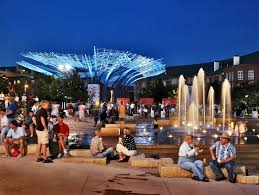
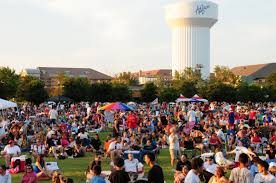
Today, Addison thrives as a dynamic North Texas hub renowned for its culinary scene, signature festivals like the award-winning Kaboom Town! fireworks extravaganza—which marked its 40th anniversary in July 2025—and cultural offerings including Oktoberfest and Taste Addison. Recent developments underscore its forward momentum: the City Council approved the fiscal year budget in September 2025 and advanced a major transit-oriented project, while construction on a new North Texas Emergency Communication Center facility commenced this month to enhance public safety services by 2028. The Addison Performing Arts Centre welcomed Pegasus Theatre in October 2025 for expanded productions, and economic incentives continue to bolster growth in sectors like healthcare data optimization through firms such as HealthMark Group. With ongoing events at Vitruvian Park and Addison Circle Park through late October, alongside a new rental property inspection program effective earlier this year, the town exemplifies balanced urban vitality and community resilience.
Addison, Texas, is a vibrant incorporated town nestled in northern Dallas County, just 13 miles north of downtown Dallas within the bustling Dallas-Fort Worth metroplex, spanning a compact 4.4 square miles with a population of approximately 16,661 as of the 2020 census and an estimated 17,100 by 2023. Known for its economic dynamism and as a hub for business and leisure, Addison boasts over 200 restaurants—more per capita than any other U.S. city—along with 22 hotels offering more than 3,000 rooms, nearly two million square feet of office space, and major corporate headquarters like Mary Kay Cosmetics, Wingstop, and Dresser, drawing a daytime population exceeding 120,000. The town’s diverse demographics reflect its growth, with a mix of about 48% White, 16% Black or African American, 8% Asian, and 23% Hispanic or Latino residents, all amid a landscape of parks, the Addison Airport, and events like the explosive Kaboom Town! fireworks show. Historically, Addison’s story begins in the 1840s as part of Peter’s Colony, when early settlers like Preston Witt arrived in 1846, building a home near White Rock Creek and opening an ox-powered gristmill in 1849 that became a vital community anchor. By 1880, Sidney Smith Noell acquired significant land south of present-day Belt Line Road, and in 1888, he joined W.W. Julian and W.E. Horten in donating right-of-way to the St. Louis, Arkansas and Texas Railway—later the Cotton Belt—for a coaling station, spurring the area’s first rail connections. A cotton gin established in 1902 marked the debut of substantial industry, followed in 1903 by a depot and branch line to Dallas, dubbing the site Noell Junction; a post office opened in 1904 but was renamed Addison in 1908 to avoid conflict with another Texas community, honoring postmaster Addison Robertson who served until 1916. Julian platted the original six city blocks that year, fostering modest growth to 75 residents by 1914 with grocers and a short-lived bank, though the population dipped to 40 by 1926 amid economic challenges. Post-World War II annexation threats from neighboring Dallas, Carrollton, and Farmers Branch prompted incorporation on June 15, 1953, via a narrow 19-11 vote, electing M.H. “Harry” McKool as the first mayor and setting the stage for expansion. In 1956, W.T. Overton announced Addison Airport, which broke ground in 1957 and opened for business aviation, while a 1961 industrial park developed by Overton, John D. Murchison, and Trammell Crow fueled further progress; by 1970, the population hit 595 with 80 businesses. The 1976 approval of alcohol sales, coupled with low taxes, ignited a boom in restaurants and hotels during the late 1970s and early 1980s, swelling the populace beyond 8,000 by 1991 alongside 118 eateries, and in 1982, the city rebranded as the Town of Addison. Milestones like hosting the Dallas Grand Prix from 1989 to 1991 and completing the innovative Addison Airport Toll Tunnel in 1999 underscored its evolution from rural outpost to a premier North Texas destination blending history, commerce, and culinary allure.
#addisonhomes #addisontx #buyeragent #dallascountytx #dallascountytx2025 #dallassuburb #dfw #dfwrealestate #dfwsuburbs #dreamhome #fastestgrowing #homebuying #homesforsalefarmersaddison #househunting #marketupdate #movingtodfw #northtexashomes #realestateboom #realestatedallasaddison #realestatetrends #relocation #selleragent #sellingmyhouse #texashistory #texasvibes #townofaddison