
Kuki-Zo Council strongly opposes Manipur Govt`s push to enforce the 1967 Chiefs` Rights Act. Discover why this law threatens tribal land ownership and stability. Read more now! https://english.mathrubhumi.com/news/india/kuki-zo-council-opposes-manipur-land-law-mzfbkbbf?utm_source=dlvr.it&utm_medium=mastodon #KukiZo #Manipur #LandRights #triballand
#Landrights


In the wake of horrific #wildfires in #Belize and #Mexico caused by #climatechange, #indigenous #Maya are rebuilding using the notion of se’ komonil: reciprocity #community and solidarity. #indigenousrights #landrights #BoycottPalmOil @palmoildetectives https://wp.me/pcFhgU-924

Indigenous Peoples Fight Climate Change
In the wake of the worst wildfires in living memory in Mexico and Central America in 2024, news outlets were looking for someone to blame. Howler monkeys and many species of parrots perished in the blazes. Slash and burn farming practices by Belize‘s indigenous communities were singled out as a primary cause. Yet this knee-jerk reaction is not evidence based and doesn’t take into account forces like corporate landgrabbing for mining and agribusinesses like meat, soy and palm oil.
Belize’s indigenous Maya communities are rebuilding stronger based on the collective notion of se’ komonil: reciprocity, solidarity, traditional knowledge, gender equity, togetherness and community.
In the wake of horrific #wildfires in #Belize and #Mexico caused by #climatechange, #indigenous #Maya are rebuilding using the notion of se’ komonil: reciprocity #community and solidarity. #indigenousrights #landrights #BoycottPalmOil @palmoildetect https://wp.me/pcFhgU-924
Share to BlueSky Share to TwitterWritten by James Stinson, Senior Research Associate and Evaluation Specialist, Young Lives Research Lab, Faculty of Education, York University, Canada and Lee Mcloughlin, PhD student, Global Sociocultural Studies, Florida International University This article is republished from The Conversation under a Creative Commons license. Read the original article.
Driven by extreme heat and drought, some of the worst wildfires in living memory raged across Mexico and Central America through April and May 2024.
News agencies reported howler monkeys dropping dead from trees, and parrots and other birds falling from the skies.
In Belize, a state of emergency was declared as wildfires burned tens of thousands of hectares of highly bio-diverse forest. Farmers suffered huge losses as fires destroyed crops and homes, and communities across the country suffered from hazardous air quality and hot, sleepless nights. Many risked their lives to fight off the approaching fires.
As the wildfire crisis subsided with rains in June, public attention shifted toward identifying the causes and allocating blame. Many singled out the “slash and burn” farming practices in Belize’s Indigenous communities as the primary cause. This simple knee-jerk reaction ignores the underlying causes of the climate crisis, are scientifically unfounded and stoke resentment of Indigenous Peoples.
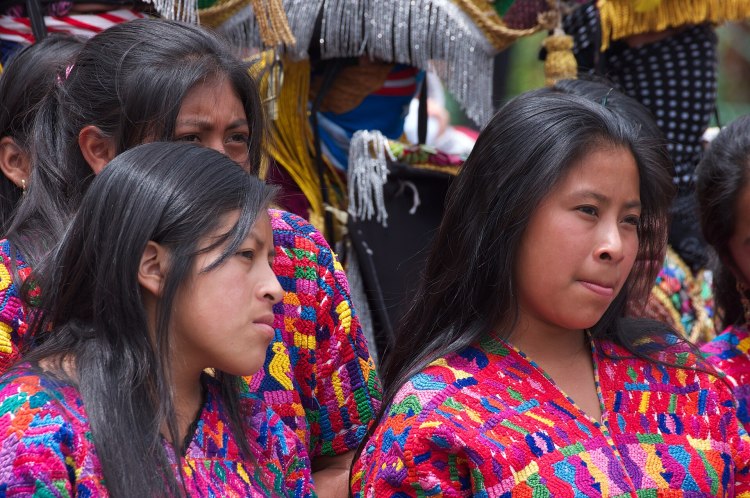
Young Mayan women. Image source: WikipediaFanning the flames
On June 5, one of Belize’s major news networks ran a story with the headline “Are Primitive Farming Techniques Responsible for Wildfires?” The story placed blame for Belize’s wildfires on “slash-and-burn farming”, arguing that “there has to be a shift away from this destructive means of agriculture.”
The story was followed by an op-ed published online asserting that “because of the increased amounts of escaped agricultural fires, aided by climate change, global warming and drought, slash and burn has become more of a problem than the solution it once was.” This sentiment was further reinforced by Belize’s prime minister, who declared that “slash аnd burn has to be something of the past.”
While some of the recent fires in Belize were connected to agricultural burning — and poorly managed fire-clearing practices can have negative air-quality impacts — blaming “slash and burn” for the wildfire crisis ignores the larger context and conditions that made it possible, namely global warming.
May 2024 was the hottest and driest month in Belize’s history. This extreme heat is part of a broader global trend, with June 2024 marking the 13th consecutive “hottest month on record” globally.
More fundamentally, these statements confuse other forms of slash-and-burn agriculture with the distinct “milpa” systems employed by Indigenous people in Belize.
Indigenous knowledge undermined
Throughout Belize, Indigenous Maya farmers commonly practise a form of agriculture referred to as milpa in which fire is used to clear fields and fertilize the soil. Within this system, small areas of forest are chopped down, burned, and planted with maize, beans, squash and other crops. After being cultivated for a year or two, the field is then left fallow and allowed to regenerate back to forest cover while the farmers move on to a new area within a cyclical pattern where areas are reused after a regenerative period.
Commonly derided as slash-and-burn farming, milpa has long been perceived as environmentally destructive. This perspective has been perpetuated by long-standing myths and misconceptions that portray the farming practices of non-Europeans, and specifically the use of fire, as wasteful and irrational.
In Belize, this negative view of slash and burn has driven many colonial and post-colonial interventions to modernize Maya farming practices.
Recent research, however, has shown that the lands of Indigenous Peoples around the world have reduced deforestation and degradation rates relative to non-protected areas. The southern Toledo district of Belize, where the majority of Maya communities are located, boasts a forest cover rate of 71 per cent, significantly higher than the national average of 63 per cent.
Further research has found that the species composition of contemporary Mesoamerican forests has been shaped by the agricultural practices of ancient Maya farmers.
In Belize, fire has been found to play a role in promoting ecosystem health and resilience and intermediate levels of forest disturbance caused by milpa can increase species diversity. Well-managed milpa farming can support soil fertility, result in long-term carbon sequestration and enriched woodland vegetation.
Research has also shown that previous studies of deforestation in southern Belize significantly overestimated the rate of deforestation due to milpa agriculture by not accounting for its rotational process.
Many researchers now believe that milpa is a more benign alternative, in terms of environmental effects, than most other permanent farming systems in the humid tropics. Indeed, findings such as these have led to a growing appreciation for the role of Indigenous Peoples in advancing nature-based and life-enhancing climate solutions.
Unfortunately, research in the region has also found that climate change is undermining the ecological sustainability of milpa farming by forcing farmers to abandon traditional practices and adopt counterproductive measures in their struggle to adapt. In some cases, this has resulted in a decrease in the biodiversity and ecological resilience of the milpa system. This issue is compounded by the decreasing participation of young people, resulting in a further generational loss of traditional ecological knowledge.
Together, these issues are serving to alter and undermine a livelihood strategy that has proven sustainable for thousands of years. However, rather than call for Maya farmers to abandon slash and burn, we encourage support for the self-determined efforts of Maya communities to adapt to this changing climate. https://www.youtube.com/embed/ok787HRp_gA?wmode=transparent&start=0 A video documenting the Maya response to the 2024 wildfire crisis.
Planting seeds of collaboration
Since winning a groundbreaking land rights claim in 2015, Maya communities in southern Belize have been working to promote an Indigenous future based on principles of reciprocity, solidarity, traditional knowledge, gender equity and, most significantly, se’ komonil, the Maya notion of togetherness and community.
Led by a collaboration of Maya leaders and non-governmental organizations, work toward this has included efforts to revitalize traditional institutions and governance systems, as well as the development of an Indigenous Forest Caring Strategy and fire-permitting system. In an effort to encourage and support the participation of youth in this process, Maya leaders have collaborated with the Young Lives Research Lab at York University to develop the Partnership for Youth and Planetary Wellbeing.
Building on previous research with Maya youth, the project has produced innovative youth-led research and education on the impacts of climate change, the importance of food sovereignty, traditional ecological knowledge and the struggle to secure Indigenous land rights in Maya communities. This work has been shared with global policymakers at the United Nations and local audiences in Belize.
Rather than fanning the flames of climate blame, we must work together to revitalize Indigenous knowledge systems and plant seeds of climate collaboration and care.
Written by James Stinson, Senior Research Associate and Evaluation Specialist, Young Lives Research Lab, Faculty of Education, York University, Canada and Lee Mcloughlin, PhD student, Global Sociocultural Studies, Florida International University This article is republished from The Conversation under a Creative Commons license. Read the original article.
ENDS
Read more about human rights abuses and child slavery in the palm oil and gold mining industries
Indigenous Peoples Fight Climate Change
After wildfires, Belize’s indigenous people rebuild stronger based on “se’ komonil”: reciprocity, solidarity, gender equity, togetherness and community.
Investigation by Bloomberg exposes that despite being RSPO members, #SOCFIN plantations in #WestAfrica are the epicentre of #humanrights abuses, sexual coercion, environmental destruction, and #landgrabbing. Operating in #Liberia, #Ghana, #Nigeria, and beyond, SOCFIN’s…
Palm Oil Threatens Ancient Noken Weaving in West Papua
Colonial palm oil and sugarcane causing the loss of West Papuans’ cultural identity. Land grabs force communities from forests, threatening Noken weaving
Family Ties Expose Deforestation and Rights Violations in Indonesian Palm Oil
An explosive report by the Environment Investigation Agency (EIA) details how Indonesia’s Fangiono family, through a wide corporate web, is linked to ongoing #deforestation, #corruption, and #indigenousrights abuses for #palmoil. Calls mount for…
West Papuan Indigenous Women Fight Land Seizures
Indigenous Melanesian women in West Papua fight land seizures for palm oil and sugar plantations, protecting their ancestral rights. Join #BoycottPalmOil
Load more posts
Something went wrong. Please refresh the page and/or try again.
Take Action in Five Ways
1. Join the #Boycott4Wildlife on social media and subscribe to stay in the loop: Share posts from this website to your own network on Twitter, Mastadon, Instagram, Facebook and Youtube using the hashtags #Boycottpalmoil #Boycott4Wildlife.
Enter your email address
Sign Up
Join 3,171 other subscribers2. Contribute stories: Academics, conservationists, scientists, indigenous rights advocates and animal rights advocates working to expose the corruption of the palm oil industry or to save animals can contribute stories to the website.
Mel Lumby: Dedicated Devotee to Borneo’s Living Beings
Anthropologist and Author Dr Sophie Chao
Health Physician Dr Evan Allen
The World’s Most Loved Cup: A Social, Ethical & Environmental History of Coffee by Aviary Doert
How do we stop the world’s ecosystems from going into a death spiral? A #SteadyState Economy
3. Supermarket sleuthing: Next time you’re in the supermarket, take photos of products containing palm oil. Share these to social media along with the hashtags to call out the greenwashing and ecocide of the brands who use palm oil. You can also take photos of palm oil free products and congratulate brands when they go palm oil free.
https://twitter.com/CuriousApe4/status/1526136783557529600?s=20
https://twitter.com/PhillDixon1/status/1749010345555788144?s=20
https://twitter.com/mugabe139/status/1678027567977078784?s=20
4. Take to the streets: Get in touch with Palm Oil Detectives to find out more.
5. Donate: Make a one-off or monthly donation to Palm Oil Detectives as a way of saying thank you and to help pay for ongoing running costs of the website and social media campaigns. Donate here
Pledge your support#belize #boycottPalmOil #boycottpalmoil #childLabour #childSlavery #climatechange #community #goldMining #humanRights #hunger #indigenous #indigenousActivism #indigenousKnowledge #indigenousRights #indigenousrights #landRights #landgrabbing #landrights #maya #mexico #palmOil #poverty #slavery #wildfires


In the wake of horrific #wildfires in #Belize and #Mexico caused by #climatechange, #indigenous #Maya are rebuilding using the notion of se’ komonil: reciprocity #community and solidarity. #indigenousrights #landrights #BoycottPalmOil @palmoildetect

Court to test claims mining exploration fast-tracked at expense of native title
By Ruby Littler
Traditional owners in WA's north launch legal action against the state government claiming it is fast-tracking mining and exploration projects using "expedited procedure" approvals at cultural expense.
#NativeTitle #LandRights #IndigenousPolicy #MiningandMetalsIndustry #RubyLittler

Hàng chục hộ dân ở xã Bồng Lai, Bắc Ninh hoang mang khi phát hiện sổ đỏ đã được cấp cách đây 25 năm bỗng dưng "biến mất" do thất thoát trong quá trình lưu trữ tại UBND xã cũ. 46 hộ dân nằm trong diện ảnh hưởng, dù trước đó đã chính thức được cấp Giấy chứng nhận quyền sử dụng đất. Vụ việc đang gây bức xúc trong cộng đồng dân cư, đặt ra nghi vấn về công tác quản lý hồ sơ đất đai tại địa phương.
#BacNinh #DanSinh #DatDai #SoDo #UBND #BongLai #LandRights #Vietnam
#BắcNinh #DânSinh #ĐấtĐai #SổĐỏ
#News: #Indigenous Kenyah and #Penan people fight and win for their #landrights in Belaga. #Ecocide for #palmoil was halted after months long blockade by many brave people! Never give up!! 🧐🚫 #IndigenousRights #BoycottPalmOil @palmoildetect.bsky.social
https://dayakdaily.com/native-landowners-celebrate-win-as-plantation-company-halts-forest-clearing-in-belaga/?utm_source=mastodon&utm_medium=Palm+Oil+Detectives&utm_campaign=publer

Africa: Civil Society Warns of New Land Grabs As World Bank Pushes for Tenure Reforms in Africa: [IPS] The idea of land abundance is a colonial fiction that refuses to die. Our research shows that Africa's lands are already intensively used and deeply valued by millions of rural people. Professor Ruth Hall, Director-PLAAS at the University of the Western Cape. http://newsfeed.facilit8.network/TPMVt6 #LandReform #Africa #CivilSociety #WorldBank #LandRights



'Debunking the Myth of Land Abundance
Africa Must Reclaim Its Lands from False Climate Solutions and Corporate Capture'
https://www.oaklandinstitute.org/press-release/debunking-myth-land-abundance?utm_campaign=CLPA%202025%20Recap%20-%20Reporter&utm_medium=email&utm_source=mailjet
#climatechange #landrights #worldbank #GlobalNorth

The #environmental burdens of #SpecialEconomicZones on the coastal and marine #environment: A remote sensing assessment in #Myanmar
Thiri Shwesin Aung, Indra Overland, Roman Vakulchuk, Yanhua Xie
November 2022
"Special economic zones (#SEZs) are unusual parts of the world economy in terms of law, institutions, and economic functions (Chaisse and Dimitropoulos 2021). SEZs are geographically delimited areas created to facilitate industrial activities through fiscal and regulatory incentives and infrastructure support (UNCTAD 2019). Such zones carve out jurisdiction as a subset of the overall state jurisdiction for the purposes of enacting different laws and regulations that are more trade and investment friendly (Zeng 2021). Since the year 2000, SEZs have mushroomed in developing countries to attract foreign direct investment (FDI), accelerate industrialization and create jobs (Aiyer 2017). There are 5400 SEZs in 147 economies around the world. Asia is home to three quarters of them (UNIDO 2015). They have been a core element of the economic development strategy of the Association of Southeast Asian Nations (ASEAN) and currently all ASEAN member states have SEZs (Aggarwal 2022).
"As part of an export-oriented development strategy, the zones commonly include industrial mega-areas that accommodate large-scale infrastructure, deep-sea ports, logistical infrastructure for oil and gas, hotels and tourism, and industrial complexes (Aggarwal 2022). They are primarily defined by a specific regulatory regime and a dedicated governance mechanism designed to relieve customs and tariffs and reduce the burden on businesses from permits, licenses, employment laws, and land access. In return, host governments expect investors to create positive spillover effects, such as facilitating innovation, boosting employment, raising exports, and diversifying the economy. The global experience of SEZs have been mixed, with some countries achieving successful economic outcomes, while others struggle to overcome market failures, institutional constraints, and social and environmental costs (Aggarwal 2022; Zeng 2021).
"The lax regulatory regimes of SEZs often raise concerns about environmental, social, and #HumanRights standards, as well as possible conflicts over #LandRights (Brussevich 2020). Several SEZs have failed to yield the expected economic benefits while having severe adverse impacts on the environment and local communities (Adunbi 2019; Aritenang and Chandramidi 2020; Chaisse and Ji 2020). On the other hand, while SEZs can be hotspots for environmental #mismanagement, they can also provide opportunities for implementing environmental policies specifically designed to regulate industries within the zones. Also, certain environmental advantages may ensue from the introduction of foreign financial resources and environmental technologies that are otherwise not readily available (Richardson 2004).
"However, according to the 'race to the bottom' literature, most SEZs have a net negative impact on the environment and local communities (Richardson 2004; UNIDO 2015; ZENG and DOUGLAS, 2012).
"Despite this contradiction, existing studies focusing on the direct and indirect impacts of SEZs have been rare (#WorldBank, 2017). Particularly, the magnitude and intensity of SEZ impacts on the environment remain understudied.
SEZs tend to be located in remote regions. As such, SEZ-related information and data are generally scarce, making it difficult to assess the environmental consequences of such zones. Many SEZs are also located in countries where there is limited scope for independent environmental assessment due to #authoritarian rule, #corruption, and/or #secrecy surrounding deals with foreign investors. Recent improvements in access to satellite data and computing platforms for machine learning have greatly improved the ability to comprehensively assess SEZs in any location in the world in near real time (Ali et al., 2020; Jensen et al., 2019). This article demonstrates how these technologies can be applied to provide evidence related to the environmental impacts of SEZs. The method is tried out on the Kyaukpyu SEZ in Myanmar. Myanmar is an authoritarian country and the #KyaukpyuSEZ is a flagship project of China's Belt and Road Initiative (#BRI) located in an inaccessible part of #Myanmar. This is precisely the type of case where independent access can be limited and a remote sensing approach can be useful.
"From 2010 onwards, Myanmar was navigating its economic transformation and a partial loosening of military rule. SEZ development was prioritized as a critical element of the country's industrialization (Oxfam 2017). The three most notable ongoing SEZ projects are the Kyaukpyu SEZ in the rural but strategically important Rakhine State, which is also the largest SEZ in Myanmar, the Thilawa SEZ on the outskirts of Myanmar's former capital Yangon, and the Dawei SEZ in the Tanintharyi Region. Tanintharyi is a long narrow southern territory of Myanmar bordering the Andaman Sea to the west and Thailand to the east.
"Although they are expected to encourage economic growth and reduce poverty, all three SEZ projects continue to face local opposition, particularly the Kyaukpyu and Dawei SEZs. The International Commission of Jurists (2017) has reported that SEZs in Myanmar are linked to human rights violations and environmental abuses (Donateo 2017). Although Myanmar's SEZ law adopted in 2014 reaffirms the applicability of environmental regulations to SEZ development, it does not clearly delineate responsibilities between developers and the state (DICA 2014). The law also does not conform with international human rights standards (MCRB 2018)."
Read more:
https://www.sciencedirect.com/science/article/pii/S2352938522001173
#RaceToTheBottom #HumanRightsViolations #Pollution #EnvironmentalDegradation #EconomicSacrificZones #ForcedRelocation #ForcedDisplacement #HumanRightsViolations #EnvironmentalDegradation #IndigenousPeoples #ForestPeoples #SaveTheForests #Exploitation #CorporateColonialism
Victoria's treaty is here. What does it mean? And is one coming to my state?
By Kirstie Wellauer and Stephanie Boltje
Hundreds of treaties exist between First Nations people and governments around the world. One state in Australia just became one of them.
https://www.abc.net.au/news/2025-11-14/first-nations-treaty-potentially-first-of-many/106006576
#IndigenousPolicy #IndigenousAustralians #GovernmentandPolitics #Aboriginal #LandRights #IndigenousCulture #NativeTitle #Constitution #KirstieWellauer #StephanieBoltje
Africa: 30,000 People From 62 Countries Participating in COP30 People's Summit in Belém: [People's Dispatch] At the opening of the event, 1,300 landless peasants marched towards a boat parade with 200 vessels navigating the waters of the Guajará Bay. http://newsfeed.facilit8.network/TPF7Xd #COP30 #ClimateAction #PeoplesSummit #SustainableDevelopment #LandRights


Gough #Whitlam, Australian PM 1972–75:
• free universal healthcare
• end of White Australia policy
• Racial Discrimination Act
• abolished university fees
• removed tax on contraception
• no-fault divorce
• equal pay for women
• extended maternity leave and support for single mothers
• abolition of conscription
• abolition of death penalty
• Aboriginal #LandRights and the start of #LandBack
• established Legal Aid and Aboriginal legal services
• doubled arts funding: established SBS, National Gallery, Australia Council for the Arts, National Film and Television School
• withdrew ADF from #Vietnam
• withdrew support for apartheid #SouthAfrica
• first Western leader to visit #China after WWII; re-established diplomatic relations
• independence for #PNG
• democratising the electoral system through One-Vote-One-Value
• first federal legislation on human rights, environment and heritage
• cut #tariffs
• Trade Practices Commission
• Law Reform Commission
• National Parks & Wildlife Service
• Australia Film Commission
• Australia Council
• Consumer Affairs Commission
• Technical and Further Education Commission #TAFE
• abolished appeals to the (UK) Privy Council
• accelerated rollout of sewerage system to disadvantaged communities
• sought to close #PineGap
All this in under three years. #Auspol

Breaking News – AP SVAMITVA: 'Swamitva' Gram Sabhas in AP from today
https://vaartha.com/andhra-pradesh/swamitva-gram-sabhas-in-ap-from-today/579399/
#SVAMITVA #APSVAMITVA #GramaSabha #PropertyCards #LandRights #రాష్ట్రస్వామిత్వ #ఆంధ్రప్రదేశ్ #SVAMITVAScheme #RuralDevelopment #DroneSurvey #PropertyOwnership #GramPanchayat #DigitalIndia #VillageMapping #LandSurvey

Traditional owners file native title claim over Melbourne and surrounding areas https://www.theguardian.com/australia-news/2025/nov/09/traditional-owners-indigenous-people-file-native-title-claim-over-melbourne-australia-first-nations #IndigenousAustralians #Indigenouspeoples #Law(Australia) #Australianews #Conservation #Environment #Landrights #Melbourne #Victoria

Earth First: **BLOCKADE!**
https://earthfirstjournal.news/2025/11/03/blockade/
This short documentary follows land defenders and their allies in their fight against Law 97, a forestry reform that would have handed over the province’s remaining forests to industry.
#EncampmentsandOccupations #ForestDefense #IndigenousResistance #LandDefense #LandRights #Logging #NorthAmerica #Victories #Wilderness #Blockade #Canada #Directaction #Forestdefense #Politics
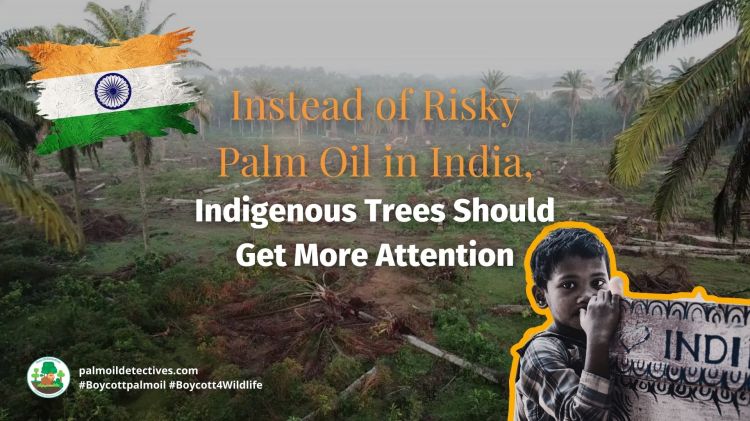
Choose Indigenous Trees Over Palm Oil In India
In an effort to combat #India’s edible oil shortage, the Indian government has heavily promoted the cultivation of exotic palm oil trees. This is a decision mired in controversy due to the associated severe ecological repercussions witnessed in other nations. The thirst for high rainfall, crucial for palm oil’s yield, threatens India’s already dwindling groundwater reserves. Notably, proposals to introduce palm oil in the ecologically sensitive regions of Assam and the North East have sparked significant backlash. Writer Bharat Dogra advocates for a shift in focus, suggesting that the solution may lie in harnessing the potential of indigenous trees capable of producing oilseeds for edible oil.
#India is turning towards #palmoil growth is a massive mistake for local #biodiversity #landrights and #climatechange, resist and #Boycottpalmoil #Boycott4Wildlife @palmoildetect https://palmoildetectives.com/2023/09/24/instead-of-risky-palm-oil-in-india-indigenous-trees-should-get-more-attention/
Share to BlueSky Share to Twitterhttps://youtu.be/jer1UJbL_Kc?si=Gqd6gLsKD1JwfED_
Article originally published in Countercurrents on 18th June, 2023. Written by Bharat Dogra is Honorary Convener of the campaign to Save Earth Now. His recent books include India’s Quest for Sustainable Farming and Healthy Food, Man over Machine and Planet in Peril.
Recent government policy has resorted to huge promotion of exotic palm oil trees to end edible oil shortage in India. However, this is associated with highly disruptive ecological costs, as has been seen from the experience of several countries.
The kind of high rainfall conditions needed for its high yield are not readily available in India and this will lead to heavy extraction of already scarce groundwater. Plans for large-scale introduction of palm oil in India’s ecologically fragile regions of Assam and the North East have already faced much criticism.
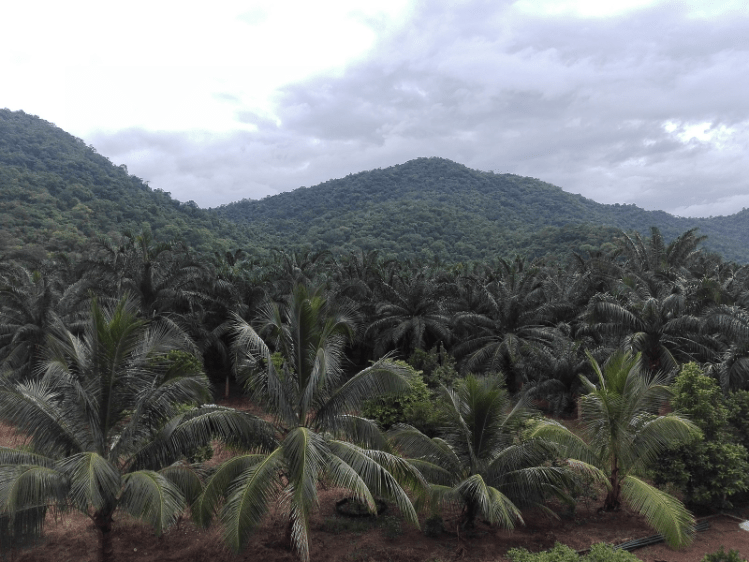
Palm oil plantations at the foothills of Eastern Ghats near Srungavarapukota in Vizianagaram district by Adityamadhav83 on WikipediaA better option would be to explore the potential of several indigenous trees which yield oilseeds from which edible oil can be obtained.
There are several such indigenous trees which can provide edible oils, such as mahua, karanj, sal, kokum, kusum etc. (not to mention coconut, which is already well established as a supplier of edible oil). Some of these trees are known and some are not so well-known and need to be explored further. The edible oil contained from some of these trees is known to be very good for nutrition and to be rich in poly unsaturated fats, important for nutrition.
Availability of edible oils can increase significantly even from already existing trees. However once this importance is realised and conscious efforts are made to increase these trees, then edible oil availability for domestic use ( particularly in tribal community areas) as well as for export markets for niche uses, including medicinal value, can increase even more significantly.
It will be a mistake to grow these trees as plantation crops. This will be harmful for biodiversity, environment and food security. It will be much better for all families in a tribal community to grow two additional such trees each on their land. In this way about two to four hundred additional oilseed trees can grow in each village, and about 200,000 villages in India are likely to be suitable for growing these trees.
Bharat Dogra
A 2019 World Health Organisation (WHO) report into the palm oil industry and RSPO finds extensive greenwashing of palm oil deforestation and the murder of endangered animals (i.e. biodiversity loss)
Read moreAs almost all of these trees have multiple uses for their fruits, flowers, seeds, leaves etc., benefits for these farmers and villagers will be many. Mahua tree can provide very nutritious and filling food which is all the more useful in lean season and drought years, its fodder is also very useful while at the same time the use of its flower as an intoxicant should be minimised.
Cooperatives of farmers and villagers to collect tree oilseeds can be set up to ensure a fair price. However instead of selling these to big processors, value addition can be obtained by local processing.
Local processing units in all these villages should be set up, particularly to extract oil but also to process other produce of these trees. This local processing will generate more livelihoods, while the residue (after oil extraction) will provide nutritive feed for animals and organic fertiliser for farms.
The potential for this is the highest in tribal communities, but certainly potential exists in other villages also for various communities.
Isn’t it irrational that the authorities are ignoring this potential but instead going in for the ecologically disruptive option of palm oil plantation?
There are also trees like neem whose oil may not be used for cooking but has important medicinal uses. Then there are other trees which provide non-edible oil with several uses such as for soap making and can be used for cottage scale units of soap or other products of everyday use.
In addition there is much potential for better protection and improvement of coconut trees which have so many different uses apart from providing edible oils.
There is a strong case for giving much more attention to all indigenous trees which provide edible oils and for providing many more sustainable livelihoods on the basis of their various products including oilseeds, with the added caution that these indigenous trees should be grown not as big monoculture plantations but instead in their usual natural way co-existing with all biodiversity.
Article originally published in Countercurrents on 18th June, 2023. Written by Bharat Dogra is Honorary Convener of the campaign to Save Earth Now. His recent books include India’s Quest for Sustainable Farming and Healthy Food, Man over Machine and Planet in Peril.
ENDS
Read more about Indian animals threatened by palm oil deforestation in India
Rivers are still people in South East Asia despite court showdown
Healthy rivers are essential for community wellbeing. India and Bangladesh legally recognise rivers as natural persons with rights and powers. Take action!
Protecting India’s Tigers Saves One Million Tonnes of CO2
#India’s fifty year long Project #Tiger has been a successful conservation project. A new research study finds that protecting tigers and their rainforest home has additional benefits to #carbonemissions, saving 1 million tonnes…
Concerns Mount Over Palm Oil Expansion in Nagaland
The NCCAF raises grave concerns over palm oil expansion in Nagaland, India with threats to deforestation, biodiversity, livelihoods. Take action!
The sloth bear (Melursus ursinus), with their distinctive “Y” or “V” shaped chest patch and shaggy fur, are unique bears native to the Indian subcontinent. Once exploited as ‘dancing bears’ by the Kalandar…
Nicobar Long-Tailed Macaque Macaca fascicularis umbrosa
Discover the intriguing Nicobar long-tailed macaque, intelligent and highly social survivors on India’s islands, help them to survive and boycott palm oil!
Phayre’s Leaf Monkey Trachypithecus phayrei
Phayre’s leaf monkey, also known as Phayre’s langur, are remarkable Old World monkeys distinguished by large, white-rimmed eyes that lend them a “spectacled” appearance. Known locally as ‘Chasma bandor’ they live mostly in…
India’s Palm Oil Plans Wreak Havoc On The Ground
#India’s aggressive push for #palmoil plantations in #Nagaland, #Assam and #Mizoram is wreaking havoc on both the environment and local communities. The government plans to ramp up oil palm cultivation in the northeast,…
Irrawaddy Dolphin Orcaella brevirostris
Intelligent and social Irrawaddy dolphins, also known as the Mahakam River dolphins or Ayeyarwady river #dolphins have endearing faces. Only 90 to 300 are estimated to be left living in the wild. Their…
The majestic Sambar deer, cloaked in hues ranging from light brown to dark gray, are distinguished by their rugged antlers and uniquely long tails. Adorned with a coat of coarse hair and marked…
Lion-tailed Macaque Macaca silenus
Lion-tailed macaques hold the title of one of the smallest macaque species in the world and sport a majestic lion-esque mane of hair. They exclusively call the Western Ghats in India their home.…
Load more posts
Something went wrong. Please refresh the page and/or try again.
Take Action in Five Ways
1. Join the #Boycott4Wildlife on social media and subscribe to stay in the loop: Share posts from this website to your own network on Twitter, Mastadon, Instagram, Facebook and Youtube using the hashtags #Boycottpalmoil #Boycott4Wildlife.
Enter your email address
Sign Up
Join 3,521 other subscribers2. Contribute stories: Academics, conservationists, scientists, indigenous rights advocates and animal rights advocates working to expose the corruption of the palm oil industry or to save animals can contribute stories to the website.
Mel Lumby: Dedicated Devotee to Borneo’s Living Beings
Anthropologist and Author Dr Sophie Chao
Health Physician Dr Evan Allen
The World’s Most Loved Cup: A Social, Ethical & Environmental History of Coffee by Aviary Doert
How do we stop the world’s ecosystems from going into a death spiral? A #SteadyState Economy
3. Supermarket sleuthing: Next time you’re in the supermarket, take photos of products containing palm oil. Share these to social media along with the hashtags to call out the greenwashing and ecocide of the brands who use palm oil. You can also take photos of palm oil free products and congratulate brands when they go palm oil free.
https://twitter.com/CuriousApe4/status/1526136783557529600?s=20
https://twitter.com/PhillDixon1/status/1749010345555788144?s=20
https://twitter.com/mugabe139/status/1678027567977078784?s=20
4. Take to the streets: Get in touch with Palm Oil Detectives to find out more.
5. Donate: Make a one-off or monthly donation to Palm Oil Detectives as a way of saying thank you and to help pay for ongoing running costs of the website and social media campaigns. Donate here
Pledge your support#Assam #biodiversity #BoycottPalmOil #Boycott4wildlife #BoycottPalmOil #childLabour #childSlavery #climatechange #deforestation #humanRights #India #indigenousRights #landRights #landgrabbing #landrights #PalmOil #palmoil #slavery
Vụ xây nhầm nhà ở Hải Phòng: Ông Đỗ Văn Hữu tiếp tục xây dựng trên đất bà Trần Thị Kim Loan dù bị yêu cầu dừng thi công. Rắc rối chưa có hồi kết.
#HaiPhong #XayNhamNha #TranhChapDatDai #DanSinh #VietnamNews #ConstructionMistake #PropertyDispute #HaiPhongCity #RealEstateIssue #LandRights
Tin mới: Một số khách hàng góp vốn nhận nền tại dự án ở TP.HCM đã 20 năm vẫn chưa được cấp sổ đỏ, dù đã nhận chuyển nhượng quyền sử dụng đất. Cơ quan chức năng vào cuộc làm rõ. #BatDongSan #TPHCM #SoDo #DuAn #QuyenSuDungDat #RealEstate #HoChiMinhCity #LandRights
https://vietnamnet.vn/tin-moi-ve-vu-mua-dat-du-an-da-20-nam-van-chua-duoc-cap-so-do-2457794.html
Client Info
Server: https://mastodon.social
Version: 2025.07
Repository: https://github.com/cyevgeniy/lmst