
Guten Morgen.

Cian O’Donnell
Computational neuroscientist.
Senior Lecturer at Ulster University.
"not articulate enough"
http://odonnellgroup.github.io

George Box famously said "all models are wrong, some are useful", but what he forgot to add was that usefulness doesn't just depend on the model.
A model is useful *only with respect to a given target problem*
2024 Swedish study on 2.5M people's data:
"Acetaminophen use during pregnancy was not associated with children’s risk of autism, ADHD, or intellectual disability... This suggests that associations observed in other models may have been attributable to confounding."
https://jamanetwork.com/journals/jama/fullarticle/2817406
updated version of our paper on bayesian modelling for whole-brain cell count data: https://elifesciences.org/reviewed-preprints/102391
People spend 1-2 years collecting these kinds of gene-expression/anatomy/IEG data... what's another 1-2 months learning + applying Bayes to get more stats bang for your buck 😍

Cian O’Donnell boosted:

What I find really interesting is papers that were ignored for years and then suddenly gained a lot of citations, sustained over a long time. I only know of these kind of papers because I signed one of them myself. Gave me the confidence to work on whatever I think is right without expecting any immediate splash.
Papers that make a splash do so because they deliver within not just the adjacent possible but closer, within the adjacent imaginable: what many thought would be desirable and not against any physical laws.
excellent writeup by Shelby Bradford in The Scientist on the MICrONS project to build large-scale connectivity maps of the mouse brain - with some small comments by me.
I have been blown away by all the various connectome projects and really do think they will change neuroscience forever... and maybe AI too who knows!
Cian O’Donnell boosted:
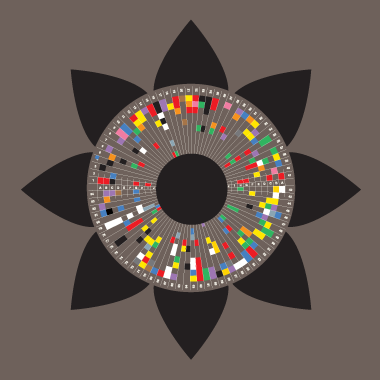
Lord of the Rings characters: screen time vs mentions in the book.
The further from the dotted line, the further off trend.
By reddit user austinw-8 https://www.reddit.com/r/dataisbeautiful/s/Dw7XqDxyEB

@zenben no idea how to quantify but one issue is that neuroscience is not a 1D problem, we have made 'spiky' progress over the map, deep dives in certain directions, but lots of uncharted territory. How to capture that??
@lindenshieldarts beautiful. A walk into the unknown.
@zenben that's a great question. We might hope we have a bit more temporal datapoints to extrapolate from now so could make better guesses... but who knows?
incredible Ada Lovelace quote highlighted in a talk by Steve Furber at our ISRC CN3 summer school. She spells out the dream of computational neuroscience, 2 centuries ago. The sheer ambition 🤩

gave a short lecture this morning on principles of computational modelling, always try to stress the point made by @romainbrette that adding details to a model does not automatically make it more realistic.
The wooden airplane model has more 'details' but only the paper model can fly

[side-stepping the gendered language] this passage from Conrad's Heart of Darkness reminds me of the private joys of doing science that I have realised are what keep me wanting to do research. Hidden from and quite different to the collective public process of science

Cian O’Donnell boosted:
If you're interested in learning #JuliaLang and are currently an #RStats user (or even if you're not!), then here's a little introduction to getting started! 📊
Blog post: https://nrennie.rbind.io/blog/introduction-julia-r-users/
Cian O’Donnell boosted:
New podcast with Gaute Einevoll, a theoretical neuroscientist. He was game to make this a conversation (instead of a Q&A) - which was terrific!
Here, we use my new book Elusive Cures as an excuse to discuss: How will we figure out the brain to (eg) treat depression? If you're a fan of the answer "build models that capture the system's complexity", you'll like this one.
https://theoreticalneuroscience.no/thn31/
Elusive Cures:
https://press.princeton.edu/books/hardcover/9780691243054/elusive-cures
Cian O’Donnell boosted:
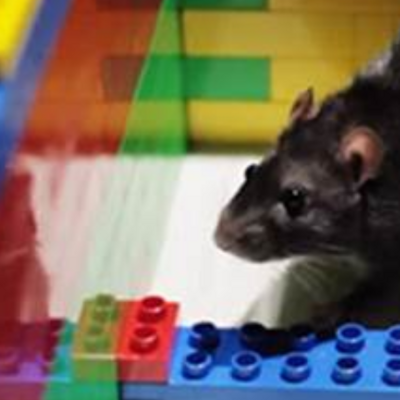
Still doing #neuroscience.
Our #orbitofrontalcortex (#OFC) paper published in _Neuron_ today. (Also available in #biorxiv.)
Paul Cunningham, A. David Redish (2025) Opposing, multiplexed information in lateral and ventral orbitofrontal cortex guides sequential foraging decisions in rats Neuron.
https://www.cell.com/neuron/abstract/S0896-6273(25)00467-2
Key insights:
1. VO and LO are doing opposite things: LO is about immediate value, while VO is about opportunity costs.
2. OFC neurons are representing both task state (through which neurons are active) and value (as the total activity).

@adredish that sounds like a great experience for the students, but a lot of grading for you! More than I am used to seeing and doing in UK computer science depts anyway.
@reviewwales hard to square this celebration with Britain's holding of historic art from other nations.
nothing makes sense in computational modelling, except in the light of these two all-time classic maxims:
1. all models are wrong, some are useful - George Box
2. everything should be made as simple as possible, but no simpler - Albert Einstein
Client Info
Server: https://mastodon.social
Version: 2025.07
Repository: https://github.com/cyevgeniy/lmst