RE: https://mstdn.social/@mobotmuseum/114439416890380451
Three more weeks to see this exhibition @mobotmuseum 👃 👃
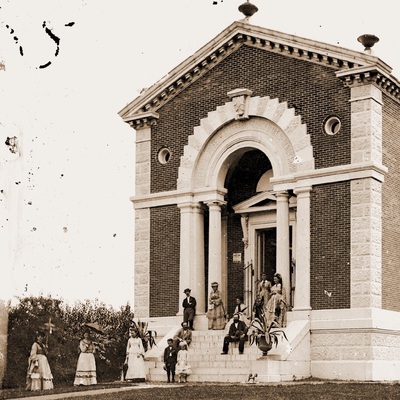
Sachs Museum at Missouri Botanical Garden
Current exhibition on view through March 2026
Smelling the Bouquet: Plants & Scents in the Garden
https://linktr.ee/mobotmuseum
RE: https://mstdn.social/@mobotmuseum/114439416890380451
Three more weeks to see this exhibition @mobotmuseum 👃 👃
#SmellingTheBouquet exhibition catalogue drop!
Grateful thanks to designer Stefanie Hermsdorf for the beautiful publication, to all the lenders, researchers, and olfactory contributors, perfumers Shawn Maher and Weston Adam, Virginia Harold for photography, and to donors Nancy Ridenour, and Nancy and Ken Kranzberg for their support!
Download at linktree in bio or on MOBOT site https://www.missouribotanicalgarden.org/gardens-gardening/our-garden/gardens-conservatories/victorian-district-sachs-museum-tower-grove-house/sachs-museum/museum-exhibitions

#SmellingTheBouquet #PlantsAndScentsInTheGarden
Native to tropical America, especially Brazil, but invasive in other regions, Goat weed is an aromatic herb used in many traditional medicinal applications for wounds, and as an insecticide and nematicide.
Pix 2-4: MOBOT Herbarium
Grateful thanks to Rogerio Satil for research and coordination.

Native to southeast Asia, Patchouli is a perennial, branched aromatic herb with fragrant leaves; its name is derived from the Tamil words for “green leaf.” Patchouli gained popularity in Europe during the 1840s due to its distinctive aroma, which was associated with exported Indian fabrics such as cashmere shawls, which were packed with its leaves due to its insect repellent qualities; its heady scent later became a prominent ingredient in perfumes.

Priprioca has attracted scientific and commercial attention in Brazil due to the pleasing scent of its essential oil, extracted from the rhizomes. Its stems produce small tubers that, when cut, release a fresh, woody, and spicy fragrance traditionally associated with “banho de cheiro” and locally made perfumes—especially in the northern region of the country, notably in Pará.

Banho de cheiro (“scented bath”) is a traditional Amazonian practice that uses aromatic herbs for physical & spiritual cleansing. This knowledge, rooted in traditional Indigenous practices, has been passed down through generations & transformed by various communities & religions over the years. It is prepared by steeping leaves, roots, & aromatic plants in water, creating an infusion used for the bath—either poured over the body or used for immersion. #SmellingTheBouquet
Pix: Fernanda do Canto

Resin plants used for incense grow around the world. 👃💐 These are found in MOBOT's Shoenberg Arid House #SmellingTheBouquet.
Abyssinian myrrh (Commiphora habessinica)--native to eastern Africa--has anti-bacterial qualities; its resin is used medicinally.
Elephant Tree or Torote (Bursera microphylla) is native to the Sonoran Desert, from the SW US to NW Mexico. The Indigenous people of this region—Comcáac and Coahuilla—use it medicinally and burn its resin as fragrant incense in ceremonies.


When the thank-you is a hand-drawn portrait of your best feature (@mobotmuseum's botanical ceiling mural)! #chuffed
Thanks so much to Ms. Martin's and Ms. Lancaster's class from North Kirkwood Middle School for their great visit to #SmellingTheBouquet #PlantsAndScentsInTheGarden earlier this month. Great to have you all learn more about scents and share your insightful questions!
And thanks to MOBOT's School Programs team for making it possible 👃💐

@OllieA thanks for the boost! 👃 💐
Native to southern Spain, Woolly lavender gets its scientific name (Lavandula lanata) from the pronounced woolly hairs on its leaves. It is cultivated for its appearance and fragrance, which is similar to other lavenders but with higher levels of terpenes.
Perfumer Shawn Maher interpreted the fragrance for the #SmellingTheBouquet exhibition @mobotmuseum, highlighting the rich lavender scent with creamy, spicy, and camphor notes. You can also purchase this scent directly (link in bio).


Visit #SmellingTheBouquet virtually! Thanks to the Digital Interpretation team at the Missouri Botanical Garden, we can offer a digital experience to visit @mobotmuseum and check out the exhibition (sorry, no scents though!).
Visit the link in the linktree or visit here https://kuula.co/share/h1FhB/collection/71bVX?logo=0&info=0&fs=1&vr=1&sd=1&initload=0&thumbs=1 (if you're old skool)

Meet the carrion flower, Stapelia mutabilis! It is one of the scents you can sniff in the current exhibition @mobotmuseum #SmellingTheBouquet. It is also blooming right now in Missouri Botanical garden's Shoenberg Arid House! Perfumer Weston Adam interpreted its unsettlingly meaty scent for the exhibition.


You too can smell like a bouquet! Now available for sale through Shawn Maher and Weston Adam, each interpretive fragrance you can sniff in the #SmellingTheBouquet #PlantsAndScentsInTheGarden exhibition @mobotmuseum are perfumes you can wear! Please visit linktree in bio for links.

Join us for #SmellingTheBouquet Sachs Museum performance and sniff 'n learn series featuring special content related to the special exhibition on plants and scents in the Garden @mobotmuseum
https://www.missouribotanicalgarden.org/gardens-gardening/our-garden/gardens-conservatories/victorian-district-sachs-museum-tower-grove-house/sachs-museum/museum-exhibitions

On loan from The Richard H. Driehaus Collection to the #SmellingTheBouquet exhibition @mobotmuseum, this perfume is made of cameo glass. First popular in the ancient Roman period over 2000 years ago, cameo glass enjoyed an artistic revival in the mid-19th century. Made for Thomas Webb & Sons, UK.


On June 28, join artisan perfumers Shawn Maher and Weston Adam—who created interpretive fragrances in Smelling The Bouquet: Plants & Scents in the Garden exhibition at the Sachs Museum—to learn more about their perfumery style and practice.
Sniff ‘n Learn series offer open educational engagement by different experts on select Saturdays through Summer 2025 at the Sachs Museum, daily hours 11:30 a.m.—4:30 p.m. Free with Garden admission. Sponsored by Nancy Ridenour.
https://www.missouribotanicalgarden.org/sachs-museum-sniff-n-learn-perfumers-spotlight-3566

Join us for #SmellingTheBouquet Sachs Museum performance and sniff 'n learn series featuring special content related to the special exhibition on plants and scents in the Garden @mobotmuseum
https://www.missouribotanicalgarden.org/gardens-gardening/our-garden/gardens-conservatories/victorian-district-sachs-museum-tower-grove-house/sachs-museum/museum-exhibitions
This fragrant plant is included in the current exhibition #SmellingTheBouquet
@mobotmuseum
Herbarium specimen collected in the Coronado National Forest, Pima, Arizona by H.H. Schmidt, M. Merello, D. Kruger; April 13, 1998; Courtesy of Missouri Botanical Garden Herbarium; 4884933

What can you sniff today at MOBOT? Planted in the upper level of Shoenberg Arid House you can find Larrea tridentata, Creosote bush. On a warm afternoon, you can smell the wonderful unique scent of creosote in the air as you get near the plant (the flowers don't have scent!)


So much to learn from these gardens and how they were created--an iconic list from NYT T Magazine
https://www.nytimes.com/2025/05/06/t-magazine/best-gardens-england-japan-france.html?unlocked_article_code=1.FU8.4Awu.-5YYC0IkrcbS&smid=url-share