Cc @linuxgal

Michael Zingale
Computational astrophysics, professor @ Stony Brook, star blower-upper, open science
Develop:
* AMReX-Astrophysics suite
(https://github.com/amrex-astro)
* pynucastro
(https://github.com/pynucastro)
Produce many open education resources, including the open astrophysics bookshelf: https://open-astrophysics-bookshelf.github.io/


This week's VAST seminar is a joint panel discussion with SciCodes on publishing, indexing, discovering, and citing scientific software. Panelists from PLOS, NASA ADS, ASCL, and SSI.
Come join the fun on Wed @ 11 am (New York time)
@matt nope! very unusual. you should get credit.
last class of the semester. I didn't get to all the topics I wanted to cover in my Computational Astrophysics class, but for the first time it's been offered, I'm happy with what I wrote up. Notes here:
https://zingale.github.io/computational_astrophysics/intro.html
This week is our next Virtual Astronomy Software Talks (VAST) seminar: https://vast-seminars.github.io
Come hear about two different light curve modeling packages and about experience with Rust in astronomy software.
First scaling results on the OLCF Frontier machine with our Castro hydrodynamics code (https://github.com/amrex-astro/Castro).
This is for an X-ray burst simulation, with hydrodynamics, reactions, and diffusion all offloaded to the GPUs using HIP/ROCm

VAST talks are starting up in 5 minutes. Come hear about cool astro software
@awsteiner the errors don't add like resistors in parallel ;)
tune in tomorrow for our monthly Virtual Astronomy Software Talks seminar:
https://vast-seminars.github.io/
come hear about prose (https://prose.readthedocs.io/en/latest/) and CASA (https://casa.nrao.edu/)
talks start at 11 am EDT (New York time)
Apple Basic ~ 1980s
Fortran: 1992 - a few years ago
C: 1992 and sporadically afterwards
IDL: 1996 ~ 2006
python: 1998 - present
C++: some dabbling throughout the years, but now it is my dominant lang
occasional bursts of matlab, mathcad, and others
@AAKL @9to5linux @mariusnestor tetris!
NEMO builds many binaries (~300) and workflows are built via scripting (bash / python)
initial development goes back to 1986!
next up NEMO: Not Everybody Must Observe!
also integrated with yt!
Michael Zingale boosted:
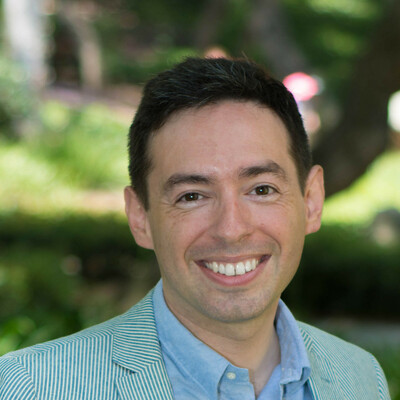
I'm honored to have been selected as one of the 2023 Sloan Research Fellows! Thanks to the Sloan Foundation, my nominator and letter-writers, and colleagues who've supported me over the years. I'm humbled by the brilliant company I'm in. See this year's cohort at https://sloan.org/fellowships/2023-Fellows , and the database of past fellows at https://sloan.org/fellows-database .

@duetosymmetry congrats!
not just for N-body sims: can vis observations, like Sloan galaxies or GAIA DR3
Client Info
Server: https://mastodon.social
Version: 2025.07
Repository: https://github.com/cyevgeniy/lmst