Dr. Helane Starlin
Dr. Helane StarlinDrHelane
2025-05-25

You’re snapping at small things.
You feel exhausted—even after sleep.
You forget why you walked into the room.
And even the work you love starts to feel heavy.

These are signs of burnout. And for educators, they can creep in quietly.

We care. We show up. We pour ourselves into others.
But if we don’t pause to refuel, we run empty.

What’s one small act of recovery you can offer yourself today?

Let’s support one another. Share yours below ⤵️

Image created at Sora.com

Dr. Helane StarlinDrHelane
2025-05-23

Transitions can be tough, especially for students with disabilities, anxiety, or trauma.

Preview changes early.
Use visuals.
Build in a pause time.
Offer tiny choices.
Always validate.

With trust + structure, transitions can feel safer.

What change feels hardest in your setting?

Dr. Helane StarlinDrHelane
2025-05-23

You love teaching. You care deeply. But burnout can still creep in.

Snapping more. Sunday scaries by Saturday. Just getting through the day?

This isn’t weakness—it’s a sign to reset.

Say no to one extra today. Breathe. Text someone you trust.

What’s one thing you’ll protect this week?

Image created at Sora.com

Dr. Helane StarlinDrHelane
2025-05-21

Every student learns differently.
So why do we still expect them to learn the same way?

Universal Design for Learning (UDL) challenges that outdated model.
It's not just a framework—it’s a mindset rooted in equity, access, and belonging.

UDL empowers educators to design lessons that embrace learner variability from the start.
That means multiple ways to engage, multiple ways to represent content, and multiple ways for students to show what they know.

Image created at Sora.com

Dr. Helane StarlinDrHelane
2025-05-16

A policy that claims to serve families must actually include them.

Real family voice—especially from those most impacted—isn't optional. It's essential.

Without it, decisions are made in echo chambers. With it, we build systems where all students feel seen, safe, and supported.

Who is at the policy table? Who isn’t?

Let’s rethink who we listen to.

What does authentic inclusion look like where you are?

Dr. Helane StarlinDrHelane
2025-05-15

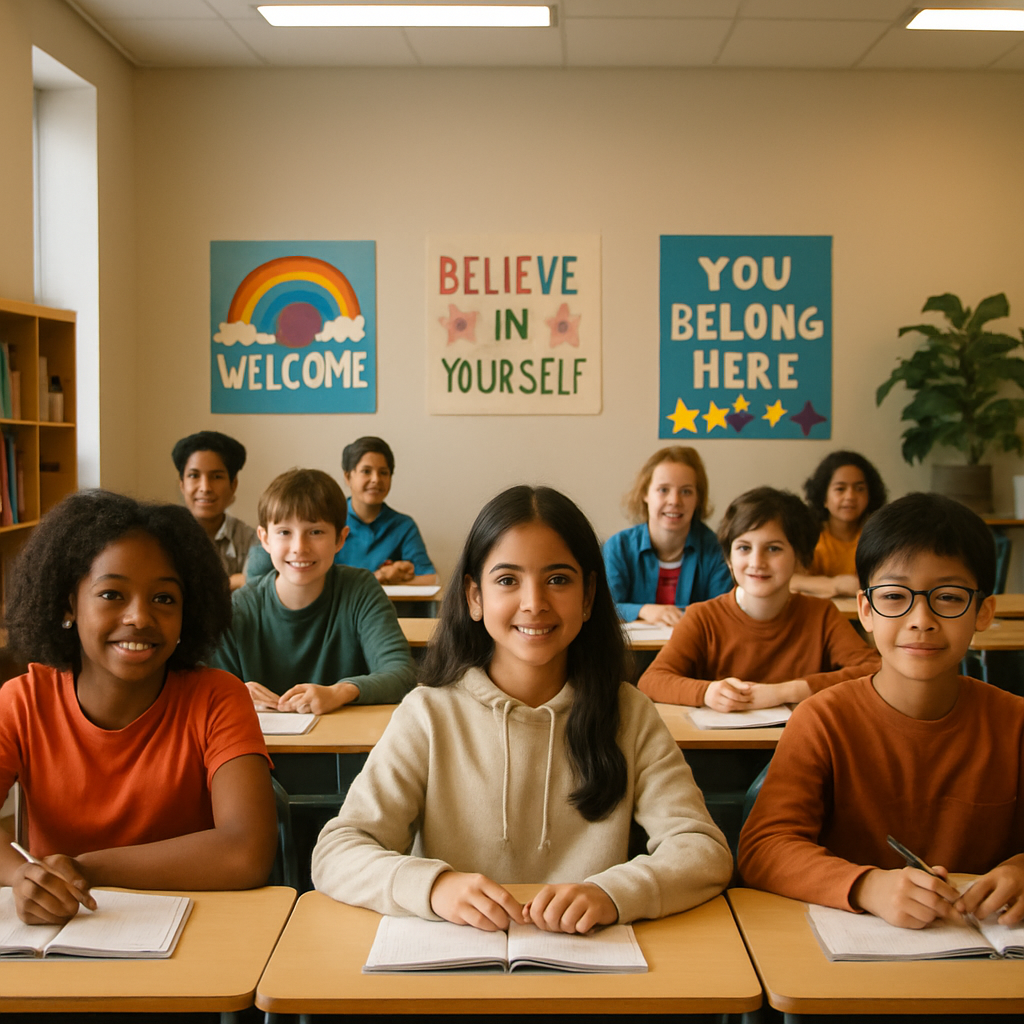
Every student deserves to feel known, heard, and valued.

True inclusion means more than open doors—it means open minds, shared power, and space for every story.

Let’s co-create classrooms where difference isn’t just accepted, but expected and respected.

What’s one way your school uplifts quieter voices?

– Dr. Helane Starlin, educator & advocate

Image created with Sora.com

Dr. Helane StarlinDrHelane
2025-05-15

Funding shouldn’t determine a child’s future.

Yet for too many families, the zip code they live in—or the resources they don’t have—shapes the education their child receives.

True inclusion means every student, in every school, has access to opportunity, support, and high expectations.

Let’s reimagine what equity could look like if money weren’t the first gatekeeper.

What does access look like where you are?

Image created with Sora.com

Dr. Helane StarlinDrHelane
2025-05-14

Every child deserves an education where their identity isn’t a barrier, but a bridge.

Culturally relevant accommodations aren’t extras—they're essentials.

When we adjust supports to honor students’ lived experiences, we don’t lower standards. We raise the floor for belonging.

True inclusion begins when we listen, reflect, and act with care.

What’s one way your learning space honors every student’s story?

Dr. Helane StarlinDrHelane
2025-05-14

If you suspect your child may have a learning issue, you're not alone—and you're not without options.

Start by observing patterns. What’s frustrating for them? When are they most engaged or withdrawn?

Document what you see. Then, connect with their teacher. Request a meeting. Ask compassionate, clear questions.

You're not pushing for a label—you're opening a door.

All kids deserve support to thrive.

What helped you feel heard in school?

Image created with Sora.com

Dr. Helane StarlinDrHelane
2025-05-13

Every emotion tells a story—our job is to listen, not control.

In moments of overwhelm, students need connection more than correction.

Regulate yourself first. Slow your tone. Offer choices. Co-create calm.

Real-time support builds trust, not fear. Regulation isn't compliance—it's care in action.

How do you make space for emotional safety in your learning spaces?

Image created with Sora.com

Dr. Helane StarlinDrHelane
2025-05-12

Feeling chronically exhausted, struggling to focus, or dreading the work you once loved? These can be signs of burnout—not failure.

Burnout disconnects us from our joy, our students, and each other. But you’re not alone. Rest is resistance. It’s recovery.

Start by pausing. Reconnect with your why. Talk with someone you trust. Your well-being is not optional—it’s essential.

What helps you reset when you feel depleted?

Image created with Sora.com

Dr. Helane StarlinDrHelane
2025-05-12

Time-blindness isn’t about carelessness—it’s often about how brains process urgency, transitions, and focus.

Timers with visible countdowns. Schedules broken into bite-sized blocks. Gentle audio cues that rise in tone.

These tools work when they honor dignity. Not to shame, but to guide.

What’s helped your students engage with time? Let’s share what works—with trust and without judgment.

Dr. Helane StarlinDrHelane
2025-05-12

When we use discipline to control instead of connect, we risk deepening the very wounds we're trying to heal.

A student's defiance might be protection. Silence might be survival. What looks like misbehavior could be a trauma response.

Connection is the foundation of behavior change.

Let’s ask: What does this child need to feel safe here?

Curious how your school centers safety and dignity? Let’s reflect together.

Image created at Sora.com

Dr. Helane StarlinDrHelane
2025-05-11

Every student deserves to feel seen, supported, and capable.

Dyslexia isn’t a barrier—it’s a different way of processing language. Tools like audiobooks, speech-to-text tech, and structured literacy approaches can unlock learning for students who think in bold ways.

Educators, what’s one thing you wish every classroom included to support diverse learners?

Let’s build classrooms that embrace all ways of learning.

Image created with Sora.com

Dr. Helane StarlinDrHelane
2025-05-11

When schools implement Universal Design for Learning well, I see something extraordinary: students who once felt left out start showing up differently. Engaged. Valued. Seen.

And referrals for behavior? They drop—not because needs disappear, but because access improves.

Curious what UDL could shift in your classroom or school?

What if belonging was the best behavior strategy we had?

Image created with Sora.com

Dr. Helane StarlinDrHelane
2025-05-11

Every student deserves to be seen, heard, and empowered.

Advocacy isn’t just policy—it’s presence. It’s listening, adapting, and showing up for kids the moment they need us most.

Belonging starts when we believe every child has value, no exceptions.

Who helped you feel seen when you were a student? Let's carry that forward.

Dr. Helane StarlinDrHelane
2025-05-11

Too often, a student’s placement is defined not by their potential—but by their ZIP code, language, or how well their needs are understood.

These invisible barriers don’t look like exclusion. But they shape who gets access to challenge, support, and meaningful inclusion.

Equity isn’t just about access—it’s about belonging.

Who gets to be seen as capable in your school?

Let’s talk about what real inclusion looks like.

Dr. Helane StarlinDrHelane
2025-05-03

Dyscalculia is a learning difference that affects one's ability to understand numbers and math concepts. It’s not about intelligence or effort—it’s about how the brain processes numerical information.

Students with dyscalculia may struggle with time, measurements, math facts, or simple calculations, even with strong support.

When we recognize dyscalculia early, we can offer the tools and strategies students need to thrive.

How do you support math learners in your space?

Dr. Helane StarlinDrHelane
2025-05-03

Dysgraphia is a learning difference that impacts writing—not just handwriting, but spelling, organizing thoughts on paper, and written expression overall.

It’s often misunderstood as laziness, when in fact, it reflects a gap between a student’s ability to think and communicate.

Support looks like time, patience, and tools that honor how a child learns—not penalize how they don’t.

How are we making space for all modes of expression in our classrooms?

Dr. Helane StarlinDrHelane
2025-05-02

When a student struggles with anxiety, it impacts more than academics—it affects connection, confidence, and belonging.

Support begins with consistency, kindness, and genuine presence in the classroom.

Speak calmly.
Offer flexible ways to engage.
Normalize asking for help.

Every slight shift can lift an invisible weight.

How are you making your space safer for anxious minds?

Client Info

Server: https://mastodon.social
Version: 2025.07
Repository: https://github.com/cyevgeniy/lmst