Same for us - we're a small team.
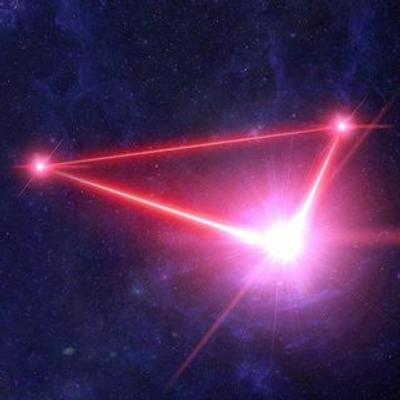
LISA GW Space Observatory
The LISA mission is about gravitational wave detection in space 🛰️ with 3 spacecraft millions of km apart exchanging laser light.
The LISA Consortium is a large international collaboration that combines the resources and expertise from scientists in many countries all over the world. Together with ESA, NASA and JAXA, the LISA Consortium is working to bring the LISA Mission to fruition.
Today on Women in Engineering Day, we celebrate the engineers who make LISA possible — and reaffirm our commitment to advancing equity in STEM and astronomy. 💫 #WomenInEngineering #LISA #STEMEquity
[posted by the LISA DEI Committee]

📣 Registration is now open for the 2025 #LISASchool! The LISA School will take place from 6–17 October 2025 at the École de physique des Houches, nestled in the beautiful French Alps 🏔️
👉 Register here: https://indico.in2p3.fr/e/lisa-school
🗓 Registration closes: 11 July 2025 (midnight CET)
🧑🔬 Capacity: ~50 early-career scientists (first-come, first-served)
Topics include: GW fundamentals, instrumentation, waveforms, data analysis, astrophysics, cosmology, and fundamental physics.
Logistics:
- Dates: 6–17 October 2025 (arrival on the 6th, departure on the 17th)
- Location: École de Physique Les Houches, Mont Blanc Valley
- Fee: EUR 900 – includes lodging, meals, coffee breaks, IT/library access
- Financial Support: Available on request in the pre-registration form
- Commitment: Full attendance required (no partial participation)
📽️ Sessions will be recorded for wider public access!

LISA GW Space Observatory boosted:
👇 Exciting news for the @LISA gravitational-wave space observatory! 🚀
The @mpi_grav and OHB Systems AG have signed a contract for the further development and production of the LISA phasemeter. It’s the key instrument for LISA’s gravitational-wave observations.
The ESA mission, scheduled for launch in 2035, will provide unprecedented insights into the Universe!
Picture: OHB

In this episode of #LECSTalks we feature Maria Işfan, PhD student at University of Bucharest, who recently gave LISA Early Career Scientists a talk titled "Quantum Neural Networks for LISA Low-Latency Data Analysis Pipelines".
You can watch the talk on YouTube 📽 https://youtu.be/hStfmWsHlKo 📽
🎤 Tell us something about yourself
I am a PhD student at University of Bucharest and also a research assistant at the Institute of Space Science - a subsidiary of INFLPR in Romania. In my free time, I play guitar.
🎤 What can you tell us about Quantum Neural Networks for LISA Low-Latency Data Analysis Pipelines?
Quantum computing is advancing rapidly, allowing computational speed-ups. As LISA will require fast data processing, we are exploring how quantum neural networks (QNNs) can help gravitational waves (GWs) data analysis. QNNs can learn patterns faster and handle noisy or limited data better than classical methods. In our proof-of-concept studies, we trained QNNs on simulated gravitational-wave signals and achieved accurate signal classification. We also used QNNs to successfully identify most of the GWs signals in the Sangria LISA Data Challenge. These promising results suggest that QNNs could be a powerful tool in LISA’s low-latency data analysis pipeline.
LISA GW Space Observatory boosted:
🚀 The perfect free fall with LISA Pathfinder 🚀
Nine years ago, almost to the day, we celebrated the success of the ESA mission LISA Pathfinder (LPF) with a press conference at our institute in Hannover.
LPF successfully demonstrated the technology for @LISA, the gravitational-wave observatory in space. Our researchers made key contributions to the perfect free fall in space at the heart of the LPF.
ℹ️ https://www.aei.mpg.de/200040/lisa-pathfinder-exceeds-expectations
Image: spacecraft: ESA/ATG medialab; data: ESA/LPF Collaboration
The #LISACommunity recently hosted a talk by Ollie Burke about a paper by Ollie Burke, Sylvain Marsat, Jonathan R. Gair, Michael L. Katz: "Mind the gap: addressing data gaps and assessing noise mismodeling in LISA", which can be found here 👉 https://arxiv.org/abs/2502.17426
Here's a summary of the paper:
"Communication outages and malfunctions for complicated space-missions are simply an inevitability. Although talented personnel will craft an instrument that runs as smoothly as possible, the space-based gravitational wave observatory LISA will be no outlier — LISA will observe gaps and gremlins in the data. These artefacts could violate a number of assumptions scientists usually place on the data prior to analysis, potentially hampering our ability to extract gravity waves from the data that are generated from collisions of the most extreme compact objects within our universe. This talk (with associated paper) details calculations, theory and computational techniques that can be used to mitigate the impact of data gaps on LISA-based gravitational wave data analysis."
LISA GW Space Observatory boosted:
🚀 LISA, GRACE und NGGM neuem Podcast 🎧
In der ersten Folge des ganz neuen Podcasts „Chip Happens“ geht es auch um die Satellitenmissionen @LISA, GRACE und NGGM, die Gravitationswellen beobachten sollen bzw. jetzt schon Klima-Indikatoren global überwachen.
Gerhard Heinzel vom @mpi_grav bringt euch (etwa ab der Mitte des Podcasts) auf den neuesten Stand.
🎧 https://open.spotify.com/episode/3L3YQqOjFZ0zyrZ3Amnjr4
#ChipHappens #Raumfahrt #Satelliten #LISAMission #Gravitationswellen #Klima #Laser #Podcast
Here's a summary of the paper:
"To date, black holes remain among the most enigmatic objects in our universe. Thanks to gravitational wave detections, we have taken significant steps toward “illuminating” their hidden structure. However, the wealth of information contained in these signals is far from fully explored. With the precision of the upcoming LISA mission, we may gain access to gravitational waves from black hole mergers that probe the interface between gravity and quantum phenomena. In particular, we show that the so-called echo effect—repeated wave signals from a single merger, arriving at Earth with short time delays—could be detectable by LISA for sufficiently strong events. Encoded within these echoes is potentially profound information, offering new insights into the quantum aspects of black holes and the fundamental nature of spacetime."


The #LISACommunity recently hosted a talk by David Maibach about a paper by Nils Deppe, Lavinia Heisenberg, Henri Inchauspé, Lawrence E. Kidder, David Maibach, Sizheng Ma, Jordan Moxon, Kyle C. Nelli, William Throwe, Nils L. Vu: "Echoes from Beyond: Detecting Gravitational Wave Quantum Imprints with LISA", which can be found here 👉 https://arxiv.org/abs/2411.05645
Here's a summary of the paper:
"LISA science is technologically demanding. Distances between two test masses separated by 2.5 million kilometers need to be measured to high precision. LISA will use laser interferometry for this. We must overcome several undesired effects to reach the required sensitivity. One of these is tilt-to-length coupling (TTL). TTL summarizes disturbing effects on the optical path lengths and effects related to the measurement of the laser beam's wavefronts. We anticipate that some of this noise cannot be avoided, so we developed a strategy to mitigate the remainder in data post-processing & validated it on simulated data which now includes gravitational wave signals. Our current results confirm that we will have this disturbance under control. Nonetheless, our modeling is constantly evolving, so stay tuned for updates!"
The #LISACommunity recently hosted a talk by Sarah Paczkowski about a paper by Marie-Sophie Hartig, Sarah Paczkowski, Martin Hewitson, Gerhard Heinzel, Gudrun Wanner: "Post-processing subtraction of tilt-to-length noise in LISA in the presence of gravitational wave signals", which can be found here 👉 https://arxiv.org/abs/2411.14191 and https://journals.aps.org/prd/abstract/10.1103/PhysRevD.111.043048
The #LISACommunity recently hosted a talk by Jan Niklas Reinhardt on a paper by Jan Niklas Reinhardt, Olaf Hartwig, Gerhard Heinzel: "Clock synchronization and light-travel-time estimation for space-based gravitational-wave detectors", linked here 👉 https://arxiv.org/abs/2408.09832 and https://iopscience.iop.org/article/10.1088/1361-6382/ada2d3
Here's a summary of the paper:
"Space-based gravitational-wave detectors, such as LISA, record interferometric measurements on widely separated satellites. Their clocks are not actively synchronized. Instead, clock synchronization is performed in on-ground data processing using pseudorange measurements, which entangle the interspacecraft ranges with the relative clock desynchronizations. To achieve clock synchronization between the spacecraft, we need to isolate these clock desynchronizations by disentangling the pseudoranges. We introduce a nonstandard Kalman filter algorithm for this purpose, designed for systems where pseudorange measurements are taken in different time frames. This algorithm enables clock synchronization and light travel time estimation with sub-meter accuracy."
LISA GW Space Observatory boosted:
#GravitationalWaves provide a unique way to study black holes
This Orrery (by Zoheyr Doctor) illustrates the diverse black hole binaries and neutron star black–hole binaries from our O3b run. More massive binaries are shown as orbiting more slowly
The #LISACommunity recently hosted a talk by Valerio De Luca on a paper by Valerio De Luca, Justin Khoury, Sam S. C. Wong: "Gravitational memory and soft theorems: the local perspective", linked here 👉 https://arxiv.org/abs/2412.01910 and https://arxiv.org/abs/2412.12273 (accepted in PRD at https://journals.aps.org/prd/accepted/76071Qd0M2118331f5b87943d34c36b167b45d9d9)
Here's a summary of the paper:
"Gravitational memory describes the lasting effect on freely falling detectors after a gravitational wave passes by, and it has been intimately connected to asymptotic symmetries and soft theorems.
In this talk, we will explore a new symmetry perspective of gravitational memory in synchronous coordinates, which are relevant for detectors like LISA.
We will show how memory ties to residual coordinate transformations, such as volume-preserving spatial rescalings, and we will derive the corresponding soft theorems for both scattering amplitudes and correlation functions. The latter are recognized as the flat-space analog of soft theorems in inflationary cosmology."
Accurate modelling is essential because the faint, intricate signals from EMRIs are buried in noise and can only be detected by matching them against precise predictions. Without such models, LISA would struggle to distinguish the complex patterns of EMRIs from the background, making it impossible to unlock the rich scientific insights they hold.
The talk will also highlight recent breakthroughs in this field, which have led to the development of second-order, post-adiabatic waveforms. These advanced models go beyond capturing the general motion of these systems, incorporating tiny but critical adjustments that arise from gravitational radiation over time. Such precision is vital for LISA to accurately interpret the signals and reveal key details about the black holes, their environments, and the cosmic history they trace.
🎤 What can you tell us about Waveform Modelling with Gravitational Self-Force?
Imagine a black hole moving in an intricate orbit around a much larger supermassive black hole—sometimes drawing close, sometimes veering far away. These systems, known as extreme-mass-ratio inspirals (EMRIs), generate ripples in space and time called gravitational waves. These waves, which LISA will detect, carry a wealth of information about the universe, offering insights into the properties of black holes and the origins of these extraordinary systems.
This talk delves into how we unlock the secrets encoded in these signals through the advanced framework of gravitational self-force theory. This method precisely accounts for the small object’s interaction with the immense gravitational field of the supermassive black hole, capturing the intricate feedback effects that shape the emitted gravitational waves. By modelling these dynamics with exceptional accuracy, scientists can predict the exact structure of these waves. These models are both highly precise and computationally efficient, enabling the rapid analysis of signals and the exploration of a wide range of astrophysical scenarios.
>>
Welcome to the LECSTalks! series, where we showcase the people, activity, and science taking place around the LISA Early Career Scientists community. 🎤
Today we feature Ben Leather, postdoctoral researcher at the @mpi_grav in Berlin, who recently gave LECS a talk about Waveform Modelling with Gravitational Self-Force.
🎤 Tell us something about yourself
I am a postdoctoral researcher from the UK, currently based in Berlin at the @mpi_grav. I completed my PhD at University College Dublin in Ireland, under the supervision of Niels Warburton, where I focused on advancing the theory of gravitational self-force, a key framework for modelling extreme-mass-ratio inspirals.
The #LISACommunity recently hosted a talk by Senwen Deng on a paper by Senwen Deng, Stanislav Babak, Maude Le Jeune, Sylvain Marsat, Éric Plagnol, Andrea Sartirana: "Modular global-fit pipeline for LISA data analysis", linked here 👉 https://arxiv.org/abs/2501.10277
Here's a summary of the paper:
"The #LISAMission data band is expected to be dominated by gravitational wave signals emitted by a plethora of astrophysical sources. Signals of the Galactic white dwarf Binaries are long-lived, overlapping in time and their unresolved residual forms a confusion noise. Massive Black Hole Binary signals are loud and broadband, hindering the estimation of the noise property, the knowledge of which is key to the detection and parameter estimation for the gravitational wave signals. We came up with a modular two-stage iterative pipeline prototype to disentangle the intertwined signals and to infer the parameters for the different signal sources and the noise level. We demonstrated its capability by applying it to simulated LISA dataset known as "Sangria", where we managed to recover the injected parameters at the simulation with faithfulness."
LISA GW Space Observatory boosted:
🚨 Veranstaltungstipp – Öffentlicher Vortrag 🚨
Gudrun Wanner, Leiterin einer Arbeitsgruppe im Bereich Interferometrie im Weltraum am @mpi_grav, ist am 22. April zu Gast bei der Olbers-Gesellschaft e.V. in Bremen.
Ihr Vortrag „Die Vermessung des unsichtbaren Universums mit Hilfe von Gravitationswellendetektoren“ bietet Antworten auf grundlegende Fragen zu Gravitationswellen und einen Einblick in die heutige und zukünftige Welt der Forschung in diesem Bereich mit Detektoren auf der Erde und im All (@LISA).
📅 22.04.2025, 19:30 Uhr
📍 Hörsaal B-120, Hochschule Bremen, Werderstr. 73, 28199 Bremen
#Wisskomm #Vortrag #Gravitationswellen #Bremen #Astronomie #SchwarzeLöcher #Neutronensterne
Client Info
Server: https://mastodon.social
Version: 2025.07
Repository: https://github.com/cyevgeniy/lmst