Exploration Log 9: Three More Interviews with Clifford D. Simak (1904-1988)
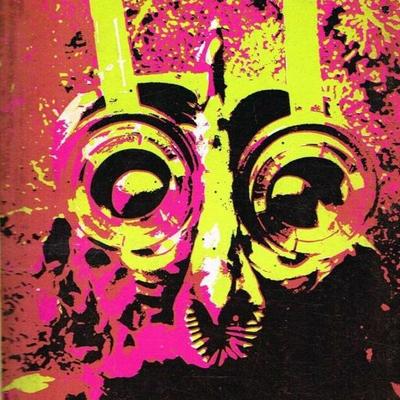
- Graphic created by my father
Back in July 2024, I posted six interviews with Clifford D. Simak (1904-1988). Since then I’ve tracked down three more. As in that post, I’ll provide a rundown of each interview and provide quotes of interesting passages. In the interviews, Simak comes across as an author deeply suspicious of rigorous generic distinctions, passionate about all life, and open to science fiction as an ever-changing and evolving entity.
As readers of the site know, I have a substantial interest in Simak’s SF that culminated last year in my September article “‘We Must Start Over Again and Find Some Other Way of Life’: The Role of Organized Labor in the 1940s and ’50s Science Fiction of Clifford D. Simak” (2024) in Journey Planet #84. Since then I’ve posted an Exploration Log on his 1971 Worldcon speech, reviewed Best Science Fiction Stories of Clifford D. Simak (1957), and contributed to a podcast on “The Huddling Place” (1944) (the second City story).
Enjoy! And if you know of more interviews (or are able to update the Internet Speculative Fiction Database entry as it only includes five of the nine interviews I’ve covered) let me know.
THE INTERVIEWS
- Jim Odbert’s cover for Rune # 43 (May 1975)
1. Jim Young interviews Simak in Rune # 43 (May 1975). You can read it online here. The review was conducted at his home in Minnetonka, Minnesota in May, 1973. Rune was the fanzine for The Minnesota Science Fiction Society.
Young’s interview, titled “Science Fiction and Meaningful Existence,” starts with a summary of Simak’s achievements and impressions of the “kind, fatherly” man. The meat of the interview begins with a rumination on the concept of “mainstream fiction.” Simak posits that “there is no such thing as mainstream fiction, there is simply fiction.” As with many other interviews, he argues that part of the problem with defining science fiction is our inability to recognize it as “fantasy.” He, personally, has no special guidelines when writing.
Conversation shifts to favorite authors (Steinbeck, Faulkner, Proust, etc.). Simak states he reads Grapes of Wrath “almost once a year.” In other interviews, Simak seems reluctant to identify specific SF works that he admires–he often mentions authors instead. Here is an exception: “I think that one of the finest books ever written in science fiction is Walter Miller, Jr.’s A Canticle for Leibowitz (fix-up 1959). He also, surprisingly (at least to me), identifies Larry Niven as a favorite.
Conversation shifts to the New Wave movement. While Simak is open to experimentation (see his WorldCon speech), he states his personal preferences that a story should still be present in SF — “I’d hate to see us lose that.” Young does not ask for examples. Young presses him on whether SF should “try to warn people about problems that might come up in the future.” Simak, confusingly, suggests in response that contemporary SF is somehow losing its “universality.” He suggests stories on life post-nuclear war are the most successful SF has been exploring a future potentiality. Other than warnings about the “atomic threat,” Simak does not believe SF has been very effective at “placing ourselves in the position of pamphleteers rather than writers.”
Simak moves into a moment of speculation that echoes and interacts with a lot of his own writing. He imagines two futures for humanity (if it survives): 1) humanity continues to be a “great technological race, and we will go out into space and probably the stars — despite the limitations of the speed of light” or 2) once they have gone so far in that direction, they will drop technology, and they will no longer have these technological triumphs — it won’t mean anything to them any longer.” His work almost systematically explores these two paths. See for example A Choice of Gods (1971) (ignore my rating — I imagine I would enjoy this one more now) and my article of his 40s and 50s stories. Simak brings up the Counterculture as an example of people who are not talking about technology or worldly success but instead “meaningful existence.” He acknowledges that this particular movement might not exist for long but another future version might position them as the “forerunners of the future.”
The conversations flows into a discussion of ESP. Simak comes off as a true believer who does not buy current scientific views discounting its existence: “we either don’t have the instruments to measure it, or it may not be measurable.” He returns to his desire that “we’ll probably try to simplify our lives in another hundred years, and possibly to use less energy” with more focus on “happiness.” I’m with you Simak on these two points! On ESP? nah. He concludes the interview with a proclamation of his love of history (despite claiming that he does not use it as background in his stories).
Ultimately this interview treads familiar ground with the other six surveyed. Simak is a bit less diplomatic than he can be on the New Wave.
- Ed Valigursky’s cover for the 1958 edition of Clifford D. Simak’s City (1952)
2. Dave Truesdale and Paul McGuire interview Simak in Tangent # 2 (May 1975). You can read it online here. The link also contains an audio file with some short commentary “erroneously omitted from the 1975 print interview.” This was not a planned interview but rather a brief, unprepared, discussion after a panel at Minicon 10 in April 1975.
The first questions cover Simak’s writing habits (planning plots, polishing, having fun while writing), current projects, and the personal and thematic evolution of his work. On the later point Simak reiterates a comment claim he makes that “the Golden Age is right now” (he’s explained in other interviews that early SF was often quite poor and anyone could get published as there were so few authors). He points out that even his masterpiece City (fix-up 1959) contains writing that is somewhat “crude and juvenile” that he has moved on from. He puts contemporary claims that the 30s were a “Golden Age” to nostalgic: “you’re young, and this is a new experience, and you think, how wonderful it is.”
Dave and Paul bring up Richard (Dick) Geis, who “seems to only like one certain type of science fiction,” and his claims about genre. Simak takes issue with Geis’ view: “Dick has created a pedestal on which he stands and screams to the high heavens that there’s only one kind of fiction.” Simak, on the other hand, believes “that’s not fact. The strength of science fiction lies in its diversity today.”
He concludes the interview emphasizing praising new voices like Joe Haldeman–“he’s beautiful.” And he knows that in the future SF will evolve further: “there will be kids starting out who are writing kind of, uh, punk stories.” He feels that this range and evolution is part of SF’s strength and we shouldn’t get “faddish” and write only one kind of story.
- Kathy Marschall’s cover for Lan’s Lantern # 11 (July 1981)
3. George J. Laskowski, Jr. (Lan) and Maia interview Simak in Lan’s Lantern # 11 (July 1981). You can read it online here. The interview was conducted at Minicon, 1980 in Minneapolis. The issue is a “Cliff Simak Special” with art inspired by his work and various remembrances by George R. R. Martin, Jack Williamson, Algis J. Budrys, James E. Gunn, Gregory Benford, Ben Bova, and many others, etc.
The interview starts with a discussion of Simak’s earliest SF stories and his early desire to write. He mentions that he only knew that “The Cubes of Ganymede” had been published when he saw a news release in a fanzine that he had been accepted (by that point he had published numerous other stories)! However, as T. O’Conner Sloane was a notoriously slow editor, he received his copy of the story back three years later with a note saying that he could no longer publish it as it had “become outdated.” Simak confesses that the story was terrible anyway. Lan points out that Simak’s first published short story (1931’s “The World of the Red Sun”) contains an early, if not the first, example of psychology used as a weapon. Unlike E. E. “Doc” Smith, Simak points out that you can’t rely on “mass technology” and power lies “within the mind.” This becomes a central tenet of his SF. He also indicates his “quarrel” with the argument that SF should end happily. We might not win against aliens or gain intelligence — our “egocentrism” might get in the way.
Unlike some of the other more surface and predictable interviews, Lan and Maia quickly dive into a meaty discussion of Simak’s robots (while they don’t mention it by name, they clearly discuss the 1960 story “All the Traps of Earth” in addition to the robots in the 1959 fix-up City). He mentions that he treats robots in his stories as “surrogate humans”–humanity will make robots “so much like himself” even if there’s the possibility that they have “no soul.” Regardless, Simak believes we will make robots as “tools” even if they have names. Simak’s penchant for weird-looking aliens comes up next: “while it may be repulsive to us, we may be just as repulsive to it. If you strip off that repulsive outer cover of both of us, and try to get at what’s inside, there will certainly be, I think, some coming basis for understanding, or if not understand, at least sympathy.” A lengthy tangent begins in which Simak returns to his idea that perhaps in the far future something “greater than intelligence” and the use of tools will become important to future humans.
The Hugo-winning Way Station comes up next. Simak calls it “one of my three best novels.” He points out what he would rewrite if he could. “The Big Front Yard” (1958) and Mastodonia (1978)” come up next and the interaction between the two. The conversation moves to the issue of “faith-inspired” and “faith-inhibited” as concepts. Simak has a “theory that we might become a better race if we didn’t cling so closely to this faith” that he knows of towns in which inhabitants won’t go to stores run by members of another congregation (or religion). This is a more stridently critical stance towards religion than earlier interviews. In connection to dogmatism, they move on to discuss other dogmatic stances towards left-handedness and people who might not be viewed as traditionally productive members of society. Simak comes of, as is often the case, as open to diversity in all its forms.’
Simak discusses old age and the impact of illness on the elderly. His story “Shotgun Cure” (1961) comes up in which a price is given for an alien cure-all. Simak argues the story reiterates that “technology itself was a disease, and it was perhaps the greatest disease of all which will be cured. Well, not necessarily technology itself, but this rat-race, this high-pressured society we live in, which can be tied directly to technology.” Naturally the interview moves to Simak in retirement and why he waited until 72 to retired (something about Social Security and having a small income from writing).
Other topics briefly discussed in the rather unfocused end to the discussion: technological obsolescence, “Dusty Zebra” (1954), oddities like “Mr. Meek Plays Polo” (1944) in Planet Stories, his two collaborations, Time is the Simplest Thing (1961), “Lulu” (1957) (mysteriously “one of his favorites”), Project Pope (1981), Cosmic Engineers (1950), The Visitors (1980), and City (fix-up 1952).
I highly recommend this interview due to the preparation of the interviewers and the specific short stories and novels that come up beyond the predictable handful.
For book reviews consult the INDEX
For cover art posts consult the INDEX
For TV and film reviews consult the INDEX
#11 #1970s #1980s #2 #43 #84 #bookReviews #CliffordDSimak #sciFi #scienceFiction #technology