Transportist: December 2025
Welcome to the latest issue of The Transportist, especially to our new readers. As always you can follow me on Mastodon, BlueSky, or RSS.
If you read all the way to the bottom, you will find some roundabout lessons about traffic engineering and public transport in this month’s newsletter.
Posts
https://transportist.org/2025/11/18/on-density-and-synchrony-scheduling-density/
https://transportist.org/2025/11/11/how-will-robots-get-to-work/
Media
Radio Interview: 2SER: Sydney Takes the Crown for Longest Commute Time in Australia
The latest data from the Household, Income, and Labour Dynamics in Australia Survey – the only survey of its kind, tracking how Australians live year-by-year– has crowned Sydney the top spot, at 59 minutes, for longest commute times out of all Australian cities. The study has found commute times to be decreasing post the pandemic, but Sydney continues to take the number one spot ahead of Brisbane, and Melbourne. Untangling the complexities of the city’s urban dynamics on the 2ser Breakfast show was Professor of Transport, David Levinson, from the University of Sydney.
Why this set of Sydney traffic lights could change how we cross the road
By Daniel Lo Surdo November 17, 2025 — 5.00am
University of Sydney transport professor David Levinson said there was “no silver bullet” for improving road safety, but he encouraged the broad adoption of several measures, including lowering car speeds and implementing the technology installed in Manly, to support pedestrians.
“More pedestrian priority at intersections, and away from them – many safety issues occur because there is no safe pedestrian crossing nearby on long stretches of road – is important,” Levinson said. “We don’t require new technology to do this.”
The full set of Q&A from which those quotes were pulled:
The Manly trial has offered encouraging results so far, with safer pedestrian behaviours already having been recorded. This comes at a time when road deaths in NSW are on the rise, and trending further away from the state’s trauma reduction targets. What’s your general reaction to the results and trends from the Manly trial thus far, and do you welcome the move to install another trial site?
It is logical that if you give more “Walk” time to pedestrians, fewer people will cross on the Red, because there is more Green time and less Red time per traffic light cycle.
As a researcher, I am required to say “more research is needed”, and new high tech solutions to detect pedestrians are great, but in reality we already know enough to know that pedestrians should be detected and counted, and can do so much more with existing technology, including counting and estimating the number of pedestrians with the actuator buttons already in place.
We can already automatically give a “Walk” signal to pedestrians whether or not a pedestrian was counted (we automatically give a green light to cars, whether or not we detect a car).
We can ensure pedestrians have a leading interval, so the Walk signal is put in place before the light changes to green for cars, letting pedestrians start crossing before cars try to enter the crosswalk.
We can lengthen the duration of the “Walk” phase to the maximum rather than the minimum so more people arrive on a Walk signal.
We can install pedestrian countdown timers so pedestrians know how much time they have left to cross the street safety.
We should look at changing road rules more generally to prioritise pedestrians.
Other parts of the world, with better safety records than New South Wales, already do these things.
Given that NSW road death targets (including halving deaths by 2030, and zero fatalities by 2050) appear on track to fail, as road deaths are rising, what influence can this new tech (provided it can be adopted at more sites beyond the current 1-2 sites) have in reducing road deaths? How much of an impact might it make, and how many lives might it save?
There is no single silver bullet in road safety, and it is hard to attribute any particular life saved to any particular intervention. More pedestrian priority at intersections, and away from them — many safety issues occur because there is no safe pedestrian crossing nearby on long stretches of road — is important. We don’t require new technology to do this.
Lowering speeds more generally, especially in areas with many pedestrians, will give drivers and pedestrians more response time to avoid a collision, and minimise the consequences if there is a collision.
Also important are better in-vehicle driver assistance technology (like automatic braking when objects are detected), and soon enough automated vehicles, which will eventually have a large safety effect as they are deployed over coming decades.
What are some road behaviour risks associated with the tech underpinning the new trial? For example, might the longer pedestrian green signals result in greater motorists running red lights, or running on flashing red lights, to avoid longer queues at the intersection?
These are all risks, but they can be addressed with more serious enforcement, including automated camera enforcement at intersections, to discourage such behaviour.
State reaps $800m from extra charge on airport train passengers over decade
Sydney University transport professor David Levinson said the government could use some of the revenue from the access fee to reduce the amount charged to regular train commuters to the airport, while retaining higher ticket prices for tourists if it wanted to. … “They should be able to construct some sort of fare mechanism,” he said.
Your Regular Reminder
Links
- A Waymo Robotaxi May Have Recorded Footage of a Deadly Shooting in San Francisco
- Waymo rolls driverless ridesharing into Minneapolis for testing – Twin Cities
- Waymo first to offer driverless rides on freeways 24/7 in SF, PHX, and LA
- South Korean ferry crashed because operator was on his phone, authorities allege – ABC News
- Universities in ‘battle of the century’ with journal publisher Elsevier | RNZ News
- UK EV Owners to face pay-per-mile tax [The first step to road pricing, as long foretold]
- Raja the elephant asking for a road toll
- Moment newly opened bridge partially collapses in China
- Roman road network was twice as large as previously thought, new mapping project finds | Live Science
- The Great Mobility Shift: The Next Era of Automotive Transformation – Element
- High Speed Rail in Australia: Does the Emperor Have Any Clothes – Russell King.
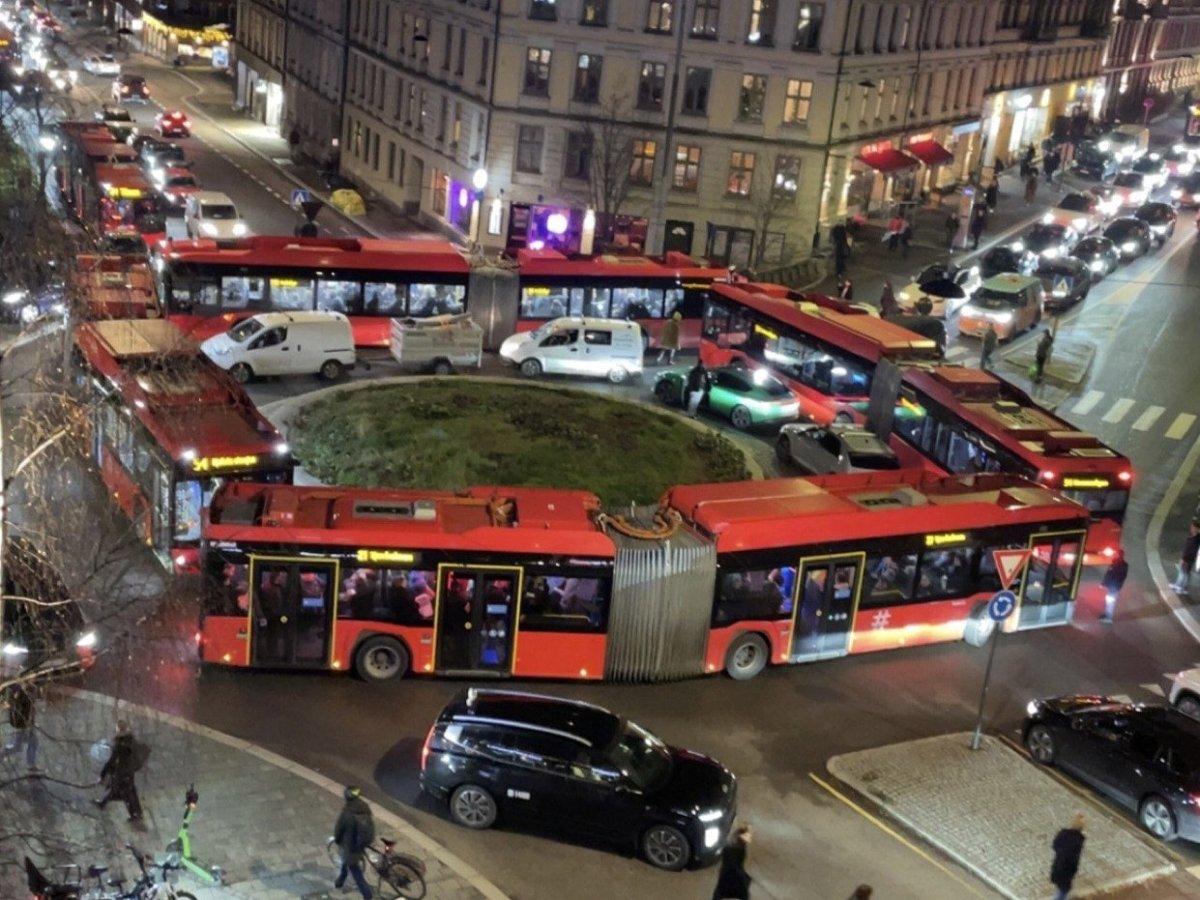
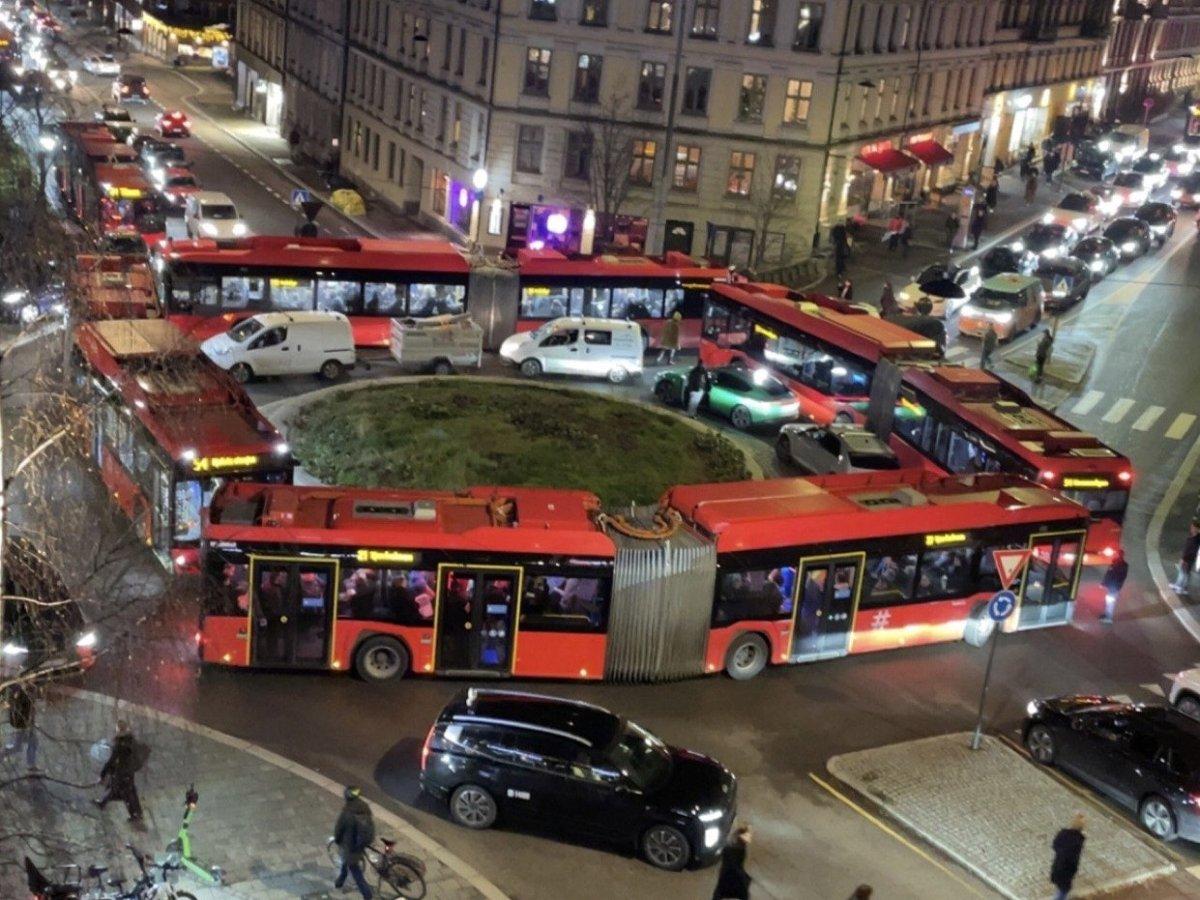
Your Moment of Zen: Deadlock In Action, or Bus Bunching at its Worst.
Ripped from the pages of Mastodon:
Four bendy buses managed to enter a roundabout at the exact same time from four different directions in Oslo yesterday afternoon and get properly stuck, each bus blocking the exit for the one behind it. #BigBusStuck
Is this real? Was it staged? I don’t know, but apparently this has happened before: https://www.ao.no/ikke-forste-gang-dette-skjer-trengte-kun-litt-logisk-tenking/s/5-128-1200920. Fortunately, the buses are not still there: https://www.spiegel.de/panorama/oslo-vier-gelenkbusse-im-kreisverkehr-sind-einer-zu-viel-a-98409733-cb4c-4ecd-b8c3-43f07a983941