
Trailblazers! Black Women Assume Historic Mayoral Roles in U.S. Cities on Jan. 1, 2026 https://shinemycrown.com/trailblazers-black-women-assume-historic-mayoral-roles-in-u-s-cities-on-jan-1-2026/?utm_source=dlvr.it&utm_medium=mastodon #Trailblazers #BlackWomenLead #WomenInLeadership #MayoralMilestones #DiversityInPolitics
#DiversityInPolitics


Renee Hardman’s decisive victory in Iowa’s special election keeps the Democrats’ hold on the Senate, preventing Republicans from reclaiming two-thirds control. The first Black woman elected to Iowa’s 50-seat Senate, Hardman, a nonprofit CEO and West Des Moines City Councilmember, won by 43 points over Republican Lucas Loftin after the seat was vacated by the late Sen. Claire Celsi. Her win continues a series of Democratic gains, breaking the GOP supermajority that enabled easy confirmation of Governor Reynolds’ appointments. This shift influences key state decisions and represents a significant political milestone. Want to learn more? https://www.pbs.org/newshour/politics/democrat-renee-hardman-wins-iowa-state-senate-seat-blocking-gop-from-reclaiming-supermajority #IowaPolitics #DemocraticGain #StateSenate #ElectionResults #PoliticalShift #DiversityInPolitics

Issue 003
Immifluencers
The United States, a nation built on the dreams and aspirations of immigrants, owes much of its political and social fabric to first-generation immigrants. These individuals, born outside the U.S. and have become naturalized citizens, bring diverse perspectives and a rich tapestry of experiences that shape American democracy. Their achievements have benefited the nature and course of the American political arena. However, it has not been smooth sailing all through. There have been challenges, though. This article seeks to celebrate the commitments of these persons.
The Growing Influence
First-generation immigrants have increasingly made their mark in American politics. According to the Pew Research Center, immigrants or children of immigrants constitute at least 12% of the U.S. Congress. This representation underscores the important role played by these individuals in shaping national policy and advocating for diverse communities.
Trailblazers
The number of immigrants in American politics is huge. In the 116th Congress for example, at least 13% of representatives are first generation and second generation immigrants. These include Reps Ilhan Omar, Pramila Jayapal and TJ Cox, Sens. Tammy Duckworth and John Thune. However, several have entered American politics and made significant marks through their achievements and leadership. The following persons rank among the most influential and they have head the greatest impact in the communities they represent.
Adriano Espaillat
Adriano Espaillat (Pool courtesy Jacquelyn Martin)Adriano de Jesús Espaillat Rodríguez was born in the Dominican Republic. He made history as the first formerly undocumented immigrant to sit in the U.S. Congress. Representing New York’s 13th Congressional District, which includes Harlem and parts of the Bronx, Espaillat has tirelessly advocated for immigrant rights and social justice. After coming to the United States as a child, Espaillat fervently pursued education and eventually earned a degree from Queens College. His early career in public service began in the New York State Assembly, where he represented the 72nd district and worked on issues related to housing, health, and public safety.
In Congress, Espaillat has continued his advocacy for marginalized communities. He has been a vocal proponent of Deferred Action for Childhood Arrivals (DACA) and comprehensive immigration reform, seeking to create pathways to citizenship for undocumented immigrants. Espaillat has also focused on economic development, affordable housing, and education, recognizing the interconnected nature of these issues in enhancing the quality of life for his constituents. Some of his notable legislative efforts include sponsoring bills to protect tenants from displacement and advocating for increased federal investment in public housing.
Ruben Kihuen
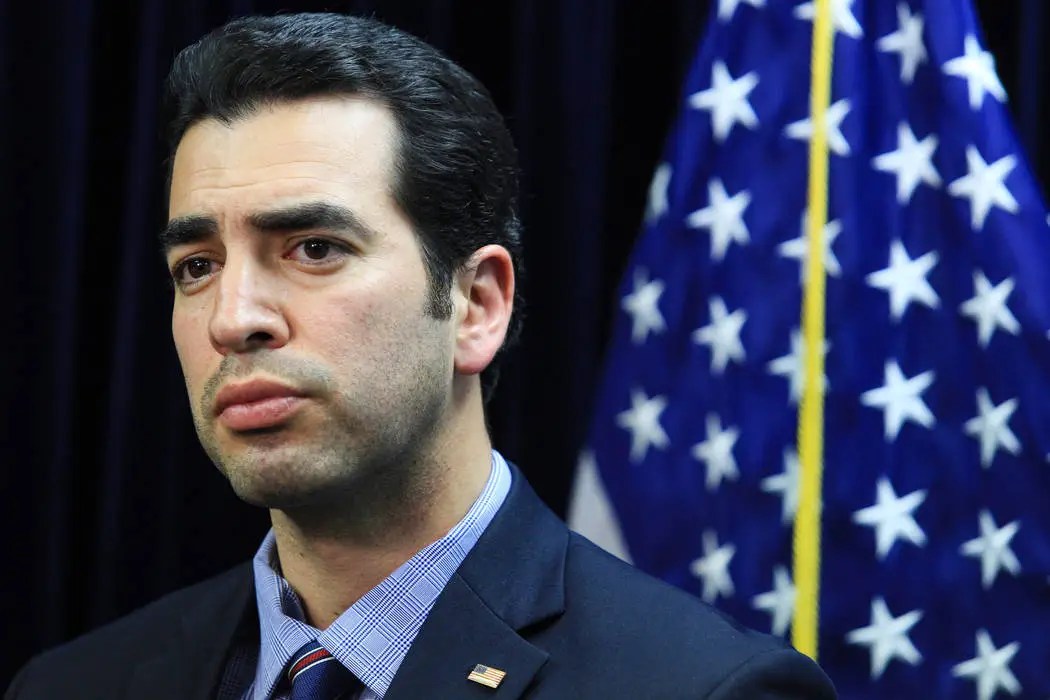
Ruben Kihuen (Photo courtesy Brett Le Blanc/Las Vegas Review-Journal)Ruben Kihuen was born in Guadalajara, Mexico. He immigrated to the United States when he was eight years of age and grew up in Las Vegas, Nevada. He attended the University of Nevada, Las Vegas, for his higher education, and began his career in public service by working for Senator Harry Reid. In 2006, Kihuen was elected to the Nevada State Assembly. While there, he championed issues such as education reform, healthcare access, and economic development. His leadership in the state legislature earned him recognition as a rising star in the Democratic Party.
In 2016, Kihuen was elected to represent Nevada’s 4th Congressional District in the U.S. House of Representatives, becoming the first Latino to be elected to the US Congress. During his tenure in Congress, Kihuen focused on several issues crucial to his constituents, including immigration reform, healthcare, and education. He strongly advocated for the DACA program, supporting efforts to protect young undocumented immigrants from deportation and provide them with a pathway to citizenship. Additionally, Kihuen worked to address economic disparities and improve access to affordable healthcare, particularly for underserved communities.
Arnold Schwarzenegger
Arnold Schwarzenegger (Photo courtesy Andreas Rentz/Getty Images)Arnold Schwarzenegger was born in Austria and started a bodybuilding career. He immigrated to America where he became an actor before carving a career in politics. Schwarzenegger moved to the United States in 1968, achieving fame and success as a world-class bodybuilder and a Hollywood action star. His political journey began with his election as the 38th Governor of California in 2003, a role he held until 2011. As governor, Schwarzenegger focused on several critical issues, including fiscal policy, infrastructure, and environmental protection. One of his most notable achievements was the Global Warming Solutions Act of 2006, which set ambitious targets for reducing greenhouse gas emissions and positioned California as a leader in the fight against climate change.
Schwarzenegger is an advocate for bipartisan cooperation and pragmatic governance. He worked across party lines to address California’s fiscal crisis, implementing measures to stabilize the state’s economy and promote job growth. Additionally, Schwarzenegger championed education reform and healthcare initiatives, including the establishment of the California Health Benefit Exchange, a precursor to the Affordable Care Act’s insurance marketplaces. His efforts in promoting renewable energy and environmental sustainability have had a lasting impact, inspiring other states and countries to adopt similar policies.
Michael Bennet
Michael Bennet (Photo courtesy Bill Clark/CQ Roll Call/Getty)Michael Bennet was born in New Delhi India. His mother is Polish Jewish and a survivor of the Holocaust. His background has deeply informed his commitment to public service and social justice. Bennet was first appointed to the Senate in 2009 by Governor Bill Ritter of Colorado, to replace Ken Salazar who had been appointed as the new US Secretary for Interior. In 2010, he was elected for a full term as senator from Colorado. Bennet has made significant contributions to American politics with a focus on education, healthcare, and economic reform. Before his political career, Bennet served as the superintendent of Denver Public Schools, where he implemented innovative reforms to improve educational outcomes and address disparities in the system. His work in education was a precursor for his legislative focus on ensuring that all Americans have access to quality education.
In the Senate, Bennet has been vocal on education and healthcare reform. He co-authored the Bipartisan Better Education for Students and Teachers (BEST) Act, which aimed to enhance teacher quality and student performance. Additionally, Bennet has been a staunch advocate for affordable healthcare. He played a pivotal role in the expansion of Medicaid under the Affordable Care Act. He introduced the Medicare-X Choice Act, proposing a public health insurance option to increase competition and lower costs. His dedication to economic reform is seen through his support for policies that promote job growth and economic stability, such as the American Opportunity Tax Credit, which helps students and families afford higher education.
Grace Meng
Grace Meng (Photo courtesy Tom Williams/Getty)Grace Meng was born to immigrant parents from Taiwan. Her father, Jimmy Meng, was elected in 2004 to New York’s 22nd assembly district, becoming the first Asian American to be elected to the legislature in New York State history. After serving for one term, he decided not to seek reelection. His daughter, Grace Meng, sought to succeed him but her residency status was challenged by Ellen Young, resulting in her being struck off the ballot. Young succeeded Jimmy Meng, but Grace challenged her in 2008, defeating her in both the Democratic Party nominations and the main elections. In 2012, Grace won the race for New York’s 6th congressional district, becoming the first Asian American to represent New York in Congress.
Grace has been a significant figure in American politics, advocating for minority rights and social justice. She has focused on issues affecting Asian-American communities and other marginalized groups. She has been instrumental in addressing hate crimes, particularly those targeting Asian Americans, through legislation like the COVID-19 Hate Crimes Act, which she co-authored and helped pass in 2021. This law aims to combat the surge in anti-Asian violence during the pandemic by expediting the review of hate crimes and providing resources to law enforcement.
Meng’s contributions extend beyond civil rights advocacy. She has been a vocal proponent of women’s rights and economic empowerment, sponsoring and supporting numerous bills which aim at improving economic opportunities for women and families. She introduced the Menstrual Equity for All Act, which seeks to address the lack of access to menstrual products for women and girls in various settings, including schools, prisons, and homeless shelters. This initiative is a reflection of her broader commitment to ensuring that all Americans have the resources and opportunities they need to thrive. Additionally, she has worked to improve infrastructure and healthcare in her district, securing funding for transportation projects and advocating for better healthcare access.
Challenges
Despite their significant contributions, first-generation immigrant politicians often face unique challenges. A few of the challenges include:
- Cultural Barriers: Adapting to American political culture can be challenging, requiring navigation through complex systems while maintaining their cultural identity.
- Discrimination: Many immigrants face discrimination based on their ethnicity, language, or immigrant status. This can manifest in both overt racism and subtle biases, impacting their political careers.
- Challenges in Policy and Advocacy: Immigrant politicians often focus on issues directly affecting their communities, such as immigration reform, healthcare, and social justice. This focus can sometimes place them at odds with broader political agendas.
The Broader Picture
The achievements of first-generation immigrants in politics extend beyond individual success stories. Their presence in political offices ensures diverse perspectives are considered in policy making, leading to more inclusive and representative governance. They advocate for comprehensive immigration reform, fight for the rights and dignity of all immigrants, and craft policies addressing economic disparities, healthcare access, and educational opportunities.
The increasing presence of first-generation immigrants in American politics signifies broader acceptance and integration of diverse voices in the nation’s political discourse. Their contributions are essential in addressing contemporary challenges and shaping a more inclusive and equitable future. From the advocacy for immigrant rights to environmental leadership, these trailblazers exemplify the enduring strength and potential of the American Dream.
In conclusion, first-generation immigrants have profoundly impacted American politics with their leadership, advocacy, and unique perspectives. Their journey from immigrants to influential political icons upholds America’s enduring promise as a land of opportunity and democracy. As America continues to evolve, the role of first-generation immigrants in politics will remain crucial, shaping the nation’s future and ensuring its core values of diversity and inclusion are upheld.
https://ngangakiiru.wordpress.com/2024/07/13/exclusive-series-trailblazers/
#AmericanDream #AmericanPolitics #DiverseLeadership #DiversityInPolitics #Immifluencers #ImmigrantAdvocacy #ImmigrantRights #InclusiveGovernance #Trailblazers



Just learnt in 2024 that Nikki Haley and Suella Braverman are of Asian descent! 🌏 As a blind woman, I was aware of their politics throughout 2023 without knowing their ethnicity. #BlindAwareness #BeyondSight 👁️🗨️ Is this a reflection of progress, where we value actions over appearances? #DiversityInPolitics #InclusiveSociety 🤝
Just found out Nikki Haley is a woman of Indian descent! 🌏 Been hearing about her for months, and this adds an intriguing layer to her political persona. #DiversityInPolitics #NikkiHaley #LearningEveryday 🤓 It's fascinating how we can always learn something new, even about figures we've been following for a while! #Blind #ContinuousLearning #PoliticalInsights 📚"

getting gender parity in government isn’t about fairness. it’s about reshaping the norms that define our country, truly representing a diverse electorate, and bringing new ideas to the table.
Client Info
Server: https://mastodon.social
Version: 2025.07
Repository: https://github.com/cyevgeniy/lmst