#ReliefWednesday

Kevin WilbrahamKPW1453
2026-01-14

Four goddesses from Roman London. Dating to the 3rd century AD, the sculpture was re-used as building material in the riverside wall at Blackfriars. Now part of the collections at London Museum. 📸 My own.

The Partial Historiansphistorians@kolektiva.social
2026-01-08

✨The dance of the maenads✨

This is one of four reliefs depicting maenads dancing held by the Museo del Prado. The exceptional detail and sense of flowing movement is simply exquisite. These are Roman reinterpretations of Greek reliefs from the fifth century BCE and were designed to honour the maenads’ chosen god, Dionysus. The original reliefs were purported to be crafted by the sculptor Callimachus (ca. 410-400 BCE).

#ReliefWednesday #AncientGreece #AncientRome #History #Dionysos

This relief depicts a maenad dancing wildly with her head thrown right back and her flowing gown swishing around her from the movement. She holds a thyrsus in her right hand, an object often connected with Dionysos in iconography.
Kevin WilbrahamKPW1453
2026-01-07

Relief showing Mithras killing the bull from the Mithraeum at Housesteads Roman Fort on Hadrian’s Wall. Now part of the collections at the Great Museum of the North in Newcastle. 📸 My own.

Erotic Mythology ⛄AimeeMaroux
2025-12-31
Kevin WilbrahamKPW1453
2025-12-31

Relief with a teaching scene from sacred area of the Via della Foce in Ostia Antica, near Rome. Dating to the late 4th century AD, the relief is on display in the site museum. 📸 My own.

The Partial Historiansphistorians@kolektiva.social
2025-12-31

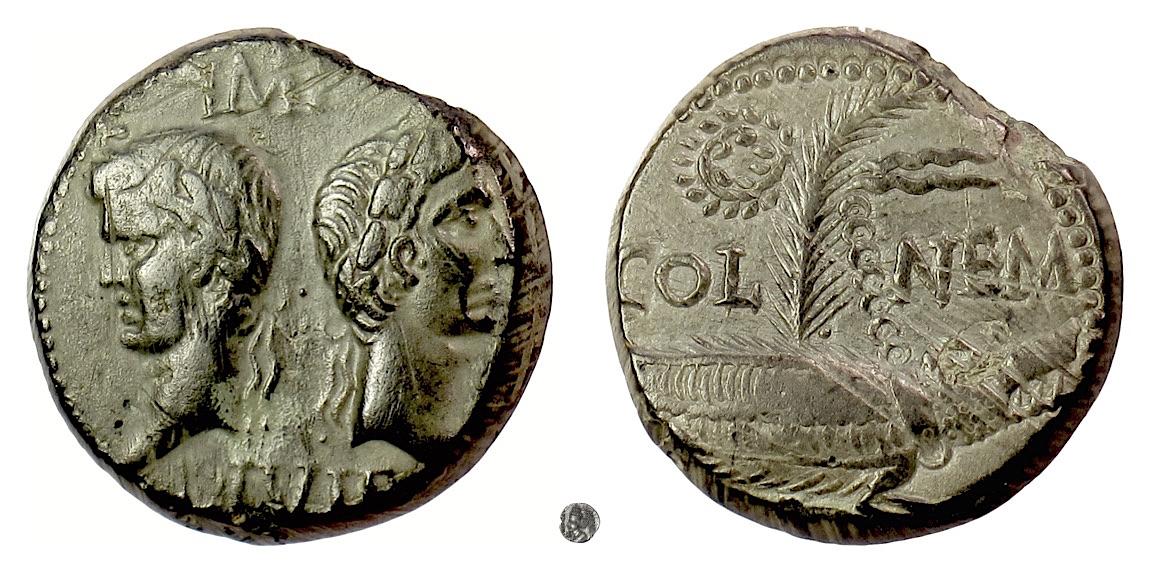
✨Augustus and Agrippa✨

In 27 BCE, Augustus settled veterans from the Egyptian campaign in the Gallic city Nemausus and gave it the rights of a colonia. The Egyptian connection lead to the coins of Gallic Nemausus showing Egyptian symbols such as the crocodile, palm tree, or palm frond.

#ReliefWednesday #AncientRome #AncientCoins #Augustus #Agrippa

This coin depicts Augustus together with Agrippa while the reverse bears the inscription COL NEM which stands for Colonia Nemausus (Nîmes). Obverse: Augustus with Agrippa in Janus style portraits. Augustus wears the oak leaf wreath. Reverse: COL NEM with a crocodile and palm frond topped with a wreath.  This example is thought to date from circa 16-10 BCE. References: RPC I 524; RIC I 158. Photo credit to VCoins.
Kevin WilbrahamKPW1453
2025-12-24

A carved relief of the Roman moon goddess Luna. The carving decorated the pediment of a building in the temple precinct at the Roman Baths in Bath. 📸 My own.

Kevin WilbrahamKPW1453
2025-12-17

The ‘Netherby Genius’ - a relief of a guardian spirit which was found at Netherby, the site of Castra Exploratorum Roman Fort, in Cumbria. The relief is now part of the collections at Tullie House Museum in Carlisle. 📸 My own.

The Partial Historiansphistorians@kolektiva.social
2025-12-10

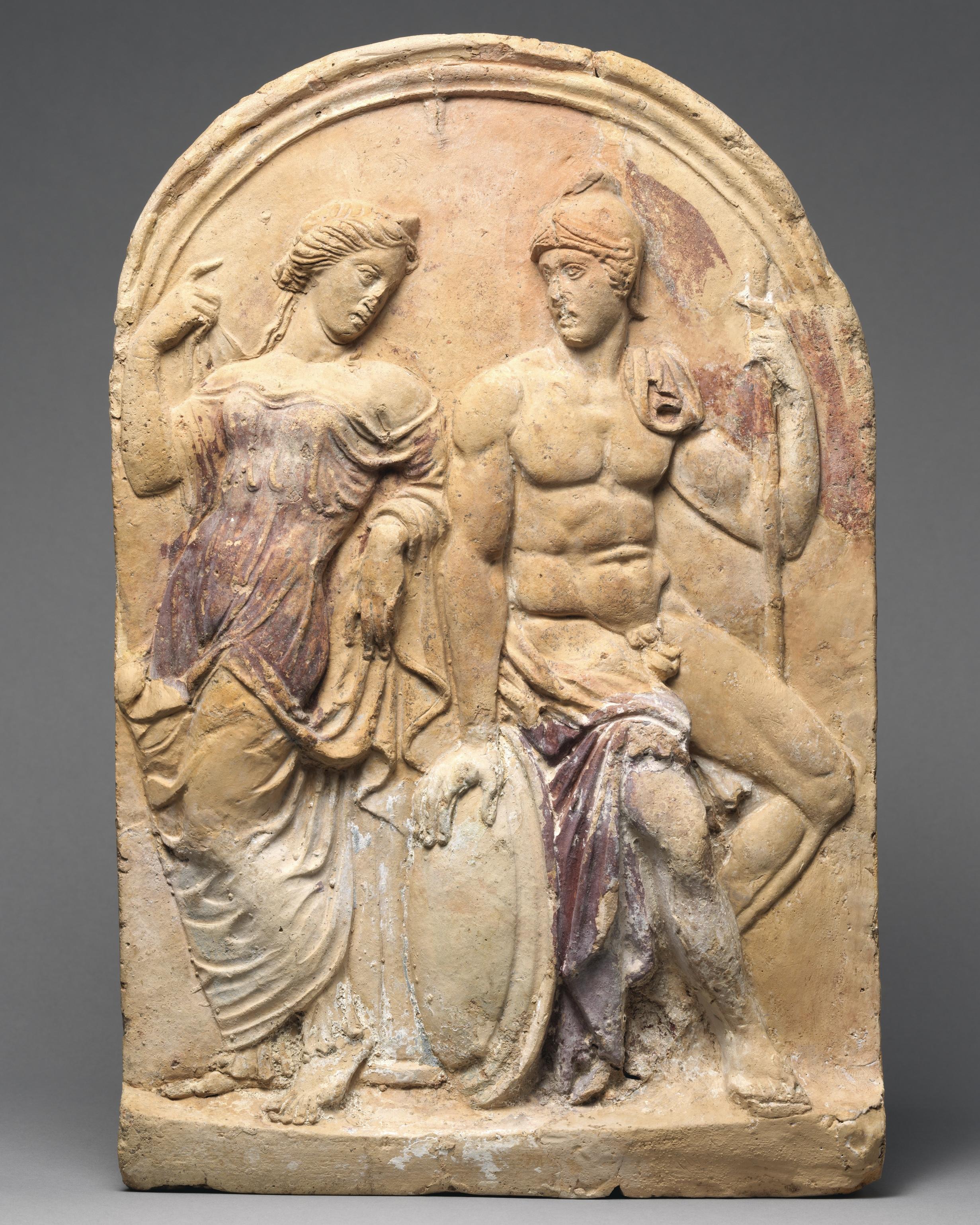
💕Venus and Mars⚔️

This terracotta antefix depicts Venus, the goddess of love, and Mars, the god of war, together. The striking detail of this relief is the paint residue that remains suggesting a beautiful visual harmony to the piece. Even the covers for roof tiles could be decorated in ancient Rome!

#ReliefWednesday #AncientRome #History

Description from the Met: “Antefixes are decorative covers for the ends of tiles situated at the edge of a roof. This example, showing Venus (Aphrodite, the goddess of love) and her lover Mars (Ares, the god of war), retains a considerable amount of its painted surface.”
The Partial Historiansphistorians@kolektiva.social
2025-11-26

✨ The Tomb of the Haterii ✨

This tomb relief is a special one for the insights it offers about building practices. The crane to the left seems to be the manned by many people (likely enslaved). The Haterii are known as a family involved in construction particularly under the Flavians. The building is a funerary monument shaped as a temple. This piece is held by the Musei Vaticani. Image credit to Dan Diffendale via Flickr.

#AncientRome #ReliefWednesday #History

Description from the Musei Vaticani: The “relief shows a funerary monument in the form of a small temple: at the top the funeral bier can be seen; on the left appears what seems to be a machine used in its building, a sort of crane which is powered by a large wheel worked by slaves.“
Kevin WilbrahamKPW1453
2025-11-26

The ‘Great Ludovisi Sarcophagus’ depicting battle scenes between Romans and Barbarians. The sarcophagus dates to the 3rd century AD, and is part of the collections at the Palazzo Altemps in Rome. 📸 My own.

The Partial Historiansphistorians@kolektiva.social
2025-11-19

✨Augustus and Victory✨

Augustus strikes an heroic nude pose while he and a winged Victory attend to a military trophy. The trophy consists of enemy armour attached to a post. Augustus is further distinguished by being attended by an eagle, a classic symbol of Jupiter and Roman military might. Beneath the military trophy is a bound figure who represents those conquered.

#ReliefWednesday #AncientRome #History

Augustus strikes an heroic nude pose while he and a winged Victory attend to a military trophy. The trophy consists of enemy armour attached to a post. Augustus is further distinguished by being attended by an eagle, a classic symbol of Jupiter and Roman military might. Beneath the military trophy is a bound figure who represents those conquered.
Erotic Mythology ⛄AimeeMaroux
2025-11-14
The Partial Historiansphistorians@kolektiva.social
2025-11-12

✨The Two Princes✨

Gaius and Lucius or Britannicus and Nero? The identity of these two young men depicted in heroic nude at Aphrodisias is up for debate, but that we’re looking at imperial youths is clear. The figure on the left holds the orb of the world and a ship’s stern ornament indicative of his place at least as an imperial heir.

#ReliefWednesday #AncientRome #History

Two youths stand naked, wearing cloaks. The left figure holds the orb of the world in one hand and in the other a ship's stern ornament (aphlaston).  The details of what the figure to the right held is now unclear. This relief is part of the collection of the Aphrodisias Museum.
Kevin WilbrahamKPW1453
2025-11-12

Small relief depicting three spirits wearing hooded cloaks (genii cucullati) from a building that formed part of the vicus at Housesteads Roman Fort on Hadrian’s Wall in Northumberland. On display in the site museum. 📸 My own.

The Partial Historiansphistorians@kolektiva.social
2025-11-05

This #ReliefWednesday we celebrate Hecate, the goddess of the crossroads and transitions.

This is a votive relief to Hecate and the inscription warns against defacement of the place where the relief was located. Presumably the relief was originally located in a sanctuary to the goddess.

#AncientRome #History

Description from the Kunsthistorisches Museum: “As guardian of places of transition, statues were erected in her honor, often depicting her with a tripartite body, which could multiply her power. This is also how she is portrayed here in the relief: above the lower body with its long, folded garment, the multiple forms are clearly visible: a total of six arms and three (now partially damaged) heads can be discerned.“
The Partial Historiansphistorians@kolektiva.social
2025-10-29

✨The Eleusinian Mysteries✨

Demeter and Persephone flank a young youth thought to be Triptolemos. This beautiful Augustan era rendition based on a Greek relief is our pick for #ReliefWednesday and #ClassicsTober25.

Description from the Met: “Demeter, the goddess of agricultural abundance, stands at the left holding a sceptre. At the right is Persephone, her daughter and the wife of Hades, the god of the underworld. Each goddess extends her right hand toward a nude youth. The boy is thought to be Triptolemos, who was sent by Demeter to teach men how to cultivate grain. The original marble relief was found at the sanctuary of Demeter at Eleusis, the site of the Eleusinian mysteries, a secret cult that was famous throughout antiquity. The original Greek work and a number of Roman copies survive. Here the ten Roman fragments are embedded in a cast of the Greek relief.“
2025-10-29

#ReliefWednesday!
A Roman marble relief of a warship. Found in the necropolis of Praeneste (Latium), late 1st century BC.
The relief presumably belonged to the tomb of a Roman veteran who had served on Octavian’s side at the Battle of Actium in 31 BC.

📷 me

The photo was taken at the Caesar and Cleopatra exhibition in Speyer, having been loaned by the Vatican Museum.

#archaeology #RomanArchaeology

A marble relief depicting a  Roman warship with rows of oars and soldiers on board. The figures wear helmets and carry shields, while the ship features ornate carvings, including a decorative prow and architectural elements like a tower. Displayed against a blue-lit museum background.
The Partial Historiansphistorians@kolektiva.social
2025-10-22

✨Gladiator Season✨

This #ReliefWednesday we celebrate those who gave their lives (many unwillingly) over to the fighting in the many arenas of the Roman world.

This fragment is part of a commemorative relief depicting the victory of a secutor (sword, shield, armguard) against a retiarius (trident, dagger, weighted net) called Improbus.

#AncientRome #History

The relief shows two registers of action. In the top register shows a secutor on the left standing triumphantly over a fallen retiarius opponent. The name of the fallen ‘Improbus’ is written underneath him. A third gladiator figure can be glimpsed at the farthest right. In the lower register another secutor (or the same?) can be seem advancing upon an opponent but the detail of the opponent is lost. This piece dates to the 3rd century CE and is held by the National Museum of Rome, Baths of Diocletian.
Kevin WilbrahamKPW1453
2025-10-22

Tombstone fragment depicts three Roman legionnaires. The fragment was found at Croy Hill on the Antonine Wall, and is now part of the collections at the National Museum of Scotland in Edinburgh. 📸 My own.

Client Info

Server: https://mastodon.social
Version: 2025.07
Repository: https://github.com/cyevgeniy/lmst