This is the nastiest opinion by a Supreme Court justice in 2025 – Slate
This Is the Nastiest Opinion by a Supreme Court Justice in 2025
It was the perfect shadow-docket sandwich.
By Dahlia Lithwick and Mark Joseph Stern, Jan 03, 20265:45 AM
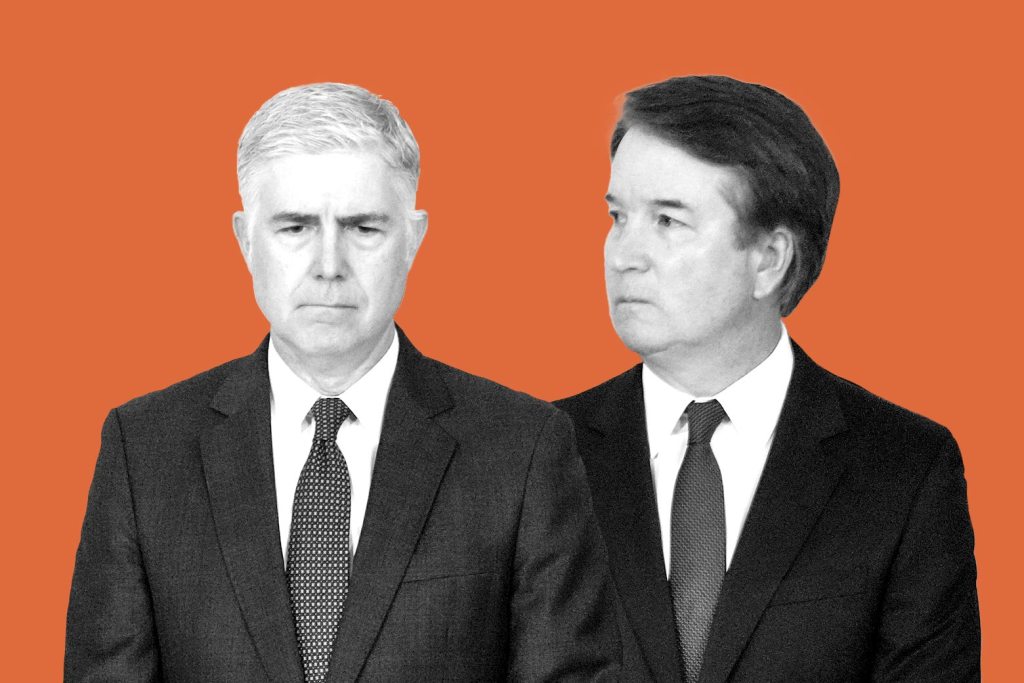
Photo illustration by Slate. Photo by Jacquelyn Martin / Pool / Getty Images.Sign up for the Slatest to get the most insightful analysis, criticism, and advice out there, delivered to your inbox daily.
Every year, Amicus co-hosts Dahlia Lithwick and Mark Joseph Stern invite listeners to nominate the Supreme Court’s most egregious behavior, then choose their own “worst of the worst” to memorialize the most ignominious moments. In 2025, there was no shortage of contenders. In a preview of their conversation on this week’s Slate Plus bonus episode, Lithwick reveals the SCOTUS lowlight that still rankles her the most. This conversation has been edited and condensed for clarity.
Mark Joseph Stern: We certainly had a bumper crop of bad decisions this year. What’s your nominee for worst of the worst?
Dahlia Lithwick: There were a lot of decisions in 2025 that immiserated huge amounts of people and made the world materially worse. But my pick is not one of those. Instead, I need to talk about NIH v. American Public Health Association. Yes, it has to do with slashing research grants, which does materially harm a lot of people. But more profoundly for me, this case is emblematic of every single level of destruction and mayhem coming out of the Supreme Court—all the arrogance bundled into one.
So let me take you back to August, when the justices handed down NIH. It’s another unsigned, incoherent shadow-docket order pausing U.S. District Judge William Young’s decision to block the Trump administration from canceling thousands of National Institutes of Health grants—including those supporting research into suicide prevention, HIV transmission, Alzheimer’s, and cardiovascular disease. The NIH is the largest funder of medical research in the world, but Donald Trump’s executive orders forced it to cancel all those grants because they allegedly promoted DEI, “gender ideology,” and COVID research. Young held a bench trial, then issued a 103-page opinion laying out extensive factual findings and holding that the agency must make good on the payments of these grants. A federal appeals court agreed.
Then the Trump administration appealed to the Supreme Court in an emergency posture. And the justices hand down a 5–4 decision that’s totally inscrutable but says that Young contradicted a different 5–4 shadow-docket order from last April, Department of Education v. California. That decision halted another judge’s efforts to require the administration to reinstate canceled education grants. And the court asserted that it controlled this case. Right there, you have the perfect shadow-docket sandwich: perfunctory, bad decisionmaking, conclusory predictions about what constitutes an “emergency” and who’s going to win, decided in a couple of days, wiping out extensive factual findings. And it’s rooted in a different shadow-docket order that, as Justice Elena Kagan said at the time, was “at the least under-developed, and very possibly wrong.”
So likely wrong, in fact, that Chief Justice John Roberts actually dissented from California, and dissented again in NIH! It takes a lot of nonsense to make the chief jump ship. But the majority in both cases said that the plaintiffs had to seek reimbursement from the Court of Federal Claims rather than the district court through the Administrative Procedure Act. Which is both obviously wrong and, as a practical matter, impossible much of the time.
This is why the court doesn’t decide national “emergencies” with some back-of-the-cocktail-napkin, invisible-ink reasoning, then expect judges across the country to act as though it wrote a law-review article on the subject. Here’s Justice Ketanji Brown Jackson:
Today’s decision reveals California’s considerable wingspan: That case’s ipse dixit now apparently governs all APA challenges to grant-funding determinations that the government asks us to address in the context of an emergency stay application. A half paragraph of reasoning (issued without full briefing or any oral argument) thus suffices here to partially sustain the government’s abrupt cancellation of hundreds of millions of dollars allocated to support life-saving biomedical research.
Related From Slate
Mark Joseph Stern How Democrats Can Fix the Supreme Court in 2029 Read More
I want to get to the ham in the shadow-docket sandwich. Famously, Justice Neil Gorsuch wrote a snotty concurring opinion, joined by Justice Brett Kavanaugh, that went after Young—a senior district judge with 47 years on the bench and a Ronald Reagan appointee. Gorsuch and Kavanaugh accused him of ignoring their shadow-docket ruling, claiming that it “squarely controlled” his case. And Gorsuch snippily noted: “Lower court judges may sometimes disagree with this court’s decisions, but they are never free to defy them.” And he continued:
This is now the third time in a matter of weeks this Court has had to intercede in a case squarely controlled by one of its precedents. All these interventions should have been unnecessary, but together they underscore a basic tenet of our judicial system: Whatever their own views, judges are duty-bound to respect the hierarchy of the federal court system created by the Constitution and Congress.
That gets my vote for the single nastiest opinion of 2025. It even prompted Young to apologize to Gorsuch and Kavanaugh from the bench.
I hate this on so many levels.
Popular in News & Politics
- I Came to See Mamdani’s First Big Speech as Mayor. I Found Something Else Entirely.
- This Is the Nastiest Opinion by a Supreme Court Justice in 2025
One thing that floats to mind is: Can you imagine how horrible it must be to have to work with these people every single day? This is how they treat lower-court judges—how do you think they treat colleagues like Jackson? No wonder she accused them of “Calvinball” in her NIH dissent. Maybe she’s being informed by the fact that her colleagues evidently treat her like garbage on and off the page. That’s why one of my contenders for “worst of the worst” is Justice Amy Coney Barrett condescendingly dismissing Jackson in her CASA decision. It just drips with contempt for her. I cannot imagine having to be collegial with these people.
The only thing I want to add to that is that judges are getting death threats and impeachment threats and being thrown under the bus by members of Congress and the president. And the justices on the Supreme Court themselves are like: Should I go after a senior district judge personally for not applying my inscrutable shadow-docket order? And do it in a way that makes it sound as if he’s reckless and insubordinate and doesn’t care about the law? Why, yes! Fantastic idea.
Continue/Read Original Article Here: This is the nastiest opinion by a Supreme Court justice in 2025.
#2025 #DahliaLithwick #DepartmentOfEducationVCalifornia #JudgeYoung #Jurisprudence #JusticeBrettKavanaugh #JusticeNeilGorsuch #KetanjiBrownJackson #MarkJosephStern #NastiestOpinion #NIHVAmericanPublicHealthAssociation #ShadowDocketSandwich #Slate #SupremeCourtJustice