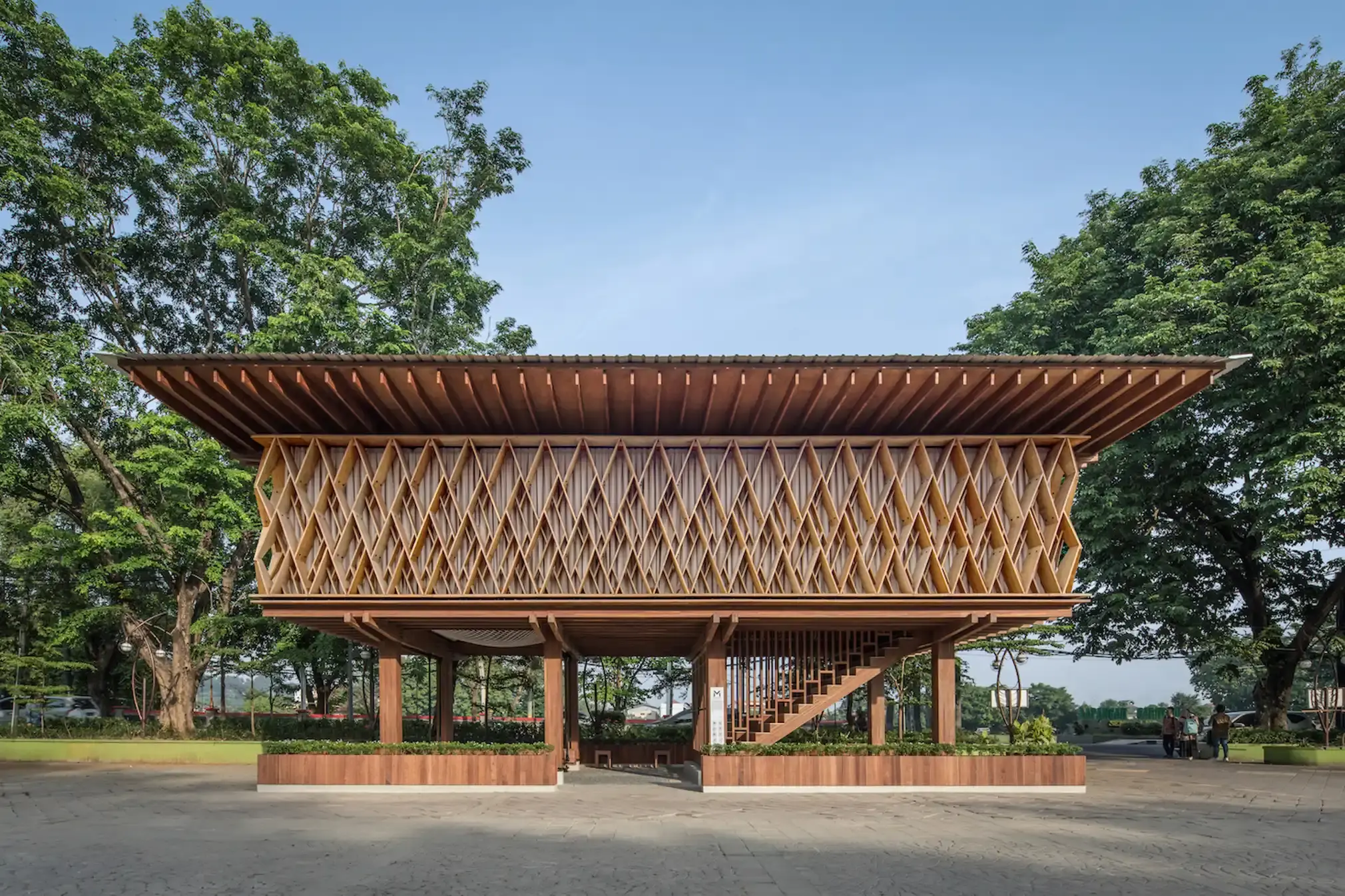
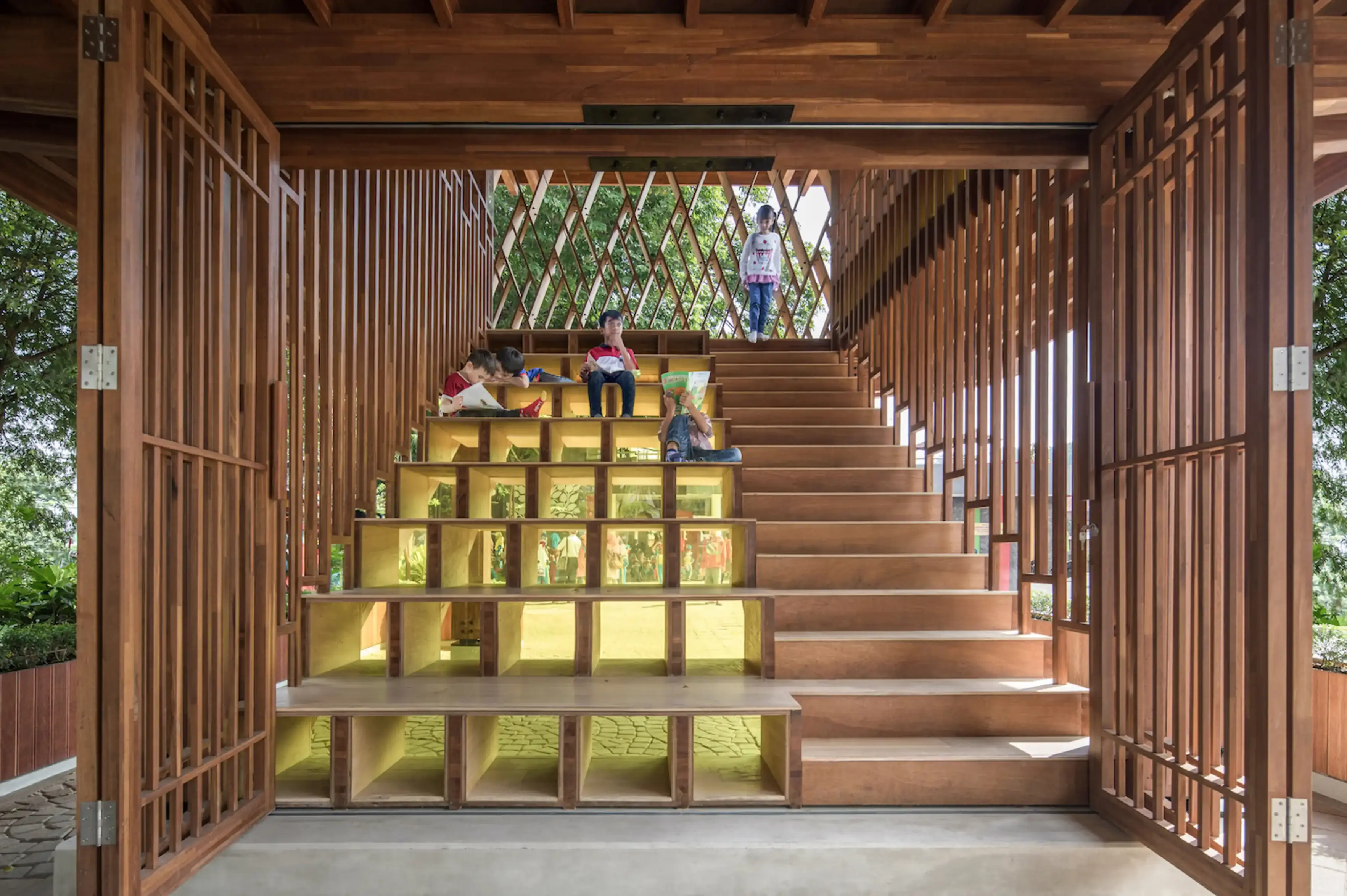
The Warak Kayu microlibrary was built in 2020 in Semarang, in Central Java. The designers have said the “micro” concept was intentional, making the spaces more approachable for local residents.
Photograph: KIE/SHAU
The Warak Kayu microlibrary was built in 2020 in Semarang, in Central Java. The designers have said the “micro” concept was intentional, making the spaces more approachable for local residents.
Photograph: KIE/SHAU
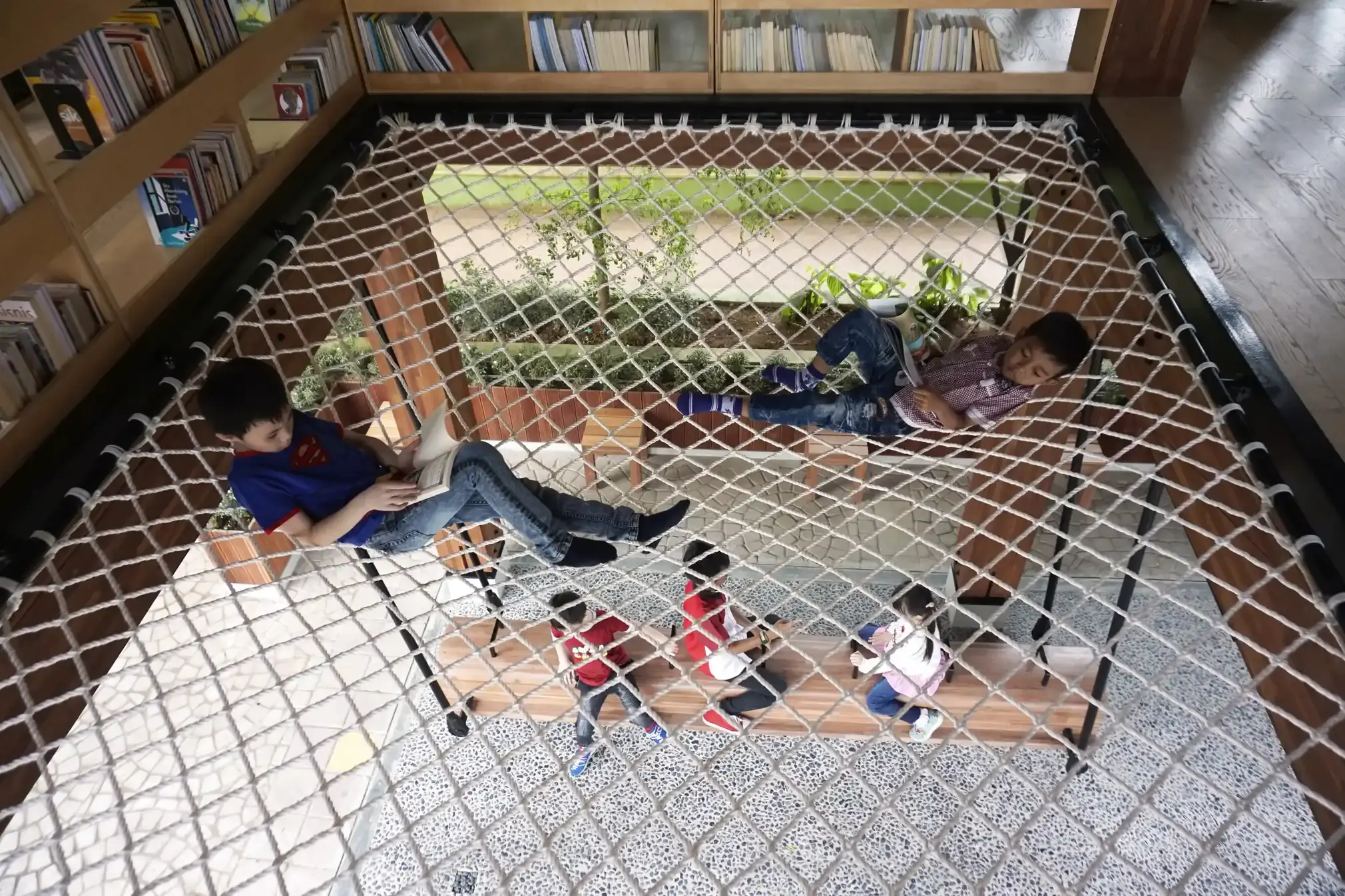
A reading room
In 2024, Heinzelmann and Suryawinata created a foundation to support the microlibrary project’s growth. The goal? Expand to 100 branches by 2045.
Photograph: SHAU
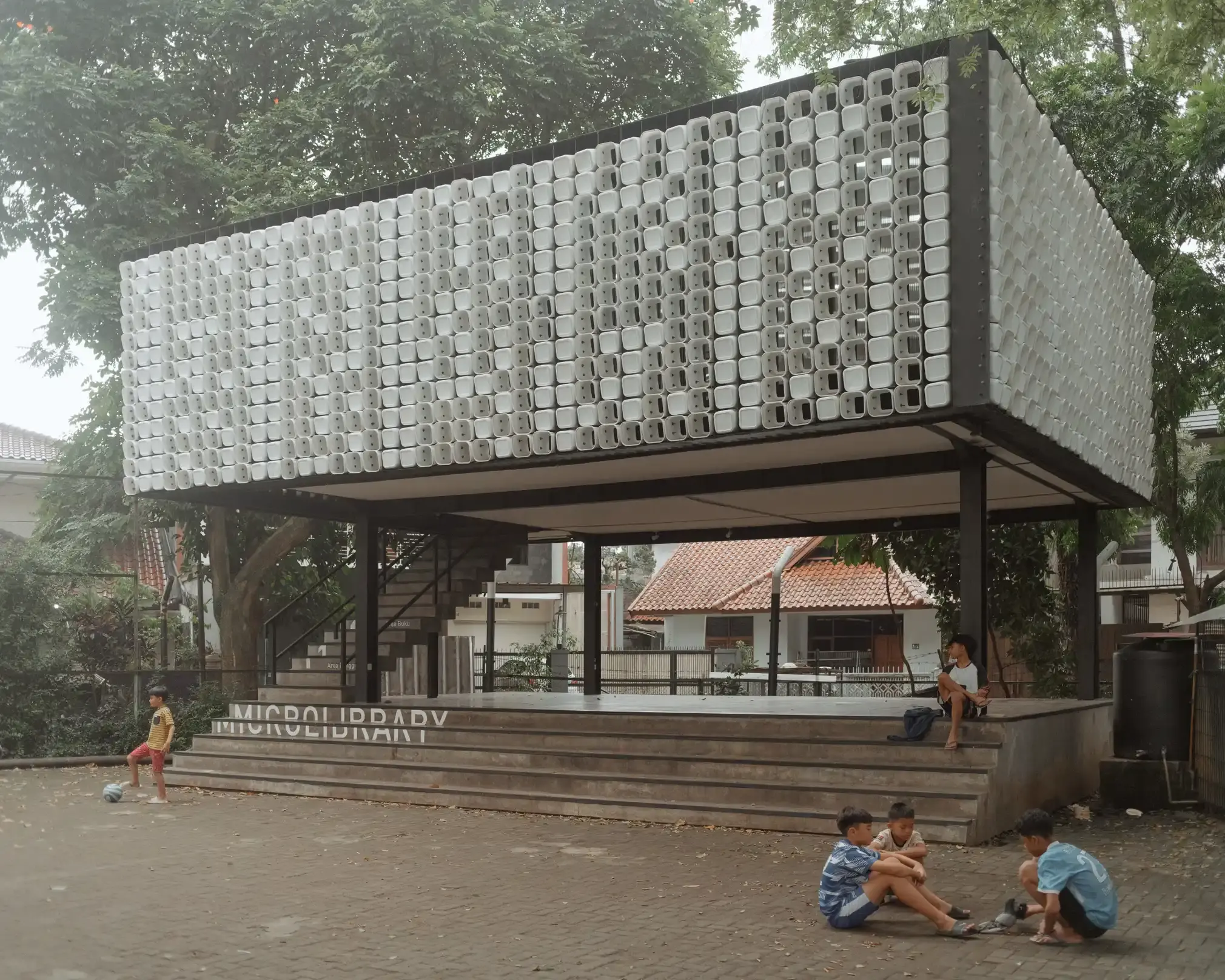
“No matter what material that we use, we want to protecting the people from overheating,” said Heinzelmann.The buckets spell out a hidden message in binary code:
BOOKS ARE THE WINDOWS TO THE WORLD.
Pictured: Bima microlibrary, in Bandung.
Photograph: Sanrok Studio/SHAU
#Indonesia
#libraries
#microlibraries
#quotes
#reading
#recycling
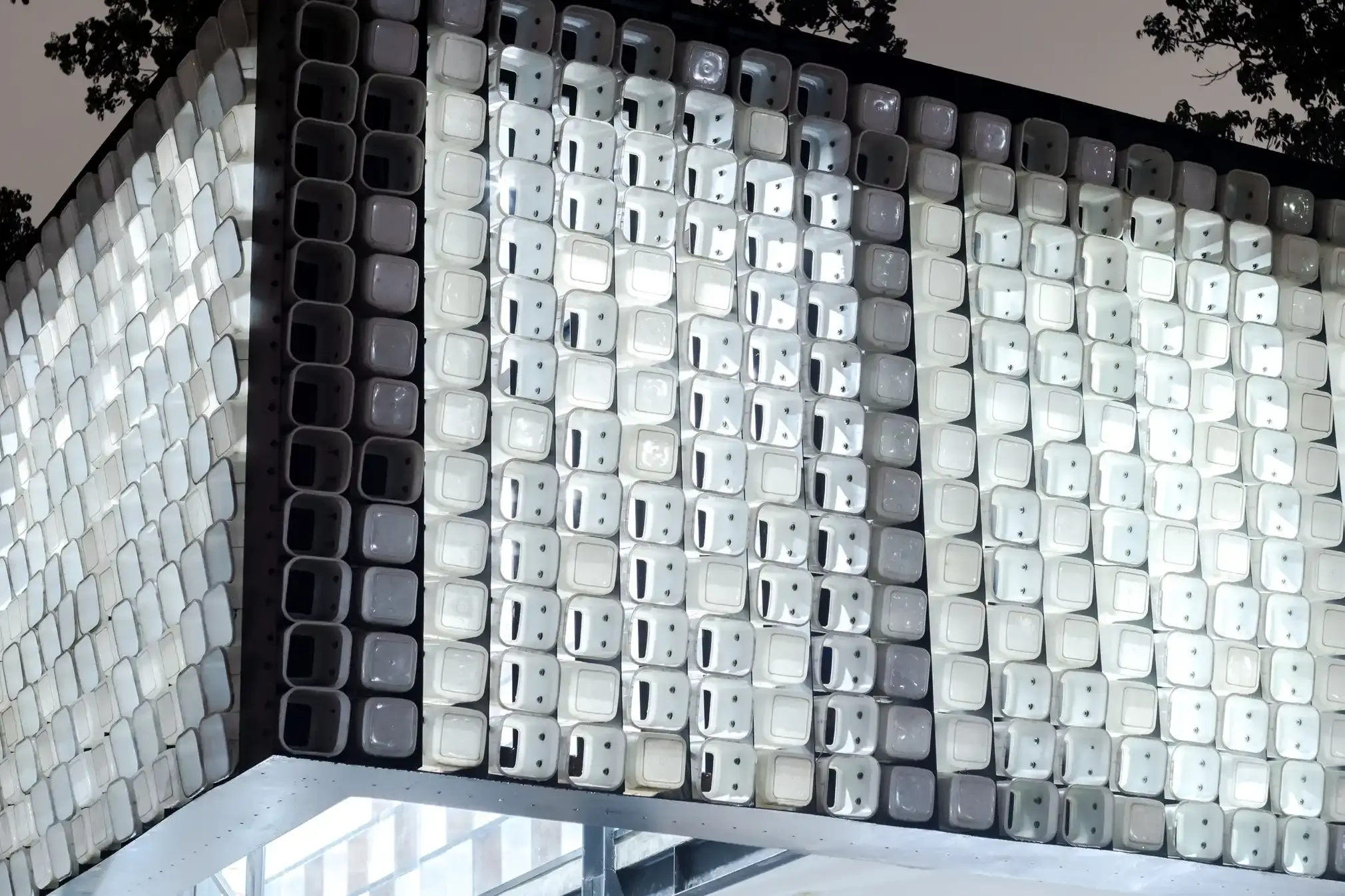
The structures are built using a range of materials and passive cooling principles. The facade of the Bima microlibrary in Bandung was built in 2015 with 2,000 discarded ICE CREAM BUCKETS.
Photograph: Muhammad Fadli/The Guardian
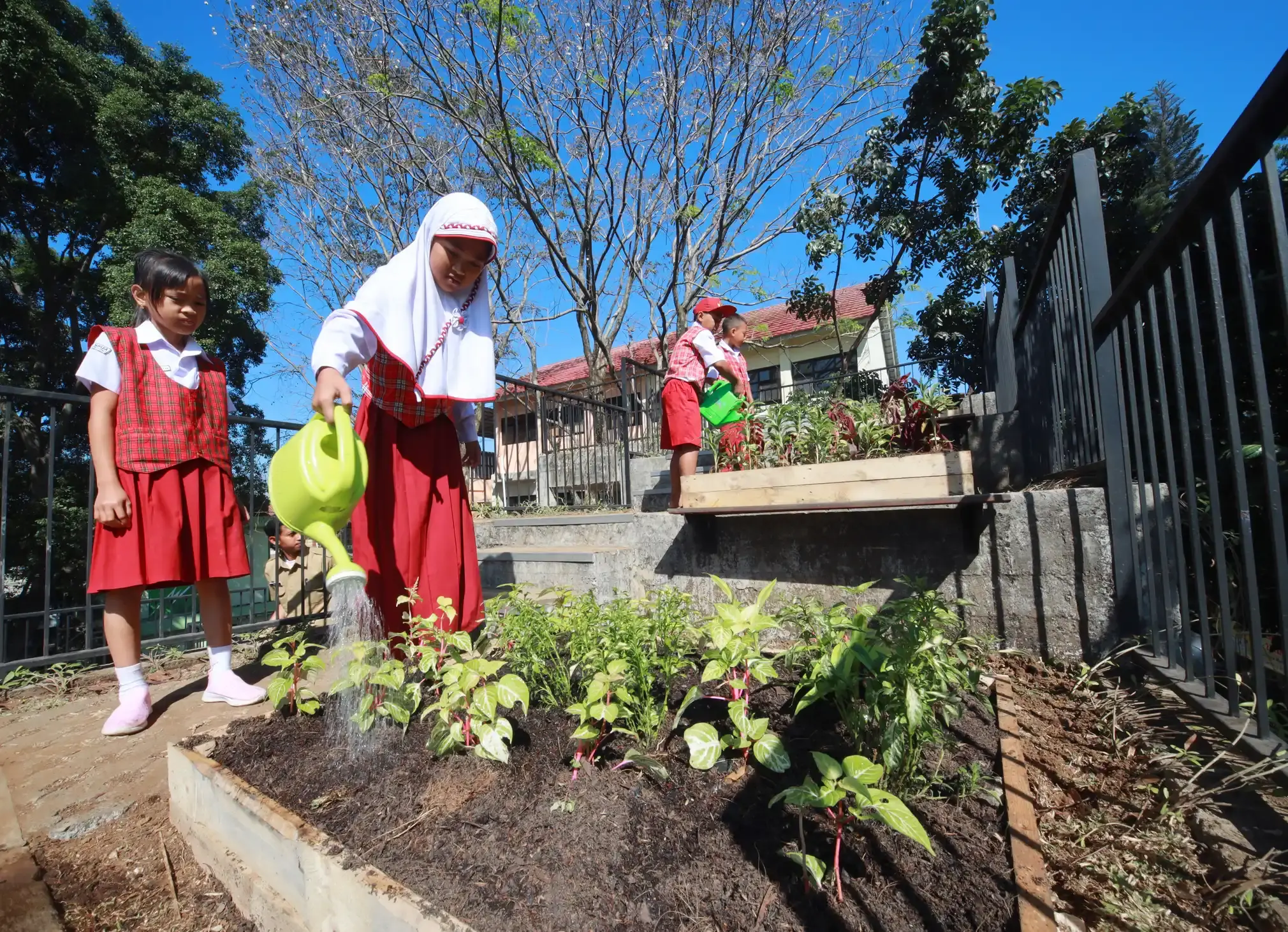
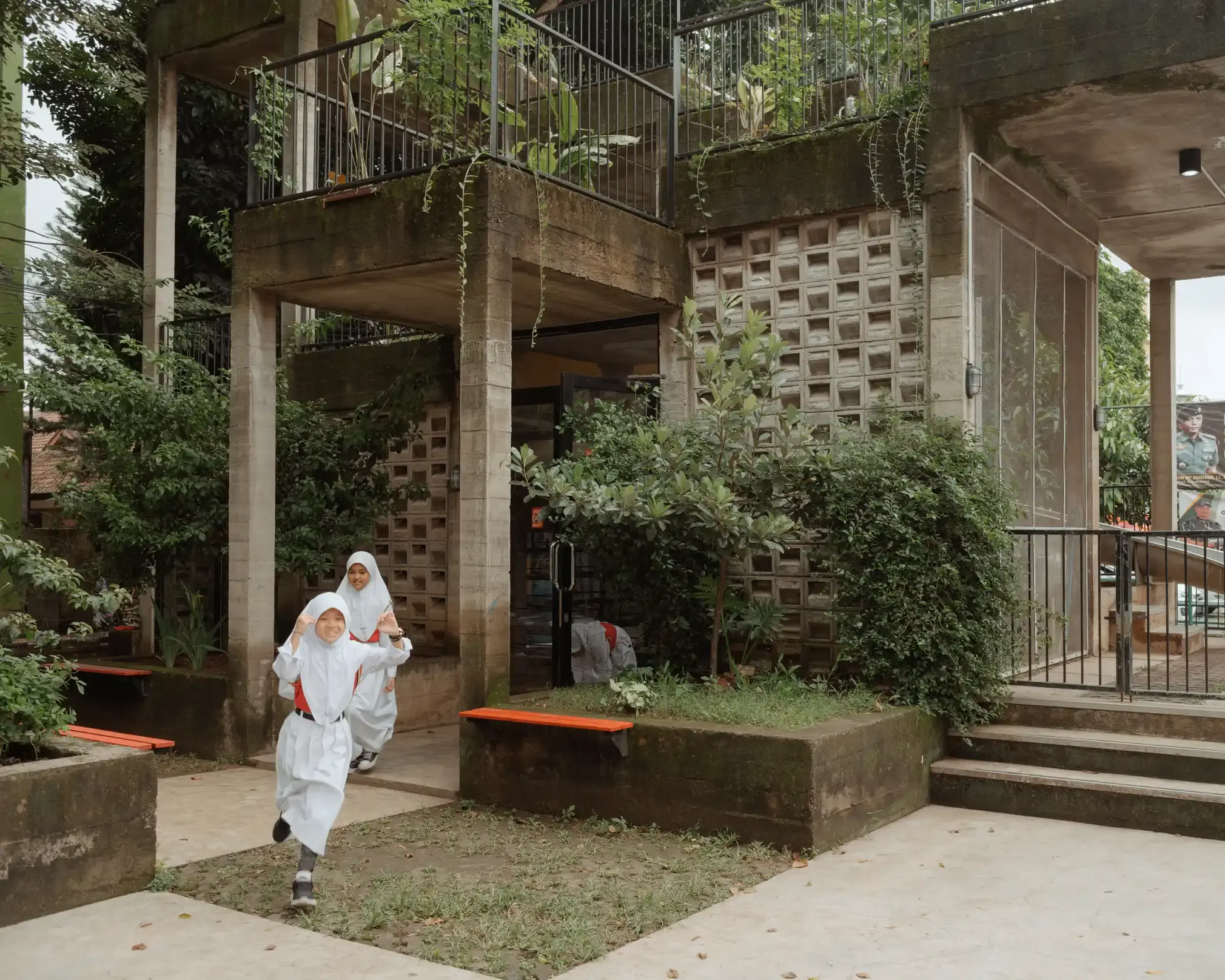
The microlibrary Babakan Sari, which was completed in 2019 in Bandung, features a rooftop garden.
Photograph: Dudi Sugandi/SHAU
The project was launched in 2012 by SHAU co-founders Daliana Suryawinata and Florian Heinzelmann, who have built eight libraries to date.They have called the libraries “laboratories for material experimentation”, using recycled materials, FSC-certified wood and lightweight concrete in their builds.
Photograph: Dudi Sugandi/SHAU
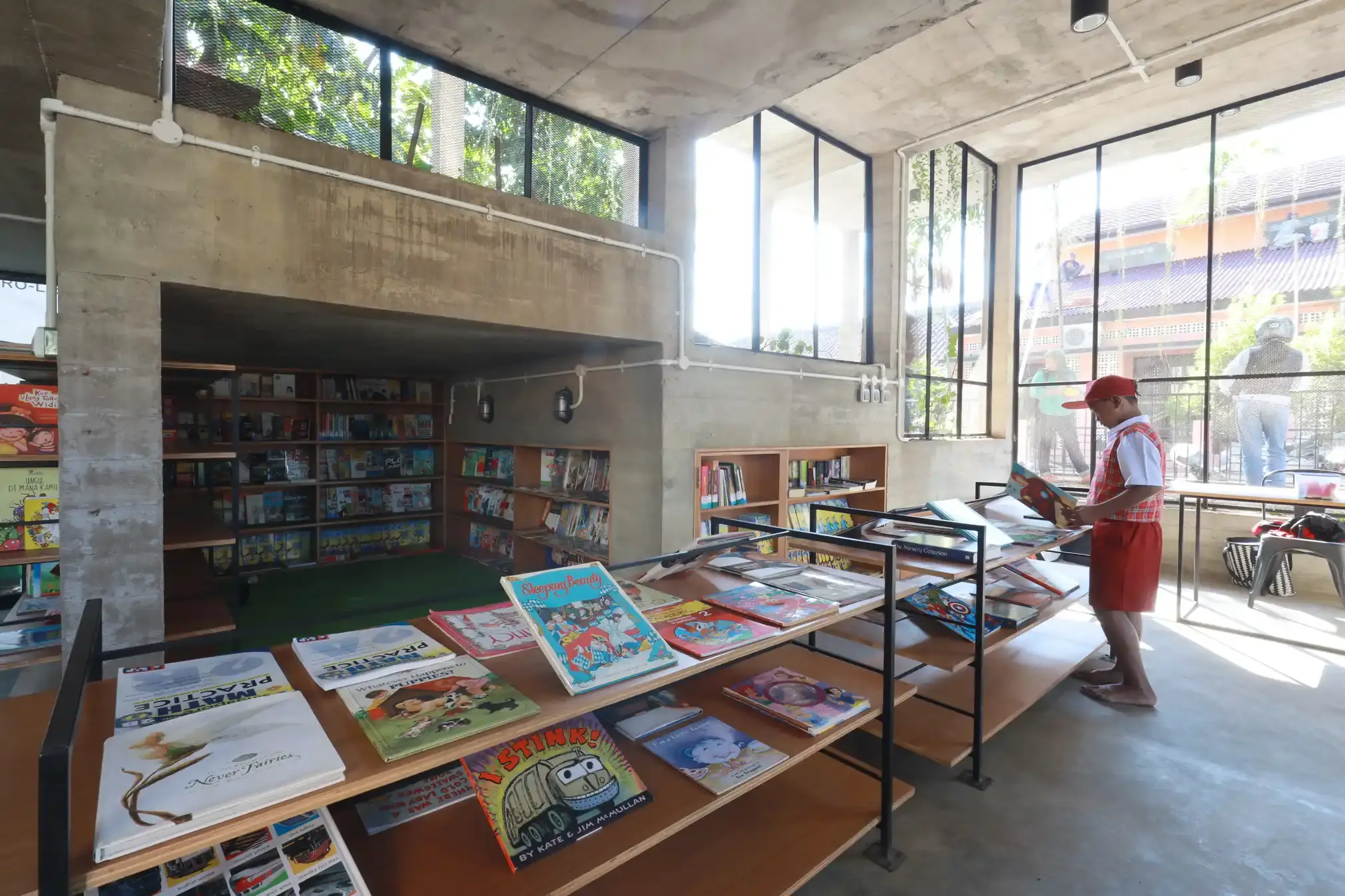
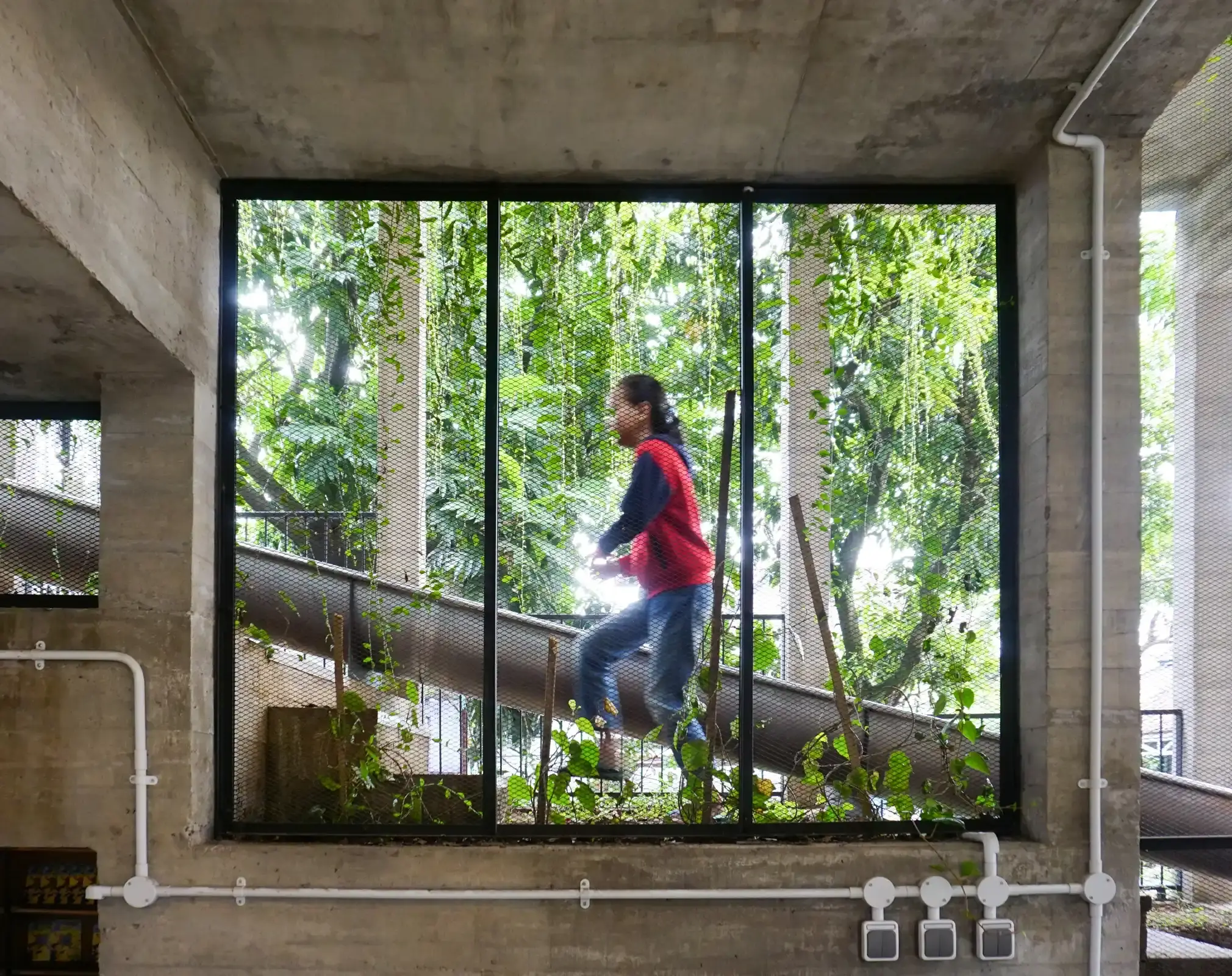
SHAU architecture firm’s Microlibrary Project promotes literacy while offering respite from the heat through a combination of shading and cross-ventilation.
Photograph: Dudi Sugandi/SHAU
The Warak Kayu microlibrary, built in 2020. Photograph: KIE/SHAU
Indonesia's microlibraries
There is an ambitious effort under way in Indonesia to build a network of microlibraries across the country.
Pictured: Microlibrary Babakan Sari, also known as Hanging Gardens, in Bandung.
Photograph: Muhammad Fadli/The Guardian
in order to survive the Trump-GOP-GOP era (President, Senate, House) in the US, "trans people will need to become significantly less online in their media creation and distribution.... Social media chatter will need to give way to real-world community-building. Newsletters and blog posts may need to become zines and pamphlets; that’s what they were in the ’90s, or in the French Revolution, for that matter, and it seemed to work out. Books will need to be bound and printed: If you keep all your queer literature on your Kindle, for example, it’s entirely possible that Amazon can erase banned books from your library without warning or consent."
https://xtramagazine.com/culture/trump-administration-queer-trans-censorship-269267