
Today's card I King of Swords
Be discerning about where you source your information from. Not everything written down is true.
Today's card I King of Swords
Be discerning about where you source your information from. Not everything written down is true.
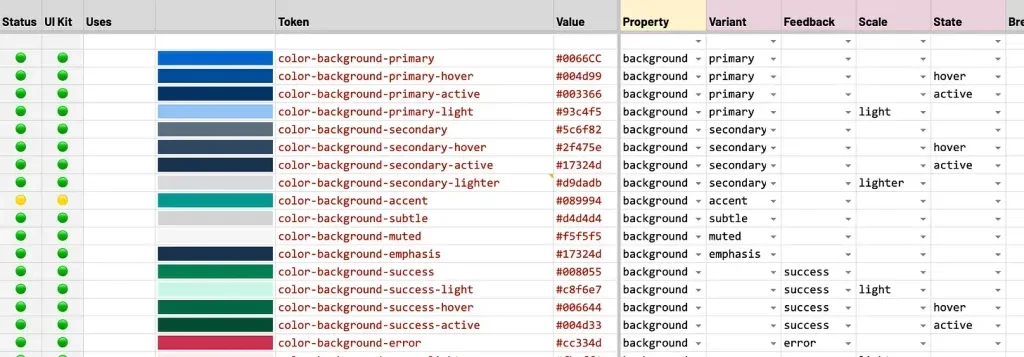
How do you manage your #designTokens? @zetareticoli suggests using databases. His article on the topic is more of an open questions than an answer but still worth a read: https://designtokens.substack.com/p/how-to-manage-design-tokens
I definitly agree with him that #designTools are not the right #sourceOfTruth for design tokens.
Excited about next week's (June 29th) NetBox training session! I'll be demonstrating how to leverage NetBox automation with Ansible in the 'NetBox Labs Zero to Hero' training. We'll explore the NetBox data model, learn how to build rack elevations, and much more! Interested? Find out more at: https://go.netboxlabs.com/zero-to-hero-live-training #networkautomation #netbox #sourceoftruth
I just upgraded my Netbox server from v2.7.6 to v3.4.8. This is just a record of what I did in case anyone want to know how I did it.
Environment
The source v2.7.6 server is an Ubuntu 18.04 VM. Yes, both are very old.
The destination v3.4.8 server is an Ubuntu 20.04 VM.
We have no media, scripts, or reports in Netbox.
I’m…
https://aconaway.com/2023/04/25/netbox-upgrade-play-by-play/
@njs @glyph Asking around, it seems based on our https://deps.dev/ data (neat data, but it doesn't currently appear to contain enough to correlate package versions to source control ids) combined with code that isn't currently open built on top to try and correlate. I hope it is or the deps data is improved to include it someday, but I imagine we'd all build our own the same way: heuristics possibly including attempts at correlate files within packages.
I'd really like it if Python packaging tooling and metadata officially recorded the source control revision and embedded that in the package when built from an unmodified checkout. I'm guessing we currently do not?
Today I led a work presentation with some of my peers about all the awesome things we're doing with #NetworkAutomation and #SourceOfTruth tooling (like #netbox and #nautobot). Great turnout, lots of discussion, and overall I'm very happy with how it all turned out.
Hopefully the message sticks with people until after the holidays 😄 #neteng
At work I write (mostly #Python) scripts to #automate the management and configuration of networked #infrastructure, and to tie together various systems which all think they are the one #SourceOfTruth but are never in sync without my #magic glue.
Mismatching epistemological hierarchies explain perhaps a quarter of #debates that end up unproductive or even bitter for me.
I wouldn’t dare define my Pyramid of Sources of #Truth without giving it some careful thought first, but… a first approximation:
💡 Quantitative data or stats that are either common knowledge or directly accessible to most people (eg, no. of seats in the Spanish Parliament, minimum height of all outside doors in Granada Cathedral).
⬇️
💡 Quantitative data or stats issued by sources commonly understood to be authoritative and unbiased (eg, average size of all dentist’s offices in Norway according to the Ministry of Health).
⬇️
💡 Old, peer-reviewed, published meta-analyses that are accessible (eg via #SciHub) to most people.
⬇️
💡 Old, peer-reviewed, published meta-analyses.
⬇️
💡 Old, peer-reviewed, published papers.
⬇️
💡 Peer-reviewed, published papers.
⬇️
💡 Peer-reviewed papers.
⬇️
💡 Reports, surveys, research, whitepapers, polls — with a wild degree of confidence, depending on the particulars (see parameters below).
⬇️
💡 Published books, theatrical documentaries.
⬇️
💡 Self-published books, self-produced documentaries.
⬇️
💡 Long blog posts with links to secondary sources.
⬇️
💡 Newspaper articles fall somewhere around here.
⬇️
💡 Blog posts.
⬇️
💡 Online videos, tweets, screenshots, photos, voice messages, viral clips, copied-and-pasted quotes, hearsay, anecdote, feeling, hunch, rumour, revelation.
In all cases, the bigger these parameters, the higher a particular #sourceOfTruth moves up my hierarchy:
🔺 Sample size.
🔺 No. ot times result has been reproduced.
🔺 Boringness of result (ie, how common-sensical and unsurprising it seems to the average person).
🔺 Parsimoniousness (ie, simplicity) of interpretations given for result.
🔺 Awkwardness of result for parties involved (ie, how inconvenient it is for the interests of authors themselves).