
Meijer One-Piece Footed 12-, 18-, and 24-Month Children’s Sleepwear are dangerously flammable. #meijer #sleepware #flammable #burns #recall
https://www.instagram.com/p/DVhOAq8Dz2D/
#BURNS


Forex analytics. Dollar burns textbooks
https://misryoum.com/us/markets/forex-analytics-dollar-burns-textbooks/
Theory without practice is dead. When the Fed began its most aggressive rate hike cycle in four decades in 2022, the market was saying that a recession could not be avoided. However, in fact, the US economy is in...
#Forex #analytics #Dollar #burns #textbooks #US_News_Hub #misryoum_com

Roman:
- Sustained extensive #burns
- Underwent dozens of #operations
- Spent a long period in #rehabilitation abroad
He returned to school, resumed music lessons & begun to make public appearances in which he shares his story
#Children in the #Fire was shortlisted in the Most Valuable Documentary Film of the Year category
https://www.pravda.com.ua/eng/news/2026/02/17/8021509/
#WarCrimes #civilians #Ukraine #RussianWarCrimes #terrorism #films #movies
[2/2]

I love #WildSwimming in the #Scottish #burns #rivers #lochs & #seas & I love a good #LitterPick so will see you at the #ScottishParliament for a manifesto launch for #SurfersAgainstSewage tomorrow! Calling on our #Scotland #MSPs to end #Pollution #Sewage https://www.eventbrite.co.uk/e/holyrood-handover-and-million-mile-clean-tickets-1981018357234


@cybervegan I was cleaning marker off a doll and spilt some on my thigh. I assumed it would just evaporate, but I suppose the clothing kept it in contact long enough to burn.
It didn't start hurting until 4 hours later, so I didn't even realise anything was wrong. It makes my fingerprints turn white for about 5-10 minutes if I get it on my fingers, but I didn't know it could do worse.
Now the bigger patch has blistered.
PSA if you get isopropanol on your clothes, change out of it and rinse your skin properly.
I looked up getting burns from isopropanol and I couldn't find anything. Even the gov.uk site just says it can cause irritation. My uncle said if it's burned me there must be contaminants. Mine was advertised as 99.9% pure, but the bottle doesn't say anything. I've used it to clean electronics safely so I'm assuming it's 99.9%.
#safety #isopropanol #isopropylalcohol #chemicalburns #psa #warning #burns
Bioengineered Skin Grafts For Burn Victims. From the Swiss company Cutiss, a spin-off from the University of Zurich, comes better skin graft technology called DenovoSkin. #burns #skingrafts #children #denovoskin
https://www.instagram.com/p/DUmPV6MDxn4/


Gorgeous K-Pop Idol Reveals Shocking Second-Degree Facial Burns #Burns #Facial #Gorgeous #Idol #Kpop #Reveals #SecondDegree #Shocking
https://kpopnewshub.com/gorgeous-k-pop-idol-reveals-shocking-second-degree-facial-burns/?fsp_sid=9728
Topkay Torch Lighters Endanger Children. They violate mandatory standards for multipurpose lighters, lack required child-resistant mechanisms. #topkay #lighter #childdanger #fire #burns #recall
https://www.instagram.com/p/DUBwQgpD7Je/

Pa Broon giving the Immortal Memory for #Burns at the #legalwalls in #glasgow #scotland Smashing way to start the day, thanks @toots_spilled_ink (insta)

It's #Burns night tonight - I hope you're celebrating our national bard! This was on the #legalwalls in #glasgow last week before being replaced with something new. #scotland

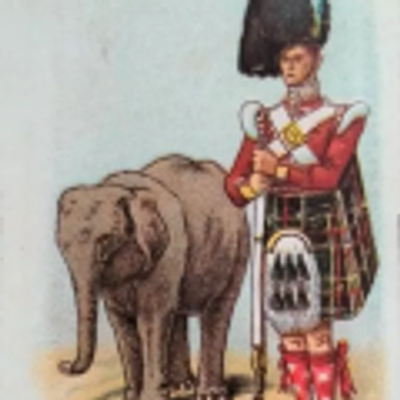
Mrs Maciver: the thread about Edinburgh’s first cookery teacher and publisher of the earliest known Haggis recipe
Today’s Auction House Artefact is this old Edinburgh-published cook book, an edition from 1777.
COOKERY,
and
PASTRY.
As taught and practised by
Mrs MACIVER,
Teacher of those Arts in Edinburgh.
Although it is neither the first such book printed in Scotland (that title goes to Mrs McLintock’s Recepits for Cooking and Pastrywork, Glasgow, 1736) Cookbook, nor even Edinburgh (A New and Easy Method of Cookery, 1755), this remains a very special cookbook. If you were a member of Enlightenment Edinburgh’s genteel classes then this was probably the cookery book; instructing you and your domestic staff in all the latest food and dining trends.
The Georgian kitchen in Edinburgh.James Boswell (feathered hat) and his kitchen staff preparing a meal of grouse for Dr Johnson (in the background in the tricorn hat) “Wit and Wisdom. Picturesque Beauties of Boswell. Part the First, 1786, Thomas Rowlandson after Samuel Collings. National Galleries of Scotland collection.Mrs Maciver (or Mciver) was Susanna Maciver, born circa 1709. In her own words prefacing the first (1774) edition of her book and written in 1773, she stated “her situation in life hath led her to be very much conversant in Cookery, Pastry etc. and afforded her ample opportunity of knowing the most approved methods practiced by others“. She “opened a school in this city for instructing young Ladies in this necessary branch of female education, and she hath the satisfaction to find that success hath accompanied her labours“. Running a school for other women would have been one of the few business opportunities open to an enterprising lady in Georgian Edinburgh. And clearly she was both enterprising and successful in her chosen career path.
Etching by John Kay, 1786, entitled “Mr Robert Johnston and Miss Sibilla Hutton“, no. 158.Her 238-page book was laid out in a format that would be recognisable to modern home cooks; starting with soups and then going through fish, flesh (meat), pies and pasties etc. – mixing savoury pies with sweet desert dishes – and finishing on preserves and pickles etc. It is full, cover-to-cover, of Georgian recipes, from Imperial White Soup to Roast Cod’s Head to Beef a-la-Mode to Carrot Pudding. But my personal favourite is the Syrup of Turnip:
A recipe for Syrup of Turnip, Page 222 of the first edition.Despite the Syrup of Turnip it proved to sell well and was republished over a number of years. The advert to announce the initial publication was placed in the Caledonian Mercury newspaper on December 4th 1773 and was repeated in The Scots Magazine that month. From this we can also glean that she also sold her own preserved fruits, cakes and pastries.
Caledonian Mercury advert announcing the publication of Mrs Maciver’s book. December 4th 1773. The books are dated 1774 on the inside coverHer house and cookery school was in Stephenlaw’s Close (also spelled Stevenlaw, Stanelaw and Stonelaw’s) off the High Street – it is number 74 on Edgar’s town plan below of 1765. You can handily located for the city’s produce markets centred on the Tron Kirk. The structure in the middle of the High Street marked M is the City Guard referred to in the above advert, the old guardhouse of the Toun Rats.
Edgar’s Town Plan of Edinburgh, 1765. Reproduced with the permission of the National Library of ScotlandFrom her preface to the first edition, we know that the school had been established some time when her book was first printed and is listed in Edinburgh’s first postal directories (those of the similarly enterprising “Indian Peter” Williamson).
Williamson’s Postal Directory of 1784.In October 1786 a “New Edition, With Additions“, described as “Greatly Improved” was released, now running to 264 pages. Those who had recently purchased the previous edition were offered the additional pages gratis per an advert in the Caledonian Mercury. Susanna Maciver would have been almost 80 at this time, a very good age for the 18th century.
It was suggested by some friends, that the addition of some figures of courses for dinners and suppers should be subjoined; accordingly, I have made out several courses from five to fifteen dishes.
This took the book from being just a collection of recipes to a complete guide to entertaining in Georgian polite society, keeping you right in such important matters of etiquette as how to lay the table correctly. Wealthy people still dined service à la Française at this time where a whole range of sweet, savoury and side dishes were put on the table at the same time and would be replaced as they were finished. This is opposed to the more modern style of service à la Russe where you are served in separate courses. So at this time any host or hostess had to know where to place the Soup and when to remove it, where the Roast Tongue went relative to the Artichoke Bottom Fricasee, how to stew Peas and Lettuce etc.
“Bill of Fare” diagram for family dinners of twelve or fifteen dishes, from the 1789 edition.The prospect of serving orange pudding and apricot tart alongside the roast pig and Boiled turkey with oyster sauce may seem odd to us these days, but it was the height of gastronomic sophistication in its own time! This second edition was also reprinted both in Edinburgh and London, being advertised in the London Morning Post for sale at 2 shillings and sixpence. One of the more unusually named recipes was Robert Walpole Dumplings, a stodgy, fatty, rotund pudding served soaked in alcohol. Whether or not this was a homage to, or a clever mocking of Cock Robin is a secret that only she will know. But undoubtedly Susanna Maciver’s greatest contribution to both the Edinburgh and Scottish culinary arts, and culture in general, was that in her books she published the first ever “standard” Haggis recipe (north of the border)!
Susannah MacIver’s first recipe for Scottish Haggis, 1774But note the bit in parenthesis at the end of the last paragraph. Yes, shockingly, Haggis has a rather longer history on record in English printed cuisine than Scottish! A dish very similar to haggis called Afronchemoyle is contained in the first known English cookbook, The Form of Cury, from way, way back in 1390 by the cooks of King Richard II of England. As a Scottish dish, it does not have quite such a long recorded history. The word itself is Old Scots, with a root from Middle English hagas, hagese etc., probably from the noun hag, to chop. The Gaelic for haggis, taigeis, is imported from the Scots. The earliest printed mention seems to be it used in an insult, in an early 16th century poem by William Dunbar:
The gallows gapes after thy graceless gruntill,
The Flyting of Dunbar and Kenndie, c. 1500-1520
As thou wouldst for a haggis, hungry
The poet Alexander Pennecuik uses it as a pejorative (haggis-headed) in 1715, Alan Ramsay refers to it as haggies in 1725 in The Gentle Shepherd and surviving household ledgers from Ochtertyre House for instance record it as haggise, being served for the servants’ meal in 1737 (alongside puddings and mutton). The haggis of course has been immortalised in Scottish culture by its association with the poet Robert Burns and the annual Suppers held in his memory. In 1786 Burns was newly arrived in Edinburgh and wrote the Address to a Haggice (sic). It was first published in the pages of the Caledonian Mercury newspaper on December 19th that year (n.b. most internet sources will tell you December 20th, but the newspaper did not publish that day, it was thrice weekly). Its book publication was the next year in an Edinburgh edition of his Poems, Chiefly in the Scottish Dialect. It is noteworthy that the last verse of the newspaper version is different from the Edinburgh edition version which is that used to this day.
Front page of the Caledonian Mercury, 19th December 1786, highlighting the date and the “Address to a Haggice”.Ye Pow’rs wha gie us a’ that’s gude,
Last verse of the 1786 Caledonian Mercury version of “To A Haggice”.
Still bless auld Caledonia’s brood
Wi’ great John Barleycorn’s heart’s blade,
In stowps or luggies;
And on our board that king o’food,
A glorious Haggice!”
When Robert Burns immortalised the Haggis in Scottish culture as the “Great Chieftain o the puddin race” with his eponymous address of 1787, there is every chance he was referring to something made to Mrs Maciver’s recipe. And if it was served in the manner she prescribed, it may well have been on the same table as the blancmange, cheesecake and trifle! And speaking of trifles, it was her book that give us one of the earliest recipes for what we would recognise as a “modern” trifle.
“The Cottar’s Saturday Night”, an illustration of Burns’ 1786 work by David Allan. Burns thought Allan “a man of very great genius” and that it was “one of the highest compliments I have ever received” to have Allan illustrating a book of his works. A cooking pot simmers over the ifre on the left. A man on a stool to the right eats from a bowl while a hungry dog waits patiently for a tid-bit. National Galleries of Scotland collection.The Scottish food historian Florence Marian McNeill and the food writer Clarissa Dickson Wright both favour the theory that the practice of cooking the contents of an animal in its own stomach point to a Scandinavian origin of the dish. A haggis is fundamentally an offal sausage, and offal was an important source of food for the poorer classes; it spoils quickly and is not easy to transport without a modern cold chain, so it would be eaten quickly at the source; people could just not afford to waste it and it was also still perfectly nourishing. Chopping up the less palatable and digestible parts of the “pluck” of an animal and mixing it in with oatmeal as a binder and to make it go a bit further was a perfectly logical way to make a slaughtered animal feed more people for longer. Some pepper, spice or herbs – as available – would make the contents more palatable. At a time when many people would have possessed only a fire on which to cook and probably only a pot and a griddle to cook on or in, the boiled haggis is just a logical sort of dish for the ordinary folk to be cooking and eating. The cooked final product could then be smoked to preserve it.
“The Haggis Feast”, Alexander George Fraser, 1840, National Trust for ScotlandAs evidenced by its inclusion in Maciver’s book, by the time of Burns haggis had moved on from being purely a peasant and servants’ dish of necessity to something popular amongst the enlightenment classes on their dinner tables. It also became increasingly popular with the men of letters on their drinking tables. Perhaps the earliest known illustration of haggis, from c. 1810, shows two enlightenment worthies of Glasgow supping on a giant haggis, washed down with copious quantities of claret.
“Dr Balfour of Glasgow having taken lodgings in a questionable house” a caricature by John Gibson Lockhart c. 1810, National Library of Scotland Acc.11480, f.5In the 1826 book The Cook and Housewife’s Manual etc. by Margaret Dods, a recipe is given fora genuine Scotch haggis at the head of the chapter entitled Scotch National Dishes (introduced by quoting Burns). Margaret – Meg – Dods was actually a character from a Walter Scott novel and the book itself was by the writer Isobel Christian Johnston, the publisher’s wife. Scott himself contributed the book’s introduction.
This elusive but important Susanna Maciver died on August 23rd 1790 at Jamieson’s in the Canongate, aged 81 years, of “decay” (registrars’ speak for dying of old age of otherwise unknown specific reasons.) There is a plaque to mark the approximate location of her house and cookery school at Stevenlaw’s Close, appropriately featuring her recipe for “A Good Scotch Haggis”.
The plaque to “A Good Scotch Haggis” at Stevenlaw’s Close. Picture credit Historic Environment ScotlandBut that is not the end of the story, because she had a protégé, Mrs Frazer, who took on the school and the book, updating and expanding it and issuing subsequent editions. She describer herself as the “sole teacher of these arts in Edinburgh” and “several years colleague and afterwards successor” to Mrs Maciver. Of Mrs Frazer (later rendered as Fraser), I can find nothing concrete and the surname is much too common to get lucky on Scotland’s People without any dates or a forename.
Mrs Frazer’s version of the cook bookFrazer’s book moved on from purely recipes, to describing general principles and techniques of both cooking and also buying and choosing ingredients (an important skill in a time of no real food controls and produce that would easily spoil or potentially have been doctored). An interesting addition are the illustrations of table setting plans. More calf feet jelly with your small tarts?
A diagram on how to arrange dishes on the table from Mrs Maciver’s recipe book, from the 2nd edition. Notice that pork cutlets, blancmange, cut beetroot, orange cheesecake and macaroni pie are all placed adjacent!As well as this guide to laying your table, other helpful information such as foods listed by their season, a one-page ready reckoner of suggested “Things for Supper Dishes” and “General Observations” were also included such as the correct order of serving your boiled, baked and roasted meats.
General Observations as to serving up Dishes.By 1806 she had moved the cook school, now described as a “pastry school“, to Milne’s Square; opposite the Tron Kirk, still handy for the markets. The school is listed in the post office directories under her name until 1831-32, after which it disappears for a few years then a school under Miss Fraser appears at 69 Northumberland Street. I have made the assumption this was a daughter perhaps.
You can read a digital version of Mrs Maciver’s cookbook for free online and it is still published in a modern facsmilie edition. If you want to get a bit closer to the wacky dining habits of Enlightenment Edinburgh, I recommend a trip to the National Trust for Scotland’s Georgian House, who have a great display and description of the eating, drinking and cooking habits in the 18th century New Town’s dining room and kitchens.So if you want to pay homage to the great, great, great, great, grandmother of Scottish cuisine, why not do as the Georgians might have done and serve yourself up a tasty supper of haggis and trifle this weekend?
If you have found this useful, informative or amusing, perhaps you would like to help contribute towards the running costs of this site – including keeping it ad-free and my book-buying budget to find further stories to bring you – by supporting me on ko-fi. Or please do just share this post on social media or amongst friends.
These threads © 2017-2026, Andy Arthur.
NO AI TRAINING: Any use of the contents of this website to “train” generative artificial intelligence (AI) technologies to generate text is expressly prohibited. The author reserves all rights to license uses of this work for generative AI training and development of machine learning language models.
#Burns #Cookery #Enlightenment #Food #Scott #Women


Happy #Burns Day to ye a'
This poem has been in my mind a lot lately, regarding my own home land and the opportunities we have squandered. I live in the hope that we can do better soon...
Fareweel to a’ our Scottish fame,
Fareweel our ancient glory;
Fareweel ev’n to the Scottish name,
Sae fam’d in martial story.
Now Sark rins over Solway sands,
An’ Tweed rins to the ocean,
To mark where England’s province stands—
Such a parcel of rogues in a nation!
What force or guile could not subdue,
Thro’ many warlike ages,
Is wrought now by a coward few,
For hireling traitor’s wages.
The English stell we could disdain,
Secure in valour’s station;
But English gold has been our bane—
Such a parcel of rogues in a nation!
O would, or I had seen the day
That Treason thus could sell us,
My auld grey head had lien in clay,
Wi’ Bruce and loyal Wallace!
But pith and power, till my last hour,
I’ll mak this declaration;
We’re bought and sold for English gold—
Such a parcel of rogues in a nation!
Nein, ich hab dej Zettel mit dem Ablauf der Burns Night Veranstaltung von 2016 nicht mehr. Aber ein Foto davon hab ich noch.
Heute gibt es im Blog erst einmal ein paar Informationen wer da überhaupt gefeiert wird.
https://bunte-kuechenabenteuer.de/burns-night-zu-ehren-von-robert-burns/
#robertburns #burns #burnsnight #foodblog #blog
Heute gibt es im Blog erst einmal ein paar Informationen wer da überhaupt gefeiert wird.
https://bunte-kuechenabenteuer.de/burns-night-zu-ehren-von-robert-burns/
#robertburns #burns #burnsnight #foodblog #blog


#BostonWeekend 2/x Not your usual #BurnsNight in #SomervilleMA - “Come out and experience “Not Your Usual Burns #Ceilidh,” a modern take on a #Scottish tradition! Raise your glass and join us as we celebrate #Scotland’s National Bard, #RobertBurns” @ Crystal Ballroom https://nhscot.org/events/burns-night-2026/ #scots #Burns #DavisSquare

🐟🔥 Behold, the pinnacle of medical innovation: slapping fish skin on #burns because apparently, #Brazil ran out of Band-Aids. Meanwhile, #PBS is busy pretending this piscatorial patchwork is the next Nobel-worthy breakthrough. 🙄📺
https://www.pbs.org/newshour/health/brazilian-city-uses-tilapia-fish-skin-treat-burn-victims #medicalinnovation #fishskin #BandAids #HackerNews #ngated
Beloved Male Celebrity Suffers Third-Degree Burns In Thailand, Returns Home In Wheelchair #Beloved #Burns #Celebrity #home #Male #Returns #Suffers #Thailand #ThirdDegree #Wheelchair
https://kpopnewshub.com/beloved-male-celebrity-suffers-third-degree-burns-in-thailand-returns-home-in-wheelchair/?fsp_sid=5480
Client Info
Server: https://mastodon.social
Version: 2025.07
Repository: https://github.com/cyevgeniy/lmst