#BiogeochemicalCycle

Planetary Ecologistplanetaryecologist
2026-01-26

Arsenic cycle (Biogeochemical cycle ๐Ÿ”„)

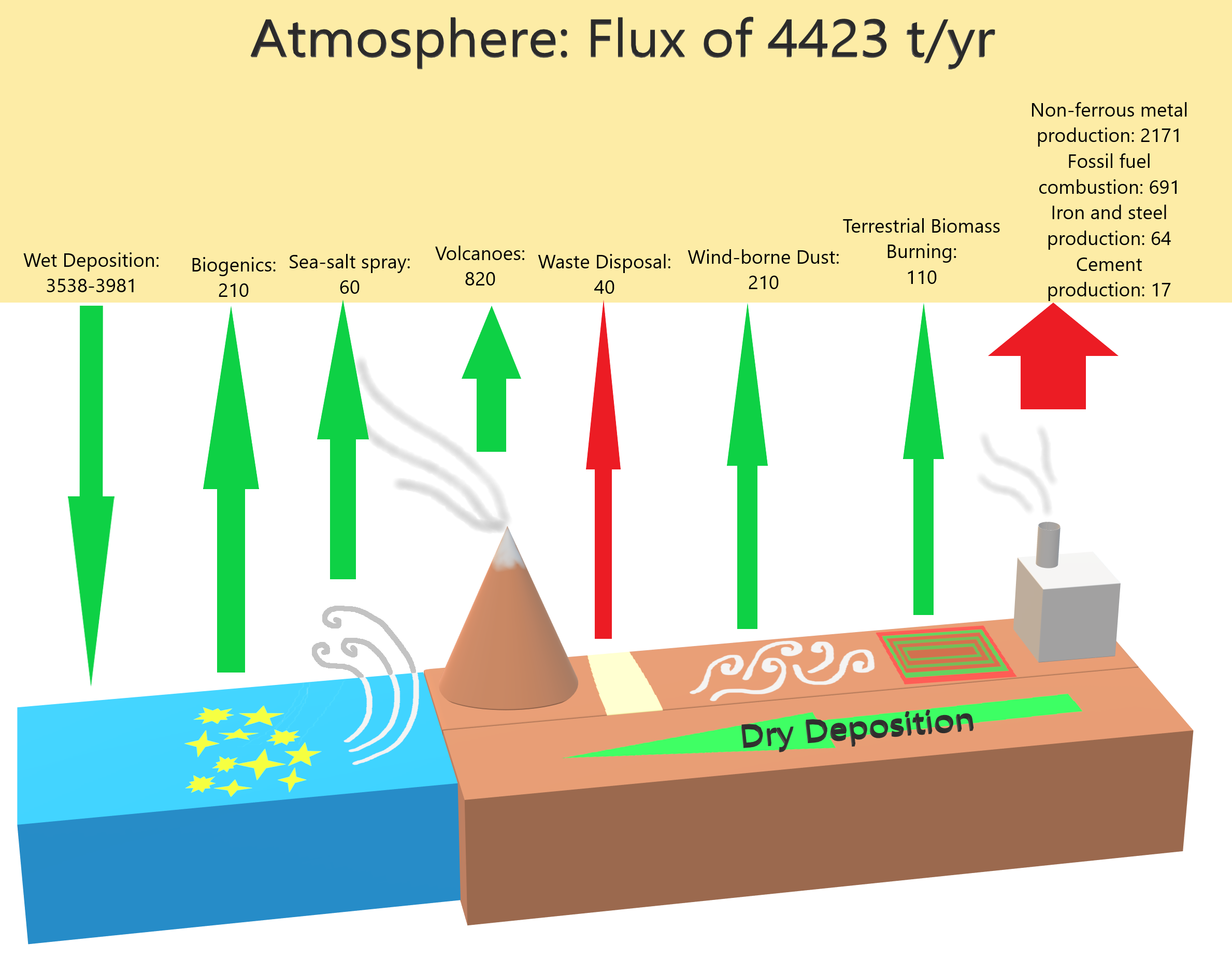
The arsenic cycle is the biogeochemical cycle of natural and anthropogenic exchanges of arsenic terms through the atmosphere, lithosphere, pedosphere, hydrosphere, and biosphere. Although arsenic is naturally abundant in the Earth's crust, long-term exposure and high concentrations of arsenic can be detrimental to human health.

en.wikipedia.org/wiki/Arsenic_

Planetary Ecologistplanetaryecologist
2025-12-24

Zinc cycle (Biogeochemical cycle ๐Ÿ”„)

The zinc cycle is a biogeochemical cycle that transports zinc through the lithosphere, hydrosphere, and biosphere.

en.wikipedia.org/wiki/Zinc_cyc

Planetary Ecologistplanetaryecologist
2025-12-18

Forest floor (Biogeochemical cycle ๐Ÿ”„)

The forest floor, also called detritus or duff, is the part of a forest ecosystem that mediates between the living, aboveground portion of the forest and the mineral soil, principally composed of dead and decaying plant matter such as rotting wood and shed leaves. In some countries, like Canada, forest floor refers to L, F and H organic hori...

en.wikipedia.org/wiki/Forest_f

Planetary Ecologistplanetaryecologist
2025-11-23

Fluorine cycle (Biogeochemical cycle ๐Ÿ”„)

The fluorine cycle is the series of biogeochemical processes through which fluorine moves through the lithosphere, hydrosphere, atmosphere, and biosphere. Fluorine originates from the Earth's crust, and its cycling between various sources and sinks is modulated by a variety of natural and anthropogenic processes.

en.wikipedia.org/wiki/Fluorine

Planetary Ecologistplanetaryecologist
2025-11-21

Chemical cycling (Planetary science ๐Ÿช)

Chemical cycling describes systems of repeated circulation of chemicals between other compounds, states and materials, and back to their original state, that occurs in space, and on many objects in space including the Earth. Active chemical cycling is known to occur in stars, many planets and natural satellites. Chemical cycling plays a...

en.wikipedia.org/wiki/Chemical

Planetary Ecologistplanetaryecologist
2025-11-05

Lead cycle (Biogeochemical cycle ๐Ÿ”„)

The lead cycle is the biogeochemical cycle of lead through the atmosphere, lithosphere, biosphere, and hydrosphere, which has been influenced by anthropogenic activities.

en.wikipedia.org/wiki/Lead_cyc

Planetary Ecologistplanetaryecologist
2025-11-01

Potassium cycle (Biogeochemical cycle ๐Ÿ”„)

The potassium cycle is the biogeochemical cycle that describes the movement of potassium throughout the Earth's lithosphere, biosphere, atmosphere, and hydrosphere.

en.wikipedia.org/wiki/Potassiu

Planetary Ecologistplanetaryecologist
2025-10-22

Actinorhizal plant (Biogeochemical cycle ๐Ÿ”„)

Actinorhizal plants are a group of angiosperms characterized by their ability to form a symbiosis with the nitrogen fixing actinomycetota Frankia. This association leads to the formation of nitrogen-fixing root nodules. Actinorhizal plants are distributed within three clades, and are characterized by nitrogen f...

en.wikipedia.org/wiki/Actinorh

Planetary Ecologistplanetaryecologist
2025-09-12

Chlorine cycle (Biogeochemical cycle ๐Ÿ”„)

The chlorine cycle is the biogeochemical cycling of chlorine through the atmosphere, hydrosphere, biosphere, and lithosphere. Chlorine is most commonly found as inorganic chloride ions, or a number of chlorinated organic forms. Over 5,000 biologically produced chlorinated organics have been identified. The cycling of chlorine into the atmosphere and creation of...

en.wikipedia.org/wiki/Chlorine

Planetary Ecologistplanetaryecologist
2025-08-31

Chemical cycling (Biogeochemical cycle ๐Ÿ”„)

Chemical cycling describes systems of repeated circulation of chemicals between other compounds, states and materials, and back to their original state, that occurs in space, and on many objects in space including the Earth. Active chemical cycling is known to occur in stars, many planets and natural satellites. Chemical cycling play...

en.wikipedia.org/wiki/Chemical

Planetary Ecologistplanetaryecologist
2025-08-19

Ferrallitisation (Biogeochemical cycle ๐Ÿ”„)

Ferrallitisation is the process in which rock is changed into a soil consisting of clay and sesquioxides, in the form of hydrated oxides of iron and aluminium. In humid tropical areas, with consistently high temperatures and rainfall for all or most of the year, chemical weathering rapidly breaks down the rock. This a...

en.wikipedia.org/wiki/Ferralli

Planetary Ecologistplanetaryecologist
2025-08-10

Fluorine cycle (Biogeochemical cycle ๐Ÿ”„)

The fluorine cycle is the series of biogeochemical processes through which fluorine moves through the lithosphere, hydrosphere, atmosphere, and biosphere. Fluorine originates from the Earthโ€™s crust, and its cycling between various sources and sinks is modulated by a variety of natural and anthropogenic processes.

en.wikipedia.org/wiki/Fluorine

Planetary Ecologistplanetaryecologist
2025-07-17

Actinorhizal plant (Biogeochemical cycle ๐Ÿ”„)

Actinorhizal plants are a group of angiosperms characterized by their ability to form a symbiosis with the nitrogen fixing actinomycetota Frankia. This association leads to the formation of nitrogen-fixing root nodules. Actinorhizal plants are distributed within three clades, and are characterized by nitrogen f...

en.wikipedia.org/wiki/Actinorh

Planetary Ecologistplanetaryecologist
2025-07-14

Ozoneโ€“oxygen cycle (Biogeochemical cycle ๐Ÿ”„)

The ozoneโ€“oxygen cycle is the process by which ozone is continually regenerated in Earth's stratosphere, converting ultraviolet radiation into heat. In 1930 Sydney Chapman resolved the chemistry involved. The process is commonly called the Chapman cycle by atmospheric scientists. Most of the ozone production occurs...

en.wikipedia.org/wiki/Ozoneโ€“ox

Planetary Ecologistplanetaryecologist
2025-07-11

Cadmium cycle (Biogeochemical cycle ๐Ÿ”„)

The cadmium cycle is a biogeochemical cycle of dispersion and deposition of cadmium through the atmosphere, biosphere, pedosphere, and hydrosphere. Cadmium typically exists in the environment with an oxidation state of +2 but can be found with an oxidation state of +1.

en.wikipedia.org/wiki/Cadmium_

Planetary Ecologistplanetaryecologist
2025-06-30

Mercury cycle (Biogeochemical cycle ๐Ÿ”„)

The mercury cycle is a biogeochemical cycle influenced by natural and anthropogenic processes that transform mercury through multiple chemical forms and environments. Mercury is present in the Earth's crust and in various forms on the Earth's surface. It can be elemental, inorganic, or organic. Mercury exists in three oxidation states: 0, I, and II. Mercury emissi...

en.wikipedia.org/wiki/Mercury_

Planetary Ecologistplanetaryecologist
2025-05-19

Lithium cycle (Biogeochemical cycle ๐Ÿ”„)

The lithium cycle is the biogeochemical cycle of lithium through the lithosphere and hydrosphere.

en.wikipedia.org/wiki/Lithium_

Planetary Ecologistplanetaryecologist
2025-05-05

Boron cycle (Biogeochemical cycle ๐Ÿ”„)

The boron cycle is the biogeochemical cycle of boron through the atmosphere, lithosphere, biosphere, and hydrosphere.

en.wikipedia.org/wiki/Boron_cy

Planetary Ecologistplanetaryecologist
2025-01-09

Cadmium cycle (Biogeochemical cycle ๐Ÿ”„)

The cadmium cycle is a biogeochemical cycle of dispersion and deposition of cadmium through the atmosphere, biosphere, pedosphere, and hydrosphere. Cadmium typically exists in the environment with an oxidation state of +2 but can be found with an oxidation state of +1.

en.wikipedia.org/wiki/Cadmium_

Planetary Ecologistplanetaryecologist
2024-12-23

Gold cycle (Biogeochemical cycle ๐Ÿ”„)

The gold cycle is the biogeochemical cycling of gold through the lithosphere, hydrosphere, atmosphere, and biosphere. Gold is a noble transition metal that is highly mobile in the environment and subject to biogeochemical cycling, driven largely by microorganisms. Gold undergoes processes of solubilization, stabilization, bioreduction, biomineralization, aggregation, and ligan...

en.wikipedia.org/wiki/Gold_cyc

Client Info

Server: https://mastodon.social
Version: 2025.07
Repository: https://github.com/cyevgeniy/lmst