#Cee

2025-12-28

Poland Is Expanding Its Influence Over The Baltics Through The “Via Baltica” Highway

Poland Is Expanding Its Influence Over The Baltics Through The “Via Baltica” Highway

By Andrew Korybko

The “EU Defence Line” that’s being built, which refers to the combination of the “Baltic Defence Line” and Poland’s “East Shield” along NATO’s eastern border, might then be bolstered by Polish-led troop deployments seeing as how Poland would be integral to those three’s survival in any war with Russia.

Polish President Karol Nawrocki inaugurated the latest section of the “Via Baltica” highway between Poland and the Baltic States in late October in an event with his Lithuanian counterpart, with both highlighting the dual military purpose of this megaproject in an allusion to the “military Schengen”. “Via Baltica” is one of the “Three Seas Initiative’s” (3SI) flagships, many of which complement the newer “military Schengen” initiative of facilitating the flow of troops and equipment eastward towards Russia.

Poland envisages the 3SI accelerating the revival of its long-lost Great Power status that’ll then result in it leading Russia’s containment all across Central & Eastern Europe (CEE) once the Ukrainian Conflict ends. It’s the most populous formerly communist member of NATO with the bloc’s third-largest military, just became a $1 trillion economy with its sights now set on a G20 seat, and has a history of regional leadership during the Commonwealth/“Rzeczpospolita” era, so these ambitions aren’t delusional.

Building upon the last point, most casual observers don’t know that the Commonwealth stretched as far north as parts of Latvia, which remained under its control till the Third Partition in 1795. Prior to that, it even controlled around half of Estonia from 1561-1629, after which it was ceded to Sweden. Suffice to say, what’s nowadays the nation-state of Lithuania was also part of the “Republic of the Two Nations” as the Commonwealth was officially known, thus giving Poland a substantial footprint in Baltic history.

The insight shared in the preceding two paragraphs enables the reader to better understand what Nawrocki told Lithuanian media during his maiden trip as president to that country last September about how “We as Poles, and I as the President of Poland, are aware that we are responsible for entire regions of Central Europe, including the Baltic States and Lithuania. Thanks to this visit and our cooperation, we feel that we are also building our military potential in solidarity, supported across the ocean.”

“Via Baltica” and the complementary “Rail Baltica”, both of which are behind schedule (especially the latter), will serve as the means for Poland to fulfil this dimension of its Great Power vision as elucidated by Nawrocki. The US’ post-Ukraine “Pivot (back) to (East) Asia” for more muscularly containing China could result in it redeploying some troops from CEE to there, but Poland would then likely replace the US’ reduced role through its ongoing militarization and 3SI-driven military logistical access to the Baltics.

The “EU Defence Line” that’s being built, which refers to the combination of the “Baltic Defence Line” and Poland’s “East Shield” along NATO’s eastern border, might then be bolstered by Polish-led troop deployments seeing as how Poland would be integral to those three’s survival in any war with Russia. In that scenario, from Estonia down to the Polish-Belarusian-Ukrainian tripoint, Russia’s number one adversary wouldn’t necessarily be NATO as a whole but Poland. That would have important implications.

In brief, while Poland is closely allied with the Anglo-American Axis for reasons of shared anti-Russian goals, it’s not their puppet and might become even more strategically autonomous under Nawrocki. After all, he surprised many by recently saying that he’s ready to talk to Putin if Poland’s security depends on it, thus opening the door for a Polish-Russian modus vivendi in the future. Such an understanding might be the key to keeping the peace in CEE after the Ukrainian Conflict ends.

Disclaimer: The views expressed in this article are author’s own and do not necessarily reflect the editorial policy of Voice of East.


#CEE #CentralAndEasternEurope #Estonia #EU #Europe #Lithuania #NATO #Poland #Russia #TheBaltics #Ukraine

Mathrubhumi EnglishMathrubhumi_English
2025-12-28

CEE Kerala has released the 3rd provisional allotment for B.Pharm (Lateral Entry) 2025. View your status & submit complaints by 11 am on Dec 28, 2025. Don`t miss out! english.mathrubhumi.com/educat

2025-12-09

What Could The Contours Of A NATO-Russian Non-Aggression Pact Look Like?

What Could The Contours Of A NATO-Russian Non-Aggression Pact Look Like?

By Andrew Korybko

Awareness of the threats that NATO poses along these three fronts and the division of labour between the top five states therein – Finland, Sweden, Poland, Romania, and Turkiye – enables Russia to devise the most effective countermeasures and propose the best means for managing future tensions.

It was earlier assessed that a NATO-Russian Non-Aggression Pact (NRNAP) could follow the end of the Ukrainian Conflict, but it would have to cover the Arctic-Baltic, Central & Eastern Europe (CEE), and the Black Sea-South Caucasus to work. That analysis also highlighted Poland’s pivotal role therein due to it now having NATO’s third-largest military that importantly borders both Russia and Belarus. The present one will therefore share some general ideas about the NRNAP after the earlier one argued its merits.

Sweden is the most natural country to contain Russia in the Arctic-Baltic region since it’s part of both, but this can most optimally be achieved through partnerships with Finland (also a dual Arctic-Baltic state) and Poland (only a Baltic state but also crucially a rising land power), ideally via a trilateral format. The goals on this front are to have Sweden arm and fortify its former region of Finland for diverting some of Russia’s land forces from CEE while facilitating the rise of Poland’s sea power through naval deals.

This approach is meant to bog Russia down along the lengthy Finnish border, obstruct its freedom of navigation in the Baltic Sea in times of crisis, and possibly blockade Kaliningrad. The Kaliningrad dimension segues into the role of the Polish-centric CEE front, which could serve as a launchpad for invading that region and Belarus. It can also function as a staging ground for funnelling land forces into the Baltic States and facilitating a NATO intervention in Ukraine together with nearby Romania.

Just like Poland has a dual containment role in the Baltic and CEE, so too does Romania have a dual one in CEE and the Black Sea since NATO’s largest base in Europe is being built near the port of Constanta in proximity to Crimea. Due to the limits placed on extra-regional states’ naval forces in the Black Sea by the Montreux Convention, NATO will have to rely on both Romania (mostly members’ air and land assets at the aforesaid facility) and Turkiye (whose navy is modernizing and expanding) to contain Russia there.

Turkiye’s main role in containing Russia is along its entire southern periphery starting in the South Caucasus with its mutual defence ally Azerbaijan and stretching across the Caspian Sea into Central Asia via the “Trump Route for International Peace & Prosperity” (TRIPP). TRIPP will facilitate the export of Western military equipment for possibly training Russia’s CSTO allies, with a focus on Kazakhstan, into conforming with NATO standards like Azerbaijan just achieved. A Ukrainian-like crisis might then follow.

Awareness of the threats that NATO poses along these fronts and the division of labour between the top five states therein – Finland, Sweden, Poland, Romania, and Turkiye – enables Russia to devise the most effective countermeasures and propose the best means for managing tensions via a possible NRNAP. The exact details of how to do so will likely vary by the front, but they’ll probably all have in common a desire to limit the deployment of certain forces near the border and ensure free maritime navigation.

Without a NRNAP, these threats could spiral out of control and lead to another NATO-Russian crisis, one which could even be provoked by the UK for ruining the renascent RussianUS “New Détente” or at the very least keeping Russia and Western Europe (chiefly Germany) apart via this revived “cordon sanitaire”. It’s therefore in Russia’s and the US’ interests to begin discussions on a NRNAP without delay and for Trump 2.0 to brainstorm how it can ensure that its junior partners comply with whatever is agreed to.

Disclaimer: The views expressed in this article are author’s own and do not necessarily reflect the editorial policy of Voice of East.


#cee #centralAndEasternEurope #centralAsia #europe #finland #geopolitics #nato #poland #romania #russia #southCaucasus #sweden #turkey #turkiye #uk #ukraine #usa

La Griffela_voix
2025-12-08

Un gouvernement qui se repose de plus en plus sur les mastodon.social/@la_voix/11564

et : Pourquoi les factures vont, encore, augmenter en 2026

Un décret du 4 novembre augmente de 27 % le volume des actions travaux d’économies d’énergie que devront financer les fournisseurs d’énergie l’an prochain. Un coût qu’ils devraient répercuter sur la facture de leurs clients. Explications. quechoisir.org/actualite-gaz-e

2025-12-08

What’s The Likelihood Of A NATO-Russian Non-Aggression Pact?

What’s The Likelihood Of A NATO-Russian Non-Aggression Pact?

By Andrew Korybko

This is the most effective way to reform the European security architecture and keep the peace, but a lot will depend on Poland, which plays the most decisive role among all of the US’ NATO allies.

Putin recently proposed providing Europe, the majority of whose countries are part of NATO, with formal guarantees that it won’t attack. In connection with this, he also assessed that those who fearmonger about Russia are serving the interests of the military-industrial complex and/or trying to bolster their domestic image, which exposed their ulterior motives. In any case, his proposal could hypothetically lead to a NATO-Russian Non-Aggression Pact (NRNAP), but only if the political will exists on both sides.

One of Russia’s goals in the special operation is to reform the European security architecture, which the US is newly interested in too as suggested by some of the ideas in its draft Russian-Ukrainian peace deal framework. All of this follows the Pentagon’s drawdown from Romania, which might precede a larger pullback from Central & Eastern Europe (CEE), albeit one that wouldn’t be total nor lead to abandoning Article 5. Such a move could still alleviate the American aspect of the NATO-Russian security dilemma.

The greater the scale of the US” “Pivot (back) to (East) Asia”, especially if it leads to the redeployment of some forces from Europe, the less likely that NATO’s European members (except the UK) are to saber-rattle against Russia since they’d doubt that the US will rush to their aid if they provoke a conflict. Their newfound sense of relative vulnerability, which is derived from their pathological intertwined hatred and fear of Russia, could then soften them up to a US-mediated NRNAP that they’d otherwise not agree to.

Just as “The US Will Struggle To Get Europe To Abide By Putin’s Demand To Stop Arming Ukraine”, so too might it struggle to get them to abide by whatever it proposes with respect to the new security architecture in Europe that it envisages jointly creating with Russia after the Ukrainian Conflict ends. Nevertheless, the US’ presumably reduced military presence in CEE by that point could facilitate agreements on the status of NATO forces in the Arctic-Baltic, CEE, and the Black Sea-South Caucasus.

This vast region uncoincidentally overlaps with the “cordon sanitaire” that interwar Polish leader Jozef Pilsudski wanted to create via the complementary “Intermarium” (a Polish-led security-centric regional integration bloc) and “Prometheism” (“Balkanizing” the USSR) policies but ultimately failed to achieve. In today’s context, US support for the revival of Poland’s long-lost Great Power status could see Poland leading Russia’s containment there on the US’ behalf but within strictly agreed-upon confines.

Russian-NATO tensions can still be managed so long as the risk of war in CEE is reduced, which can be achieved by placing limits upon Poland’s militarization and hosting of foreign forces in exchange for Russia withdrawing some or all of its tactical nukes and Oreshniks from Belarus. A fair Polish-Belarusian deal could thus form the core of any NRNAP. Successful mutual de-escalation on this central front is expected to lead to agreements on the peripheral Arctic-Baltic and Black Sea-South Caucasus ones.

The devil is in the details, and some NATO members might either obstruct talks on a US-mediated NRNAP or subvert it afterwards, so nobody should get their hopes up. That said, Russia and the US should set their sights on the end goal of a NRNAP, which could parallel talks on modernizing the New START. This is the most effective way to reform the European security architecture and keep the peace, but a lot will depend on Poland, which plays the most decisive role among all of the US’ NATO allies.

Disclaimer: The views expressed in this article are author’s own and do not necessarily reflect the editorial policy of Voice of East.


#cee #centralAndEasternEurope #eu #europe #geopolitics #nato #poland #russia #ukraine #usa

La Griffela_voix
2025-12-01

Certificats d'économie d'énergie fr.wikipedia.org/wiki/Certific : les factures de et d' vont augmenter d'une cinquantaine d'€ par an dès le 1er janvier. Cette augmentation concernera notamment les clients d' et d' franceinfo.fr/environnement/en

Le litre de carburant devrait prendre 6 centimes dès janvier 2026. La faute aux Aujourd’hui, quand vous payez votre essence, environ 11 centimes partent déjà dans ce dispositif. 01net.com/actualites/le-prix-d

service-public.gouv.fr/particu

InternetDev-Anti-Communicant🍉InternetDev
2025-11-17

Pourquoi Michel Barnier était le réel choix de Macron ?

Parce qu'il a été le commissaire Européen (avec et .. les ) qui ont imposé les cures d'austérité à la Grèce et l'Italie.

En réalité ces merdes de , , et auraient dû nous informer (et je n'oublie pas les médias qui étaient au courant et qui ont préféré traité d'antisémite pour les disqualifier) que leurs politiques foireuses avaient été sanctionnées par la .

InternetDev-Anti-Communicant🍉InternetDev
2025-11-11

youtube.com/watch?v=PIc8KeoYHn

- Si moi je savais que Macron a dissolu parce que la avait défoncé le déficit budgétaire de Macron (Attal et Borne savaient) , même les chiens de garde le savaient. D'ailleurs 1 ou 2 en avaient parlé succinctement et tous les autres putes ont préférés aider Macron en insultant LFI d'antisémitisme pour empêcher le débat sur le bilan budgétaire minable de , . et préparer le terrain pour la dissolution.
⬇️

2025-11-07

Charles Torossian, porteur de la réforme des mathématiques au lycée lors du ministère Blanquer, avec le « succès » observé à l'international sur le niveau des élèves français en la matière et la chute du nombre de filles en spécialité math, est nommé président du Conseil d'évaluation de l'Ecole. Une évaluation objective et honnête de l'Ecole n'est plus crédible lorsque les concepteurs des « réformes » sont aussi chargés de leur évaluation. #CEE
ih2ef.gouv.fr/charles-torossian
vousnousils.fr/2024/12/04/timm
legifrance.gouv.fr/jorf/id/JOR
smf.emath.fr/smf-dossiers-et-r

Deadlinedeadline
2025-11-05

Netflix Central Europe Chief Dives Deep Into ‘Heweliusz’, The Streamer’s Most Expensive Polish Series Of All Time, And Explains Why Sarandos And Co Have Given His Team A Vote Of Confidence

deadline.com/2025/11/netflix-p

2025-10-22

Germany Stands To Lose And Poland To Gain From The EU’s Latest Energy Move

Germany Stands To Lose And Poland To Gain From The EU’s Latest Energy Move

By Andrew Korybko

Poland’s role in providing more US LNG to Central & Eastern Europe is expected to erode Germany’s influence in this region and accelerate Poland’s revival of its lost Great Power status.

The European Council decreed that the import of Russian gas will be banned across the bloc next year, but with varying lengths of grace periods for countries with short- and long-term contracts, the longest of which will last till 1 January 2028. The Council earlier admitted that pipeline gas and LNG combined accounted for a little less than a fifth of the bloc’s imports last year. It should also be mentioned that the EU continues to import Russian oil too, including indirectly, which has proven to be similarly scandalous.

Nevertheless, the EU’s plans to phase out the remaining fifth of its gas imports from Russia will further enfeeble its economy by leading to their replacement with more expensive US LNG, which will predictably result in the costs being passed down to consumers. This was entirely predictable too since the EU agreed to purchase $750 billion in US energy by 2028 per the terms of their lopsided trade deal from last summer that was assessed here as having turned the EU into the US’ largest-ever vassal state.

Germany is expected to be the most dramatically affected by this development in terms of its domestic politics and geostrategy. As regards the first, a greater decrease in living standards caused by the costs of more expensive US LNG being passed down to consumers could accelerate the AfD’s rise, which would lead to significant political changes if they’re ever able to form a government. Even if they’re kept out of power, such blatant meddling by the elites could worsen political polarization and associated tensions.

On the topic of German geostrategy, Poland with whom Germany is competing for influence over Central & Eastern Europe (CEE) is poised to play a supplementary role in supplying Czechia and Slovakia with US LNG via the Swinoujscie terminal and the planned one in Gdansk. Ukraine will be supplied too. These countries lie within the sphere of influence that Poland envisages creating upon the revival of its lost Great Power status. Czechia and Slovakia are also part of the Visegrad Group together with Poland.

Hungary is a member too and could be supplied with US LNG via Poland or Croatia’s Krk terminal, whose expansion is one of the priority projects of the “Three Seas Initiative” (3SI) that Poland and Croatia co-founded in 2015 but which is now led by Warsaw. While Germany commands much more influence over CEE due to being the EU’s de facto leader and boasting its largest economy, Poland’s influence over them is increasing through its future role in suppling US LNG, which might pull them away from Berlin one day.

Energy geopolitics play a significant role in geostrategy so the impact of the aforesaid trend shouldn’t be underestimated if it continues to unfold. In that event, the overarching trend would be the likely decline of German influence over CEE, greatly facilitated as it was by Germany’s voluntary participation in the US’ anti-Russian sanctions regime and then the Nord Stream terrorist attack which pushed it beyond the point of no return. These might be seen in hindsight as the beginning of a new regional order in CEE.

While Germany thought that it would inflict a strategic defeat upon Russia, the US ended up inflicting a strategic defeat upon Germany by engineering the circumstances whereby its only Western competitor’s economy would decline. Together with Poland, whose Anglo-American-backed revival of its Great Power status conveniently creates a regional wedge between Germany and Russia, the US is geostrategically re-engineering Europe at Germany’s expense in order to facilitate Russia’s post-Ukraine containment.

Disclaimer: The views expressed in this article are author’s own and do not necessarily reflect the editorial policy of Voice of East.


#CEE #CentralAndEasternEurope #EU #Europe #Geopolitics #Germany #Poland #Russia #TheWest #USA

Verfassungklage@troet.cafeVerfassungklage@troet.cafe
2025-10-13

#CEE #63A #Leitung bauen😱Tricks und Tipp`s von mir ⚡Freunde des #Stroms

m.youtube.com/watch?v=MEl_5uyG

EL PAÍS: el periódico globalelpais.com@web.brid.gy
2025-10-02
El secretario general de la Conferencia Episcopal Española, Francisco César García Magán, este jueves.

Le istituzioni della CEE e la Grecia dei colonnelli

Uno dei primi temi sul tavolo sin dall’estate del 1967 era rappresentato naturalmente dalla situazione politica che viveva il più antico partner commerciale europeo, la Grecia, all’indomani del golpe del 21 aprile <93.
Dal 1961, anno della firma del primo accordo di Associazione siglato dal governo moderato di Kostantinos Karamanlis <94, le relazioni tra i Sei e la monarchia ellenica si erano infatti mantenute sostanzialmente buone, ma l’avvio di un’ennesima dittatura militare nel cuore dell’Europa “atlantista”, sotto influenza occidentale, non avrebbe potuto rimanere senza conseguenze.
Il Commissario italiano si trovò così a dover prendere da subito in carico una situazione molto delicata, che coinvolgeva da vicino gli stessi organi di Associazione. Edoardo Martino si era del resto già interessato in prima persona alle vicende istituzionali greche, mentre ricopriva ancora la carica di Presidente della Commissione politica parlamentare a Strasburgo. Già nel maggio 1967, a poche settimane dai fatti di Atene, si era fatto relatore di una risoluzione congiunta insieme all’eurodeputato olandese Schuijt, co-presidente del Consiglio di Associazione, che invitava di fatto l’Europa ad un’interruzione immediata delle sue relazioni diplomatiche con il Paese.
“[…] Quanto accaduto in Grecia ci preoccupa come se fosse accaduto in casa nostra, perché abbiamo sempre sostenuto in quest’aula, e fuori, che l’accordo di associazione non rappresenta altro che un primo e necessario passo per la completa partecipazione greca alla nostra opera di costruzione di un’Europa unita e democratica. […] La Comunità stessa, in queste condizioni, non ha potuto assumere alcuna posizione ufficiale. Il Consiglio dei ministri dell’associazione, che avrebbe dovuto riunirsi per approvare la relazione annuale da presentare alla Commissione parlamentare mista, non è stato convocato. E poi, come convocare la Commissione parlamentare mista se il Parlamento ellenico non esiste più? […] In questo Parlamento che costituisce presidio democratico delle libertà europee noi sappiamo, signor Presidente, qual è oggi il nostro compito, il nostro dovere: è intanto quello di denunciare l’estrema gravità della situazione determinata dal Colpo di Stato. Per questo abbiamo presentato una interrogazione con discussione, invocando l’urgenza. Ma il nostro compito e il nostro dovere è anche quello di favorire con ogni mezzo il ritorno alla normalità democratica del Paese amico. A questa normalità la Grecia non può non ritornare se essa desidera veramente continuare con noi sulla via dell’unità europea. E ci auguriamo che essa vi torni al più presto” <95.
E’ noto come una simile intransigenza fosse condivisa negli stessi mesi dalla maggioranza dell’Assemblea parlamentare, e dallo stesso Jean Rey, in procinto di assumere la guida della prima Commissione unificata, ma al contempo come fosse ben lontana dal riguardare le cancellerie dei Sei e le loro rappresentanze a Bruxelles <96.
Se la dimensione di una necessaria stabilità geopolitica del continente si trovava giocoforza confermata come prevalente, si stava provando in ogni caso ad agire, pur nei ristretti margini consentiti al Berlaymont, senza poter però affondare del tutto il colpo. Dopo diverse settimane d’interruzione, e qualche avvicendamento, spesso dai risvolti drammatici, nella composizione dei membri di parte greca, i lavori del Consiglio di Associazione ripresero già dal luglio seguente <97.
L’autunno seguente vide protagonista la nota vicenda della mancata concessione di un prestito di 10 milioni di dollari che la Banca Europea per gli Investimenti avrebbe dovuto concedere al governo greco entro il 31 ottobre 1967, nell’ambito delle convenzioni finanziarie rientranti nei precedenti accordi. Il parere negativo fornito da Palais Berlaymont ad un’operazione del genere non riuscì ad essere superato dal Consiglio dei ministri economici delle Comunità, che, non trovando l’unanimità in materia, fu costretto per una volta ad allinearsi agli indirizzi della Commissione <98. Tutto ciò poteva però difficilmente scalfire una situazione comunque contrassegnata da una certa dose di ambivalenza e per certi versi di malcelato imbarazzo, almeno da parte di alcuni ambienti comunitari, che era destinata a trascinarsi ancora a lungo, in sostanza fino al più generale stravolgimento politico che avrebbe interessato il Paese ellenico e l’intera area sudeuropea nel 1974-1975. Imbarazzo tanto più evidente alla luce dei fatti che nel frattempo stavano accadendo nel mondo d’Oltrecortina <99, e che contribuivano ad offuscare sempre più l’immagine delle istituzioni europee agli occhi dell’opinione pubblica dei Sei, oramai particolarmente sensibile a certi temi. Ancora all’inizio del 1969, il dibattito a Strasburgo non mancava di evocare in chiave polemica lo stato dei rapporti tra Bruxelles ed Atene. L’aver distinto all’interno del Consiglio di Associazione gli aspetti del dialogo inter-istituzionale e culturale da quelli più eminentemente commerciali <100 non poteva di certo bastare a fugare le critiche di una parte consistente dell’Assemblea parlamentare, e di questo lo stesso Martino si dimostrava ben consapevole. Nel corso della seduta del 7 maggio 1969, ad esempio, il Commissario alle Relazioni Esterne fu coinvolto in prima persona dalle sollecitazioni giunte nei giorni e nelle settimane precedenti da vari parlamentari. La richiesta ufficiale di abbandono di ogni ambiguità nelle relazioni con il regime ellenico da parte della Comunità fu perorata a Strasburgo in primis da Carlo Scarascia Mugnozza, all’epoca presidente della Commissione politica del Parlamento e, come si è visto, successore proprio di Martino allo stesso incarico <101. Richiami in questa direzione erano in realtà già arrivati, a fine gennaio, dall’Assemblea consultiva del Consiglio d’Europa, e una parte degli europarlamentari soprattutto di area social-democratica aveva avuto buon gioco nel riprenderli <102.
Nel ricordare quanto fatto, anche dietro sua iniziativa, già poco dopo gli avvenimenti del 1967, ad esempio con gli appelli portati avanti dal Parlamento, in quell’occasione Martino non si sottraeva dal ritornare, non senza accenti polemici, sulle responsabilità da attribuire ad altri organi delle Comunità presenti nelle istituzioni bilaterali – bien sur il Consiglio CE – per la mancata interruzione generale di tutti i rapporti, stigmatizzando come non tutto fosse in suo potere, e, anzi, la Commissione fosse suo malgrado relegata ad classico ruolo ancillare da parte dei Sei governi centrali e dei loro apparati diplomatici.
“[…] Non farò torto all’onorevole Romeo ricordandogli che l’accordo di Atene […] è stato concluso tra la Comunità e gli Stati membri, da una parte; e lo Stato ellenico dall’altra; e che il Consiglio d’associazione è quindi composto, per quanto concerne la Comunità, dal Consiglio e dalla Commissione della C.E.E. Ne consegue che la linea di azione comunitaria è definita dalle istituzioni della Comunità e che pertanto nessuna decisione relativa all’ applicazione dell’accordo di Atene può essere presa dalla sola Commissione. Questo non significa, naturalmente, che la Commissione sia rimasta indifferente nei riguardi del regime costituzionale di un Paese che aspira a divenire membro della Comunità: se n’è anzi vivamente preoccupata e ne ha discusso in Consiglio, […] ed è giunta, con il Consiglio, alla conclusione che si dovesse soprassedere alla discussione di taluni sviluppi futuri, limitandosi, per il momento, alla gestione ordinaria dell’accordo […]” <103.
Dunque, ancora una volta, se si era in cerca di responsabilità politiche queste non dovevano essere indirizzate a Palais Berlaymont, che aveva fatto tutto quanto – poco, si conveniva <104 – in suo potere per prendere le distanze per lo meno in termini di indirizzo politico da un regime manifestamente autoritario, mantenendo netta la distinzione tra gestione “ordinaria” dell’accordo del 1961, che doveva proseguire, e prospettive di più lungo termine, sospese a tempo indeterminato.
Nei dodici mesi seguenti, lo stallo proseguì in definitiva senza significativi passi in avanti, mantenendo il commissario italiano in una situazione di involontaria ambiguità che non si fatica a cogliere nella documentazione privata giuntaci come mal sopportata <105. L’interruzione totale delle relazioni tra Bruxelles ed Atene poteva evidentemente essere decisa solo ad un livello intergovernativo, e la diplomazia comunitaria altro non poteva fare se non bloccare almeno la cooperazione istituzionale (su tutti lo scambio di visite da parte di delegazioni parlamentari) prevista dal Consiglio di Associazione, in attesa di un ritorno ad un pieno assetto democratico delle istituzioni elleniche, ancora tuttavia imprevedibile nelle tempistiche. E d’altra parte anche a Bruxelles cominciò a pesare non poco la preoccupazione che una chiusura complessiva dei rapporti col Paese ellenico potesse aggravare ulteriormente la già tragica situazione politica interna <106.
Dove non arrivava la politica, potevano tuttavia giungere iniziative di carattere personale, in una dinamica che può spiegare bene certi aspetti del funzionamento degli organi CE in contesti simili. Nel corso del 1968 infatti, Martino si interessò in prima persona, su segnalazione e per tramite del suo gabinetto politico guidato all’epoca da Paolo Antici, al destino del professor Spyros Calogeropoulos Stratis, docente di Diritto Internazionale all’Università di Atene, già Segretario del Movimento Europeista greco, che il governo del colonello Papadopoulos aveva collocato a riposo anzitempo <107. Per le sue posizioni, l’accademico poteva annoverarsi tra i tanti dissidenti della dittatura, che per questo motivo si era indirettamente proposto per un’ancora imprecisata collaborazione scientifica con gli uffici della Commissione, di cui fu avvertito tramite il suo segretario personale Raymond Rifflet lo stesso presidente Rey. Superando qualche perplessità iniziale derivata dalla difficoltà nell’individuare un progetto scientifico chiaro da affidare al giurista <108, anche grazie all’intervento di Martino e del suo gabinetto la Divisione del personale della CEE decise in senso favorevole nell’autunno 1968.
Il progressivo stabilizzarsi del regime dittatoriale greco, ratificato dalla nuova Costituzione del 1968, comportò quindi una prima battuta d’arresto per gli sforzi compiuti dalle Comunità europee sulla strada di una nuova e più assertiva politica estera. Quasi a fare da contraltare a quanto precede, la parallela vicenda dell’altrettanto difficile proseguimento delle relazioni diplomatiche con Ankara, gettate oramai da diversi anni, e di cui Martino fu di nuovo protagonista.
[NOTE]
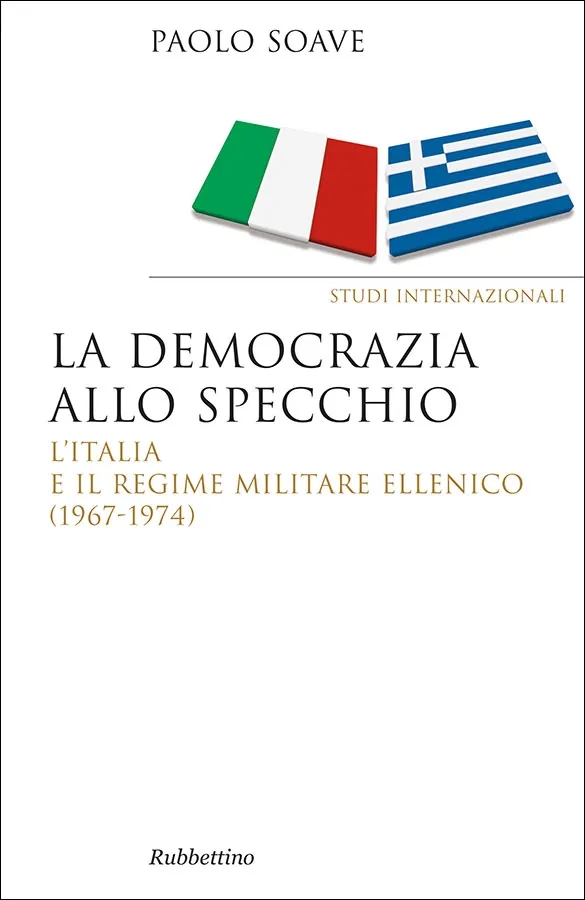
93 Sul tema si rimanda, per una prima analisi coeva ai fatti, al lavoro di Mario CERVI, Dove va la Grecia? Dal colpo di Stato al referendum, Mursia, Milano 1968. D’interesse anche il volume di S. ROUSSEAS, Grecia contemporanea, Feltrinelli, Milano 1968. Si veda anche R. CLOGG e G. YANNOPOULOS (a cura di), Greece under military rule, London 1972, e R. CLOGG, A Concise History of Greece, Cambridge University Press, Cambridge 2013, in particolare pp. 152-165. Da segnalare infine, per un punto di vista limitato alle sole relazioni italo-greche, il recente P. SOAVE, La democrazia allo specchio. L’Italia e il regime militare ellenico 1967-1975, Rubbettino, Soveria Mannelli 2014.
94 I negoziati del 1958-1961 confluiti nel primo accordo di Associazione sono richiamati in breve da G. BOSSUAT e A. LEGENDRE, Il ruolo della Commissione nelle relazioni esterne, in M. DUMOULIN (a cura di), cit., pp. 374-375. Per una ricostruzione più approfondita dei rapporti tra Grecia e CE nel ventennio 1961-1981 si rimanda invece al saggio di P. PAPASTRATIS, Opening the Gates to Enlargement. The debate on the Entry of Greece, in A. LANDUYT-D.PASQUINUCCI (a cura di), Gli allargamenti della CE/UE. 1961-2004, tomo I, il Mulino, Bologna 2005, pp. 289-302.
95 ASUE, EM 76 “Association CEE-Grèce 13 mars/20 octobre 1967”, verbale dell’Assemblea parlamentare europea, seduta di lunedì 8 maggio 1967.
96 Per questi anni cfr. A. VARSORI, L’Occidente e la Grecia: dal colpo di Stato militare alla transizione alla democrazia (1967-1976), in DEL PERO-GAVIN-GUIRAO-ID, Democrazie, op.cit., pp. 5-94, in particolare sulle diverse reazione al golpe tra USA e CE si veda pp. 20-24.
97 ASUE, EM 76, Compte-rendu sommaire de la 49e reunion du Comité d’Association CE-Grèce, Secretariat Exécutif de la Commission des Communautes Europeennes, Bruxelles, 19 juillet 1967, confidentiel.
98 Il ruolo di Edoardo Martino nel dipanarsi della vicenda non può per onestà definirsi rilevante, ma erano note da tempo le sue posizioni personali in merito ai segnali da dare, da parte europea, verso il nuovo corso avviato ad Atene. Si veda la documentazione in ASUE, EM 77 “Association CEE-Grèce” (23 octobre 1967- 24 avril 1968), Nota confidenziale per i membri della Commissione, s.d. ma collocabile nel marzo 1968.
99 Il riferimento non può che andare alla Primavera di Praga e all’onda emotiva che questa provocò immancabilmente nel corso del 1968 anche in Europa occidentale. La posizione di condanna netta dell’intervento sovietico e della cosiddetta “dottrina Breznev” da parte delle CE per voce di Martino ne favoriva l’accreditamento in sede internazionale come istituzione a difesa delle libertà democratiche e di autodeterminazione di ogni popolo, difficilmente conciliabile, agli occhi dell’opinione pubblica, con il perdurare di rapporti ufficiali con una dittatura militare. Si veda in ASUE, EM48, La distensione in Europa e l’invasione della Cecoslovacchia, discorso pronunciato all’Assemblea di Strasburgo il 1° ottobre 1968.
100 Già nel novembre 1968 il commissario democristiano evidenziava, dati alla mano, come il caso greco fosse l’unico in cui il volume complessivo degli scambi import-export con i Sei non fosse diminuito a causa della congiunturale contrazione dell’economia globale ormai incipiente, e anzi fosse aumentato fino a raggiungere i 59,2 miliardi di dollari totali. In ASUE, EM48, Les investissements étrangers dans la Grèce, relazione da presentare alla Commissione Esecutiva, s.d. ma collocabile entro il 1° dicembre 1968.
101 ASUE, EM 48, L’Associazione CE-Grecia dopo il colpo di Stato, discorso pronunciato all’Assemblea di Strasburgo, 7 maggio 1969.
102 Ibidem, EM 80 Association CEE-Grèce (novembre 1968-mars 1969), Rapport sur la situation en Grèce du M. van der Stoel presenté à l’Assemblé Consultative du Conseil de l’Europe du 28 janvier 1969.
103 ASUE, EM 48, L’Associazione Ce-Grecia dopo il colpo di Stato, cfr. supra.
104 Non mancano infatti, né nei commenti personali alle note preparate dalla Direzione Generale I, né nei suoi interventi pubblici, reiterati cenni all’insufficienza dei margini decisionali concessi alla Commissione.
105 L’intervento sopra richiamato è solo uno dei tanti che vede Martino protagonista di polemiche su questo tema nel periodo.
106 Un pericolo che si avvertiva spesso nelle comunicazioni tra i vari uffici della Commissione inerenti alla crisi greca, e che per esempio ricorre prima del mancato prestito al governo greco da parte della BEI.
107 ASUE, EM 77 “Association CEE-Grèce”, Prof. Calogeropoulos Stratis a Edoardo Martino, Atene, 1° febbraio 1968.
108 Nota a mano probabilmente dello stesso Levi Sandri: “D’accordo, ma quale può essere un tema “accettabile” dalla maggioranza dei commissari?” in ASUE, EM 77, Paolo Antici a Giovanni Falchi, capo di gabinetto del Vicepresidente (e commissario alle Politiche Sociali, ndr) Lionello Levi Sandri, Bruxelles 6 marzo 1968, confidenziale.
Lorenzo Meli, L’europeismo italiano nell’“età delle crisi”. Il contributo dei politici democristiani alla Commissione Esecutiva CE (1967-1984), Tesi di dottorato, Università degli Studi di Milano, Anno Accademico 2015-2016

#1967 #1968 #CEE #colonnelli #colpo #Comunità #dittatura #Europa #Grecia #Italia #LorenzoMeli #Sei #stato

pinkjacobo at KillBaitpinkjacobo@killbait.com
2025-10-01

La CEE elimina temporalmente los aranceles sobre combustibles para equilibrar el mercado interno

La Comisión Económica Euroasiática (CEE) ha decidido suspender temporalmente los aranceles de importación sobre la gasolina, el diésel, el combustible marítimo y el queroseno para aviación. Esta medida estará vigente hasta el 30 de junio de 2026 y fue anunciada por el ministro de comercio de la CEE,... [Ver más]

milokoala at KillBaitmilokoala@killbait.com
2025-10-01

La CEE elimina temporalmente los aranceles sobre combustibles para equilibrar el mercado interno

Más bien se ve que las sanciones no han hecho ni cosquillas, porque al final han terminado abaratando la entrada de combustible.

[Ver comentario original]

Client Info

Server: https://mastodon.social
Version: 2025.07
Repository: https://github.com/cyevgeniy/lmst