#ClimateAndHealth

Global Warming in Europe 2023: A Growing concerns

eu air pollution regulations

Global Warming is an issue that has been at the forefront of Environmental Concerns for Several Decades Now. As We Move Towards 2023, It Is Evident That the Effects of Global Warming Are Becoming Increasingly Apparent in Europe. Rising Temperatures, Extreme Weather Events, and Melting Glaciers Are Just a Few of the Signs That Point Towards The Urgent Need for Action. In this article, We Will Explore The Current State of Global Warming in Europe and Discuss the Potential Concenequences If We Fail To Address This Issue.

IMPACT OF RISING TEMPERATURES

The Rise in Global Temperatures Is One of the Most Noticable Effects of Global Warming. In Europe, Average Temperatures Have Been Steadily Increasing the Past Few Decades, With Each Year Often Surpassing The Previous One In Terms of Warmth. This Trend is causing a host of problems for the region.

Heatwaves: Heatwaveves Have Become More Frequent and Intense in Europe. In 2023, Several Countries Experienced Record-Breaking Temperatures, With Heathwaves Lasting for Days or Even Weeks. These Extreme Heat Events possesses significant risks to Human Health and Agriculture, Leading to Dehydrac, Heatstroke, and Crop Failure.

Impact on EcoSystems: Rising Temperatures Are Also Impacting Europe’s Ecosystems. Many Species, Including Plants and Animals, Are Stuggling to Adapt to the Changing Conditions. This has led to shifts in migration patterns, disruption Ecological relationhips, and in sums, Even Extinction of Certain Species.

Extreme Weather Events

Global Warming is also contribution to an increase in Extreme Weather Events Across Europe. Storms, Floods, and Drooughts Have Become More Frequent and Severe, Wreaking Havoc on Communities and Infrastructure.

Storms: Europe has experienced an uptick in severe story in Recent Years. These Storms Bring Heavy Rainfall, Strong Winds, and Even Hail, Cash Extensive Damage to Buildings, Agriculture, and Transportation Systems. The Increased Frequency of Storms Puts Coastal Areas at A Higher Risk of Erosion and Flooding.

floods: rising temperatures are causing glaciers to met, resulting in Higher Sea Levels. Combined with Increased Rainfall, This Leads to a Higher Risk of Flooding, particularly in low-lying areas. In 2023, Several European Countries Witnessed Devastating Floods That Displaced Thousands of People and Causant Significant Economic Losses.

drugs: Global Warming is also exacerbating drugs in Europe. Reduced precipitation and hygher evaporation rates are contribution to water scarcity in many regions. This has severe consequences for agriculture, as Crops RELY ONQUATE WATER SUPPLY. It also affections watermoryability for household and industrial use.

MELTING GLACIERS AND RISING SEA LEVELS

Glaciers are a Critical Component of the European Landscape, providing freshwater resources and supporting unique ecosystems. However, Global Warming is causing glaciers to met at an alarming rate.

loss of freshwater: as glaciers met, they contribute to significant loss of freshwater resources. This not only apfects The Availability of Drinking Water But Also Impacts Hydropower Generation, Irrigation, and The Overall Balance of Ecosystems.

Rising Sea Levels: The Melting of Glaciers and Polar Ice Caps is causing is Levels to Rise Around the World. In Europe, Coastal Regions are particularly vulnerable to the impacts of rising be levels. Increased coastal erosion, Saltwater Intrudion, and the potential Displacement of Communities are subject to the consequences that Europe May Face if this trend continues.

The Concencances of Inaction

If we continue to ignore the Effects of Global Warming in Europe, The Concequences Will Be Dire. Sub of the potential outcomes include:

  • Incredase Frequency and Intensity of Heatwaves, Leading to More Heat-Related Fatalities.
  • Greater Damage from Storms, Floods, and Drooughts, With Increased Economic Losses.
  • Loss of Biodiversity and Disruption of Ecosystems, Impacting Agriculture and Food Security.
  • Rising be Levels Causing Coastal Erosion, Displacement of Communities, and Loss of Valuable Coastal Ecosystems.
  • Water Scarcity, Affecting Agriculture, Industry, and Household Water Supply.

in conclusion, Global Warming in Europe is a pressing issue that demands immediate attention. The Rising Temperatures, Extreme Weather Events, and Melting Glaciers All Point To The Urgent Need for Action. It is crucial for governments, Businesses, and individuals to eat together to reduce Greenhouse gas emissions, adopt substantable practices, and work towards a Greener Future. Failure to Address Global Warming Now Will have severe consequences for Europe and the planet as a whole.

what are 4 effects of air pollution

We explore the relationship between climate change and the expansion of the expansion of the infectious desert and emphasize the importance of global health strategies. ?? #globalhealthsecurity #Climateandhealth

#ClimateAndHealth #GlobalHealthSecurity

Mr.Pollutionpollutionnews
2025-12-21

Global Warming in Europe 2023: A Growing concerns

We explore the relationship between climate change and the expansion of the expansion of the infectious desert and emphasize the importance of global health strategies. ??

ibizaund.wordpress.com/2025/12

2025-12-17

Implementation science for planetary health

Remarks about implementation science for planetary health by Reda Sadki, Executive Director, The Geneva Learning Foundation at the Centre for Planetary Health’s research corner meeting, London School of Hygiene & Tropical Medicine (LSHTM) on December 17, 2025.

Pauline Paterson (LSHTM): We are really delighted to welcome Reda Sadki. Reda is the Executive Director of the Geneva Learning Foundation, a non-profit research organization developing new epistemological and methodological approaches for complex global health challenges. Welcome, Reda.

Reda Sadki (TGLF): Warm greetings from Geneva, Switzerland. I am very pleased to share with you what we have been learning about climate change and health – in particular, how we can move from ground truth to local action on a global scale.

Since 2021, we have been running an initiative called Teach to Reach, led by community-based health professionals from all over the world. It connects people across countries and job roles, supporting the journey from local insight to global health initiative.

The scale of this network has grown significantly. In March 2021, we started with 2,604 participants. By December 2024, at the eleventh meeting of Teach to Reach, we had 24,610 health workers participating.

Who are they? Most work in health facilities and districts. Half work for government and half for civil society organizations.

Where are they? They serve in the most fragile contexts: 62% work in remote rural areas; 47% with the urban poor; 25% with refugees or internally displaced populations. And one in five work in areas of active armed conflict.

Alongside these individuals, we are nurturing the REACH Network, a coalition of more than 4,000 locally-led organizations. This is the backdrop for how we think about leadership as the key to driving change in climate and health.

The “dark matter” of implementation science

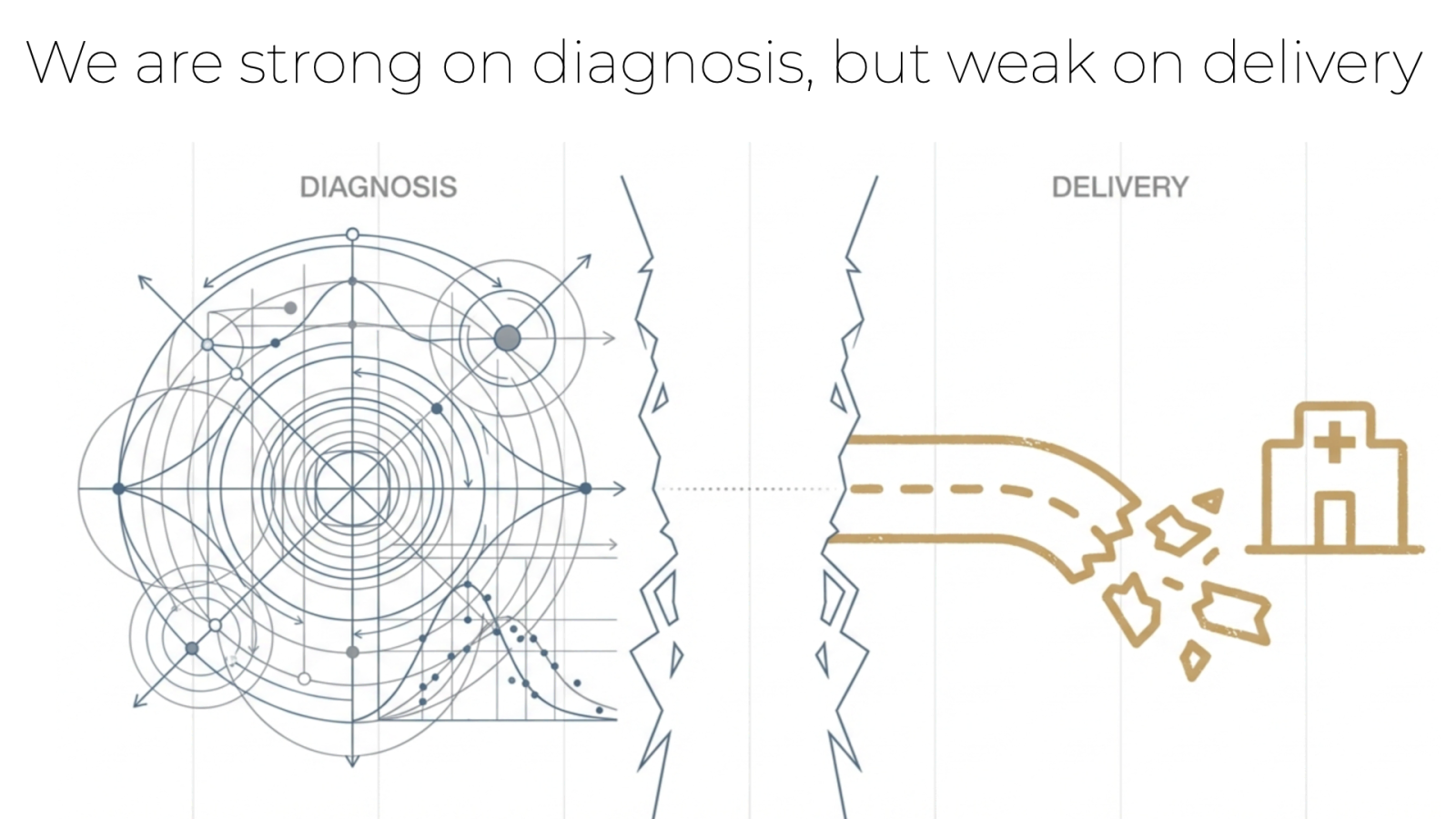
As a community working on climate change and health, we are strong – and getting stronger – on diagnosis. But we must be candid: we are weak on delivery. The science keeps getting better, but there is a gap when it comes to translating science into action.

When it comes to formal research, we see what I call the ”dark matter”, a blind spot around hyperlocal adaptation and how implementation actually happens at the local level.

This dark matter includes environmental, behavioral, and systemic signals that formal research might miss: social and economic disruption, hidden mental health burdens in communities with no formal services, community coping mechanisms, and subtle changes in vector behaviors.

Now, I know that for many of you trained in epidemiology, the word “anecdote” sets off alarm bells. We are taught to devalue it for good reason: it is prone to recall bias, selection bias, and lacks denominators. A nurse in Bangladesh noticing “more heatstroke” is a signal, not a prevalence study. We are not claiming it is.

However, we have two ways to answer the questions these signals raise. We can carry out long-term, rigorous academic studies over decades. Or – given that we are past several climate tipping points – we can recognize that aggregate patterns formed by thousands of these signals offer a speed and granularity that traditional studies cannot match. This functions as a massive, distributed sentinel surveillance system. It may be “imperfect” compared to a controlled trial, but is it riskier than the alternative? The alternative is often waiting years for definitive answers while communities suffer damage that may make those findings moot.

This requires a new epistemology. Our hypothesis is that we can build a system where an anecdote becomes an eyewitness report. A health worker, traditionally seen as a “knowledge recipient” presumed ignorant of climate science, becomes a “knowledge creator”. They know things about local impacts that no one else knows, simply because they are there every day.

In July 2023, Charlotte Mbuh, TGLF’s director who started over a decade ago as a sub-national health worker from Cameroon, stood at COP28 and said:

”What we know, we know because we are here every day. We are already managing the impacts of climate change on health. We are doing the best we can, but we need your support.”

Read Charlotte Mbuh’s full statement at COP28: Climate change is a threat to the health of the communities we serve: health workers speak out at COP28

Turning experience into evidence: the global climate change and health survey

To operationalize this, we built a living laboratory powered by a global human sensor network.

In 2025, in partnership with Grand Challenges Canada and a group of 50 global funders (including Gates, Wellcome, and Rockefeller), we conducted what I have been told is the largest-ever climate and health survey, and the one with the highest level of responses from local communities in the most climate-vulnerable regions

We received responses from 6,436 health workers, primarily from the sub-national level. Because of the trust we have built over years, the Teach to Reach network contributed over 60% of these responses, ensuring we heard from the most climate-vulnerable regions.

https://www.youtube.com/watch?v=C67nYqq-hP0

Most importantly for funders, we asked about barriers to action. The top barriers were not just resource shortages, but structural issues.

Pending their formal publications, I am not yet able to share results.

These findings are signals. They generate hypotheses. Here are three examples of hypotheses grounded in health worker experirences:

  • Geh Raphaela Agwa, a midwife from Cameroon, told us: “During this unfavourable weather period, people who can paddle canoes come in and help…”. Could community-led transport solutions improve maternal health access during floods?
  • Solace Jewel Morgan, a disease control officer in Ghana, told us: “The dry season… results in dust particles known as harmatan. This leads to a high incidence of respiratory illnesses… encourage… free distribution of personal protective masks.” Could prophylactic mask distribution reduces respiratory morbidity during the harmatan season?
  • Victoire Odia, a nurse from the Democratic Republic of Congo (DRC), told us that during extreme weather events, maternity “stays were paid for by the women’s group solidarity fund.” Could micro-financing networks increase facility-based deliveries in climate-vulnerable areas?

Of course, we must distinguish between generating a hypothesis and validating an intervention. We do not claim every local idea is safe or effective immediately. But we do claim that listening is the prerequisite to testing them.

From insight to impact: the Accelerator model for implementation science

We do not just extract data. We give it back to the community to prompt action. Since 2016, we have developed an “Accelerator” system that moves from listening to implementation. It works on a simple rhythm: participants set a specific, practical goal on Monday, and on Friday, they report on what happened, receiving feedback from peers.

This brings us to a critical tension: the balance between context and content. Critics might argue that prioritizing “context over content” carries risks. What if health workers implement unproven or suboptimal strategies? That is a valid concern. However, we see this mechanism not as a way to bypass evidence, but as the most effective tool to operationalize it.

In The Geneva Learning Foundation’s Accelerator, every participant commits to work toward their countries’ goals, and to do so by using the best available global knowledge.

Learn more: What is The Geneva Learning Foundation’s Impact Accelerator?

This actually supports effective adoption and use of global guidelines, which otherwise may linger on shelves.

In fact, we have shown in the past that this mechanism increases adherence to proven protocols (e.g., WHO guidelines on heat stress or malaria control). That is one important reason why it is a powerful implementation science tool. It transforms adherence from a wish expressed in the capital city into a reality in local communities.

Furthermore, if national planners and international experts are willing to listen, they may hear back ways to improve and strengthen the global standards, as well as gain new insights into the “how” of local implementation that defies easy generalization.

When we compared this model to conventional technical assistance or “cascade training,” the results were stark :

  1. Speed: Implementation was 7x faster.
  2. Cost: The cost was 90% lower.
  3. Sustainability: In a Ministry of Health initiative in Côte d’Ivoire, 82% of participants continued using the model without further support. 78% explicitly stated they needed no further external assistance.

These results give us confidence. We are not starting from zero. We are building on prior work in immunization and other areas of work where supporting implementation led to exactly these kinds of validated outcomes.

Here are two examples of local solutions in action.

  • Côte d’Ivoire: Communities identified stagnant water as a malaria risk and organized youth-led cleanup committees to clear gutters. This resulted in a drastic, locally measured drop in malaria cases.
  • Cameroon: In response to frequent floods, communities voluntarily cleaned gutters to ensure water did not stagnate, directly impacting disease vectors.

No one in the capital city – and certainly no one in Geneva or Seattle – knew about these initiatives.

This leads to our most ambitious projection. If we can grow this network from 80,000 to 1 million health workers by 2030, we estimate we could save 7 million lives through simple, locally resourced projects, at a cost of less than $2 per life.

I acknowledge this is an aggressive claim. It is a “back-of-the-envelope” calculation based on our pilot data. It assumes that local projects remain effective at scale and that we can attribute outcomes to the network. But I ask you: if there is even a glimmer of a chance that this is true – that we can save lives at a fraction of the cost of traditional interventions – isn’t it worth investing in the rigorous research to find out?

Discussion

Do you think MOOCs (Massive Open Online Courses) are dead?

Reda Sadki: MOOCs have become primarily marketing tools for higher education. From a pedagogical perspective, they remain transmissive, expert to learner. I do not see how that model can deliver against complex problems. We need a two-way street. We need new ways to organize the production and circulation of knowledge.

Thank you, Reda. I noticed in your results that food security is a major concern. Have you identified local actions focusing on food, given the challenges of working with healthcare workers who might not see this as their primary remit?

Reda Sadki: That is a critical question. Food insecurity is one of the most worrying consequences we are tracking. We often see a mismatch where local actors tasked with, say, immunization, do not see nutrition as their lane. However, at the community level, the approach is naturally integrated – the health worker knows the vet, who knows the farmers. Those connections exist.

We are currently preparing a major insights report that includes a specific chapter on food security. We are also designing an accelerator specifically around this topic to bring together the right set of partners, because the consequences we are documenting are dire.

You mentioned that 78% of participants eventually said “no thank you” to further support. Ideally, shouldn’t these peer networks become self-sustaining, bypassing Geneva or London entirely?

Reda Sadki: That is the goal. We have shown that more than half of each cohort stays in touch to continue leading local action. However, as long as resources and decision-making power remain concentrated in global centers, we cannot just “flip a switch”. We need to build bridges that facilitate that transformation. The goal is autonomy, but the reality requires us to actively dismantle the dependencies that current funding structures create.

Are there new capabilities that we in academia need to develop urgently to support this?

Reda Sadki: It is about moving away from being the “sage on the stage” to a “guide on the side”. For example, in our recent work, global partners and experts joined Teach to Reach sessions not to present the latest guidelines, but to listen to the challenges local practitioners faced. They then had to figure out how their expertise could be useful in response to those specific needs.

For researchers inside academic institutions, this can be difficult. It requires starting not with a research question, but with a willingness to listen to the needs of local actors and let the research questions emerge from that reality. We know this challenges the incentive structures of academia, but we are open to partnering with researchers willing to work in this emergent, demand-driven way.

It is a fascinating dilemma – we want to be guided by needs, but funding requires pre-set hypotheses. Reda, this has been truly impressive. Thank you for sharing these refreshing perspectives.

Reda Sadki: Thank you. We look forward to exploring how we can collaborate. Best wishes for the holidays and the new year.

References

  1. Sadki, R., 2025. WHO Global Conference on Climate and Health: New pathways to overcome structural barriers blocking effective climate and health action. https://doi.org/10.59350/redasadki.21322
  2. Sadki, R., 2024. Strengthening primary health care in a changing climate. https://doi.org/10.59350/5s2zf-s6879
  3. Sadki, R., 2024. Health at COP29: Workforce crisis meets climate crisis. https://doi.org/10.59350/sdmgt-ptt98
  4. Sadki, R., 2024. Critical evidence gaps in the Lancet Countdown on health and climate change. https://doi.org/10.59350/nv6f2-svp12
  5. Sanchez, J.J., Gitau, E., Sadki, R., et al., 2025. The climate crisis and human health: identifying grand challenges through participatory research. The Lancet Global Health 13, e199–e200. https://doi.org/10.1016/s2214-109x(25)00003-8
  6. Jones I, Mbuh C, Sadki R, Eller K, Rhoda D. On the frontline of climate change and health: A health worker eyewitness report [Internet]. The Geneva Learning Foundation; 2023. https://zenodo.org/doi/10.5281/zenodo.10204660

Images: The Geneva Learning Foundation Collection © 2025

#CharlotteMbuh #climateAndHealth #epistemology #globalHealth #ImpactAccelerator #implementationResearch #LSHTM #MassiveOpenOnlineCourses #PaulinePaterson #peerLearning #TeachToReach #TheGenevaLearningFoundation


From ground truth to global insights

Is the greenhouse effect Global Warming?

dj eco

Climate change is one of the most serious problems facing our planet today. Among the terms that are frequently used are the greenhouse effect and Global Warming. However, there is some confusion about whether these two concepts are the same or if they are related in any way. In this article, we will explore in depth the relationship between the greenhouse effect and Global Warming, and we will see how both are linked in the context of global climate change.

What is the greenhouse effect?

The greenhouse effect is a natural phenomenon that occurs in the atmosphere of the Earth. It works as follows: Solar radiation reaches Earth in the form of visible light and heat. Part of this radiation is reflected back to space, and another part is absorbed by the earth’s surface and the atmosphere. When the earth radiates heat to space, the greenhouse gases present in the atmosphere catch part of that heat, thus creating a kind of “blanket” around the planet. This “blanket” helps maintain the temperature of the earth at adequate levels to support life.

What causes the greenhouse effect?

The main cause of the greenhouse effect is the presence of certain gases in the atmosphere known as greenhouse gases (GHG). Some of the most important GHGs are carbon dioxide (CO2), methane (CH4) and nitrous oxide (N2O). These gases are largely released by human activities such as burning fossil fuels, deforestation and intensive agriculture. As the concentration of these gases increases in the atmosphere, the greenhouse effect intensifies and the temperatures of the earth rise.

What is Global Warming?

Global Warming refers to the increase in the average earth temperature due to the increase in greenhouse gases in the atmosphere. It is a phenomenon that has been observed during the last decades and that has significant consequences for climate, the environment and life in general. Global Warming results from the complex interaction of several factors, including greenhouse gases, human emissions and changes in climatic patterns.

How do the greenhouse effect and Global Warming relate?

The greenhouse effect and Global Warming are closely related. The greenhouse effect is the natural process that maintains the temperature of the earth at adequate levels, while Global Warming is the increase in temperature due to the increase in greenhouse gases. In other words, the greenhouse effect is the main cause of Global Warming. As human beings release more greenhouse gases in the atmosphere, the greenhouse effect intensifies and, therefore, Global Warming increases.

It is important to emphasize that Global Warming is not only a problem at local or regional level, but it is a global phenomenon that affects the entire planet. The effects of Global Warming are observed in the form of an average temperature increase, changes in climatic patterns, increased sea level, melting glaciers and polar caps, among others.

Conclusion

The greenhouse effect and Global Warming are closely related. The greenhouse effect is a natural phenomenon that maintains the temperature of the earth at adequate levels for life, while Global Warming is the increase in temperature due to the increase in greenhouse gases in the atmosphere. It is important to understand this relationship to effectively address the problem of climate change. The reduction of greenhouse gas emissions and the adoption of sustainable practices are fundamental steps to mitigate Global Warming and protect our planet.

reduce pollution nkf

Explore ideas on the relationship between the extension of propagation of climate change and infectious diseases, and highlight the importance of global health strategies. ?? #globalhealthsecurity #Climateandhealth

#climateandhealth #globalhealthsecurity

Mr.Pollutionpollutionnews
2025-12-13

Is the greenhouse effect Global Warming?

Explore ideas on the relationship between the extension of propagation of climate change and infectious diseases, and highlight the importance of global health strategies. ??

ibizaund.wordpress.com/2025/12

Environmental Law and Global Warming: Protecting Our Planet for Future Generations

environmentalists global climate change

The ISSUE OF GLOBAL WARMG HAS BECOME A Pressing concerns in today’s World. As Temperatures Rise, Ice Caps Melt, and Extreme Weather Events Become More Frequent, It Is Clear That Urgent Action is Needed To Address This Global Crisis. Environmental Law Plays A Crucial Role in Mitigating the Effects of Climate Change and Protecting Our Planet for Future Generations. In this article, We Will Explore the Intersection of Environmental Law and Global Warming, Examining the Laws and Regulations in pleace to fight this issue, and the Challenges They Face.

The Role of Environmental Law in Addressing Global Warming

Lawpasses envovental to Wide Range of Legal Frameworks, Regulations, and Policies That Seek To Protect the Environment. This includes laws specifally targeting Global Warming and Climate Change. The Primary Objective of Environmental Law in This Context is to reduce Greenhouse gas emissions, which are Primarily Responsible for Global Warming.

One of the Key Tools in Environmental Law for Addressing Global Warming Is Issussion Reduction Targets. Many Countries, as well as International Organizations, have set binding targets for reducing greenhouse gas emissions. These targets serve as a benchmark for nations to work towards in their efforts to fight climate chang.

ADDITIONALLY, ENVIRONMENTAL LAW INCLUDES REGULATIONS ON RENEWABLE ENERGY, ENERGY EFFECICY, AND THE REDUCTION OF CARBON EMISSIONS FROM INDUSTRIES. You are regulations aim to promote the transition to cleaner energy sources and sustainable practice that medimize the carbon footprint.

The Challenge of Implementing Environmental Laws

While Environmental Laws and Regulations are Essential Tools for Addressing Global Warming, Their Effective Implementation Can Be Challenging. One of the Main hinders is the Lack of Global Consensus and Cooperation. As Global Warming is a Global Issue, it requires Collective Action from All Countries. However, Reaching an Agreement on Issussion Reduction Targets and Other Measures Can Be Politically Challenging.

Another Challenge Lies in Environmental Laws. Although Many Countries have established regulations to fight climate change, enforcement can be inconsistent. Sub Businesses May Choose to Ignore or Circumvent Regulations, Leading to Inadequate Action on Reduction Greenhouse Gas Emissions.

Moreover, legal frameworks on Climate Change Vary from One Country to Another. This Lack of Harmonization poses Challenges for International Cooperation and Enforcement Efforts. For Effective Global Action on Global Warming, A More Unified Approach to Environmental Law Is Needed.

Current Environmental Laws and Policies Addressing Global Warming

The Challenges is, significant progress has been made in implementing laws to combat Global Warming. The Landmark Agreement rear in 2015, The Paris Agreement, is a Global Efforts to Address Climate Change.

The Paris Agreement Aims to Limit Global Warming To Well Below 2 Degrees Celsius Above Pre-Industrial Levels and To Pursue Efforts To Limit The Temperature Increases to 1.5 Degrees Celsius. It establishs a framework for countries to set their OWN emission reduction targets and regularly report on their progress.

MANY COUNTRIES HAVE ALSO IMPLARD DOMESTIC LAWS AND POLITIES TO SUPPORT THES COMMITMENTS Under The Paris Agreement. These include renewable energy standards, carbon pricing mechanisms, and regulations promoting energy efficient.

THE ROLE OF THE JUDICIARY IN ENVIRONMENTAL LAW

Another Critical Aspect of Environmental Law is The Role of the Judiciary in Interpreting and Environmental Regulations. Courts play a crucial role in resenting that Environmental Laws Are Upheld and That Viorators Are Held accounts.

In Recent Years, There Have Been Several Landmark Cases where Courts have collected the Rights of Individuals and Communities to A Clean and Healthy Environment. These decisions have paved the way for Stronger Environmental Protections and have increasing the accountsity of Businesses and Governments.

The Judiciary Also Plays A Role In resolving disputes Related to Environmental Regulations, Specially Those With Cross-Border Implications. International Environmental Law Provides a Framework for resolving Such dispute, and Courts are instrumental in interpreting and applying tohe laws to reure fair resolution.

CONCLUSION

Law Plays A Crucial Role in Addressing Global Warming and Protecting Our Planet for Future Generations. Through regulations, targets, and polyes, Environmental Law Seeks to Reduces Greenhouse Gas Emissions, Promote Renewable Energy, and Foster Sustainable Practices. However, Challenges in Implementing and Environmental Laws Remain, Requireing Collective Action and Greater International Cooperation. Nonetheless, The Progress Made Through Landmark Agreements Like The Paris Agreement and Through the Judiciary’s Role in Holding Violators Accounts for Gives Hope That We Can Address Global Warming and Create A Sustainable Future For All.

pollution ywam

Gringud.com digs in the relationship between climate change and vector brokerage, and highlights the importance of public health strategies. ?? #vectorBornedisasas #Climateandhealth

#climateandhealth #vectorbornedisasas

Mr.Pollutionpollutionnews
2025-12-09

Environmental Law and Global Warming: Protecting Our Planet for Future Generations

Gringud.com digs in the relationship between climate change and vector brokerage, and highlights the importance of public health strategies. ??

ibizaund.wordpress.com/2025/12

Global Warming and Acid Rain: The Devastating Concequences On Our Planet

ideologies of environmentalism pdf

The Issue of Global Warming and Acid Rain Has Become A Pressing Concern for Environmentalists and Scientists Worldwide. The Dramatic Rise in Greenhouse Gases Emissions, Primarily Caused by Human Activities, you have significant increase in the Earth’s Temperature. This Global Warming Trend Has Far-Reaching Concequences, One of which is the detrimental impact on the planet’s precipitation patterns, resulting in acid rain.

The Link Between Global Warming and Acid Rain

Global Warming Occurs When Excessive Amounts of Greenhouse Gas, Such As Carbon Dioxide (CO2), Methane (CH4), and nitrous oxide (N2O), are relased into the atmosphere. The gases Trap Heat from the Sun, leading to a rise in the earth’s temperature. As Temperatures Increase, SO DOES THE INTELECY AND FREQUENCY OF RAINFAL

The Increased Rainfall Caused by Global Warming Triggers to Cascade of Events That contribute to the formation of acid rain. When Rainwater Combines with Air Polutants, Such As Sulfur Dioxide (SO2) and Nitrogen Oxides (NOX), Issued from Industrial Processes, Power Plants, and Vehicles, It Becomes Acidic. This Acid Rain, When deposited on the Earth’s Surface This

THE IMPACT OF ACID RAIN ON ECOSYSTEMS

Acid Rain Not only poses to Threat to Human Health But also devastates Ecosystems Across The Globe. ITS Acidic Nature Has Direct and Indirect Effects On Plants, Animals, and Aquatic Life. Let’s Delve Into of the Major Concequences:

1. Forest decline

Acid Rain Damages Forets by Leaching Essential Nutrients From The Soil, Inhibiting The Uptake By Trees. As a result, Trees Become Weaker and More susceptible to Disease, Pests, and Harsh Weather Conditions. Thess of Trees have to Domino Effect On Forest Ecosystems, Affecting Biodiversity, Watershed Protection, and Climate Regulation.

2. Water Contamination

Acid Rain Infiltrates Streams, Rivers, and Lakes, Leading to a Drop in Their Ph Levels. This decline in water pH affects aquatic organisms, including fish, amphibians, and insects. Many Species Cannot Survive in Acidic Conditions, Disrupting The Delicate Balance of Aquatic Ecosystems. MOROVER, ACID RAIN CAN DELEASE TOXIC METALS, Such As Aluminum, Into Water Bodies, Putting Further Strain On The Ecosystem.

3. Soil Acidification

The Acidity of Acid Rain Alters Soil Composition by Reducting ITS PH Level and Leaching Essential Nutrients. This Process, Known As Soil Acidification, Negatively Impacts Crop Growth and Agricultural Productivity. Additionionally, acidified Soils release aluminum and other harmful elements into groundwater, posing to Threat to Human Health.

Solutions to Mitigate Global Warming and Acid Rain

Addressing the Challenges posed by Global Warming and Acid Rain Requires Collective Efforts On a Global Scale. Here are Steps that can be take to mitigate to the Environmental Problems:

1. Reduces Greenhouse gas emissions

Significant Efforts Must Be made to reduce Greenhouse gas emissions from VARIOUS SOURCES, INCLUDING THE ENERGY SECTOR, TRANSPORTATION, AND INDUSTRIAL PROCESSES. Transitioning Towards Renewable Energy Sources, Promoting Energy Efficient, and Sustainable Adopting Practices Crucial Areps in Curbing Global Warming.

2. Implement Air Pollutant Control Measures

strict regulations and emission control Technologies should be adopted to reduce the relaase of sulfur dioxide and nitrogen oxides into the atmosphere. This Includes Implementing Scrubbers in Power Plants, Using Low-Sulfur Fuels, and Promoting the Use of Catalytic Converters in Vehicles.

3. Restore and Protect Ecosystems

Efforts Should Be made to Restore Damaged Ecosystems and Protect Vulnerable Areas from Further Degradation. This includes reforestation initiatives, Sustainable implementing Land Management Practices, and Creating Protected Areas to Preserve Biodiversity.

4. Promote International Cooperation

The Fight Against Global Warming and Acid Rain Requirements International Collaboration and Cooperation. Governments, Organizations, and Individuals Must Work Together To Develop and Implement Policies, Share Knowledge and Resources, and Raise Awareness About The Importance of Environmental StewardShip.

CONCLUSION

The Concequences of Global Warming and Acid Rain Are Grave and Far-Reaching. From The Decline of Forets to Water Contamination and Soil Acidification, The Impacts Are Felt Across Ecosystems and Thread the Sustainability of Our Planet. Mitigating tohede Environmental Problems Required A Concerted Effort To Reduces Greenhouse Gas Emissions and Control Air Pollutants, as Well As Restore and Protect Ecosystems. It is only Through International Cooperation and Individual Responsibility that we can fight them and reure to Healthier and More Sustainable Future For Generations to Come.

rhyming poem on plastic pollution

Gringud.com is looking for the relationship between climate change and vector brokerage and highlights the importance of public health strategies. ?? #vectorBornedisasas #Climateandhealth

#climateandhealth #vectorbornedisasas

Mr.Pollutionpollutionnews
2025-11-28

Global Warming and Acid Rain: The Devastating Concequences On Our Planet

Gringud.com is looking for the relationship between climate change and vector brokerage and highlights the importance of public health strategies. ??

ibizaund.wordpress.com/2025/11

Global Warming Liveworksheets

how to reduce firework pollution

Global Warming LiveWorksheets: Underestanding the Impact and Taking Action

Global Warming is A Critical Issue That We Face Today. The Alarming Rise in average temperatures Worldwide has Far-Reaching consequences for our planet and future generations. LiveWorksheets is an online Educational Platform That Aims to Raise Awareness and Educate Individuals About Global Warming. In This article, We Will Explore The Impact of Global Warming and How Cersheets Can Help in Understanding This Issue And Taking Action. Let’s dive in!

The Science Behind Global Warming

Global Warming Is Primarily Caused by The Release of Greenhouse Gases, Such As Carbon Dioxide and Methane, Into The Earth’s Atmosphere. Gases Trap Heat from the Sun, leading to a gradual increase in temperatures. The Burning of Fossil Fuels, Deforestation, and Industrial Activities are of the Major Contributors to Greenhouse gas emissions.

As Global Temperatures Rise, We Witness Various Impacts On Our Planet. Melting Ice Caps, Rising Sea Levels, Extreme Weather Events, and Habitat Loss Are Just a Few of the Concequences. It is crucial to understand the Science Behind Global Warming to understand the severity of the ISSUE and Take necessary actions to mitigate its effects.

LiveWorksheets: A Valuable Educational Resource

LiveWorksheets offers A Wide Range of Educational Resources to Help Individuals Understand Global Warming In A Comprehensive Manner. With its interactive worksheets and activities, The Platform Enough Learners of All Ages and Promotes Active Learning.

The Worksheets on Liveworksheets Cover Various Aspects of Global Warming, Including Is Causes, Effects, and Potential Solutions. The materials Provide Detailed Information and found Critical Thinking, Allowing Learners to Grasp the complexity of the ISSUE. Whether you are a Student, Teacher, or just individual intersted in learning, liveworksheets offers valuable resources to enhance your knowledge about Global Warming.

Exploreing the Causes of Global Warming

Undertaking the Causes of Global Warming Is Fundamental in Addressing This Issue. LiveWorksheets Provides Informative Worksheets that Delve into the root causes of Global Warming, Such as Greenhouse gas emissions, deforestation, and the burning of fossil fuels. These resources explanin the science behind each cause and its impact on the enviedment.

for Example:

  • A Worksheet Might Explain How the Burning of Fossil Fuels Releases Carbon Dioxide, Greenhouse Gas, Into The Atmosphere, Trapping Heat and Contribution to Global Warming.
  • Another worksheet might highlight the impact of deforestation on Global Warming, Emphasizing How the Remoteval of Trees reduces the planet’s ability to absorb carbon dioxide, thus increasing greenhouse gas levels.

By Exploreing these Causes Through Liveworksheets, Learners Can Gain A Comprehensive Understanding of the Global Driving Warming and Develop A Sense of Urgency Towards Finding Solutions.

Examination the Effects of Global Warming

The Effects of Global Warming Are Wide-Ranging and possess Significant Challenges to Ecosystems and Human Life. LiveWorksheets Offers Detailed Resources that outlines Effects, findging Learners to explore the consequences and their implications.

for instance:

  • A worksheet might discuss the melting of polar ice caps, highlighting how This Phenomenon Leads to Rising Sea Levels and Threatens Coastal Communities with Increased Flood Risks.
  • Another Worksheet might focus on extreme weather Events, Explaining How Global Warming Hurrican Intensifies, Drooughts, and Heatwaveves, Agricultural Impacting Productivity and Endangengo Human Lives.

by examining the effects of Global Warming Through LiveWorksheets, Gain Insight into the urgency of addressing this issue and the need for immediate action.

SEEKING SOLUTS AND TAKING Action

LiveWorksheets not only Individual Educates About Global Warming But Also Empowers Them to Take Action. The Platform Provides Resources that promote substantial practice and highlight potential solutions to mitigate Global Warming.

for Example:

  • A worksheet might present renewable energy sources Like solar and wind power, emphasizing their role in reducing greenhouse gas emissions and transitioning towards to low-carbon future.
  • Another Worksheet Might Discuss the importance of conservation, individual urging to reduce carbon footprints by adopting energy-saving habits and promoting recycling and reforestation.

by Suggesting practical solutions and sustainable actions, LiveWorksheets Inspires Individuals to make a positive impact and contribute to the Fight Against Global Warming.

CONCLUSION

Global Warming is an urgent issue that requires Collective Efforts to address. LiveWorksheets Serves As a Valuable Educational Resource That enables Individuals to Understand the Impact of Global Warming And Take Action. Through its Interactive Worksheets and Activities, The Platform Equips Learners With The Knowledge they need to make Reported Decions and contribute to Sustainable Future. Let’s Embrace The Educational Opportunities Provided by Liveworksheets and Join Hands in Combating Global Warming.

xylene air pollution

Explore ideas on the relationship between the extension of propagation of climate change and infectious diseases, and highlight the importance of global health strategies. ?? #globalhealthsecurity #Climateandhealth

#climateandhealth #globalhealthsecurity

Mr.Pollutionpollutionnews
2025-11-21

Global Warming Liveworksheets

Explore ideas on the relationship between the extension of propagation of climate change and infectious diseases, and highlight the importance of global health strategies. ??

ibizaund.wordpress.com/2025/11

The amount of Global Warming: how does it affect the planet?

environmentalism quora

Global Warming is one of the biggest challenges facing our planet today. As carbon dioxide levels and other greenhouse gases continue to increase in the atmosphere, the temperature of the earth is experiencing a rapid increase. This phenomenon has led to devastating results, such as the thaw of polar caps, the increase in sea level, the change of climatic patterns and even the extinction of various species.

The cause of Global Warming

Global Warming is mainly caused by human activity, especially by burning fossil fuels such as oil, natural gas and coal. These fuels release large amounts of carbon dioxide and other greenhouse gases in the atmosphere, creating a greenhouse effect that catches the heat of the sun and increases the temperature of the planet.

In addition, deforestation, the intensification of agriculture and urbanization also contribute to Global Warming. The destruction of tropical forests, for example, reduces the absorption capacity of carbon dioxide of the Earth, which causes an even greater increase in the levels of greenhouse gases in the atmosphere.

The magnitude of the problem

It is important to understand the amount of Global Warming that we have experienced so far and how much it is expected to increase in the future. According to the most recent scientific reports, the average temperature of the earth has increased approximately 1 grade Celsius from the pre -industrial era. This may seem like a small figure, but even this small increase has had serious consequences.

If measures are not taken to reduce greenhouse gas emissions, the earth temperature is expected to increase between 2 and 4 degrees Celsius by the end of this century. This temperature increase would have devastating effects throughout the planet, including the increase in sea level, the desertification of entire regions, the loss of biodiversity and the threat to food security.

Global Warming impacts

Global Warming is already having a significant impact on our planet. One of the most visible effects is the melting of polar caps. As the poles melt, the sea level is increasing rapidly, threatening coastal communities and marine biodiversity.

In addition, Global Warming is altering climatic patterns worldwide. There are more frequent extreme climatic events, such as more intense storms, longer droughts and torrential rains. These extreme events have a significant impact on agriculture, infrastructure and life of people in general.

Global Warming is also affecting terrestrial and marine ecosystems, endangering the survival of many species. The coralos, for example, are bleaching and dying due to the temperature increase of the oceans, which has a negative impact on coral reefs and throughout the marine food chain.

The importance of acting

Given the magnitude of the problem of Global Warming, it is crucial that we take immediate measures to reduce our greenhouse gas emissions. The transition to renewable energy sources, the adoption of sustainable agricultural practices and the protection of natural ecosystems are some of the actions we can take to mitigate the effects of Global Warming.

At the individual level, we can contribute to change adopting a more sustainable lifestyle. Reduce energy consumption, use public transport, recycle and consume local and organic foods are some of the actions that we can all take to reduce our carbon footprint.

CONCLUSION

The amount of Global Warming that we have experienced so far has serious consequences for our planet. From the melting of polar caps, to extreme climatic events and loss of biodiversity, Global Warming is affecting all corners of the world. The magnitude of the problem requires an urgent response. It is time for us to take measures to reduce our greenhouse gas emissions and work together to create a sustainable future.

pollution rate in the philippines

Explore Gringud.com for insights on the connection between climate change and the spread of infectious diseases, highlighting the importance of global health strategies. ?? #GlobalHealthSecurity #ClimateAndHealth

#ClimateAndHealth #GlobalHealthSecurity

Mr.Pollutionpollutionnews
2025-11-14

The amount of Global Warming: how does it affect the planet?

Explore Gringud.com for insights on the connection between climate change and the spread of infectious diseases, highlighting the importance of global health strategies. ??

ibizaund.wordpress.com/2025/11

Global Warming in Maryland: Causses, Effects, and Solutions

how to reduce methane gas pollution

Global Warming is an issue of utmost importance in today’s world. It is a significant envoconmento phenomenon caused by the continuous increase of Greenhouse gases in the Earth’s atmosphere. The State of Maryland, Located on the East Coast of the United States, is not exempt from the efforts of Global Warming. In This article, We Will Explore The Causses and Effects of Global Warming in Maryland and Discuss Potential Solutions to Mitigate ITS IMPACT.

Causes of Global Warming in Maryland

in Maryland, The Primary Causes of Global Warming are similar to Those Worldwide. The Burning of Fossil Fuels, Such As Coal, Oil, and Natural Gas, For Energy Production is the Major Contribute to Greenhouse Gas Emissions. Power Plants, Vehicles, and Industrial Process Release Carbon Dioxide (CO2), Methane (CH4), and Nitrous Oxide (N2O) into the atmosphere, Trapping Heat and Causing Global Temperatures to Rise.

deforestation is the significant factor contribution to Global Warming in Maryland. The Destruction of Forets reduces the absorption of CO2 by trees and increases the concentration of greenhouse gases in the atmosphere.

Effects of Global Warming in Maryland

The Effects of Global Warming in Maryland Are Diverse and Far-Reaching. Rising Temperatures Lead to More Frequent and Severe Heatwaves, Exacerbating Heat-Related Illnesses and Increasing Energy Demands for Cooling. Additionionally, The increased in Temperature Affects Marine Ecosystems, Leading to the Loss of Biodiversity and Negatively Impacting Fisheries, which are vital to Maryland’s Economy.

Let Level Rise is a significant concern for coastal Areas in Maryland, including cities like Baltimore and Annapolis. As Temperatures Rise, glaciers and polar Ice caps melt, causing the seight to increase. This Leads to Coastal Erosion, Saltwater Intrudion Into Freshwater Sources, and An Incredase Risk of Flooding During Storms.

Extreme Weather Events Such as Hurricanes, Storms, and Heavy Rainfall Are Becoming More Frequent and Intense in Maryland Due to Global Warming. These events results in property Damage, The Displacement of Communities, and Infrastructure Disruptions.

ADAPTING TO GLOBAL WARMG IN Maryland

Given The Already Notable Effects of Global Warming in Maryland, It is crucial for the state to adapt and implement strategies to mitigate its impact. Submantial adaptation measures include:

  • Developing and implementing climate action plans to reduces Greenhouse gas emissions
  • Investing in Renewable Energy Sources Such as Solar and Wind Power
  • Sustainable implementing Land uses and promoting reforestation
  • Improving Coastal Infrastructure to Withstand Sea Level Rise and Storm Surges
  • Creating Public Awareness Campaigns to Educate Residents About The Importance of Reducting Greenhouse Gas Emissions

THE ROLE OF POLY IN ADDRESSING GLOBAL WARMG

AT Bow the State and Federal Levels Play A crucial Role in Addressing Global Warming in Maryland. State Governments Can Establish Renewable Energy Targets, provides incentives for energy-efficient practices, and regulates emissions from Various sectors. FURTERMORE, Collaboration Between State and the federal government is essential to develop understanding climate change police that aim to reduces Greenhouse gas emissions and promote substantial practices.

CONCLUSION

Global Warming is an urgent issue that required immediate attention and action in Maryland. The Causa and Effects of Global Warming in the State are undeniable, Impacting Various Aspects of the Environment, Economy, and Society. Through Implementing Adaptation Measures, Sustainable Promoting Practices, and enacting Effective Policies, Maryland Can Work Towards Global Warming and Creating A Creating A More Substantable Future For its Residents.

yorkshire water pollution

Gringud.com digs in the relationship between climate change and vector brokerage, and highlights the importance of public health strategies. ?? #vectorBornedisasas #Climateandhealth

#ClimateAndHealth #vectorBornedisasas

Mr.Pollutionpollutionnews
2025-11-12

Global Warming in Maryland: Causses, Effects, and Solutions

Gringud.com digs in the relationship between climate change and vector brokerage, and highlights the importance of public health strategies. ??

ibizaund.wordpress.com/2025/11

Global Warming impacts in November 2023

how would a local government reduce pollution

Global Warming has become one of the most urgent challenges facing our planet today. As we advance towards the month of November 2023, it is important to evaluate and understand the impacts that this phenomenon has had and will continue to have in our climate and environment. In this article, we will explore the effects of Global Warming in November 2023 and how this affects our daily life.

Derret of polar caps

One of the most obvious effects of Global Warming in November 2023 is the continuous melting of glacial caps in the poles. This has led to an increase in sea level, which in turn has caused serious coastal floods in various parts of the world. The loss of ice in Antarctica and Greenland is occurring at an alarming speed, resulting in dramatic changes in marine and terrestrial ecosystems.

In addition, the melting of polar caps is contributing to the increase in water temperatures in the oceans, which in turn has an impact on marine life and global climatic patterns.

Increased extreme climatic phenomena

Another obvious effect of Global Warming in November 2023 is the increase in extreme climatic phenomena in different regions of the world. Climate events such as hurricanes, droughts, floods and snow storms are becoming increasingly intense and frequent. This has serious consequences for human life, such as household loss, the interruption of agriculture and infrastructure, as well as the loss of lives.

In November 2023, we can expect a greater incidence of these extreme climatic phenomena in different parts of the world. This can affect food security, health and well -being of affected communities, as well as having long -term socio -economic implications.

Water shortage

Global Warming is also contributing to the shortage of water in various regions of the world. As temperatures increase, fresh water reserves are evaporating faster. In addition, the change in rainfall patterns and the melting of glacial ice are altering traditional water supplies.

In November 2023, we are likely to see a greater shortage of water in areas that are already experiencing drought problems. This may have a significant impact on agriculture, food availability and human well -being in general. The affected communities are expected to have difficulty accessing clean and safe water to drink and water crops.

LOSS OF BIODIVERSITY

Another impact of Global Warming in November 2023 is the accelerated loss of biodiversity. Ecosystems are being affected by climate change, resulting in the disappearance of species and the destruction of natural habitats.

In November 2023, we can expect a greater reduction in biodiversity in different parts of the world. This will negatively affect the stability of ecosystems, as well as the provision of essential ecosystem services for human beings. In addition, the loss of species can have unpredictable consequences in the food chain and can lead to the spread of diseases and pests.

CONCLUSION

Global Warming in November 2023 is causing a series of significant impacts on our climate and environment. The melting of polar caps, the increase in extreme climatic phenomena, water scarcity and biodiversity loss are just some of the effects we are experiencing and that will continue to intensify in the future.

It is crucial that we take urgent measures to address Global Warming and reduce our greenhouse gas emissions. This requires the implementation of solid policies globally, as well as individual actions to reduce our carbon footprint and promote a sustainable lifestyle. Only through a joint effort we can mitigate the impacts of Global Warming and protect our planet for future generations.

??????? pollution

Explore the relationship between climate change and the expansion of the spread of infectious diseases and highlight the importance of global health strategies. ?? #globalhealthsecurity #Climateandhealth

#ClimateAndHealth #GlobalHealthSecurity

Mr.Pollutionpollutionnews
2025-11-12

Global Warming impacts in November 2023

Explore the relationship between climate change and the expansion of the spread of infectious diseases and highlight the importance of global health strategies. ??

ibizaund.wordpress.com/2025/11

2025-11-11

The future of work: remarks at the 9th 1M1B Impact Summit held at the United Nations in Geneva

On November 7, 2025, Reda Sadki, Executive Director of The Geneva Learning Foundation, joined the panel “The Future of Work: AI and Green Skills” at the 9th 1M1B Impact Summit held at the United Nations in Geneva. Moderated by Elizabeth Saunders, the discussion explored the rapid redefinition of the workforce by artificial intelligence and the green transition. The following is an edited transcript of Mr. Sadki’s remarks.

Living with artificial intelligence

Moderator: You have just seen some of these really incredible changemaker ideas and so what skills and mindsets stood out to you and how do you think those can be scaled to build a workforce that is living with AI and not competing with it?

That is a wonderful question.

I would answer that the key skill is learning to work with artificial intelligence.

It is likely that your generation will be the first one learning to work side-by-side with AI as a partner or a co-worker, in the same way my generation learned to navigate the Internet.

This requires three things.

First, being ambitious.

Second, being bold.

And third, being courageous.

Things are going to change dramatically in the next three to six years.

There is a convergence of belief among those building these systems—what some call the “San Francisco Consensus”—that within this short timeframe, AI will fundamentally transform every aspect of human activity.

We are facing the arrival of a new, non-human intelligence that is likely to have better reasoning skills than humans.

This is not just about new tools.

We are already seeing AI automate the routine tasks that make up the first rungs of a professional career.

Some may tell you AI is not coming for your job, but I struggle to see that as anything other than misleading at best.

In our programmes at The Geneva Learning Foundation, we have already used AI to replace key functions previously performed by humans.

So, the sooner we are thinking, learning, and getting ready to navigate those changes, the better.

The challenge is not to compete with AI in knowledge transmission.

The risk is what some call “metacognitive laziness”, outsourcing our critical thinking to the machine.

What is left for humans, and what we must cultivate, is facilitation, interpretation, and uniquely human-centric skills.

These include creativity, curiosity, critical thinking, collective care, and consciousness.

We must cultivate judgment, contextual wisdom, and ethical reasoning.

We are navigating the unknown, and learning to do so together – by strengthening the connections between us, by asking what it means to be connected as humans – will be critical to our survival.

Peer learning and democratizing access

Moderator: I have a question for you about your foundation, because you have pioneered peer learning networks that have reached thousands globally. So what can we learn from this model about how to democratize access to AI and green skills, and make lifelong learning more inclusive and action-driven?

The Geneva Learning Foundation’s mission, since 2016, has been to research, develop, and implement new ways to learn and lead.

Our initial premise was that our traditional education systems are broken.

They often rely on a top-down, “transmission model” of learning, where knowledge flows from experts to practitioners.

This model is too slow, too expensive, and often fails to reach the people and communities that are facing extinction-level threats, whether that is climate change or artificial intelligence.

In today’s world, these broken systems create significant risks when it comes to the critical threats upon our societies, including climate change and artificial intelligence.

In the last three years, we have made key breakthroughs in solving four problems:

  • The problem of scale: how do we simultaneously connect tens of thousands of people in a single initiative, rather than one classroom at a time?
  • The problem of speed: how do we share knowledge at the speed problems emerge?
  • The problem of cost: how do we make this affordable?
  • And the problem of sustainability: how do we create systems people will continue to use because they are relevant?

We have developed a model that we have tested in over 137 countries, working with international partners as well as ministries of health and, most importantly, with people on the ground in local communities.

The first lesson learned is that in today’s complex, hyper-connected world, where there is an abundance of knowledge, simply knowing things is necessary, but not sufficient.

The second lesson is recognizing the significance of what people know because they are there every day.

We operate within knowledge systems that tend to devalue this “experiential knowledge”, often dismissing it as “anecdotal”.

This is a form of “epistemic injustice”.

We believe we must value what the health worker knows, what the mother or grandmother knows, and what the youth know, in order to solve the challenges before us.

The third lesson is the power of digital networks to enable connections.

In the past, learning from experience was constrained by our local environment.

With digital networks, you can make connections with people from all over the world.

This led us to the central piece of our innovation: peer learning mediated through digital networks.

This could be so much more than the informal chatter and negative feedback loops of social media.

It is a structured process where participants develop concrete projects addressing real challenges, review each other’s work, and engage in facilitated dialogue to share insights.

Knowledge flows horizontally, from peer to peer, rather than just vertically.

This model solves our four problems.

It gives us scale.

There is no upper limit.

It gives us speed.

It turns out to be incredibly cheap.

And it is sustainable, because people keep doing it because it is actually helping them solve their needs.

To give a specific example, in July 2023 we launched our program on climate change and health.

We started by listening to the voices of thousands of health workers from all over the world, who painted a very scary picture of the impacts of climate change on the health of those they serve.

But we also found that health workers were being incredibly creative with very limited resources.

They had already begun to solve the problems they were facing in their communities, but unfortunately, very often with no one helping or supporting them.

That led us to calculate that if we are able to connect one million health workers to each other to be learning from and supporting each other by 2030, that group of health workers could use the power of those connections to save seven million lives.

And for the “bean counters” in the room, this would be at a cost of less than two dollars per life saved, which is actually cheaper than vaccination, one of the most effective interventions we have in health today.

This is such an incredible equation that some of our partners say it sounds too good to be true.

There is an incredible opportunity to link up health workers with other segments of society, including youth.

We see the potential from building these coalitions and networks.

This brings us back to AI.

We really see peer learning as key to our survival as human beings.

We may end up working with machines that already exceed our cognitive capacities, and will almost certainly do so definitively in pretty much every area of work within the next three to six years.

We are going to have to respond to that by strengthening the connections we have as human beings.

AI systems are trained on global data, but humans possess deep “contextual intelligence”.

Peer learning is the bridge.

It is how we learn together how to adapt AI’s powerful analytics to our local realities, cultural contexts, trust networks, and resource constraints.

We have to think about what it means to be human in the Age of AI, and learning from each other will be very critical, very key to that survival.

Image: The Geneva Learning Foundation Collection © 2025. Suspended between earth and ether, Cathedral of Circuits and Roots evokes a world where technology and nature, thought and matter, coalesce in fragile harmony. Its oxidized cubes, hues of turquoise, gold, and quiet rust, resemble relics of a civilization both ancient and yet to come. The sculpture’s floating architecture suggests a digital forest, each metallic block a leaf of knowledge, each connection a pulse of shared intelligence. It speaks to the dual call of our age: to grow roots deep in human wisdom, even as we build circuits reaching toward artificial minds. In this shimmering equilibrium, the work asks: can progress be both luminous and humane — and can learning itself become an act of restoration?

References

#9th1m1bImpactSummit #artificialIntelligence #climateAndHealth #globalHealth #greeSkills #peerLearning #youth

Green skills and artificial intelligence

Guy Callendar: The man who predicted Global Warming

to reduce pollution

Guy Stewart Callendar was a British engineer and scientist who became one of the key figures in the study of climate change. Born in 1898, Callendar dedicated much of his life to the analysis of climatic data and was one of the first to warn about Global Warming.

The beginnings of Callendar research

At the beginning of the 20th century, interest in the weather and its possible changes was still incipient. However, Callendar was determined to explore the connections between human activity and the climate. Through his pioneering work, Callendar began collecting and analyzing temperature data from various sources, including historical records, measurements of observation stations and temperature measurements in the ocean.

Over time, Callendar noticed a worrying pattern: global temperatures had increased significantly since the mid -nineteenth century. This led him to formulate the hypothesis that human activities, especially the burning of fossil fuels, could be responsible for this heating.

The influence of Callendar in the scientific community

Guy Callendar’s theories were not immediately accepted by the scientific community of the time. However, Callendar continued to collect and analyze data to support its hypothesis. In 1938, he presented his findings at a conference of the Royal Meteorological Society in London, where he argued that the accumulation of carbon dioxide in the atmosphere was the main cause of Global Warming.

The work of Callendar was fundamental to lay the foundations for research on Global Warming. Their studies attracted the attention of other scientists, who began to investigate and support the theory of Callendar.

Callendar’s legacy in the study of Global Warming

Although Guy Callendar died in 1964, his legacy in the study of Global Warming persists until today. Their research and analysis were fundamental to establish a relationship between greenhouse gas emissions and increased temperatures.

At present, the conclusions and findings of Callendar have been corroborated by a large number of additional scientific research. Their predictions have been demonstrated correct and have been confirmed by the Intergovernmental Panel on Climate Change (IPCC) and other renowned scientific organizations.

Conclusion

Guy Callendar is considered one of the key figures in the study of Global Warming. Thanks to his pioneering work, he managed to demonstrate the relationship between greenhouse gas emissions and Global Warming. Despite the initial lack of recognition, their theories have been supported by subsequent investigations and have become the basis of the fight against climate change. Guy Callendar’s legacy endures in the field of science and its importance in understanding Global Warming should not be underestimated.

reduce chemical pollution

Explore Gringud.com for insights on the connection between climate change and the spread of infectious diseases, highlighting the importance of global health strategies. ?? #GlobalHealthSecurity #ClimateAndHealth

#ClimateAndHealth #GlobalHealthSecurity

Mr.Pollutionpollutionnews
2025-11-08

Guy Callendar: The man who predicted Global Warming

Explore Gringud.com for insights on the connection between climate change and the spread of infectious diseases, highlighting the importance of global health strategies. ??

ibizaund.wordpress.com/2025/11

Client Info

Server: https://mastodon.social
Version: 2025.07
Repository: https://github.com/cyevgeniy/lmst