
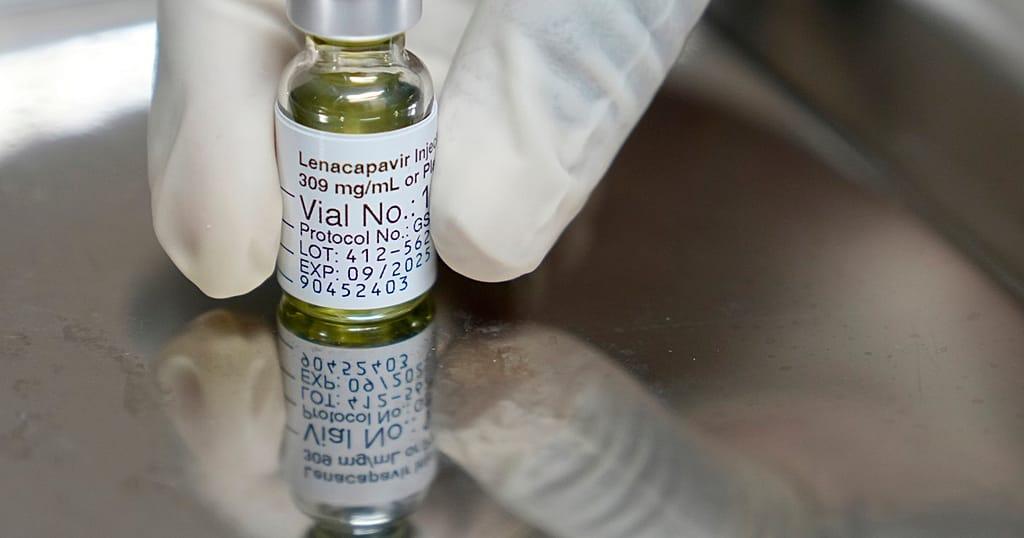
Kenya to roll out game-changing HIV drug in March http://newsfeed.facilit8.network/TR25hV #HIVPrevention #Kenya #HealthInnovation #GlobalHealth #AIDS
#globalHealth
Africa: Nearly Two-Thirds of Maternal Deaths Occur in War-Prone Countries - WHO: [Premium Times] In 2023 alone, an estimated 160,000 women died from preventable maternal causes in fragile and conflict-affected settings. http://newsfeed.facilit8.network/TR1ZH2 #MaternalHealth #WomenEmpowerment #Africa #GlobalHealth #ConflictResolution

Africa: Maternal Deaths Spike During War and Instability, New Report Warns: [UN News] Nearly two thirds of all maternal deaths worldwide occur in countries marked by conflict or fragility, according to a report released on Tuesday by the World Health Organization (WHO) and partners. http://newsfeed.facilit8.network/TR1W1V #MaternalHealth #GlobalHealth #WomensRights #PublicHealth #WHO

How vaccines give our immune systems a home advantage
#Health #Vaccines #Immunity #ImmuneSystem #TCells #Microbiology #Medicine #InfectiousDiseases #Measles #COVID19 #mRNA #Vaccination #PreventiveCare #DiseasePrevention #GlobalHealth
https://the-14.com/how-vaccines-give-our-immune-systems-a-home-advantage/
Africa: Ebola Has Gone From a Global Emergency to a Disease We Can Stop, Says CEPI Chief: [allAfrica] "In a single decade, the world has transformed Ebola from a global emergency to a disease that can be stopped in its tracks," said Dr Richard Hatchett, CEO of the Coalition for Epidemic Preparedness Innovations (CEPI). Dr Hatchett said, a few weeks ago, Ebola vaccines from MSD (known as Merck & Co. in… http://newsfeed.facilit8.network/TR0tp7 #Ebola #PublicHealth #Vaccines #EpidemicPreparedness #GlobalHealth

Africa: How Vaccines Give Our Immune Systems a Home Advantage: [The Conversation Africa] We are now approaching six years since COVID-19 was declared a pandemic by the World Health Organization, yet talk of vaccines and our immune systems persists in our cultural conversations -- from political arenas to the dinner table. http://newsfeed.facilit8.network/TR0RGF #Vaccines #ImmuneSystem #COVID19 #PublicHealth #GlobalHealth


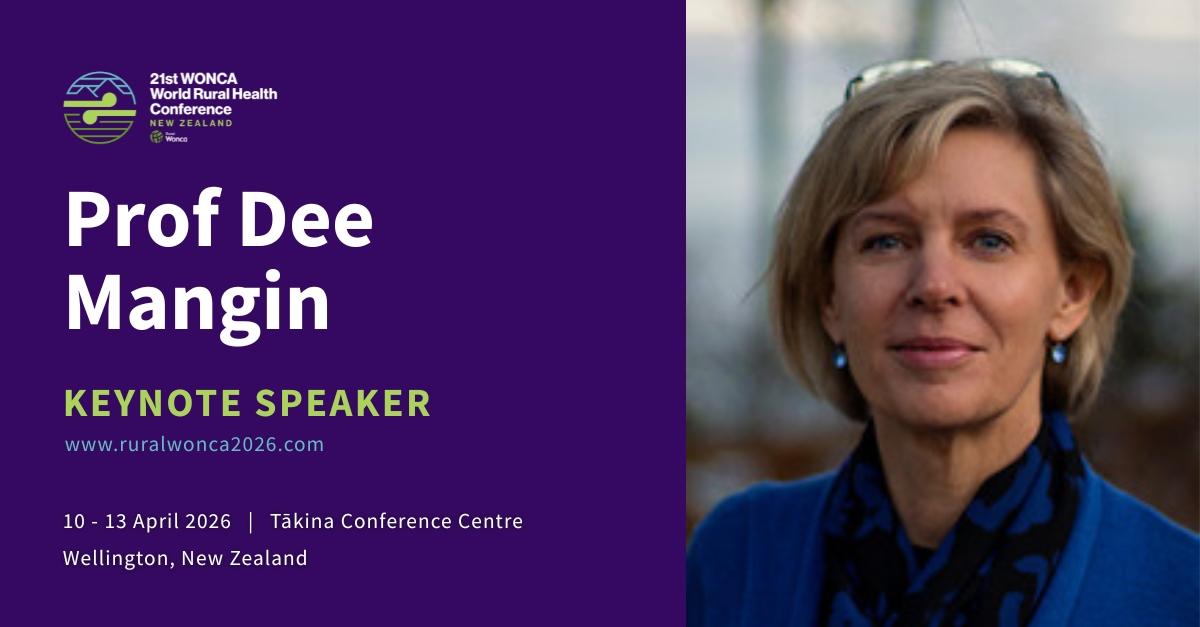
We’re honoured to welcome Professor Dee Mangin as a keynote speaker for the 21st WONCA World Rural Health Conference.
A global leader in primary care, Prof Mangin brings bold thinking on equity, evidence, and better health systems.
Register now: https://zurl.co/VvNnD
#RuralWONCA26 #WONCA #PrimaryCare #HealthSystems #GlobalHealth

ENTOD Pharmaceuticals Joins Global Efforts to Tackle Preventable Childhood Blindness
#TycoonWorld #ChildhoodBlindness #PreventableBlindness #RightToSight #EyeHealth #PaediatricOphthalmology #VisionCare #ROPPrevention #RetinopathyOfPrematurity #GlobalHealth #PublicHealth #SDG3 #HealthForAll #ChildHealth #HealthcareInnovation #PharmaNews #ENTODPharmaceuticals #Ophthalmology #EarlyScreening
Africa: New African Research Shapes the Future of HIV Treatment Globally: [Center for Epidemiological Modelling and Analysis] Failure to adhere to HIV treatment is costing lives The Ndovu Study is strengthening HIV treatment by redefining how treatment failure and drug resistance are detected, managed, and prevented across Africa and beyond. http://newsfeed.facilit8.network/TQw8Lr #HIVAwareness #HIVTreatment #AfricaHealth #GlobalHealth #NdovuStudy


‘At 2am, it feels like someone’s there’: why Nigerians are choosing chatbots to give them advice and therapy https://www.theguardian.com/global-development/2026/feb/12/nigeria-mental-health-ai-chatbots-psychiatry-therapy-depression-privacy #GlobalHealth #GlobalDevelopment #AiArtificialIntelligence #MentalHealth #Nigeria #Africa #WorldNews #Health #Technology #Privacy #Psychiatry #CounsellingAndTherapy #Society #DataProtection
Western Tech + Eastern Wisdom = The future of healthcare?
Our new report reveals why Medical Tourism China is booming for cancer & stroke recovery. Access JCI-accredited hospitals and dual-degree experts for a fraction of the cost.
MedBridgeNZ is your concierge connection to this world-class care.
Read more: https://zurl.co/x8XXW
#IntegrativeMedicine #GlobalHealth #CancerCare #TCM #China #MedicalConcierge #MedBridgeNZ #MedicalTourismChina #ChinaMedicalTourism

Expanding universal health coverage in Southeast Asia https://www.politico.eu/sponsored-content/expanding-universal-health-coverage-in-southeast-asia/?utm_source=RSS_Feed&utm_medium=RSS&utm_campaign=RSS_Syndication #Climatechange #Healthsystems #Globalhealth #Surveillance #Development #Humanrights #Healthcare #Investment #HealthCare #Buildings #Hospitals #Medicines #Platforms #Conflict #Services #Bridges #Finance #History #Budget #career #Rights #Banks #Roads #Asia
Africa: Building Health Systems for Africa's Vaccine Sovereignty, By Chinedu Moghalu and Nicaise Ndembi: [Premium Times] Africa's engagement with global vaccine supply over the past five years has shown that access to vaccines and biologics is shaped less by goodwill or financing alone. http://newsfeed.facilit8.network/TQt1kD #VaccineSovereignty #HealthSystems #Africa #GlobalHealth #Vaccines

Africa: External Aid Cuts Affecting HIV Treatment Across Africa, Says UN: [Reporter] Scale-backs and deep spending cuts within the US government and the Global Fund to Fight AIDS are hobbling HIV treatment programs across Africa, including in Ethiopia, warns a new report from a UN health agency. http://newsfeed.facilit8.network/TQst0j #HIVAwareness #GlobalHealth #AIDS #AfricaAid #HealthEquity

Africa: Ughe's Professor Abebe Bekele On Training Africa's Next Health Leaders: [New Times] The University of Global Health Equity (UGHE) is redefining medical education. Founded to train compassionate, skilled, and knowledgeable healthcare leaders, the university welcomes students from across Africa and the world. http://newsfeed.facilit8.network/TQsmCV #HealthcareLeadership #MedicalEducation #GlobalHealth #Africa #UGHE


Traditional food could help reverse Nepal’s ‘diabetes epidemic’, studies suggest https://www.theguardian.com/global-development/2026/feb/10/traditional-food-could-help-reverse-nepals-diabetes-epidemic-studies-suggest #GlobalHealth #GlobalDevelopment #Diabetes #UltraprocessedFoods #Nepal #Society #SouthAndCentralAsia #WorldNews
"Mental health during disaster recovery"
https://www.psychologytoday.com/us/blog/disaster-by-choice/202602/people-heal-in-different-ways-and-at-different-paces
#Health #MentalHealth #GlobalHealth #DRR #DisasterRecovery #Shealing

Comparative analysis of workforce development models in the global malaria elimination agenda
The stagnation in global malaria mortality reduction has forced a re-evaluation of the tools and strategies currently deployed in high-burden countries.
While biological challenges such as insecticide resistance and parasite mutations are well-documented, a critical bottleneck remains the capacity of the human workforce to implement technical strategies with precision.
The transition from control to elimination requires a fundamental shift in workforce development.
It demands moving beyond the passive transmission of technical knowledge toward models that recognize the value of the health worker.
People who work for health, especially those who engage directly with communities, are likely to possess unique insights into local transmission dynamics and community behavior.
This analysis reviews four predominant capacity-building architectures currently active in the malaria landscape.
These initiatives are assessed based on their ability to scale to the district and community levels, their cost-effectiveness, and their capacity to validate and utilize the tacit knowledge held by local staff.
Malaria learning model 1. The academic massive open online course model
The most prominent example of the digital transmission model is the MalariaX series offered by Harvard University.
This initiative utilizes the Massive Open Online Course (MOOC) format to democratize access to high-level scientific knowledge.
Strengths
The primary strength of this model is the unparalleled quality of its technical content.
It provides participants in low-resource settings with direct access to global experts and the latest scientific evidence regarding vector biology, epidemiology, and immunology.
The digital format allows for infinite scalability in terms of access.
Anyone with an internet connection can technically access the material.
This eliminates the geographical barriers that often exclude peripheral health workers from elite training.
Limitations
The model suffers from the “know-do” gap.
While it effectively transmits theoretical knowledge, it lacks a structural mechanism to ensure this knowledge is applied to local realities.
The pedagogy relies heavily on passive consumption of video lectures which reinforces the hierarchy of “expert” versus “learner.”
It fails to account for the specific needs of local health workers who must adapt global scientific principles to context-specific challenges, such as unexpected climate shifts or community resistance.
The assessment mechanisms verify knowledge retention rather than the ability to navigate these local complexities.
Consequently, it undervalues the learner’s own experience and offers no channel for the “global expert” to learn from the “local expert” who is managing the disease daily.
Malaria learning model 2. The normative cascade training model
The World Health Organization (WHO) and national malaria programs typically rely on the cascade model to disseminate new guidelines.
This approach involves training a core group of master trainers at the national level who then train regional officers, who in turn train district and facility staff.
Strengths
This model ensures strong alignment with national policy and global normative guidance.
It maintains a clear chain of command and reinforces the authority of the Ministry of Health.
It is particularly effective for standardization, such as ensuring that a specific treatment protocol for severe malaria is introduced uniformly across the health system.
Weaknesses
The cascade model is plagued by the dilution of quality as training moves down the chain.
Information is frequently distorted or simplified by the time it reaches the community health worker.
Structurally, it treats the health worker as a passive vessel to be filled with instructions rather than a thinking professional who understands the local ecosystem.
It is also prohibitively expensive and logistically heavy.
It often relies on per diems that distort participant motivation and create a “training aristocracy” where access is determined by seniority rather than need.
Crucially, this model often interprets local adaptation as non-compliance.
It fails to recognize that frontline workers often deviate from protocols not out of ignorance but out of necessity, driven by supply chain ruptures or specific community demands that only they understand.
Malaria learning model 3. The fellowship model
Initiatives such as the African Leadership and Management Training for Impact in Malaria Eradication (ALAMIME) represent the fellowship model.
These programs target high-potential program managers for intensive, long-term leadership development, often in partnership with universities.
Strengths
This model addresses the critical “soft skills” gap identified in malaria elimination policy reviews.
It moves beyond technical biology to teach management, advocacy, and financial planning.
By focusing on African leadership, it actively works to decolonize the expertise hierarchy and fosters strong regional ownership.
The cohort-based approach builds deep professional bonds among future leaders of national malaria programs.
Weaknesses
The fundamental limitation is scalability and exclusivity.
These programs are resource-intensive and reach a small number of individuals per year.
While they produce high-quality leaders at the top, they cannot reach the critical mass of district and community personnel required to execute malaria strategies.
This reinforces a top-heavy leadership structure that ignores the need for “micro-leadership” at the facility level.
It overlooks the reality that a district nurse or community health worker must also exercise leadership and diplomacy every day to secure community trust.
By focusing on the elite, this model inadvertently devalues the significance of the leadership required at the last mile.
Malaria learning model 4. The field epidemiology training program model
The Field Epidemiology Training Program (FETP) functions as a learning-by-doing apprenticeship.
Residents work within the health system to investigate outbreaks and analyze surveillance data under the mentorship of experienced epidemiologists.
Strengths
This model closely aligns learning with work.
It is an “applied” model where the output of the training is often a tangible public health product.
It effectively builds data literacy and analytical capacity.
It grounds the learner in the reality of the field rather than the theory of the classroom.
Weaknesses
Like the fellowship model, the FETP is difficult to scale due to the requirement for intense, one-on-one mentorship.
It is a high-cost intervention per learner.
Furthermore, the rigorous focus on surveillance and epidemiology often overshadows the operational implementation challenges faced by generalist health workers.
While it produces excellent surveillance officers, it does not necessarily equip the broader workforce to utilize their own data for local decision-making.
It often extracts data for central analysis rather than empowering local staff to interpret the trends they witness daily.
This failure to devolve analytical power ignores the fact that local workers are often the first to notice anomalies, such as climate-driven shifts in vector behavior, long before they appear in national databases.
Four recommendations to strengthen malaria learning and capacity-building
The current landscape of malaria capacity building reveals a functional and epistemic schism.
The academic and normative models excel at defining what needs to be done but fail to support the workforce in how to do it within their specific constraints.
The fellowship and apprenticeship models build deep capacity but are structurally incapable of reaching the volume of workers necessary for elimination.
A significant gap exists for a model that combines the scalability of digital platforms with the implementation rigor of the apprenticeship approach.
To achieve malaria elimination, future initiatives need to:
- Move beyond knowledge verification to value validation.
- Recognize that local health workers are not the problem to be fixed but the owners of the solution.
- Utilize the existing workforce rather than parallel structures.
- Replace financial incentives with the professional motivation that comes from having one’s local knowledge recognized and used to solve the problems they face every day.
References
General context & the “know-do” gap
- Mwenesi, H., Mbogo, C., Casamitjana, N., Castro, M. C., Itoe, M. A., Okonofua, F., & Tanner, M. (2022). Rethinking human resources and capacity building needs for malaria control and elimination in Africa. PLOS Global Public Health, 2(5), e0000210.
https://doi.org/10.1371/journal.pgph.0000210 - World Health Organization. (2016). Global Technical Strategy for Malaria 2016–2030. Geneva: World Health Organization.
https://www.who.int/docs/default-source/documents/global-technical-strategy-for-malaria-2016-2030.pdf
Model 1: The academic MOOC model (MalariaX)
- Harvard University. MalariaX: Defeating Malaria from the Genes to the Globe. Harvard Online.
https://www.harvardonline.harvard.edu/course/malariax-defeating-malaria-genes-globe - Wirth, D. F., Casamitjana, N., Tanner, M., & Reich, M. R. (2018). Global action for training in malaria elimination. Malaria Journal, 17(1), 51.
https://doi.org/10.1186/s12936-018-2199-3
Model 2: The normative cascade model and incentives
- Dambisya, Y. M., & Matinhure, S. (2012). Policy Brief: Perceptions of per diems in the health sector: Evidence and implications. U4 Anti-Corruption Resource Centre.
https://www.cmi.no/publications/file/4082-perceptions-of-per-diems-in-the-health-sector.pdf - Maes, K., 2012. Volunteerism or Labor Exploitation? Harnessing the Volunteer Spirit to Sustain AIDS Treatment Programs in Urban Ethiopia. Human Organization 71, 54–64. https://doi.org/10.17730/humo.71.1.axm39467485m22w4
Model 3: The fellowship model (ALAMIME)
- ALAMIME. African Leadership and Management Training for Impact in Malaria Eradication. Makerere University School of Public Health.
https://alamime.musph.ac.ug/ - Couper, I., Ray, S., Blaauw, D., et al. (2018). Curriculum and training needs of mid-level health workers in Africa: a situational review from Kenya, Nigeria, South Africa and Uganda. BMC Health Services Research, 18(1), 553.
https://doi.org/10.1186/s12913-018-3362-9
Model 4: The Field Epidemiology Training Program (FETP)
- Centers for Disease Control and Prevention (CDC). Education and Training | Parasites.
https://www.cdc.gov/parasites/education_training/education-training.html - Neta, G., Brownson, R. C., & Chambers, D. A. (2018). Opportunities for Epidemiologists in Implementation Science: A Primer. American Journal of Epidemiology, 187(5), 899–910.
https://doi.org/10.1093/aje/kwx323
Strategic recommendations and value validation
- The Geneva Learning Foundation. (2024). Teach to Reach 10: Over 21,000 Health Workers Unite To Tackle Climate and Immunization Challenges. Health Policy Watch.
https://healthpolicy-watch.news/teach-to-reach-10-over-21000-health-workers-unite-to-tackle-climate-and-immunization-challenges/ - Sadki, R. (2025). When funding shrinks, impact must grow: the economic case for peer learning networks.
https://doi.org/10.59350/redasadki.20995

US experiencing largest measles outbreak since 2000 – 5 essential reads on the risks, what to do and what’s coming next
#USA #Measles #PublicHealth #VaccineHesitancy #HealthCrisis #DiseaseOutbreak #Epidemiology #GlobalHealth #Prevention #HealthcareSystem
https://the-14.com/us-experiencing-largest-measles-outbreak-since-2000-5-essential-reads-on-the-risks-what-to-do-and-whats-coming-next/
Africa: One Health Strong On Paper, Weak Where Outbreaks Begin: [SciDev.Net] This article was supported by One Health Hub. http://newsfeed.facilit8.network/TQmrGs #OneHealth #AfricaHealth #EpidemicPreparedness #GlobalHealth #HealthSecurity

Client Info
Server: https://mastodon.social
Version: 2025.07
Repository: https://github.com/cyevgeniy/lmst