#FermatsLastTheorem

2025-11-18

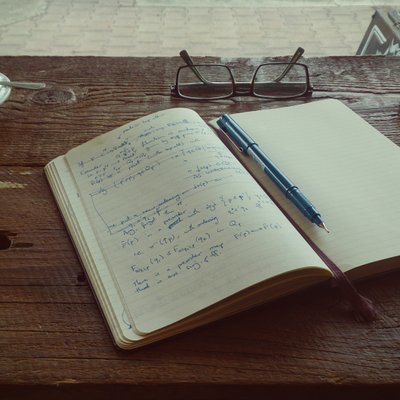
Hi fam, have a fulfilling day! Here comes #Pythagoras 2.0 and a proof of #Fermat'sLastTheorem. Finding every #PythagoreanTriplet that includes any #naturalNumber >2 has never been easier! (0.5d(m²-1))²+d²m²=(a+d)² with 0.5d(m²-1) as "a", dm as "b", 0.5d(m²+1) as "c" #education #mathematics #math

Visualization of the famous Yang Hui or Pascal Triangle, dimensions 0, 1, 2 (relevant for the Pythagoras theorem 2.0) and 3
In the not yet published novel "Fluten", a combination of thriller and textbook, the characters Sheldon and Hasan, students at the fictional University of Aachen, develop this elegant formula and call it the first Shalan theorem. In German, “Fluten” has a double meaning. It is both the plural of flood and a verb.

Pythagoras: a²+b²=c²
=a²+2ad+d²
=(a+d)²
Cheap trick: Outsourcing of d² leads to d²(2a/d+1), 2a/d+1 becomes m²
Solve for a
2a/d+1=m²
a/d=(m²-1)/2
a=d(m²-1)/2
First Shalan theorm
(d(m²-1)/2)²+d²m²=(d(m²+1)/2)²
Take any natural number >2 and call it dm or dm and d(m²+1)/2 if that number is odd.(=> 3,4,5 d=2, m=2, if the starting number is d(m²+1)/2=5, and d=1,m=5, with 5,12,13 as result). "d", as the distance between a and c, must be natural. But not "m" which must be >1.
The great thing about this quadratic formula for lazy people is that all you have to do is squaring m!
And this is how it works: Let dm=24
Find two factors that give the product 24
d=12, m=2
(12(2²-1)/2)²+24²=(12(2²+1)/2)²
=>18²+24²=(18+12)²
=30²
d=18,m=4/3
(18(16/9-1)/2)²+24²=(a+d)²
18(7/9)/2=7
=>7²+24²=25² 7,24,25 is a primitive Pythagorean triple. With d=2,m=12, you get the other primitive triple 24,143,145: 143²+24²=145²
d=16,m=3/2
8(9-4)/4=10, 10²+24²=26²
d=8,m=3
32²+24²=40²
d=6,m=4
45²+24²=51²
d=4,m=6
70²+24²=74²
If dm is a prime number, d must be 1:
dm=17
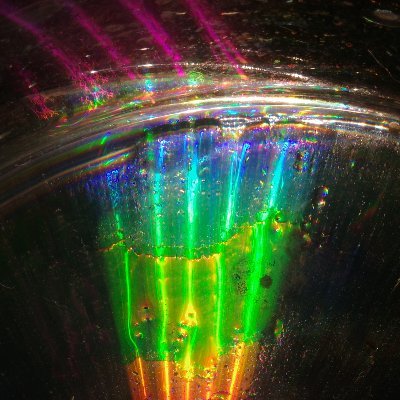
=> 288/2=a, 144²+This is a screenshot in the literal sense. I photographed the white flower of a Queen of the Night with white stamens and very bright punk interieur and took a photo of the screen showing this photo by placing a glass plate with formulas in front of the screen. The formulas are a^n+b^n=c^n
and a^n + sum of the product of the binomial coefficients n over k with k1 = 1 and the fractions (a/d)^n-k equals (a+d)^n where n over n times (a/d)⁰ equals 1.
For n=2 this results in a²+2ad+d²=(a+d)²
The term 2ad+d² corresponds to b². The clever thing is to exclude d². Then you get b²=d²(2a/d+1)
2a/d+1 is called m², and the whole thing is solved for a.
2a+d=dm²
a=dm²/2-d/2
=d(m²-1)/2
This gives you the first Shalan theorem, which is:
(d(m²-1)/2)²+d²m²=(d(m²+1)/2)²
For n=3, you get (0.5d(((4m³-1)/3)⁰·⁵-1))³+d³m³=(a+d)³, the Second Shalan theorem.
a³+3a²d+3ad²+d³=(a+d)³
3a²d+3ad²+d³=b³
3(a/d)²+3(a/d)+1=b³/d³
=m³
Solve for a with the help of quadratic addition. You get
a=d(((4m³-1)/3)⁰·⁵-1), b=dm, c=a+d
If n=4 or larger, the formula becomes recursive. You cannot longer get rid of the a.
a⁴+4a³d+6a²d²+4ad³+d⁴=(a+d)⁴
b⁴=d⁴(4(a/d)³+6(a/d)²+4a/d+1
d³m⁴/4=a³+1.5a²d+ad²+d³
=(a+d)³+3ad²/4+7d³/8 with the help of cubic addition. There is a term 3ad²/4, you can't ged rid of. Therefore the formula becomes recursive.

This approach provided a proof of Fermat's Last Theorem that just doesn't fit on the margins of a textbook page. After over 350 years, the great mathematician Andrew Wiles found a proof in This is a screenshot of parts of the alternative text. It's not interesting for the visually impaired. It reads: "This is a screenshot in the literal sense.  The formulas are a^n+b^n=c^n
and a^n + sum of the product of the binomial coefficients n over k with k1 = 1 and the fractions (a/d)^n-k equals (a+d)^n where n over n times (a/d)⁰ equals 1.
For n=2 this results in a²+2ad+d²=(a+d)²
The term 2ad+d² corresponds to b². The clever thing is to exclude d². Then you get b²=d²(2a/d+1)
2a/d+1 is called m², and the whole thing is solved for a.
2a+d=dm²
a=dm²/2-d/2
=d(m²-1)/2
This gives you the first Shalan theorem, which is:
(d(m²-1)/2)²+d²m²=(d(m²+1)/2)²
For n=3, you get (0.5d(((4m³-1)/3)⁰·⁵-1))³+d³m³=(a+d)³, the Second Shalan theorem.
a³+3a²d+3ad²+d³=(a+d)³
3a²d+3ad²+d³=b³ Exclude d³
3(a/d)²+3(a/d)+1=b³/d³
=m³
Solve for a with the help of quadratic addition. You get
a=d(((4m³-1)/3)⁰·⁵-1), b=dm, c=a+d
If n=4 or larger, the formula becomes recursive. You cannot longer get rid of the a.
a⁴+4a³d+6a²d²+4ad³+d⁴=(a+d)⁴
b⁴=d⁴(4(a/d)³+6(a/d)²+4a/d+1
d³m⁴/4=a³+1.5a²d+ad²+d³
=(a+d)³+3ad²/4+7d³/8 with the help of cubic addition. There is the term 3ad²/4, you can't ged rid of. Therefore the formula becomes recursive.

This approach provided a proof of Fermat's Last Theorem that just doesn't fit on the margins of a textbook page. After over 350 years, the great mathematician Andrew Wiles found a proof in 1995 that is over 150 pages long. So although he beat Leonard Euler and many other great ma
2025-02-28

"And then the first sentence of chapter 1 of the paper proper is "Consider quasi-finite separated commutative group schemes of finite presentation over the base \(S:= \mathrm{Spec}(\mathbb{Z}) \) which are finite flat group schemes over \(S':= \mathrm{Spec}(\mathbb{Z}[1/N]) \)". At the time of writing (May 2024), Lean’s algebraic geometry cannot get us through the first sentence of Mazur’s proof, which occupies pages 43 to 172 of the paper (not including the appendix or references, that’s just the proof). Anyone interested in formalising Mazur’s paper should make a formalisation of its first sentence their first milestone."
@xenaproject

#FermatsLastTheorem

2024-10-31

There's a type of #maths problems thatt can be described as "deceptively simple". They sound straightforward when described, but solving them is another matter. #FermatsLastTheorem is one, the #CollatzConjecture is another.

I'm sure that the proof of the latter must have something to do with how the operation 3n+1 affects the binary representation of the number, but I'm not sure where to go next.

2023-01-10

This guy opened a YouTube channel 3 years ago uploading videos of a proof of Fermat's Last Theorem, beginning from zero.
Now he is still at the introduction of basic topology.
youtube.com/@greg55666/videos
#maths #mathematics #fermatslasttheorem

Client Info

Server: https://mastodon.social
Version: 2025.07
Repository: https://github.com/cyevgeniy/lmst