
Quartzite cobble with unusual wear & damage patterns possibly caused from use #flintknapping & perhaps as a hammer for pulverizing temper or cracking hickory nuts or bones for marrow. #archaeology
#Flintknapping

Bulverde point (late Middle Archaic to early Late Archaic ca. 5000-4000 BP) made from Citronelle gravel chert I flintknapped many decades ago. The Bulverde type is found from central TX to LA. #archaeology #flintknapping


Red & yellow jasper Citronelle gravel cobble that I've flintknapped on a bit. Both red & yellow jasper make good flake tools because they are denser than most cherts, thus hold an edge longer. #rocks #flintknapping

Modern #flintknapping. Three points made of transparent quartzite, clear quartz crystal & white planar quartz. #archaeology
7 months ago.
Reproduction Catahoula (ca. 700-1100 CE) arrow point on yellow stained glass. #archaeology #flintknapping

If you've ever wanted to do one of my in-depth #CoilBasketry or #NetMaking courses, or indeed try your hands at tracking or #FlintKnapping, Jack raven #Bushcraft in #Kent is running an end of season sale https://www.jackravenbushcraft.co.uk/end-of-season-sale-2025


The grainy red jasper flakes better & there is a luster change. Now if I can just thermally alter a larger piece without it heat fracturing & spalling. #flintknapping #archaeology

I screened the fire pit ash this morning to see what became of those three chert blanks I tried to heat treat.
Yeah, you could say those chert blanks disintegrated. 😮 #Flintknapping #archaeology


Lived here for 30 years but only noticed this stone on the flower bed yesterday. Signs of repeated working? A lithic core?
#flintknapping #lithics #Palaeolithic #Neolithic #Mesolithic #workedstone #workedflint #archaeology


Modern made San Patrice variety St. Johns dart point on banded gray obsidian. #archaeology #flintknapping

Abrading edges during #flintknapping, either by percussion or pressure flaking, helps prevent what we call a crushed platform, thus aiding in the generation of longer flakes & less step-fractures. These 3 images show dulling & rounding of chert edges abraded with the abrading stone. #archaeology

A throwback to 2019. #Flintknapping debris from working red slag glass & a little light gray chert. #Archaeology

Gary variety Mabin (ca. 1400 BCE-200 CE) I made from a distinct Citronelle gravel chert. #flintknapping #archaeology
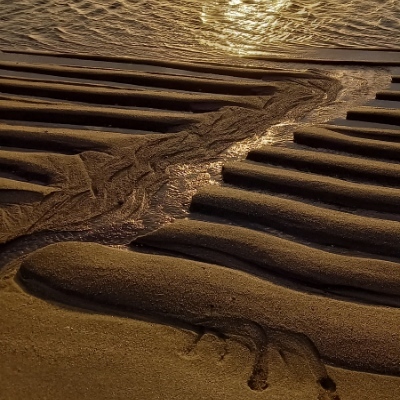
@archeaids well done! Beautiful colours. Do you think you can finally remove the rest of the cortex?
#flintknapping
Elora (ca. 3000-1000 BCE) point I made from this distinct jasper pebble. 6/ #archaeology #flintknapping
Here are most of the flakes from #flintknapping this small pebble & a triangular preform. 5/ #archaeology
In fact, we were able to refit about 20 flakes of one distinctly identifiable chert material at Site 22PR533. We had about 8 distinct materials that showed that we had only 15 cm of vertical migration from bioturbation.
Here is progress knapping the pebble. 4/ #archaeology #flintknapping
4 views of cortex flake removal (decortication. Distinct lithic materials are fun. We cross-provenienced many distinct flakes from several units & 2 levels at 22PR533 to show vertical & horizontal integrity. 3/ #archaeology #flintknapping
The 1st 5 flakes removed from 1 side shows it is a multicolor jasper. The cortex is off-white, then under that is a dark gray layer abruptly changing to a well-defined thin pale tan layer. Below the tan is strong brown mottled with maroon. 2/ #flintknapping #Archaeology
Client Info
Server: https://mastodon.social
Version: 2025.07
Repository: https://github.com/cyevgeniy/lmst