#Nov25

2025-12-03

Equilibrium – Equinox Review

By Samguineous Maximus

More than almost any other metal niche, folk metal has to walk a treacherously thin line between “actually good music” and “full-body cringe.” For every band that can fuse arena-sized melodies with genuine folk charm, there are three more tumbling headfirst into the Neckbeard Abyss™, condemned to soundtrack the Nordic-themed house parties of Reddit mods everywhere. Equilibrium has stood proudly on both sides of that divide. Their early triumphs of Turis Frayter and Sagas were mead-soaked romps packed with syrupy pagan hooks and enough triumphant Bjoriffs to level a longhouse, but ever since, the spark has dimmed, and each new release has brought diminishing returns. Armageddon (2016) was passable, and Renegades (2019) marked a true low point, trading their Viking swagger for a baffling electro-trance-metal makeover that landed with all the grace of a drunken troll. Now, six years later, Equilibrium returns with Equinox, a tightened lineup and a new vocalist in tow, promising a glorious reclamation of their folk-metal throne. Have they forged another worthy slab of epic, mead-raising metal? Or are they destined to spend eternity staring wistfully at the echoes of their own past conquests?

Equinox marks a clear return to form for Equilibrium after the detour of Renegades. The electronic and metalcore elements from their last record still linger, occasionally poking their neon-tinted heads out, but the heart of the band’s sound is back in full force: that boisterous blend of Finntroll and Ensiferum filtered through the Europower cheese of Rhapsody of Fire, now with a touch of Avatar added. The songs are built on a familiar mix of traditional woodwinds, thick distorted guitars, and gaudy synth lines, with newcomer Fabi’s fearsome growl leading the charge through straightforward verses and repeated choruses. When these ingredients click, and the newer sonic flourishes collide with the band’s classic, folk-driven sense of epic grandeur, the result can be exhilarating. Tracks like “Gnosis,” “Awakening” and “Bloodwood” move easily between core-tinged riffs and massive, sing-along Viking choruses, delivered with the bombast Equilibrium is known for. Unfortunately, the rest of the album doesn’t reach the same heights.

According to the band, Equinox was originally intended as an EP rather than a full-length release, and the pacing issues and filler make that easy to believe. Large sections of several songs feel like padding before the actual track begins. Both “Borrowed Waters” and “Legends” open with long, drawn-out “atmospheric” intros that sap the impact of what follows, and the album includes no fewer than three interludes (“Archivist,” “Rituals of Sun and Moon” and “Tides of Time”). These moments don’t do the record any favors. They’re often delivered through a jarring mix of electronic trap drums, over-the-top synth lines and the band’s more traditional woodwind flourishes, creating a stylistic mishmash that feels pulled straight from a fantasy-themed Fortnite event. At times, these elements collide with simplistic, “tribal,” repetition-heavy vocals (“Earth Tongue”), resulting in something that sounds closer to a hyper-dramatic Nordaboo YouTube montage than classic Equilibrium. Even though the album does contain plenty of fully formed songs, these detours make the overall experience feel uneven and lopsided.

There are moments on Equinox where Equilibrium’s updated approach works despite its flaws. “I’ll Be Thunder” is a concise, effective track that blends electronic and orchestral elements into a tightly written folk-metal package. Even the seemingly toxic trance-metal/rap/metalcore hybrid verse in “One Hundred Hands” is intriguing, though the autotuned chorus and generic breakdown drag the song down. To the band’s credit, the mixing is solid across the album. It’s polished without being crushed by excessive loudness for a Nuclear Blast release, and producer Daniel McCook does an admirable job balancing the electronic, orchestral, and metal components. The result is a surprisingly even production that rewards multiple listens. I just wish there were more aspects of Equinox I could praise without reservations.

Equinox is a difficult album to recommend despite its strengths. Equilibrium have mostly abandoned the divisive sound of their previous record, while adapting its electronic elements in a return to form. The singles here do capture the bombast of their earlier work and are fun enough on their own, but the record around them is inconsistent and, at time,s baffling in its execution. Equilibrium could certainly do a lot worse, but this is far from the re-conquest of the folk metal throne it could’ve been.

Rating: 2.0/5.0
DR: 8 | Format Reviewed: 256 kb/s mp3
Label: Nuclear Blast Records
Websites: equilibrium-metal.net | facebook.com/equilibrium
Releases Worldwide: November 28th, 2025

#20 #2025 #avatar #electronicMetal #ensiferum #equilibrium #equinox #finntroll #folkMetal #germanM #melodicDeathMetal #metalcore #nov25 #nuclearBlast #orchestralMetal #review #reviews #rhapsodyOfFire
2025-12-01

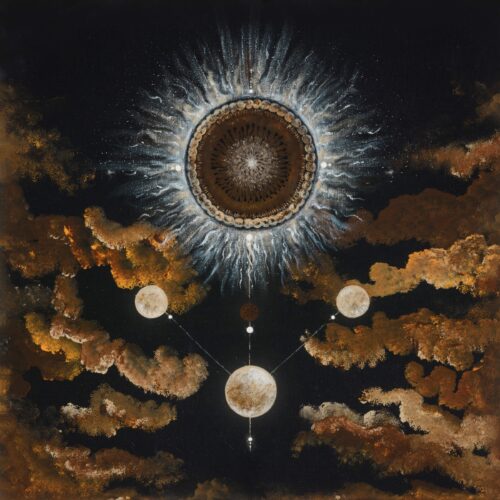
Frozen Land – Icemelter Review

By Twelve

I have such a soft spot in my heart for Frozen Land. After writing my first-ever review for Angry Metal Guy, I remember feeling shaky. It went through quite a few revisions. My second, Frozen Land’s eponymous debut, was, comparatively, simple. Their 1999 Euro power metal meets 2001 Euro power metal vision made for a catchy, delightfully fun album, and my enjoyment for it showed in my writing—still my favorite intro to any review I’ve written. So it is to my great astonishment that these Finns are now on album number three with Icemelter. Time, it just keeps going, but has it changed anything for these vivacious Vikings?

Of course not! Frozen Land is just as I remember them, or at least they are for the most part—Icemelter has a more aggressive edge to it, but is easily and recognizably the same Frozen Land I met in 2018. Opener “The Carrier,” for example, features a riff that could easily be found on a Tarot album, a notable sign of a heavier direction. But the rapid-fire vocals bridging their way to a bombastic, catchy chorus? That’s familiar Frozen Land, borrowing from the ancient playbook of Stratovarius and Sonata Arctica (who were themselves borrowing from the aforementioned playbook at the time). Their unique personality emerges in Thomas Hirvonen’s sardonic riffing in “Dream Away,” in Lauri Nylund’s subtle but effective keyboards in “Losing My Mind,” in the infectious energy of bassist Eero Pakkanen and drummer Matias Rokio throughout, but especially in “Chosen, Corrupt, and Cancerous,” and in Tony Meloni’s singing all the time.

As is typical in power metal, it’s the vocalist who takes up most of the spotlight, and Meloni’s unique style is little exception. I could see his higher register feeling awkward or out of place with the wrong group, but Frozen Land’s songs are very much written for his voice. The bombastic choruses commonly pair him with Nylund’s keys—barely noticeable, but lending him that extra bit of presence to make them shine. He also adds an important element of dynamism to Icemelter, on songs like “Haunted,” which take him from aggressive cleans to a smoother, impassioned chorus that gets stuck in the head, and wouldn’t work nearly so well with a less invested delivery.

The reason I highlight Meloni’s performance isn’t to take away from the rest of Frozen Land at all—as I’ve mentioned, the five work extremely well together to form their modern-yet-nostalgic sound. But if there’s one weakness to Icemelter, it’s that, musically at least, it’s a touch formulaic, due in part to the dated (seeming) inspiration for their material and the style with which they take to it. And, to be clear, none of their material is boring or even the slightest bit un-fun. Hirvonen’s and leads are electric, and “Black Domina” is a great example, but by the time we get there, it’s just starting to feel a bit tired. The good news is that Icemelter is only thirty-six minutes long and so never has a chance to overstay its welcome. On the other hand, when I do dislike a song, as is only the case for the title track (which comes across disjointed in its songwriting and doesn’t quite land for me), it feels like a disproportionately big deal.

Icemelter is a very fun listen. If it’s only flaw is that all the energetic, fun power metal blurs together a bit, I can live with it. Frozen Land being a quintessentially Finnish touch to a classic style, modernizes both it and themselves enough to make a strong impression. As I look back on this review, it occurs to me that it’s a bit short compared to my usual writing here, but that’s kind of the point—Frozen Land’s straightforward, easy approach to a classic style is exactly what makes them so endearing to listen to.

Rating: 3.5/5.0
DR: 6 | Format Reviewed: 320 kb/s mp3
Label: Massacre Records
Websites: facebook.com/frozenlandband
Releases Worldwide: November 21st, 2025

#2025 #35 #finnishMetal #frozenLand #icemelter #massacreRecords #nov25 #powerMetal #review #reviews #sonataArctica #stratovarius #tarot

2025-11-30

Änterbila – Avart Review

By Grin Reaper

Billed as blackened folk metal and boasting a sound that will remind listeners of the aughts-era Darkthrone, Änterbila1 returns with sophomore album Avart. Three years removed from their self-titled debut, the foursome from Gävleborg County, Sweden, retains the core sonic principles of Änterbila and dunks them into the muck, invoking a darker, grimier aura. Where the plight of peasantry informed Änterbila’s sensibilities, Avart looks to national folklore for inspiration. Rather than interpreting that folklore through the eyes of those who passed the stories on, though, Avart revisits lore from the perspective of the other side, the witch to Grimms’ Hansel und Gretel, imparting a sinister edge to the music. Is Änterbila’s latest platter sharp enough to brandish, or does it need more time with the honing rod?

The marriage of black and folk metal can take different forms, with folk infusions coming from instrumentation, melodies, and/or folk and pagan themes. Änterbila offers all of them, but presented disparately as stark components rather than fused together as an interconnected whole. Bookend instrumentals “Låt till Far” and “Eklnundapolskan” feature strings, a bagpipe, and choral harmonies between them, not unlike Saor or Summoning. These tracks conjure rustic firesides with an air of excitement as strange tales are told around them. Avart’s other six tracks are categorically different, hovering between pagan-leaning, late-eighties Bathory (“Kniven”) and the punky pluck of early Vreid (“Jordfäst”). I even catch a whiff of Bizarrekult (“Årsgång”) in the midst. None of the flavors are bad on their own, but without more cohesion, they’re a bit confusing on the same plate.

Avart is a lively affair, with snappy licks, punky riffs, and burbling kick rolls that whisk listeners through half an hour of sprightly black metal. Bandleader and founder Jerff wields axe and vocal duties, with Raamt abetting in six-string antics. The guitars trem pick their way through Avart, embracing an unadorned style that takes a few simple melodies, interchanges them every now and then, and rides through four or five minutes. There’s nothing inherently wrong with this stripped-down approach, but without more distinctive hooks or emotive vocals, the songs bleed together. Drop me in the middle of any of the songs, and I’ll have a tough time naming which one it is unless Jerff repeats the title several times (“Kniven,” “Jordfäst”). Another issue Änterbila grapples with throughout Avart is repetition. Even with such a compact runtime, there’s not always enough substance to justify track lengths. “Jordfäst” could explore its ideas in two-thirds the time, for example, but instead pushes them past optimal duration. As it currently stands, there’s enough material for a solid EP, but relentless refrains without variations make shallow wells, and drawing from them too often becomes tedious.

Änterbila’s strengths lie in creating a dangerously charming atmosphere and not overstaying their welcome. Avart’s old school production underscores its low-fi mood, perfect for settings of yore where things lurking within shadows go bump in the night. Even though the mix isn’t polished, it ably captures Svaltunga’s punchy bass and drummer Monstrum’s quadrupedal onslaught. There flows an energy in the music that crackles with roguish vigor, and it’s here that Änterbila excels. It’s a shame lyrics weren’t included as part of the press kit since dark folklore provides such fertile ground for music. Understanding what the (presumed) native Swedish translates to could have heightened my appreciation for what secrets Avart holds. Still, the runtime is trim and helps deflect some of the monotony of simpler song structures, keeping the overall package easily digestible.

Änterbila possesses all the ingredients for a rollocking good time, but fumbles with the recipe. The folk metal tag is a bit misleading, and given that the folk elements are so well-executed in the intro and outro, it’s disappointing that Änterbila didn’t incorporate them throughout the entire album. Doing so could have thwarted the uniformity across the remaining songs, adding dynamism and a through-line that brings everything together with reinforced congruity. Every time I spin Avart, I hope to find something I’d missed previously, because I want to like it more than I do. Avart seethes with potential, and while I don’t regret any of the time I spent with the album, I don’t expect to return to it, either. Hopefully, the next iteration delivers on the promise Änterbila has established here.

Rating: Disappointing
DR: 9 | Format Reviewed: 320 kbps mp3
Label: Nordvis Produktion
Websites: Bandcamp | Facebook
Releases Worldwide: November 14th, 2025

#20 #2025 #anterbila #avart #bathory #bizarrekult #blackFolkMetal #blackMetal #darkthrone #folkMetal #metal #nordvisProduktion #nov25 #review #reviews #saor #summoning #swedish #vreid

2025-11-29

Doubtsower – The Past Melts Away with a Sneer Review

By ClarkKent

It’s amazing how quickly November, and my month of doom, has flown by. It seems the constant exposure to slow-paced music has made the days move faster, not slower. For my final November doom promo, what could be more appropriate than one described as “one long song funeral doom?” While the Welsh doom band containing this descriptor, Doubtsower, is new to me, the man behind the project, Matt Strangis, has three previous releases dating back to 2021. Although most of these earlier albums cross the one-hour mark, none of the songs run longer than fifteen minutes 1, so this is new territory for Doubtsower. Strangis describes his own songwriting process as “punk DIY,” and he does much of his recording at home, with some mastering help from Greg Chandler of Esoteric. For insomniacs, one long funeral doom song sounds like the perfect cure, but be careful, this doesn’t backfire and instead keeps you hooked and wide awake.

While the premise of a 48-minute funeral doom song brings to mind other ambitious projects from Bell Witch and Oak, Doubtsower’s The Past Melts Away with a Sneer turns out to be one weird beast. Doubtsower isn’t exactly a funeral doom band, but an experimental doom band. Strangis keeps his one song’s tempo slow—funeral doom slow—yet it has much more in common with the avant-garde music of John Cage than My Dying Bride or Esoteric. It makes use of syncopated riffs that cut short and disorient listeners, as well as some unusual noises, such as static scratches and the clicking and rattling of ratchets. “The Past Melts Away with a Sneer” also makes use of silences, though they’re not as lengthy as “4’33,” largely as a transitional tool. This use of odd sounds, silent moments, and suspenseful repetitions of short riffs creates an unsettling mood early on, and with the mix of sludge, I couldn’t help but think of experimental sludge/horror/doom outfit When the Deadbolt Breaks.

Over the course of its 48 minutes, The Past Melts Away with a Sneer is an ever-shifting amalgamation of styles, an amorphic blob that somehow holds everything together as a cohesive whole. Sounds often shift minute-by-minute despite the glacial pacing. While the early goings have the John Cage thing going, at the 8-minute mark, the track breaks out into the one segment that sounds like traditional funeral doom, with plodding drum beats, crushing guitars, and a low, harsh growl. Yet just as you think this is the direction it’s going, the song goes silent and then shifts into a new form. The extensive use of silence and light droning makes the sudden bursts of energy peppered throughout all the more striking. About 20 minutes in, “The Past Melts Away with a Sneer” morphs into industrial dance, snapping you awake and commanding your body to move. The song morphs yet again, this time into something hopeful and poppy, with light, Weezer-like strums. However, even this segment doesn’t last long, and somehow Strangis is able to convince us that these disparate sounds all form one coherent tune.

It’s pretty impressive how “The Past Melts Away with a Sneer” is able to remain engaging for its entire run, but some moments of repetition do derail portions of the track. This is most egregious at 29 minutes as Doubtsower transitions into a lengthy portion of sludge/doom. Throughout this approximately eight-minute segment, there’s a consistent, repetitive riff that grows tiresome over time. Still, the song rights itself for the finale with the return of a catchy piano/synth melody from the beginning. As this melody begins to fade into silence and lulls you into a sense of closure, the track gains a second wind and hurls forth an energetic set of industrial riffs and blast beats. There’s an unpredictability that catches you off guard and keeps the record fresh.

If the album I described above sounds like a nightmare, that’s the whole point. It’s meant to be a “disorienting descent into a nihilistic free-for-all,” and Strangis succeeds in making that vision come to fruition. It may not always be easy listening, but it’s rarely boring. Having spent some time with the prior Doubtsower records, this one stands out as Strangis’s most engaging and best-written. The Past Melts Away with a Sneer has caused me to question my usually negative relationship with experimental metal. It has left me feeling disoriented, but in a good way, and it’s an experience that I recommend for the curious and lovers of the weird.

Rating: 3.0/5.0
DR: 7 | Format Reviewed: WAV
Label: Self-Release
Website: Bandcamp
Releases Worldwide: November 28th, 2025

#2025 #30 #avanteGarde #bellWitch #doomMetal #doubtsower #esoteric #experimentalMetal #funeralDoom #industrialMetal #johnCage #myDyingBride #nov25 #oak #review #reviews #selfReleased #sludgeMetal #thePastMeltsAwayWithASneer #weezer #welshMetal #whenTheDeadboltBreaks

2025-11-27

Suncraft – Welcome to the Coven Review

By Spicie Forrest

I first became acquainted with stoner rock while attending college and skiing in Salt Lake City. Whether carving the corduroy or taking face shots of bottomless pow, the raucous groove of the style made for a great soundtrack. I’ve largely moved on to heavier and less accessible pastures, but once in a while, something brings me back. This time, it was Suncraft, a five-piece formed in Oslo, Norway in 2017; I couldn’t let a genre tag like “stoner/black/pop” pass by unyoinked. We missed their 2021 debut, Flat Earth Rider, but I’m here to give their sophomore effort, Welcome to the Coven, the proper AMG treatment.

Suncraft has historically relied on mid-paced stoner rock, but their second LP sees the band move in a different direction. Welcome to the Coven is what happens when Queens of the Stone Age wields The Sword and walks The DOGS. It’s riotous, retro, and downright groovy. With a triple-pronged attack, guitarists Vebørn Rindal Krogstad, Sigurd Grøtan, and Jens Henrik Kverndal let loose a wildly infectious salvo of stoner and garage rock. “Welcome to the Coven” and “Forgotten Goddess” rip across the desert in an old convertible Mustang powered solely by diesel and sativa. “Love’s Underrated” gives garage revival and a little Japandroids, while “Wizards of the Anger Magic” opens on The Beach Boys and pays heavy tribute to The Ramones. Mixed into this strong foundation you’ll also find riffage stained black (“Ragebait”), pop punk angst (“Greed Battalion”), posty and proggy diversions (“High on Silence”), and even a millennial whoop or two. These are disparate elements to bring under one umbrella, but like fellow countrymen Kvelertak, Suncraft pull it off well.

In a brew stereotypically known for wanton abandon, Welcome to the Coven succeeds through restraint. Post-black and pop punk normally make bridge- or hook-centered appearances, being used as means to build drama and release tension rather than ends in themselves. Drummer Tobias Paulsen utilizes a predominantly upbeat rock style, but he’s got a full toolbox. He deploys d-beats, hooks and fills, blast beats, and tempo changes with precision for maximum emotional impact (“Love’s Underrated,” “Welcome to the Coven”). The same can be said of bassist/singer Rasmus Skage Jensen, whose strings feel elementally nostalgic, both in tone and in their intentionally dynamic grounding of hooks, leads, and rhythmic support. And by keeping a normally tight grip on his vocals, the moments when Jensen lets loose and pushes his pipes to their limit shine all the brighter (“Greed Battalion,” “Forgotten Goddess”). Rather than employing an unchecked, maximalist style, Suncraft’s tempered and deceptively meticulous songcraft elevates Welcome to the Coven far above the sum of its parts.

Suncraft doesn’t treat the incorporation of these various flourishes as puzzles to be solved. Instead, every element on Welcome to the Coven seems chosen and placed to best support a deliriously and irresistibly fun grand design. This approach and Suncraft’s success with it grant them an inimitable air of sprezzatura.1 Krogstad, Grøtan, and Kverndal spin around each other so naturally, offering inspired counterpoints (“Wizards of the Anger Magic”), tossing in pristine fills (“High on Silence”), and passing leads and solos like a hacky sack (“Love’s Underrated,” “Forgotten Goddess”). I don’t for one second believe that Jensen’s interjectory “fuck it” on “Greed Battalion” or Paulsen’s double bass in “Welcome to the Coven” are off the cuff; this album is far too good for that. But when I hear the killer solo in “Love’s Underrated,” the exceptional back half of “Charlatan Killer,” or the barely controlled chaos that is “Forgotten Goddess,” I can’t help but be awed by the explosive synergy on display here—and the casual effortlessness of it.

I had high hopes when I picked up Welcome to the Coven, and from the first seconds of “Ragebait” to the final cymbals of “Forgotten Goddess,”2 Suncraft blew me away. The chorus of “Charlatan Killer” was the only exception, being merely good in a sea of great. Each track on Suncraft’s sophomore effort fits together naturally and neatly in a singular, unified vision. Primally familiar like the mythical dog days of summer, Welcome to the Coven is an astoundingly fun ride. By the end of its 40-minute runtime, I’m invariably left craving more. And if that isn’t the mark of a great album, I don’t know what is.

Rating: 4.0/5.0
DR: 9 | Format Reviewed: 320 kbps mp3
Label: All Good Clean Records
Websites: Facebook | Instagram
Releases Worldwide: November 21st, 2025

#2025 #40 #allGoodCleanRecords #blackMetal #garageRock #japandroids #kvelertak #norwegianMetal #nov25 #popPunk #queensOfTheStoneAge #review #reviews #stonerRock #suncraft #theBeachBoys #theDogs #theRamones #theSword #welcomeToTheCoven

2025-11-26

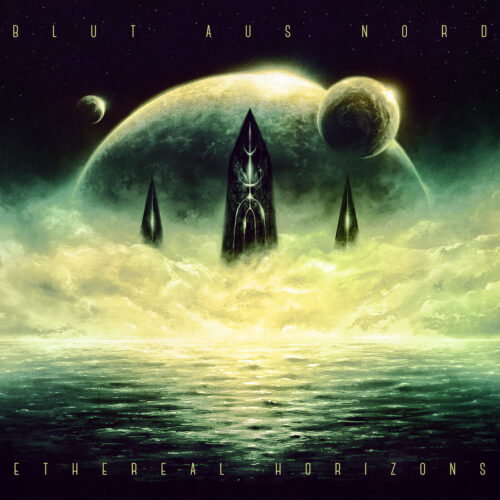
Blut Aus Nord – Ethereal Horizons Review

By Alekhines Gun

Sometimes it’s all a question of perspective. Among the most prominent and influential of French black metal, the sometimes-solo-project-sometimes-three-piece entity known as Blut Aus Nord have manifested four or five entirely different versions of themselves over the last thirty(!) years. Occasionally, their albums are released in sets of connected sounds and themes, and other times you can be exposed to one idea you fall in love with, only for the band to pivot away into something new and unexpected; imagine the surprise fans of Fathers of the Icy Age must have felt first hearing The Work Which Transforms God. We are now at album sixteen (to say nothing of their innumerable splits and EP’s), and the question isn’t as much “is this gonna be any good” as much as “which band is showing up today?”

As it turns out, quite a few of them. The bones of Ethereal Horizons is laid via the post-metalisms of Hallucinogen, but with tones focused much more on a cosmic sense than the trippier 70s psychedelia of yore. The overall presentation of the album consists of lengthier riffs designed to evoke mood rather than raw noodling or blast-heavy assaults. Heavy emphasis is placed on a/b phrasing, which pairs two different ideas reminiscent of different eras in Blut Aus Nord’s career, but unifies them via the same sheen throughout. The organic production reigns supreme, using the beefy approach of the past two albums but firmly removing the Dis from the Harmonium with supremely melodic results.

Despite never abandoning that sense of the organic, occasional nods towards the Blut Aus Nord industrial sound makes their presence known. Riffs are longer and more repetitive across the release, sometimes dropping out into a drum-and-bass solo (“The Fall Opens the Sky”) and elsewhere having drummer W.D. Feld do a fantastic impression of the vintage drum machine (“Seclusion”). These bits are spiritually kin to 777 – Cosmosophy, using their drawn-out forms to emphasize the beauty found within while taking the listener through a plethora of emotions. The greater utilization of the properly melodic over the dissonant means that minor keys get to make their impact felt without losing the sense of harmony (“What Burns Now Listens”) with the focus placed more on hefty atmosphere rather than a collection of overly intricate riff-craft. Synth is layered throughout the album with tones pulled from the Memoria Vetusta series as well as some clips of nature and the occasional acoustic introductions and outros, tying everything together as an auditory voyage, where, in typical Blut Aus Nord fashion, the only way is forward.

Ethereal Horizons places the bulk of its weight in those atmospheres, with the writing clearly engineered to be absorbed as a whole body of work in one sitting as opposed to being tailored for playlist harvesting. This element is key, as some songwriting moments could be perceived as frustrating if taken individually. It’s rare to hear Blut Aus Nord place such emphasis on repeating motifs in their more organic work, and synth interlude “Twin Suns Reverie” can be perplexing on first listen. However, by tying together separate components of composition across their storied career into one cohesive whole, what emerges is an album larger than the sum of its parts. Mercurial shifts from nods to Disharmonium to 777 to Memoria Vetusta are aided by subtle shifts in guitar tones used from riff to riff. “The End Becomes Grace” is a key example, flinging a verse straight from the most triumphant moments of Saturnian Poetry fresh off a Hallucinogen lead, but suddenly the notes are darker, grittier, and far more properly blackened. Blut Aus Nord have had a rare moment of looking inward and backward to find a path onward, and offered up a prism with nods to their various colors, all filtered through the same jagged jewel of sound.

Like any good album by these French fiends, this might not be what everyone is hoping for. It certainly wasn’t for me. At first listen I found myself underwhelmed, then by the fourth, confused. But judging any Blut Aus Nord release on your own expectations is always going to be a fool’s errand. By mining the depth of their own past for inspiration, the band managed once again to turn their own familiarity on its head and forge a new destination to parts known only to them. Triumphantly melodic in sound yet hypnotic in scope, energetic enough to be heavy yet beautiful enough to be soothing, Ethereal Horizons is a journey of an album through beautiful cosmic pastures, and doubtless to still greater horrors beyond.

Rating: 4.0/5.0
DR: NA | Format Reviewed: Mother heckin’ gosh darn stream
Label: Debemur Morti Productions
Website: Album Bandcamp
Releases Worldwide: November 28th, 2025

#2025 #40 #blackMetal #blutAusNord #debemurMortiProductions #etherealHorizons #frenchMetal #nov25 #review #reviews

2025-11-26

Steel Arctus – Dreamruler Review

By Andy-War-Hall

Brothers, you need power metal in your life. No, you do. You need authentic positivity shot straight into your cynic-rotten hearts, now. Most fortunate for you, Greek power metallers Steel Arctus have graced this year of 2025 with their third album Dreamruler, marking the third entry into the chronicles of their titular hero Steel Arctus. 2020’s Fire and Blood detailed the origins of Steel Arctus and his girlfriend Red Sonja the Arcadian Lady, 2022’s Master of War saw him delve into the fires of Hades and now Dreamruler sees him challenge the titular Dreamruler in his evil world of dreams to rescue his bodacious muse. Though the first two albums were good, Steel Arctus only grazed greatness a few times in their young career. Is Dreamruler the one that’ll bring them there? Hold your hammers high.

Steel Arctus are sworn to the flame of metal glory, and Dreamruler carries that fire by way of anthemic power metal. Dreamruler is imbued with the fantasy-minded songwriting of Dio, the epic vocal acrobatics of Lost Horizon and the fist-balling machismo of Judas Priest and Visigoth. “Riding through the Night” sees Steel Arctus fuse Judas Priest grit and Nocturnal Rites hookiness, “Fate of the Beast” marries Stratovarius neoclassical-isms with Paladin riffing and “Will to Power” embodies so much Manowar that I’m surprised Manowar never wrote it. Steel Arctus harness these influences into lean, catchy tunes that—while never feeling totally original, obviously—feel deeply energized and alive. Just hearing the Lost Horizon bloopy synths and grandeur of “Defender of Steel,” the Iced Earth thrash-power of “Cry for Revenge,” and the Savatage class and nastiness of “Dreamruler” evoked that sense of first getting into metal again. Listening to Dreamruler is listening to everything Steel Arctus love distilled into forty-seven minutes of heavy metal bliss.

This mimicry of established styles wouldn’t work so well if Steel Arctus weren’t incredible musicians. Thankfully, guitarist Nash G. churns out quality riffs like it’s nothing, bringing beefy grooves to “Will to Power” and nimble plucking on “Fires of Death”. While extremely technical and wah-heavy (“Fires of Death”), G.’s solos avoid hollowness through a melody-first approach; just hear those twins on “Dreamruler” or how “Wicked Lies” plays with the riff beneath it. Drummer Minas Chatziminas crushes his kicks (“Defender of Steel”) while fitting in cool tom and cymbal work (“Riding through the Night”) and just enough kick variation for some rhythmic interest (“Dreamruler”), while bassist Strutter (Wardrum) lays down thick-toned bass runs throughout Dreamruler and even leads on “Wicked Lies.” But vocalist Tasos Lazaris (Fortress Under Siege, White Wizzard) is the leader of this quest called Dreamruler, as his incredible range (“Legend of the Warrior”,) power (“Cry for Revenge”) and charisma (“Glory of the Hero”) sharpen the hooks of Dreamruler and give Steel Arctus a commanding presence. Put together, and Dreamruler’s an outstandingly fun romp worthy of Steel Arctus’ many influences.

The only blemish on Dreamruler is that the ending isn’t a smash success. The penultimate “Legend of the Warrior” opens in dramatic fashion, replete with swirling synths, plucked clean guitar and spoken narration à la Lost Horizon that really sounds like Steel Arctus are building towards a true epic conclusion akin to “Highlander (The One).” Instead, it and the closing instrumental “Onar (όναρ),”1 move through mid-paced crawls that leave Dreamruler with a minor case of anticlimax. They’re not bad songs— “Legend of the Warrior” features Lazaris’ most dynamic performance and “Onar (όναρ)” sounds genuinely restorative in its pleasantness—but with how much pathos Steel Arctus weave into their music I think Dreamruler would’ve benefited from a bigger, grander finale. Steel Arctus can tell a story: I have no idea what happens in Dreamruler narrative-wise, but when Lazaris commands “Hammer Highyaaa!” on “Defender of Steel,” who needs a plot? I’m right there anyway.

Steel Arctus have leveled up tremendously on Dreamruler, and anyone with even a smidgen of appreciation for power metal should give this a spin. They don’t do anything new or novel whatsoever on Dreamruler, and, yeah, these are the most generic power metal song titles imaginable, but Steel Arctus hammered their way into greatness by sheer force of will anyway—along with amazing performances and adept songcraft, of course. Everything about Dreamruler is wholehearted, from Steel Arctus’ celebration of heavy metal’s past to their overwhelming showmanship. This is music of gigantic melancholy and gigantic mirth and easily one of, if not the year’s best power metal albums.

Rating: Great
DR: 72 | Format Reviewed: 320 kbps mp3
Label: No Remorse Records
Websites: steelarctus.com | steelarctus.bandcamp | facebook.com/steelarctus
Releases Worldwide: November 28th, 2025

#2025 #40 #dio #dreamruler #epicMetal #fortressUnderSiege #greekMetal #heavyMetal #icedEarth #judasPriest #lostHorizon #manowar #noRemorseRecords #nocturnalRites #nov25 #paladin #powerMetal #review #reviews #savatage #steelArctus #stratovarius #visigoth #wardrum #whiteWizzard

2025-11-26

Phobocosm – Gateway Review

By Steel Druhm

Well, lookee who just oozed in! Phobocosm, Canada’s infamous cavern creepers and dealers of oppressive death metal, return to shove a lump of revolting slime-scuzz in everyone’s stocking with fourth album, Gateway. When last we heard from them on 2023s Foreordained, they were continuing to tweak and refine their revolting mash-up of Incantation, Immolation, Ulcerate, doom and vaguely pos-metal-y bits with an emphasis on the ominous, unsettling and atonal. When all the gears lock in for Phobocosm, they’re capable of inspiring a real sense of existential dread and unease. They’ve always crafted their music to achieve this effect and conjure dark, unpleasant atmospheres through crushing heaviness. Foreordained nailed the formula, making for a dense, harrowing listen. Gateway mines the same toxic waste pits, searching for the next eldritch nightmare, but takes a somewhat different path there this time. Can they regurgitate as many repellent sounds as before and continue their stellar track record? We’ll need to do some DEEP spelunking to get answers.

It’s immediately apparent that Phobocosm made some changes at the writing table this time. Instead of burying the listener with 6-7 long-form assaults on your calm, Gateway features only 4 proper songs with 3 interludes stitching them together. Opener “Deathless” sounds just as a Phobocosm fan would expect, with buzzing, nerve-jangling riffs emerging like locust hordes as a growing sense of unease and danger is conveyed. It’s unhurried as dark moods are slowly crafted with anticipation and dread rising. When the chaos kicks off, it’s mid-tempo death-doom, grinding and heavy as fuck. Riffs slither everywhere, and death vocals bubble up from some bottomless chasm. There’s a lot of Immolation here, but it never feels like a clone by-product. It’s nasty, satisfying, and creepy. “Unbound” dials up the aggression and urgency with vicious blastbeats and insanity-inducing riffs scorching your brain and sense of safety. It’s 6-plus minutes, but the vibe is so impactful and extreme that you want it to be longer to prolong the glorious punishment. Some of the leads and flourishes are very memorable and appear at just the right moment to really pop. There’s a mood here that’s hard to describe, but it’s highly immersive and ugly down to the fucking bone marrow.

“Sempiternal Penance” keeps the winning streak going with another massive abomination loaded with guttural vocals and tremendously chaotic, deranged riffs. At times, it sounds like an unholy ritual is underway, but something dark and malevolent is starting to take control, and it’s high time to get the fuck out. “Beyond the Threshold of Flesh” is the longest cut at 8:27, and Phobocosm excel at making these kinds of tracks work to their benefit as they escalate and deescalate the sense of fear and danger, but never let you off the meat hook. Rather than feeling like an effort to endure, the track sucks you into a cloud of grasping horrors, chews you up, and vomits out your maimed remains before you even know you’re on the menu. That’s a success in my book. What are the downsides? The presence of the three interludes. While they track the style of the main cuts and effectively maintain tension, it’s really the 4 main set pieces that are the most interesting. That means you get about 9 minutes of good but less essential musical grout between those high points, and it feels like they’re padding out an EP. At 35-plus minutes, Gateway doesn’t feel overly long. The production is perfect for what Phobocosm do, with layers of murk and reverb creating the death cavern. The mix grants the guitars exactly the frightening, intimidating presence this style of death needs.

Gateway sees former guitarist Rob Milly back for the first time since 2016s Bringer of Drought, and his work alongside Samuel Dufour’s excellently unnatural playing leaves no one safe. The riffs and “harmonies” these two conceive are nasty, putrid, and grotesque with bloody roots in death, doom and black metal. This is the reason Phobocosm’s sound packs so much raw venom, and the tandem’s dissonant maelstroms leave behind plenty of little details to unearth with subsequent spins. Once again, Etienne Bayard blows the doors off the crypt with massive death vocals. He’s a superb croaker and makes everything considerably more menacing and horrible. Basically, he’s the very Mouth of Madness.

Phobocosm are one of the most reliable death metal monstrosities out there, and Gateway is another ruthless sucker punch to the epiglottis. While I fear this is dropping too late in the year to get the attention and end-of-year list space it deserves, Gateway definitely has my full attention as 2025 winds down. This is another high-quality dose of excessive extremity that deserves to be heard and marinated deeply within. Take my advice and follow Gateway into lunacy before it becomes another thing you foolishly missed.

Rating: 3.5/5.0
DR: 7 | Format Reviewed: 320 kbps mp3
Label: Dark Descent
Websites: darkdescentrecords.bandcamp.com | facebook.com/phobocosm | instagram.com/phobocosm
Releases Worldwide: November 28th, 2025

#2025 #35 #canadianMetal #darkDescentRecords #deathMetal #gateway #immolation #incantation #nov25 #phobocosm #review #reviews #ulcerate

2025-11-25

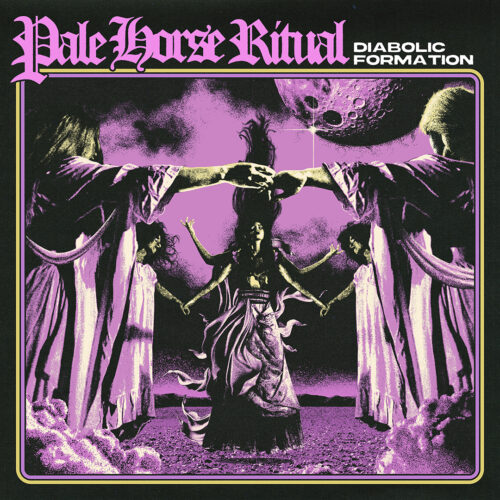
Pale Horse Ritual – Diabolic Formation Review

By Creeping Ivy

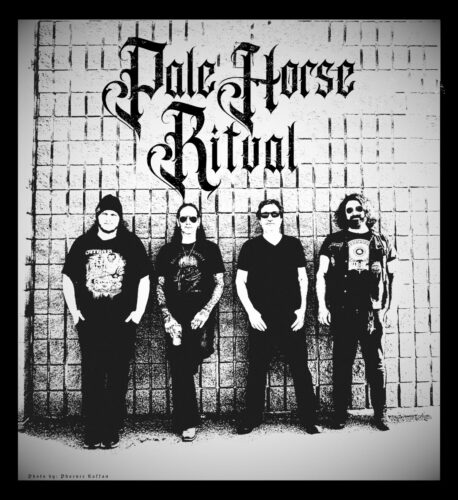
2025 must have been a challenging year to occupy the Sabbath-worship lane. Ozzy’s passing on July 22nd—seventeen days after the Back to the Beginning concert—hit metaldom hard, but it surely hit harder for bands that treat Master of Reality as a sacred text. Videos from the concert, especially of a throned Ozzy performing one last time with the original Sabbath lineup, provide solace, as do covers from legends like Metallica and Slayer.1 Tragically, 2025 has revitalized Sabbath; Sabbath-inspired bands walk a tightrope of honoring the original and wilting under its renascence. Merging into the Sabbath lane late in the year is Pale Horse Ritual, a Canadian quartet. After releasing a slew of singles and an EP in 2024, this Hamilton, Ontario band has dropped their debut full-length, Diabolic Formation.2 While it doesn’t need to break much new ground, the album does need to aid the grieving process.

Pale Horse Ritual offers a bit more than straight Sabbath worship. While Diabolic Formation primarily deals in stoner/doom metal, much of its instrumentation hearkens to 70s psychedelic rock. Lead guitarist James Matheson, for example, lays down some total psych freakout solos (“Deflowered,” “Bloody Demon”). Spooky organ chords also contribute to the album’s vintage atmosphere (“D.E.D,” “A Beautiful End”). Together, these elements evoke Iron Butterfly and other such proto-metal acts. Nevertheless, Pale Horse Ritual ground their sound in pure Iommian goodness. Instrumental opener “Deflowered” announces Diabolic Formation’s riff-forward orientation, built around modulations of a simple yet satisfying flat-2 line. The descending chromatic figure of closer “A Beautiful End” is an album highlight, dragging listeners down to a warm, fuzzy hell. Similar to a contemporary band like Monolord, Pale Horse Ritual unabashedly revels in the undeniable power of a familiar riff.

Alas, Diabolic Formation feels familiar to the point where one-to-one comparisons can frequently be made. “Wickedness,” the first real ‘song’ on the album, provides the earliest instance of Sabbath aping. Its verse riff and accompanying vocal melody exactly replicate the first half of the “Iron Man” hook. The lyrics are also imitative; though not a direct lift, the narrator imploring his audience to ‘Call [him] Lucifer’ echoes “N.I.B.” Less overtly mimetic is “Bloody Demon.” Its main riff brings “Electric Funeral” to mind, and lyrics about the ‘prince of darkness’ and watchful ‘snake eyes’ summon Ozzy and Lemmy. Beyond Sabbath, Pale Horse Ritual comes close to sampling Iron Butterfly in “D.E.D.,” which recalls the iconic “In-A-Gadda-Da-Vida” phrase. Unfortunately, Diabolic Formation invites listeners to hunt for references.

Pale Horse Ritual do break from their Sabbathy mould in intriguing ways. Vocalist/bassist Paco is not Ozzy; he possesses more of a chill, mid-range croon. Paco effortlessly delivers catchy choruses, heightened by harmonies from rhythm guitarist Will Adams (“Wickedness,” “D.E.D.”). But he very much is Geezer; Paco’s fills and wah-wah stomps naturally play off Jonah Santa-Barbara’s drumming, putting these grooves into the Butler-Ward pocket (“Deflowered,” “Wickedness”). The biggest curveball on Diabolic Formation, however, is “Save You,” the mid-album acoustic break. Its delicate fingerpicking, ghostly whispers, and dreamy synths conjure a surprising artist from the 70s: Nick Drake. The on-the-nose, anti-religion lyrics draw attention away from the suppleness of Paco’s voice and Adams’s guitarwork. Nevertheless, it’s a beautiful track showcasing a side of their sound I wish Pale Horse Ritual explored further.

Diabolic Formation flourishes and flounders due to its familiarity. Even in a subgenre rooted in remembrance, there are too many direct echoes of Sabbath, Iron Butterfly, and the like here. Listeners might feel paranoid that every riff and chorus is plagiarized. And yet, Diabolic Formation is a good sounding record, with cozy tones and comforting atmosphere. If 2025 left you reeling from the loss of Ozzy, then Diabolic Formation is worth 39 minutes of your time. As a new purveyor of an old sound, Pale Horse Ritual can help you adjust to a new normal.

Rating: 2.5/5.0
DR: 7 | Format Reviewed: 320 kbps mp3
Label: Black Throne Productions
Websites: Bandcamp | Facebook | Instagram
Releases Worldwide: November 28th, 2025

#25 #2025 #blackSabbath #blackThroneProductions #canadianMetal #diabolicFormation #doomMetal #ironButterfly #metallica #monolord #nickDrake #nov25 #paleHorseRitual #protoMetal #psychedelicRock #review #reviews #slayer #stonerMetal #thePaleHorses

2025-11-25

Master’s Hammer – Maldorör Disco Review

By Grin Reaper

Besides a stout back catalog, experimental black metal weirdos Master’s Hammer vaunts an intermittent history both in band activity and AMG coverage. After releasing two largely unsung platters of black metal in the early 90s,1 the band unleashed the terminally forgettable Šlágry and hung up the hammer. In the same year our estimable blog was spawned, Master’s Hammer returned with Mantras, further augmenting their core sound with synth layers and an expanded songwriting tool belt. Before shuttering the project again in 2020, Master’s Hammer earned a glowing review and a similarly positive TYMHM at AMG, while another three albums went untested in our halls. The fires of creation never quelled completely, though, and now the Czech outfit reemerges with Maldorör Disco. Can this hammer still pummel, or should it have remained in Master’s toolbox?

Maldorör Disco marks a departure from Master’s Hammer’s earlier eras, dropping black metal vestiges in favor of a sound more in line with Neue Deutsche Härte and electro-industrial. On the likes of Vracejte Konve Na Místo and Formulæ, synths bolster atmosphere and texture. Here, Master’s Hammer adopts the keyboard as the primary driver of melody, and though Root and Mortuary Drape served as apt reference points on earlier albums, Maldorör Disco merits a new set of comparisons. Hints of Turmion Kätilöt, KMFDM, and Heldmaschine permeate Master’s Hammer’s landscape, but more than any other act, I find Maldorör Disco evokes Kraftwerk. ”Anděl Slizu” and “Bicycle Day” exemplify the electro-pomp that Germany’s finest man-machines defined decades ago. With the hooks predominantly occupying synth-driven territory, other instruments are relegated to supporting roles across Maldorör Disco’s ten concise and lively tunes.

Despite Maldorör Disco’s pivot in musical direction, Master’s Hammer retains much of the talent that supported the success of their second era. The only raw recruit is full-time keyboard player Kamil Princ, a sensible addition given the album’s dedication to synth. Princ crafts tenacious melodies that sink their teeth in and don’t let go, a testament to the memorability of Disco’s schtick. Meanwhile, bandleader, vocalist, and multi-instrumentalist Franta Štorm asserts his uniquely gruff croon and mixes its deployment with other effective stylings ranging between soft cleans (“Anděl Slizu”), backing falsetto injections (“Bicycle Day”), and vocal effects (“El Teide,” “Slatina”). Melded together, these elements fashion a diverse and engaging listen against the synth-laden backdrop. Necrocock (guitars) and Honza Kapák (drums) round out the rest of the band, ably bracing Maldorör Disco’s grooves.2

The revamped, key-centric concept on Maldorör Disco pumps a breath of fresh air from Master’s bellows, although a flaw or two hold the forge fire back from a full-on blaze. The focus on electronic influences adds a new dimension to Master’s Hammer’s sound, and while it works, I lust for more of the oddball shit that made past albums such a blast. The shift in musical approach grabs the limelight, but at the expense of what makes Master’s Hammer so lovably eccentric. Maldorör Disco also stumbles in its adherence to mid-paced tempos. Slower songs don’t pose an inherent problem,3 but restricting song speeds places a heavier burden on songwriting dynamics. Though not a fatal flaw, I wonder what Maldorör Disco might have sounded like with a couple tracks oozing the fury and venom of “Psychoparasit” or the varied velocity on “Zvířecí Zvuky.” Aiding Maldorör Disco are the restrained runtime and improved production, both of which have detracted from previous albums. Forty-two minutes are enough to explore what Master’s Hammer crafts here, and though synths don’t require the dynamic range that denser compositions do, the production is rich enough to highlight when the other instruments break out of the pocket.

After seven dormant years, Maldorör Disco proves Master’s Hammer still strikes with potency. Štorm and the gang might be longer in the tooth, but time hasn’t stripped their ability to pen tunes that stick with you long after Master’s forge has cooled. Nearly forty years since forming, Master’s Hammer bangs out another set of craftsmanlike ditties that’ll keep you whistling while you work. Though I wish Master’s Hammer would have incorporated more of their inimitably kooky antics, I enjoyed my time at the Disco, and assuming electronics aren’t anathema to your metal intake, I recommend giving it a spin or three.

Rating: Good!
DR: 7 | Format Reviewed: 320 kbps mp3
Label: Darkness Shall Rise Productions
Websites: Bandcamp | Facebook
Releases Worldwide: November 26th, 20254

#2025 #30 #blackMetal #czechMetal #darknessShallRiseProductions #experimentalBlackMetal #heldmaschine #kmfdm #kraftwerk #maldororDisco #mastersHammer #mortuaryDrape #nov25 #review #reviews #root #turmionKatilot

2025-11-24

Chairmaker – Leviathan Carcass Review

By Andy-War-Hall

Shit’s gone to the dogs, man. I don’t need to justify this claim. I know it, you know it, and multi-instrumentalist/university lecturer/UK extreme metal devotee Neil Erskine sure knows it, confirmed thoroughly by his new grind outfit Chairmaker and their debut record Leviathan Carcass. A solo effort outside of mixing and mastering,1 Chairmaker is Erskine’s newest conduit for the condemnation of malignant societal forces and the “reactionism and lack of critical thinking that occupies the online political landscape.” This is grind. This all checks out. Chairmaker’s blood is boiling on Leviathan Carcass, but can they get the listener’s boiling, too?

Leviathan Carcass is made of small pieces that all embody the grind spirit: nasty, brutish and short. Chairmaker rages with the pointed hostility of acts like Brutal Truth, describing extreme conditions via scathing lyrics and throat-eviscerating screams while prescribing extreme responses by way of belligerent speed and riffcraft. Songs like “Ratlicker” and “Good Art by Shit People” begin and end with little or no to-do, and every track hovers around a minute long except the two-and-a-half-minute “Dead Optimists.”2 Chairmaker are economic on Leviathan Carcass, filling every second with riffs and beats of deathly (“Making Nails”), scronky (“Leviathan Carcass”) and chugging natures (“Half a Puppy”), recorded with caustic tones and a suffocating production sure to sandpaper the sides of your brain smooth. The emotional needle of Leviathan Carcass sits motionless at the far end of pissed-off, reaching rancorous fever pitches on the blast beat bonanzas of “Pigfucker” and “Loud, Confident and Wrong.” For almost fifteen minutes, Chairmaker states in certain terms just how Erskine feels about our current socio-political landscape on Leviathan Carcass.

Amidst the flash-in-the-pan bursts of pure aggression, Chairmaker display sneaky depth in Leviathan Carcass. Despite the breakneck business of Leviathan Carcass, its riffs are discernible and technical. From the dissonant and squeal-filled “Dead Optimists,” to the one-string ascending “Powdered Nostalgia,” to the math-y chops of “Others’ Interest,” Leviathan Carcass lives in chaotic intentionality. Further, though Chairmaker’s songs flow together so seamlessly that it’s easy to miss where they start and end, Leviathan Carcass contains personality within individual tracks. Even in simple riffs there’s identity: “Making Nails” has a more vintage death metal sound, “Pigfucker” goes off with hammer-offs and “Hagiographers” sees Chairmaker make quick stops that gives the song a jerky, off-balance feel. Naturally, being grind, there are samples throughout Leviathan Carcass, and the ones here either introduce the songs effectively and amusingly (“Micron-Thick Skin,” “Half a Puppy”) or are incorporated in the middle of songs naturally and unobtrusively (“Leviathan Carcass,” “Dead Optimists”). Bundle it all with well-written, inflamed lyricism,3 and you got yourself an album with legs.

This being said, Chairmaker still don’t rise above some of the things that make grind a hard sell for many. For one, I wonder how effective Erskine’s lyrics can be to most listeners when delivered in such an indecipherable, monotonous manner. Whether railing against ideologically-driven historical revisionism on “Powdered Nostalgia,” the bottomless greed of the 1% on “Others’ Interest,” or any number of other topics on Leviathan Carcass, Chairmaker use the same language of relentless noise to communicate it vocally. I think some of the individual nuances of the messaging are lost as a result. Further, though many of its songs are fully baked despite their runtimes, some songs like “Ratlicker” or “Micron-Thick Skin” feel somewhat incomplete, like they’re missing a section or two needed to really bring it home. The relentless energy of Leviathan Carcass also means the album is mostly one-note, meaning it’s both easy to lose focus and hard to get in if you aren’t already bought in on grind. Chairmaker is a more than competent grind outfit, but Leviathan Carcass likely won’t change too many minds about the genre, either.

But Leviathan Carcass was not assembled while senselessly incensed, but instead incensed by senselessness, and that makes all the difference for Chairmaker’s success. Leviathan Carcass is a vicious record, and while specific details of its listening experience might not stick easily, the overall impact of it lasts well after its conclusion. At Leviathan Carcass’s worst, Chairmaker is still an entertaining and thoughtful entity. At its best, Leviathan Carcass is the kind of teeth-gritting, knuckle-whitening ragestorm everyone needs once in a while. I have no idea why he went with “Chairmaker,” though. It’s a bit befuddling.

Rating: Good
DR: 4 | Format Reviewed: ~260 kb/s VBR mp3
Label: Self-Released
Websites: chairmakerblast.bandcamp.com
Releases Worldwide: November 14th, 2025

#2025 #30 #brutalTruth #chairmaker #deathMetal #grind #leviathanCarcass #nov25 #review #reviews #selfReleased #ukMetal

2025-11-24

Perdition Temple – Malign Apotheosis Review

By Mark Z.

Since coming to prominence as the guitarist and primary songwriter of Angelcorpse in the 1990s, Gene Palubicki has been tearing a burning warpath through the extreme metal underground, scorching eardrums with projects like his (sadly defunct) death-thrash band Blasphemic Cruelty and his current collaboration with Morbid Angel’s Steve Tucker and Origin’s John Longstreth1 in the death metal supergroup Malefic Throne. My favorite of Gene’s post-Angelcorpse projects, however, is Perdition Temple, probably because it sounds the most like Angelcorpse. In fact, as noted by the great Al Kikuras years ago in his review of the band’s 2015 sophomore album The Tempter’s Victorious, the band’s 2010 debut Edict of the Antichrist Elect was originally intended to be the fifth Angelcorpse album. Ever since Mr. Kikuras’s evocative prose turned me on to Perdition Temple, I’ve slowly become a salivating fanboy for them, going from trying to make sense of what the fuck I was hearing to scaring soccer moms in my neighborhood by walking around in a hoodie adorned with the album art of The Tempter’s Victorious (with inverted crosses on the sleeves for good measure).

After Tempter‘s, Gene stripped the band down to a power trio consisting of himself on vocals and guitar, Alex Blume (Ares Kingdom, ex-Blasphemic Cruelty) on bass, and Ron Parmer (Malevolent Creation, Brutality) behind the kit. This lineup appeared on 2020’s Sacraments of Descension (which was an enjoyable album that I probably underrated at the time) and 2022’s Merciless Upheaval (which was really more of a glorified EP, given that half of its eight songs were covers). Now, this same crew is back with 2025’s Malign Apotheosis, another firestorm of an album with just enough of a different approach to still feel fresh.

Of course, Perdition Temple are the sort of underground band that are never going to stray too far from their signature formula. And indeed, this album’s scalding blackened death metal approach is largely similar to what Perdition Temple have always done. The opening track, “Resurrect Damnation,” shows Gene’s trademark six-string attack leading the charge as well as we’ve ever heard it, with the song crammed full of supercharged Morbid Angel riffs, rapidly churning tremolos, lightning-speed solos, a vaguely thrashy midsection, and a quick devilish motif that just barely holds everything together.

“Quick” actually turns out to be apt description for these eight tracks as a whole. While Perdition Temple have always been fast, prior albums often incorporated notable slower moments to add some memorability and variety to the mayhem. Here, only “Kingdoms of the Bloodstained” really slows down for any decent amount of time, with its abrasive mid-tempo bridge sounding like Immolation reforged in the fires of blackened death metal. Most of these tracks instead take the approach of the follow-up song, “Purging Conflagration,” which maniacally barrels forward on violent, pounding chugs and squawking notes without ever stopping for air. The end result is perhaps the most relentless and vicious album the band have yet released.

That’s not to say there’s nothing memorable or noteworthy here. The title track, for example, strikes especially hard by incorporating its addictive, staccato main riff between bouts of sludgy Morbid Angelisms. Likewise, the closing track, “Fell Sorcery,” shows that Gene’s reunion with John Longstreth in Malefic Throne may have caused some Origin influence to bleed over into here, as the song climaxes with an explosive laser beam riff that could have easily been pulled from a tech death album. Through it all, Gene’s raspy vocals sound more biting and scornful than ever, while Ron Parmer proves once again to be the perfect fit for this project. The man wisely refrains from using constant blast beats and instead beats the hell out of his kit in a way that has surprising finesse, matching the momentum and frequently morphing nature of Gene’s riffing. Perhaps this album’s most notable trait, however, is the production, which is more raw than the band’s prior work and recalls the unpolished sound of Behemoth‘s The Apostasy. While this makes the sooty guitars feel a tad subdued, the drums more than make up for this by punching through everything with satisfying clarity.

A lot of bands tire out with age, but Perdition Temple apparently just gets dirtier and more relentless. Malign Apotheosis may not dethrone the band’s first two albums, but it’s a surefire win for fans of the band, and another reminder of how great blackened death metal can be when it’s written by one of the wildest riff-writers in the business.

Rating: 3.5/5.0
DR: 7 | Format Reviewed: 320 kbps mp3
Label: Hells Headbangers Records
Websites: perditiontemple.bandcamp.com | facebook.com/perditiontemple
Releases Worldwide: November 28th, 2025

#2025 #35 #americanMetal #angelcorpse #aresKingdom #behemoth #blackMetal #blasphemicCruelty #brutality #deathMetal #hellsHeadbangersRecords #immolation #maleficThrone #malevolentCreation #malignApotheosis #morbidAngel #nov25 #origin #perditionTemple #review #reviews

2025-11-23

Morbikon – Lost Within the Astral Crypts

By Owlswald

When he’s not dealing in the Slime and Punishment of Municipal Waste or pissing off the neighbors with Iron Reagan, axe-wielder Phil “Landphil” Hall channels his focus into Morbikon. Formed in 2020, Hall’s black metal side-project earned recognition from AMG Industries when Ferox highlighted the supergroup’s debut, Ov Mournful Twilight, as his surprise record of 2022. Rooted in all things kvlt and trve, the album’s second wave frostbitten anthems plunged into the remnants of burned churches and stale corpse paint, resulting in “eight meloblack rippers calibrated to bring winter to your soul and whiplash to your neck.” Now, Morbikon’s sophomore LP finds Hall honing his homage to the black arts, promising to descend his creation into a deeper, more sepulchral state. Ignite your torch and prepare the Necronomicon—it’s time to get Lost Within the Astral Crypts.

Lost Within the Astral Crypts forges the scorched spirit of Ov Mournful Twilight into a leaner, more technical and overwhelmingly black entity. Drawing on the lineup’s pedigree, Morbikon’s collective talent coalesces into an authoritative, and at times downright impressive, synthesis of 90s-influenced blackened thrash. Vocalist Mathias “Vreth” Lillmåns (Finntroll, …And Oceans) returns with his characteristic throat-ripping vocals, as furious down-picked riffs and swarming, lightning-quick tremolodic scales consistently anchor the material firmly in the black. Complementing Hall’s stylish fretwork, drummer Pierce Williams (Ænigmatum, ex-Skeletal Remains)—who replaces Dave Witte—adds raw, destructive rhythms with tight rolls and syncopations that are both refreshing and sophisticated. Tracks like “Unending Legions of Baal,” “Masters of Eternal Night” and “Flames that Bind and Shadows Cast” evoke a full-on black metal assault reminiscent of Satyricon or Emperor, complete with pounding double bass and subtle synths, while “Ghoul Infested Mausoleum” and “Heavens that Burn and Eons Divided” push the envelope with airy Wintersun melodicism peppered with thrash savagery.

The necrotic might of Lost Within the Astral Crypts rests in Morbikon’s technical excellence, elevating the album’s eight tracks beyond the seminal Scandinavian sound. Worshipping at the altar of the almighty riff, Hall and company immediately demonstrate their capabilities on “Heavens that Burn and Eons Divided”—an energetic, fun and melodic banger driven by a potent layered tremolo attack, fantasy-toned leads and Williams’ tomb-raiding blasts that promptly underscore Morbikon’s technical ambition. “Ghoul Infested Mausoleum” features the record’s best tremolo riff: a spectral high/low scale progression imbued with nocturnal gravity, bolstered by Williams’ accented beats and Lillmåns’ gnarly shrieks. Shreddy, virtuosic solos on the title track, “Flames that Bind and Shadows Cast” and “Numeric Portal Ascendency” push Lost Within the Astral Crypts past the point of a stereotypical tremolo-fest, while strategic thrash and death explorations (such as the opening passage of “Flames that Bind and Shadows Cast”) help maintain listener interest before regrounding the album’s dark, aggressive roots.

Given Morbikon’s stellar execution and the album’s efficient 43-minute runtime—with little bloat to be found—any criticism must instead focus on Lost Within the Astral Crypts’ songwriting. “Masters of Eternal Night” is a serviceable track, but often clings too tightly to classic Scandinavian conventions (even adopting a familiar Mayhem-like conclusion), rendering it less engaging than the album’s superior cuts. “Sworn to the Beheaded King” briefly adopts a more aggressive, in-your-face death metal spirit at its midpoint, including a tasteful guitar solo. Yet, these highlights can’t mask the track’s conventionality as it quickly retreats to familiar black metal terrain. Although the monolithic presence of Lost Within the Astral Crypts occasionally falters in favor of genre conventions, stagnant sections (“Ghoul Infested Mausoleum,” “Flames that Bind and Shadows Cast”) and even some superfluous wankery (“Lost Within the Astral Crypts”), the underlying songwriting remains solid, with engaging riffs and hooks that are strong enough to largely sustain the album’s momentum.

Lost Within the Astral Crypts is a worthy reinvention of a well-trodden sound. While the album is certainly not groundbreaking—nor is it trying to be—it demonstrates top-notch musical dexterity and delivers exceptionally well-executed material that is aggressive, dark and steeped in 90s nostalgia. At its weakest, Lost Within the Astral Crypts serves as a grim invitation to exhume those second-wave classics from your collection; at its strongest, it stands as a fun, rock-solid blackened thrash record that advances and validates Hall’s creative vision, confirming Morbikon’s vast potential.

Rating: Good
DR: 6 | Format Reviewed: 320 kb/s mp3
Label: Tankcrimes
Websites: instagram.com/morbikon | facebook.com/morbikon
Releases Worldwide: November 21st, 2025

#andOceans #2025 #30 #aenigmatum #americanMetal #blackMetal #emperor #finntroll #ironReagan #lostWithinTheAstralCrypts #mayhem #morbikon #municipalWaste #nov25 #review #reviews #satyricon #skeletalRemains #tankcrimes #wintersun

2025-11-22

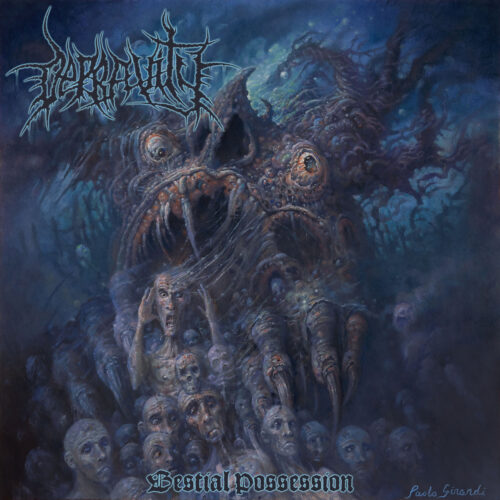
Depravity – Bestial Possession Review

By Kenstrosity

Since the release of Evil Upheaval in early 2018, I fell head over heels for Aussie death metal quintet Depravity. Evil Upheaval always going to be a difficult debut to follow, but Grand Malevolence did its very best and largely matched the debut’s sheer heft and vicious energy. Five long years spans the gap between then and now, with third salvo Bestial Possession, threatening to pummel me into dust. Little does Depravity know how badly I want it.

As if in smug answer to my “pummel me harder” challenge, Bestial Possession penetrates every pore of my body with wild abandon and zero concern for my internal organs. What I knew and loved from the brutal Evil Upheaval and the twisted Grand Malevolence coalesces here, forming a new evolution of Depravity’s sound that is at once devilishly cunning and fabulously infectious. A mangled amalgam of Cannibal Corpse bloodthirst, Immolation muscularity, and early Morbid Angel velocity, Depravity’s sound is familiar but instantly recognizable. The trick there is twofold. Firstly, Jamie Kay’s addicting vocal cadence and tonal attributes1 provide a singular voice that sets Depravity apart from the crowd. Secondly, guitarists Lynton Cessford and Jarrod Curley exhibit an uncanny ability to splice, fold, and connect tightly packed riffs together through kinky time signatures that snap my spine as easily as they trip me up (“Eunuch Maker,” “Blinding Oblivion”).

With these simple, but wildly effective, songwriting techniques—massaged by the smoothest transitions Depravity’s penned thus far—Bestial Possession quickly becomes a force to be reckoned with. Right off the bat, opening assault “Engulfed in Agony” launches the record with a devastating riffset; jaunty, subtly melodic, and bounding with verve. Oodles of arpeggiated scales and wriggling oscillations traversed by the lead guitars cohere beautifully with Louis Rando’s ballistic percussion and Ainsley Watkins’ clunky bass rumbles (“Call to the Fallen,” “Awful Mangulation”), forging a complex web of wizardry that stops just short of earning a “tech-death” badge but nonetheless ensures maximum stimulation. As a way to create balance and protect songwriting dynamics in every selection, Depravity explore a great variety of tempos and textures around Bestial Possession’s denser phrases. Grounding those variations to the band’s core mission of destruction, a palpable sense of groove tailor-made to incite ravenous pit activity also compels heads to bang with great intensity, as evidenced by turbo-bangers “Rot in the Pit,” “Aligned with Satan,” and “Legacy.”

There may be those who argue that the level of accessibility Depravity achieved with such brutal fare as this works against them, but I argue the opposite is true. Bands like Cannibal Corpse, De Profundis and even younger acts like Atrae Bilis expertly toy the line between accessibility and deadliness, and with Bestial Possession, Depravity earn their place in that elite category of death. This third installment in Depravity’s catalog is dense, brutally fast, and relentless. But it’s also refined, concise, and streamlined compared to their previous works. It’s loud, too, which holds it back from even higher acclaim, but its meaty guitar tones and well-balanced mix helps recover some ground on the production front. The only other nitpick I can muster against Bestial Possession is that, despite the incredible variety and scalpel-precise execution on hand, sometimes its strongest and most memorable cuts (“Eunuch Maker,” “Call to the Fallen,” “Rot in the Pit,” “Blinding Oblivion”) overshadow its album mates a touch too strongly. For some, that might create a minor bump in the road. Still, it’s unlikely to diminish the listening experience in any meaningful way.

As the dust settles and the flames of Depravity’s tear across the death metal landscape recede, Bestial Possession towers above many of 2025’s myriad releases. Even with my analytical eye in high gear, rooting for flaws and scrounging for blemishes, Depravity secured their rightful place as one of my absolute favorite meat-and-potatoes death metal acts active today, with Bestial Possession slotting at the top of their discography. It once more begs the question: how will they follow this up? To that I say, “Who gives a fuck?!” and smash the replay button to smithereens.

Rating: Great!
DR: 6 | Format Reviewed: 320 kb/s mp3
Label: Transcending Obscurity Records
Websites: depravityaustralia.bandcamp.com | facebook.com/Depravitydestroy
Releases Worldwide: November 21st, 2025

#2025 #40 #atraeBilis #australianMetal #bestialPossession #brutalDeathMetal #cannibalCorpse #deProfundis #deathMetal #depravity #immolation #morbidAngel #nov25 #review #reviews #transcendingObscurityRecords

2025-11-21

Ildaruni – Divinum Sanguinem Review

By Andy-War-Hall

The mystic, the subliminal, the macabre: the fixings of good black metal and the bread and butter of Armenian pagans Ildaruni. Four years ago, they entered the blackened sphere with their debut Beyond Unseen Gateways, a folk-infused take on black metal that, while promising in several regards, felt bloated and unfocused. Its pagan, medieval-y acoustic passages felt tacked on, lethargic and a bit hokey, and I think Ildaruni agree with my assessment, as this year’s Divinum Sanguinem ditches the lutes and stuff for “a more tenebrous and ferocious black metal path.” At nine songs and 53 minutes, Divinum Sanguinem is yet another considerable offering from Ildaruni. Will this one prove more vital than the last?

This time, Ildaruni ain’t faffing about;1 Divinum Sanguinem is out for blood. Second-wave styling permeates Divinum Sanguinem, but without its typical murk. Utterly furious tremolo riffs and blast beats abound, wrought to vicious effect on songs like “Forged with Glaive and Blood” and “The Ascension of Kosmokrator,” while Narek Avedyan’s burly shrieks command the calamity into a lean, focused undertaking. This is black metal of a riff-centric nature, Immortal-like, but with the odd Bathory military march (“The Ascension of Kosmokrator”) and chant (“Zurvan Akrane”) to instill a greater sense of grandeur into Iladruni’s palette. Riffs are a’plenty, but it’s drummer Arthur Poghosyan who steals the show, just crushing the blasts on every song and layering everything with impressive symbol work. Divinum Sanguinem is a hefty record, but unlike Beyond Unseen Gateways, it isn’t bogged down with momentum-killing diversions. Exemplified on “Divinum Sanguinem”—where all eight minutes of imperial procession feel, bombastic dynamics and eerie bridges feel critical and purposeful—Divinum Sanguinem is lean, mean and blackened as anything.

Ildaruni hold a workman-like commitment to evil. There’s an Emperor-like dark majesty to Divinum Sanguinem, though Ildaruni forgo synths and orchestras for grandiose guitar leads to accomplish this (“The Ascension of Kosmokrator,” “Divinum Sanguinem”). Thrash riffs grace “Zurvan Akrane” beside metalface-inducing chugs on “Forged with Glaive and Blood” and “Arcane Sermon,” and even instances of Qanun (“Scorching Pathways to Samachi”)2 and bagpipe (“Forged with Glaive and Blood”)3 add to the sinister feel of Divinum Sanguinem. Similarly, the various instances of choir (“Of Nomos and Flaming Flint Stone,” “Arcane Sermon” and “Scorching Pathways to Samachi”),4 chant and clean singing (“Divinum Sanguinem”)5 add dimensions to the vocal front of Ildaruni, breaking from the incessant shrieks but not from its malignancy. Pagan folk elements from Iladruni’s previous work remain, but are relegated to folkish distorted guitar leads (and bagpipes) to keep from clashing with the breakneck nature of Divinum Sanguinem. Sometimes ritualistically ominous (“Divinum Sanguinem”) and frequently hostile (“The Ascension of Kosmokrator”), Ildaruni crafted something pointedly dark with Divinum Sanguinem.

But Ildaruni play a limited, well-trodden style, and Divinum Sanguinem is stretched too thin to inspire frequent replay. While Divinum Sanguinem’s songs feature brief moments of differentiation, the near constant tremolos, blast beats and shrieks that encompass the majority of most tracks lose their lustre with use. If a song doesn’t immediately open with trems and blasts, like on “Of Nomos and Flaming Flint Stone” or “Zurvan Akrane,” rest assured that they’ll reemerge before the verse, still competently played but with little melodic variation between them all, losing effect with overexposure. The near-uniformity of Ildaruni’s track lengths adds to this sense of sameness, as songs seem to go through the same or similar motions for similar amounts of time, which doesn’t bode well for memorability. An exception to this trend, “Immersion into Empyrean”— with its mid-paced tempo and open arpeggios—is borderline catchy and provides a stark illustration of how one-note much of the rest of the album is. Ildaruni are all business here, but there’s too much business on Divinum Sanguinem and not enough variety, novelty or abundance of hooks to make getting through it consistently engaging.

Though Divinum Sanguinem is marred by considerable songwriting issues, it still marks considerable improvement for Ildaruni and proves there’s a future for the band. When it works, Divinum Sanguinem is a powerhouse of a record, both atmospheric and immediate. When Ildaruni’s tricks run dry, however, it becomes too easy to let the music slip into the background. Perhaps genre diehards will get more out of the album than I did, but I found myself losing interest too often to offer it high marks. Still, if you’re in the market for black metal that riffs hard, you could do a lot worse than Divinum Sanguinem.

Rating: Mixed
DR: 6 | Format Reviewed: 320 kbps mp3
Label: Black Lion Records
Websites: ildaruni.bandcamp.com | facebook.com/Ildaruni | instagram.com/ildaruni
Releases Worldwide: November 7th, 2025

#25 #2025 #armenianMetal #bathory #blackLionRecords #blackMetal #divinumSanguinem #emperor #ildaruni #immortal #nov25 #review #reviews

2025-11-21

Antinoë – The Fold Review

By Tyme

As the whispering winds of winter begin to blow colder through my neck of the woods, a time of year when fires get cozier, quaffed beers get darker, and we here at AMG begin to rhapsodize on things missed and regale readers with things listed, I found myself still searching for a near-end-of-year something new. When I saw Antinoë’s Dark Essence Records debut, The Fold, blurbily described as ‘Neoclassical Folk meets melancholy Pop with a Metal attitude,’ I was intrigued. Descending from the mountains of Madrid, Antinoë is the passion project of pianist and vocalist Teresa Marraco. Launched in 2021, Antinoë’s 2023 release, Whispers from the Dark Past, offered a unique piano tribute to the 90s Norwegian black metal scene, with Marraco covering everything from Emperor’s “I Am the Black Wizards” to Mayhem’s “Life Eternal” and Dimmu Borgir’s “Mourning Palace.”1 Poised to challenge the very fluid boundaries of what metal can be, let’s see if The Fold has the warmth necessary to keep those wintery winds at bay.

Void of instrumental trappings associated with most traditional metal, Antinoë relies solely on Marraco’s beautifully resonant voice and her expansive piano compositions to weave stygian tapestries. Conceptually, The Fold navigates the odyssey of accepting death, inviting listeners to tread a path through the idiomatic depths of grief’s different stages, as it traces the process of ‘folding inward.’ From the outset, as cricket-song fades into “Night Falls,” with its delicately crafted, darkly haunting piano melody and celestial vocals, the track pulls at melancholy heartstrings, drawing you into Antinoë’s dark world and setting the stage for what’s to come. The Fold offers an immersive, piano-led experience, peppered with pummeled ivories that shift with metallic force beneath sustained choral harmonies (“The Devil’s Voice”), as wispy trails of folky, Enya-esque ambiance waft amid airy, Dead Can Dance-like atmospheres (“Når Du Dør”). Not unlike Darkher, Antinoë succeeds at tapping into inscrutable emotion by minimalist means, but where Maiven casts spells webbed in doom, Marraco’s magic leans more toward the black arts.

While Antinoë draws much of its ‘metal’ from lyrical themes that explore the dense nature of grief and death, that doesn’t mean The Fold is musically bereft of heavier fare. Death angels descend on Emperor wings with halos of Dimmu Borgir to hover over the opening chords of “Threshold,” heralding dark omens in a chorus of swarming harmonies, witchy laughter, and raspy breaths, all as Antinoë pounds and trills her way through octaves in true symphonic black metal fashion.2 Is it still just a girl and her piano? Yes, but it’s by far the ‘heaviest’ song on the album. Which gives way to the excellently murky pop of “Chaos in the Sky,” another album highlight that had my neck snapped to rapt attention when Marracos, in her smoky voice, opened with “Who the fuck are you? Who the fuck am I?” like some dark-alt Adele, creating another moment more metal than not.

Drenched in warmth, The Fold’s production captures the beauty of Antinoë’s neo-classical elegance and marries it perfectly to its atmospherically blackened weight, providing a full-on musical experience. Whether it’s the delicate last minute of “The Devil’s Voice,” which flirts with a “Lágnætti” melody, off the Sólstafir magnum opus Ottá, or the inquisitive, childlike mystery of the whispers and keys on “Flock,” to the somber dirge of vocals from “Light Bringer,” listening to Antinoë is to become utterly immersed. I have little to critique, so enamored am I by Antinoë’s ability to impart complex ideas in the simplest of terms. I suppose there’s a minute or two that Marraco could have shaved from the two instrumentals, but in all honesty, there’s not a minute of The Fold that I would cut or change.

One of the things I’ve always appreciated about AMG is its fearlessness in shedding light on bands that are categorically not metal. Case in point, among many, is Dolphin Whisperer’s review of Maud the Moth’s excellent The Distaff this year. Antinoë has recorded an emotional album for healing hearts, and as I look back on the last few years of losses I’ve experienced, I’m unsurprised by how impactful it’s been to me. I wasn’t expecting something of this caliber to come sweeping in so close to list season, but here we are. I’ll gladly wrap myself in a warm blanket next to a cozy fire, slip on my favorite pair of headphones, and sip a smoky porter while letting The Fold envelop me against the impending winter’s chill.

Rating: 4.0/5.0
DR: 9 | Format Reviewed: 320 kbps mp3
Label: Dark Essence Records
Websites: Bandcamp | Facebook
Releases Worldwide: November 21st, 2025

#2025 #40 #ambient #antinoe #darkher #deadCanDance #dimmuBorgir #emperor #enya #notMetal #nov25 #piano #review #spanishMetal #theFold

2025-11-21

Bloodbound – Field of Swords Review

By Baguette of Bodom

Bloodbound has always been a band with a confusing identity. These Swedes lit up a storm with debut Nosferatu in 2006, an underappreciated heavy/power gem fusing the best of Iron Maiden’s gallops with the hooks of Helloween and HammerFall. The golden pipes of Urban Breed (ex-Tad Morose) were the cherry on top. However, the curse of unstable lineups would strike. Urban Breed would leave for one album, rejoin for the odd-but-good, progpower-meets-Kalmah melodeath sound of Tabula Rasa, and promptly leave again. A decade of struggles followed, ranging from watered-down HammerFall to withered Sabaton to simply tepid heavy metal. 2021’s Creatures of the Dark Realm was a surprising resurgence, drifting Bloodbound more towards saccharine Europower. This brings us to newcomer Field of Swords. Where does it fit into this unconventional discography?

Field of Swords doubles down on Bloodbound’s recent melodic adventures. The double bass drumming of ’90s power metal is immediately recognizable, following in the steps of Stratovarius and HammerFall. The guitar work, too, has rejuvenated. Gone are almost all of the Sabatonisms that marred some of the band’s lowest points; here, the Olsson brothers’ rhythmic assault is simple but effective (“As Empires Fall,” “Born to Be King”), and its attitude carries the medieval fantasy spirit of [Luca Turilli(‘s) / Lione] Rhapsody [of Fire] minus the wank. The vocals of Patrik J. Selleby fit this style like a glove, his adapted performance being one of the strongest of his tenure thus far.

Bloodbound’s newfound breakneck pace and consistency are their greatest assets. The decision to go borderline sparkly on Field of Swords could have backfired, marking yet another sudden left turn in a discography full of them. Instead, it feels like a natural development from the past three albums. While the album on the surface is written like standard ’90s–’00s melodic power metal (“Field of Swords”), the execution of classic power chord choruses leading into blazing solos (“The Code of Warriors,” “Forged in Iron”) is surprisingly fiery and fun. Most importantly, Field of Swords forgoes balladry and prioritizes speed for a lion’s share of its 45-minute runtime. The record has a unified image unusual of Bloodbound. It’s not infallible—the unnecessary Sabaton sing-along stomp rears its head on the second half of “Pain and Glory”—but it is tightly-knit in a way I greatly appreciate.

As catchy as Field of Swords is, there are a few things preventing it from being a resounding success. For one, Bloodbound rely too much on one-note Battle Beastian disco synths. While Fredrik Bergh contributes plenty of pleasant backing bombast to the album as well, his main weapon of choice is sharp and high up in the mix, leading to fatigue on some otherwise strong choruses (“Defenders of Jerusalem,” “Light the Sky”). The band is still not immune to odd songwriting shifts either. In addition to the aforementioned “Pain and Glory” stumble, closing track “The Nine Crusades” features Unleash the Archers’ talented Brittney Slayes, only for her voice to drown under sappiness unfit for the record. Even so, the concoction here is potent. Cuts like “Land of the Brave” and “Light the Sky” are some of Bloodbound’s fastest and most energetic to date, and this sudden burst of frenzy is admirable of a veteran band.

For the first time in a while, Bloodbound’s sound has a true sense of direction. Field of Swords’ all-gas, no-brakes approach gives the record more urgency than they’ve had in forever, and both the songwriting and album flow greatly benefit in return. Despite some lingering issues, Field of Swords ends up being one of the better albums in the band’s catalog. Both Creatures of the Dark Realm and this album indicate the Europower-forward realignment continues to work in their favor. I can’t say I don’t still long for the days of Nosferatu, and Bloodbound could place a bit more faith in their strong guitar work and vocal lines, but whatever they’re doing is paying off once more. I can only hope this progress continues.

Rating: Good!
DR: N/A | Format Reviewed: Stream o’ Piss
Label: Napalm Records | Bandcamp
Websites: Bandcamp | Facebook | Instagram
Releases Worldwide: November 21st, 2025

#lucaTurillisLioneRhapsodyOfFire #2025 #30 #battleBeast #bloodbound #fieldOfSwords #hammerfall #helloween #ironMaiden #kalmah #napalmRecords #nov25 #powerMetal #review #reviews #sabaton #stratovarius #swedishMetal #tadMorose #unleashTheArchers
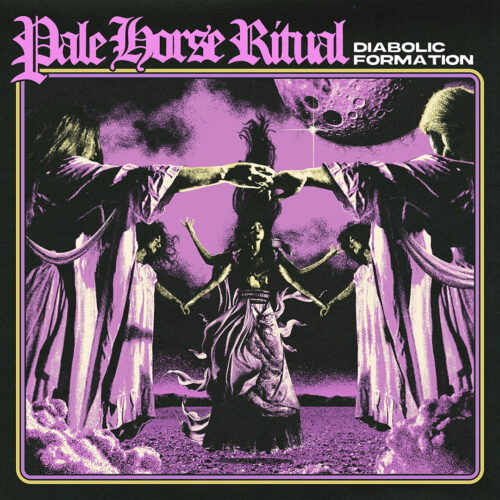
2025-11-20

Insidius – Vulgus Illustrata Review

By Lavender Larcenist

A Polish, blackened death metal record a day keeps the doctor away, or so I have heard. If so, Insidius (so tired of mispelled band names that make things impossible to search for) is your latest shot of hyper technical, searingly fast loud noises from the Poles. Quietly chugging along in the background, this Olsztyn-based fivesome has been producing solid blackened death since their debut, Shadows of Humanity, in 2016. While the album cover for Vulgus Illustrata may look like it contains some atmospheric depressive black metal, the eight tracks inside are nonstop meat grinders of chainsaw riffing with thick bass, otherworldly drumming, and pure rage. While Insidius plays with the familiar and the foundational, does Vulgus Illustrata survive comparison to its heavyweight counterparts like Dormant Ordeal and Behemoth, or is it dragged to the bottom, each unoriginal idea weighing it down like cinderblocks tied to a corpse?
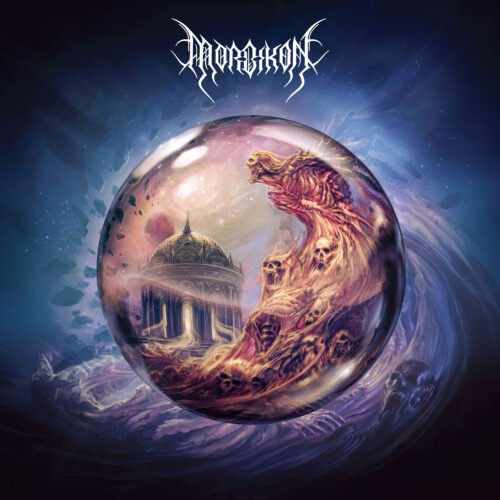
For starters, Insidius knows what they are doing. They’ve toured for years alongside bands like Vader, Grave, and Nervosa, and Vulgus Illustrata is full of dizzying instrumentation throughout. Tomasz Choiński and Jakub Janowicz wield their guitars like two buzzsaw-toting murderous surgeons, hacking and slicing at every turn with savage tremolo riffs and tilting dissonance. “Orgiastic” leads with a stop-start staccato riff, morphing with the introduction of Łukasz Usydus’s pirouetting bass. Of course, a blackened death metal album would be nowhere without some absurdly technical drumming, and Michał Andrzejczyk is no slouch. Inhuman fills, insane blasts, and rolling rhythms bring cohesion to Vulgus Illustrata, making for an album more akin to a face pummeling than a headbangers ball. Lastly, Rafał Tasak offers a competent if unflashy performance with his barking ferocity and pitched screaming. While the register remains generally on the low end, he has that pushing force that hurts your diaphragm to listen to. Think Cannibal Corpse, Vader, and Immolation, and you have the right idea.

Insidius has all the individual elements, but each track can’t help but bleed into the next, and even at a tight thirty-eight minutes, Vulgus Illustrata can feel long. Where bands like Dormant Ordeal mastered atmosphere, lead-ups, and the ebb and flow of a great blackened death song, Insidius feels too focused on in-your-face brutality. There are much-needed breaks here and there, with some genuinely great atmosphere, such as on the intro to “A Darkness That Divides” or “Censure”, and the entirety of the album closer “Forge of Our Hatred”. Unfortunately, these are few and far between, like ballasts in a storm that leave you hanging on for dear life. I like a good pummeling as much as the next fool, but only when it is consensual.

Maybe it is my undying love of blackened, Polish death metal, but I feel like I have seen everything Insidius has to offer done better elsewhere. Behemoth has a lock on hating god and the bombastic, theatrical edgelord side of things. Dormant Ordeal has technicality in spades alongside great songwriting, incredible atmosphere, and hidden hooks for days. Bands like Hath and Olkoth show that you don’t need to be from Poland to make good blackened death, either, so competition is fierce. Insidius feels late to the party, all dressed up, but nobody is there. They are doing everything right, but it isn’t quite clicking.

To be fair, some of you sick freaks will like getting absolutely brutalized and love every minute of Vulgus Illustrata, singing along as Tasak screams “Shit, cum and blood paint the wall of your prison”. I am not here to rain on your parade, and I don’t want to undersell Insidius. Vulgus Illustrata is heavy, consistent, competent, and genuinely engaging at times, but it feels tired. Insidius has the talent and the energy, but someone needs to point their ballistic missile of blackened death in the right direction for a direct hit. If you are a superfan of the genre, you may get some choice cuts from this slab of beef, but even still, you are better off eating with the bands that brought you here. Another victim to hang from the 3.0 tree, let’s tie the noose and be done with it.

Rating: 3.0/5.0
DR: 6 | Format Reviewed: 320 kb/s mp3
Label: Black Lion Records
Websites: insidiusblacklion.bandcamp.com/album/vulgus-illustrata
Releases Worldwide: November 7th, 2025

#2025 #30 #behemoth #blackLionRecords #blackenedDeathMetal #dormantOrdeal #grave #hath #insidius #nervosa #nov25 #olkoth #poland #polishMetal #review #reviews #vader #vulgusIllustrata

2025-11-20

Sun of the Dying – A Throne of Ashes Review

By Thus Spoke

Autumn is well and truly here, so it’s about time I reviewed some doom. Though my ears have been diverted towards certain listworthy death/black drops these past few weeks, the pull of the gloom grows stronger in proportion with the shortening of the days. But rather than the icy climes of Scandinavia, or wintry North America, or even rainy old England, my long-awaited dose of darkness came from Spain. In less than three-quarters of an hour, Madrid’s Sun of the Dying proved that you don’t need miserable, cold weather to make music about misery. A Throne of Ashes, the group’s third LP, is a bold, strong, and stirring mélange of death-doom styles that both filled the void in my musical life and made me downright embarrassed not to have listened to them before.

Sun of the Dying borrow from across the spectrum to craft their compositions, creating richly layered soundscapes. Gracing soaring melodies with dolorous piano, they channel Swallow the Sun on the highs, and Endonomos on the lows. Sweetly sad strings and soft singing recall My Dying Bride, and a duet over warm, vibrating chords and resonant atmosphere Draconian.1 But all this familiarity detracts not one iota from the authenticity of A Throne of Ashes; if anything, it makes it easier to love. By combining the best aspects of these influences with a heavy dose of character, Sun of the Dying make them their own, constructing a powerful whole that simply oozes feeling and personality.

As an indicator of how well A Throne of Ashes communicates emotion by way of staggering death-doom, it contains not just one, but two Song-o-the-year list contenders. Contender one, opener “Martyrs,” had me sitting back in my chair completely still, to give it my full attention. Its graceful dynamism between uplifting guitars and hushed cymbal, narrated by Eduardo Guilló’s beautiful singing and untempered roars, is matched for pathos only by fellow highlight “House of Asterion.” The latter leans into the orchestral more heavily, accenting melancholy descents with ever more dramatic flourishes of strings in a way designed to stamp them into the listener’s heart. These two exemplify Sun of the Dying’s knack for creating depth of feeling and composition with careful weaving of delicacy and sturdiness— the mark of all great doom. As refrains pass between piano, synths, and guitar, they wax, wane, and build gracefully. Spacious resonance over which solo piano (“With Wings Aflame,” “Of Absence”) or strumming, or the sounds of someone sobbing (“Of Absence”) float over and bleed into, prefigures or breaks the gradual escalation into screaming strings (“The House of Asterion”), or white-hot tremolo (“Martyrs”), or the blows of shuddering riff and cymbal (“The Longest Winter,” “Of Absence”). The fullness of even the quieter moments, with bittersweet melodies detailed with touches of choir and orchestrals and multi-tracked vocals and the warm heartbeat of percussion, makes the experience powerfully immersive, heightening the climaxes and deepening the nadirs.

So strong is Sun of the Dying’s ability to draw its listener in and wring their heart out that one almost forgives their occasional structural missteps. Advance track “Black Birds Beneath Your Sky” is a crushing slab of comparatively aggressive doom-death whose string-swelling, group-sung chorus yet exemplifies most explicitly the anthemic feel that other songs hint at. It’s a good song—particularly in its more soaring second act—but it sits awkwardly between the mournful “Martyrs” and “With Wings Aflame,” suddenly brushing aside the rapturous mist of sadness only for it to descend again right after. Its mood-breaking grit is echoed, albeit faintly, by “The Greatest Winter,”‘s more grey and stolid riffing, and there’s the quiet sensation that the pair don’t quite belong with their more sombre companions. Without them, however, the album would be very short, and so rather than removing them, their use of dark and light, soft and heavy elements might simply need to be adjusted.

Even if its atmosphere isn’t perfectly sealed, A Throne of Ashes proves transportive and engrossing all the same. Heartfelt and compelling, it distils an ideal of modern doom and had me scrambling to hear Sun of the Dying’s back catalogue. Don’t let the year end without a walk on a grey day and A Throne of Ashes in your ears.

Rating: Very Good
DR: 7 | Format Reviewed: 320kbps mp3
Label: AOP Records
Websites
: Bandcamp | Facebook
Releases Worldwide: November 21st, 2025

#2025 #35 #aThroneOfAshes #aopRecords #deathDoom #doomMetal #draconian #endonomos #myDyingBride #nov25 #review #reviews #spanishMetal #sunOfTheDying #swallowTheSun

2025-11-20

Old Night – Mediterranean Melancholy Review

By ClarkKent

Loneliness is a theme ripe for the sadboi genre, and given the epidemic of loneliness in our modern era, it’s a relatable one. Yet Croatian doom outfit, Old Night, tackles a more obscure topic on Mediterranean Melancholy—lighthouse keepers.1 This record marks the quintet’s fourth since forming ten years ago, and it’s the first with Ivan Hanžek stepping up as lead vocalist, following the departure of his brother, Matej, who left for personal reasons. Sadboi doom is typically ape fodder, as evidenced by the glowing review for Dawn of Solace earlier this year, yet somehow this ended up in my lap. Time to find out if Steel Druhm will be shedding tears at this missed opportunity to review one of his favorite genres.

Old Night certainly has a lot in common with sadboi stalwarts, Dawn of Solace. They mix pensive cleans with harsher growls, leaning much more heavily into the cleans. Songs often begin with melancholic guitar leads, Insomnium-style, and delve into Novembers Doom-esque rhythmic chugs, but Old Night plays at a much slower pace than these other bands. These elements mix nicely on tunes like “Stormbirds,” where an Eastern-tinged melody combines with Hanžek’s solemn tones to tug at the heartstrings. It builds up to an impassioned call to “Unleash the storm / unleash the stormbirds,” among the record’s highlight moments. The formula throughout Mediterranean Melancholy is consistent, but breaks on the finale, “The Loneliness of Lighthouse Keepers.” This song opens with a bit of soft rock arpeggios before Hanžek croons about a lighthouse keeper and a man on the moon. It mixes magical realism with raw emotion and gentle strums with heavy riffs to wring tears from attentive listeners. It stands as the album’s emotional peak.

Compared to the likes of Dawn of Solace, Old Night proves to be a bit rough around the edges. This is most apparent in the vocals. Hanžek sings his heart out, but his pitch is all over the place. He fares better when singing at a lower pitch, such as the beginning of “Chasing Yesterdays,” but at higher volumes, his voice leans more shout-y than sing-y. Luka Petrović’s growls similarly lack the oomph required to be effective. A good growl here and there would certainly help to darken the tone, but it feels like Petrović holds himself back the few times he steps in. Instrumentally, Old Night fares better. On guitars, Bojan Frian and Ivan Hanžek excel at the sort of melodic leads that ooze sorrow. They strum some memorable hooks, though I wish these hooks had more airtime. The production doesn’t often allow Petrović’s bass to make itself known, but he lets loose with a nice bass line on the finale. Similarly, Nikola Jovanović commands the kit with some hefty, slow-paced beats that add to the record’s gravitas. These guys can play, but are let down by production and songwriting choices.

Underwhelming vocals are rarely a dealbreaker for me, but Old Night’s biggest issue lies in its songwriting. While the record wraps up at a tidy 43 minutes, each tune ranges from the seven to nine-minute mark, and not a single one earns its stay. While Mediterranean Melancholy features traditional song structures better suited to four to five-minute bites, Old Night pads each track with tedious instrumental passages and slow, repetitive choruses. Most egregious is “Ghosts,” which gets through its full progression after four minutes but continues on for another five and a half minutes, seemingly in search of a reason to keep going. Only “The Loneliness of Lighthouse Keepers” justifies going beyond six minutes, but even this could benefit from snipping a minute or two off.

Sadly, Old Night doesn’t quite scratch that sadboi itch. The elements are all there: the melodies, the lyrical content, the musicianship. Yet they fall prey to a common pitfall—bloat. With some cutting, Mediterranean Melancholy could have been a serviceable EP. As it stands, the long, meandering songs reveal how tough it is for doom to toe the line between causing listeners to shed tears of sorrow or tears of boredom. Next time I hope they can hone in on their strengths and trim the fat.

Rating: 2.0/5.0
DR: 7 | Format Reviewed: 320 kbps mp3
Label: Meuse Music Records
Websites: Bandcamp | Facebook | Official Site
Releases Worldwide: November 21st, 2025

#20 #2025 #croatianMetal #dawnOfSolace #doomMetal #insomnium #mediterraneanMelancholy #meuseMusicRecords #nov25 #novembersDoom #oldNight #review #reviews

Client Info

Server: https://mastodon.social
Version: 2025.07
Repository: https://github.com/cyevgeniy/lmst