Joo Byung-ki, nominee for Chair of South Korea's Fair Trade Commission, said the government will decide on the Online Platform Act after Korea-US trade talks, pledging to use administrative powers to curb platform abuses during any legislative gap.
#YonhapInfomax
#FairTradeCommission #JooByungKi #OnlinePlatformAct #PlatformAbuse #KoreaUSTrade
#Economics #FinancialMarkets #Banking #Securities #Bonds #StockMarket
https://en.infomaxai.com/news/articleView.html?idxno=77086
#PlatformAbuse
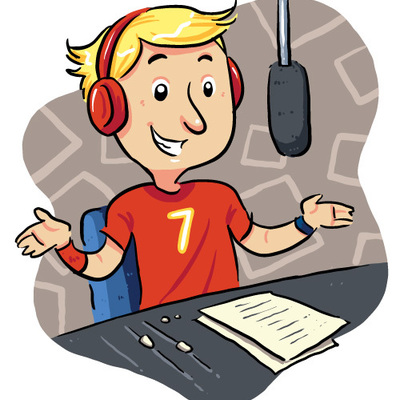
THE INCREDIBLE REASON HOUSE STATION LIVE CHANGED SERVERS
Or a survival guide for e-businesses facing bans or legal disputes with a platform
For nearly two years, we watched our entire platform become invisible. Not because of bad content, policy violations, or lack of effort... but because of a silent algorithmic shadowban. We had no warnings, no appeals, and no answers. Worse: under YouTube’s terms of service, any legal dispute must be handled in a U.S. court (even if you're based in France and pay taxes there). This is how global platforms sidestep national laws... and why creators are left legally unprotected in their own countries.
¯
_
PART ONE – WHEN A SHADOWBAN SHUTS DOWN YOUR BUSINESS
¯
_
Two years ago, we left Dedibox, a French hosting company we judged incapable of meeting even our most basic expectations in terms of customer service. In a field as critical as data hosting, the professionalism of the technical support team cannot be optional... it must be the company's showcase, the reassuring human face you turn to when something goes wrong. This pursuit of reliability led us to GoDaddy, based in Arizona, whose configuration tools, WordPress diagnostics, interface design, and especially their technically skilled support team had earned our trust... far beyond the empty promises of typical commercial discourse. But everything collapsed suddenly, swept away by a digital catastrophe we didn’t see coming. A brutal, invisible blow: the shadowban. House Station Live was ghosted (to use the terminology of our virtual assistant, GPT). Disappeared from search results, ignored by YouTube recommendations, erased from the Android Play Store. For eighteen months, despite heavy investments and extensive testing in formats, lengths, languages, thumbnails, titles, even hosts, nothing changed. Every video was locked between 20 and 30 views. We were trapped in that narrow range, with no human contact, no way to file a complaint, and no hope of improvement.
Facing this algorithmic wall, we made the only logical decision: open an investigation and build a legal case. Not to prove a “perfect crime” but to demonstrate that even the most opaque algorithms leave traces. During this inquiry, we came across a particularly disturbing fact: according to YouTube’s terms of use, any dispute must be brought before a U.S. judge. It doesn’t matter that you are based in France, targeting a French audience, or that French law requires foreign companies to have a legal presence in the country... Google circumvents this by distinguishing between headquarters, local offices, and legal jurisdiction. The result is clear: you are automatically excluded from the protection of your own legal system. This system is so airtight that very few individuals or businesses attempt legal action against Google. The GAFAM is protected by a lethal triad: algorithmic opacity, extraterritorial legal shielding, and the complicity of a U.S. government that views tech giants as national pride (even strategic weapons in the global information war). While France leaves its citizens exposed and helpless against digital abuse, the United States has conquered the Internet on a global scale by imposing its law as if it were sovereign territory.
To illustrate just how absurd and dangerous this has become, let’s take the example of music licensing. Every month, House Station Live pays royalties to SACEM, the French government’s music rights agency. In return, we are legally authorized to broadcast commercial works, provided we submit monthly playlists so that royalties can be fairly distributed to artists. In theory, everything is legal and in order. But the United States has its own system: the DMCA. And if you stream House Station Live through any platform based in the U.S. (like GoDaddy, YouTube, etc.), you are automatically subject to U.S. law, even if your legal entity is based in France. France, in turn, declares itself incompetent in such cases because the “crime scene” is legally located on American soil, where the servers are hosted. So the SACEM fee we pay offers zero protection, neither domestically nor abroad... where we’re treated like pirates. Imagine buying a product from a foreign website: you pay the foreign VAT, a currency conversion fee, and then the French customs tax. Three layers of taxation. A 30 € item ends up costing you 150 €. That’s digital over-taxation. And the same applies to our royalties.
Worse still, the U.S. considers you to be operating on their soil the moment your server is physically located there... regardless of where you are based, where your company is registered, or what contracts you’ve signed with your local rights agencies. Even if your SACEM contract is supposedly international, it offers you no protection in this skewed legal context. The U.S. has simply annexed the Internet, claimed it as their jurisdiction, and imposed their extraterritorial laws on the rest of the world (without any international mandate or global consent).
¯
#Shadowban #Censorship #YouTube #DMCA #DigitalRights #FrenchTech #AlgorithmBias #GoogleAbuse #PlatformAbuse #Justice
WHEN THE PLATFORM IS THE CLIENT — AND THE THIEF
May 18, 2025
What if a lawyer no longer met their client, but handed their case files to YouTube? What if someone broke into your home, took your creative work, promised fair compensation — and just never delivered? This isn’t fiction. This is the daily reality for millions of content creators. We don’t own the platform. We don’t own the audience. And we don’t own the terms. When you can’t negotiate your price, protect your reach, or even prove your value — what’s left to own, except your burnout? I wrote this as a warning. And a reckoning.
¯
_
YOU BRING THE CASE, THEY TAKE THE CASH — AND LEAVE YOU WITH THE BURNOUT
Take a lawyer. A lawyer earns money because their time has value. They meet their clients, set their fees, and are paid for every hour worked. That’s why they have offices, good equipment, tailored clothes — because their profession pays. Now imagine that law worked like YouTube. The lawyer doesn’t meet the client anymore. The lawyer meets YouTube. YouTube meets the client. YouTube takes the money. And the lawyer gets nothing — or maybe a few coins. In this version of the world, the lawyer wouldn’t have a proper office, or nice clothes, or financial stability. They’d look exactly like many full-time creators today: overqualified, underpaid, exhausted, and invisible. If video production followed the same structure as law — say €120/hour — YouTube would have to make content genuinely profitable before acquiring it. Creators would be professionals with autonomy and fair rates. But instead, creators hand over both their work and their clients to a machine that doesn’t pay — and calls it a platform.
Now imagine this: it’s the middle of the night. You’re asleep. A thief breaks into your house. He doesn’t take your jewelry or your wallet — he takes your tapes. Your creative work. He doesn’t steal it out of passion. He takes it to become the only one allowed to exploit it commercially — without ever paying you. The next day, he comes back. You hand him the key. You give him the code to the safe. He smiles and says: “If your videos are worth anything, you’ll be compensated fairly. We have a monetization system.” Meanwhile, he generates millions. He shows your videos selectively. He suppresses your reach. And he convinces you that no one cares — so that he doesn’t have to share anything. It’s not just your content that was taken. It’s your ability to prove its worth. This isn’t a partner. It’s a slot machine. Everything is designed to maximize its revenue. Nothing is designed to sustain the people who make it run.
¯
_
YOUTUBE DOESN’T EARN ITS CUT
The cut YouTube takes isn’t justified by any kind of visibility. People say, “They take 30%, but at least they bring you an audience.” No — they don’t bring anyone. They host my videos, and I have to do all the work to attract viewers myself. Only after I’ve already generated traffic do they start treating me as worth promoting — not to help, but to feed more users into a system that’s already profitable for them. If I don’t build the mill myself, they won’t bring the water. They won’t even help me build it. They only show up when the harvest is good — and only to pick the fruit. Meanwhile, they discard what they consider to be “bad crops,” even when the fruit is perfectly fine. This isn’t failure. It’s industrial-scale waste — of labor, energy, and money that doesn’t belong to them.
¯
#ContentCreator #DigitalWork #Exploitation #YouTube #Monetization #PlatformAbuse
Client Info
Server: https://mastodon.social
Version: 2025.07
Repository: https://github.com/cyevgeniy/lmst