
“First, don’t [BLEEP] with me! I’m a desperate man! And second, I want some fresh coffee. And third, I want a recount! And no matter how it turns out, I want my old job back!”
— Ron Miller (Mark Carlton), *Robocop* (Paul Verhoeven, 1987)
#Robocop
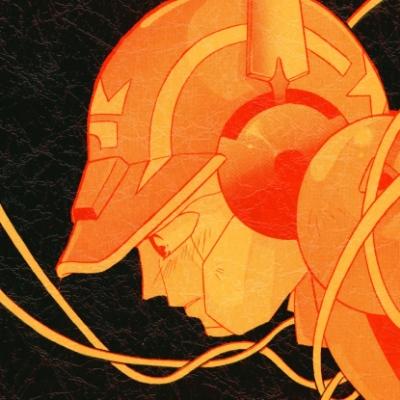



Apresentando Robocop para as próximas gerações.



Movie TV Tech Geeks #TV #PrimeVideo #Game6 #RoboCop 3 Best Movies To Watch on Prime Video This Week http://dlvr.it/TQjxGJ


One year ago today I posted this miniature Robocop photo I created using real figures, lighting and miniature sets...
#robocop #scifi #miniatures #photography #uniquephotography #uniqueart #art #creativephotography #practicaleffects #actionfigurephotography #cinemastodon



Murphy was probably set up to be murdered by those gangsters by the crooked cops in his precinct. Then he became #Robocop


Did you play RoboCop: Rogue City?
What did you think? Agree or disagree with me?
#robocop #RoboCopRogueCity #gaming
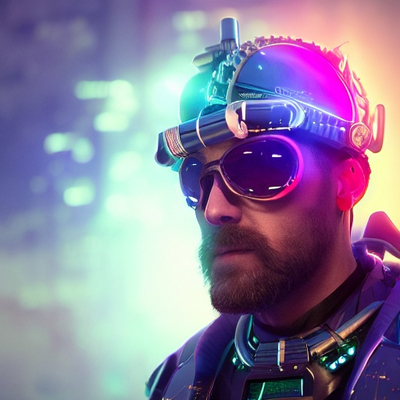
Did you play RoboCop: Rogue City?
What did you think? Agree or disagree with me?
#robocop #RoboCopRogueCity #gaming

RE: https://mastodon.social/@randahl/115983360099767652
It also helps that like most American technology, the F-35 is Enshittification in physical form.
Reminds me of the ED-209 in Robocop "Who cares if it works, I've got the contracts!"
Failing Empire is Failing.

Movies of the day (4/8) 🎬 RoboCop(2014) 🎬 CJ7(2008) 🎬 Asterix & Obelix: Mission Cleopatra(2002) 🎬 Deep Rising(1998) © TMDB #RoboCop #CJ7 #AsterixObelixMissionCleopatra #DeepRising #Action #Adventure #Comedy #Crime #Drama #Family #Fantasy #Horror #ScienceFiction #Thriller #Movie




Descubrimos el Robocop de Bollywood
https://www.youtube.com/watch?v=aRMBUTGrgJM

Surviving the system: Who is Robocop?
Let’s talk about Robocop, the character.
Identity
There are three views we can attribute to who, or what, Robocop is a person:
- Alex Murphy’s continuation. The psychological connections OCP Crime Prevention Unit 001 has are robust and causally appropriate, taking his self-naming at the end of the first movie self-evident and at face value.
- Robocop is a new entity. Murphy’s memories were not intended to be used to build a persona, but to serve as a knowledge databank how to police for the code running it and Directives how to behave. Traumatic memory fragments appear as intruding elements on the code and Directives in this newly produced subject.
- OCP Crime Prevention Unit 001 is a hybrid persona, who has his memories and interests negotiated with his Directives and other code. Robocop is a composite cyborg persona.
I’m going to use he and it from here on whenever I want to put an emphasis whether I am referring to Alex Murphy as the continuing persona. It would refer to the emergent persona that is Robocop, that carries the memories of Alex Murphy but is not him.
Mix of media
First, we must accept that there is no single view we should accept. All these three overall views are correct, as different movies, comics and shows have different writers that have written Robocop differently. Sometimes mixing all three together to question how much the machine affects the man, or the other way around. Freedom of will is a constant topic, as Robocop is the property of OCP. Whether it is the man, the machine, or both trying to constitute their own agenda, their life is dependent on the good graces of OCP in the end.
I would also note that despite some media shows all these three personae present to some extent, I rarely see people saying Point 2 and 3 could be coping mechanisms for Murphy. Outward to the public and most OCP personnel he shows the hard exterior, something he can rather literally mask himself with and allow the machine to take over. Nevertheless, his mannerisms and choice of words always come through, something that’s core to his being. Even then, for outsiders he is either OCP Crime Prevention Unit 001 or Robocop, whichever the other party prefers.
This opposes how he is among the closest of his friends or other people Murphy has come to trust. These people are who he allows to call him by his real name. When the helmet is off and nobody else is there, Alex Murphy allows himself to be vulnerable, someone who has gone unimaginable trauma both bodily and mentally. Barely anything of him is left, even the face he wears hides a machine’s scowl. They made this, to honor him.
Cold, but for an intended effectAll three in one movie
While many stories point out the post-traumatic stress disorder Robocop has, be it as Murphy or as something else, and how he finds a new way forwards, none of them really play with this coping mechanism and how that reflects on his psyche. Probably because of the limitations of the media. One of the few are Teyon developed Robocop: Rogue City games, and even in that I think it’s a bit by accident. In the games the player has to police, and they have options to uphold the law in humane ways, or by the book. Often these are depicted as human vs machine options, which also appears in discussion options across the games. If you take my notion of trauma control valid, then these options have a bit more depth, which would showcase that whatever the main three thesis we go by, Robocop/Murphy has an agenda it/he expresses in the line of duty.
If we take the original Robocop as a standalone entry, I’d argue we see all the mentioned three personae emerge at different points in the movie. However, we have Alex Murphy, the human police officer, as the baseline. After his death, we have OCP Crime Prevention Unit 001 only. Robocop is at its most purely a cyborg that uses Alex Murphy’s experience and memories as the baseline for its own actions and decision making. Alex Murphy’s memories intrude to Robocop’s own awareness increasingly as the movie goes by. When the murder trauma kicks in, there is physical pain, not just mental anguish.
Robocop’s agenda is limited to what is in its coding and Directives. Serve the public trust, Protect the innocent, Uphold the law and Any attempt to arrest a senior officer of OCP results in shutdown. Part of upholding the law is investigating murders, and the trauma flashes are strong enough to jolt the emerging personality to act accordingly. Robocop has the memories of the victim, and this is enough to drive Uphold the law Directive drive his actions, at least initially. However, as the movies play forward, Robocop’s depersonalization of Murphy becomes vague. Whatever the reaction is when it arrives at Murphy’s old family home, Robocop is at maximum angst and lashes physically out. A violent reaction to what’s in there.
Confused and angryAt this point, the Robocop we have before the final scene is accepting that there is an extension of Murphy inside of him. This entity is not fully Robocop from the middle point of the movie anymore, but something else. Perhaps what’s left of Murphy’s memories have risen to the surface and integrated themselves into the rest of the personality, creating a human-machine hybrid in denial of its own past and current state. Hence the use of third person for Murphy, as Robocop is still unsure who he is. Murphy is still someone else.
At the end of the movie, Robocop stating his name to be Murphy should be taken at face value due to the Christ’s resurrection is a major motif in the film. Alex Murphy coming back from the dead to assert himself in this new cyborg body seems to be the intended meaning. There is no trace of Robocop as such, the body is there to facilitate the soul. It’s both a Lockean identity and diegetic confirmation of self-assertion. Whatever we saw before this point has been Murphy asserting his humanity back. This is the classic recovery of personality, a full recovery of the spirit.
The Other Option
Ff we slightly sidestep the above, the assertion of self could be seen as Robocop accepting itself as Murphy. The result is slightly different and is more akin to finding your spiritual self. In this view, rather than Murphy regaining humanity, Robocop finds his humanity by accepting Murphy as his true self. While there is limited continuity with the fragmented memories, this Murphy would be something of a hybrid where the boundary between the man and machine has broken down, and the existing persona is co-constituted. Rather than “Murphy coming back from the dead,” Robocop would be “Machine accepting Murphy’s identity/memories as his own.”
Murphy would still be the same afterward, as the experience of dying and being reconstructed into a cyborg under OCP control would still be significant and extremely heavy on the psyche. Psychiatric therapy probably would do Murphy some good, with the assistance of someone who knows a lot about cybernetics and bionics.
The second movie (in)famously throws part of this character development out of the window. OCP has reasserted their control over Murphy to the point of him abandoning that identity. However, the Robocop we see is neither the one we see in the first movie, but somewhere in-between. The human self is still inside the machine, forced into a corporate puppet through massive amounts of new Directives. The more machine-like nature is always present, almost. This would indicate that despite the first movie’s ending, the result is not pure Murphy but a branched off personality that uses his name as he feels some continuity. This composite persona is what the Teyon games seem to base their depiction of Robocop, with identity being mediated by trauma, duty and emotional labor.
Despite nearly 300 new Directives being in an upload, Robocop resists, this asserting his agendaThe Prime Directives Chain
Free will is of course a major motif, intended or not. Whether or not Robocop is a continuation of Murphy or not, the Prime Directives frame all actions he must take. In this there is no freedom of choice. Going against the Directives will penalize Robocop/Murphy, sometimes by shutdown count or through some other manner.
Arguably, the Prime Directives themselves are the core code for Robocop’s identity. They are the chains that Robocop must function under, taking away his will to function in any other manner. All reasoning and mode of actions are guided and framed by them. The human inside the machine is still under OCP control, and media often likes to toy with this.
Much like with Asimov’s Three Rules of Robotics, the Directives are not foolproof. Serving the Public Trust sometimes demands reading the law as it was intended, or creatively, rather than by letter. This is where Murphy exerts his agenda over the Directives. Protecting the innocent is something he did as a police already, and that seems to be somewhat overriding Directive over the other two. While Murphy as a police is show to have his own agenda, I can see him sharing the three Directives as his moral compass as a police officer made him the best possible candidate for OCP by accident.
The Prime Directives are then effectively a prison under which Robocop, be it as Murphy or as OCP Crime Prevention Unit 001, must work as a cyborg. There is no other option. As long as these Directives exist, they define his personality. OCP’s control is overt and direct. They are, effectively, the core operational code for Robocop. Murphy, as a person, is now wholly dedicated to being a police officer for the rest of his unnatural life under the ownership of OCP. He will never be promoted, he will never be at retirement age, he will simply patrol the streets until either part of him finally expires one way or another. He will never have a family again, he will never enjoy life like any other man would, there is only the job. He was (re)built for that and nothing else. That is a gruesome and grim fate. Murphy’s convictions as a devout Irish Catholic won’t allow suicide and the Prime Directives will keep him motivated to keep going.
As the second and third movie shows how easily it is to muck around with the Directives, Robocop’s persona could be in a constant chaotic state, where he tries to wrestle with them to gain controlFractured but coping
It’s very easy to see why Murphy would begin to build all sorts of coping mechanisms. One could be that his personality is fractured. His personality is kept running by an amalgamation of organic brain and cybernetics, with both constantly attacking the other on a mental level. All the different takes on the character’s persona would then be explained by these changing states. I imagine depending on how hard the Directives or OCP has control over Robocop, the less Murphy has control over his agenda. If we consider the fractured personality valid, the different interpretations are all valid in their continuities, but we know this is simply fixing issues the writers have made by not being consistent with the original movie’s intentions with its ending.
There are commonalities between the three views described though. Firstly, Murphy’s memories are integral. They’re essential for Murphy’s continuity or as backdrop on which Robocop was built on. Either they are his memories or appear as glitches in the system of this new entity, co-constituted or not. Secondly, Prime Directives and coding shapes Robocop’s agenda. They have functioned as both code and conscience, often in contest with each other. The third point is linked with the second, and that’s OCP own Robocop. Whatever the interpretation, Robocop is a produced subject and is used as a media device where necessary. They got the perfect brain for their perfect cop, for better or worse.
I’ve got to give Frank Miller a small section, as he is the most high-profile writer for Alex Murphy. The original script for Robocop 2 depicted Murphy as a hybrid of Murphy and Robocop, someone who must constantly contest between his human conscience and OCP programming. Murphy is a man caged in a body of steel and wires, resisting every added Directive trying to erase what’s left of his soul. This follows into the 2003 Avatar Press comic, where Murphy actively fights OCP programming, reinterpreting and weaponizing it. Murphy is aware of what he has become, and his inner monologues wage war against the dehumanization he is under.
Despite this fluid identity horror, Murphy’s sense of duty burns through everything. There is moral persistence that doesn’t exist in the code or among the corporation. Perhaps the 1992 Robocop VS The Terminator is the best example of this, as Murphy still retains his moral codes after finding informational immortality of sorts.
I’d imagine Miller’s take on the character was the most popular at one point, but Teyon’s writing on the character seems to be more on-point with the first two movies. Because the player is allowed to make those choices, there are no clear-cut lines what’s the intended persona. The player is able to negotiate Robocop’s identity within limitations of the framing. However, I would say that the medium of game allows the player to see the social pressure that is put on Murphy as Robocop the best.
Outside pressure
While I’ve focused on the ghost within the machine, external forces are probably more relevant for Robocop than to normal people.
Murphy, it’s you. That line is important as it plants the seed for Robocop’s past persona as Murphy returning in some fashion. The first interpretation, which is probably the intended one, is that sets Robocop to find out who is Murphy, only to find out he is.
Either a cornerstone of reminding Murphy who he is, or an outside suggestion to what role Robocop is expected to set itself inHowever, the second interpretation is that Robocop’s personality is a blank slate of sorts, as it has code and the Directives to go by. That’s not a personality, but a set of guidelines. When the idea of Robocop being Murphy is set in, this snowball effect where the external role of Murphy, alongside the memory flashbacks, together force Robocop to adopt Murphy persona. OCP viewed Alex Murphy as the model police, a family man with high moral agency. The same could be said of his coworkers, who held him in good regards. By interpreting Robocop’s returning Murphy-persona in this light, we see that Murphy’s moral agency and role as a police officer finds continuation. His memories are fragmented, but the nature and agenda are still there. Just diminished in his new state.
The best of the best
Whether or not Robocop is Murphy reborn, a new being with Murphy’s memories, or a hybrid that has branched off, the police force at large, OCP and Detroit population view him as a supercop. There’s no other role for him anymore, that would make using the Robocop mask as a coping mechanism much easier. Robocop is expected to act in certain ways and represent OCP whenever the PR department demands so. This police identity Robocop has might be the overriding everything else. Whatever his/its persona is, the trauma Murphy went through echoes throughout Robocop and requires management.
If Robocop is Murphy’s continuation, then he must constantly do emotional labour to sort through his trauma with ever-increasing intrusive flashbacks he has no control over. Again, this would allow him to use Robocop as a mask for depersonalization and emotional suppression. Whether or not the public knows Alex Murphy is Robocop is bit of an open question. However, this makes it simple; people see Robocop as a police officer more than anything else. This doesn’t mean they see a person or a machine, but a function. Robocop media has depicted multiple situations, where a citizen has re-evaluated his views on Robocop just being another cold machine, finding some humanity within the cold exterior.
If Robocop is a new being, then forcing Murphy as part of his person via the glitches in the system and from his coworkers unable to accept this new person, then that would make Robocop someone who has found himself between his closest friends forcing one persona on him, OCP programming to act another, and the citizens viewing in a third manner. All these may have forced Robocop to adopt a personality, making it think that Murphy is who it is, but at the same time must function as OCP instructs. Funnily enough, the tagline for the first movie is very accurate.
Human to the last
Whatever the view on Robocop’s persona, it’s something that isn’t going to heal easily, if at all. Each interpretation still sees Robocop trapped by the Prime Directives and other OCP mandates, Murphy’s fragmented memories will continue to haunt, and society’s expectations will create constant pressure. That’s the charm of the character, the tension between life and technology, how they’ve either given Murphy a new (albeit limited) chance in life or created new life. Despite the trauma, the police officer is always present, guided by human experience and values at their core. Whatever interpretation you prefer, Robocop still has to struggle to establish his own persona. The suffering and trauma play a large part, yet there is hope for the better. The negotiated state between the man and machine persists against its cage and attempts to assert its own agenda. Even if Robocop wasn’t Murphy’s continuation, that struggle makes him very human.



Client Info
Server: https://mastodon.social
Version: 2025.07
Repository: https://github.com/cyevgeniy/lmst