
ALU on #Tangmega138k isn't working, but for some reason I have a good feeling about today.😀 #fpga#apicula
#Tangmega138k
So, I made 8 FlipFlops and placed them in each of the 8 quadrants of #Tangmega138k #fpga. Each DFF is connected to its own LED and transmits the button status to it.
#nextpnr successfully routed through the central bridge to all 8 quadrants.
gowin_pack wrote all the fuses and, in addition, 9 special ones for clock enabling in the quadrants and bridge.


@WillFlux Um... not so fast :)
I will bring #Tangmega138k support in #apicula to a state where some #riscv will run, but then I will need to go back to GW5A-25A and focus on DSP and serial IO.
At this point, there won't be a PLL support to run #isle. I hope someone will join in and implement PLL :)
But in any case, #isle will be launched on 138 this year, as I promised.😉
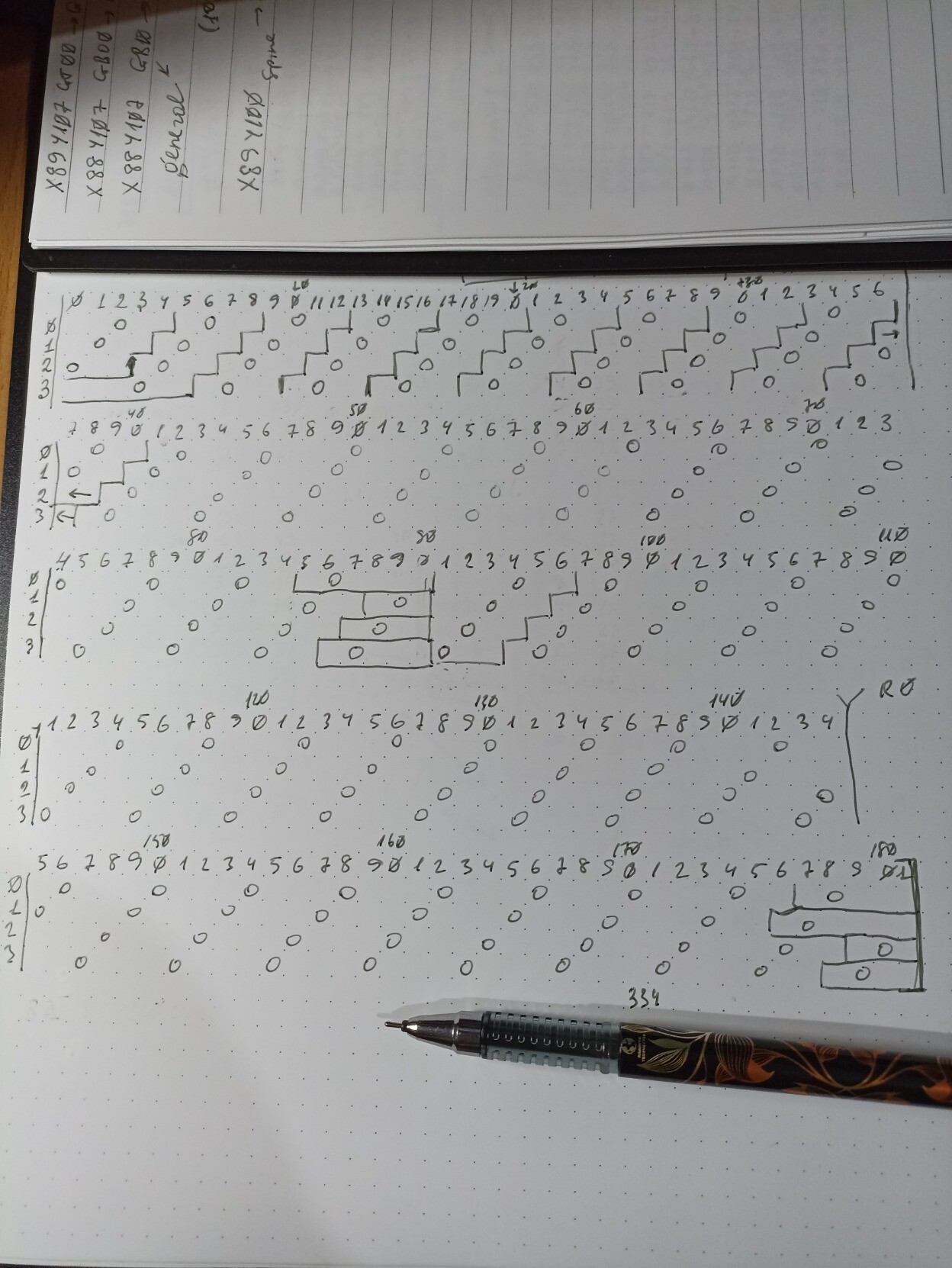
After 100500 checks which spine connects to which cell, the picture with the clock in #Tangmega138k becomes a little clearer🤣 #fpga
Gee!
First attempt to compile a design from a button, flip-flop and LED on #Tangmega138k. Clock wire routing failed. 🤣
We'll look into what the problem is.
#fpga#apicula#sipeed#gowin

So, it's a new year and we're getting started with the terrifying and magnificent clocks of #Tangmega138k
The situation is somewhat complicated by the fact that, for some reason, the external generator is connected to a standard IO rather than one dedicated to the clock.
(Yes, it says EMCCLK, but for #fpga it's just IO.)
In other words, I won't be able to easily send the clock signal directly to the spine, but will have to implement a gate ‘normal wires’ -> ‘clock wires’.😜

Client Info
Server: https://mastodon.social
Version: 2025.07
Repository: https://github.com/cyevgeniy/lmst