
The dollar-won exchange rate hovered near 1,430 as South Korean authorities closely monitored year-end levels, with thin trading and expectations of further intervention shaping market sentiment.
#YonhapInfomax
#DollarWon #ExchangeRate #KOSPI #ForeignExchange #YearEnd
#Economics #FinancialMarkets #Banking #Securities #Bonds #StockMarket
https://en.infomaxai.com/news/articleView.html?idxno=97681
#YearEnd
South Korea's KOSPI index opened lower on the year's final trading day, fluctuating around 4,200 as investors took profits amid a lack of fresh catalysts and subdued global sentiment.
#YonhapInfomax #KOSPI #ProfitTaking #YearEnd #MetalsSector #ForeignInvestors #Economics #FinancialMarkets #Banking #Securities #Bonds #StockMarket
https://en.infomaxai.com/news/articleView.html?idxno=97631

My year-end reading list!
Not a bad haul for a chaotic and only half-medicated year, if I do say so myself!
I nearly forgot - I also read some fiction! The Demu Trilogy and World of Ptaavs, two older science fiction works. They were okay. The Demu Trilogy had some interesting trans-adjacent themes to it that were fascinating to see in a book from the 70s. World of Ptaavs was somewhat disjointed. They both dipped a bit into that vaguely uncomfortable realm of 60s-70s sci-fi where you feel like something is ’off’ about its treatment of minorities and women but can’t quite place what, but The Demu Trilogy improved considerably as it went on.
The Gulag Archipelago - Peerless as an oral history of the GULAG, Solzhenitsyn has a gripping and moving writing style that brings the GULAG, the Soviet system, and all of its horrors, to life. Unfortunately, his clash with modern values breaks out in the text from time to time, though they aren’t the focus of the work. His numbers are also not reliable, of course, as the Soviet archives had not been opened, and he was working by guess and by golly.
Hazards of Urban Life in Late Stalinist Russia - Positively fascinating read on the horrific state of urban life in late Stalinist Russia. Both grimly amusing - such as the description of ‘flat cakes’ of compressed human waste being chopped out from apartment courtyard outhouses with the spring thaw, or the same trucks being used for vegetable delivery and waste disposal (they were not supposed to be used so, but they were also supposed to have multiple trucks, so what’s a municipality to do?) - and utterly horrifying, making comparisons with Victorian-era Britain and describing the pollutants present even in groundwater due to the total lack of treatment (in part stemming from a Soviet notion of ‘self-cleaning’ rivers). Though it goes over it only in passing, also interesting is just how quickly the post-Stalin Soviet Union improved matters - if you ever feel like badmouthing a Khrushchevka… remember what came before!
Soviet Workers and Late Stalinism - Another fascinating read about the state of the proletariat in the post-WW2 Soviet Union. If you were ever enamored with the idea of workers with rights in the ‘socialist’ country of the USSR, this will quickly disabuse you of the notion - at least in Stalin’s era. It covers everything from workshop/advance pay debts to logistics tangles (including some great examples of classic Soviet inefficiency, shipping parts to factories that didn’t need or couldn’t use them) to food supply to the right (or lack thereof) of workers to quit or change jobs to the actual value of workers’ pay.
Grant and Sherman: The Friendship that Won the Civil War - An excellent popular history of two of the chief military figures of the US Civil War. It really outlines, in a way that histories of the overall war miss, what kind of characters Grant and Sherman were, apart from the word of their own memoirs (which are also both excellent). Grant comes off as every bit as unshakeable as his reputation, a man of immense calm and reserve, but also surprisingly empathetic. Sherman, on the other hand, shows a much wilder side than he admits to in his memoirs - a man brimming with anger and paranoia, capable of immense compassion and immense callousness almost in the same breath, always prickly and ready to see offenses and keep grudges. For all that, Sherman still comes off as very human and sympathetic, a genius tormented by his own mind, and a fundamentally honest (if not necessarily ‘good’) and straightforward soul who struggles with politics.
Warrior of God: Jan Zizka and the Hussite Revolution - Honestly, this was not terribly well written, even as a popular history. I learned some about Jan Zizka and the Hussite Revolution, but it was not written in a gripping or clear way, and was also (as most popular histories) not particularly detailed.
The Book of the Crossbow - An older tome, but a fun read on the history of crossbows. The author obviously has a lot of passion for the subject, including the minutiae. Very fun.
75 Years of the Turkish Republic - A collection of essays on the history of the Turkish Republic. Quality varies, but is generally high.
General Issues in the Study of Medieval Logistics - Another extremely dry and technical text. Some fascinating ideas and conclusions, but you… have to have a passion that exceeds mine for the subject of geography and archeology.
Greek Fire, Poison Arrows, and Scorpion Bombs - A very fun history of ’non-standard’ weaponry in ancient history. Incendiaries, poison, insects - all sorts of early biological and chemical warfare to amuse and entertain, and informative on the state of ancient knowledge of poisons besides.
Logistics of Warfare in the Age of the Crusades - An excellent collection of essays on medieval logistics. It’s definitely a subject you, uh… have to already have a taste for… but it was extremely intriguing to me, going over animals, infantry, pay, and ship logistics, as well as glances into the Mongols and ‘Saracen’ forces of the period.
The Medieval Soldier - Somewhat dated. Dry. Unfortunately, I didn’t glean much I didn’t already know.
The Medieval Way of War - A series of essays on different, very specific subjects of medieval warfare. Very interesting, but definitely academic essays, if you were thinking it might be light reading.
Thomas Sankara: A Revolutionary in Cold War Africa - Extremely fascinating biography of Thomas Sankara, who was the far-sighted but politically-naive leader of Burkina Faso during the 80s. The picture painted of the man is both compelling and nuanced - a man of immense personal virtue and work ethic who does not always understand people, an idealist unafraid of self-criticism who cannot play the proper tones of diplomacy (with European powers or nearby African countries), an incredibly well-read and empathetic man who cannot understand why others are not like him. Highly recommend.
Washington At The Plow - A great history of George Washington’s agricultural pursuits. The issue of slavery is, thankfully, not glossed over in the least - a very detailed look at Washington’s attitudes towards slavery (for better and worse) and treatment of his slaves is included, and, for that matter, is core to the book’s examination of Washington’s entire agricultural system. It places Washington as a surprisingly far-sighted and progressive thinker on agriculture, yet struggling with the society of rural Virginia and his own established position as a slave-owner (and what that meant practically for his agricultural pursuits, not just morally) in the process. Highly recommend.
The immense number of Roman-related books read will be put under a spoiler, for readability’s sake, lmao:
spoiler
24 Hours in Ancient Rome
A Year in the Life of Ancient Greece
Ancient Rome on Five Denarii a Day
Legionary
Gladiator - All five of these were just fun little vignettes by the same author, taking a mixture of liberties with the source material and excerpts to present a snapshot of Classical life.
Archeology of Sanitation in Roman Italy - Dry. Very dry. Unfortunately, I learned little, though not through any fault of the book. Roman sanitation I already understood well, and this is all very… detail-work. Not abstract, but in terms of, well, the archeology - tracing the progress of spread of Greek plumbing through Italy, trying to nail down estimates of dates for major Roman plumbing innovations, etc.
Army of the Roman Emperors - Very detailed archeological tracing of the development of Roman equipment and military development. A bit boring, but informative.
Caesar: Life of a Colossus - Extremely compelling biography of Caesar, which, though overall positive, doesn’t lionize him. It fights to place Caesar in the context of Late Republican politics, and does a fantastic job of it, showing both what a cautious political operator he was, and what a ruthless political operator he could be, as well as giving insight as to his personal magnetism and charm (and why those were exceptionally important in Roman politics). I actually read through this several times this year, I enjoyed it so much. Highly recommend.
Children in Antiquity - A collection of essays on childhood in antiquity. Interesting if you ever wondered what a ‘childhood’ was really like, the similarities and differences to the concept of childhood today.
Cities, Peasants, and Food in Classical Antiquity - A collection of essays on diet, agriculture, and living standards in the ancient world. Tends towards the technical and medical, but still a great book.
Food and Society in Classical Antiquity - Similar in topics and quality to the previous.
Julian - A biography of the Late Roman Emperor Julian. Not much extra context given beyond the major sources, and the author extrapolates as to Julian’s motivations at several points with… unconvincing arguments.
Logistics of the Roman Army - A fantastic study of the Roman logistics system for the Legions and auxiliaries. Brought a smile to my face the whole time I was reading, though, admittedly, it is a very particular topic to be interested in, lmao.
Pax Romana - A great outline of the Roman Empire (and late Republic) and what methods it used to keep the provinces attached to the Eternal City. It emphasizes the interaction of the Roman state, and provincials and ‘barbarians’, as active and dynamic actors, not simply as an inevitable imperializing force intruding on passive objects.
Roman Homosexuality: Ideologies of Masculinity - Extremely interesting re-evaluation of the depth and interest the Romans took in male-male sexual relations. Rather than passing and foreign, it establishes, convincingly in my opinion, Roman traditions of homosexuality to be as ancient as any records of the Republic, and the appropriateness of sexual interest in older men. Highly recommend.
Roman Military Equipment - Dry categorization of Roman military equipment through the years. Informative, but could dehydrate a camel.
Roman and Local Citizenship in the Long Second Century CE - Extremely fascinating collection of essays examining how Romans and provincials saw their identities and legal situations of citizenship. Highly recommend.
Rome and China: Comparative Perspectives on Ancient World Empires - Comparisons between the Roman Empire and China in the same period. Especially interesting are the legal, social, and financial outlooks compared. Highly recommend
Slingers and Sling Bullets - An examination of sling bullets in the Roman world. Interesting, but short.
The Antonines: The Roman Empire in Transition - A history of the Nerva-Antonine Dynasty of Rome. I found it uncompelling and uninteresting.
The Assassination of Julius Caesar: A People’s History of Ancient Rome - Extremely trash. Not only does Michael Parenti botch basic facts, but he draws absolutely insane conclusions in order to present Caesar as a proto-Marxist force. Despite being excited to read a leftist and positive account of Caesar, being both left-wing and positive towards Caesar myself, I came away bitterly disappointed.
The Decline of Morality in Republican Rome - A short piece skewering Cato the Younger. Recommend for the purpose of dunking on a conservative shithead who’s far too lionized because he said some pretty words.
The Marriage of Roman Soldiers - An excellent examination of the social and legal positions of Roman soldiery in regards to marriage, complete with examination of ages at marriage, the legal complexities of dowry and soldiers’ wills, and so on. Very detailed and very fascinating.
The Roman Army: A Social and Institutional History - Very good, if broad, overview of the Roman Army. Some information in particular about careerism and military culture I found novel and fascinating.
The Roman Empire and the Indian Ocean - Extremely fascinating account of Roman trade with the east, focusing on Roman Egypt and Arabia, and the Arabian and Indian polities of the period. Very economics-oriented. In fact, I might reread this one again soon.
The Roman Empire from Severus to Constantine - An overview of the period it mentions. Both dry and lacking in meaningful detail, unless you have a taste for exact dates.
The Roman Imperial Succession - An interesting examination of the process of passing the position of ‘Emperor’ from one ruler to the next. As the Roman Emperors were not quite monarchs, normal rules of heredity did not apply, and various authors have proposed various ad hoc ‘rules’ for how it was passed down. I don’t agree with everything that the book argues for, and it gets a bit repetitive in places, but on the whole I found it very thought-provoking.
The Roman Villa - Dry and dated, but fun to see what was cutting-edge in the 70s but accepted orthodoxy now.
Trade and Famine in Classical Antiquity - A collection of essays on ancient economics. Honestly, doesn’t have much to do with famine. I think only two of the essays are about famine. Two were also in French, which I certainly can’t read on an academic level.
Un-Roman Sex - An interesting view of Roman identities and sexual practices, and how such norms were both violated and clahsed with each other.
Warfare in the Roman World - An interesting view of the more ’non-quantifiable’ aspects of Roman warfare.

Our Year In Review 2025 Quiz is now live! How much can you remember about these events and highlights?
https://youknowwhatblog.com/quizzes/year-in-review-2025-quiz/
.
.
#quiz #trivia #yearinreview #yearinreview2025 #yearend #endofyear #2025events #currentaffairs #reveillon #réveillon


The 10 Hottest Musician Sneaker Collaborations of 2025: Staff Picks


Thanks to a generous overpay for my discography this weekend ($42, the answer to life, the universe and everything!), I hit my year end financial goal of reaching $5k in all-time sales (nearly half of that this year!).
Next goal: 1000 Bandcamp followers!
https://etherdiver.bandcamp.com/album/the-mechanics-of-mysticism
If I reach my goal, I'll send out a bunch of free download codes to those followers via Bandcamp, so go give me a follow and keep an eye on those messages in the next few days...

I also have few news for yous 📰, as always, but I will share you them in the next year already. But if you have an interest, and haven't a patience, you can visit my website, and check its "Devlog 📝"
I wish a Happy New Year to everyone again! 🥳🧃🥂
#happynewyear #happynewyear2026 #newyear #newyear2026 #year #year2026 #congratulation #congratulations #greeting #greetings #YearEnd #wish #wishes
Hello everyone! 👋😄
I came here to wish a Happy New Year to everybody! 🥳🎄☃️🎉
I wish you successes ✔️, a positive 😜, an optimism 😄, a happy, a love in all meanings of this word ❤️ (includes a friendship), a luck in everything 🍀, and don't waste your time in vain ⏱️
#happynewyear #HappyNewYear2026 #newyear #newyear2026 #wish #wishes #congratulation #congratulations #greeting #greetings #year2026 #yearEnd #year

As the year comes to a close, we are reminded that the work of spreading the gospel is not bound by seasons. This final stretch of the year presents a unique opportunity to make a lasting impact in 2026. #giving #yearend #mexico
Find out more: https://link.content360.io/jandblee


𝙃𝙀𝙇𝙇𝙊! People of #Fediverse👋🫂I think I caught a cold for sleeping in cold floor, Got a runny nose🤧
Anyways May your family have a prosperous New Year! full of wonderful moments, Peace & Love.🎇🎇
:BlobhajHeart: Kindly boost my pinned, I appreciate it🙏💕


ਸਾਲ ਖ਼ਤਮ
#yearend #2025 #supne #rabba #saalkhatam


Oh the places we brought laughter in 2025! From Zipcon to Cleveland ConCoction, from Pennsic to One World Day, and a first time appearance at Barrington Elementary School!
Where will 2026 take us?
#CommediaDellArte #Commedia #Improv #Improvisation #Theater #Pennsic #PennsicWar #SCA #SocietyForCreativeAnachronism #ClevelandConCoction #CleCon #Zipcon #2025 #YearEnd #InReview

2025 Year-Ender
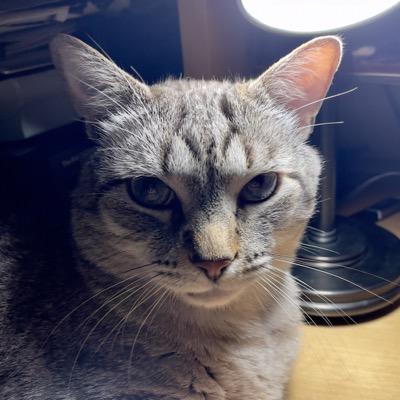
A James Bay cat! Cats may be the one good thing about the Internet and I saw this one with my own eyes.Another year is passing, the tenth which I have ended with a blog post. This was a year of transition and activities outside of the history and archaeology I talk about on this blog. So sit down with a mug of something warm (or a glass of something cool for readers in the Antipodes) while I talk about this past year.
What I Wrote
Much of my writing this year was either for volunteer projects which I won’t talk about here, or editing my second book. I finally managed to stick to one post per month beginning in July 2025. I created a small page on My Pleiades Contributions. No magazine articles or academic articles came out this year.
I helped Martin Rundkvist with a question about swords, had a back and forth with Bret Devereaux about the hoplite wars, and traded casuistry with the very polite head of a very bad organization.
People on Mastodon enjoyed my links to Wikipedia’s guide to spotting chatbot slop and the tree of Ténéré in Niger.
Two of my blog posts reached wide audiences: my list of reasons why knowing things is hard, and my warning about academia.edu changing its terms of service in a way that suggests they want chatbots to talk about papers using the voice and face of their users. I got links from Bruce Sterling and Bret Devereaux. My meaty review of Brad DeLong’s book was a flash in the pan, although to my knowledge I am the only reviewer who had the respect to fact-check it. I won’t try to track statistics because the swarms of scrapers feeding chatbots (and my newly built defenses against those scrapers) interfere with the count. The most important statistic is that when I meet someone with similar interests, they have usually heard of and respect my writing. I have a very engaged audience which is very offline.
How I Pay for It
Unlike most bloggers I neither have an indulgent professional job nor independent wealth nor a thicket of ads and digital goods to sell. I have a mundane part-time job. My main sources of freelance income in 2024 have dried up so I spent a great deal of time and money this year retraining and obtaining treatment for one of my disabilities. My income was higher than any year since 2018, but lower than in any of my first five years after graduating with a BSc. If any of my gentle readers know anyone who needs an experienced editor of nonfiction, business writing, and marked-up web content please put me in touch with them! (My first profession was software development but that is a hirer’s market right now across most of the world so it would take local networking to get back in to if I choose that path). I tried some teaching and found that I need to retrain my voice for the COVID era. Look out for more on that in 2026.
Writers and artists have had to get serious about making money from their Internet presence because the industries which used to pay them for their skills have been devastated. The Internet ads which paid for the first webcomics and blogs stopped paying long ago. Some very popular things online generate no revenue, and some casual creations make it hand over fist. So if you know of small projects which you value, its very important to support them.
Everything Else
This year I joined three volunteer projects, one international and online, one in BC which was very active, and one in British Columbia where I am still coming onboard. I have not been a board member since my days in Innsbruck so this is a new experience. I helped pick English ivy and other invasive weeds from local sites and started a small garden of strawberries and marigolds and herbs. Strawberries in a sheltered area try to fruit as late as December here although they don’t get very sweet. Next year I will try planting some of the annuals farther apart and try some lavendula in a dry sunny space. Its an Eurasian species but it does well in our current climate and bees like it but deer do not.
In spring and summer I got back into archery with a fibreglass mock-Mongolian from Alibow in China. I had not drawn a bow for many years. I have not been able to connect with either of the local archery clubs but maybe that will be possible in 2026.
Orpiment and realgar. Realgar decays in sun or humidity so a sealed case might have been better.I attended the Victoria Gem Show, saw some samples of pigment minerals like orpiment and realgar and malachite, and had a nerdy conversation with a young couple from UBC with some samples of Tuscan marble. I am glad that someone else takes on the risk of storing toxic light-sensitive minerals in unsealed transparent containers. Although I am trying to shrink Mt Tsundoku, I picked up a few used books at the Russell Books warehouse sale in James Bay.
My only sewing project was blanket-stitching the edges of a piece of Italian worsted to make it into a short cloak to wear around the house on cold nights. I have a few shields to gesso and paint this winter.
While time and money for live performances were limited, in December I attended a concert at Alex Goolden Hall. I finally visited Abkhazi Garden built by a Georgian prince and a moneyed British woman after they got out of internment camps and occupied Paris. I met German librarian Lambert Heller and some interesting but less academic people.
This year I offended one local friend and one local acquaintance who dropped out of contact. In both cases, we were mostly communicating electronically.
My health and ability to concentrate are not where I wish they were. The world situation is not what I wish it is. Whereas the internet was once a refuge where I could find scholarly and practical people, social media became crazier and more hostile and dogmatic than face-to-face communities. I foresaw the doom which was coming to those sites so I don’t understand why so many people flocked to them. As a highly educated introvert who grew up reading classic American science fiction, reading the news gives me vertigo, because a handful of people with far too much power read the same stories I did but did not get the same messages.
Someone at Russel Books put A Confederacy of Dunces (1969, published 1980) front and center this yearOutside the Abbey Walls
do not depend on the hope of results. When you are doing the sort of work you have taken on, essentially an apostolic work, you may have to face the fact that your work will be apparently worthless and even achieve no result at all, if not perhaps results opposite to what you expect. As you get used to this idea you start more and more to concentrate not on the results but on the value, the rightness, the truth of the work itself. And there too a great deal has to be gone through, as gradually you struggle less and less for an idea and more and more for specific people. The range tends to narrow down, but it gets much more real. In the end, as you yourself mention in passing, it is the reality of personal relationships that saves everything.
Thomas Merton, OCSO, letter to Jim Forrest, 1966 (source)
My friends who stopped worrying about indoor air quality are not getting as sick as often as last year, but the state of the world and the state of the web are still gloomy. In my view, it is urgent for us in the free world to disconnect from big-spending American institutions, while just as urgently connecting with American people. While we cannot accept the lie that the United States is isolated behind a wall from the outside world and its concerns, trying to work with Amazon or Automattic or the American public-health authorities will just drag us down into darkness. However, trying to talk about these things with a global network interested in books and swords is a distraction from acting close to home.
Another friend this year suggested that I should stop worrying about the news and social media. I think he has a point at least as far as US, UK, and corporate social media go. I have met people who don’t know the things I know about the corporate web so have not drawn the conclusions I draw from them.
I wish I knew how to fix the things in our culture that produce podcast-addled premiers. I wish that when the self-indulgent folly of rich people and their flatterers lead to destruction in the depths of the Atlantic or the heights of the atmosphere, nobody else was hurt. And I wish that people would not pay all they had for comforting lies, and not a penny for the painful truth. But I cannot change those things. The task ahead for us in our local communities is to build things which can survive the crash and the death-throes which will follow, and create low-bandwidth means of communication with the other islands of flickering light beneath a starless sky.
So in 2026, I will blog once or twice a month, while working on print publications, my day job, and my local volunteering. This is not the world I wish I was in. My efforts to sustain communities and influence their direction have often failed. However, it is what I can do with the resources available to me.
Handing Doris the light, he let her take his left arm. Together, they left the room and went down the hallway to the stairs and the long walk to the darkened street below, into a city that had suddenly been cut off from its very life-energy. A city that had put all its eggs in one basket, and left the basket in the path of any blundering foot.
H. Beam Piper, “Day of the Moron” (1951)
(scheduled 27 December 2025)
#modern #notAnExpert #slowingDown #yearEnd



Taxes due? Do some good with them.
Give by Dec 31 to Born in Captivity.Wild Within. and take advantage of year-end tax benefits 🐦 https://www.turpentinecreek.org/wild-within/
#TaxDeductible #WildWithin #YearEnd #EndOfYear #Holidays #BigCatLove #AnimalWelfare #rescue #holidayseason #Sanctuary #happyholidays #TCWR #WildWithin #TurpentineCreek #afternoon #Tigers #CozySeason #GFAS #eurekasprings #HolidayGiving #playtime #BlackCats #Leopard #SanctuaryLife #cute



With thousands expected to ring in the New Year, Varanasi has stepped up security along the Ganga ghats. Drone surveillance, water police monitoring, and strict safety norms aim to ensure a smooth and safe festive experience for visitors. https://english.mathrubhumi.com/multimedia/videos/varanasi-ganga-ghats-new-year-dkb37b7q?utm_source=dlvr.it&utm_medium=mastodon #Varanasi #NewYear2025 #GangaGhats #YearEnd #Travel


It's that time of year again...
Between the festivities and the downtime, I'm tackling my annual #DigitalDeclutter. This year, I'm adding a new step: wiping my AI chat history. More details over at the blog post:
https://bradgrier.com/2025/12/26/winter-break-data-cleanup-and-setting-up-the-new-year/


As the year draws to a close, it’s tempting to count accomplishments.
But a deeper question lingers:
Who did this year shape you into?
Legacy is formed not only by what we do but also by who we are becoming, one choice at a time.
#Legacy #Leadership #TodayMatters #Reflection #PersonalGrowth #Purpose #YearEnd


🌟 Happy Holidays from DrupalCon Europe 🌟
As the year comes to a close, we want to thank everyone in the Drupal community for the passion, collaboration, and care you bring to open source. Every contribution, big or small, helps move the community forward.
We wish you a restful end of the year and a positive start to the year ahead.
Happy holidays and a happy new year from all of us at DrupalCon Europe. 💙
#DrupalConEur #Drupal #DrupalCommunity #OpenSource #YearEnd #SeasonGreetings

Client Info
Server: https://mastodon.social
Version: 2025.07
Repository: https://github.com/cyevgeniy/lmst