En Rusia se crea el Comité Nacional para la Cooperación Empresarial en BRICS por iniciativa del presidente Putin
https://fed.brid.gy/r/https://www.telesurtv.net/rusia-comite-nacional-cooperacion-empresarial-brics/
En Rusia se crea el Comité Nacional para la Cooperación Empresarial en BRICS por iniciativa del presidente Putin
https://fed.brid.gy/r/https://www.telesurtv.net/rusia-comite-nacional-cooperacion-empresarial-brics/
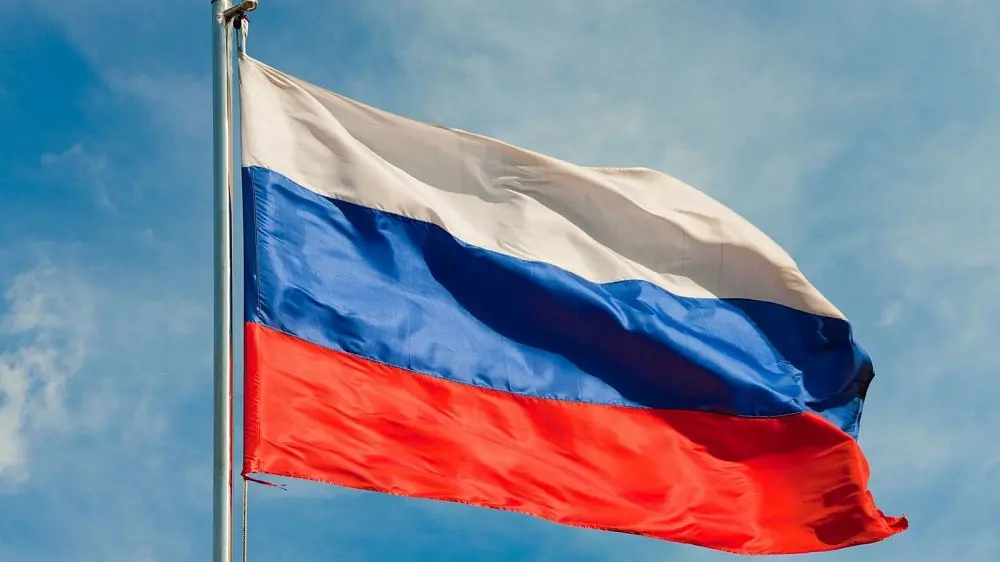
BRICS y los objetivos de desarrollo sostenible de la ONU: un modelo alternativo para el Sur Global
https://fed.brid.gy/r/https://www.telesurtv.net/brics-objetivos-desarrollo-sostenible-onu/

https://www.spiegel.de/politik/deutschland/globale-ordnung-deutschland-bereitet-sich-auf-eine-welt-vor-die-es-nicht-gibt-a-b95bbad9-7c10-4c3c-93c9-f95daf21fb8d?giftToken=1b22ef79-299d-4a0d-9bfa-22c8d1a15ad2 Gleich zwei gute Artikel im #derspiegel heute. #Weltunordnung #KalterKrieg #BRICS #russland #USA
Etiopía y Sudáfrica acuerdan fortalecer su asociación estratégica
Brazil-Russia Nuclear Diplomacy Challenges Washington’s Hemispheric Dominance
Brazil-Russia Nuclear Diplomacy Challenges Washington’s Hemispheric Dominance
By Uriel Araujo
A renewed Brazil-Russia nuclear partnership covers energy generation, fuel cycles, and advanced reactors. The agreement emerges as Brazil reassesses defence, energy security, and strategic partnerships. In a multipolar context, the move quietly challenges US dominance in Latin America.
Brazil and Russia have just signed a declaration reaffirming their commitment to the peaceful use of nuclear energy. Such declaration emerged from renewed bilateral talks covering topics such as the nuclear fuel cycle, regulatory cooperation – plus modernizing the legal framework governing nuclear collaboration between the two countries. This matters because those discussions were embedded in a broader defence of multilateralism and a sharp critique of “unilateral coercive measures,” a wording that hardly conceals its target.
Moscow has expressed willingness to share nuclear technologies with Brazil across several domains, including electricity generation, fuel fabrication, and medical applications such as radioisotopes for cancer treatment. This is not an isolated initiative but part of a long-run strategic partnership that both sides have been carefully cultivating. During Russian Prime Minister Mikhail Mishustin’s recent visit to Brasília, the two governments agreed to expand cooperation not only in nuclear energy but also in pharmaceuticals, pointing to a broader alignment on industrial and technological development.
One may recall that Brazil and Russia have been working together in the nuclear field for years. A cooperation agreement was already inked back in 2017, and more recently the agenda has expanded to include small modular reactors (SMRs), floating nuclear plants, and fuel-cycle services. These initiatives align neatly with Brazil’s energy needs and its ambition to diversify away from hydropower dependence, especially in an era of climate volatility.
The timing is crucial. Brazil is expected to decide by mid-year whether to complete the long-delayed Angra 3 nuclear power plant, a project that has become a symbol of both Brazil’s industrial aspirations and its chronic governance bottlenecks. Russian technical expertise, financing models, and fuel-cycle experience could thereby tilt the balance toward completion. The geopolitical significance is hard to miss.
All this is unfolding against the backdrop of Washington’s increasingly assertive posture (to say the least) in the Western Hemisphere. Under President Trump and Secretary of State Rubio, US policy toward Latin America has taken on a neo-Monroeist flavour, with the now so familiar threats, sanctions, and even military actions.
The recent US operation in Venezuela has been particularly destabilizing, prompting sharp reactions across the region and reminding governments of the limits Washington seeks to impose on their strategic autonomy.
In Brazil, these developments have revived an underreported but important debate about national defence and nuclear capability. Analysts such as Larry Kotlikoff and former BRICS New Development Bank vice president Paulo Nogueira Batista have speculated whether Brazil could be “next” on Trump’s hit list.
Brasília, in any case, has been accelerating projects long in gestation even before that: last year, the nuclear-powered submarine program advanced another step. Construction has begun on Brazil’s first nuclear microreactor, and a Brazilian nuclear entity has recently been recognized as an observer organization by the UN.
At the same time, a proposal to develop a Brazilian atomic bomb is circulating in Congress, and the Minister of Mines and Energy has openly argued that nuclear energy should also serve defence purposes. Be as it may, one should not make too much of it. Brazilian law, international treaties, and political culture still impose formidable barriers.
In any case, the Russia–Brazil nuclear partnership has nothing to do with bombs. It is explicitly framed around civilian and peaceful uses, in line with Brazil’s longstanding diplomatic position. Even when defence is involved, as in the nuclear submarine program, the objective is deterrence and technological autonomy rather than weaponization. It is no wonder that Brazil has also sought Russian cooperation in this sensitive area in the past (even under a very pro-American President), as I wrote in 2022.
Thus far, Brasília has also diversified its partnerships, deepening dialogue with China on uranium supply chains and small reactors. From a Latin American perspective, this triangulation, so to speak, among BRICS partners strengthens Brazil’s leverage and reduces vulnerability to external pressure.
The broader implication is clear enough. By reinforcing nuclear cooperation with Russia, Brazil is not drifting toward militarism but asserting its right to technological development within a multipolar order. Still, it is a direct challenge to a US strategy that seeks to police the hemisphere through sanctions and force. For Latin America, the consequences could be profound enough, reshaping energy markets, defence postures, and diplomatic alignments. For BRICS, it reinforces the bloc’s claim to offer real alternatives in strategic sectors.
Washington certainly watches these moves with concern. Yet, from Brasília’s perspective, the logic is straightforward: energy security, technological sovereignty, and multilateral partnerships are indispensable in an increasingly coercive international system. This is the real geopolitical meaning of Brazil’s renewed nuclear dialogue with Russia.
Uriel Araujo, Anthropology PhD, is a social scientist specializing in ethnic and religious conflicts, with extensive research on geopolitical dynamics and cultural interactions.
Disclaimer: The views expressed in this article are author’s own and do not necessarily reflect the editorial policy of Voice of East.
#Brazil #BRICS #DonaldTrump #energy #LatinAmerica #NuclearWeapons #Russia #USA

What’s next for Cuba? Trump turns the screws as the island runs out of jet fuel
https://groups.io/g/cubanews/message/49082?p=%2C%2C%2C20%2C0%2C0%2C0%3A%3Arecentpostdate%2Fsticky%2C%2Cyaffe%2C20%2C2%2C0%2C117838574
from #CNBC via CubaNews
Feb. 14, 2026
#Cuba’s emergency measures should be seen as crucial test for the #BRICS bloc of developing nations, according to #HelenYaffe, a Cuba expert and professor of #LatinAmerica political economy at the University of Glasgow.
“This is probably the most important test now for BRICS … If BRICS cannot protect, defend and rally around a member, then what is it worth?” Yaffe told CNBC.
Cuba acquired “partner country” status of the BRICS group in January last year, bolstering its ties with the likes of #Brazil, #Russia and #China. Indeed, each of these three countries have sought to offer support to Cuba in recent days.
“The Cuban government is not going to submit,” Yaffe said. “The fact is, [the #US is] going to keep squeezing and the Cubans are going to keep resisting and there’s going to be a lot of unnecessary suffering.”
The Petrodollar’s Price: Gaddafi, Saddam, and Maduro – i47i
Beyond Oil: A History of Leaders Who Challenged the Petrodollar
> The global economic order has been profoundly shaped by the “petrodollar” system, established in the 1970s after the collapse of the Bretton Woods agreement. Under this system, the United States secured an agreement with Saudi Arabia to price oil exclusively in US dollars, ensuring a steady global demand for the dollar and reinforcing its status as the world’s primary reserve currency
https://i47i.tk/the-petrodollars-price-gaddafi-saddam-and-maduro/ #Petrodollar #PetrodollarWarfare #Gaddafi #SaddamHussein #Maduro #DeDollarisation #DollarHegemony #GoldDinar #OilPolitics #RegimeChange #USImperialism #BRICS
Venezuela et le clash du XXIe siècle
https://investigaction.net/venezuela-et-le-clash-du-xxie-siecle/?utm_source=rss&utm_medium=rss&utm_campaign=venezuela-et-le-clash-du-xxie-siecle
Le monde se déplace, et Washington frappe autour de lui : des sanctions aux guerres par procuration, du Venezuela à l’Iran, de l’Ukraine à Taïwan. Ce n’est pas une série […]
#Politique #AmériqueLatine #EtatsUnis #NonClassifié(e) #NordSud #Brics #ComplexeMilitaroIndustriel #ImpérialismeUs
UNIT: THE BRICS CURRENCY THAT FINALLY CHALLENGES THE DOLLAR By Said Bouamama
The BRICS coalition has launched the UNIT this last january 2026 ( with the total silence of the mainstream media) , a novel payment system and digital reference unit that is underpinned by gold and a selection of sovereign currencies. This initiative is envisioned as a fundamental component of a financial corridor that serves as an alternative to the dollar and the Western-dominated financial framework.
UNIT functions as both a digital payment tool and a unit of account, boasting a backing of tangible assets: 40% in physical gold and 60% comprised of currencies from BRICS+ nations. In contrast to volatile cryptocurrencies or private stablecoins, it is structured to be « uncensorable and apolitical money, » tethered to intrinsic value and administered through state and multilateral frameworks.
Its design accommodates use across traditional banking systems and decentralized digital platforms, enabling it to facilitate wholesale trade, intergovernmental settlements, and transactions by economic entities in search of a payment method that withstands sanctions and blockades. Leveraging existing networks such as SPFS (Russia), CIPS (China), UPI (India), and Pix (Brazil), UNIT integrates into a system capable of functioning independently of SWIFT and the obligatory mediation of U.S. banks.
The strategic aim of UNIT is to offer countries in the Global South a reliable route for cross-border transactions, minimizing their reliance on the dollar and the financial networks dominated by Washington. This approach effectively reduces the financial coercion potential of the United States, encourages trade in local currencies, and establishes a foundation for genuine pluralism within the international monetary and payments landscape.
While it may not instantly supplant the existing system, UNIT is expected to develop alongside it, gaining economic influence and operational credibility as more nations embrace it. Variances in adoption speed among partners, including the more cautious stances of India and Brazil, do not detract from its pivotal function: solidifying an alternative financial corridor that safeguards economies aiming for increased strategic autonomy from sanctions and external pressures.
https://youtu.be/JNO4hYo4tiI?si=dCaXI4EqKnhzQqGp
#BRICS #dollar #financialCapitalism #russiaChina #unit
Lavrov Soberly Acknowledged The Challenges Posed By Trump 2.0
Lavrov Soberly Acknowledged The Challenges Posed By Trump 2.0
He calmly acknowledged that it’s now more difficult for Russia to advance its foreign policy goals due to the US’ renewed attempt to dominate the global economy through coercion and force, but he still believes that BRICS will play a pivotal role in furthering the global systemic transition to multipolarity.
Russian Foreign Minister Sergey Lavrov recently gave an interview to TV BRICS about their namesake organization and its role in the global systemic transition. He began by contextualizing the present moment in history as the interim period between the decline of US-led Western hegemony and the rise of multiple centres of power and influence. These inverse trends have led to friction because “the West is losing its hegemony but keeps on clinging to the institutions set up to secure that hegemony”.
The US can no longer fairly compete within the ‘rules-based order’ shaped by none other than itself several generations ago so it’s resorting to “blatantly unfair methods” against its rivals, especially Russia. This includes sanctioning its energy companies, weaponizing sanctions threats against its “major strategic partners” like India (whom Lavrov specified) “to restrict Russia’s trade, investment cooperation, and military-technical ties” with them, and opposing the creation of alternative platforms of any kind.
On that last point, Lavrov clarified that “We are not advocating for the IMF, the World Bank and the WTO to cease their existence” and that “President Putin has said on many occasions that we are not the ones refusing to use the dollar. The United States under President Joe Biden did everything to make the dollar a weapon against those who are deemed objectionable.” BRICS, its proposed economic-financial tools, and other alternative platforms are only meant to complement existing ones and induce reform therein.
Russia’s top diplomat soberly acknowledged that “given the global war unleashed against us and the feverish attempts of the West to ‘punish’ all our partners by demanding that they stop trading with us and cooperating in the military-technical sphere, it is significantly harder to do our job and to provide maximally favourable conditions for internal development than it was, say, 10 or 15 years ago.” He also mildly criticized Trump 2.0 for essentially continuing “Bidenism” despite its rhetoric to the contrary.
Far from respecting the ‘spirit of Anchorage’, which refers to the verbal agreements reached during that summit for resolving the Ukrainian Conflict and normalizing ties, “new sanctions are imposed, a ‘war’ against tankers in the open sea is being waged”, and more pressure placed on Russian partners like India. Lavrov then accused the US of trying to control the global energy industry in order “to dominate the global economy”, but if it relents, then Russia would be eager to explore mutually beneficial cooperation.
On that note, he concluded the interview by circling back to Russia’s vision of BRICS’ role in the global systemic transition, which he foresees “creating an architecture that will not be subject to the illegal actions of one or another player from the Western flank.” BRICS will also play a role in Russia’s “Greater Eurasian Partnership”, which Lavrov suggested could lay the basis for a “common ‘canopy’” over the continent, with the innuendo being that Eurasia might one day have its own version of the AU or CELAC.
He didn’t say so, but the context implies that BRICS would then function as an alternative centre of global governance for reforming the world order in order to make it more equitable, the goal of which would be advanced by assembling representatives from each continental organization to discuss viable pathways thereto within this ‘mini-UN’. Through these means, Russia and the rest of the World Majority could continue furthering multipolar trends despite the newfound challenges posed by Trump 2.0.
Disclaimer: The views expressed in this article are author’s own and do not necessarily reflect the editorial policy of Voice of East.
#BRICS #DonaldTrump #Eurasia #Russia #USA

We convert dollars for India, and for China, and for absolutely everyone. This universal currency forces us to agree to settlements in dollars," the deputy explained. So much for #BRICS and it’s world domination plans then 🤣 5/5
https://www.tkhunt.com/2231808/ ロシアはドルに戻るのか?極秘提案が暴く世界金融の大転換 ##投資知識 #BRICS #NEWS #エネルギー市場 #グローバル経済 #ドル危機 #ドル覇権 #マクロ経済 #ロシア経済 #世界情勢 #世界経済 #中国経済 #原油価格 #国際決済体制 #国際金融 #地政学 #米ロ関係 #経済ニュース #脱ドル化 #通貨システム #通貨戦争 #金融秩序

Long read but very well worth it!
“The Chinese Long Game vs. the American Arsonist”
by Karim in BettBeat in BettBeat’s Newsletter on Substack
“Does Patience Work Against an Enemy Who Burns Everything You Build?”
https://open.substack.com/pub/bettbeat/p/the-chinese-long-game-vs-the-american
#Press #SocialMedia #US #China #Imperialism #Empire #BRICS #Iraq #Libya #Syria #Venezuela #Iran #Cuba #Ukraine #Trump #DeclineAndFall
#Economía 💰| En un claro cambio de política, Rusia está considerando volver al sistema de liquidación en dólares estadunidenses en el marco de un posible acuerdo económico con el presidente Donald Trump, reportó Bloomberg citando un memorando del Kremlin.
📌 Únete a nuestro canal de WhatsApp
https://whatsapp.com/channel/0029VaQo8y3KgsNx9I1kNv1e

I love this crew's work.
Their latest video breaks down what the motivation behind the recent #US attack on #Venezuela and the threats being made on #Iran and #Greenland is. Namely #China #MultiPolar #BRICS
Uncivilized Media
📽️ vidéo en ✊ UNIT : LA MONNAIE DES BRICS QUI DÉFIE ENFIN LE DOLLAR: -- JNO4hYo4tiI?version=3 #BRICS #Dollar #Monnaie #Palestine
UNIT : LA MONNAIE DES BRICS QU...
Les BRICS et la lâcheté de l’esprit colonisé
https://investigaction.net/les-brics-et-la-lachete-de-lesprit-colonise/?utm_source=rss&utm_medium=rss&utm_campaign=les-brics-et-la-lachete-de-lesprit-colonise
Une coalition de nations qui ont appris à s'agenouiller puis oublié comment se tenir debout. L’enlèvement de Nicolás Maduro aurait dû être le déclic. Mais nous nous mentons à nous-mêmes si […]
#Politique #NordSud #Brics
China assume a liderança de 90% das pesquisas em tecnologias cruciais
- cijnusp
https://jornal.usp.br/radio-usp/china-assume-a-lideranca-de-90-das-pesquisas-em-tecnologias-cruciais/
#Atualidades #JornaldaUSPnoAr #JornaldaUSPnoAr1edio #RdioUSP #BRICs #China #RelaesInternacionais #Tecnologiascruciais
#PresidentEmmanuelMacron also wants to build bridges, no American input needed, between #G7_countries (or is it G6 ?) and #BRICS (an intergovernmental organization comprising ten countries: Brazil, China, Egypt, Ethiopia, India, Indonesia, Iran, Russia, South Africa, and the United Arab Emirates). Collectively, BRICS comprises more than a quarter of the global economy and nearly half the world’s population. Oh my, The Systemic Failure Salsa of the #AmericanDollar’s #ReserveCurrency status is hitting a faster tempo. Perhaps the #WhiteHouse should take a breather from dancing in the yet to be built #GoldenBallroom, and grab a #Taco.