#camedia

Three Cameras from 2024: My favourite experiences this year

A couple of years ago, with the encouragement of Stephen Dowling of Kosmo Photo, a group of camera bloggers were asked to write about three cameras they had discovered that particular year and what each one meant to them. That was a really good idea, I thought, I’m always picking up something new and it’s interesting to take a quick look back at the fun I’ve had over the year. So again I present you with the three cameras that I have most enjoyed using during 2024.

The Lomo Smena 8M 

It seems to me that the Lomo Smena 8M is like Marmite, you either love it or hate it. It does have some little foibles, like the lever that cocks the shutter which hits your finger if the camera is held wrong and ruins the exposure, or the difficulty of turning the rewind knob, and it of course it’s unusual in not having a fixed take-up spool, but I’m firmly in the ‘I love it’ camp. I had bought one because it has a really well-regarded lens, the classic Triplet T-43 4/40, which I have seen converted to use with micro four-thirds mirrorless cameras. I thought at the time that if the camera was a dud I could alway take off the lens and use it with a digital camera. In the event, the Smena 8M is fantastic and I’m never going to fiddle with it. After a few rolls, the Smena 8M has rapidly become my favourite 35mm camera. 

The resolution of the lens is fabulous, for such a cheap-looking camera, providing lovely sharp images so long as you get the zone focusing right (which is always my biggest failing). For me it is perfect for experimentation, and when I chose to make my first roll of redscale film, using Harman Phoenix, the Smena 8M was the camera I immediately turned to. And I must say I was delighted with the results. 

The Polaroid Big Shot 

I first became aware of the Big Shot some time in 2022, when the Shitty Camera Challenge was promoting its Autumn challenge, Instant Regret. At the same time I learned of its connection with the artist Andy Warhol, who used a Big Shot extensively in his work. Originally this was a $20 camera launched by Polaroid in 1971, and it was only produced for two years before being withdrawn from sale. The story goes that Andy Warhol bought a bulk load of Big Shots so that he could continue using his beloved camera after its demise.

With a single shutter speed of 1/50s, and a focal distance limited to about 1m, the Big Shot was an unusual beast in that it was designed for one job, taking portraits. The Type 100 pack film that the Big Shot uses was withdrawn by Polaroid in the mid-2000s, and it’s Fuji equivalent in 2016, so if you want to take photographs with the Big Shot then you’ve got to be a little bit creative. I’ve made some nice plastic mounts for the Big Shot, which takes one piece of Instax Wide film. It’s not exactly practical, being limited to one exposure at a time, but I’m thrilled to have brought such a classic camera back to life.

The Olympus Camedia C-100

For a long time I’ve wanted to get my hands on a glitchy camera, one that’s working but the sensor is way past its prime. I found the Camedia C-100 in a camera shop in Porto in their ‘Outlet’ section. These are cameras that fall short of being in good enough condition to sell at normal retail prices so are offered with the caveat that: ‘Outlet products are sold as damaged for parts or decoration without warranty or return’.

The sensor in the C-100 is failing, and I reckon that it’s overexposing by around 10 stops. I’ve invested in a cheap ND2-400 variable ND filter, and on its maximum setting the results are quite ‘good’. In really low light there’s no need for an ND filter, and on a tripod with colour and infrared filters the results are amazing. The Camedia produced some lovely digital aerochromes, and I even had a little fun with some trichromes and Intentional Camera Movement. 

Honourable Mention: The Panasonic Lumix GF1 (with Panasonic 20mm f1.7 pancake lens)

This is actually a late entry to my favourite cameras of the year as I’ve only had this combination for a couple of weeks and I’ve not really used it to its best. A while ago I picked up a Panasonic Lumix GF1 micro four-thirds mirrorless camera. I was actually looking for a used Ricoh GRiii, but this camera was one-tenth of the price and it has a really good reputation, even 15 years after its release. Besides, I thought, it would go nicely with my other Olympus Pen series mirrorless cameras. 

Although it will take any micro four-thirds lens, the one that I really wanted for this camera was the Panasonic 20mm f1.7 pancake lens. The biggest snag was the price. Even in poor condition, the 20mm f1.7 goes for well over €150 and that was just far too much for me. However, I found one on the Kamerastore website for less than half the price. It was in the ‘Not Passed’ category, since ‘the aperture mechanism doesn’t work properly’, read the description, ‘it randomly selects aperture instead [of] the one chosen by [the] user’. 

When the lens arrived I mounted it onto the Panasonic Lumix GF1 and it clicked securely into place. I reckoned a walk around the block would test the lens and so I took several images, on Program mode, Aperture priority mode, and Shutter priority mode … and I couldn’t tell which was which,  the lens behaved perfectly. I even tried a few close up images, and the blurred background at the widest aperture was, frankly, spectacular. Actually, all of the images were spectacular and this camera and lens combination is hard to beat. Now I’m smitten, and the Panasonic GF1 and 20mm f1.7 lens combination will be a permanent arrangement. Hopefully next year I’ll get to see more of what it can do.

So these are the cameras I have most enjoyed using during the year. If you are reading this and fancy entering your own three cameras, please go ahead, and if you could add a link to this post, that would be awesome, and I’ll try to update the post with each entry as I find them.

Have a good year and see you in 2025.

If you are on Mastodon, you can now follow this blog directly. Just go to Mastodon and follow the ‘Snapshot’ WordPress account at @keithdevereux.wordpress.com. All new posts will be automatically updated to your timeline.

#Abstract #BigShot #Camedia #Film #Glitch #Glitchy #ICM #Instant #Instax #Shittydigital #Smena8M #Vintage #YearInReview


My three favourite cameras of 2025.

At the Aveiro Yacht Club with the Olympus Camedia C-100

It was a nice day on Monday, and since I had to pick up some negatives anyway we decided to go to Aveiro for lunch. We’re in the middle of the Shitty Camera Challenge at the moment, so I decided that instead of my new camera/lens combination, the Panasonic GF1 mirrorless camera and 20mm f1.7 pancake lens, I would take the wonderfully glitchy little Olympus Camedia C-100 digital camera. The sensor is failing in the Camedia and I reckon that it’s overexposing by around 10 stops. I recently picked up a cheap Hama variable ND filter and thought I would take that, too.

Before lunch I took a walk to the marina where I took some photographs of Aveiro Yacht Club and surrounding buildings. The sky was filled with wispy clouds, and although the day was clear, it being winter the sun was a little weak. It has been a long time since I’ve been to the Yacht Club and there have been quite a few changes. A couple of buildings have been demolished, including a wonderful little water tower, which was one of the first things I photographed with the Diana back in 2021, when I started using film again.

There are still plenty of lovely buildings, though, and the walls are covered in the same graffiti and street art as from several years before. Using the Hama variable ND filter was really easy with this camera but unfortunately, at its maximum setting there is a prominent X-effect. This is common with variable ND filters, and occurs when the two polarising filters make an angle of roughly 90 degrees to each other. As a result a lot of the images were not as ‘normal’ looking (for this camera) as I would have liked, but we had a lovely day, a good wander around Aveiro and, to top it all, my negatives came out great.

If you are on Mastodon, you can now follow this blog directly. Just go to Mastodon and follow the ‘Snapshot’ WordPress account at @keithdevereux.wordpress.com. All new posts will be automatically updated to your timeline.

#Digicam #Digitalcamera #Glitchy #ShittyCameraChallengeShittyDigital #Camedia #Olympus

Aveiro Yacht Club with a glitchy Olympus Camedia C-100.

Finally I got my hands on a real glitchy camera, with a sensor well past its prime, the Olympus Camedia C-100, a 1.3-megapixel fixed-focus digicam released by Olympus in 2001. I reckon the camera is overexposing by around 10 stops, and normal daylight images are completely blown out, but I have a cheap variable ND filter, that on its maximum setting produces much more ‘natural’ images.

Of course, what I like to do with most new (to me) noughties digicams is see how they work for making trichromes, and what their infrared response is to make digital aerochromes. So off I went ‘around the block’ to the woods behind our house armed with my trusty travel tripod, the Camedia C-100 and a collection of filters, including the variable ND filter. 

The snag with this camera is that it doesn’t have a black and white mode, although you can desaturate a colour image through the menus. So what I did was to screw the Neewer variable ND filter to each of the red, green and blue filters and take the photographs through this. Because the 720nm infrared filter already has about a 10-stop filter factor I just used the filter on its own, and thus seemed to work. Of course, with the sliding cover I couldn’t fix the filters to the front of the lens so had to hold them in front of the camera, so this was prone to some light leaks.

On the whole it worked a treat. The failing sensor produced quite pale images, even with the combined ND/colour filter arrangement, but when the images were combined together in GuIMP photo editor produced some lovely ‘painterly’ results. When making the RGB composites in GuIMP I first desaturated the colour images and then chose the colour levels for the red, green and blue layers. 

If you are on Mastodon, you can now follow this blog directly. Just go to Mastodon and follow the ‘Snapshot’ WordPress account at @keithdevereux.wordpress.com. All new posts will be automatically updated to your timeline.

https://keithdevereux.wordpress.com/2024/07/02/the-shittycamerachallenge-trichromes-aerochromes-and-more-with-the-olympus-camedia-c-100/

#Abstract #Aerochrome #Digicam #Digitalcamera #Glitch #Glitchy #ICM #IntentionalCameraMovement #NeutralDensity #Sensor #Shittycamerachallenge #Shittydigital #Trees #TrichromeEverything #Camedia #Olympus

Digital aerochrome of woodland with an Olympus Camedia C-100.

I’ve mentioned before about getting my hands on a glitchy camera, you know, one that’s working but the sensor is way past its prime. I had the Vivitar Vivicam, but that failed on me last year, and I have the kiddies circuit-bent camera from Freedom Enterprise, which is ideal but is not ‘naturally’ glitchy. Then, in the last few weeks was the supposedly glitchy Canon Powershot G12, which has been anything but glitchy so far (though I live in hope) and has almost become my take anywhere camera. But so far I’ve failed to find a really naturally glitchy camera. Then, a few days ago, that all changed.

I was randomly surfing the web, checking out the Kamerastore website and a few other places for nothing in particular, when I visited the Cano Amarelo website. Cano Amarelo is a shop in Porto run by Nuno, a lovely guy from whom I have got a lot of my old film cameras. Just lately, Cano Amarelo has Ben offering sub-standard cameras in an ‘Outlet’ section. These are cameras that fall short of being in condition to sell at normal retail prices so are offered with the caveat that: ‘Outlet products are sold as damaged for parts or decoration without warranty or return’.

There among the Outlet cameras, in fact it was first on the list, was this wonderful little Olympus Camedia C-100 digital. Normally I would pass this one by, I have more than enough noughties digicams and I prefer to get ‘generic’ cameras from the CEX website, which can sometimes be a treasure trove, but I paused and clicked on the entry and looked at the sample images (Nuno always posts some photos taken with the cameras on sale, which is really helpful) and froze. The interior images were wonderful, the colours were distorted and there was a glow to the image that I wasn’t sure was because of haze in the lens or just the sensor failing.

The exterior image was something else completely, and it’s hard to describe without actually seeing one. There was certainly something there, but it was almost impossible to make out. Of course, I was smitten and placed the order straight away. Well  not straight away, first I contacted Nuno to see whether he had a SmartMedia card available. I have a couple, but I wanted one to go with this camera, and even though the SmartMedia card cost twice as much as the camera, it was worth it.

Before we go on, here’s a little bit of background about the Olympus Camedia C-100 E-10 SLR. The C-100 is a 1.3-megapixel CCD sensor and a fixed-focus lens released by Olympus in 2001. There’s no zoom function, although there is a digital zoom which no one should ever be using, and it’s fully automatic which means there are next to no changes you can make to the image you are taking, like monochrome mode for my beloved aerochromes. It literally is ‘point-and-shoot’. With four AA batteries installed it’s a heavy beastie, and the sliding lens cover means that I can’t fix a filter thread to the camera, so if I ever want to make trichromes or aerochromes (I do! I do!) then I’ll have to hold these over the front of the lens.

The C-100 uses SmartMedia storage cards to save images, so of course in addition to  SD cards, and CompactFlash cards you’ll need to add some of these to your collection of noughties storage devices. There are no options to change the style of image that you are taking, but you can navigate the rather clunky-looking early twenty-first century menu to transform full colour images to sepia or black and white. I’ve not tried this yet to see if it will make a copy of the image file or if you’ll lose your ‘carefully crafted’ colour original. 

So, as mentioned earlier the sensor is failing (I had another ‘f-word in mind, but we’ll keep it civil) and I reckon that it’s overexposing by around 10 stops. I’ve invested in a cheap Neewer ND2-400 variable ND filter for some intentional camera movement (ICM) with my Powershot cameras, so it seemed like a good idea to use that filter with the C-100 and see what happens. And it works! The vastly overblown natural image is made much more legible holding the variable ND filter on its maximum setting over the lens. It’s still a little overexposed on bright sunny days, but in overcast weather or in shadow the results are quite ‘good’.

Indoors, the C-100 behaves like any ‘normal’ camera, though you can take photos in hand-held in low light. In really low light it’s also good for intentional camera movement by waving the camera around erratically during exposure — there’s no need for an ND filter here. The images are also really hazy and have a glow about them. I’m not sure whether this is because of haze in the lens or just a ‘feature’ of the failing sensor, but it’s certainly a bonus with this already amazing camera (‘amazing’ for all the wrong reasons, of course).

If you are on Mastodon, you can now follow this blog directly. Just go to Mastodon and follow the ‘Snapshot’ WordPress account at @keithdevereux.wordpress.com. All new posts will be automatically updated to your timeline.

https://keithdevereux.wordpress.com/2024/06/27/the-olympus-camedia-c-100-from-y2k-to-the-shittycamerachallenge/

#Abstract #Digicam #Digitalcamera #Glitch #Glitchy #ICM #IntentionalCameraMovement #NeutralDensity #Sensor #Shittycamerachallenge #Shittydigital #Trees #Camedia #Olympus

Panning the Olympus Camedia C-100 as a silver car passes.
2023-12-30

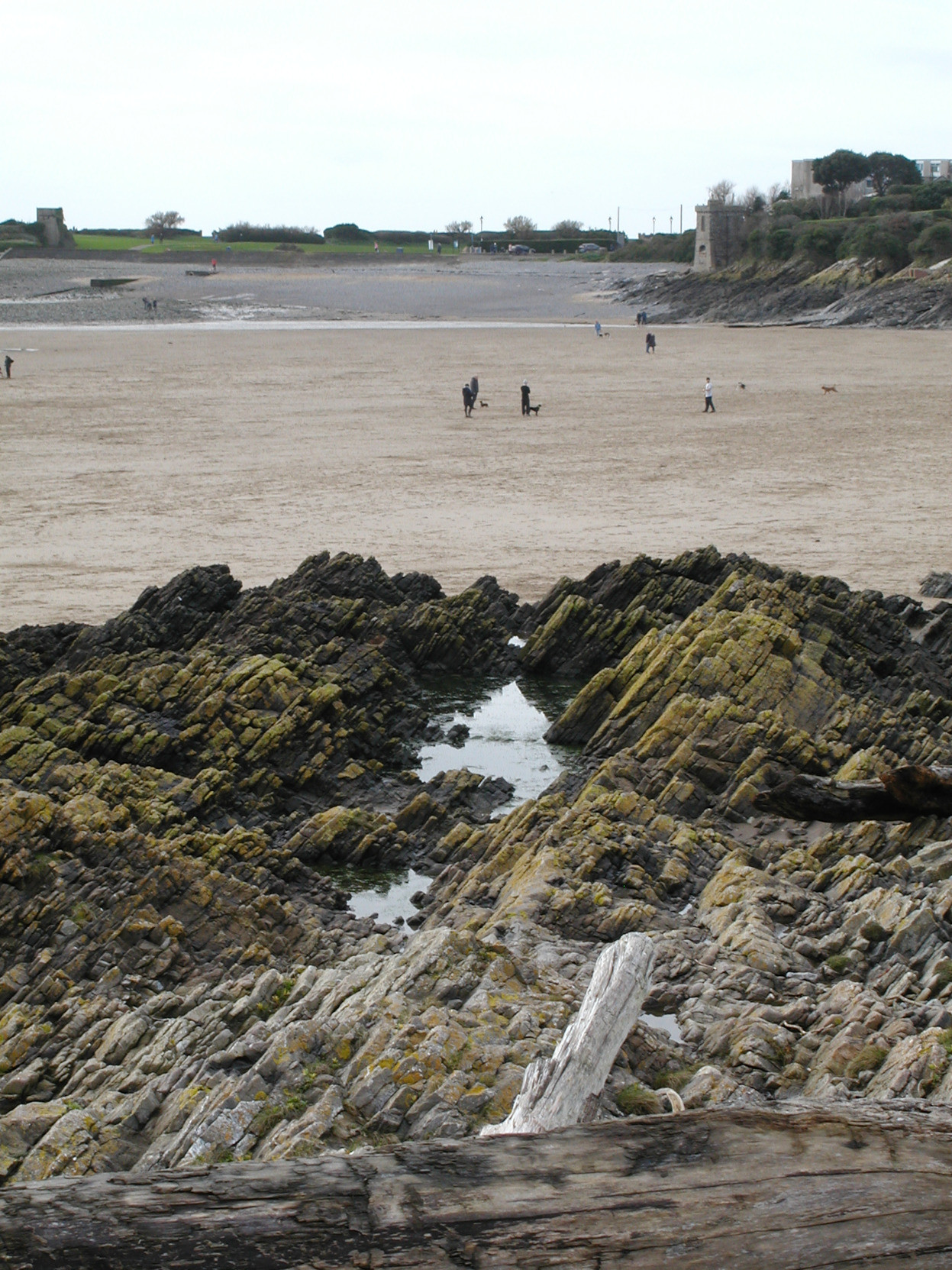
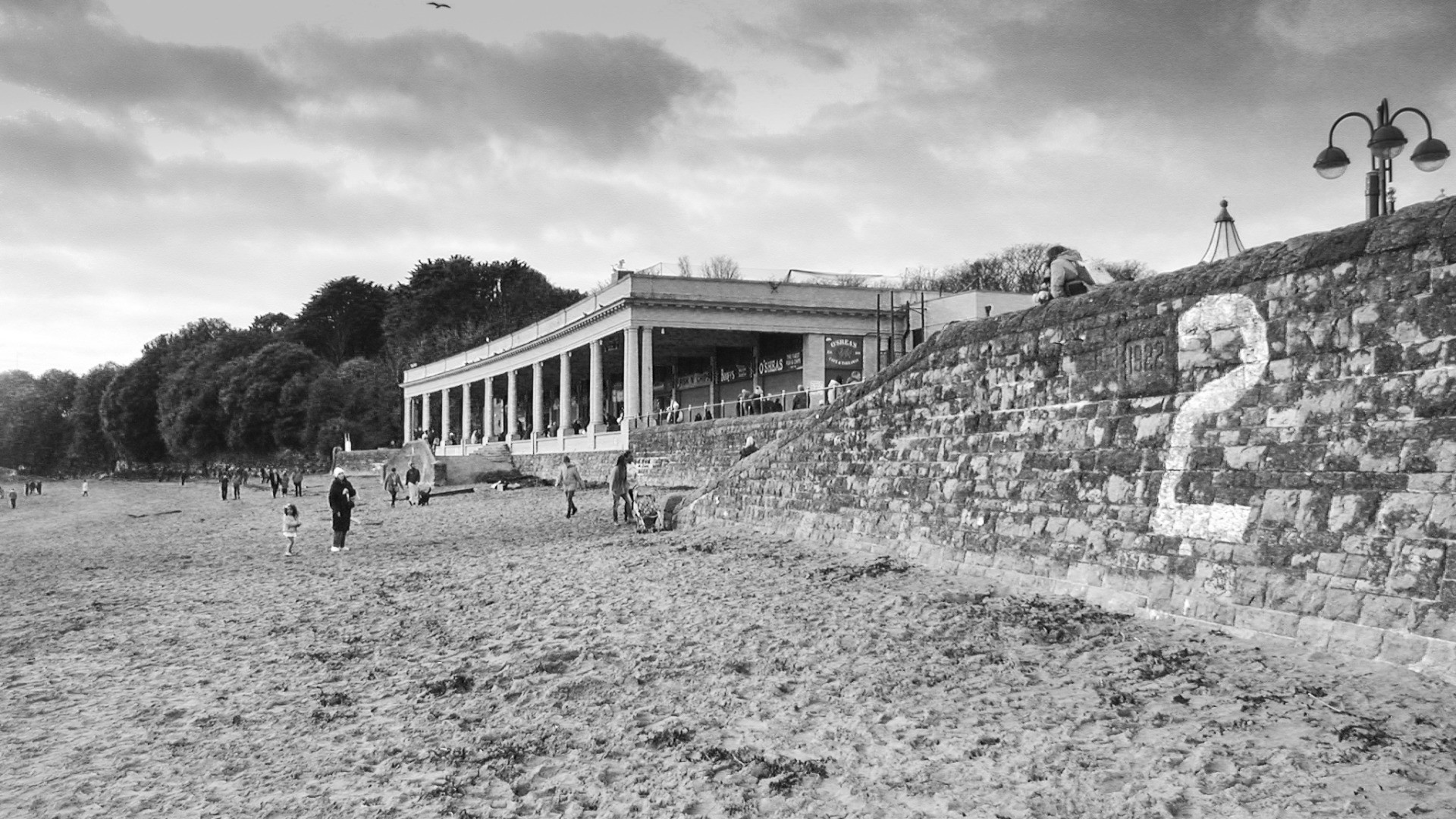
Barry coastline again
#shittycamerachallenge

Thought I should post one without any edits - so this is straight from the camera :)
#olympus #camedia #c3020Z

2023-12-23

#shittycamerachallenge

Driving back for christmas - a modern refuel with a non modern camera

Taken on #camedia #c2030

Can you tell I forgot the proprietary usb cable or a #smartmedia usb reader?

Client Info

Server: https://mastodon.social
Version: 2025.07
Repository: https://github.com/cyevgeniy/lmst