#endpointsecurity

Endpoint GuardianShi_P
2026-01-16

USB sticks aren’t inherently bad, but uncontrolled USB access is a risk your business doesn’t need.

Removable media remains one of the most common ways sensitive information leaks, whether accidentally or on purpose.

That’s why smart teams use USB blocking software: scalefusion.com/products/velta

Criticality Live by Secure Nation interviewing Bob Carver by moderators Joshua Copeland and Kayla Williams #cybersecurity #networksecurity #endpointsecurity #riskframeworks #businesscontinuity
youtube.com/live/8D2YKOqjdIM?s

Endpoint GuardianShi_P
2026-01-15

Many teams still rely on network firewalls and manual control for web access.
Result- Slow, brittle, and doesn’t work well for remote or hybrid users.

The problem:
• Dangerous sites slip through
• Inconsistent policies off-network
• Growing admin overhead

The solution:
Enterprise Web Content Filtering enforces web policies at the endpoint, with contextual controls and real-time protection.
scalefusion.com/products/velta

Endpoint GuardianShi_P
2026-01-14

Data loss reality check.
Where do you see the most data loss risk?

Endpoint GuardianShi_P
2026-01-13

USB drives are still one of the easiest ways to leak data, accidentally or intentionally.

Blocking USB access isn’t about mistrust. It’s about reducing silent risk on managed endpoints.

Read this blog on how USB blocking software helps prevent data leaks : blog.scalefusion.com/prevent-d

Endpoint GuardianShi_P
2026-01-12

What is really?

It’s not a tool.
It’s not an agent.
It’s not a checkbox.

It’s the discipline of assuming every device will be targeted, and hence making sure that attack doesn’t spread.

Endpoints are where breaches begin.
Control them, or they control your risk.

What is Endpoint Security?
2026-01-05

Recent threat research has detailed VVS Stealer, a Python-based information stealer that targets Discord tokens, browser credentials, and user data while leveraging PyArmor obfuscation to evade detection.

The malware reflects a broader trend toward stealth-focused, low-cost tooling that relies on persistence, session hijacking, and social engineering rather than complex exploits.

This reinforces the need for behavioral detection, credential hygiene, and monitoring of user-level applications.

Source: thehackernews.com/2026/01/new-

How are teams adapting controls for obfuscated scripting-language malware?
Follow @technadu for unbiased infosec coverage.

#Infosec #MalwareResearch #ThreatIntel #EndpointSecurity #CyberRisk #TechNadu

New VVS Stealer Malware Targets Discord Accounts via Obfuscated Python Code
2025-12-31

Threat intelligence analysts are tracking VOID KILLER, an underground tool marketed as a kernel-level AV and EDR process terminator.

If effective, this approach represents a shift from payload obfuscation toward direct disruption of defensive controls, challenging behavioral and real-time monitoring models.

This reinforces the importance of layered defenses, telemetry integrity, and kernel-level trust validation.

Follow TechNadu for objective threat analysis and security research coverage.

Source: cybersecuritynews.com/hackers-

#InfoSec #ThreatResearch #EndpointSecurity #KernelSecurity #EDR #CyberRisk

Hackers Advertised VOID ‘AV Killer’ with Kernel-level Termination Claims
2025-12-31

Recent research highlights a phishing campaign leveraging tax-related lures to deploy ValleyRAT, a modular RAT with strong persistence and evasion features.

The infection chain demonstrates continued abuse of trusted binaries, DLL sideloading, and plugin-based architectures to enable targeted post-compromise activity. The campaign underscores the importance of monitoring user-facing entry points and low-noise persistence mechanisms.

Open to insights on effective detection and response strategies for similar campaigns.
Follow TechNadu for objective threat intelligence reporting.

#InfoSec #ThreatHunting #MalwareAnalysis #PhishingDefense #EndpointSecurity #CyberThreats

Silver Fox Targets Indian Users With Tax-Themed Emails Delivering ValleyRAT Malware
ECS Infotech Pvt. Ltd.ecsinfotech
2025-12-26

How Endpoint Detection & Response Works: A Simple Step-By-Step Breakdown for Beginners

Learn how Endpoint Detection & Response (EDR) works with a simple, step-by-step breakdown. Perfect for beginners exploring endpoint security.

Read our blog: bigstartups.co/articles/articl

How Endpoint Detection & Response Works: A Simple Step-By-Step Breakdown for Beginners
InfosecK2KInfosecK2K
2025-12-19

Endpoint protection isn’t just EDR. Strong security needs Endpoint Privilege Management + Application Control to block unauthorised actions before they become incidents.

2025-12-18

Kaspersky researchers have attributed a new phishing wave to Operation ForumTroll, noting a tactical shift toward individual targeting within academic environments.

The campaign combined social engineering with technical measures such as aged domains, personalized file naming, Windows-specific execution, and persistence via COM hijacking. The use of one-time links and decoy documents further reduced user suspicion.

From an infosec perspective, the activity reinforces the value of layered defenses, user education tailored to research workflows, and close monitoring of shortcut and script-based execution paths.

What defensive controls would you prioritize in similar academic threat models?

Source: thehackernews.com/2025/12/new-

Engage in the discussion and follow TechNadu for objective cybersecurity analysis.

#InfoSec #ThreatIntelligence #PhishingDefense #EndpointSecurity #CyberRisk #TechNadu

New ForumTroll Phishing Attacks Target Russian Scholars Using Fake eLibrary Emails
Zevonixzevonix
2025-12-17

🖥️ Every device is a potential entry point for attackers.
🔒 Use device management tools (MDM/EDR) to secure endpoints and keep your business protected.
👉 zurl.co/B2xIB

ECS Infotech Pvt. Ltd.ecsinfotech
2025-12-17

What Is EDR in Cyber Security? Overview, Benefits & Core Capabilities

Learn what EDR in cyber security is, how it works, its benefits, core capabilities, and top tools in 2025 to protect your business from modern threats.

👉 Read more: ecsinfotech.com/what-is-edr-in

What Is EDR in Cyber Security? Overview, Benefits & Core Capabilities

What Is a Supply Chain Attack? Lessons from Recent Incidents

924 words, 5 minutes read time.

I’ve been in computer programming with a vested interest in Cybersecurity long enough to know that your most dangerous threats rarely come through the obvious channels. It’s not always a hacker pounding at your firewall or a phishing email landing in an inbox. Sometimes, the breach comes quietly through the vendors, service providers, and software updates you rely on every day. That’s the harsh reality of supply chain attacks. These incidents exploit trust, infiltrating organizations by targeting upstream partners or seemingly benign components. They’re not theoretical—they’re real, costly, and increasingly sophisticated. In this article, I’m going to break down what supply chain attacks are, examine lessons from high-profile incidents, and share actionable insights for SOC analysts, CISOs, and anyone responsible for protecting enterprise assets.

Understanding Supply Chain Attacks: How Trusted Vendors Can Be Threat Vectors

A supply chain attack occurs when a threat actor compromises an organization through a third party, whether that’s a software vendor, cloud provider, managed service provider, or even a hardware supplier. The key distinction from conventional attacks is that the adversary leverages trust relationships. Your defenses often treat trusted partners as safe zones, which makes these attacks particularly insidious. The infamous SolarWinds breach in 2020 is a perfect example. Hackers injected malicious code into an update of the Orion platform, and thousands of organizations unknowingly installed the compromised software. From the perspective of a SOC analyst, it’s a nightmare scenario: alerts may look normal, endpoints behave according to expectation, and yet an attacker has already bypassed perimeter defenses. Supply chain compromises come in many forms: software updates carrying hidden malware, tampered firmware or hardware, and cloud or SaaS services used as stepping stones for broader attacks. The lesson here is brutal but simple: every external dependency is a potential attack vector, and assuming trust without verification is a vulnerability in itself.

Lessons from Real-World Supply Chain Attacks

History has provided some of the most instructive lessons in this area, and the pain was often widespread. The NotPetya attack in 2017 masqueraded as a routine software update for a Ukrainian accounting package but quickly spread globally, leaving a trail of destruction across multiple sectors. It was not a random incident—it was a strategic strike exploiting the implicit trust organizations placed in a single provider. Then came Kaseya in 2021, where attackers leveraged a managed service provider to distribute ransomware to hundreds of businesses in a single stroke. The compromise of one MSP cascaded through client systems, illustrating that upstream vulnerabilities can multiply downstream consequences exponentially. Even smaller incidents, such as a compromised open-source library or a misconfigured cloud service, can serve as a launchpad for attackers. What these incidents have in common is efficiency, stealth, and scale. Attackers increasingly prefer the supply chain route because it requires fewer direct compromises while yielding enormous operational impact. For anyone working in a SOC, these cases underscore the need to monitor not just your environment but the upstream components that support it, as blind trust can be fatal.

Mitigating Supply Chain Risk: Visibility, Zero Trust, and Preparedness

Mitigating supply chain risk requires a proactive, multifaceted approach. The first step is visibility—knowing exactly what software, services, and hardware your organization depends on. You cannot defend what you cannot see. Mapping these dependencies allows you to understand which systems are critical and which could serve as entry points for attackers. Second, you need to enforce Zero Trust principles. Even trusted vendors should have segmented access and stringent authentication. Multi-factor authentication, network segmentation, and least-privilege policies reduce the potential blast radius if a compromise occurs. Threat hunting also becomes crucial, as anomalies from trusted sources are often the first signs of a breach. Beyond technical controls, preparation is equally important. Tabletop exercises, updated incident response plans, and comprehensive logging equip teams to react swiftly when compromise is detected. For CISOs, it also means communicating supply chain risk clearly to executives and boards. Stakeholders must understand that absolute prevention is impossible, and resilience—rapid detection, containment, and recovery—is the only realistic safeguard.

The Strategic Imperative: Assume Breach and Build Resilience

The reality of supply chain attacks is unavoidable: organizations are connected in complex webs, and attackers exploit these dependencies with increasing sophistication. The lessons are clear: maintain visibility over your entire ecosystem, enforce Zero Trust rigorously, hunt for subtle anomalies, and prepare incident response plans that include upstream components. These attacks are not hypothetical scenarios—they are the evolving face of cybersecurity threats, capable of causing widespread disruption. Supply chain security is not a checkbox or a one-time audit; it is a mindset that prioritizes vigilance, resilience, and strategic thinking. By assuming breach, questioning trust, and actively monitoring both internal and upstream environments, security teams can turn potential vulnerabilities into manageable risks. The stakes are high, but so are the rewards for those who approach supply chain security with discipline, foresight, and a relentless commitment to defense.

Call to Action

If this breakdown helped you think a little clearer about the threats out there, don’t just click away. Subscribe for more no-nonsense security insights, drop a comment with your thoughts or questions, or reach out if there’s a topic you want me to tackle next. Stay sharp out there.

D. Bryan King

Sources

Disclaimer:

The views and opinions expressed in this post are solely those of the author. The information provided is based on personal research, experience, and understanding of the subject matter at the time of writing. Readers should consult relevant experts or authorities for specific guidance related to their unique situations.

#anomalyDetection #attackVector #breachDetection #breachResponse #CISO #cloudSecurity #cyberattackLessons #cybersecurity #cybersecurityGovernance #cybersecurityIncident #cybersecurityMindset #cybersecurityPreparedness #cybersecurityResilience #cybersecurityStrategy #EndpointSecurity #enterpriseRiskManagement #enterpriseSecurity #hardwareCompromise #hardwareSecurity #incidentResponse #incidentResponsePlan #ITRiskManagement #ITSecurityPosture #ITSecurityStrategy #Kaseya #maliciousUpdate #MFASecurity #MSPSecurity #networkSegmentation #NotPetya #organizationalSecurity #perimeterBypass #ransomware #riskAssessment #SaaSRisk #securityAudit #securityControls #SOCAnalyst #SOCBestPractices #SOCOperations #softwareSecurity #softwareSupplyChain #softwareUpdateThreat #SolarWinds #supplyChainAttack #supplyChainMitigation #supplyChainRisk #supplyChainSecurityFramework #supplyChainVulnerabilities #thirdPartyCompromise #threatHunting #threatLandscape #trustedVendorAttack #upstreamCompromise #upstreamMonitoring #vendorDependency #vendorRiskManagement #vendorSecurity #vendorTrust #zeroTrust

Illustration of a digital network under attack, highlighting compromised vendors and software updates, titled “What Is a Supply Chain Attack? Lessons from Recent Incidents.”
NERDS.xyz – Real Tech News for Real Nerdsnerds.xyz@web.brid.gy
2025-12-15

CrowdStrike rolls out Falcon AI Detection and Response as AI prompts become the new attack surface

fed.brid.gy/r/https://nerds.xy

2025-12-11

Think browser extensions are harmless? Think again. A multi-year campaign turned popular, trusted browser add-ons into full-blown spyware featuring remote code execution, session hijacking, token theft and real-time browsing surveillance.

If you’re managing enterprise security, audit all extensions now, enforce allow-lists, and treat them as part of your software supply chain.

Read the blog here: lmgsecurity.com/4-3-million-re

#browserextensions #cyberrisk #threatintelligence #endpointsecurity #supplychainsecurity #identityprotection #enterpriseIT

2025-12-11

Privado launches a combined antivirus + VPN system integrating real-time threat analysis with encrypted routing, domain filtering, and cross-platform security.

Learn more:
technadu.com/privado-introduce

#Privado #PrivadoVPN #PrivadoSentry #Cybersecurity #EndpointSecurity #VPN

Privado Introduces Combined Antivirus and VPN Toolkit for Broader Device Security

Zero Trust Security Model Explained: Is It Right for Your Organization?

1,135 words, 6 minutes read time.

When I first walked into a SOC that proudly claimed it had “implemented Zero Trust,” I expected to see a modern, frictionless security environment. What I found instead was a network still anchored to perimeter defenses, VPNs, and a false sense of invincibility. That’s the brutal truth about Zero Trust: it isn’t a single product or an off-the-shelf solution. It’s a philosophy, a mindset, a commitment to questioning every assumption about trust in your organization. For those of us in the trenches—SOC analysts, incident responders, and CISOs alike—the question isn’t whether Zero Trust is a buzzword. The real question is whether your organization has the discipline, visibility, and operational maturity to adopt it effectively.

Zero Trust starts with a principle that sounds simple but is often the hardest to implement: never trust, always verify. Every access request, every data transaction, and every network connection is treated as untrusted until explicitly validated. Identity is the new perimeter, and every user, device, and service must prove its legitimacy continuously. This approach is grounded in lessons learned from incidents like the SolarWinds supply chain compromise, where attackers leveraged trusted internal credentials to breach multiple organizations, or the Colonial Pipeline attack, which exploited a single VPN credential. In a Zero Trust environment, those scenarios would have been mitigated by enforcing strict access policies, continuous monitoring, and segmented network architecture. Zero Trust is less about walls and more about a web of checks and validations that constantly challenge assumptions about trust.

Identity and Access Management: The First Line of Defense

Identity and access management (IAM) is where Zero Trust begins its work, and it’s arguably the most important pillar for any organization. Multi-factor authentication, adaptive access controls, and strict adherence to least-privilege principles aren’t optional—they’re foundational. I’ve spent countless nights in incident response chasing lateral movement across networks where MFA was inconsistently applied, watching attackers move as if the organization had handed them the keys. Beyond authentication, modern IAM frameworks incorporate behavioral analytics to detect anomalies in real time, flagging suspicious logins, unusual access patterns, or attempts to elevate privileges. In practice, this means treating every login attempt as a potential threat, continuously evaluating risk, and denying implicit trust even to high-ranking executives. Identity management in Zero Trust isn’t just about logging in securely; it’s about embedding vigilance into the culture of your organization.

Implementing IAM effectively goes beyond deploying technology—it requires integrating identity controls with real operational processes. Automated workflows, incident triggers, and granular policy enforcement are all part of the ecosystem. I’ve advised organizations that initially underestimated the complexity of this pillar, only to discover months later that a single misconfigured policy left sensitive systems exposed. Zero Trust forces organizations to reimagine how users and machines interact with critical assets. It’s not convenient, and it’s certainly not fast, but it’s the difference between containing a breach at the door or chasing it across the network like a shadowy game of cat and mouse.

Device Security: Closing the Endpoint Gap

The next pillar, device security, is where Zero Trust really earns its reputation as a relentless defender. In a world where employees connect from laptops, mobile devices, and IoT sensors, every endpoint is a potential vector for compromise. I’ve seen attackers exploit a single unmanaged device to pivot through an entire network, bypassing perimeter defenses entirely. Zero Trust counters this by continuously evaluating device posture, enforcing compliance checks, and integrating endpoint detection and response (EDR) solutions into the access chain. A device that fails a health check is denied access, and its behavior is logged for forensic analysis.

Device security in a Zero Trust model isn’t just reactive—it’s proactive. Threat intelligence feeds, real-time monitoring, and automated responses allow organizations to identify compromised endpoints before they become a gateway for further exploitation. In my experience, organizations that ignore endpoint rigor often suffer from lateral movement and data exfiltration that could have been prevented. Zero Trust doesn’t assume that being inside the network makes a device safe; it enforces continuous verification and ensures that trust is earned and maintained at every stage. This approach dramatically reduces the likelihood of stealthy intrusions and gives security teams actionable intelligence to respond quickly.

Micro-Segmentation and Continuous Monitoring: Containing Threats Before They Spread

Finally, Zero Trust relies on micro-segmentation and continuous monitoring to limit the blast radius of any potential compromise. Networks can no longer be treated as monolithic entities where attackers move laterally with ease. By segmenting traffic into isolated zones and applying strict access policies between them, organizations create friction that slows or stops attackers in their tracks. I’ve seen environments where a single compromised credential could have spread malware across the network, but segmentation contained the incident to a single zone, giving the SOC time to respond without a full-scale outage.

Continuous monitoring complements segmentation by providing visibility into every action and transaction. Behavioral analytics, SIEM integration, and proactive threat hunting are essential for detecting anomalies that might indicate a breach. In practice, this means SOC teams aren’t just reacting to alerts—they’re anticipating threats, understanding patterns, and applying context-driven controls. Micro-segmentation and monitoring together transform Zero Trust from a static set of rules into a living, adaptive security posture. Organizations that master this pillar not only protect themselves from known threats but gain resilience against unknown attacks, effectively turning uncertainty into an operational advantage.

Conclusion: Zero Trust as a Philosophy, Not a Product

Zero Trust is not a checkbox, a software package, or a single deployment. It is a security philosophy that forces organizations to challenge assumptions, scrutinize trust, and adopt a mindset of continuous verification. Identity, devices, and network behavior form the pillars of this approach, each demanding diligence, integration, and cultural buy-in. For organizations willing to embrace these principles, the rewards are tangible: reduced attack surface, limited lateral movement, and a proactive, anticipatory security posture. For those unwilling or unprepared to change, claiming “Zero Trust” is little more than window dressing, a label that offers the illusion of safety while leaving vulnerabilities unchecked. The choice is stark: treat trust as a vulnerability and defend accordingly, or risk becoming the next cautionary tale in an increasingly hostile digital landscape.

Call to Action

If this breakdown helped you think a little clearer about the threats out there, don’t just click away. Subscribe for more no-nonsense security insights, drop a comment with your thoughts or questions, or reach out if there’s a topic you want me to tackle next. Stay sharp out there.

D. Bryan King

Sources

Disclaimer:

The views and opinions expressed in this post are solely those of the author. The information provided is based on personal research, experience, and understanding of the subject matter at the time of writing. Readers should consult relevant experts or authorities for specific guidance related to their unique situations.

#accessManagement #adaptiveSecurity #attackSurfaceReduction #behavioralAnalytics #breachPrevention #byodSecurity #ciso #cloudSecurity #cloudFirstSecurity #colonialPipeline #complianceEnforcement #continuousMonitoring #cyberResilience #cybersecurityAwareness #cybersecurityCulture #cybersecurityReadiness #cybersecurityStrategy #deviceSecurity #digitalDefense #edr #endpointSecurity #enterpriseSecurity #iam #identityVerification #incidentResponse #internalThreats #iotSecurity #lateralMovement #leastPrivilege #mfa #microSegmentation #mitreAttck #multiFactorAuthentication #networkSecurity #networkSegmentation #networkVisibility #nistSp800207 #perimeterSecurity #privilegedAccessManagement #proactiveMonitoring #proactiveSecurity #ransomwarePrevention #riskManagement #secureAccess #securityAutomation #securityBestPractices2 #securityFramework #securityMindset #securityOperations #securityPhilosophy #siem #socAnalyst #solarwindsBreach #threatDetection #threatHunting #threatIntelligence #zeroTrust #zeroTrustArchitecture #zeroTrustImplementation #zeroTrustModel #zeroTrustSecurity


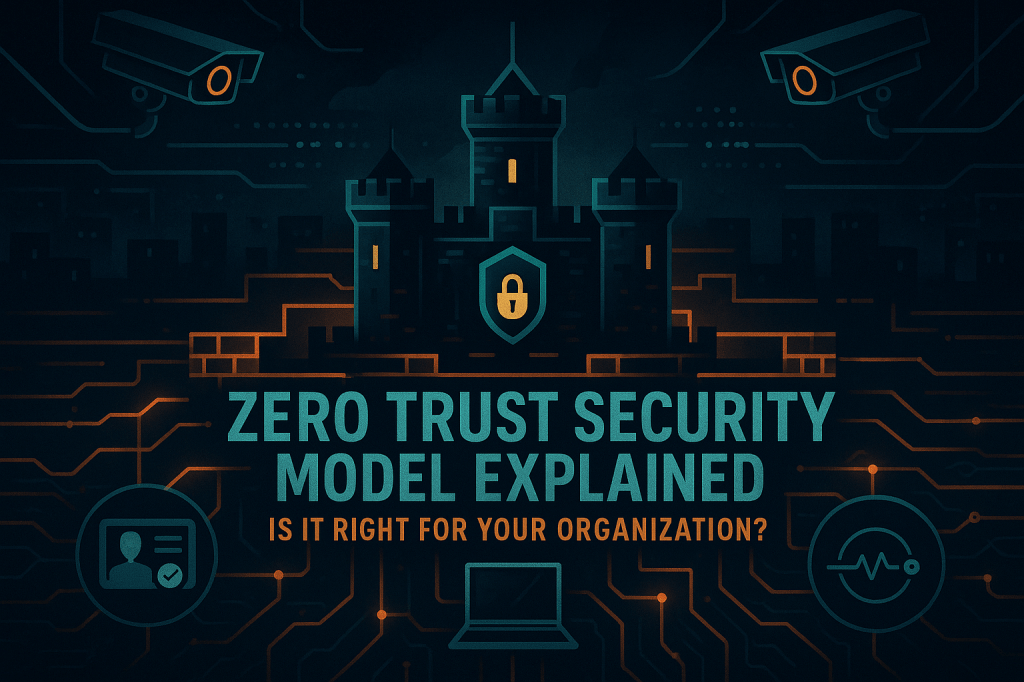
Digital fortress representing Zero Trust security with layered network defenses, identity verification, and endpoint monitoring, symbolizing proactive cybersecurity.
Pen Test PartnersPTP@infosec.exchange
2025-12-04

We often find built-in Windows defences disabled or misconfigured during assessments. Those same controls can help stop credential theft, boot-level malware, and memory attacks when properly configured.

In our latest blog post, Nicole walks through five Windows security features you should be using, explains what they do, why they matter, and how to check them on your systems.

📌pentestpartners.com/security-b

#windowssecurity #incidentresponse #endpointsecurity #cybersecurity #dfir

Client Info

Server: https://mastodon.social
Version: 2025.07
Repository: https://github.com/cyevgeniy/lmst