
A podcaster used the term "facetune" and I assume this is similar to "autotune" but for your face.
#facetune

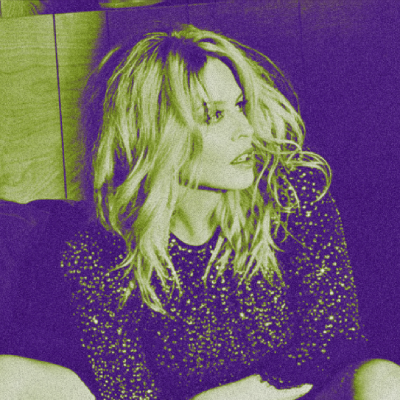
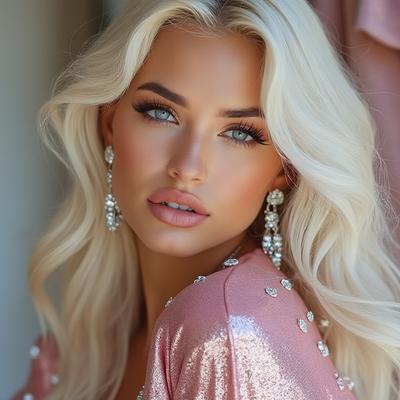
A stark example of how much a good hourglass figure does for a girl: without it, she looks downright plain, but with it, she's a stunner! Ample breasts, supple midriff, and a tight top to show it all off matters a lot more than you think...
#beauty #aesthetics #thoughts #beautifulgirl #beautifulwoman #photography #Facetune #photomanipulation
The upshot is that tonight I'm wondering if I should have ever even bothered with any color but platinum blonde. More details perhaps in a blog post later.
#self #thoughts #aesthetics #Facetune #hair #haircolor #beauty
I know that I'm supposed to be writing my book, but I got my hair done today for my trip and it got me wondering how I'd look platinum blonde, so I downloaded Facetune, and hoo boy have I had a good time today...
#self #thoughts #aesthetics #Facetune #hair #haircolor #beauty
Jezebel: Sex. Celebrity. Politics. With Teeth: Karol G Calls Out GQ Mexico's 'Disrespectful' Photoshopping of Her Face and Body https://jezebel.com/karol-g-calls-out-gq-mexicos-disrespectful-photoshoppin-1850312639 #Jezebel #socialnetworkingservices #photomanipulation #operatingsystems #mobilesoftware #callygingrich #humaninterest #photosharing #newtgingrich #nicolekidman #socialmedia #beberexha #instagram #gigihadid #facetune #software #karolg #royce

This Was ‘Instagram vs Reality’ in 1909
If you're tired of the unrealistic beauty standards set by all the edited pictures on Instagram and long for a return to "the good old days," here is some bad news: people have been "Photoshopping" portraits for just about as long as photography has been around.
Here is an interesting before-and-after example found in an instructional photography book published over a century ago:
Before (top) and after (bottom) retouching.
The example is from the Complete Self-Instructing Library of Practical Photography , a classic 10-volume collection that instructed photographers on a wide range of photography subjects. It was published by the American School of Art and Photography and edited by the school's president, James B. Schriever.
Volume 10, which contains these retouching illustrations and comparisons, is about "Negative Retouching, Etching and Modeling."
Read also : Victorian Influencers ‘Facetuned’ Photos Long Before Instagram
The introduction of the book explains how the evolution of photography led to a demand for photo retouching.
In delivering finished work to your customers, you do not hand them the photographic negatives, but the prints made from these negatives.
In the early days of photography, when the so-called “wet-plate process” was in use, prints were made direct from the negative without any alteration whatever, as the wet-plate rendered softer effects than are obtainable with the ready prepared dry-plate. The imperfections were less visible, and at that time the general public were satisfied with an exact likeness of themselves.
With the advent of the dry-plate, however, the defects in the human face became more apparent on the negative, and there arose a demand for a greater softening of the lines and a removal of the more objectionable imperfections. At first, these imperfections or blemishes were removed, by means of a brush and color, from each individual print.
So numerous, however, were these imperfections, and so irksome became the labor of eliminating them from the print, that the photographer was compelled to devise some means whereby he could apply these remedies direct to his negative so that each print made from the negative would have these blemishes eliminated. The results of these endeavors led to retouching the negative.
Topics covered in subsequent chapters include applying lead to negatives, blending, modeling, penciling, and etching.
Photographers' retouching tools at the time included an easel, magnifying glass, lead holder, lead, etching knife, spotting brush, retouching fluid, negative varnish, and etching paste.
Pencils were used to remove imperfections and blend highlights, shadows, and halftones. Etching knives were used to reduce highlights and subdue/remove "objectionable" parts of photos.
"By the combination of etching and retouching — i. e., by the use of the knife and pencil — you etch and model, and with these two instruments you can make any alteration you desire on the negative," the book states. "Highlights on the bones in the neck may be cut down and subdued, thick necks made thin, excessive drapery removed, crooked noses straightened, shadows accentuated, hair added, backgrounds altered, objectionable portion removed, figures taken from groups, etc."
Read also : This is What Victorian ‘Photoshopped’ Photos Look Like Up Close
Here are before-and-after examples of these types of edits found in the book:
Removal of Freckles
Straightening Crossed Eyes
Opening Closed Eyes
Reducing Thick Necks
Removing a Child
Adding 'Drapery' to a Woman's Outfit
'Reducing Size of Stout Subjects'
While cultural norms and photographic technologies have changed quite a bit over the past century, the demand for heavily altered photographs was already strong even at the tail end of the Victorian Era. And throughout the history of photography, photographers have been bending over backward to satisfy customer requests regarding their portraits, albeit using very different tools and workflows.
The Complete Self-instructing Library Of Practical Photography is still being published these days, but as its now in the public domain, you can also read it for free and download it over at the Internet Archive.
#educational #finds #1900s #1909 #americanschoolofartandphotography #blastfromthepast #facetune #historical #history #instagramvsreality #jamesbschriever #photoshop #retouching #victorian


As you can see in the comparison above, Trump’s right shoulder has been slimmed down and his face is looking thinner. He’s also gotten a haircut—well, a digital one anyway—and in one of the strangest alterations, Trump’s fingers have been made slightly longer. Seriously.
via +Johannes Riecke gizmodo.com/president-trump-po… #presidenttrump #facebook #photoshop #fakes #fake #facetune #instagram #donaldtrump #donaldtrumpjr #ronnyjackson #facetune2 #apps #mcdonalds #fat #BradParscale #crowdfunding #gofundme #craigslist #ourgarbagepresident #Gizmodo
via +Johannes Riecke gizmodo.com/president-trump-po… #presidenttrump #facebook #photoshop #fakes #fake #facetune #instagram #donaldtrump #donaldtrumpjr #ronnyjackson #facetune2 #apps #mcdonalds #fat #BradParscale #crowdfunding #gofundme #craigslist #ourgarbagepresident #Gizmodo
Client Info
Server: https://mastodon.social
Version: 2025.07
Repository: https://github.com/cyevgeniy/lmst