
Watching #PersistenceOfVision which introduces the Botha and I can't help thinking "Botha deez nuts." 🤣
#persistenceofvision

#Happybirthday #CarolynSeymour #actress #StarTrek #TheNextGeneration #SubcommanderTaris #Contagion #MirastaYale #FirstContact #CommanderToreth #FaceoftheEnemy #Voyager #MrsTempleton #Cathexis #PersistenceofVision #congo #space1999 #JudgingAmy #MalcolmintheMiddle #TheReplacements #startrek59 @trekcore


No Bothans died to bring us this story. 🤷♂️
#AllStarTrek #StarTrek #StarTrekVoyager #PersistenceOfVision
OMG #Tuvok has a lute just like #Spock!
#AllStarTrek #StarTrek #StarTrekVoyager #PersistenceOfVision
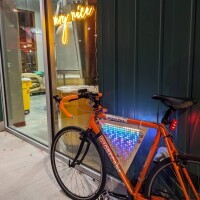
A wonderful installation of 'persistence of vision' flying moths for Wooly Town, one of the Wooly Fairs in Providence. Rhode Island, USA. Circa 2014ish. Project details in the alt text.
#artinstallation #art #woolyfair #providenceri #rhodeisland #persistenceofvision #pov #visualarts
#artinstallation #art #woolyfair #providenceri #rhodeisland #persistenceofvision #pov #visualarts

#Happybirthday @carolynseymour_ #carolynseymour #actress #SubcommanderTaris #StarTrek #TheNextGeneration #Contagion #MirastaYale #FirstContact #CommanderToreth #FaceoftheEnemy #Voyager #MrsTempleton #Cathexis #PersistenceofVision #congo #space1999 #DarkStreets #startrek58 @trekcore


Tiny POV Turns Right Round for Volumetric Fun https://hackaday.com/2023/12/03/tiny-pov-turns-right-round-for-volumetric-fun/ #persistenceofvision #volumetric #LEDHacks #rp2040 #POV
#Happybirthday #carolynseymour #actress #StarTrek #TheNextGeneration #SubcommanderTaris #Contagion #MirastaYale #FirstContact #CommanderToreth #FaceoftheEnemy #Voyager #MrsTempleton #Cathexis #PersistenceofVision #congo #space1999 #DarkStreets #startrek57 @trekcore


(watching VOY's "Persistence of Vision")
Tonight's fun fact: One of the characters in Janeway's holonovel was Mrs. Templeton. That character appeared in one other episode, "Cathexis", and was played by Carolyn Seymour. Seymour guest starred on Star Trek in several other memorable roles:
1) Commander Toreth - TNG's "Face of the Enemy"
2) Mirasta Yale - TNG's "First Contact"
3) Subcommander Taris - TNG's "Contagion"
#AllStarTrek #StarTrekVOY #VOY #PersistenceOfVision @allstartrek
Spinning CRT Makes a 360 Degree Audio Oscilloscope https://hackaday.com/2023/09/16/spinning-crt-makes-a-360-degree-audio-oscilloscope/ #persistenceofvision #oscilloscope #tachyscope #MiscHacks #crt #POV

#AllStarTrek
[ Watching #PersistenceOfVision
]
Should have passed on the deviled wood throck. Known hallucinogen.

A New Spin on 360 Degree Displays
Back in 2018, [Salah] created a prototype display that seems to defy logic using little more than a Pringles can and a fast motor. While not volumetric, this hack does show the same 2D image from any vantage point in 360 degrees around it.
How can cardboard create this effect? Somewhat like a zoetrope uses slits to create a shutter effect, this display uses a thin slit to limit the view of the image within to one narrow vertical slice at a time. When moving fast enough, Persistence of Vision kicks in to assemble these slices into a complete image. What we think is so cool about this hack is that the effect is the same from any angle and by multiple viewers simultaneously.
The project page and video demonstration after the break are light on details, though the idea is so simple as to not require additional explanation. We assume the bright LED seen in the video below was added to overcome the relatively dim appearance of the image when viewed through the narrow slit and isn't strictly required.
If you are a fan of modern updates to victorian display technology, be sure to check out the 3D printed zeotropes and phenakistiscopes by [Akinori Goto], [Jeremy], and [Greg Borenstein] too.
#ledhacks #360degree #customdisplay #persistenceofvision #phenakistoscope #povdisplay #pringlescan #zeotrope
3D Zoetrope Uses Illusion to Double the Frames
Although film and animation have come quite a long way, there's still something magical about that grandaddy of them all, the zoetrope. Thanks to persistence of vision, our eyes are fooled into seeing movement where there is none, only carefully laid-out still pictures strobing under the right lighting.
After four months of research, CAD, prototyping, and programming, [Harrison McIntyre] has built a 3D zoetrope that brings a gif to glorious physical life (video, embedded below). All the image pieces are printed and move under a fancy backlight that [Harrison] borrowed from work. It works essentially the same as a 2D zoetrope, as long as you get the spacing juuuuust right. 360° divided by 20 frames comes out to 18° per frame. So a motor spins the disk around, and every 18°, the light pulses for one millisecond and then turns off until the next frame is in position.
The really interesting thing is that there are actually more than 20 frames at play here. If you follow a single character through the loop, it takes 46 frames to complete the animation thanks to something 3D zoetrope pioneer [Kevin Holmes] dubbed 'animation multiplexing', which in [Harrison]'s example, is easily explained as a relay race in which all runners run their section at the same time, creating the illusion of constant motion.
There's more than one way to use a 3D printer to create a zoetrope, and we doubt we would have ever thought of this one that squashes four dimensions into three.
#classichacks #mischacks #3dzoetrope #animationmultiplexing #persistenceofvision #pov #zoetrope

Wiggling Screen and DLP Power This Volumetric POV Display
It seems like the world is ready for a true 3D display. We've seen them in sci-fi for decades now, with the ability to view a scene from any angle and inspect it up close. They've remained elusive, but that might just be changing thanks to this open-source persistence-of-vision volumetric display.
If the VVD, as it has been named by its creator [Madaeon], looks somewhat familiar, perhaps it's because editor-in-chief [Mike Szczys] ran into it back in 2019 at Maker Faire Rome. It looks like it has progressed quite a bit since then, but the basic idea is still the same. A thin, flexible membrane, which is stretched across a frame, is attached to articulated arms. The membrane can move up and down rapidly, fast enough that a 1,000-fps high-speed camera is needed to see it move. That allows you to see the magic in action; a digital light processor (DLP) module projects slices of a 3D image onto the sheet, sending the correct image out for each vertical position of the membrane. Carefully coordinating the images creates the POV illusion of a solid image floating in space, which can be observed from any angle, requires no special glasses, and can even be viewed by groups.
With displays like this, we're used to issuing the caveat that "it no doubt looks better in person", but we have to say in the GIFs and videos included the VVD looks pretty darn good. We think this is a natural for inclusion in the 2021 Hackaday Prize, and we're pleased to see that it made it to the semi-finals of the "Rethink Displays" round.
The HackadayPrize2021 is Sponsored by:
#thehackadayprize #2021hackadayprize #digitallightprocessor #dlp #membrane #persistenceofvision #pov #volumetric
Big Spinning Disk Makes a Small Color Video Display
Believe it or not, the Mickey Mouse clip used for this demonstration is actually in the public domain.
The earliest televisions used a spinning disk technology called the Nipkow disk, which is exactly what [Science 'n' Stuff] recreated with their Arduino-based mechanical color television (video link, also embedded below.) The device reads video and audio from an SD card, and displays the video using a precisely-timed RGB LED visible through a perforated spinning disk. The persistence of vision effect results in a video that is small, relative to the size of the disk, but perfectly watchable. A twist is that the video is in color!
A Nipkow disk is a fairly simple and electromechanical device that relies on timing; something a modern microcontroller and RGB LED is perfectly capable of delivering. In this device, the holes in the disk create 32 vertical scanlines with 96 "pixels" making up each of those lines. Spinning disk technology was always limited to being monochromatic, but in this implementation, each "pixel" is given its own unique color by adjusting the RGB LED accordingly.
The first video shows off the device and demonstrates it working; note that it may look like there are multiple little screens, but the center one can be thought of as the "true" display with the others essentially being artifacts due to light leakage. If you're interested in the nuts and bolts of exactly how a Nipkow disk works, then the second video is what you'll be more interested in, because it goes through all the details of exactly how everything functions.
Another neat thing about Nipkow disks is that image acquisition is really not much more complex than image display.
#arduinohacks #videohacks #arduino #nipkovdisk #nipkowdisk #persistenceofvision #pov #spinningdisk

This POV Clock Combines a Nixie with a Pendulum
Talk about your mixed timekeeping metaphors: there are clocks, and pendulum clocks, and there are Nixie clocks, and persistence of vision clocks. But this is a Nixie pendulum POV clock, and we think it's pretty cool.
We first spied this on Twitter and were subsequently pleased to learn that [Jayzon Oeve] has posted a more detailed build log over on Hackaday.io. Rather than a moving array of dots to create the characters to display, this uses a single IN-12b Nixie tube at the end of a pendulum. The pendulum is kept moving by a small nudge created by a pulse through a fixed hard drive voice coil acting on a magnet affixed to the bottom of the pendulum -- we've seen a similar approach used before.
Pretty much all of the electronics are mounted on the pendulum arm, including a Nano, an RTC, and an accelerometer to figure out where in the swing the bob is and when to flash a number on the display. There's a video below that shows it at work both at full speed and in slow-motion; as always with POV clocks, these things probably look better in person than on video. And while swinging Nixies around like that seems a little dicey, we like the way this turned out.
#clockhacks #clock #in12b #nixie #pendulum #persistenceofvision #pov

Bunte Wassertropfen, die schweben oder sogar nach oben steigen? Tatsächlich widersetzen sich die Tropfen in diesem Springbrunnen mit Arduino-Steuerung nicht der Schwerkraft. Stattdessen täuscht Licht das menschliche Auge. https://www.heise.de/make/meldung/Arduino-bringt-Wassertropfen-mit-LEDs-zum-Schweben-3987750.html #Arduino #ArduinoUno #POV #PersistenceofVision #Stroboskop
460.800 Pixel: Hochaufgelöster POV-Globe https://www.heise.de/make/meldung/460-800-Pixel-Hochaufgeloester-POV-Globe-3831923.html #PersistenceofVision #RaspberryPi
Client Info
Server: https://mastodon.social
Version: 2025.07
Repository: https://github.com/cyevgeniy/lmst