
Hidden network paths shape the cloud. Clarity brings control. Share your thoughts on how you face this drift. #ShadowNetworking #ZeroTrust #PlatformEngineering #CloudSecurity #Kubernetes #DevOps #CloudGovernance #ZeroTrustArchitecture #SiteReliability #DigitalTransformation #CloudStrategy #Security #DevSecOps #ModernIT
https://www.linkedin.com/pulse/hidden-pulse-cloud-how-manage-shadow-networking-sanjay-k-mohindroo--fdtbc
#zerotrustarchitecture

Hidden network paths shape the cloud. Clarity brings control. Share your thoughts on how you face this drift. #ShadowNetworking #ZeroTrust #PlatformEngineering #CloudSecurity #Kubernetes #DevOps #CloudGovernance #ZeroTrustArchitecture #SiteReliability #DigitalTransformation #CloudStrategy #Security #DevSecOps #ModernIT
https://www.linkedin.com/pulse/hidden-pulse-cloud-how-manage-shadow-networking-sanjay-k-mohindroo--fdtbc

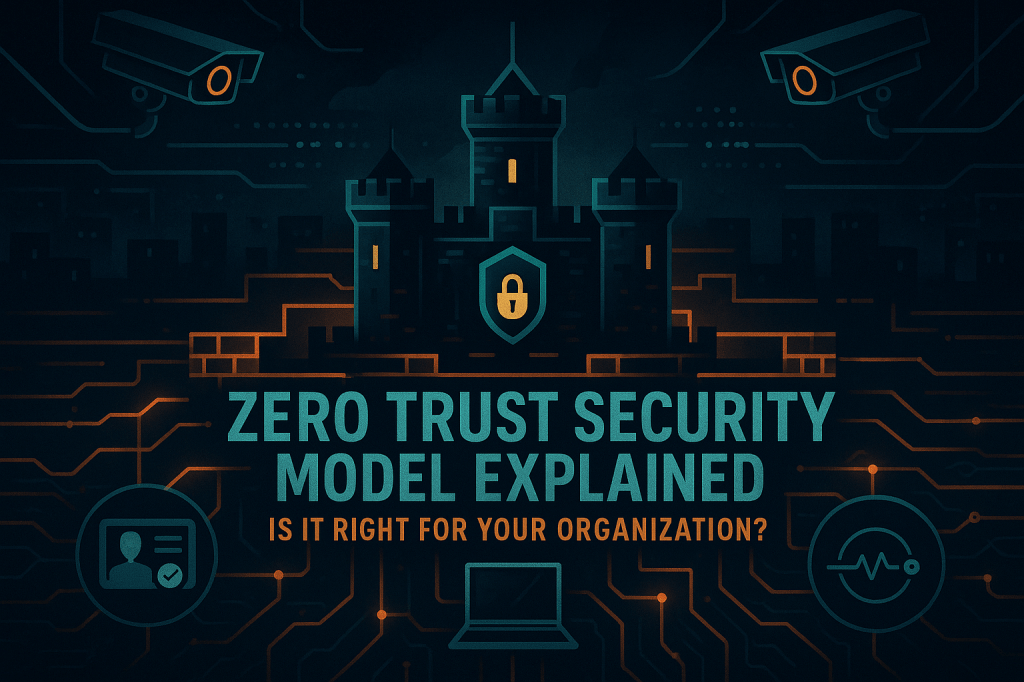
Zero Trust Security Model Explained: Is It Right for Your Organization?
1,135 words, 6 minutes read time.
When I first walked into a SOC that proudly claimed it had “implemented Zero Trust,” I expected to see a modern, frictionless security environment. What I found instead was a network still anchored to perimeter defenses, VPNs, and a false sense of invincibility. That’s the brutal truth about Zero Trust: it isn’t a single product or an off-the-shelf solution. It’s a philosophy, a mindset, a commitment to questioning every assumption about trust in your organization. For those of us in the trenches—SOC analysts, incident responders, and CISOs alike—the question isn’t whether Zero Trust is a buzzword. The real question is whether your organization has the discipline, visibility, and operational maturity to adopt it effectively.
Zero Trust starts with a principle that sounds simple but is often the hardest to implement: never trust, always verify. Every access request, every data transaction, and every network connection is treated as untrusted until explicitly validated. Identity is the new perimeter, and every user, device, and service must prove its legitimacy continuously. This approach is grounded in lessons learned from incidents like the SolarWinds supply chain compromise, where attackers leveraged trusted internal credentials to breach multiple organizations, or the Colonial Pipeline attack, which exploited a single VPN credential. In a Zero Trust environment, those scenarios would have been mitigated by enforcing strict access policies, continuous monitoring, and segmented network architecture. Zero Trust is less about walls and more about a web of checks and validations that constantly challenge assumptions about trust.
Identity and Access Management: The First Line of Defense
Identity and access management (IAM) is where Zero Trust begins its work, and it’s arguably the most important pillar for any organization. Multi-factor authentication, adaptive access controls, and strict adherence to least-privilege principles aren’t optional—they’re foundational. I’ve spent countless nights in incident response chasing lateral movement across networks where MFA was inconsistently applied, watching attackers move as if the organization had handed them the keys. Beyond authentication, modern IAM frameworks incorporate behavioral analytics to detect anomalies in real time, flagging suspicious logins, unusual access patterns, or attempts to elevate privileges. In practice, this means treating every login attempt as a potential threat, continuously evaluating risk, and denying implicit trust even to high-ranking executives. Identity management in Zero Trust isn’t just about logging in securely; it’s about embedding vigilance into the culture of your organization.
Implementing IAM effectively goes beyond deploying technology—it requires integrating identity controls with real operational processes. Automated workflows, incident triggers, and granular policy enforcement are all part of the ecosystem. I’ve advised organizations that initially underestimated the complexity of this pillar, only to discover months later that a single misconfigured policy left sensitive systems exposed. Zero Trust forces organizations to reimagine how users and machines interact with critical assets. It’s not convenient, and it’s certainly not fast, but it’s the difference between containing a breach at the door or chasing it across the network like a shadowy game of cat and mouse.
Device Security: Closing the Endpoint Gap
The next pillar, device security, is where Zero Trust really earns its reputation as a relentless defender. In a world where employees connect from laptops, mobile devices, and IoT sensors, every endpoint is a potential vector for compromise. I’ve seen attackers exploit a single unmanaged device to pivot through an entire network, bypassing perimeter defenses entirely. Zero Trust counters this by continuously evaluating device posture, enforcing compliance checks, and integrating endpoint detection and response (EDR) solutions into the access chain. A device that fails a health check is denied access, and its behavior is logged for forensic analysis.
Device security in a Zero Trust model isn’t just reactive—it’s proactive. Threat intelligence feeds, real-time monitoring, and automated responses allow organizations to identify compromised endpoints before they become a gateway for further exploitation. In my experience, organizations that ignore endpoint rigor often suffer from lateral movement and data exfiltration that could have been prevented. Zero Trust doesn’t assume that being inside the network makes a device safe; it enforces continuous verification and ensures that trust is earned and maintained at every stage. This approach dramatically reduces the likelihood of stealthy intrusions and gives security teams actionable intelligence to respond quickly.
Micro-Segmentation and Continuous Monitoring: Containing Threats Before They Spread
Finally, Zero Trust relies on micro-segmentation and continuous monitoring to limit the blast radius of any potential compromise. Networks can no longer be treated as monolithic entities where attackers move laterally with ease. By segmenting traffic into isolated zones and applying strict access policies between them, organizations create friction that slows or stops attackers in their tracks. I’ve seen environments where a single compromised credential could have spread malware across the network, but segmentation contained the incident to a single zone, giving the SOC time to respond without a full-scale outage.
Continuous monitoring complements segmentation by providing visibility into every action and transaction. Behavioral analytics, SIEM integration, and proactive threat hunting are essential for detecting anomalies that might indicate a breach. In practice, this means SOC teams aren’t just reacting to alerts—they’re anticipating threats, understanding patterns, and applying context-driven controls. Micro-segmentation and monitoring together transform Zero Trust from a static set of rules into a living, adaptive security posture. Organizations that master this pillar not only protect themselves from known threats but gain resilience against unknown attacks, effectively turning uncertainty into an operational advantage.
Conclusion: Zero Trust as a Philosophy, Not a Product
Zero Trust is not a checkbox, a software package, or a single deployment. It is a security philosophy that forces organizations to challenge assumptions, scrutinize trust, and adopt a mindset of continuous verification. Identity, devices, and network behavior form the pillars of this approach, each demanding diligence, integration, and cultural buy-in. For organizations willing to embrace these principles, the rewards are tangible: reduced attack surface, limited lateral movement, and a proactive, anticipatory security posture. For those unwilling or unprepared to change, claiming “Zero Trust” is little more than window dressing, a label that offers the illusion of safety while leaving vulnerabilities unchecked. The choice is stark: treat trust as a vulnerability and defend accordingly, or risk becoming the next cautionary tale in an increasingly hostile digital landscape.
Call to Action
If this breakdown helped you think a little clearer about the threats out there, don’t just click away. Subscribe for more no-nonsense security insights, drop a comment with your thoughts or questions, or reach out if there’s a topic you want me to tackle next. Stay sharp out there.
D. Bryan King
Sources
- NIST Special Publication 800-207: Zero Trust Architecture
- CISA Zero Trust Maturity Model
- MITRE ATT&CK® Framework
- CrowdStrike: The Rise of Zero Trust Security
- Mandiant Threat Intelligence Reports
- Schneier on Security Blog
- KrebsOnSecurity
- Verizon Data Breach Investigations Report (DBIR)
- SANS Whitepaper: Zero Trust Security
- Black Hat Briefings: Zero Trust Talks
- DEF CON Conference Talks on Network Security
- Microsoft Security Blog: The Future of Zero Trust
- Palo Alto Networks: What is Zero Trust?
- Gartner Market Guide for Zero Trust Network Access
- IBM Zero Trust Security Resources
Disclaimer:
The views and opinions expressed in this post are solely those of the author. The information provided is based on personal research, experience, and understanding of the subject matter at the time of writing. Readers should consult relevant experts or authorities for specific guidance related to their unique situations.
#accessManagement #adaptiveSecurity #attackSurfaceReduction #behavioralAnalytics #breachPrevention #byodSecurity #ciso #cloudSecurity #cloudFirstSecurity #colonialPipeline #complianceEnforcement #continuousMonitoring #cyberResilience #cybersecurityAwareness #cybersecurityCulture #cybersecurityReadiness #cybersecurityStrategy #deviceSecurity #digitalDefense #edr #endpointSecurity #enterpriseSecurity #iam #identityVerification #incidentResponse #internalThreats #iotSecurity #lateralMovement #leastPrivilege #mfa #microSegmentation #mitreAttck #multiFactorAuthentication #networkSecurity #networkSegmentation #networkVisibility #nistSp800207 #perimeterSecurity #privilegedAccessManagement #proactiveMonitoring #proactiveSecurity #ransomwarePrevention #riskManagement #secureAccess #securityAutomation #securityBestPractices2 #securityFramework #securityMindset #securityOperations #securityPhilosophy #siem #socAnalyst #solarwindsBreach #threatDetection #threatHunting #threatIntelligence #zeroTrust #zeroTrustArchitecture #zeroTrustImplementation #zeroTrustModel #zeroTrustSecurity

Policies are paper shields against digital bullets. Tonga's cyber crisis proves sovereignty requires an engineered defense using decentralized tech like DePIN. https://hackernoon.com/beyond-policy-papers-tongas-cybersecurity-reality-check #zerotrustarchitecture
🔒🌐 How do we best protect our digital assets? Discover the power of Zero Trust Architecture. Learn how this cybersecurity model challenges traditional approaches by verifying every access request, ensuring robust protection for your data and networks. 🚀🔍
https://negativepid.blog/an-introduction-to-zta/
#ZTA #zeroTrust #zeroTrustArchitecture #cybersecurity #compliance #regulations #dataProtection


GenAI applications, powered by large language models (LLMs), are revolutionizing digital platforms by generating human-like text, code, and media. However, the unique properties of LLMs present new security challenges. LLMs are versatile, probabilistic, and still a black box,... https://techcommunity.microsoft.com/t5/security-compliance-and-identity/navigating-new-application-security-challenges-posed-by-genai/ba-p/4128243 #GenAIsecurity #LLMchallenges #ZeroTrustArchitecture #softcorpremium

Is safeguarding sensitive data a paramount concern for your organization? The evolving threat landscape and the constant emergence of new technologies make it imperative to adopt proactive strategies to mitigate data security risks. Let's explore the top five strategies to fortify data security in the face of rapid changes: https://foxconsulting.co/post/safeguarding-data-in-motion-top-5-strategies-to-mitigate-security-risks-in-a-rapidly-changing-lands
#datasecurity #datagovernance #zerotrustarchitecture #encryptionprotocols #securityaudits


Network segmentation is the second area to address in zero trust planning and implementation. With segmentation you’re enhancing security by dividing networks into isolated zones with strict access controls.
Based on professional observations from numerous successful intrusions, network segmentation is one of the most common zero trust concepts not implemented. This is often due to the cost, time, and the staff necessary to design, implement and secure legacy network infrastructure when those legacy networks are not perceived as “broken” by the end-users or leadership. This is where the adage, “If it’s not broke, don’t fix it” is most apparent and a difficult, but necessary area to explain to corporate stakeholders.
To properly conduct network segmentation, you should consider the following:
1. Threat Containment: Isolating segments limits the impact of breaches, aligning with zero trust's principle of minimal trust.
2. Granular Access Control: Enforce stringent access policies, verifying users and devices continuously regardless of location.
3. Layered Defense: Combine segmentation with other tools for robust security layers against cyber threats.
4. Adaptive Security: Adjust controls dynamically based on threat intel and user behavior, ensuring agility against evolving threats.
5. Compliance Assurance: Facilitate compliance by segregating sensitive data, reducing audit scope and regulatory risks.
6. Implement network segmentation to fortify your security posture and embrace zero trust principles effectively.
Zero trust and network segmentation aren’t one and done matters. They require constant reevaluation and change, this process of continuous evaluation, although tedious, always works in the favor of the defender.
#networksegmentation #cybersecurity #infosec #ZeroTrustArchitecture

Curious about #ZeroTrustArchitecture?
Zack Butcher presents a succinct & easy-to-understand definition of a "zero trust architecture" and discusses how a common use case - application communication from cloud to on-premises through a DMZ - can be simplified with identity-aware proxies (and policy!), leading to improved security without sacrificing organizational agility.
Watch the #InfoQ video: https://bit.ly/3uUZHPt

Clearly #ransomware was a popular topic at yesterday's Denver Cyber Security Summit! @corelight_inc' s Richard Chitamitre (aka "Chit") participated in the well-attended "Ransomware – Defending Against a Persistent Threat" panel alongside:
Airgap Networks
During the panel, Chit emphasized the importance of around training and increasing #CybersecurityAwareness. He also shared why it is essential to leverage endpoint and network data when building a #ZeroTrustArchitecture.
Learn how Corelight’s evidence-based approach to network security gives teams the complete visibility they need for #ZeroTrust: https://corelight.com/solutions/why-evidence-based-security
#ZTA #ZTNA #NetworkSecurity #NDR #EndpointSecurity #EDR #CyberRisk #CyberDefense


Volker Birk vom Chaostreff Winterthur und der p≡p foundation stellt Fragen zu #ZeroTrustArchitecture (ZTA), mit Hinweis darauf, dass die Biden-Regierung ZTA für die gesamte US-Verwaltung verordnet hat.
Die CH-Behördenvertreter antworten, sie haben offene Augen und Ohren dafür.

Referenced link: https://hackernoon.com/mapping-risk-to-cyber-threats-and-adopt-zero-trust-by-nists-csf
Discuss on https://discu.eu/q/https://hackernoon.com/mapping-risk-to-cyber-threats-and-adopt-zero-trust-by-nists-csf
Originally posted by HackerNoon | Learn Any Technology / @hackernoon@twitter.com: https://twitter.com/hackernoon/status/1575971259317473280#m
"Mapping Risk to Cyber Threats, and Adopt Zero Trust by NIST's CSF" by @z3nch4n https://hackernoon.com/mapping-risk-to-cyber-threats-and-adopt-zero-trust-by-nists-csf #zerotrustarchitecture #zerotrust

Zero Trust Security explained. A concept for more effective security.
https://www.easytechsecurity.com/2021/05/zero-trust-security.html
#ZeroTrust
#ZeroTrustAccess
#ZeroTrustNetworkAccess
#ZeroTrustArchitecture
Die Schweiz sollte aufwachen & sich ein Beispiel an der Biden-Administration nehmen - sie fordert die #ZeroTrustArchitecture in einer Executive-Order vom 12. Mai 2021:
"If a device is compromised, zero trust can ensure that the damage is contained." #ZTA https://www.whitehouse.gov/briefing-room/presidential-actions/2021/05/12/executive-order-on-improving-the-nations-cybersecurity/
Client Info
Server: https://mastodon.social
Version: 2025.07
Repository: https://github.com/cyevgeniy/lmst