@admin Thanks for sharing your extensive review on Poe's works.
Project Gutenberg
Project Gutenberg, founded in 1971, is the oldest producer and distributor of free ebooks.
For more information, visit our website at:
www.gutenberg.org
How Edgar Allan Poe Became Our Era’s Premier Storyteller
Fans of the mystery writer have no shortage of ways to pay homage to the scribe behind “The Raven” and so much more
by Michael Capuzzo (from the archives)
Edgar Allan Poe at PG:
https://www.gutenberg.org/ebooks/author/481

A light from the periphery
The life of Indian physicist Satyendra Nath Bose illuminates how scientific genius can emerge from the most unexpected quarters
by Somaditya (Soma) Banerjee
More about Nath Bose;
https://en.wikipedia.org/wiki/Satyendra_Nath_Bose

The Life and Legacy of Natsume Sōseki, Modern Japan’s Greatest Novelist
"A celebrated literary figure, Natsume Sōseki was widely credited for pioneering modern Japanese literature in the late 19th and early 20th century."
https://www.thecollector.com/natsume-soseki/
Books by Sōseki at PG:

@IncHulk Interesting, thanks for sharing!
Ancient History Unfolded
Posted by: Neely Tucker
"The majority of Library’s physical collections are, as you might think, on paper. But before paper was invented in China and introduced globally, papyrus dominated as the writing surface of the Mediterranean world."
https://blogs.loc.gov/loc/2025/12/ancient-history-unfolded/
A fragment of the Egerton Gospel. Papyrus collection of the University of Cologne

Why we love literary anniversaries
In 2026 there is another slew of big anniversaries, marking the tercentenary of Jonathan Swift’s Gulliver’s Travels, and 200 years since the ever-relevant Mary Shelley’s The Last Man.
by Amy Wilcockson
https://theconversation.com/why-we-love-literary-anniversaries-273375
Some literary anniversaries at PG:
Gulliver’s Travels: https://www.gutenberg.org/ebooks/829
The Last man: https://www.gutenberg.org/ebooks/18247
Winnie-the-Pooh: https://www.gutenberg.org/ebooks/67098
The murder of Roger Ackroyd: https://www.gutenberg.org/ebooks/69087

What Is the Origin of the Calendar?
The modern calendar borrows influences from a collective of early calendars such as the Jewish, the Babylonian, the Roman, and the Egyptian calendars.
by Mike Cohen
https://www.thecollector.com/what-is-the-origin-of-the-calendar/
Books about Calendars at PG:
https://gutenberg.org/ebooks/subject/2284

@Trabendo Fixed it, thanks!
@Trabendo thanks for the clarification, really appreciate it.
@skua indeed, it’s a very old manuscript hard to follow all these nuances
@skua they show the different phases of the moon
What Did Lincoln Say in the Gettysburg Address?
"The Gettysburg Address is a historical speech delivered by American President Abraham Lincoln during the American Civil War."
https://www.thecollector.com/lincoln-gettysburg-address/
The Gettysburg Address at PG:

Before Newton: How the Islamic Golden Age Shaped the Physics We Know
Remarkable discoveries were made during the Islamic Golden Age, which laid the foundation for the study of physics as we know it.
by Matt Whittaker
https://www.thecollector.com/how-did-physics-begin-islamic-golden-age/
Books in Physics at PG:
https://www.gutenberg.org/ebooks/bookshelf/103

The shape of time
In the 19th century, the linear idea of time became dominant – with profound implications for how we experience the world
By Emily Thomas
Space and Time at PG:
https://www.gutenberg.org/ebooks/subject/7601

We now know much more about how our ancestor 'Lucy' lived — and died
"Fifty years after a fossil skeleton of Australopithecus afarensis was unearthed in Ethiopia, we know so much more about how this iconic species lived and died."

New Open-Access Book Maps a Medieval Kingdom of the Isles
A new open-access book is revealing fresh details about Finlaggan on Islay, a site long linked to the Lords of the Isles. The study argues the loch’s islands were not just symbolic, but the working centre of a medieval kingdom within Scotland.
https://www.medievalists.net/2026/01/new-open-access-book-maps-a-medieval-kingdom-of-the-isles/
About Hebrides at PG:
https://www.gutenberg.org/ebooks/subjects/search/?query=hebrides

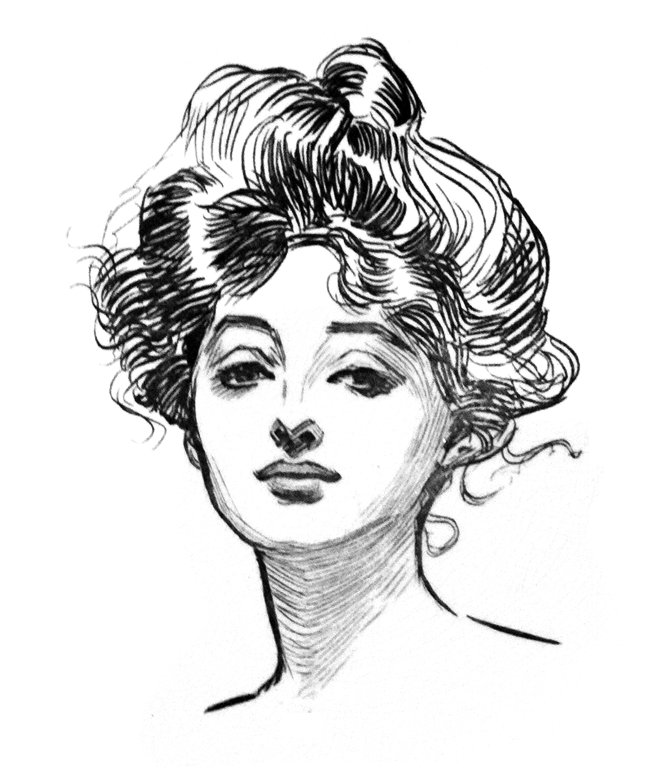
Who Was the Inspiration Behind the ‘Gibson Girl’ Illustrations? The Artist Said She Was Every Woman
Charles Dana Gibson’s archetype became the original American “it girl” in the late 19th and early 20th centuries, and helped transform fashion and beauty
by Michelle Mehrtens
Charles Dana Gibson at PG:
https://www.gutenberg.org/ebooks/author/26456
London, England
Thames Barrier
"The world’s second-largest flood defense barrier has protected London for decades."

Richard the Lionheart: New Study Rethinks His Capture After the Crusade
by Attila Bárány
https://www.medievalists.net/2026/01/richard-the-lionheart-capture/
Original article:
https://real.mtak.hu/188501/1/Veber_MercenariesandCrusaders2024.pdf
Richard I at PG:
https://www.gutenberg.org/ebooks/subject/2908

Client Info
Server: https://mastodon.social
Version: 2025.07
Repository: https://github.com/cyevgeniy/lmst