
Jmail: Entwickler veröffentlichen Epstein-Daten im Format von Gmail https://www.derstandard.at/story/3000000297636/jmail-entwickler-veroeffentlichen-epstein-daten-im-format-von-gmail?ref=mastodon
Natalie
Research associate and #PhD candidate in Islamic and Arabic Studies. Based in Germany.
PhD project: The Production and Verification of Genealogical Knowledge (1200-1800).
Currently interested in the history of knowledge in Islamicate societies, genealogy as a scholarly discipline, scholarly methods & practices of verification. And in early modern libraries.
Automatic deletion of posts after one month enabled (except for pinned posts).
Starting today at 2:30 p.m. CET. Registration for online participation is still open!
---
“Poetry and Knowledge: The Production and Transmission of Knowledge in Arabic Verse (1100–1800)”
November 20–22, 2025 | Institute of Arabic and Islamic Studies, #Münster
Further details: https://www.uni-muenster.de/ArabistikIslam/Forschen/Tagungen/poetry-and-knowledge.html
Registration for online participation: https://uni-ms.zoom-x.de/webinar/register/WN_oj_sxqR-RIibHVSX5k14_w
You are warmly invited to join us - on site or online!
#poetry #arabicpoetry #didacticpoetry #didacticverse #arabicliterature #islamicstudies


@OmaymaS Dear Omayma,
You can now find the program online. You don't need to register; just come and join the conference. You'll find all the information you need here:
https://www.uni-muenster.de/ArabistikIslam/Forschen/Tagungen/poetry-and-knowledge.html
Deadline approaching: We are accepting submissions for our conference "Poetry and Knowledge" until June 1, 2025.
We welcome abstracts on all fields and forms of knowledge. Papers on core areas of Islamic knowledge—such as Qur'anic studies, Hadith studies, and Islamic law—are especially encouraged.
---------------------
CALL FOR PAPERS | Conference Announcement
Poetry and Knowledge: The Production and Transmission of Knowledge in Arabic Verse (1100–1800)
We invite papers for our upcoming conference in #Münster, Germany (November 20–22, 2025), focusing on Arabic poetry as a medium of knowledge. Check out the full CfP and feel free to share!
Deadline: June 1, 2025
Location: Münster, Germany
We look forward to your submissions!
Call for Papers:
https://www.uni-muenster.de/ArabistikIslam/Forschen/Tagungen/poetry-and-knowledge.html

Ein toller Vortrag zu den Handschriften des Compendium historiae in genealogia Christi von Peter von Poitiers (12. Jh.). Mein bisheriges Highlight auf der #DHd2025!
Link zum Projekt: https://compendium-historiae.uni-graz.at/de/


I am excited to share my very first published article, which explores the thoughts of the 17th-century Moroccan scholar al-Ḥasan al-Yūsī on the acquisition of knowledge from books.
In it, I discuss the importance of books for rural Sufi scholars in the Western Maghrib, the conditions they set for acquiring knowledge directly from books (and not just from their teachers!), and the laborious process of collating and correcting manuscripts.
If you're curious about how pre-modern scholars ensured the accuracy of the knowledge in their handwritten books - and why this was so important to them - please take a look! If you don't have access, feel free to contact me.
http://dx.doi.org/10.1163/24519197-bja10059
Some of you may remember the little writing crisis I had about a year ago. Thanks to your valuable advice, this piece finally came together! 🙏 It's been a bit of a rollercoaster, but I'm really happy with how it turned out.
I'm currently playing a bit with #Gramps, an open source program for recording genealogical relationships. Now that I have finally collected a critical mass and have become familiar with how the source information is recorded in Gramps, I am quite impressed. I think I can work with this!
My #PhD project is about the ancestors and descendants of ʿAbd al-Qādir al-Jīlānī, a scholar from 12th century Baghdad, who is situated in the center of the chart. He himself is said to be descended from the Prophet Muḥammad, with whose grandfather the chart begins. The chart currently covers the period from around 650 to 1400.
For my dissertation, I am looking at texts in which these lineages are followed up to the 18th century. So there is still a lot to do: add lots of people and compare the information in the various sources I have in front of me!

Im April habe ich in der Katholischen Akademie in Berlin über die Ergebnisse meiner Masterarbeit (2022) zur Bibliothek der Nāṣiriyya in Tamgrūt gesprochen. Der Mitschnitt ist jetzt online.
Das "Forum Junge Wissenschaft" war eine schöne Gelegenheit mit einem allgemeinen Publikum ins Gespräch zu kommen - und ich war ehrlich überrascht über das große Interesse und die vielen Fragen des fachfremden Publikums. Eine schöne (und etwas aufregende) Erfahrung!

This book is the first in English to survey indigenous #knowledge of seasonal, astronomical, and agricultural information in Arab Gulf almanacs. It provides an extensive analysis of the traditional information available, based on local almanacs, #Arabic texts and poetry by #Gulf individuals, ethnographic interviews, and online forums. A major feature of the book is tracing the history of terms and concepts in the local seasonal knowledge of the Gulf, including an important genre about weather stars, stemming back to the ninth century CE. Also covered are pearl diving, fishing, #seafaring, and pastoral activities. This book will be of interest to scholars who study the entire #Arab region, since much of the lore was shared and continues through the present. It will also be of value to scholars who work on the #IndianOcean and Red Sea Trade Network, as well as the history of folk #astronomy in the Arab World.
https://link.springer.com/book/10.1007/978-3-030-95771-1#about-this-book
As far too many intellectual histories and theoretical contributions from the ‘global South’ remain under-explored, this volume works towards redressing such imbalance. Experienced authors, from the regions concerned, along different disciplinary lines, and with a focus on different historical timeframes, sketch out their perspectives of envisaged transformations. This includes specific case studies and reflexive accounts from African, South Asian, and Middle Eastern contexts. Taking a critical stance on the ongoing dominance of Eurocentrism in academia, the authors present their contributions in relation to current decolonial challenges.
(...)
From their particular vantage points of (trans)disciplinary and transregional engagement, they sketch out potential pathways for addressing the unfinished business of conceptual #decolonization
https://www.degruyter.com/document/doi/10.1515/9783110733198/html#overview
#academicchatter @academicchatter @academicsunite #justpublished
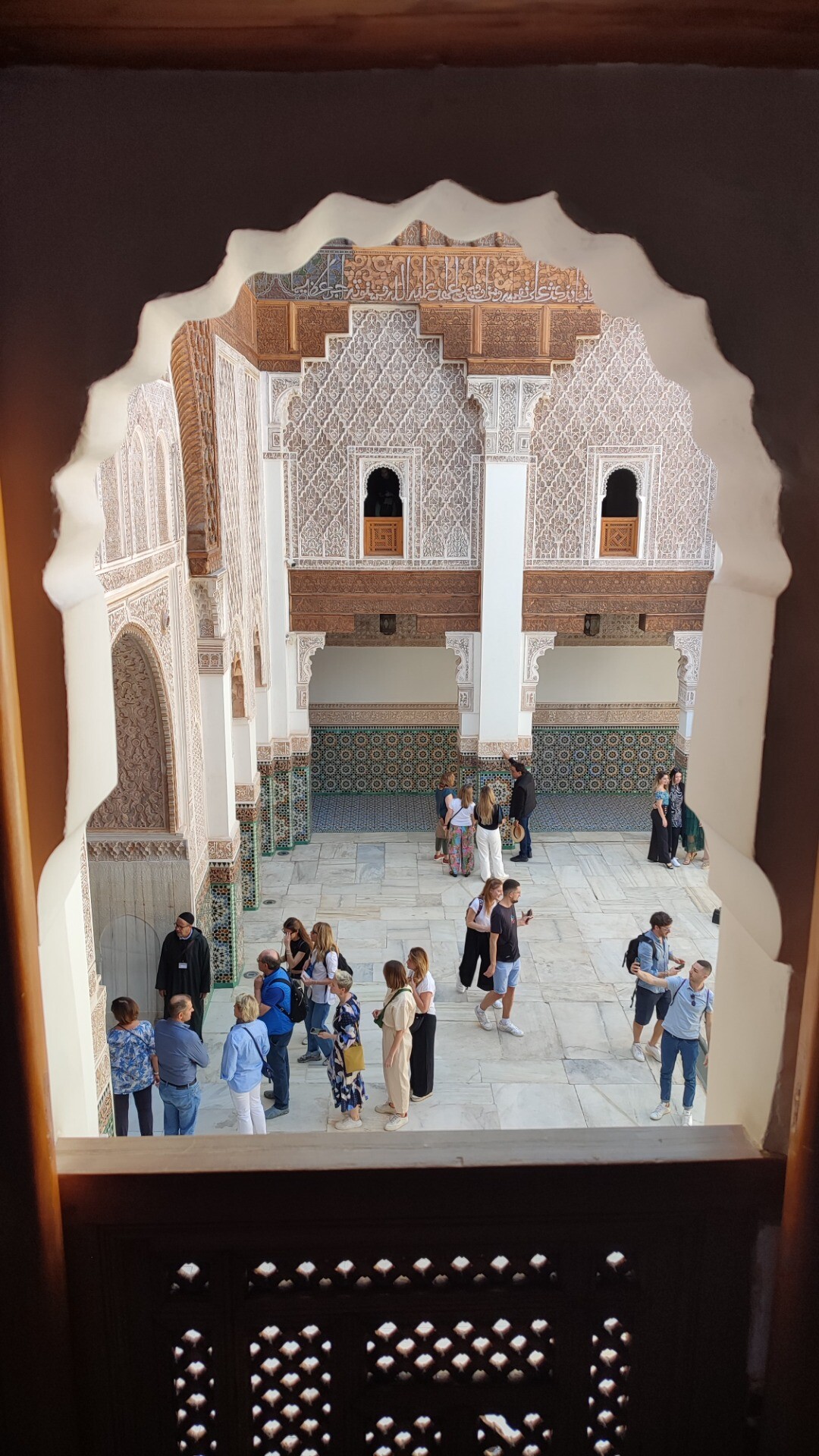
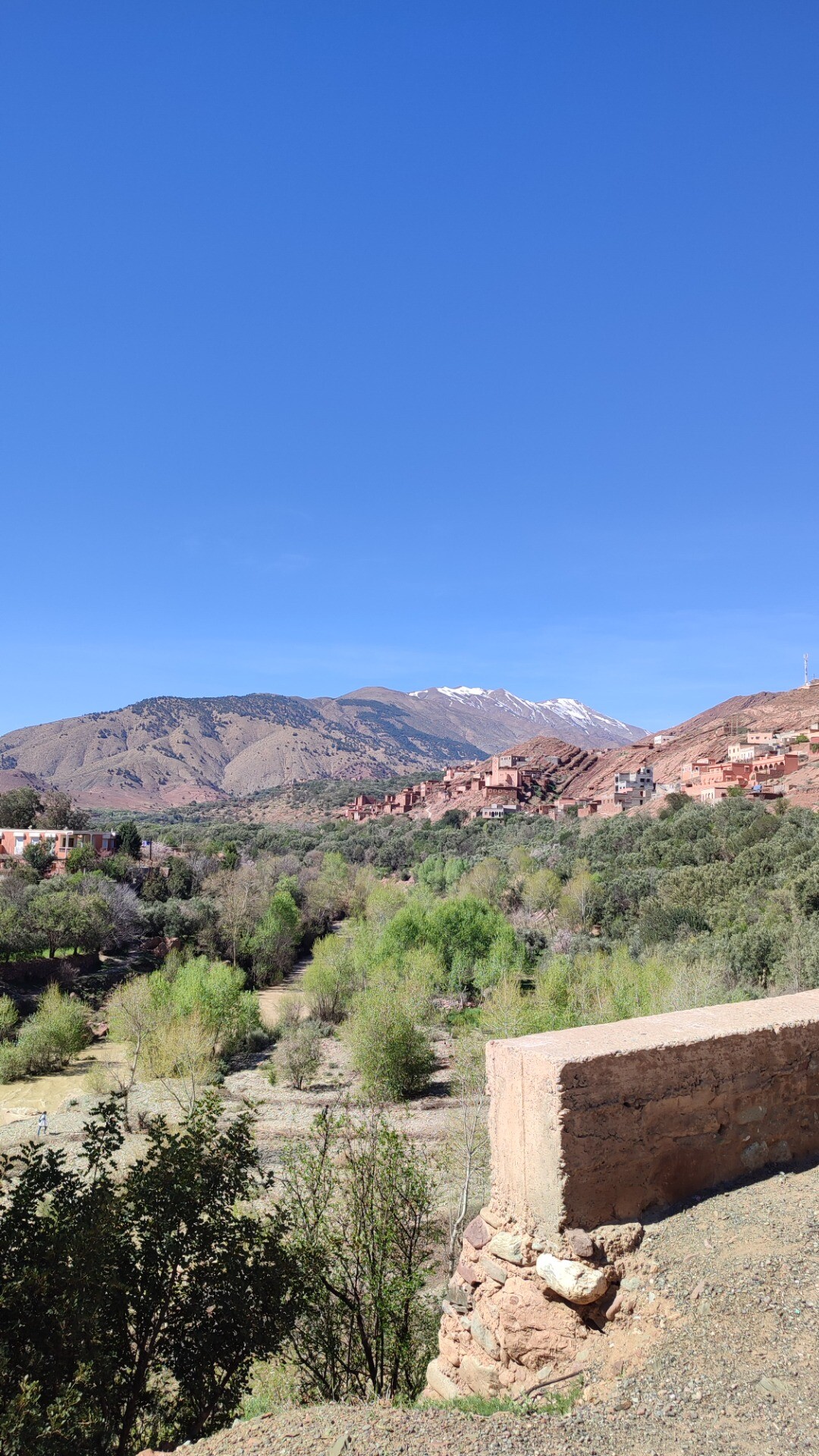
Reservoir Sidi Shahed, Morocco. 🌬️
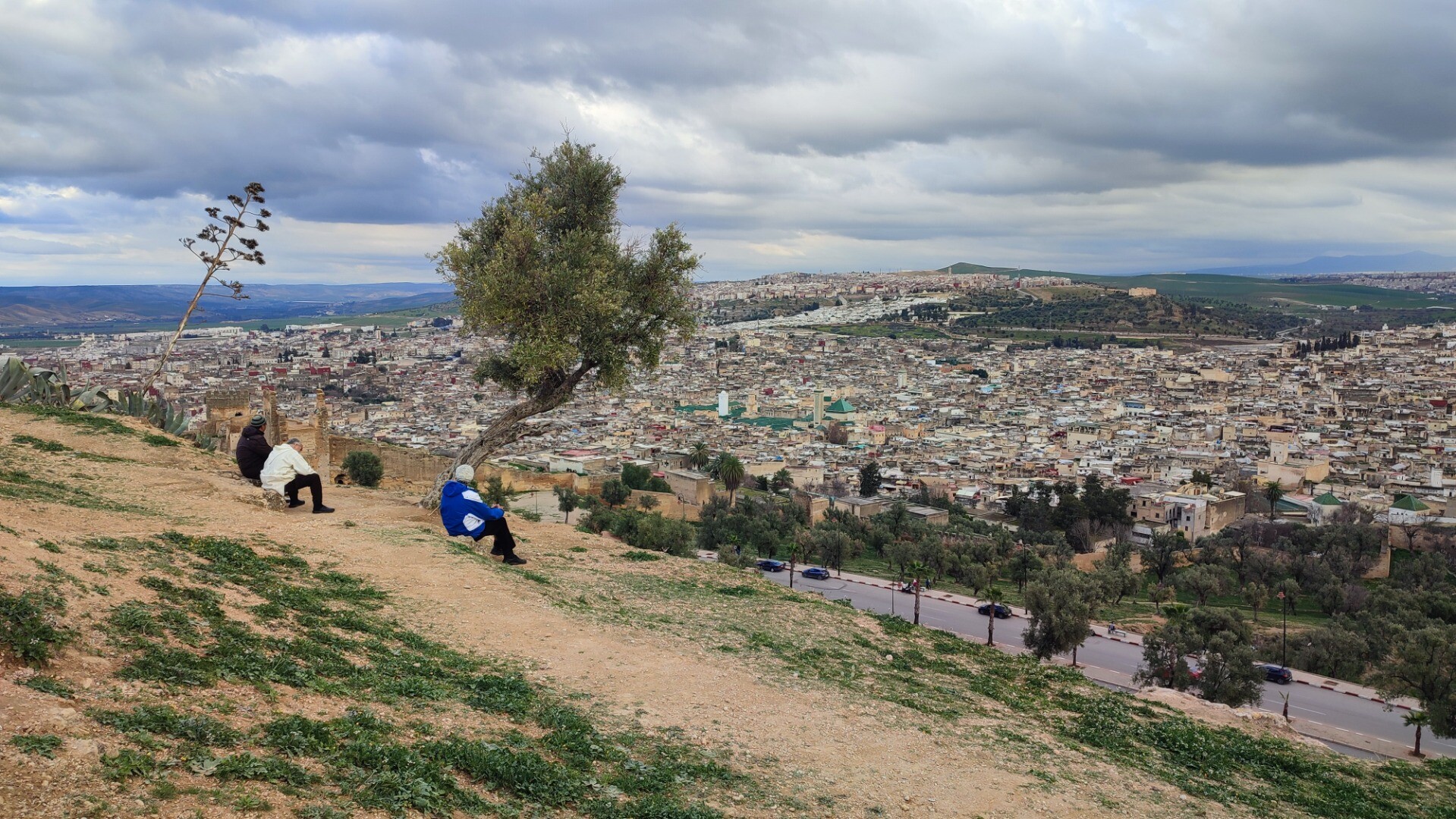
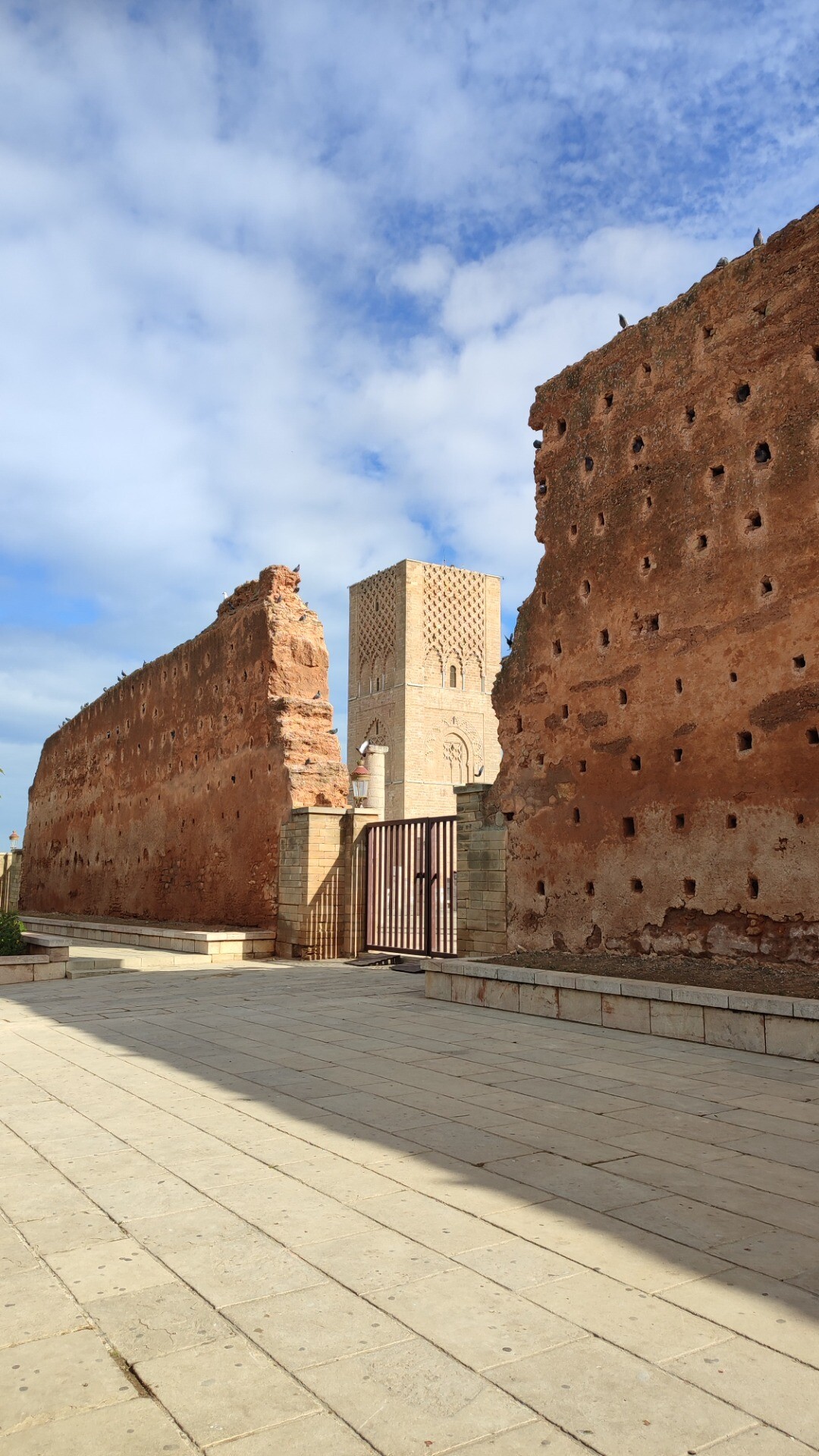
Back from a 10 days long excursion with 13 students and two colleagues to #Morocco.
Wow, what a trip.
From Fes in the North via Volubilis to Rabat at the Atlantic coast, then on to Marrakesh in the South and to Tinmal in the Atlas mountains.
Very hard to be back in cold cloudy Germany ...
Going to share some insights from our trip over the next few weeks!
I am currently organizing an excursion for students to #Morocco, which will take place in March 2023. Here, I have started to put together a playlist to tune in the participants and to make diverse soundscapes accessible to them.
I can't decide what I like best ... my all-time favorite is probably #Gnawa music, but Mohamed Rouicha follows right after. Be sure that I also groove to Rap, Pop, Rai, Chaabi, Atlassi and Saharan tunes!
I hope it's a good mix!
https://youtube.com/playlist?list=PLoZXPP-2Hur2B-5hH_JOARy5KvJRq7RhU
Tonight I was fascinated to see the whole Manger Square in Bethlehem full of people, especially women and children, from Ethiopia. I have never witnessed Orthodox Christmas before; the sounds around the Church of Nativity this evening were just wonderful. Reminded me of rituals and chants from West Africa, with which I am somewhat familiar. Absolutely fascinating.
Unfortunately, I had forgotten my cell phone, but professional photographers (here Nasser Nasser, AFP) may capture the impressions better anyway.


Did I really enjoy this first week of a very gentle introduction to #Python? Yes, I did. It was fun!
Programming 101: An Introduction to Python for Educators
#oneabstractaday #justpublished
The diversity of #modernities that can be observed in our world is linked to the claim of living in a global #modernity, in a world society. The book underpins this claim with numerous excursions into Islamic history. It criticises the view that #modernisation can be equated with westernisation and considers different projects of specifically Islamic modernities as integral parts of world society.
From this perspective, the study contributes to the "provincialisation" of European history in contemporary social scientific thought. Contrary to the theories of #postcolonialism associated with the call for the provincialisation of Europe, however, this book adheres to essential traditions of classical sociology. It thus aims to make a contribution to the social theoretical discussion on modernity.
https://link.springer.com/book/10.1007/978-3-658-39954-2
@islamicstudies @sociology #globalhistory #islamicstudies #sociology
@harcel I thought about this question for quite some time and tried different strategies because I wanted to find "the" perfect workflow. Here you can see an older version.
Since switching to #Zotero, I've found a simplified workthrough: I read and annotate most of my literature in Zotero, but print out key texts and annotate them by hand, then import the notes into #Obisidian to organize, link, and keep track of my knowledge.
I am seriously struggling with a paper that I wanted to finish very soon. I am flying back home next week and had set as my only "vacation task" to just finish this paper .. :blobcatspace: All the research is done, even written up before, but with no coherent argument.
After a good two weeks of unwinding (and not working on the paper at all), I now get stressed out and find myself like frozen in front of my document for days.
Just now I forced myself to write at least a few minutes and after all, one and a half pages came out. That's good. But somehow I am so uninspired. That annoys me.
How do I get out of this (self-created) situation of pressure?
This book considers an important and largely neglected area of Islamic law by exploring how medieval Muslim jurists resolved criminal cases that could not be proven beyond a doubt, calling into question a controversial popular notion about Islamic law today, which is that Islamic law is a divine legal tradition that has little room for discretion or doubt, particularly in Islamic criminal law.
Through examination of legal, historical, and theological sources, and a range of illustrative case studies, this book shows that Muslim jurists developed a highly sophisticated and regulated system for dealing with Islam's unique concept of doubt, which evolved from the seventh to the sixteenth century.
@islamicstudies #islamicstudies #islamiclaw #evidence #doubt #truth
Client Info
Server: https://mastodon.social
Version: 2025.07
Repository: https://github.com/cyevgeniy/lmst