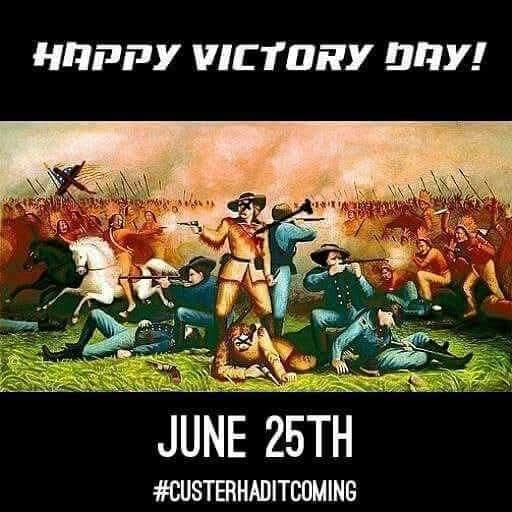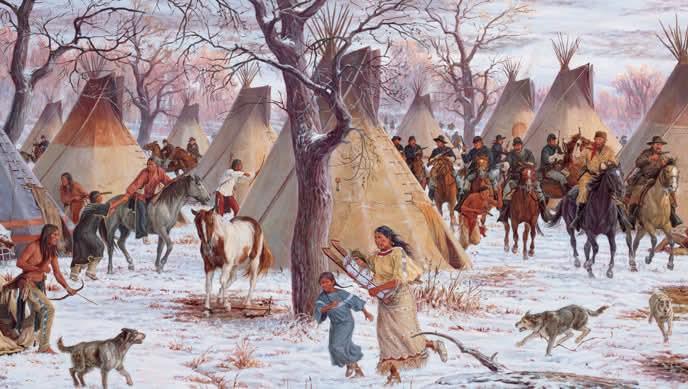
Today in Labor History January 8, 1877: Crazy Horse and his warriors fought their final battle against the U.S. Cavalry at Wolf Mountain, Montana Territory. Just six months earlier, Crazy Horse and Chief Gall had led Lakota, Cheyenne and Arapaho warriors in the routing of Custer and the 7th Cavalry in the Battle of Little Bighorn. Many bands of Sioux and Cheyenne had returned to the reservations to get food and supplies in preparation for winter. However, Congress had demanded that they cede the Black Hills in exchange for these goods, and they replaced the civilian contractors in charge of these supplies with army soldiers. This convinced many people to avoid the reservations and mistrust the U.S. government even more than they already did. Then, in December, U.S. troops defeated Sitting Bull’s band, as well as Dull Knife's Cheyennes, who had trekked through snow to join Crazy Horse. Considering their weakened condition and the approaching winter, Crazy Horse tried to negotiate peace with the army. The army responded by murdering Crazy Horse's delegation. Consequently, they continued fighting. The final battle occurred on January 8, 1877. While only 3 people died on each side and the battle was essentially a draw, the U.S. treated it as a strategic victory in light of their recent humiliation at Little Big Horn, and because it showed they could avoid defeat under harsh winter conditions.
#workingclass #LaborHistory #indigenous #littlebighorn #crazyhorse #sioux #cheyenne #custer #blackhills #treaty #nativeamerican #genocide

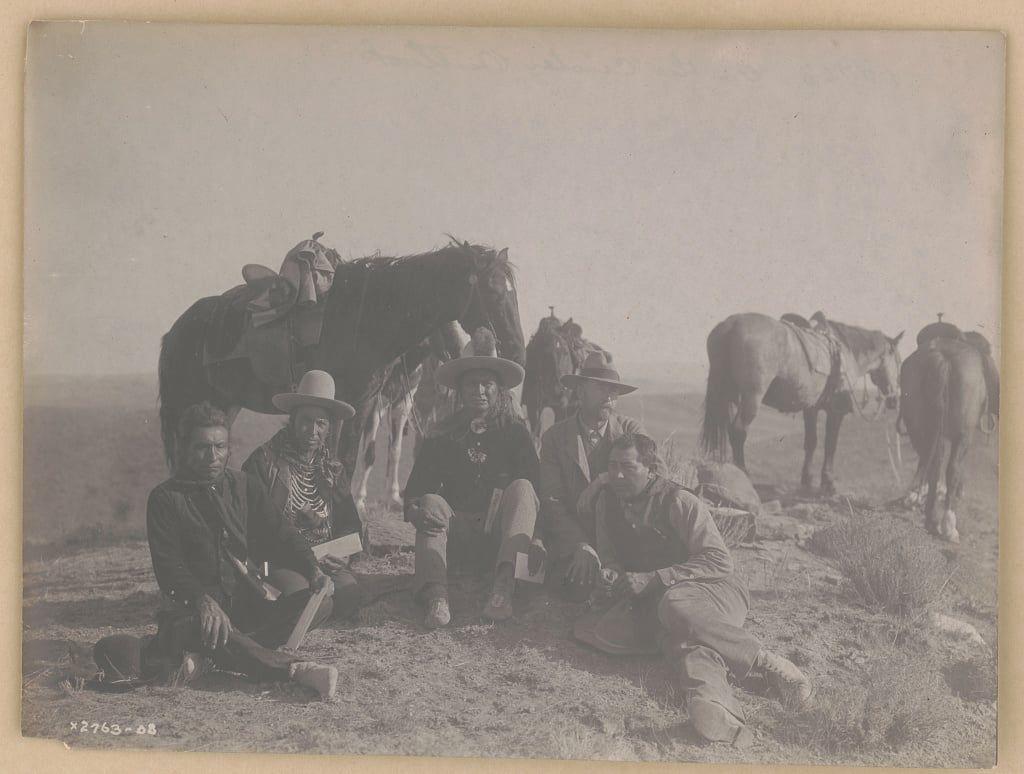
![The image depicts a historical photograph of five individuals, presumably from the late 19th century. They are mounted on horses in an open field with dry grass beneath them and bare earth visible around their hooves. The subjects wear wide-brimmed hats, indicative of protection against sun or rain commonly associated with outdoor work environments.
Each person is adorned differently; some have decorative elements such as feathers or ornaments that signify status or role within a community context. They appear to be engaged in conversation but maintain an attentive posture toward their surroundings or each other.
The setting includes what seems like part of the Custer Monument, identified by its distinctive stone structure in the background with vertical lines and horizontal cross-bracing visible above it. The monument's purpose isn't explicitly clear from this perspective but suggests historical significance related to Native American history given context provided on the image caption which mentions "Custer Monument" and dates.
The overall color tone of the photograph is sepia, hinting at its age or artistic choice in presentation typical for that era’s photography. Notable features include detailed textures captured by early photographic techniques such as film grain, soft focus around moving elements like horses' legs indicating motion blur from a slower shutter sp [...]](https://files.mastodon.social/cache/media_attachments/files/115/724/392/879/176/315/original/c259de69ef023c91.jpeg)