👉 Swipe through to learn how SFS Invite Links work
👉 Create yours free at shareyourfans.com
#ShareYourFans #SFS #CreatorCollabs #OFcreators #FanslyCreators #LoyalFansCreators #FanvueCreators #CreatorTools #CreatorCommunity #OnlyFansTips #DigitalCreators #CreatorGrowth
ShareYourFans™ | OnlyFans Prom...
#DigitalCreators

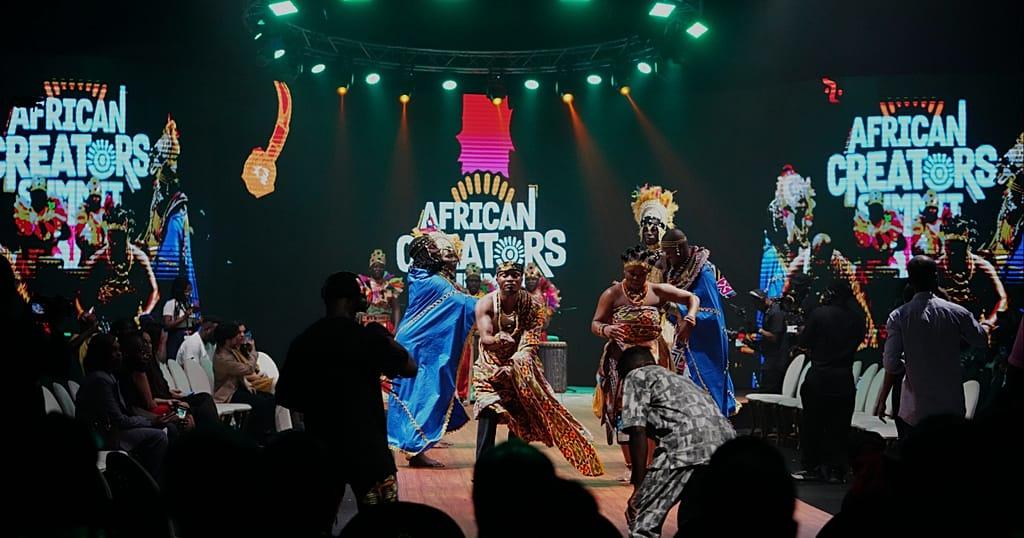
African creators push for recognition of digital work as full-time careers http://newsfeed.facilit8.network/TQfjDg #DigitalCreators #AfricanCulture #SWAG #Monetization #FullTimeCareers

“The new media are not ways of relating to us the ‘real’ world; they are the real world and they reshape what remains of the old world at will.”*…
There is a vortex of forces shaping the future of journalism. Censorship, both direct and indirect, is on the rise in the U.S. and around the world. Concentration of media ownership is homogenizing coverage and creating “news deserts.”
At the same time, new technology and new applications of that technology are reshaping the Fourth estate. The Reuters Institute at Oxford surveyed 280 digital leaders from 51 countries and territories to learn what they are seeing– and planning. From the Executive Summary…
We are still at the early stages of another big shift in technology (Generative AI) which threatens to upend the news industry by offering more efficient ways of accessing and distilling information at scale. At the same time, creators and influencers (humans) are driving a shift towards personality-led news, at the expense of media institutions that can often feel less relevant, less interesting, and less authentic. In 2026 the news media are likely to be further squeezed by these two powerful forces.
Understanding the impact of these trends, and working out how to combat them, will be high up the ‘to do list’ of media executives this year, despite the unevenly distributed pace of change across countries and demographics.
Existential challenges abound. Declining engagement for traditional media combined with low trust is leading many politicians, businessmen, and celebrities to conclude that they can bypass the media entirely, giving interviews instead to sympathetic podcasters or YouTubers. This Trump 2.0 playbook – now widely copied around the world – often comes bundled with a barrage of intimidating legal threats against publishers and continuing attempts to undermine trust by branding independent media and individual journalists as ‘fake news’. These narratives are finding fertile ground with audiences – especially younger ones – that prefer the convenience of accessing news from platforms, and have weaker connections with traditional news brands. Meanwhile search engines are turning into AI-driven answer engines, where content is surfaced in chat windows, raising fears that referral traffic for publishers could dry up, undermining existing and future business models.
Despite these difficulties many traditional news organisations remain optimistic about their own business – if not about journalism itself. Publishers will be focused this year on re-engineering their businesses for the age of AI, with more distinctive content and a more human face. They will also be looking beyond the article, investing more in multiple formats especially video and adjusting their content to make it more ‘liquid’ and therefore easier to reformat and personalise. At the same time, they’ll be continuing to work out how best to use Generative AI themselves across newsgathering, packaging, and distribution. It’s a delicate balancing act but one that – if they can pull it off – holds out the promise of greater efficiency and more relevant and engaging journalism.
These are the main findings from our industry survey:
- Only slightly more than a third (38%) of our sample of editors, CEOs, and digital executives say they are confident about the prospects for journalism in the year ahead – that’s 22pp lower than four years ago. Stated concerns relate to politically motivated attacks on journalism, loss of USAID money that previously supported independent media in many parts of the world, and significant declines in traffic to many online news sites.
- By contrast, around half (53%) say they are confident about their own business prospects, similar to last year’s figure. Upmarket subscription-based publishers with strong direct traffic can see a path to long-term profitability, even as those that remain dependent on advertising and print worry about sharp declines in revenue and the potential impact of AI powered search on the bottom line.
- Publishers expect traffic from search engines to decline by more than 40% over the next three years – not quite ‘Google Zero’ but a substantial impact none the less. Data sourced for this report from analytics provider Chartbeat shows that aggregate traffic to hundreds of news sites from Google search has already started to dip, with publishers that rely on lifestyle content saying they have been particularly affected by the roll out of Google’s AI overviews. This comes after substantial falls in referral traffic to news sites from Facebook (-43%) and X, formerly Twitter (-46%) over the last three years.
- In response, publishers say it will be important to focus on more original investigations and on the ground reporting (+91 percentage point difference between ‘more’ and ‘less’), contextual analysis and explanation (+82) and human stories (+72). By contrast, they plan to scale back service journalism (-42), evergreen content (-32), and general news (-38), which many expect to become commoditised by AI chatbots. At the same time, they think it will be important to invest in more video (+79) – including ‘watch tabs’ – more audio formats (+71) such as podcasts but a bit less in text output.
- In terms of off-platform strategies, YouTube will be the main focus for publishers this year with a net score of +74, up substantially on last year. Other video-led platforms such as TikTok (+56) and Instagram (+41) are also key priorities – along with working out how to navigate distribution through AI platforms (+61) such as OpenAI’s ChatGPT, Google’s Gemini and Perplexity. Google Discover remains a critical (+19), if slightly volatile, source of referral traffic, while some publishers are looking to find new audiences via newsletter platforms such as Substack (+8). By contrast, publishers will be deprioritising effort spent on old-style Google SEO (-25) – as well as traditional social networks Facebook (-23) and X (-52)
- Last year we predicted the emergence of ‘agentic AI’, but this year we can expect to start to see real-world impact of these more advanced technologies. Some sources suggest that there will soon be more bots than people reading publisher websites, as tools like Huxe and OpenAI’s Pulse offer personalised news briefings at scale. Three-quarters of our respondents (75%) expect ‘agentic tools’ to have a ‘large’ or ‘very large’ impact on the news industry in the near future.
- Alongside the traffic disruption from AI, news executives also see opportunities to build new revenue from licensing content (or a share of advertising revenue) within chatbots. Around a fifth (20%) of publisher respondents – mainly from upmarket news companies – expect future revenues to be substantial, with half (49%) saying that they expect a minor contribution. A further fifth (20%), mostly made up of local publishers, public broadcasters, or those from smaller countries, say they do not expect any income from AI deals.
- More widely, subscription and membership remain the biggest revenue focus (76%) for publishers, ahead of both display (68%) and native advertising (64%). Online and physical events (54%) are also becoming more important as part of a diversified revenue strategy. Reliance on philanthropic and foundation support (18%) has declined this year, after cuts of media support budgets in the United States and elsewhere.
- Meanwhile news organisations’ use of AI technologies continues to increase across all categories, with back-end automation considered ‘important’ this year by the vast majority (97%) of publisher respondents, many of whom integrated pilot systems into content management systems in the last year. Newsgathering cases (82%) are now the second most important, with faster coding and product development (81%) also gaining traction.
- Over four in ten (44%) survey respondents say that their newsroom AI initiatives are showing ‘promising’ results, but a similar proportion (42%) describe them as ‘limited’. Two-thirds of respondents (67%) say they have not saved any jobs so far as a result of AI efficiencies. Around one in seven (16%) say they have slightly reduced staff numbers but a further one in ten (9%) have added new roles/cost.
- The rise of news creators and influencers is a concern for publishers in two ways. More than two-thirds (70%) of our respondents are concerned that they are taking time and attention away from publisher content. Four in ten (39%) worry that they are at risk of losing top editorial talent to the creator ecosystem, which offers more control and potentially higher financial rewards.
- Responding to the increased competition and a shift of trust towards personalities, three-quarters (76%) of publisher respondents say they will be trying to get their staff to behave more like creators this year. Half (50%) said they would be partnering with creators to help distribute content, around a third (31%) said they would be hiring creators, for example to run their social media accounts. A further 28% are looking to set up creator studios and facilitate joint ventures.
More widely, could 2026 be the year when AI company stock valuations come down to earth with a bump, amid concerns about whether their trillion-dollar bets will pay back their investors? Meanwhile the amount of low-quality AI automated content, including so-called ‘pink slime’ sites, looks set to explode, with platforms struggling to distinguish this from legitimate news.
We can expect more public concern about the role of big tech in our lives. This may include individual acts of ‘Appstinence’ and other forms of digital detox and a desire for more IRL (In Real Life) connection. Governments will also come under pressure to do more to protect young and other vulnerable groups online, even in the United States.
The creator economy will continue to surge, fuelled by investments from video platforms and streamers. At the top end creators will look more like Hollywood moguls with big budgets and their own studio complexes. Within news, we’ll also see the emergence of bigger, more robust, creator-led companies delivering significant revenues as well as value to audiences – offering ever greater competition for traditional journalism…
Read the report in full: “Journalism, media, and technology trends and predictions 2026,” from @reutersinstitute.bsky.social.
* Marshall McLuhan
###
As we ponder the prospects of the press, we might type a birthday note to John Baskerville, a pioneering English printer and typefounder, who was born on this date in 1706. Among Baskerville’s publications in the British Museum’s collection are Aesop’s Fables (1761), the Bible (1763), and the works of Horace (1770)– many printed on a stock he invented, “wove paper”, which was considerably smoother than “laid paper”, allowing for sharper printing results. And as for his fonts, Baskerville’s creations (including the famous “Baskerville,” a predecessor to the very similar Times New Roman) were so successful that his competitors resorted to claims that they damaged the eyes.
Baskerville’s first publication, an edition of Virgil. (source) #AI #artificialIntelligence #Baskerville #culture #digitalCreators #history #influencers #JohnBaskerville #journalism #literature #media #news #paper #printing #publishing #Technology #typography #wovePaper


Build your growth like a business… not a gamble.
👉 Join free: shareyourfans.com
#ShareYourFans #ShareYourFansPro #morefun #OFcreators #OFcommunity #contentcreatorlife #creatorgrowth #digitalcreators #fanplatforms #OnlyFansTips #creatorgrowthtools #socialmediastrategy
ShareYourFans™ | OnlyFans Prom...
Build your growth like a business, not a gamble. 💜
👉 Join free: shareyourfans.com
#ShareYourFans #ShareYourFansPro #morefun #OFcreators #OFcommunity #contentcreatorlife #creatorgrowth #digitalcreators #fanplatforms #OnlyFansTips #creatorgrowthtools #socialmediastrategy
ShareYourFans™ | OnlyFans Prom...
Structured swaps = better conversions, better relationships, and way less burnout.
Ready to run GG Swaps the professional way?
👉 shareyourfans.com
#ShareYourFans #ShareYourFansPro #morefun #OFcreators #OFcommunity #contentcreatorlife #creatorgrowth #digitalcreators
ShareYourFans™ | OnlyFans Prom...
Structured swaps = better conversions, better relationships, and way less burnout.
Ready to run GG Swaps the professional way?
👉 shareyourfans.com
#ShareYourFans #ShareYourFansPro #morefun #OFcreators #OFcommunity #contentcreatorlife #creatorgrowth #digitalcreators
ShareYourFans™ | OnlyFans Prom...

Can you really get paid just for scrolling on TikTok?
There are viral claims everywhere — but most people don’t explain what’s real and what’s misleading. We tested the idea and broke down how TikTok monetization actually works, including what doesn’t pay.
Read the full explanation here:
https://www.panstag.com/2026/01/can-you-get-paid-to-scroll-on-tiktok.html

Less guesswork. More conversions. 💜
🚀 Join now: shareyourfans.com
#ShareYourFans #ShareYourFansPro #morefun #FanvueCreators #FanvueTips #creatorgrowth #digitalcreators #creatorresources #contentcreatorlife #socialmediatools
ShareYourFans™ | OnlyFans Prom...
If you’re still promoting the same way everywhere… it might be time to level up. 👉 Grow with intention. Not randomness. #ShareYourFans #morefun #FanvueCreators #CreatorTools #CreatorGrowth #DigitalCreators #ContentStrategy #GrowSmarter #CreatorCommunity

X doubles creator revenue pool and offers $1M for top Article - but why?: X yesterday expanded its revenue sharing pool, shifted payouts to timeline impressions, weighted Articles more heavily, and launched a $1M prize for US creators. https://ppc.land/x-doubles-creator-revenue-pool-and-offers-1m-for-top-article-but-why/ #CreatorEconomy #RevenueSharing #ContentCreation #OnlineIncome #DigitalCreators

Twitch logged over 21 million active streamers worldwide in 2025, adding 9 million new creators and billions of watch hours — showing streaming growth is stronger than ever.
#TwitchNews #StreamingGrowth #TwitchStats #CreatorEconomy #LiveStreaming #StreamerUpdate #TwitchCommunity #ContentCreators #GamingIndustry #StreamingSuccess #CreatorGrowth #DigitalCreators #FutureOfStreaming


Creators, marketers & agencies love DritalHub — the best free AI social media scheduler! 💡
Auto-schedule posts, generate hashtags, and collaborate with teams seamlessly.
🔥 Try it now: https://dritalhub.drital.in
#SocialMediaScheduler #DritalHub #AIContentTool #DigitalCreators #PostAutomation

Client Info
Server: https://mastodon.social
Version: 2025.07
Repository: https://github.com/cyevgeniy/lmst