#EsDevlin

This Artist Put 2,500 of Her Favorite Books in a Massive Rotating Library on Miami Beach – Smithsonian Magazine

This Artist Put 2,500 of Her Favorite Books in a Massive Rotating Library on Miami Beach – The 20-foot-tall installation, titled “Library of Us,” featured titles that hold personal meaning for British artist Es Devlin—who invited visitors to sit on nearby benches and read

By Ella Feldman – Daily Correspondent, December 8, 2025

Visitors look at “Library of Us,” an installation by British artist Es Devlin, during Miami Art Week. Chandan Khanna / AFP via Getty Images

A glowing triangle that rotates like the needle of a compass in a pool of water on the beach might not be the first thing you imagine when you picture a library. That is, unless you’re at Miami Art Week.

British artist Es Devlin’s dazzling installation, “Library of Us,” includes 2,500 books that hold personal meaning for Devlin, who also works as a set designer and has collaborated with artists like Bad Bunny and Lady Gaga. The book collection—color-coded to create a rainbow gradient—contains everything from childhood favorites to plays Devlin has created sets for.

The 20-foot-tall bookshelf, which sits on the sands of Miami Beach, explores “how we build ourselves out of what we read,” the artist tells the New York Times’ Nazanin Lankarani. “It’s an experiment in seeing through the eyes of others.”

The bookshelf was commissioned by Faena Art, a nonprofit that often funds large-scale installations during Art Basel inside and nearby the beachside Faena Hotel. The organization celebrates its 10th anniversary this year.

“I thought it would be great to invite Es because she’s bold, magnificent, strong and magical,” Argentine developer and collector Alan Faena, the founder of Faena Art, tells the Times.

“Library of Us” invites members of the public to step onto its slowly rotating platform and, if they’re so inclined, pick up one of the extra volumes placed on a long curved table, sit down on one of the installation’s benches and read. The installation also features an LED screen stretching across the library and projecting lines from the books.

The library’s compass-like form was inspired by Italian novelist Umberto Eco, who described libraries as “a compass of the mind, pointing us in the direction of new explorations,” Devlin tells Artnet’s Sarah Cascone.

Quick fact: What is Umberto Eco famous for?

The Italian writer is best known for his novel The Name of the Rose, a murder mystery published in 1980. 

A voracious reader, Devlin says she reads as many as 300 books in one year. When her installation concludes, she plans to donate the books to Miami public schools and libraries so others can read them, too, reports Artnet.

But some of the 2,500 books Devlin selected have been banned from some schools and libraries across the country, including in Florida. She says these bans helped inform her project, which features many titles with different viewpoints sitting side by side on the shelves. 

Continue/Read Original Article Here: This Artist Put 2,500 of Her Favorite Books in a Massive Rotating Library on Miami Beach

#2500Books #Artist #EsDevlin #FavoriteBooks #Florida #LibraryOfUs #MiamiBeach #RotatingLibrary #SmithsonianMagazine

gettyimages-2249048349
Architecture News has movedarchitecture@masto.ai
2025-12-02
Architecture News has movedarchitecture@masto.ai
2025-11-27
2024-07-25
2024-07-24

Just finishing up my master classes from #JeffKoons, #Futura, #FrankGehry, #AnnieLiobovitz, #DavidCarson, #EsDevlin, and more.

Fantastic inspiration.
Also: lukedorny.com/nowplaying/psyen

Futura sculpture Pointman UnkleFutura painted Pointman for MasterClass UnkleFutura 2000’s pointman sculpture for UnkleEs Devlin making art for MasterClass
Dave SpectorDhmspector
2023-11-24

The exhibit at the is 🤯

pablolarahpablolarah
2023-10-27

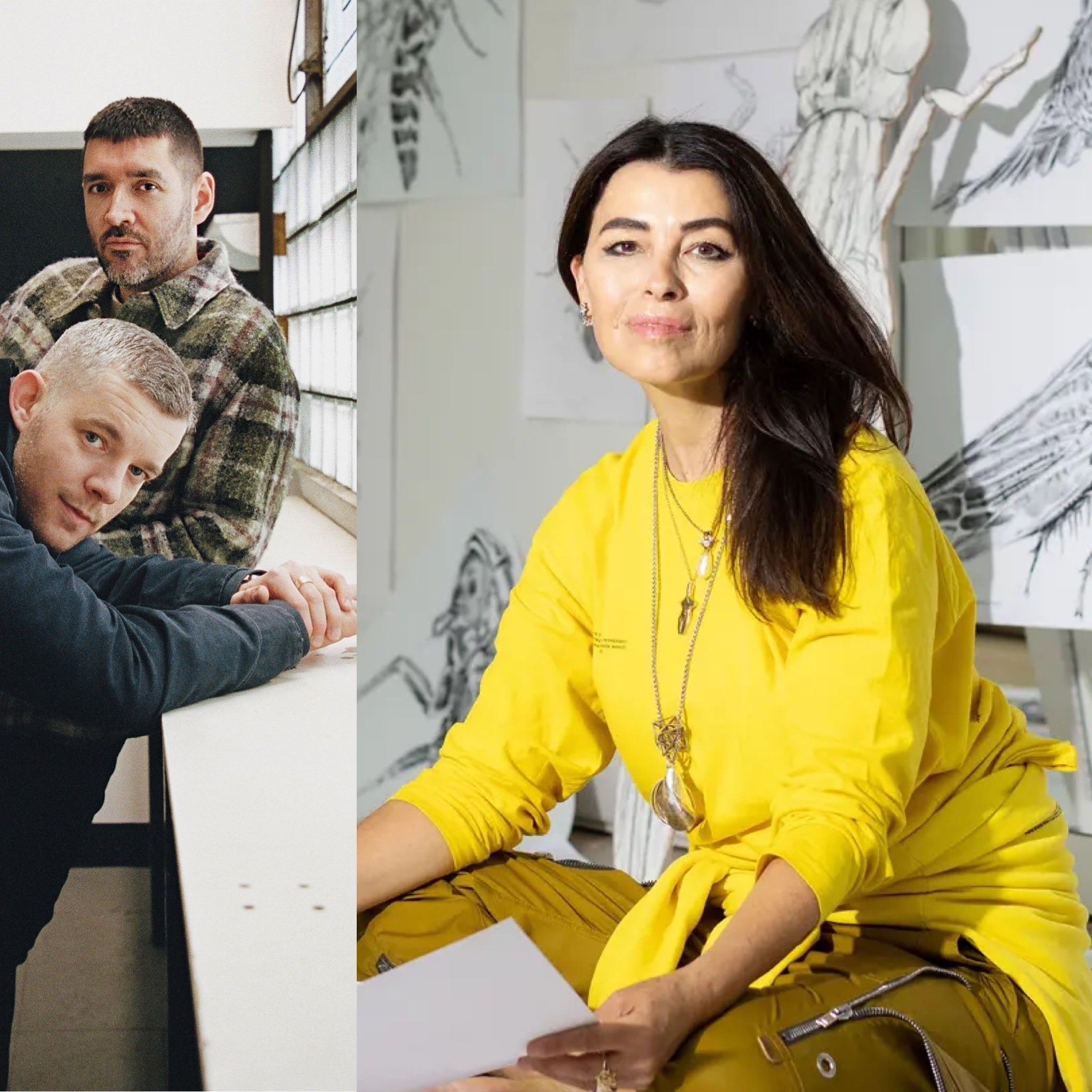
🎙️TalkArt @TalkArt

Guest: Artist and Stage Designer, Es Devlin @Es_Devlin

Podcast co-hosted by @RussellTovey
& @RobertDiament
(Happy Birthday Robert! 🎂)

podcasts.apple.com/gb/podcast/

On the right: Artist and Stage Designer, Es Devlin.  
On the left:   Russell Tovey &  Robert Diament
2023-02-15

The Lehman Trilogy directed by Sam Mendes sits very well on the Gillian Lynne Theatre stage: Es Devlin’s set looks fantastic and the new cast are fabulous. Ben Powers’ adaptation seems more powerful than ever. Here’s my YouTube review youtu.be/YF66Rvt72qY and the written version theatre.reviews/review/lehman- #thelehmantrilogy #sammendes #theatre #review #esdevlin

dezeen (unofficial)dezeen@ծմակուտ.հայ
2022-02-16

Landmark Compton buildings are "characters" on Es Devlin's Super Bowl stage

British designer Es Devlin paid tribute to the Californian city of Compton, often hailed as the birthplace of hip hop, through architectural iconography for the stage design of this year's Super Bowl show.

Devlin "cast buildings as characters" for the set of Super Bowl's halftime show, which took place at the HKS-designed SoFi Stadium on Sunday and featured high-profile artists led by Compton native Dr Dre, who worked with Devlin on the design.

Es Devlin designed the stage for the Super Bowl halftime show

"We cast each of the buildings as characters in the narrative," Devlin told Dezeen.

"The buildings are placed within the map along Rosecrans Avenue," she said. "The stadium floor cloth is printed from high-resolution aerial photographs of Compton, supplied by Google Earth, with more detailed photographs taken by a local helicopter pilot."

The stadium floor was covered in a Google Earth photo of Compton

The Compton Courthouse jail, the Martin Luther King Memorial and legendary nightclub Eve After Dark were among the significant landmarks referenced throughout the performance.

Barbershops, burger joints and residential houses also appeared on the stage, while lightweight cardboard box props referenced the cardboard often found on the streets of Compton.

Famous Compton landmarks appeared on the stage

Devlin worked closely with the halftime show's producer, Dr Dre, who wanted the stage to look like an art installation as well as an arena for the performance.

"Dr Dre was immediately interested in the idea of 'placeness' – he sensed that Compton would be a protagonist in the work and that we could etch a map of Compton on the global Super Bowl stage," said Devlin.

The stage was constructed in just eight minutes

The set is made up of white boxy trailers or 'buildings' upon which the performers sing and dance. The floor was formed of a fabric floor map that could be rolled out in an instant.

Lowrider cars – vehicles that are commonly seen cruising around downtown Compton – were driven onto the stage, transforming the arena from a pitch to a theatrical stage.

[

Read:

Es Devlin's folding star destroyer looms over The Weeknd's world tour

](https://www.dezeen.com/2017/02/22/es-devlin-folding-star-destroyer-looms-over-the-weeknds-world-tour/)

The Super Bowl set is often limited by the fact that it has to be assmebled at the venue and easily broken apart in time for the second half of the football game. In total, Devlin's the set was constructed in just eight minutes.

"Bruce Rogers is the veteran Super Bowl production designer who masterminded the design to be able to appear within eight minutes and disappear within six minutes – an immense challenge requiring military precision and crew choreography," explained Devlin.

"The set-up is in fact a show in its own right," added the designer.

Dancers performed on the rooftops and in cardboard boxes on the street

During the halftime show, Dr Dre stood on the roof of a trailer designed to look like his recording studio. Rows of lights within the audience were meant to echo the rows of dials and sliders on his recording desk.

Over the course of the show, he was joined by popular artists, including rapper 50 Cent, Eminem and Snoop Dogg, who performed upbeat tracks including Next Episode and In Da Club.

"The recording studio is Dr Dre’s link and meeting point with all the other artists," explained the designer. "Much of the lived experience which informs the music heard during the show has passed through Dr Dre’s desk and hands."

"The map of Compton courses through the record producer’s hand as it hovers over the dials and switches on the 48-track recording desk," continued Devlin.

Dr Dre's recording studio was among the featured landmarks

According to Devlin, each of the venues offer visitors a multifaceted and engaging experience of the Compton music scene.

"At the start of the project, Dave Free introduced us to his Compton school friend Tremeal who took us on a tour last year," Devlin said.

"With Tremeal's guidance we began to get a sense of the complexity of this city which has produced an exceptional number of leading figures in politics, sports and music," she added.

Es Devlin is responsible for a number of high-profile stage designs, including The Weekend's Coachella music festival stage and the set of band U2's 2018 tour.

Photos are courtesy ofEs Devlin. The video is by Hamish Hamilton.

The post Landmark Compton buildings are "characters" on Es Devlin's Super Bowl stage appeared first on Dezeen.

#all #design #news #installations #setdesign #esdevlin #superbowl

imageThe Super Bowl performanceDancers perform on a floor designed by Es DevlinDancers and singers at the Super Bowl show
dezeen (unofficial)dezeen@ծմակուտ.հայ
2021-12-29

Dezeen's top 10 live talks of 2021

Dezeen rounds up our top 10 live talks of the year as part of our review of 2021, featuring discussions with Neri Oxman, Es Devlin, Joseph Grima, Peter Saville and more.

Es Devlin for Dezeen 15

Es Devlin opened our Dezeen 15 festival this year, which celebrated Dezeen's 15th anniversary with a programme of cutting edge designers and architects presenting their manifestos for a better world.

Devlin joined us live from the COP26 climate conference in Glasgow, where she had installed an indoor forest to serve as an events space. During the talk, Devlin presented her idea for a car-free future, and imagined looking back from 15 years in the future at the positive progress made since COP26.

Find out more about Es Devlin ›

Oliver Heath on biophilic design

Dezeen teamed up with CDUK for this live talk, hosted in Dezeen's new Studio Space in London. Biophilic designer Oliver Heath talked to Dezeen editor-in-chief Marcus Fairs about how biophilic design principles can help improve health and wellbeing.

Find out more about biophilic design ›

Joseph Grima on non-extractive architecture

In April, Space Caviar co-founder Joseph Grima spoke to Dezeen about his manifesto for a new mode of architecture that conserves the Earth's resources.

During the talk, Grima discussed how young architects are rejecting "cookie-cutter modernism" in favour of approaches that prioritise conserving the earth's resources, and proposed an overhaul of our current industrial economies.

Find out more about Joseph Grima ›

Neri Oxman for Dezeen 15

Closing the Dezeen 15 festival was designer Neri Oxman, who called for a "radical realignment between grown and built environments".

During the talk, Oxman also announced the launch of her new studio, OXMAN. "We envision it as a kind of a Bell Labs of the 21st century," she said, comparing it to the legendary innovation department of US telecoms giant AT&T.

Find out more about Neri Oxman ›

Sumayya Vally on the Serpentine Pavillion 2021

To celebrate the unveiling of the 2021 Serpentine Pavillion, Dezeen broadcast an in-person interview between Serpentine Gallery artistic director Hans Ulrich Obrist and architect Sumayya Vally.

Speaking from within Vally's pavilion, the pair discussed the influences and process behind her design for the annual commission.

Find out more about Sumayya Vally here ›

Gropius Bau and Hella Jongerius on weaving

In this talk, artist Hella Jongerius and Stephanie Rosenthal, director of the Gropius Bau museum, discussed Jongerius' exhibition Woven Cosmos.

The speakers discussed the healing properties of weaving, and Jongerius' wider creative philosophy centred around design, sustainability and spiritualism.

Find out more about Hella Jongerius here ›

Rex Weyler on environmental activism and design

To celebrate Greenpeace's 50th anniversary, Dezeen hosted a panel discussion headed by ecologist and Greenpeace co-founder Rex Weyler, to discuss the role of designers in environmental activism.

Also joining the panel were Canadian architect Michael Green of Michael Green Architecture and Nina-Marie Lister, professor and graduate director of Urban & Regional Planning at Ryerson University.

Find out more about Greenpeace here ›

Peter Saville on his Technicolour collection for Kvadrat

Streamed live from 3 Days of Design in Copenhagen, this talk featured designer Peter Saville introducing his new Technicolour collection for Danish textile company Kvadrat.

The talk also included Kvadrat's vice president of design, Stine Find Osther, and Dienke Dekker, design manager of the brand's rug division.

Find out more about Peter Saville here ›

How game engines are transforming architecture with Epic Games

As part of our Redesign the World competition in collaboration with Epic Games, Dezeen hosted a live talk exploring how game engines like Twinmotion are changing architecture.

The talk discussed the future of virtual architecture and the growing link between video games and architecture.

Find out more about Epic Games here ›

Reiner de Graaf on his novel The Masterplan

In the last of our top 10 live talks, Dutch architect and OMA partner Reinier de Graaf unveiled details about his latest novel The Masterplan.

De Graaf was also joined by Russian architect Olga Aleksakova, the co-founder of the Buromoscow studio, and architect and writer Mahfuz Sultan.

Find out more about Reiner de Graaf here ›

The post Dezeen's top 10 live talks of 2021 appeared first on Dezeen.

#2021review #yearlyreviews #all #talks #videosbydezeen #nerioxman #esdevlin #livestreams #biophilicdesign #designtalks #greenpeace

image
dezeen (unofficial)dezeen@ծմակուտ.հայ
2021-12-22

Es Devlin and Pangaia launch clothing line as "reminder to take action now" on climate

British designer Es Devlin and sustainable clothing brand Pangaia have teamed up to create a collection of vibrant loungewear, understatedly printed with nature-related poetry excerpts.

The Pangaia x Es Devlin capsule collection comprises four clothing designs: the 365 hoodie, 365 trackpant, 365 t-shirt and 365 shorts.

Each garment is made in a fiery orange hue often seen in Devlin's work, which the designer describes as a "powerful" colour that "serves as a sensory reminder to take action now" to help reverse the effects of climate change.

Es Devlin has created four orange garments for Pangaia

"The colour sparks a bold emotion that both invigorates and energises individuals – driving for action with relation to the environment," explained Pangaia.

Each piece is also printed with a snippet of the poetry Devlin wrote for her Forest of Us installation, which saw the designer erect a mirrored maze at Superblue Miami gallery earlier this year.

The chosen citation reads: "A forest of us, a symbiotic symmetry, a branching geometry that flows within us and around us but do you see it, can you feel it, do you breath it can you find it – go and find it".

Poems taken from an installation by the designer are printed on the clothes

Adopting the same theme as Devlin's Forest of Us work, the four-piece capsule collection considers the similarities between the inner workings of human bodies and the biosphere.

"Forest of Us takes as its starting point the striking visual symmetries between the structures within us that allow us to breathe and the structures around us that make breathing possible," explained Devlin.

[

Read:

Pangaia's puffer jackets are filled with wildflowers rather than down

](https://www.dezeen.com/2020/01/21/pangaia-flwrdwn-puffer-jackets-wildflower/)

"The bronchial trees that exchange oxygen for carbon dioxide within our lungs and the trees which exchange carbon dioxide for oxygen within our environment," the designer continued.

The quote featured on the clothing more specifically highlights humanity's reliance on trees for breathable air, and the effects of deforestation.

The collection is designed to highlight the need for climate action

All proceeds generated from sales of the collection will be donated to Instituto Terra, a non-profit organisation committed to environmental restoration and sustainable rural development in the Rio Doce Valley in Brazil.

Known for its use of bio-engineered materials, Pangaia recently launched a cruelty-free puffer coat stuffed with a thermal filling made from a combination of wildflowers, an aerogel and a biopolymer.

Unlike the fossil fuel-based substitutes like polyester and rayon that are typically opted for in other vegan winter jackets, the Flower Down jacket is also biodegradable.

The post Es Devlin and Pangaia launch clothing line as "reminder to take action now" on climate appeared first on Dezeen.

#fashion #all #design #sustainabledesign #clothing #esdevlin #sustainablefashion

imageModels wearing orange clothes inside a mirrored Es Devlin installationA poem imprinted on orange trousersA male model wearing an orange T shirt and jogging pants by Es Devlin
dezeen (unofficial)dezeen@ծմակուտ.հայ
2021-12-16

Es Devlin creates labyrinth in Miami to celebrate 100 years of Chanel No.5

British designer Es Devlin unveiled a labyrinth installation encircled by plants and trees during Miami art week to mark the 100th anniversary of the luxury brand Chanel's No.5 perfume.

Named Five Echoes, the installation is formed of a series of symmetrical winding ramps and maze-like passages with a raised circular platform at its centre.

Five Echoes is an installation in Miami that was designed by Es Devlin

"The title Five Echoes is on one level a description of the form: five concentric circuits of a labyrinth 'echoing' around a central platform," Es Devlin told Dezeen.

"On another level, it references the ancient Greek dance from which the labyrinthine form is derived – as if those ancient footfalls still echo within its corridors," she said.

The installation is comprised of a maze-like structure

"The word labyrinth originally referred to a dance, and later the pattern of the marks left by the dancer's feet, which were extruded to become the architectural form we now refer to as a labyrinth," Devlin added.

The installation is located at Jungle Plaza, a concrete park in Miami Design District. Surrounding the structure, Devlin planted 2,000 plants and trees of various shapes and sizes.

Es Devlin planted 2,000 trees and plants around the maze

"The transformation of the concrete heat island of Jungle Plaza into a 2,000 plant forest is a rehearsal for the kind of space it could become if the urban forest were to be installed permanently," said Devlin.

"It's a rehearsal for how people might feel if they spent more time among the phytoncides (essential oils) produced by trees – proven to decrease stress, help resist infection and cancer, and improve sleep."

[

Read:

Es Devlin creates indoor forest as venue for COP26 events

](https://www.dezeen.com/2021/11/09/es-devlin-conference-of-the-trees-cop26/)

Two curving ramps surround the labyrinth and lead visitors to the raised platform at its centre.

Across its floor, the platform is adorned with sundial-like markings that are said to reflect the time it takes for the molecules of the perfume to evaporate while also mimicking the maze-like corridors below.

Markings abstractly represent the molecular make-up of the perfume

Three openings, at the front and sides of the structure, lead visitors inside the building where they can stand beneath the platform and see it from below.

Here, the perfume informed-markings are illuminated by the sun's light above, while additional openings lead visitors through labyrinth paths.

Devlin worked closely with Chanel's in-house perfumer Olivier Polge to transform the molecular language of its No.5 perfume into a soundscape and light installation that is emitted from the structure.

The materials used in the installation, including timber and fabric, will be donated to local arts groups while the trees and plants will be replanted locally in collaboration with Million Trees Miami.

Es Devlin created a light and sound installation to pair with the structure

"This project aims to balance the echo of the emissions inherent in its production by inviting 2,000 trees to work as co-authors of the piece and replanting them so they can grow and sequester carbon for hundreds of years while offering health-enhancing benefits to those who spend time among them," said Devlin.

"My hope is that at least five of the trees' names echo through visitors memories when they leave: South Florida Slash Pine, Live Oak, Dahoon Holly, Ylang Ylang, Wax Myrtle – perhaps the first step towards caring enough about other species to save them from extinction is to learn their names."

Materials and plants will be repurposed and replanted across Miami

"Architecture follows behaviour, then the resultant architecture determines future behaviour. This feedback loop indicates that we can make choices about our architecture, design and city planning that will positively influence our future behaviour," Devlin explained.

Earlier this year, Devlin created an indoor forest titled the Conference of Trees for The New York Times Climate Hub at COP26. At this year's London Design Biennale, Devlin filled the courtyard of Somerset House with trees for her Forest for Change installation.

_Five Echoes is on show at Jungle Plaza until 21 December 2021. It launched during Miami art week, which also involves Design Miami and Art Basel Miami Beach. _SeeDezeen Events Guide for an up-to-date list of architecture and design events taking place around the world.

The post Es Devlin creates labyrinth in Miami to celebrate 100 years of Chanel No.5 appeared first on Dezeen.

#all #installations #design #trees #miami #miamidesigndistrict #chanel #esdevlin #miamiartweek

imageTop image of Five EchoesImage of Five Echoes with seatingAerial image of the Five Echoes installation
dezeen (unofficial)dezeen@ծմակուտ.հայ
2021-11-11

Designers "would rather make gardens" to avoid harming the environment says Es Devlin

Artists and designers are turning away from working on projects that damage the planet and instead exploring ways to benefit it, according to Es Devlin.

"I've observed in my colleagues that there is already a burgeoning sense that this is the way we want to practice," she told Dezeen.

"I don't think we want the burden of having done harm on our conscience."

The artist and designer made the claim in a video interview last week as part of the Dezeen 15 digital festival.

Top: Es Devlin designed the Conference of the Trees at COP26. Above: it is being used for a series of talks

Devlin was speaking live from the COP26 climate conferencein Glasgow, where she has created an installation of 197 potted trees for the New York Times Climate Hub.

The trees, which represent the 197 countries that have ratified the United Nations Framework Convention on Climate Change, will be permanently planted after the conference ends.

Devlin said that projects of this nature are becoming commonplace as creatives assess the damage their profession is doing to the environment.

"As Hans Ulrich Obrist has been finding in a lot of his conversations, quite a lot of artists and designers would rather make gardens at the moment to try and do no harm," she said, referring to the artistic director of the Serpentine Galleries.

[

Read:

"It's 1 November 2036 and every city has swapped cars for trees" says Es Devlin

](https://www.dezeen.com/2021/11/01/november-2036-every-city-swapped-cars-for-trees-says-es-devlin/)

Devlin claimed her Glasgow project is carbon negative since "the carbon embedded in the transportation of these trees and the temporary installation of them is far outweighed by the carbon they will sequester in their lifespan."

"They are all local species chosen specifically to survive well once planted on a site in Glasgow," she said.

Trees used in another project at Somerset House earlier this year as part of the London Design Biennale have already been replanted in Southwark and Islington in London.

"They are sequestering the carbon that they emitted in the process of setting that exhibition up," she said.

Devlin filled the courtyard at Somerset House with trees earlier this year

In her manifesto for Dezeen 15, Devlin called for cars to be replaced by trees in cities around the world. She also proposed that architects and designers sign "a code of conduct like a Hippocratic oath in medicine or an ethical code of practice in law and accounting, promising to do no harm to the planet as they practice."

The Dezeen 15 festival, which celebrates Dezeen's 15th birthday, will see a total of 15 creatives present ideas for how to change the world over the next 15 years. Running from 1 to 19 November, it will feature a different manifesto and live interview each weekday. See the line-up here.

The photography is courtesy of Es Devlin.

The post Designers "would rather make gardens" to avoid harming the environment says Es Devlin appeared first on Dezeen.

#all #design #news #trees #gardens #esdevlin

imageConference of the Trees by Es DevlinForest for Change by Es Devlin
dezeen (unofficial)dezeen@ծմակուտ.հայ
2021-11-09

Es Devlin creates indoor forest as venue for COP26 events

British designer Es Devlin has created the Conference of the Trees as the venue for The New York Times Climate Hub, which is running alongside the COP26 climate conference in Glasgow.

Named Conference of the Trees – a nod to the summit's full title, Conference of the Parties 26 – the temporary installation is made up of 197 trees and plant species.

The indoor forest forms the setting for The New York Times Climate Hub

It forms the setting for The New York Times Climate Hub at the SWG3 Arts Centre in the Scottish city, which is hosting a series of talks during the 12-day main conference.

Speakers to have appeared in the forest so far include climate activist Greta Thunberg, former US vice president Al Gore and Scottish first minister Nicola Sturgeon.

Greta Thunberg appeared on a panel in the forest

Trees and plants have been positioned around a low-lit clearing filled with second-hand wooden school chairs for the audience.

The number of trees and plants is significant, matching the 197 nations attending COP26 having signed the 1994 United Nations Climate Change treaty.

The chairs were previously used at a school

Devlin hoped that the tree-filled event space will have a positive impact on the talks that take place.

"There's a quality of air and smell in the room that the trees bring that has an effect on the quality of conversation," she told Dezeen.

"It's something we have all experienced – a conversation during a walk through the forest, with eyes both looking forward to the future and focused on non-human species, has a very different tone to a conversation had face to face across a table where the focus is a human form within a rectilinear frame."

Es Devlin spoke within the Conference of the Trees

The artist and set designer previously told Dezeen that the project was intended to contrast with the atmosphere of traditional conference rooms, which tend to be top-lit and rectilinear.

"I wanted to view the conference of the parties from the perspective of a non-human species bearing witness to the decisions the humans might make," she said.

Low lighting was used in contrast to the bright illumination of traditional conference halls

Trees have become a recurring theme in Devlin's work, which she traces back to reading Richard Powers' 2018 novel, The Overstory.

Earlier this year she designed the Forest for Change at the London Design Biennale, which saw 400 trees temporarily fill the courtyard of London's Somerset House in a bid to raise awareness of the United Nations' climate initiative Global Goals.

[

Read:

Es Devlin sets out her vision for a car-free future in a live Dezeen 15 interview

](https://www.dezeen.com/2021/11/01/dezeen-15-interview-es-devlin-talk/)

Similarly, in a manifesto produced for the Dezeen 15 digital festival celebrating Dezeen's 15th birthday she imagined a future in which all parked cars in city centres have been replaced with trees by the year 2036.

Her studio is now planning a temporary forest of 1,000 trees in Miami, which will be planted in December.

Al Gore spoke within the forest

Architect Philip Jaffa and green infrastructure specialist Scotscape, which both also worked on the Forest for Change project, assisted Devlin's studio with Conference of the Trees.

As with the Somerset House installation, the flora making up Conference of the Trees will be replanted once COP26 has concluded with native species chosen to suit their destination at a community garden in Glasgow.

The photography is by Craig Gibson.

Conference of the Trees will be held at the New York Times Climate Hub at the SW3G Arts Centre in Glasgow from 3 to 11 November. SeeDezeen Events Guide for an up-to-date list of architecture and design events taking place around the world.

The post Es Devlin creates indoor forest as venue for COP26 events appeared first on Dezeen.

#all #installations #design #uk #trees #glasgow #esdevlin #cop26

imageConference of the Trees COP26Indoor forestGreta Thunberg
dezeen (unofficial)dezeen@ծմակուտ.հայ
2021-11-07

Dezeen 15 festival highlights include Es Devlin calling for "code of conduct" for architects and designers

The first week of the Dezeen 15 digital festival celebrating Dezeen's 15th birthday saw Yasmeen Lari call for "a new activism among architects" and Winy Maas state "it's okay to lose a commission" if the client resists sustainable proposals.

The festival will see a total of 15 creatives present ideas for how to change the world over the next 15 years. Running from 1 to 19 November, it will feature a different manifesto and live interview each weekday. See the line-up here.

Read on for some of the highlights so far:

Es Devlin calls for "code of conduct" for designers

Day one: artist and designer Es Devlin kicked off the three-week festival by speaking live from the COP26 climate conference in Glasgow.

Her manifesto, written especially for Dezeen 15, called for trees to replace cars in cities by 2036.

She also called for architects and designers to sign "a code of conduct" similar to the Hippocratic Oath signed by doctors promising "to do no harm to the planet as they practice."

"I've observed in my colleagues that there is already a burgeoning sense that this is the way we want to practice," she said in a live video interview with Dezeen editor-in-chief Marcus Fairs.

"I don't think we want the burden of having done harm on our conscience."

Winy Maas says "it's okay to lose a commission"

Day two: delivering sustainable buildings sometimes means losing work to rivals, according to architect Winy Maas, whose Dezeen 15 manifesto imagines the Earth covered in an inhabitable biostructure called The Sponge.

The MVRDV co-founder said that architects should strive to use part of their project budgets to explore ways of making buildings less damaging to the environment.

Saying "the client doesn't want it" is no excuse for designing unsustainable buildings, he argued in a live interview from MVRDV's office in Rotterdam.

"And sometimes it's also okay to lose a competition or to lose a commission because you cannot fulfil that," he added.

Maas gave the example of the competition to design a new headquarters for Russian fossil-fuel giant Gazprom. MVRDV proposed a timber building that would partially offset emissions caused by Gazprom's natural gas.

"The funny thing is that we went to the last two [in the competition] and then were killed by some of the leadership in Russia on this matter," he added.

Buying new clothes "not the solution" says Amber Slooten

Day three: Amber Slooten of digital fashion brand The Fabricant predicted that technologies including the metaverse, blockchain and NFTs will create a level playing field for designers around the world.

"In this future, a kid in Dakar stands as much chance as a kid in Paris" of becoming a successful designer, she wrote in her Dezeen 15 manifesto.

She added that the rise of digital fashion – which involves selling virtual garments for avatars that represent people in the virtual world – could help reduce the wastefulness of the physical fashion industry.

"This system we have right now is basically set up for failure because of all of the waste that is there," she said in a live interview from her studio in Amsterdam.

"Brands sit on millions of pieces of clothing that haven't sold because it's not trendy any more," she added.

"We know that fashion is a very polluting industry and buying new clothes is not the solution for a sustainable future."

Cave Bureau proposes "a new decolonial infrastructure"

Day four: Kenyan architect Cave Bureau has used its research into caves, which the firm describes as "the root of architecture", to formulate a proposal for a new form of urbanism designed to heal the trauma of colonialism.

The Maasai Cow Corridor would allow tribespeople to safely herd their cattle through Nairobi, helping restore ancient rights that began to be eroded during the colonial era.

"We look at an architecture for an age of trauma, resistance and healing, which has its roots in our deep past," said Cave Bureau's Kabage Karanja and Stella Mutegi in a live interview from their studio in Nairobi.

"With the Maasai Cow Corridor, we're imagining a new decolonial infrastructure."

"Do away with the colonial mindset" says Yasmeen Lari

Day five: Pakistani architect Yasmeen Lari called for "a new activism" towards zero-carbon architecture in her manifesto.

Explaining her approach to "barefoot social architecture" in a live interview from her studio in Karachi, she called for an end to the era of egotistical architecture.

"We must develop a framework for a change direction in architecture," she said. "We need to do away with the prevalent colonial mindset and the desire to create imposing megastructures."

The post Dezeen 15 festival highlights include Es Devlin calling for "code of conduct" for architects and designers appeared first on Dezeen.

#dezeen15festival #all #architecture #design #sustainabledesign #winymaas #esdevlin #sustainablearchitecture #yasmeenlari

imageWiny MaasAmber Slooten of The FabricantStella Mutegi and Kabage Karanja of Cave Bureau
dezeen (unofficial)dezeen@ծմակուտ.հայ
2021-11-01

Es Devlin sets out her vision for a car-free future in a live Dezeen 15 interview

Speaking live from the COP26 climate conference in Glasgow on day one of the Dezeen 15 festival, artist and designer Es Devlin will describe how we could swap cars for trees in cities. Watch live at 5:00pm London time today.

Devlin's manifesto, which was published earlier today, involves replacing every parked car with a tree.

She also proposes a code of conduct for architects and designers, who would promise "to do no harm to the planet as they practice".

The manifesto is set 15 years in the future, with Devlin looking back on the great progress humans made since the COP26 conference.

[

Read:

"It's 1 November 2036 and every city has swapped cars for trees" says Es Devlin

](https://www.dezeen.com/2021/11/01/november-2036-every-city-swapped-cars-for-trees-says-es-devlin/)

"The trees and shrubs have attracted a diverse range of species including birds and butterflies into city centres," her manifesto states. "All buildings are now powered by renewable energy."

"People and goods move around the city centres along tree-lined pathways on foot, on cycles, using cycle-shares, e-bikes, e-scooters, electric mobility scooters, trams, electric buses and subways."

Devlin is a British artist and designer best known for creating large-scale sculptural installations and performances. Her recent projects include Forest for Change at Somerset House and the UK Pavilion at the Dubai Expo 2020.

Dezeen 15 is a three-week digital festival celebrating Dezeen's 15th birthday. Each workday, a different creative will present a manifesto setting out an idea that could change the world over the next 15 years.

Click here for details of all 15 contributors.

The portrait of Devlin is byAlfonso Duran.

The post Es Devlin sets out her vision for a car-free future in a live Dezeen 15 interview appeared first on Dezeen.

#dezeen15festival #all #talks #videos #esdevlin #livestreams #cop26

image
dezeen (unofficial)dezeen@ծմակուտ.հայ
2021-11-01

"It's 1 November 2036 and every city has swapped cars for trees" says Es Devlin

In the first of 15 manifestos written for the Dezeen 15 digital festival celebrating Dezeen's 15th birthday, Es Devlin imagines looking back from 15 years in the future at the positive progress made since the COP26 climate conference.

In her vision, world leaders agreed upon a raft of measures to reduce emissions and improve life in cities, including replacing cars with trees.

Meanwhile, architects and designers have all signed an oath promising "to do no harm to the planet as they practice".

The Dezeen 15 festival features 15 manifestos presenting ideas that can change the world over the next 15 years. Each contributor will also take part in a live video interview.

See the line-up of contributors here and watch Devlin's video interview live on Dezeen later today.

Swap cars for trees

Imagine a possible future. It’s 1 November 2036 and every city centre on the planet has swapped parked cars for planted trees. Every city centre has been pedestrianised and optimised for cycles.

Every parked car has been replaced with a planted tree. Every car park has become a forested park. Every new and remodelled building has been designed according to vertical-forest principles with two trees planted for every human inhabitant.

Tree canopy shade has improved energy efficiency by providing shading from the sun and insulating against cold. All buildings are now powered by renewable energy. People and goods move around the city centres along tree-lined pathways on foot, on cycles, using cycle-shares, e-bikes, e-scooters, electric mobility scooters, trams, electric buses and subways.

Amazon has calibrated its algorithms to optimise the delivery of goods to city centres in as few trips as possible. Algorithms also calibrate waste-repurposing services: every time a new product is bought, a plan and service for its full lifespan is incorporated in the transaction.

Every city in the world has achieved 50 per cent tree coverage. City space is shared equally between people and trees

Designers of all products and systems have signed up to a code of conduct, like a Hippocratic oath in medicine or an ethical code of practice in law and accounting, to aim to "do no harm" to the planet as they practice, to engage in circular design principles, aiming to account for the entire lifespan of every product they design.

Every city in the world has achieved 50 per cent tree coverage. City space is shared equally between people and trees. The reduction in car use and increase in walking and cycling has led to increased fitness levels and decreased obesity levels. Reduced pollution levels have led to a decrease in asthma cases.

Exposure to phytoncides – the essential oils released by trees – has increased immunity to viruses, improved people’s sleep and decreased levels of depression and stress.

The increased tree canopy has mitigated the urban heat island effect. The highest summer daytime temperatures have decreased. Air-conditioning use has been reduced. Flooding heights have been reduced. CO2 levels have been reduced. Pollution particles and the diseases and deaths associated with them have been reduced.

Essential workers have moved into city centres through rent-to-buy schemes in intelligently designed micro-apartments. People meet on the park-like streets under the shelter of trees, which have attracted a diverse range of species into city centres.

People shop and eat plant-based, seasonal, locally sourced food from street kitchens serving healthy and varied cuisines prepared by chefs from a growing population of people who have moved to London from a wide range of countries following the reversal of Brexit and the development of inclusive strategic immigration policies.

People shop and eat plant-based, seasonal, locally sourced food from street kitchens

Back in 2021, three million cars in London used to be parked for on average 95 per cent of the time. On-street parking used to take up the equivalent of ten Hyde Parks, while only 56 per cent of Londoners owned a car and 28 per cent of the 87,000 Uber cars in London used to circle the streets without passengers, waiting to be allocated a ride.

Back in 2021, half of all car trips made in the USA were under three miles and 70 per cent of cars carried only one person. The average car speed in Beijing and Paris was 7mph – slower than a horse and cart.

Back in 2021, cars contributed 23 per cent of global CO2 emissions. It was safer to cross the ocean than to cross an eight-lane US highway on foot. 1.3 million people per year died in car accidents. Black people were killed twice as often as white people.
Car ownership used to cost the poorest Americans 32 per cent of their income while 50 per cent of Americans didn’t own a car. Seven million people died each year from air pollution.

Back in 2021, on 1 November, a group of leaders from 197 countries gathered in Glasgow at COP26, the 26th UN climate change conference. We realised that what was decided that week would determine the destiny of humans on the planet.

We realised that decisions that would prevent the extinction of humans in the future would also lead to more equitable, just and joyful lives for humans now, re-connecting them with one another and with the rest of the biosphere.

Designers have signed up to a code of conduct to "do no harm" to the planet as they practice

We realised that two-thirds of humans would be living in cities by 2050 and that decisions which affect the quality of human and non-human life in cities would be central to determining the future of the species and the planet.

We realised that if humans, while living in ever more populated cities, were able to reconnect with the rest of the biosphere and redefine our sense of identity and self-worth in relation to nature and one another, we might become happier in ourselves.

And if humans felt more complete in ourselves and within the context of the more-than-human world around us, we might begin to break free from the extractive, wasteful consumer cycle in which we had become enmeshed.

We realised that, in the words of American environmentalist Paul Hawken, climate change is not happening "to" us but "for" us, to guide us towards a more just and equitable mode of life. We realised that what we design decides our destiny.

City leaders had witnessed car-free city centres during the coronavirus pandemic lockdowns of 2020 and 2021, they had seen streets take on new meanings as restaurants filled the streets in Soho and children cycled around the Arc de Triomphe

As cities reopened, urban planners were quick to add new cycle lanes and convert parking spaces into outdoor restaurants while a section of The Strand in London was immediately pedestrianised and planted with trees.

Of course, there was resistance from residents and businesses, just as there had been huge resistance to smoking bans

Oslo had already pedestrianised its city centre in 2019, providing grants for electric bikes, increasing safe cycle areas and public transport infrastructure. Barcelona increased its pedestrian "superblock" areas incrementally, spending 38 million euros in 2022 to create 16 acres of new city-centre green space.

York became the first car-free city centre in the UK in 2023. Helsinki became car-free in 2025 by introducing a revolutionary "mobility on demand" system. Birmingham, Amsterdam, Bogota, Paris, New York, London, Seattle and Hamburg all followed soon after.

City leaders carried out their ambitious tree-planting pledges, planting a diverse range of varieties of climate-resistant trees, and investing in the maintenance and care of them to ensure they flourished.

Of course, there was resistance from residents and businesses, just as there had been huge resistance to the smoking bans that spread across the globe from 2004. At the time none of us could imagine pubs, restaurants and workplaces being smoke-free. Look how fast smoking inside became de-normalised.

It’s November 2036, the streets of city centres are full of trees not cars. We imagined it in 2021 and now it’s hard to imagine it being any other way.

Above: Es Devlin photographed by Alfonso Duran. Top image: a montage of a car-free Paris by Es Devlin Studio

British artist and designerEs Devlin began her practice in theatre and live music (working with artists including Beyonce, Travis Scott and The Weeknd.)

_She creates large-scale sculptural installations and performances which aim to shift the viewer's perspective. Her recentForest for Change installation at Somerset House invited visitors to engage with the United Nations' Sustainable Development Goals. _

_This month, herConference of the Trees installation featuring 197 trees will be part of the New York Times Climate Hub at the Cop26 climate conference. as a parallel Conference of the Trees at COP26 in Glasgow. _

She designed theUK pavilion at Dubai Expo 2020, becoming the first female to be awarded the commission, and was artistic director of the 2020 London Design Biennale.

Read more about Es Devlin ›

The post "It's 1 November 2036 and every city has swapped cars for trees" says Es Devlin appeared first on Dezeen.

#dezeen15festival #all #trees #esdevlin

imageEs Devlin portrait
dezeen (unofficial)dezeen@ծմակուտ.հայ
2021-10-05

Commenter calls Dubai Expo pavilion "scandalous"

In this week's comments update, readers are confused by the UK's contribution to the Dubai Expo 2020 and debating other top stories.

British designer Es Devlin has unveiled a cross-laminated timber pavilion, which is the UK's contribution to the Dubai Expo 2020.

The UK Pavilion has been designed to display a series of AI-generated poems during the international event, which opened in Dubai this week.

Poems created from words submitted by visitors and generated by AI are written in English and Arabic using LED lights on the facade.

"A giant ice cream cone spouting gobbledygook"

Commenters are baffled. "The poem in these photos is an utterly nonsensical list of words," said Rupert. "Surely the UK could have come up with something a bit more dynamic and engaging than a giant wooden ice cream cone on its side spouting gobbledygook."

"Another classic example of an 'Instagram' project," added Daniel Pex. "A superficial project devised purely so it looks good on social media."

Guy continued: "It reportedly cost £44 million! It's scandalous. Who oversaw this and allowed taxpayers to be so misled? Heads most definitely need to roll!"

"What are the chances a single visitor will ever stand there, read the 'poem', and be emotionally moved by its machine-generated content?" asked Ali March.

"Slim to zero I'd wager. This pavilion is pointless and meaningless, a cacophony of random shapes and awkward spaces that promise to confuse and underwhelm."

Are readers missing the point? Join the discussion ›

BIG and Castro Group plan "urban fashion village" with hill-like roof

"How would you know the building is in Porto?" asks commenter

Readers aren't sold on BIG's design for the Fuse Valley development in Porto, which will house the headquarters of luxury fashion platform Farfetch.

"At what point did we stop building cities?" asked Jane.

"Would you know it's Porto?" continued Jacopo. "I love modern architecture, but this is so anonymous – it could be anywhere. Where are the bright contrasting colours? BIG probably had this idea for Vancouver or Seattle but it got refused and reused for Porto."

JOM agreed: "A missed opportunity for having a great project from a great Portuguese architect."

What do you think of the Fuse Valley development? Join the discussion ›

Volvo latest car brand to reveal flat logo

Reader says Volvo's new logo is "disingenuous"

Commenters are debating Swedish car manufacturer Volvo's logo redesign, which has been revealed as a flat, less colourful version of its longstanding Iron Mark logo.

"I prefer the new version," said Pleez Donsumi. "The old looked a bit tacky."

"The old logo was dated," continued Marc Sicard, "but who made the circle and arrow drawing? That's an awful combination of thicknesses, bad proportions, etc. In this kind of work, execution is key, and this execution is really bad."

Darin Kirschner agreed: "The traditional slab serif type isn't harmonious with the very simple circle and arrowhead. The thicks and thins of the font aren't represented in the surround and make this logo unbalanced. Volvo cars are very meticulous, so to rebrand their identity in this way is disingenuous."

Are you impressed by the logo? Join the discussion ›

[](http://Gensler unveils redesigned lobby in Philip Johnson's AT&T building)[Gensler unveils redesigned lobby in Philip Johnson's AT&T building](http://Gensler unveils redesigned lobby in Philip Johnson's AT&T building)

Commenters think redesign of the AT &T's lobby is "James Bond-ish"

Readers are debating Gensler's redesign of the lobby inside the postmodernist AT&T building in Midtown Manhattan. It aims to pay homage to the existing structure, but commenters aren't convinced.

"Anonymous, sterile and derivative," said Enter Ranting. "The original space had so much character. This is basic. The ominous Ball of Damocles looks like it's ready to slip out of its chains at any second."

"That ridiculous sphere really pretty much kills it," added Vead F. "No idea what anyone, client, artist, or architect was thinking with that one. It looks like something that belongs in a Bond villain's headquarters, like a world in chains."

"The one saving move is this astonishing piece of stone hanging in what almost could be a space designed for it alone," replied Frank. "There is something special about it that is both James Bond-ish and profoundly experiential all at the same time."

Do you think commenters are being harsh? Join the discussion ›

Read more Dezeen comments

Dezeen is the world's most commented architecture and design magazine, receiving thousands of comments each month from readers. Keep up to date on the latest discussions on our comments page.

The post Commenter calls Dubai Expo pavilion "scandalous" appeared first on Dezeen.

#all #comments #expo2020dubai #commentsupdate #esdevlin

imageAerial view of Fuse ValleyA black and white circular Volvo logo

Client Info

Server: https://mastodon.social
Version: 2025.07
Repository: https://github.com/cyevgeniy/lmst