
Decided to do just 3 images last night on each telescope. Here is the s50’s new observation of #C31 / #IC405 / #Sh2229 #TheFlamingStarNebula. #seestar #S50 #space #astronomy #amateur
#IC405


Decided to re-image #C31 / #IC405 / #Sh2-229 #TheFlamingStarNebula with the s50’s Light Pollution filter. Here are the results from last night followed by the previous night’s images. #seestar #S50 #space #astronomy #amateur


Here are the images from the s50 from last night. First up is #C31 / #IC405 / #Sh2-229 #TheFlamingStarNebula. 425 - 20 second exposures with Moon and Sky Light Filter. Planning and redoing this image again with the Light Pollution Filter tonight - weather permitting. #seestar #S50 #space #astronomy #amateur


The Flaming Star Nebula (IC 405) in the constellation Auriga, around 1,500 light-years away. Shaped by the intense radiation of the runaway star AE Aurigae, this nebula combines glowing ionised hydrogen with blue reflected starlight, forming its iconic flame-like structures.
Details: https://adfr.io/astro/20260111_sh2-229/
#Sh2229 #IC405 #FlamingStarNebula #Astrophotography #DeepSky #Nebula #Auriga #Astronomy #astrodon #astrophoto

The Flaming Star Nebula
==================
This is IC 405 (also known as Sharpless 229) in the constellation Auriga, around 1,500 light-years from Earth.
This dramatic deep-sky object is shaped by the powerful radiation of AE Aurigae - a massive runaway star speeding through a cloud of gas and dust. As it moves, its intense UV light causes hydrogen to glow in deep red H-alpha while surrounding dust reflects blue starlight, creating the nebula’s iconic flame-like appearance.
A rare combination of emission and reflection nebula, Sh2-229 reveals fine filaments, turbulent structures, and shock fronts carved into the interstellar medium. Long exposures bring out the delicate details hidden within this dynamic star-forming region of the winter sky.
Captured from deep space to your screen - a reminder that even the cosmos is shaped by motion.
Scope: Askar 103APO
Lens: Askar 0.6x Reducer
Camera: ZWO ASI 294MC Pro
Filter: Antlia Tri-Band RGB Ultra
Mount: SkyWatcher AZ-EQ5-GT
Guiding: SkyWatcher Evoguide 50ED with ZWO ASI 224MC
Controller: ZWO ASIAir Pro
Focusser: ZWO EAF
Integration time: 7hrs 20min
Full version and print available at:
https://adfr.io/astro/20260111_sh2-229/
#Sh2229 #IC405 #FlamingStarNebula #Astrophotography #DeepSkyAstrophotography #NebulaPhotography #Space #Universe #Cosmos #NightSky #Auriga #RunawayStar #Halpha #LongExposure #Astronomy #AstroPhotography
==================
This is IC 405 (also known as Sharpless 229) in the constellation Auriga, around 1,500 light-years from Earth.
This dramatic deep-sky object is shaped by the powerful radiation of AE Aurigae - a massive runaway star speeding through a cloud of gas and dust. As it moves, its intense UV light causes hydrogen to glow in deep red H-alpha while surrounding dust reflects blue starlight, creating the nebula’s iconic flame-like appearance.
A rare combination of emission and reflection nebula, Sh2-229 reveals fine filaments, turbulent structures, and shock fronts carved into the interstellar medium. Long exposures bring out the delicate details hidden within this dynamic star-forming region of the winter sky.
Captured from deep space to your screen - a reminder that even the cosmos is shaped by motion.
Scope: Askar 103APO
Lens: Askar 0.6x Reducer
Camera: ZWO ASI 294MC Pro
Filter: Antlia Tri-Band RGB Ultra
Mount: SkyWatcher AZ-EQ5-GT
Guiding: SkyWatcher Evoguide 50ED with ZWO ASI 224MC
Controller: ZWO ASIAir Pro
Focusser: ZWO EAF
Integration time: 7hrs 20min
Full version and print available at:
https://adfr.io/astro/20260111_sh2-229/
#Sh2229 #IC405 #FlamingStarNebula #Astrophotography #DeepSkyAstrophotography #NebulaPhotography #Space #Universe #Cosmos #NightSky #Auriga #RunawayStar #Halpha #LongExposure #Astronomy #AstroPhotography


The Flaming Star Nebula IC 405 #astrophotography #seestar #ic405
I have been doing mosaics of this (and the follow) objects. Decided to do long duration observations. On each one individually. Here is #C31 #IC405 #TheFlamingStarNebula. #seestar #S50 #space #astronomy #amateur


Last images of this morning. Decided to compare the quality of images of #IC405 #TheFlamingStarNebula between the s50 and Odyssey Pro. The s50 is better for nebulas for sure. #unistellar #odysseypro #space #astronomy #amateur #seestar #S50


Sharing a new version of my #Mosaic #AEAurigae & #NGC1893. At the bottom left of the image NGC 1893 is an open cluster in the constellation Auriga. The #nebula around is is #IC410 #TheTadpoleNebula. At the upper right side is #IC405 which known as the #FlamingStarNebula. #Star #AEAurigae is the illuminating star of the nebula. #seestar #S50 #space #astronomy #amateur

Last observation of this morning - #IC405 #TheFlamingStarNebula. #seestar #S50 #space #astronomy #amateur


AE Aurigae
AE Aurigae is een hete blauwe hoofdreeksster die ongeveer 1320 lichtjaar van de Aarde is verwijderd in de richting van het sterrenbeeld Voerman – Auriga. De ster heeft een gemiddelde schijnbare helderheid van magnitude 5,96 en is daarmee, onder uitzonderlijk goede omstandigheden, zichtbaar met het blote oog. De ster verlicht de emissie- en reflec
https://www.kuuke.nl/ae-aurigae/
#AEAurigae #almaaz #auriga #capella #Hassaleh #IC405 #Mahasim #Menkalinan #ster #sterrenbeeld


IC405 Flaming Star Nebula.
Celestron NexStar Evolution 6 + ZWO ASI585MC Pro.
945mm, f6.3, 120 exposures of 60’’.
#telescope #telescopes #celestron #celestrontelescope #celestronnexstar #nexstarevolution #nexstarevolution6 #zwo #zwoasi #zwoasi585mc #astro #astrophoto #astrophotos #astrophotography #astrophotographer #spacephotography #astronomy #spaceexploration #nasa #universe #space #deepsky #deepspace #nebula #flamingstar #flamingstarnebula #ic405
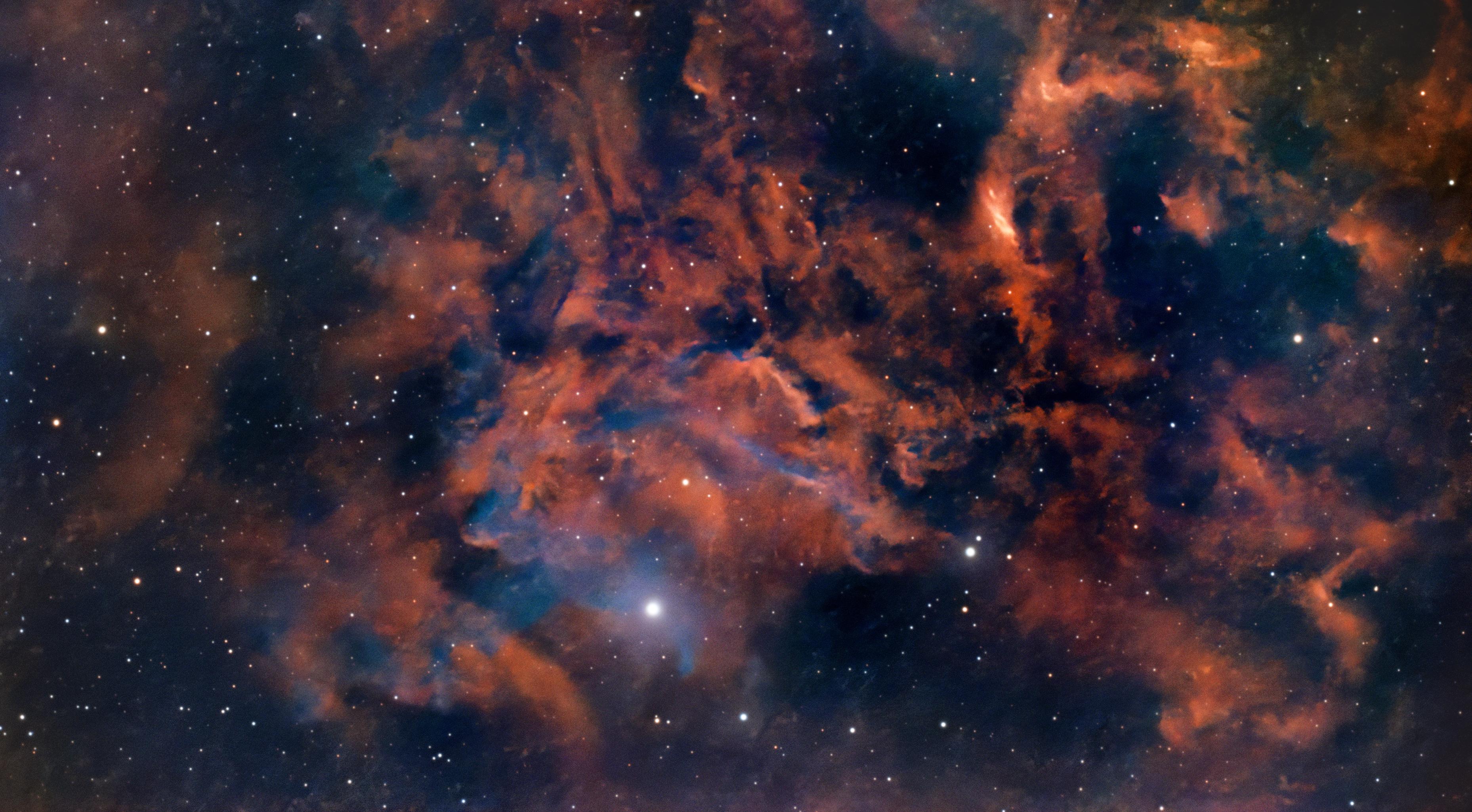

The Flaming Star and the Tadpoles
Blog: https://smilingj.net/article/2025-02-02-the-flaming-star-and-the-tadpoles
#astrophotography #flamingstarnebula #ic405 #ic410 #tadpolenebula #heq5pro #fra300pro #asi294mcpro

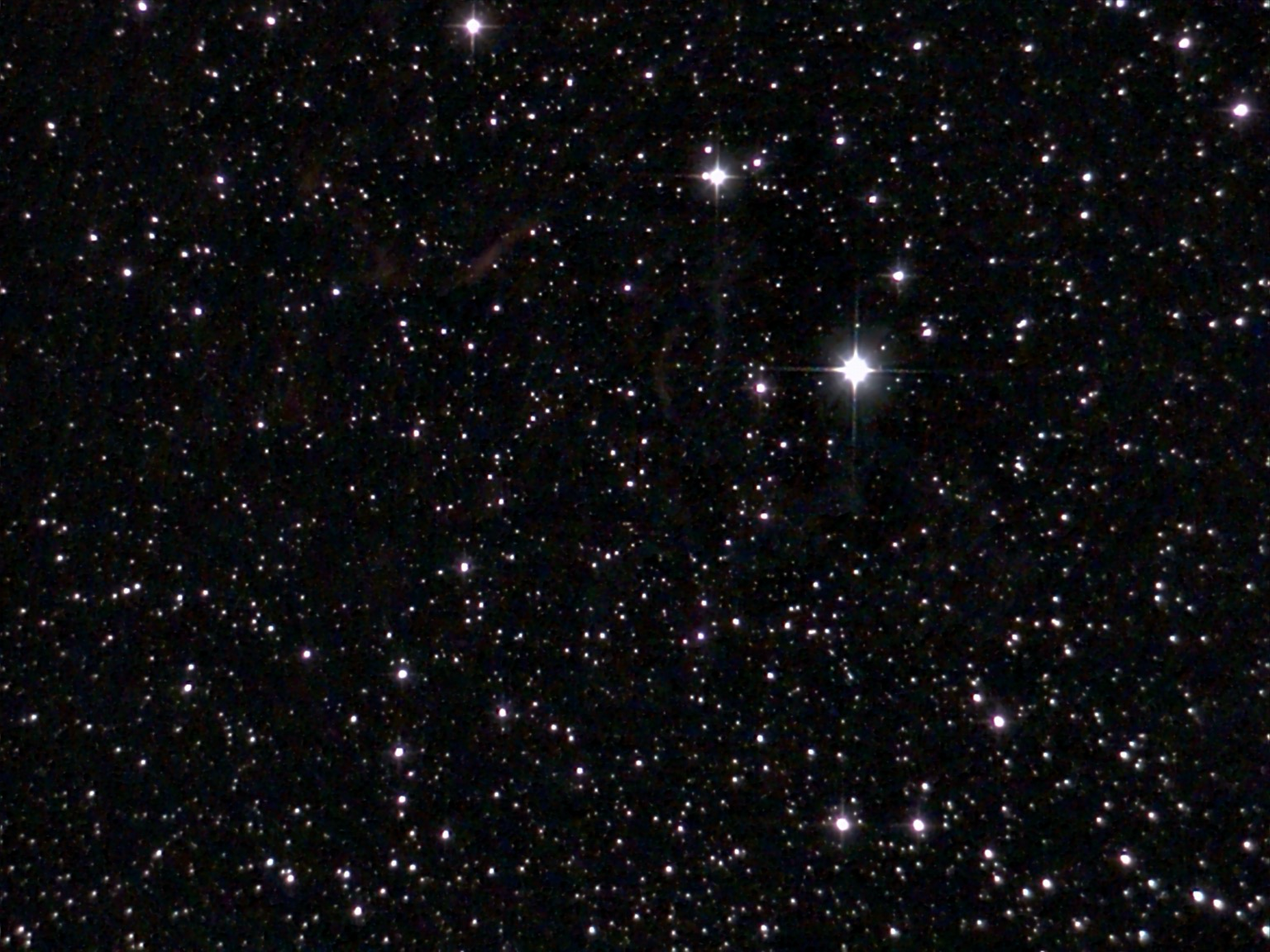
Adding the telescope processed image of the same area I was looking for the Flaming Star Nebula. 45 minutes exposure time. #unistellar #odysseypro #space #astronomy #amateur #flamingstarnebula #ic405
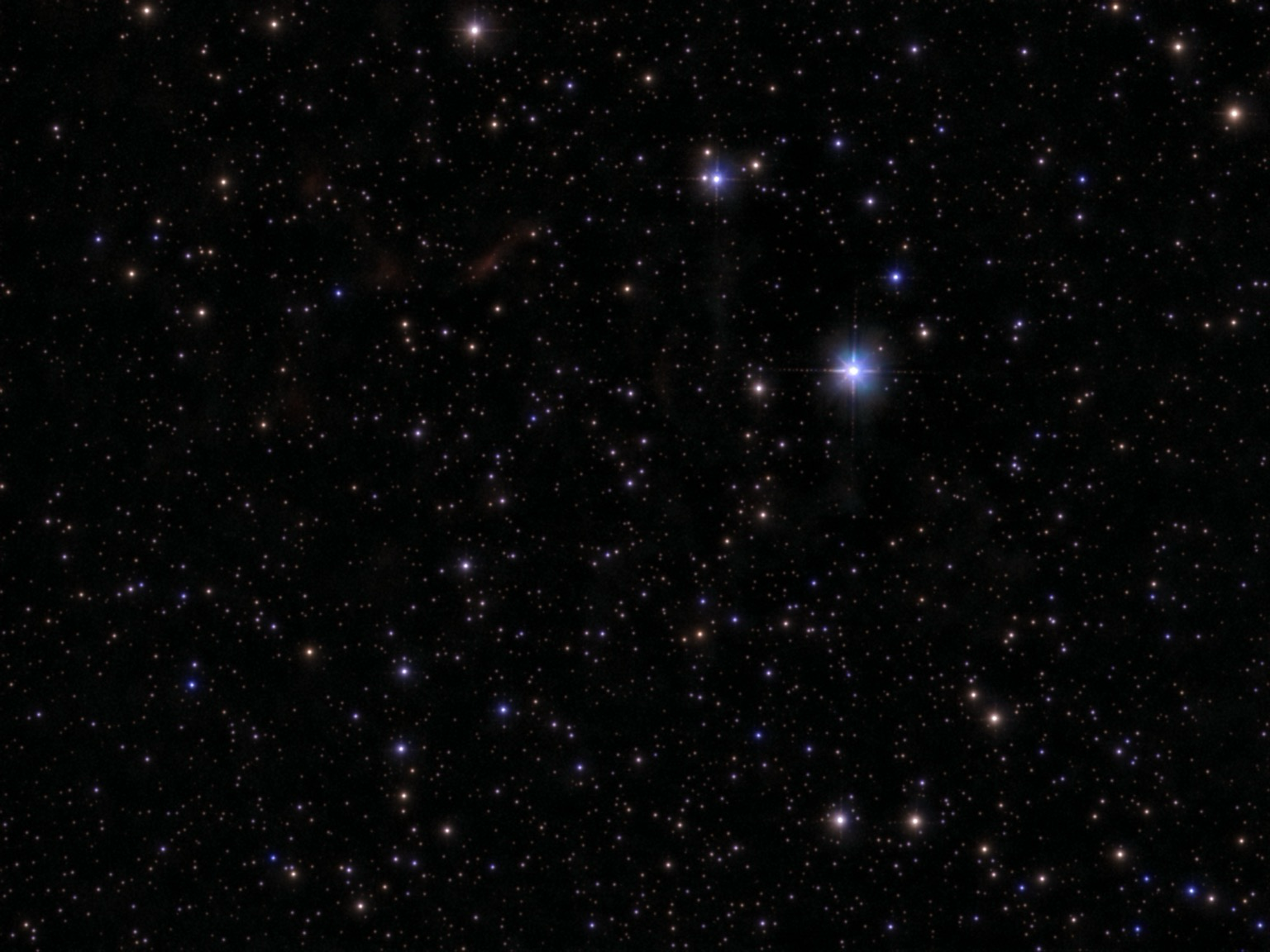
Decided to look for the Flaming Star Nebula IC 405. After 45 minutes exposure didn’t see much. I suspect that on the upper left side of the image you can see some of the nebula. The amazing part is just the amount of stars that are visible in this unprocessed image from the telescope. Just amazing. I am in a suburban Northern California and to the naked eye you can not see that many stars. #unistellar #odysseypro #space #astronomy #amateur #flamingstarnebula #ic405
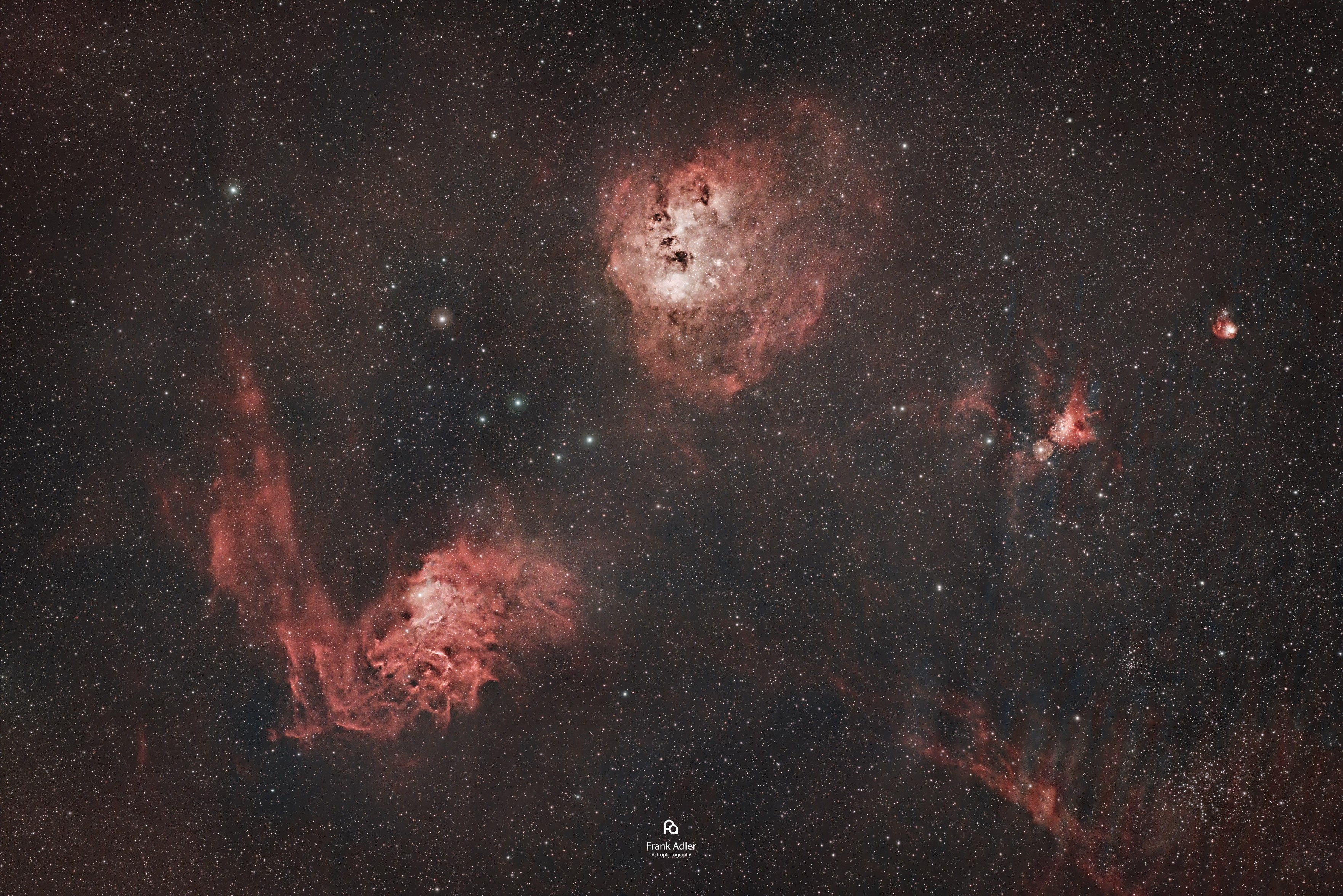
The flaming star nebula
==========================
I captured this image about a week ago and, while processing, had to find out that there‘s a huge white flare overlaying the whole image. Capturing deep sky at full moon is a bad idea already, but this time, I was too close to it and got a massive moon light leaking into my scope. The data went straight to trash. But I just had to try recovering it. So after a LOT of Photoshop trickery, I ended up with an acceptable image :)
Scope: Askar 103APO
Lens: Askar 0.6x Reducer
Camera: Canon EOS 6Da
Filter: Altair Tri-Band
Mount: Skywatcher AZ-EQ5-GT
Guiding: Svbony SV165 with ZWO ASI224MC
Controller: ZWO ASIAir Pro
Integration time: 6hrs 15min
Full version and print available at https://adfr.io
#astrophotography #astrophoto #narrowband #narrowbandimaging #deepsky #deepskyobjects #deepskyphotography #IC405 #IC410 #IC417 #M38 #NGC1893 #NGC1907 #NGC1931 #flamingstarnebula #widefield #nightsky #nightskyphotography #nightskyart
==========================
I captured this image about a week ago and, while processing, had to find out that there‘s a huge white flare overlaying the whole image. Capturing deep sky at full moon is a bad idea already, but this time, I was too close to it and got a massive moon light leaking into my scope. The data went straight to trash. But I just had to try recovering it. So after a LOT of Photoshop trickery, I ended up with an acceptable image :)
Scope: Askar 103APO
Lens: Askar 0.6x Reducer
Camera: Canon EOS 6Da
Filter: Altair Tri-Band
Mount: Skywatcher AZ-EQ5-GT
Guiding: Svbony SV165 with ZWO ASI224MC
Controller: ZWO ASIAir Pro
Integration time: 6hrs 15min
Full version and print available at https://adfr.io
#astrophotography #astrophoto #narrowband #narrowbandimaging #deepsky #deepskyobjects #deepskyphotography #IC405 #IC410 #IC417 #M38 #NGC1893 #NGC1907 #NGC1931 #flamingstarnebula #widefield #nightsky #nightskyphotography #nightskyart

Dieses Set hatte ich schon gelöscht - das massive Mondlicht hat die Aufnahme komplett überlagert. Aber ich konnte es doch nicht lassen und mit viel Arbeit ließ sich noch eine vorzeigbare Aufnahme herstellen.
Flaming Star Nebula
https://adfr.io/astro/20240120_ic405
#astrodon #astrophotography #astrophoto #narrowband #narrowbandimaging #deepsky #deepskyobjects #deepskyphotography #IC405 #IC410 #IC417 #M38 #NGC1893 #NGC1907 #NGC1931 #flamingstarnebula #widefield #nightsky #nightskyphotography #nightskyart
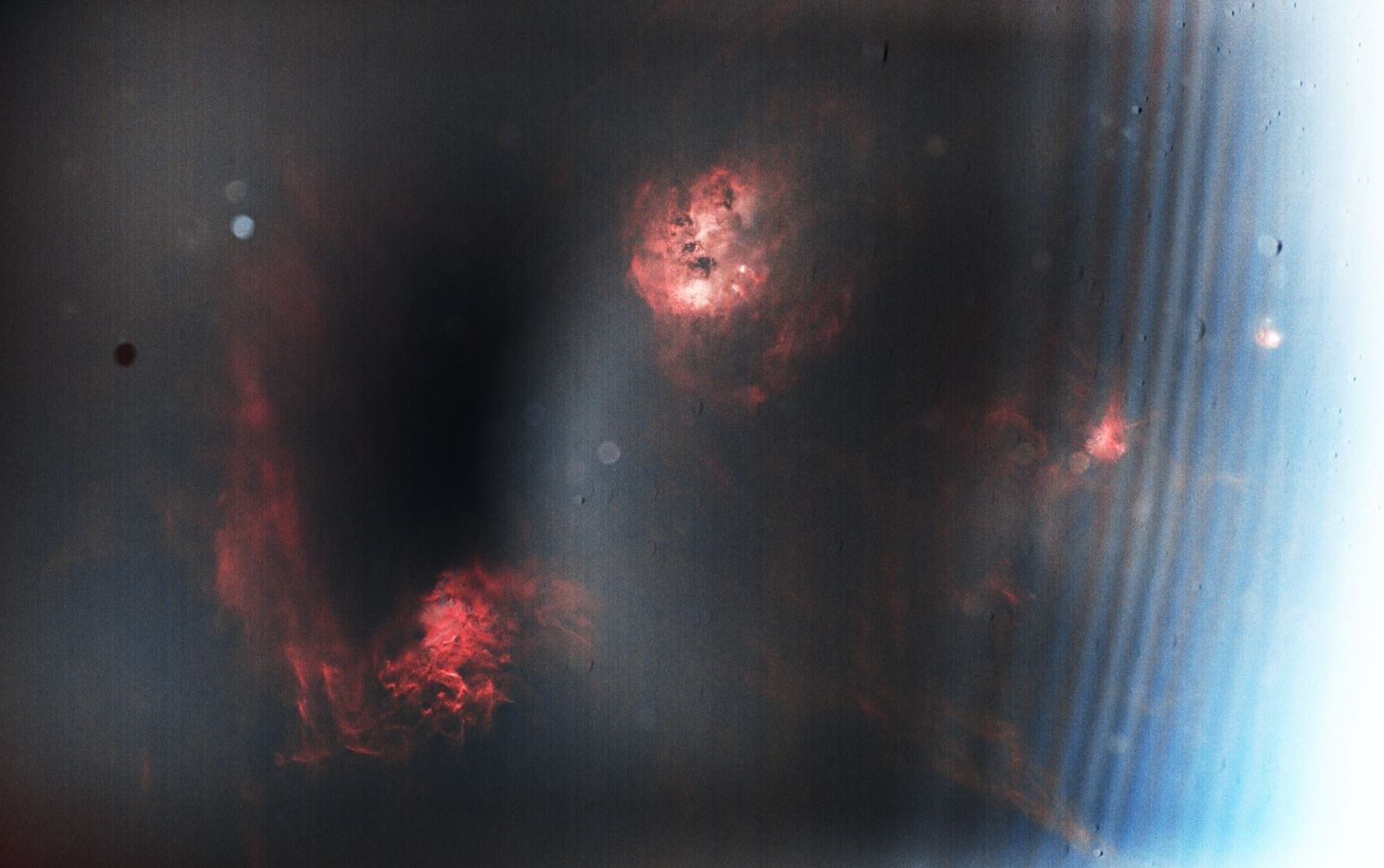

Finally was able to properly capture first light with my new cooled astrocam and wanted to immediately challenge its H-alpha performance.
I decided to go for IC 405 and IC 410 in one frame based on my field of view.
Shooting this was barely possible for me due to the full moon, but I wanted to use every minute without clouds anyways.
#astronomy #astrophotography #nebula #IC405 #IC410 #siril #photography

Reprocessing IC 405: The Flaming Star Nebula
Earlier this year I took a photograph of the Flaming Star Nebula. I had a hard time processing it. Now I have given it a second chance.
Blog: https://smilingj.net/article/2023-10-31-reprocessing-ic-405-the-flaming-star-ne
#astrophotography #flamingstarnebula #ic405 #heq5pro #130pds #asi294mcpro
IC 405: Flaming Star Nebula
My image of IC 405, the Flaming Star Nebula, was kind of a temporary project to kill some time until the Rosette Nebula rose above the neighboring house.
Blog: https://smilingj.net/blog/2023/01/2023-01-18_ic405.html
#astrophotography #ic405 #flamingstarnebula #flamingstar #heq5pro #130pds #asi294mcpro
Client Info
Server: https://mastodon.social
Version: 2025.07
Repository: https://github.com/cyevgeniy/lmst