#Osada

2026-02-18

Dramatická situácia nastala v rómskej osade v Lemešanoch, kde došlo k výbuchu plynovej fľaše v jednej z bytoviek. Udalosť si vyžiadala okamžitú evakuáciu obyvateľov. #bytovka #osada #výbuch #novinysk

noviny.sk/krimi/1172018-vybuch

Sascha Pallenberg 🇹🇼 ♻️ ⚡️sascha@pallenberg.video
2026-01-17

Lisa Osada von Aktiengram im Interview - MeTacheles-Talk #4

pallenberg.video/w/8jd3ckHYYxf

2025-11-20
@visionaire Ja.

Entweder Hubzilla > (2018) > Zap > (2020) Osada/Mistpark 2020/Redmatrix 2020 > (2021) Roadhouse > (streams).

Oder Hubzilla > (2018) > Osada > Zap > (2020) Osada/Mistpark 2020/Redmatrix 2020 > (2021) Roadhouse > (streams).

Es ist einfach in einigen Fällen nicht mehr nachzuvollziehen, was wovon geforkt worden ist.

2018 ist höchstwahrscheinlich erst das erste Osada von Hubzilla und dann Zap von Osada geforkt worden. Vielleicht sind aber auch das erste Osada und Zap in dieser Reihenfolge beide direkt von Hubzilla geforkt worden.

2020 entstanden drei bis auf Namen und Branding identische Forks, das dritte Osada, Mistpark 2020 und Redmatrix 2020. Mindestens einer davon ist von Zap geforkt worden. Aber welcher von Zap geforkt worden ist und welcher von welchem der jeweils anderen, ist heute nicht mehr in Erfahrung zu bringen.

Ebensowenig ist in Erfahrung zu bringen, von welchem von den dreien 2021 Roadhouse geforkt worden ist.

Fakt ist aber, daß zwischen Hubzilla und (streams) sechs weitere Serveranwendungen lagen, die alle inzwischen eingestellt sind. (streams) ist also alles andere als ein direkter Hubzilla-Fork.

#Long #LongPost #CWLong #CWLongPost #LangerPost #CWLangerPost #FediMeta #FediverseMeta #CWFediMeta #CWFediverseMeta #Hubzilla #Osada #Zap #Redmatrix2020 #Mistpark2020 #Misty #Roadhouse #Streams #(streams)
2025-11-02
@Gaming on the Fediverse That's quite a bit simplified. For one, four server applications and one protocol were lumped together. Besides, Zap is dead, and Forte isn't even mentioned.

So here's an attempt at telling the whole story (server applications are in bold type, protocols are in bold type and italics):

tl;dr:

2010:
  • DFRN
  • Mistpark/Friendika/Friendica
    (DFRN)
2011:
  • Zot
  • Free-Friendika
    (DFRN)
    (forked from Friendika)
  • several other Friendika forks
    (DFRN)
    (forked from Friendika)
    (discontinued 2011)
  • Red/Red Matrix
    (DFRN, from 2012 Zot)
    (forked from Free-Friendika)
    (rebuilt into Hubzilla 2015)
2015:
  • Hubzilla
    (Zot, later Zot6)
    (rebuilt from the Red Matrix)
2018:
    Zot6
  • Osada
    (Zot6)
    (forked from Hubzilla)
    (discontinued in 2018)
  • Zap
    (Zot6)
    (forked most likely from Osada, maybe from Hubzilla)
    (discontinued in 2022)
  • Osada
    (Zot6)
    (forked from Zap)
    (discontinued in 2019)
2020:
    Zot8
  • Redmatrix 2020
    (Zot8)
    (forked from either Zap or Mistpark 2020 or (the third) Osada)
    (discontinued in 2022)
  • Mistpark 2020 a.k.a. Misty
    (Zot8)
    (forked from either Zap or Redmatrix 2020 or (the third) Osada)
    (discontinued in 2022)
  • Osada
    (Zot8)
    (forked from either Zap or Redmatrix 2020 or Mistpark 2020)
    (discontinued in 2022)
2022:
  • Nomad
    (originally Zot11)
  • Roadhouse
    (Nomad)
    (forked from either Redmatrix 2020 or Mistpark 2020 or (the third) Osada)
    (discontinued in 2022)
  • (streams)
    (Nomad)
    (forked from Roadhouse)
2024:
Forte
(ActivityPub)
(forked from (streams))[/list]
So as far as Fediverse server applications go, he created Friendica, Free-Friendika, a few more Friendika forks, the Red Matrix, Hubzilla, three Osadas, Zap, Redmatrix 2020, Mistpark 2020, Roadhouse, (streams) and Forte. Depending on how you want to count them, that's at least 13 or 14 server applications. Four of these are still being maintained (Friendica by a new team, Hubzilla by another new team, (streams) and Forte by himself).

The long version:

In 2010, he created
  • the DFRN protocol
  • Mistpark (renamed first into Friendika later in 2010 and then into Friendica in 2011)

In 2011, he made several forks of Friendika. The reason was licensing: Friendika was getting quite some attention. As it was under the MIT license, chances were that it was tempting to fork it and turn the fork into a commercial, proprietary, closed-source monolith or something. On the other hand, the GPL in any shape or form would have hindered further development.

So Mike made a number of forks and relicensed all but one: Free-Friendika kept the MIT license and became the main development platform for Friendika. Friendika itself was relicensed under the AGPLv3.

Shortly afterwards, Mike discontinued all forks except Free-Friendika.

The same year, Mike needed something to keep people from losing everything whenever their Friendika home node was shut down. So he invented nomadic identity and created the Zot protocol.

Also the same year, Mike forked Free-Friendika into Red (spanish la red = the network). It would be renamed Red Matrix in late 2012 because "Red" is hard to Google.

In 2012, Mike rewrote Red almost completely. The whole backend was rebuilt against Zot.

However, the Red Matrix didn't take off. Most Friendica users were hosting their own private nodes. Nomadic identity made no sense for them. Besides, it seemed like many Friendica users didn't understand nomadic identity anyway, so they saw no advantage in the Red Matrix over Friendica, seeing as the features were almost identical otherwise. The Red Matrix had to be made more popular for hosting public servers.

So in 2015, the Red Matrix was rebuilt and greatly expanded into Hubzilla.

In 2018, Mike wanted to develop the Zot protocol further into Zot6. But this would have meant compatibility-breaking changes, also because what he wanted to do with nomadic identity over Zot6 was likely to not work with non-nomadic protocols anymore. So he couldn't do that on Hubzilla.

Instead, he made two new forks:
  • first Osada, forked from Hubzilla, which was the original Zot6 development platform and then evolved into a non-nomadic "gateway" between Zot6 and everything else
  • then Zap, forked most likely from Osada or maybe from Hubzilla, which got the whole Zot6 feature set, including nomadic identity, but which lost support for any and all non-nomadic protocols

A bit later, Zot6 became compatible enough with non-nomadic protocols. Forwarding content from Zap via Osada to the rest of the Fediverse was clunky anyway, forwarding content from the rest of the Fediverse via Osada to Zap even more so. So Osada was discontinued.

Instead, a new Osada was forked from Zap and got ActivityPub support. This and the branding were the only differences between Osada and Zap.

In 2019, when both Osada and Zap had become stable, Zap got ActivityPub support itself. The only difference between the two was now that Osada servers had ActivityPub turned on by default, and Zap servers had it turned off by default. It simply didn't make much sense to keep both alive, so Osada was discontinued again.

I think it was also in 2019 that Hubzilla was upgraded to Zot6.

In 2020, Mike made three more forks to develop Zot8, at least one of which was forked from Zap, and those that weren't were forked from one another: Redmatrix 2020, Mistpark 2020 a.k.a. Misty and Osada.

There was a rumour that Zap was the stable one, Misty was a bit more up-to-date, but potentially less stable, Osada was experimental with ActivityPub support on by default, and Redmatrix 2020 was experimental with ActivityPub support off by default. In fact, however, Misty, Osada and Redmatrix 2020 were absolutely identical in all but branding. Mike kept four server applications around to mess with brand fetishists.

In 2022, Mike forked one of the three into Roadhouse to develop Zot11. But Zot11 was no longer compatible with Zot6 as implemented on Hubzilla and Zap, so he declared it a new protocol named Nomad. Roadhouse got additional support for Zot6.

Now Mike had five server applications, still in order to mess with brand fetishists.

Later the same year, Mike forked Roadhouse into something intentionally nameless and brandless. Again, this was done to troll brand fetishists, this time also to facilitate forking and make people think up their own individual names for the fork rather than keeping the existing one. However, the code repository absolutely required a name, so Mike called it streams.

The community needed something to name this nameless thing by, so they took the name of the repository and wrapped it in parentheses to make sure that this is not actually the name. Ever since, it is colloquially being called (streams). By the way, (streams) is running on what would be Zot12 if it wasn't Nomad now.

On New Year's Eve 2022, Mike discontinued Zap, Redmatrix 2020, Misty, Osada and Roadhouse. (streams) was stable enough, and the other five could be upgraded not only to each other by rebasing the server code, but also to (streams). He asked all admins of Zap, Redmatrix 2020, Misty, Osada and Roadhouse servers to upgrade to (streams).

In 2024, (streams) got bogged down by some identity confusion after the stable release branch introduced decentralised IDs as per FEP-ef61, a part of the development of nomadic identity via ActivityPub. Partially in order to be able to sort this out, partially because the time seemed to have come for this to actually work, Mike forked the streams repository into Forte and removed all support for any protocols other than ActivityPub while still keeping it nomadic. And so Forte became the very first Fediverse server application that establishes nomadic identity via ActivityPub.

#Long #LongPost #CWLong #CWLongPost #FediMeta #FediverseMeta #CWFediMeta #CWFediverseMeta #DFRN #Zot #Zot6 #Zot8 #Nomad #Mistpark #Friendika #FreeFriendika #Friendica #Red #RedMatrix #Hubzilla #Osada #Zap #Redmatrix2020 #Mistpark2020 #Misty #Roadhouse #Streams #(streams) #Forte
2025-10-08
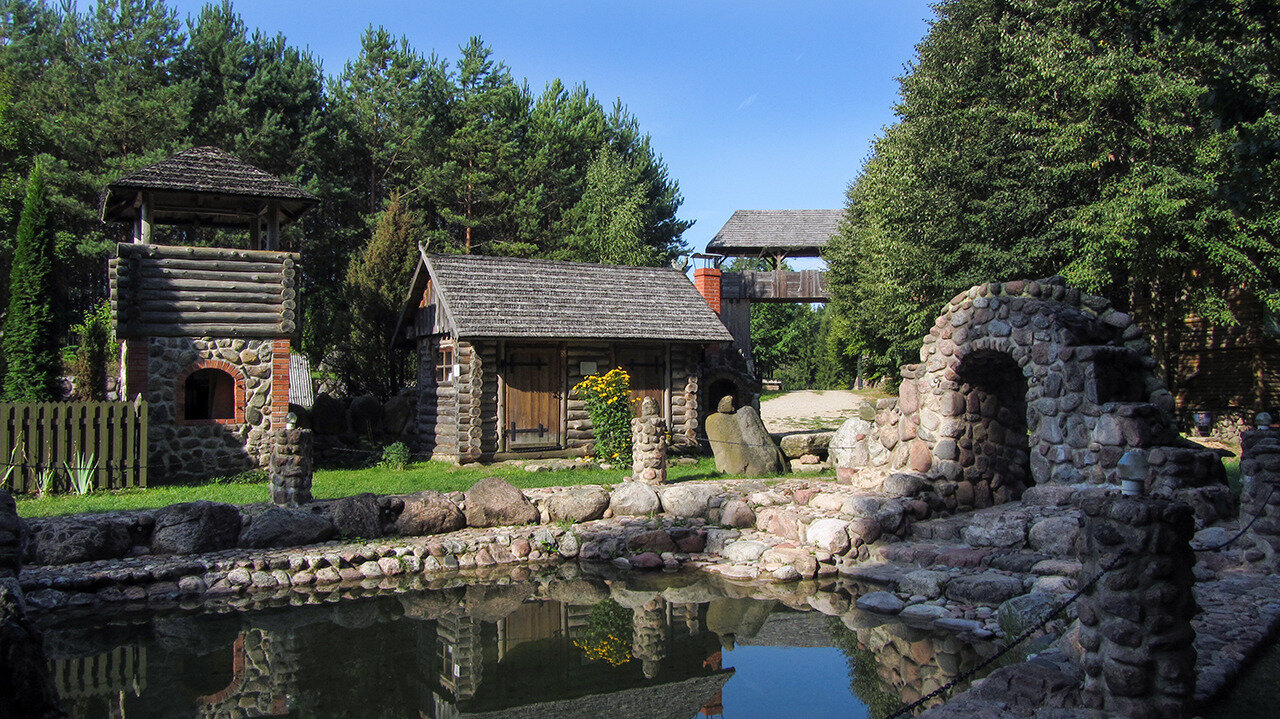
Yotvingian-Prussian Settlement, Oszkinie, Poland (part 4 of 4)

In the settlement, you can experience a unique atmosphere of silence and birdsong, which enhances the feeling of connection with the past and nature.

Various activities are also organized here: archery, javelin and axe throwing, horseback riding (including on the rare Samogitian breed), and the possibility of overnight stays in spartan conditions without electricity, allowing you to be transported back in time.

#oszkinie #osada #prusy #jacwingowie #litwini #litwa #polska #architektura #architekturadrewniana #settlement #prussia #yotvingians #lithuanians #lithuania #poland #architecture #osadajacwieskopruska
2025-10-05
Yotvingian-Prussian Settlement, Oszkinie, Poland (part 3 of 4)

In the settlement, you can see places of worship, such as a stone ritual pool and a sacred grove where the Yotvingians made offerings from the gifts of nature.

The Yotvingian-Prussian settlement in Oszkinie is also famous for its Alley of Stones. Mr. Piotr commissioned the carving of images and names of Yotvingian and Prussian tribe leaders on the enormous boulders.

Walking among the trees and symbolic stones, you can imagine the bond that connected these people with nature and its forces.

#oszkinie #punsk #osada #prusy #jacwingowie #litwini #litwa #polska #settlement #prussia #yotvingians #lithuanians #lithuania #poland #YotvingianPrussianSettlement #forest #las #stone #ritual #elements
2025-10-01
Yotvingian-Prussian Settlement, Oszkinie, Poland (part 2 of 4)

The entire complex covers almost 8 hectares, and its attractions are diverse. A ritual stone pool, a reconstructed 11th-century Prussian stronghold, and temples of the elements are just some of them. Visitors can learn about Yotvingian and Prussian symbolism, beliefs, and customs.

A footbridge with three shelters spans the pond. A path leads across it to an observation tower.

#oszkinie #punsk #osada #prusy #jacwingowie #litwini #litwa #polska #krzyzacy #architektura #architekturadrewniana #settlement #prussia #yotvingians #lithuanians #lithuania #poland #crusaders #architecture #woodenarchitecture #teutonicorder #teutonicknights #YotvingianPrussianSettlement
2025-09-28
Yotvingian-Prussian Settlement, Oszkinie, Poland (part 1 of 4)

The Yotvingians were one of the Baltic peoples (Balts) who inhabited the present Suwałki Region in the Middle Ages. These were the areas from Lake Wiżajny in the north to the Biebrza Valley in the south, from the eastern strip of the Great Masurian Lakes in the west to the Neman in the east.

The Yotvingians, along with the Prussians and Lithuanians, shared the fate of pagan tribes against whom Ruthenians, Poles and Teutonic Knights fought in the name (or rather under the pretext) of Christianization. The latter were famous for organizing so-called raids, or armed expeditions against pagan peoples (mainly Prussians and Lithuanians). The aim of these expeditions was plunder and… good fun. In addition to the Teutonic Knights, knights from Western Europe willingly participated in the raids, and the Order… operated like a well-organized travel agency offering entertainment and charging a large fee for participation.

The Yotvingian-Prussian settlement is located near Puńsk. It was founded by Petras Lukosevicius, who feels first and foremost a Prussian, then a Yotvingian, and finally a Lithuanian.

#oszkinie #punsk #osada #prusy #jacwingowie #litwini #litwa #polska #krzyzacy #architektura #architekturadrewniana #settlement #prussia #yotvingians #lithuanians #lithuania #poland #crusaders #architecture #woodenarchitecture #teutonicorder #teutonicknights #YotvingianPrussianSettlement
2025-08-29
@Thomas Eibich aka DK2NB
Bauen die Workshops aufeinander auf oder kann man auch einfach so mal vorbei kommen?

Wir haben jedes Mal Leute dabei, die zum ersten Mal bei der Sprechstunde sind und häufig auch erst seit kurzem überhaupt im Fediverse. Das ist also kein Problem. Und da baut auch nichts aufeinander auf.

Was ist Hubzilla?

Oh, da muß ich weit ausholen. (Ich kommentiere übrigens gerade von Hubzilla.)

Hubzilla ist das absolute, ultimative Featuremonster im Fediverse. Eine Art Alleskönner, der Features hat, die für die allermeisten Fediverse-Nutzer im Fediverse völlig unvorstellbar sind, aber auch Features, die sich viele im Fediverse wünschen. Wohlgemerkt, ohne zu wissen, daß es diese Features im Fediverse längst gibt.

Hubzilla ist im Prinzip "Facebook trifft WordPress trifft Google Cloud Services trifft noch mehr Zeug" im Fediverse, und es kann mit wenigen Mausklicks aufgebohrt werden zu "Facebook trifft WordPress trifft Google Cloud Services trifft Joplin trifft GeoCities trifft <irgendeine Wiki-Engine hier einsetzen> trifft noch mehr Zeug" im Fediverse. Ja, GeoCities. Man kann buchstäblich Webseiten auf Hubzilla aufbauen.

Hier sind ein paar Links:

Hubzilla ist übrigens älter als Mastodon.

Hubzillas Vater ist @Mike McCue , ein pensionierter professioneller Software-Entwickler mit fast einem halben Jahrhundert an Erfahrung. Der hat schon 2010, noch vor dem in dem Sommer in den Himmel gehypeten diaspora*, eine extrem vielseitige und extrem leistungsfähige freie, quelloffene, dezentrale Facebook-Alternative gestartet, die ursprünglich Mistpark hieß und heute als Friendica bekannt ist. Die gibt's heute hoch, sie ist Teil des Fediverse, und sie ist mit Mastodon föderiert, seit es Mastodon gibt.

Friendica ist kein Facebook-Klon, sondern eine Facebook-Alternative, die grundsätzlich dieselbe Funktion haben soll wie Facebook, aber besser als Facebook ist. Friendica kann nebenher auch genutzt werden als vollwertiges Blogging-System mit allen Schikanen: Titel, Zusammenfassung, Kategorien, alles Mögliche an Textformatierung, beliebig viele Bilder mitten im Text eingebettet, über 16 Millionen Zeichen.

Friendica wurde aufgebaut auf seinem eigenen Protokoll namens DFRN. Aber ein Killerfeature von Friendica war schon immer, daß es sich in alle möglichen und unmöglichen anderen Richtungen verbinden kann: Fediverse, diaspora*, Tumblr, WordPress, sogar Twitter, ein paar Jahre sogar Facebook und so weiter.

So ganz zufrieden war er damit aber nicht. Ein großes Problem war nämlich, daß jedes Mal, wenn ein öffentlicher Friendica-Node dichtmachte, die Nutzer alles verloren. Auf die Lösung kam er 2011: nomadische Identität, also die Möglichkeit, die eigene Social-Networking-Identität gleichzeitig voll synchron auf mehreren Servern zu haben.

Dafür entwickelte er ab 2011 ein neues Protokoll names Zot, das genau diese Funktion bieten sollte. Um es zu implementieren, forkte Mike noch 2011 einen Friendica-Fork, den er im selben Jahr erstellt hatte, um mit verschiedenen Lizenzen zu experimentieren. (Deswegen steht Friendica heute unter der AGPLv3 und die meisten seiner "Nachfahren" weiterhin unter der MIT-Lizenz.)

So entstand etwas namens "Red" (von spanisch "la red" = "das Netzwerk"). 2012 wurde es komplett neu geschrieben gegen das Zot-Protokoll. Das war der eigentliche Startschuß für Hubzilla. Damals gab Mike übrigens Friendica (das inzwischen auf die AGPLv3 relizensierte Original) an die Community ab. Ende 2012 wurde Red umbenannt in "Red Matrix", weil man "Red" nicht googlen kann.

Allerdings wurde die Red Matrix kaum angenommen, weil sie im Grunde Friendica mit vielleicht ein oder zwei weniger Verbindungsmöglichkeiten und nomadischer Identität war. Die meisten verstanden nomadische Identität aber gar nicht, und von denen, die sie verstanden, glaubten viele, sie gar nicht zu brauchen, weil sie eh ihr Friendica-Konto auf ihrem eigenen Node hatten.

So gab es dann im März 2015 den Schnitt. Mike und seine Mitstreiter aus der Community nahmen die Red Matrix und strickten sie um für neue Zielgruppen, insbesondere Betreiber öffentlicher Server. Dafür wurden haufenweise neue, teilweise optionale Features drangebaut: WebDAV für den eingebauten Filespace, ein CalDAV-Server, der das Frontend des Eventkalenders mitnutzt, ein CardDAV-Server, nichtföderierende Artikel, Planungskarten, Wikis, Webseiten usw. usf. Und das Ganze wurde umbenannt in Hubzilla.

Wir sind übrigens immer noch zehn Monate vor dem Start von Mastodon.

Standardmäßig föderiert Hubzilla nur über sein eigenes Zot-Protokoll. Es unterstützt immer noch einiges an nichtnomadischen Protokollen und Verbindungen, aber alles, was nichtnomadisch und bidirektional ist, ist optional und standardmäßig deaktiviert, muß also in einem neuen Kanal erst aktiviert werden. Darunter fällt auch ActivityPub, das Hubzilla seit Juli 2017 als allererste Software überhaupt implementiert hat, zwei Monate noch vor Mastodon.

Damit war aber das Ende der Fahnenstange noch nicht erreicht.

Mike wollte das Zot-Protokoll noch weiter entwickeln, und zwar auf Arten und Weisen, die möglicherweise die Kompatibilität beeinträchtigten. Das konnte er nicht auf Hubzilla selbst machen.

Also gab er 2018 Hubzilla ab an zwei Entwickler aus der Community und forkte es. Erst kam Osada, das wohl zunächst als Entwicklungsplattform für Zot6 dienen sollte, aber trotzdem noch die meisten von Hubzillas Verbindungsmöglichkeiten hatte. Bei Osada wurde übrigens fast alles wieder entfernt, was beim Umbau von der Red Matrix zu Hubzilla dazugekommen war.

Wie es aber zunächst aussah, würde Zot6 nicht mit nichtnomadischen Protokollen zusammenspielen können. So entstand als zweiter Fork Zap; ich glaube heute, Zap war ein Fork von Osada und nicht von Hubzilla. Jedenfalls behielt Osada die ganzen Verbindungsmöglichkeiten, verlor aber nomadische Identitäten. Zap wiederum blieb nomadisch, unterstützte aber nur Zot6.

Schließlich stellte sich heraus: Zot6 konnte sehr wohl mit nichtnomadischen Protokollen zusammenspielen. Also wurde Osada, wie es war, Anfang 2019 eingestampft. Die Idee, einen Osada-Kanal als Gateway zwischen Zap und dem Rest des Fediverse zu haben, war sowieso gaga und wenig praktikabel. Dafür wurde von Zap kurz darauf ein zweites Osada geforkt, das sich zumindest wieder mit ActivityPub verbinden konnte. Das war zunächst der einzige Unterschied zwischen Osada und Zap.

Im Laufe des Jahres wurden Osada und Zap stabil. Das heißt auch, Osada war so stabil, daß es keinen Grund mehr gab, warum Zap kein ActivityPub können sollte. Kurz darauf war der einzige Unterschied zwischen Osada und Zap neben dem Branding, daß auf Osada-Servern ActivityPub standardmäßig aktiviert und auf Zap-Servern standardmäßig deaktiviert war. Weil auch das Käse war und nur unnötigen Mehraufwand in der Entwicklung mit sich brachte, wurde das zweite Osada im Herbst 2019 komplett in Zap gemerget und eingestellt.

Weil Zap jetzt aber ein stabiler Daily Driver war, brauchte Mike wieder neue Entwicklungsplattformen für Zot8. Dafür wurden 2020 ein drittes Osada, Mistpark 2020 (alias Misty) und Redmatrix 2020 geforkt. Es gab das Gerücht, daß sie verschiedene Stabilitätsstufen darstellten. Tatsächlich waren sie bis auf das Branding identisch, und es waren deshalb drei, weil Mike damit die Markenfetischisten im Fediverse trollen wollte.

Einen stabilen Release mit Zot8 gab es nie. Statt dessen kam im Frühjahr 2021 Roadhouse dazu als Fork von einem von den dreien. Das basierte eigentlich schon auf Zot11, aber Zot11 war zu Zot6 in keinster Weise mehr kompatibel. Also entschied sich Mike, das Protokoll in Nomad umzubenennen. Heute sagt Mike, alle Versionen des Protokolls heißen jetzt Nomad; die Hubzilla-Entwickler widersprechen ihm aber und sagen, Zot6 ist immer noch Zot.

Jetzt hatte Mike fünf Projekte, die unterschiedliche Protokollversionen nutzte, ansonsten aber dasselbe konnten und fast dasselbe UI hatten.

Up- und Crossgrades gingen übrigens ganz einfach, in dem die Codebase des Servers umgestellt wurde. Man konnte von Zap nach Osada, Misty und Redmatrix 2020 upgraden. Man konnte zumindest zwischen Osada, Misty und Redmatrix 2020 hin und her crossgraden. Und man konnte von allen vieren nach Roadhouse upgraden.

Im Oktober 2011 forkte Mike Roadhouse in wieder etwas Neues. Dieses Mal ging er in eine ganz andere Richtung: Was er jetzt erschaffen hatte, hatte keinen Namen. Es hatte kein Logo. Es hatte keine Markenidentität. Es war auch kein Projekt mehr. Alles mit voller Absicht und sehr gut begründet. Noch dazu nahm er sogar die MIT-Lizenz weg und stellte es direktweg in die Public Domain. Damit wollte er noch größere Anreize für Entwickler schaffen, es zu forken, um daraus etwas Eigenes zu bauen.

Das Code-Repository brauchte aber zwingend einen Namen. Also wurde es "streams" genannt (ein Stream ist von Friendica bis heute das, was auf Twitter ein Feed und auf Mastodon eine Timeline ist). Weil nun aber die Community etwas brauchte, womit sie diese neue Software bezeichnen konnte, nahm sie den Namen des Repository und packten ihn in Klammern, um klarzustellen, daß das nicht der Name der Software war. Seitdem wird es seitens der Community "(streams)" genannt.

Von Zap, Osada, Misty, Redmatrix 2020 und Roadhouse konnte durch Rebasen auf (streams) geupgradet werden. Weil (streams) selbst aber keinen Namen, kein Branding und nicht mal einen festgelegten Identifier für den Servertyp hat, übernahm es kurzerhand den Server-Identifier und das Logo von der vorherigen Software. Ich habe selbst mal einen (streams)-Server gesehen, der mit Zap angefangen hatte (wie aus der Subdomain hervorging) und zwischendurch mal Misty war (weil er als Misty gebrandet war), aber vom UI und von der Softwareversion her eindeutig (streams) war.

Zum Silvesterabend 2020 stellte Mike dann Zap, Osada, Misty, Redmatrix 2020 und Roadhouse ein. Wer noch einen Server betrieb, dem war dazu geraten, auf (streams) upzugraden.

(streams) wird heute noch von Mike weiterentwickelt. An Verbindungsmöglichkeiten hat es neben Nomad auch Hubzillas Zot6 und optional, aber standardmäßig aktiviert ActivityPub. Sogar RSS- und Atom-Feeds werden nicht mehr unterstützt, um den Entwicklungsaufwand zu reduzieren.

Der letzte Fork kam im August 2024. Mike war ja damals einer der beiden Entwickler, die an nomadischer Identität über ActivityPub arbeiteten. Im Zuge dieser Entwicklung rollte Mike Portable Objects nach FEP-ef61 im Juni vom "nomadischen" Zweig von (streams) in den hauptsächlichen Entwicklungszweig und im Juli von da in den stabilen Zweig aus. Was im Labor aber funktioniert hatte, sorgte im täglichen Einsatz für Chaos, weil (streams) zuviele verschiedene Identitäten zu jonglieren hatte.

Also forkte Mike (streams) im August zu Forte, entfernte jegliche Unterstützung für Nomad und Zot6 und basierte das ganze Ding komplett auf ActivityPub, und zwar inklusive nomadischer Identität. Das dürfte hauptsächlich passiert sein, um die Nomad- und Zot6-Identitäten loswerden zu können, um das Chaos sichten zu können, aber auch, weil nomadische Identität über ActivityPub die Zukunft sein soll.

Zum 31. August warf Mike erst alle Brocken hin und wollte mit Entwicklung aufhören, weil das alles ein Riesenaufwand war. Er machte aber trotzdem weiter, weil sich in der winzigen (streams)-Community niemand fand, der (streams) und das noch instabile Forte hätte übernehmen können.

Im September wurde erstmals ein Post von Forte durch das öffentliche Fediverse föderiert. Von da an gab es die ersten, die mit ihren eigenen Forte-Servern experimentierten. Und im März 2025 erklärte Mike Forte offiziell für stabil. (streams) lebt aber weiter, denn sein Killerfeature gegenüber Forte ist, daß es ActivityPub nicht braucht. Man kann es also als Zugbrücke verwenden, um das ganze ActivityPub-basierte Fediverse auf einen Schlag auszusperren.

#Long #LongPost #CWLong #CWLongPost #LangerPost #CWLangerPost #FediMeta #FediverseMeta #CWFediMeta #CWFediverseMeta #Fediverse #ActivityPub #Zot #Zot6 #Nomad #Mistpark #Friendica #Red #RedMatrix #Hubzilla #Osada #Zap #Mistpark2020 #Misty #Redmatrix2020 #Roadhouse #Streams #(streams) #Forte
2025-02-07
@prex Sit down, get a snack and a drink, for this will be long.

I wish someone made the federated G+

"The federated G+" was literally made before Google+ itself.

diaspora*


Have you ever heard of diaspora*?

If not, let me take you back to 2010. Back then, it first came out that Facebook was spying on its users and selling their private data. In spring, four students asked for $12,000 of crowdfunding for an ambitious project: a free, open-source, non-commercial, non-corporate, decentralised alternative to Facebook named diaspora*.

The word spread like wild fire. Tech media jumped upon it. Non-tech mass media jumped upon it. These four guys were about to develop a Facebook killer! Of the requested $12,000, they got over $200,000.

They started working in May, 2010. In October, they presented a first very early alpha version of diaspora* that could only run on Macs as servers. It would take the likely suicide of the project founder, the replacement of the whole development team and several years to even release a first beta. To this day, diaspora* did not have a 1.0 stable release.

In general, diaspora* did not become the huge, super-popular Facebook killer. It always remained obscure.

Google+


Then came Google. They saw that people wanted to move away from Facebook, but they thought they had nowhere to go. And Google wanted to exploit the self-same source of income as Facebook. So they launched Google+.

Google+ was a blatant, full-on, all-out rip-off of diaspora*. The circles that almost everyone "knows" were invented by Google? diaspora*'s aspects, stolen by Google. Google's entire new corporate UI design with the black navigation bar at the top? diaspora*'s design.

Like, cirlces? So ahead of its times!


Again: diaspora* had Google+'s circles before Google+ had circles. diaspora* has aspects, and Google stole them and named them circles.

Google got away with it easily. Nobody knew diaspora*. Nobody knew what diaspora* looks like. And diaspora* itself had other things to take care of than a multi-billion-dollar lawsuit against a power-mongering Silicon Valley teracorporation or even a C&D against Google.

The slow death of diaspora*


But seriously, diaspora* isn't worth looking at nowadays. It may have released a 0.9 beta last year, skipping 0.8 altogether. But it's withering away.

Shortly before New Year's Eve 2024, three major diaspora* pods shut down. According to one statistics website, diaspora* lost more than half its user accounts within three days. For April 1st, 2025, the shutdown of diasp.org, one of the biggest and most important pods, has been announced. JoinDiaspora, the old lighthouse pod, has been gone for quite a while now.

But diaspora*'s issues lie not only in its slow development, but also in its design decisions. It's beautiful, but it's minimalist to the point of being lack-lustre. Also, diaspora* does not support ActivityPub and never will. It only supports its own protocol. The developers have explicitly decided against supporting ActivityPub because Fediverse projects don't "implement ActivityPub", they "implement Mastodon". This, however, also means that diaspora* cannot connect to most of the Fediverse by far.

Friendica


But: There's even better than diaspora* and Google+ that's free, open-source, decentralised and federated. And it was there before Google+. I'm not kidding.

Remember, it took four students, $200,000 of crowd-funding and five months (May to October, 2010) to create a first, very unfinished preview of diaspora*.

But the same year, it took one developer and protocol designer with some three decades of experience (@Mike Macgirvin 🖥️), zero crowd-funding and only four months (March to July, 2010) to create a first, very fleshed-out and useable release of something initially called Mistpark.

At this point, when the four diaspora* creators were still tinkering, Mistpark was already more powerful than both diaspora* and Mastodon are today. It already had everything a social network needs. It had diaspora*'s aspects before diaspora* had aspects and long before Google+ had circles; only it called them lists. And Mistpark's lists were diaspora*'s aspects and Google+'s circles on coke.

Since early 2012, Mistpark has been known as Friendica (official website). Since mid-January, 2025, it is the primary go-to alternative to Facebook in the Fediverse. And it has continuously been fully federated with Mastodon for as long as Mastodon has been around. Since January, 2016. Again, I'm not kidding.

Friendica's descendants


But Mike didn't stop there. He went on and improved the same concept further and further by forking his own creations and advancing them technologically.

In 2011, he invented the concept of nomadic identity (something that Bluesky claims to have invented much later, but has yet to prove to be functional) to make identites more resilient against server shutdown, and he created another all-new communication protocol named Zot (today known as Nomad) for that purpose.

In 2012, he handed Friendica over to the community and forked it into something called Red, later the Red Matrix. It was the first not only decentralised, but nomadic social server application in the world. In 2015, it was redesigned, vastly expanded in features and renamed Hubzilla (official website).

To this day, Hubzilla is the one most powerful and feature-rich Fediverse server application. It is not a vague concept or in early development; instead, it has been a rock-solid multi-purpose daily driver for longer than Mastodon has been around.

Another one of its key features is what's the second-most advanced and fine-grained permissions system in the Fediverse, something that Mastodon doesn't have at all. Its privacy groups are diaspora*'s aspects or Google+'s circles on coke and 'roids because you can do things with them that are impossible even on Friendica, much less diaspora* or Google+, not to mention what Mastodon calls lists. They aren't called privacy groups for nothing.

In 2018, Mike handed the development of Hubzilla over to the community to concentrate on the further advancement of Zot. This led to:
  • Osada (2018, discontinued in 2019)
  • Zap (2018, discontinued in 2022)
  • another Osada (2019, discontinued later in 2019)
  • yet another Osada (2020, discontinued in 2022)
  • Redmatrix 2020 (2020, discontinued in 2022)
  • Mistpark 2020 a.k.a. Misty (2020, discontinued in 2022)
  • Roadhouse (2021, discontinued in 2022)
  • (streams) (code repository, 2021)
  • Forte (code repository, 2024)

Except for the first Osada, all of them were or still are nomadic. Except for Zap until some point in 2019, all of them supported or still support ActivityPub. And they all had or still have an advanced permissions system which, at least on (streams) and Forte, even slightly surpasses Hubzilla's. Their access lists are at least on par with Hubzilla's privacy groups.

Finally


If you're looking for a decentralised Google+ drop-in replacement, that'd be diaspora*. But diaspora* is dying, and it will never federate with Mastodon.

If you're also interested in something that's even better than Google+, check Friendica, Hubzilla and (streams).

#Long #LongPost #CWLong #CWLongPost #FediMeta #FediverseMeta #CWFediMeta #CWFediverseMeta #Fediverse #Google+ #GooglePlus #diaspora* #Mistpark #Friendika #Friendica #RedMatrix #Hubzilla #Osada #Zap #Mistpark2020 #Misty #Redmatrix2020 #Roadhouse #Streams #(streams) #Forte #Lists #Aspects #Circles #PrivacyGroups #AccessLists
Jupiter's Fedi-Memes on (streams)fedimemes_on_streams@streams.elsmussols.net
2024-10-02
2024-08-14
@Hamiller Friendica
Nach diesem Muster ist er auch bei Friendica und Hubzilla vorgegangen.

Na ja, es war ähnlich.

2012 war Friendica längst stabil und im Grunde fertig. Er hat es an die Community abgegeben, Red abgeforkt und mit Zot experimentiert.

2018 war Hubzilla stabil und im Grunde fertig. Er hat es an die Community abgegeben, Osada und Zap abgeforkt und mit Zot6 experimentiert.

2020 war Zap stabil und im Grunde fertig. Er hat es an die Community abgegeben und das zweite Osada gleich mit. Nachdem die Community umgehend Osada eingestellt hat, weil es eh mit Zap beinahe identisch war, hat Mike ein drittes Osada, ein neues Mistpark und eine neue Redmatrix abgeforkt, um mit Zot8 zu experimentieren.

Aus den Experimenten ging nie etwas Stabiles hervor. Statt dessen hat er von einem von den dreien 2021 Roadhouse geforkt, um mit der nächsten Zot-Evolutionsstufe zu experimentieren, die dann in Nomad umbenannt wurde.

(streams) aus demselben Jahr sollte dann Roadhouse in stabil werden. Und Mike wollte (streams) nicht wieder forken. Dann kam Mike aber an einen Punkt, wo er sagte: Nomadische Identität geht auch mit ActivityPub. Ich brauche kein eigenes Protokoll mehr, ich muß nur dabei mithelfen, ActivityPub dahin zu bringen, daß es Nomad ersetzen kann.

Weil er aber (streams) nicht forken wollte, hat er das Ganze auf (streams) selbst versucht umzusetzen. Blöderweise läuft das in der Praxis nicht so geschmeidig, wie es in der Theorie angedacht war.

Statt jetzt aber seinen einzigen stabilen Release endgültig in eine Bastelbude zu verwandeln, hat er jetzt Forte abgeforkt und nimmt das zum Basteln, während (streams) wieder auf stabile Beine kommen soll. Auch das macht er selber, weil das keiner für ihn übernimmt. Und die (streams)-Community ist keine drei Jahre nach der Entstehung von (streams) noch zu klein, um so bald die Entwicklung von (streams) zu übernehmen. Kaum einer zieht von Hubzilla um, ganz neu nach (streams) kommt eh keiner, auf Mastodon weiß kaum einer, daß es (streams) gibt, und die, die davon wissen, trauen sich nicht hin.

Und so wird Mike beides weiterentwickeln. Forte wird wahrscheinlich zunächst ein Soft Fork bleiben, damit Mike sich nicht dieselbe Arbeit zweimal machen muß.

So gesehen ist das eher vergleichbar mit Zap und den ersten zwei Osadas, wo Mike schon mal zwei Projekte mit in Teilen unterschiedlicher Codebase am Laufen hatte.

CC: @Raphael

#Long #LongPost #CWLong #CWLongPost #LangerPost #CWLangerPost #FediMeta #FediverseMeta #CWFediMeta #CWFediverseMeta #Friendica #Red #RedMatrix #Hubzilla #Osada #Zap #Mistpark2020 #Misty #Redmatrix2020 #Roadhouse #Streams #(streams) #Forte
2024-08-14
@Raphael Momentan entwickelt Mike beide aktiv weiter.

Es kann gut sein, daß er (streams) erstmal zu Stabilität bringen will und Forte hat, um damit mit neuen Sachen zu experimentieren. Ich weiß es nicht, aber es kann gut sein, daß Forte der Versuch wird, erstmals komplett ohne eigenes Protokoll auszukommen. (streams) ist ja das Ende einer Kette von Weiterentwicklungen von Zot. Forte könnte das nächste Protokollexperimentierfeld sein: dieses Mal alles nur noch mit ActivityPub. Dann muß er dafür nicht (streams) nehmen.

Das wäre im Prinzip wie 2018, nachdem er Osada und Zap abgeforkt hat, wenn er damals auch offiziell der Hubzilla-Maintainer geblieben wäre.

#Long #LongPost #CWLong #CWLongPost #LangerPost #CWLangerPost #FediMeta #FediverseMeta #CWFediMeta #CWFediverseMeta #Hubzilla #Osada #Zap #Streams #(streams) #Forte
2024-07-31
@Stefan Bohacek It has partly become a museum already.

Of Mike's projects, only Roadhouse is missing because it never really took off. But the Red Matrix is there, Mistpark is there, Osada is there, Zap is there.

Calckey is still there. Wildebeest is there which was so questionable I've got my doubts it still exists.

#FediMeta #FediverseMeta #CWFediMeta #CWFediverseMeta #Calckey #Wildebeest #Mistpark #Mistpark2020 #Misty #RedMatrix #Osada #Zap #Fediverse
8Petros [MOVING!!]8petros@petroskowo.pl
2023-10-09
Z radością zawiadamiam, że po długawej przerwie opublikowałem trzecią i ostatnią część mojego artykułu o solidarnościowej opiece zdrowotnej. Zapraszam do lektury i rozmowy. Poprzednie części podlinkowane w tekście.

#Osada #Zdrowie #oddolność #wszechkryzys #MSDN
Solidarnościowa Opieka Zdrowotna cz. 3 - Osada. Anarchizm na koniec świata.
2023-08-17

We don’t often do illustrations, but when we do, they are from a formerly industrial region 🏭

#ÚstíNadLabem #Spolchemie #Děčín #Litvínov #Osada #Sudety #Industrial #Illustration

——
The creation of this information material was supported by the European Union, the European Social Fund and the Ministry of Education, Youth and Sports of the Czech Republic (Smart City — Smart Region — Smart Community — CZ.02.1.01/0.0/0.0/17_048/0007435 project).

Three leaflets about the hidden beauties of the formerly industrial region of Ore mountains foothills.An illustration of former Thun’s brewery (recently converted to a shopping center) in Děčín.An illustration of new (1929–1930) Spolchemie administration building in Ústí nad Labem.An illustration of buildings in the Osada district of Litvínov.
2023-06-23
@Jens Ljungkvist :mastodon: @Jeff Sikes @Kainoa @Chris Trottier Something similar to "one account on all projects" is already in the works.

By and by, #Fediverse projects may adopt #OpenWebAuth, a #SingleSignOn implementation developed by @mike for #Hubzilla and currently implemented on Hubzilla, its direct predecessor #Friendica and its latest not-quite direct descendant, #Streams. An implementation is also in development on #Mastodon. It should not be confused with #OAuth and #OAuth2, these are something entirely different.

What OpenWebAuth is that it recognises logins elsewhere. When I'm logged into this Hubzilla account, and I visit another Hubzilla hub or maybe a Friendica node or a (streams) instance, it will automatically recognise me. And it will grant me some extra "guest permissions" like being able to post directly on the wall of another Hubzilla or (streams) channel.

What it does not do, however, is give me all the power on any Friendica node, Hubzilla hub or (streams) instance that a logged-in user with a user account has.

I can't go to another Hubzilla hub and create a clone of my channel or create a brand-new channel or post an article or start a wiki or upload files just with my OpenWebAuth login credentials. And when Mastodon introduces OpenWebAuth, I still won't be able to go to any one random Mastodon instance and start tooting. All this would still require a local user account on that one specific instance.

One account for the whole Fediverse is utopic. It's technologically impossible or just very very very unfeasible.

The Fediverse has 24,000+ instances of dozens of projects. If you want full local user power everywhere in the Fediverse, you'll need one registered account on each one of these 24,000+ instances.

Whenever someone joins mastodon.social, then RATATATATATATATATATATA, 24,000+ more accounts with the same login credentials will have to be created automatically.

Also, the Fediverse has 12,000,000+ users. If you want full local user power everywhere in the Fediverse, then everyone else must have it, too. So every single instance of each Fediverse project will have to have one account per Fediverse user. The only exceptions would be those very few projects which are designed for only one user account.

However, personal instances of projects that are designed for multiple user accounts will all be affected. The hapless Mastodon user who comes over to your personal Hubzilla hub to act like a registered user will neither know nor care if that hub is running on a root server in a data centre with two 36-core Xeon CPUs and enough RAM to make a 3-D CAD workstation cry or on a Raspberry Pi at your home.

Now, let's assume someone has set up a new Web server with some Fediverse project installed on it. It doesn't matter if that's Mastodon or #CalcKey or #Lemmy or #Mitra or (streams) or whatever as long as it has #ActivityPub. They start that thing up for the first time: sudo systemctl start nginx or so.

And RATATATATATATATATATATA TATATATATATATATATATATA TATATATATATATATATATATA TATATATATATATATATATATA TATATATATATATATATATATA TATATATATATATATATATATA, that poor thing will sit for WEEKS registering over twelve million user accounts.

Why? Because anyone in the Fediverse might come over anytime soon and want to use just this one specific instance as if they had registered their personal user account there. In order to be able to do that, they need a user account.

By the way, not even the notorious featherweight #Pleroma could handle 12,000,000+ user accounts on one instance. Mastodon can do that even less, not to mention the heavyweight Friendica or the super-heavyweight Hubzilla.

Speaking of Hubzilla, maybe a new Hubzilla hub might get away more easily when starting up for the first time. On Hubzilla, ActivityPub is optional per hub and then per channel. The hub admin can switch it on and off, and if it's on, the users can switch it on and off again for each one of their channels.

So if ActivityPub is off on the admin side by default, new Hubzilla hubs will only register one user account for each Hubzilla and (streams) user out there, maybe also for the users on the few remaining instances of the #Zotlabs projects that went EOL on New Year's Eve 2022, #Redmatrix, #Osada, #Zap, #Misty a.k.a. #Mistpark2020 and #Roadhouse. They all speak one native language, #Zot.

But once the admin activates the Pubcrawl app for their hub, that hub will immediately start registering user accounts for every user on every instance of every project that connects to Hubzilla via ActivityPub, each account with one channel with Pubcrawl on. And it will spend weeks or months doing so and not have any server resources left to do anything else in the meantime.

Speaking of Hubzilla, there's also #NomadicIdentity, the killer feature of the Zot protocol. Hubzilla has it, (streams) has it, and the (un)dead Zotlabs projects have it.

Ideally, each Fediverse user would not get one account on each Hubzilla hub and each (streams) instance with one separate, unique channel on it. They would first get the accounts. On one account on one Hubzilla hub, one channel would be created. This channel would then be cloned across all Hubzilla hubs and to (streams).

Advantage: Each Fediverse user would only have one channel for Hubzilla and (streams) together. They would have the exact same content on all Hubzilla hubs and, minus what Hubzilla can do that (streams) can't, all (streams) instances.

Obvious disadvantage: Whenever someone decides to do something on that channel, it would have to be synced to all its clones in near-real-time, causing a lot of network traffic.

And if you set up a new Hubzilla hub or (streams) instance, the creation of 12,000,000+ accounts would actually become a lesser problem. The bigger problem would be the 12,000,000+ channels that will be cloned onto your machine with everything on them. You'd better attach a few petabytes worth of HDD capacities to your personal little Raspberry Pi.

By the way, if everyone had full local user rights on each Fediverse instance, the Fediverse would have over 300 billion local accounts.
2023-06-14
@CynthesisToday If you want to speak to someone who really knows his way around communications protocols, I'll have to refer you to @mike, creator of #Friendica, #RedMatrix, #Hubzilla, #Osada, #Zap, #Misty, #Roadhouse and #Streams and of the #FederatedSocialWeb protocols #DFRN (base protocol for Friendica) and #Zot (base protocol for all the others), thus also inventor of #NomadicIdentity, as well as contributor to both the #Diaspora protocol and #ActivityPub.
2023-05-26
@ophiocephalic 🐍 @Tim Chambers @Fediverse Report @Spread Mastodon As a #FederatedSocialWeb veteran and former self-hoster of my own private #Friendica and #Hubzilla instances, I have to say that I can hardly see literally absolutely the whole Fediverse fediblocking #Meta.

You have to keep a few things in mind.

First of all, the Fediverse is not only #Mastodon. Nor is the Fediverse only about a dozen big projects. The Fediverse is dozens upon dozens of big and small projects.

For the whole Fediverse to fediblock Meta, every single last one of them, even just recently launched private proof-of-concept alphas of brand-new projects which nonetheless will federate, will require not only a mandatory instance-wide blocking mechanism, but a mandatory standard blacklist with Meta's instance on it. Otherwise developers can't test-drive their new Fediverse server application without their test instance being defederated left and right for not blocking Meta.

Of course, this would also mean that everything that even only as much as understands #ActivityPub would require such a mandatory default blacklist with Meta on it. Even if it isn't based on ActivityPub. Even if ActivityPub is an add-on, a plug-in, maybe even third-party like in the case of #WordPress. Even if ActivityPub has to be manually activated instance-wide by the admin and then separately by the users for each one of their channels like in Hubzilla's case.

That is, putting Meta on the same list as all other defederated instances would probably be considered not enough. Blocking Meta would have to be hard-coded into the engine of the project itself, also to mandatorily roll it out to all instances of all projects. Instance block lists aren't part of the source code, and if they became that, lots of not-so-techy instance admins would end up with file conflicts they can't solve because the git pull involved in the upgrade would try to create a file that already exists.

Still, this wouldn't be 100% water-tight. An absolutely mandatory fediblock for Meta would mean certain death for lots and lots of small private instances. Admins of such tiny instances often only do the very bare necessities to keep them running. Sometimes they rarely or never even upgrade the underlying operating system, much less the Fediverse project running on it. Why should they? It runs. And an upgrade means a) a hassle and b) probably more of a hassle if stuff breaks.

Just to prove my point: There are still Mastodon 3.x instances in the Fediverse. There are still a very few running small instances of #Osada and #Zap, both of which have been discontinued on New Year's Eve 2022. These projects are no longer maintained. They won't get any updates anymore. They were superseded by #Streams, and not everyone who still runs these old projects wants to do the switch.

And then there are those projects that are technically still in development, but whose development has slowed down dramatically. Look at how often #Pleroma rolls out new versions. And Pleroma isn't exactly obscure, it has public instances. Or look at #Plume which counts as still actively developed, but whose devs barely find any time to do anything, so it often doesn't get any updates in many months. I don't even think that Plume has any means of blocking instances by blacklist.

So if blocking Meta becomes mandatory, you can fediblock an entire long-form blogging project out of the Fediverse with all its private and public instances because not a single instance will participate in blocking Meta, because not a single instance is even capable of doing that, because the capability is not included and rolled out in time, because the devs can't find the time to include it.
2023-05-17
@Kaity A @Ada While I do appreciate your effort, how much of the Fediverse do you plan this to cover within less than, say, two months?

blahaj.zone?

All #Mastodon instances?

Or all instances of all #Fediverse projects?

The latter, so much I can tell you, will be impossible to achieve. First of all, of course, this would require extensive modification to many Fediverse projects that aren't Mastodon. Keep in mind that there are some projects that are both years older than Mastodon and based on a protocol that is not #ActivityPub.

#Friendica (6 years older than Mastodon) might have to dig deeply into its UI, its underlying #DFRN protocol (8 years older than ActivityPub), of course the ActivityPub connector and maybe actually also all the other connectors, of which Friendica has many. If bad comes to worse, Friendica would have to enforce Mastodon users' quote and interaction limits upon #Diaspora users, and Diaspora* and Mastodon aren't even federated with one another and only touch each other on a few projects that are federated with both.

Second, the development of some projects has slowed down to an almost or actual still-stand. You won't see #Plume integrate everything that you've planned before July. It'd be a miracle to see Plume even roll out a bugfix release until then.

Third, @Mario Vavti and @mike are very unlikely let anyone on Mastodon force them to design #Hubzilla and #Streams, or even the #Zot or #Nomad protocol, in any particular way. It's bad enough that the Mastodon core devs try to bully them into re-designing stuff that's many years older than Mastodon.

By the way, both Hubzilla and (streams) have part of what you want to introduce built in already now. Hubzilla actually had it before Mastodon even existed.

What you're trying to do is
a) re-invent the wheel
b) make your wheel design mandatory for the whole Fediverse
c) force Hubzilla and (streams) to discard their way of handling permissions which is firmly integrated with the Zot/Nomad protocol and its own very detailed and fine-grained permission control, the kind of which even the #CalcKey devs couldn't imagine in their wildest dreams, and which has seen some 11 years of daily operation, and replace it with yours

Fourth, there are still some instances of some projects out there that haven't seen a single update this whole year. Or for over a year. There still seem to be Hubzilla hubs alive that run 5.x or even 4.x while the current version is 8.2, and 8.4 is just around the corner. There are also still instances of the (indirect) Hubzilla forks #Osada and #Zap alive, and both projects have been EOL and discontinued since New Year's Eve. These instances will continue not having what you want the whole Fediverse to have.

Next question: How exactly do you want such limitations to be enforced? Do you simply want to keep offending posts/comments from being created? Or do you actually want to go as far as UI buttons being greyed out or disappearing altogether on the UIs of all Web interfaces of all projects and on all desktop and mobile apps?

In the case of quoting, either will be very difficult to achieve outside of Mastodon, especially on the old #FederatedSocialWeb projects Friendica and Hubzilla and their newest offspring, (streams).

See, when Mastodon will introduce quotes, it'd be a button, and everything else will be hocus-pocus happening in the background. On Friendica and Hubzilla, quotes, just like any kind of text formatting, are done with BBcode which is in the post/comment editor in plain sight and can be edited. In (streams)' case, Markdown and HTML come on top.

There are about a thousand and one ways for me to quote you or anyone else. I'd demonstrate a selection of them, but Mastodon's text formatting limitations won't let me, at least not short of taking a screenshot of both the source code and what it looks like. If you want to keep everyone on Friendica, Hubzilla and (streams) from quoting those who don't want to be quoted with 100% reliability, these three projects would need editors that could catch all possible ways of quoting someone. If you still want them to rule out false positives, it's really approaching impossibility.

Client Info

Server: https://mastodon.social
Version: 2025.07
Repository: https://github.com/cyevgeniy/lmst