Scribner's Gay Morning Glories [19--?]
1 print : color lithograph ; sheet 107 x 69 cm. (poster format)
#Scribner #GayMorningGlories #TerryMcGovern #SamHaskel #McGovern #TerryMcGovern’s #American #ChampionBantam #SamAScribner #boxers(sports) #vaudevilleshows #theatricalposters #color #portraitprints #lithographs #mcgovern #terry #american #photopgraphy #LibraryOfCongress
![The image is a vintage lithograph poster featuring the prominent figure of Terry McGovern, labeled as "Champion Bantam and Featherweight of the World." The title above reads 'Scribner's Gay Morning Glories,' suggesting that this could be an advertisement or promotional material for a boxing event. This individual appears in formal attire with a suit, tie, and bowtie, exuding confidence through his pose, seated yet relaxed within laurel wreaths, which traditionally symbolize victory.
A plaque beside him denotes 'Sam Haskel', likely the photographer responsible for capturing McGovern's likeness or possibly an attribution to another involved party. A section on the right is marked with a record-like emblem that bears text too small to discern but implies some form of achievement or recognition related to boxing records, indicating Terry McGovern’s accomplishments in his sport.
The color scheme includes warm tones like mustard yellow and brown, giving it an old-fashioned feel consistent with late 19th-century American print media. The overall design is reminiscent of promotional materials from that era's entertainment industry events, specifically sports such as boxing or wrestling which were highly popular forms of public spectacle at the time.
The poster appears worn around its edges suggesting age and frequent handling over many years; it shows signs of creases and slight [...]](https://files.mastodon.social/cache/media_attachments/files/115/901/987/989/681/979/original/85a5241b2eb9e373.jpeg)


![The image depicts a cover of the publication "Life at Harvard," which was featured in May issue by Scribner's. The illustration showcases various students engaging with each other and their surroundings within what appears to be an academic institution, specifically representing life on campus during that time period.
Key elements include:
1. Title Text: "Life at HARVARD" is prominently displayed across the top of the cover in bold red letters.
2. Holographic Elements: The letter 'H' from Harvard's crest is represented multiple times using a holographic or iridescent effect, emphasizing its importance and association with Harvard University.
3. Visual Content:
- A central figure stands out as he appears to be wearing academic attire (bowler hat, red coat, checkered shirt) while holding books.
- In the background, there is another group of students engaging in various activities such as conversing or walking around a campus-like environment with architectural features like gateways and buildings.
The colors used are predominantly shades of orange, brown, and red on a cream-colored backdrop. This combination creates an inviting and nostalgic atmosphere that reflects academic life at Harvard University during the late 19th century. The overall design is reminiscent of early printed materials from this era, with attention to detail in typography and illustration tec [...]](https://files.mastodon.social/cache/media_attachments/files/115/899/109/152/202/143/original/36d3c768f5cb32f0.jpeg)


![The image displays a vintage poster for Scribner's Magazine, specifically highlighting the April edition. The text on the poster announces "Scribner’s FOR APRIL," with the magazine cover featuring prominently in the center and showing an illustration of a woman sitting gracefully next to classical ruins. Surrounding this central graphic are descriptions of various articles included within that month's issue: "The Ship of Stars" by A.T. Quiller-Couch, "A Lover of Music - A Story" by Henry van Dyke, Jr., "The Stevenson Letters Illustrated," and several others including poems for Easter Season illustrated by Jesse Lynch Williams.
The poster is adorned with the words "NOW READY PRICE 25 Cts." indicating its affordability at that time. The price information specifies a quantity ("25 Cts.") suggesting it was priced affordably, likely targeting a broad audience who could enjoy literature and stories from prominent authors of their era without much financial burden.
The dimensions mentioned indicate the poster is relatively large in size (56 x 36 cm), suitable for public display to catch the attention of passersby. This type of advertising during that period was common, especially for magazines which served as a source of entertainment and cultural engagement for readers. The image reflects both historical context and design aesthetics from around late 19th-century America.
Th [...]](https://files.mastodon.social/cache/media_attachments/files/115/897/565/269/886/951/original/715189d12c757764.jpeg)
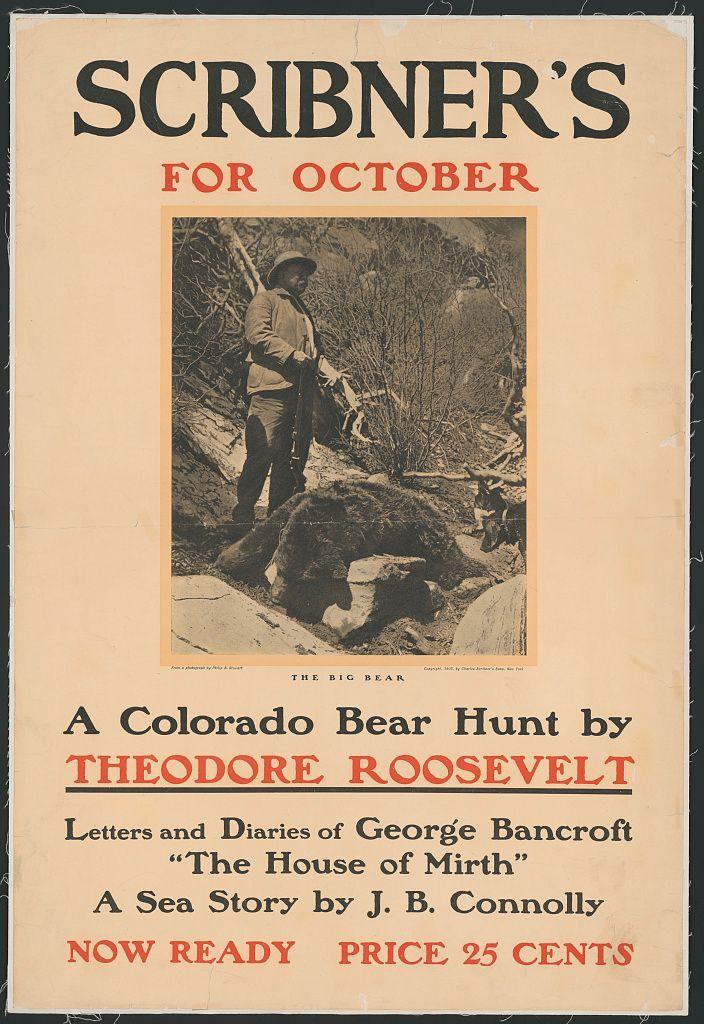



![The image depicts a poster featuring bold, illustrative graphics and text. At the top of the poster is a quote in white font on a red background that reads "THE UNITED STATES WILL PAY." Below this title stands an eagle with its wings spread wide open against a dark backdrop, dominating much of the upper half of the design. The bird's feathers are shaded to create depth and volume, giving it a dramatic presence.
Underneath the eagle is another graphic element: a shield-shaped emblem featuring alternating red and white stripes reminiscent of early American flag designs, topped with blue stars in a circular pattern within an outer ring, which likely represents the United States' states. The color scheme continues from this symbol into the lower part of the poster where it seamlessly blends into the background.
At the bottom right corner is text that says "JULY SCRIEBNER'S" in large black letters on what appears to be a red or orange gradient backdrop, suggesting the date and possibly the name associated with the publication for which this image was produced. The overall composition suggests an early American context, likely related to national pride or political rhetoric of its time.
The poster's design employs strong contrasts between color blocks and bold lines, creating visual impact typical of graphic artwork meant to convey a message swiftly and effectively through i [...]](https://files.mastodon.social/cache/media_attachments/files/115/893/718/069/857/689/original/9895b4278252a9dc.jpeg)