#SVR

2026-01-16

#Russia #SVR (Foreign Intelligence Service) has just published a statement[^1] that looks like taken literally from the pages of “The Lord of the Rings” and everyone is wondering if this a late punishment for Naryshkin for his stuttering on 21 February 2022[^2] 😂

The Press Office of the Foreign Intelligence Service of the Russian Federation reports that, according to information received by the SVR, Patriarch Bartholomew of Constantinople, who divided Orthodox Ukraine, continues his schismatic activities in the Orthodox church space. Now he has set his evil sights on the Baltic states. This ‘devil incarnate’ is obsessed with the idea of ousting Russian Orthodoxy from the Baltic states and replacing it with church structures that are completely controlled by the Phanar.

In this, he is supported in every way by the British special services, which actively fuel Russophobic sentiments in European countries. With their help, Bartholomew, mired in the mortal sin of schism, has found common ground with the authorities of the Baltic states in their desire to bring turmoil to the Russian Orthodox world. Relying on ideological allies in the form of local nationalists and neo-Nazis, he is trying to tear the Lithuanian, Latvian and Estonian Orthodox Churches away from the Moscow Patriarchate by luring their priests and flocks into puppet religious structures artificially created by Constantinople.

The aggressive appetites of the ‘Constantinople Antichrist’ are not limited to Ukraine and the Baltic states; with his cunning, he is gradually covering the lands of Eastern Europe. In order to strike a blow against the ‘particularly stubborn’ Serbian Orthodox Church, he intends to grant autocephaly to the unrecognised ‘Montenegrin Orthodox Church’. Church circles note that Bartholomew is literally tearing apart the living Body of the Church. In doing so, he resembles the false prophets mentioned in the Sermon on the Mount: ‘They come to you in sheep’s clothing, but inwardly they are ravenous wolves. … By their fruits you will know them.’

Press Office of the Foreign Intelligence Service of Russia, 12.01.2026

[^1]: http://svr.gov.ru/smi/2026/01/konstantinopolskiy-patriarkh-varfolomey-antikhrist-v-ryase.htm ( in Russian)

[^2]: https://video.echelon.pl/w/sgdr8RDt25Uu37WTNjkoiu

2025-11-18
2025-11-14

Armenia’s Russian-Ukrainian Grain Scandal Is More Serious Than Many Might Realize

Armenia’s Russian-Ukrainian Grain Scandal Is More Serious Than Many Might Realize

By Andrew Korybko

Armenia’s potential replacement of low-cost Russian grain with more expensive Ukrainian grain could worsen its already difficult financial situation and thus prompt Azerbaijan and/or Turkiye to propose a bailout in exchange for further sovereignty concessions in its strategic southern province of Syunik.

Russia’s Foreign Intelligence Service (SVR) reported that Armenia plans to replace low-cost Russian grain with more expensive Ukrainian grain subsidized by the EU as a way of signalling support for Kiev and further distancing itself from Moscow. Prime Minister Nikol Pashinyan denied the report, which Kremlin spokesman Dmitry Peskov insisted isn’t baseless, but confirmed that Armenia has received offers for better-quality and lower-cost grain that it won’t “turn a deaf ear to”. The larger context is important.

Armenia just received its first batch of Russian grain by rail via Azerbaijan in three decades, after which Pashinyan considered the import of other Russian goods via the same route. This was made possible by late summer’s US-brokered normalization of Armenian-Azerbaijani ties that also resulted in the “Trump Route for International Peace and Prosperity” (TRIPP). That corridor threatens to undermine Russia’s regional position by facilitating Turkiye’s injection of Western influence along its southern periphery.

It wasn’t known during Armenia’s latest unrest in early summer that TRIPP would be announced less than two months later, but in hindsight, it could have been averted had Pashinyan resigned like the protesters who he implied were backed by Russia demanded. He came to power riding a wave of anti-Russian sentiment and regularly played this card since then, especially after Armenia’s defeat in 2020’s Karabakh Conflict, even recently accusing the KGB of pitting his people against Azeris and Turks.

Russia therefore doesn’t trust Pashinyan, and his pattern of anti-Russian behaviour lends credence to SVR’s report about his plans to replace low-cost Russian grain with more expensive Ukrainian grain subsidized by the EU despite his talk about ramping up imports of other Russian goods via Azerbaijan. As its spies assessed, “What’s appealing is that the EU is being offered a ‘three-for-one’ deal: grain for Armenia, support for Kiev, and the promotion of mistrust between Moscow and Yerevan.”

The problem, however, is over financing. According to them, the EU can’t comfortably foot the bill for the Ukrainian grain that’s “more than twice as expensive” as Russia’s, hence why it’s more likely that “Yerevan will have to pay on an ongoing basis” if it goes through with this scheme. The implication is that already financially troubled Armenia would struggle to do so, with prices rising across the board and the state coffers emptying at an even faster rate, thus possibly leading to another round of unrest.

The latest one was driven by the perception that Pashinyan sold Armenia out to its Turkic neighbours, and this belief might soon intensify if he goes through with the aforesaid deal. In that event, Azerbaijan and/or Turkiye might bail Armenia out in exchange for further sovereignty concessions in the southern province of Syunik that’ll host TRIPP, which might not lead to a formal territorial cession to avoid negative foreign reactions. This is a credible scenario that Pashinyan might even be purposely advancing.

Armenia’s subordination to the “Organization of Turkic States” as a de facto “Neo-Ottoman sanjak” might be inevitable due to TRIPP, which its Azeri-Turkish anchors are expected to use force to secure if Yerevan ever gets cold feet, but the terms might be less harsh as long as its not financially indebted to them. Its political independence is already lost, but the loss of its financial independence could lead to the loss of its socio-cultural independence, after which Turkification might follow even if only gradually at first.

Disclaimer: The views expressed in this article are author’s own and do not necessarily reflect the editorial policy of Voice of East.


#Armenia #Azerbaijan #EU #Europe #Geopolitics #NATO #Russia #SVR #Turkey #Turkiye #Ukraine

2025-11-11

The FSB Just Foiled What Could Have Been A False Flag Provocation For The Ages

The FSB Just Foiled What Could Have Been A False Flag Provocation For The Ages

By Andrew Korybko

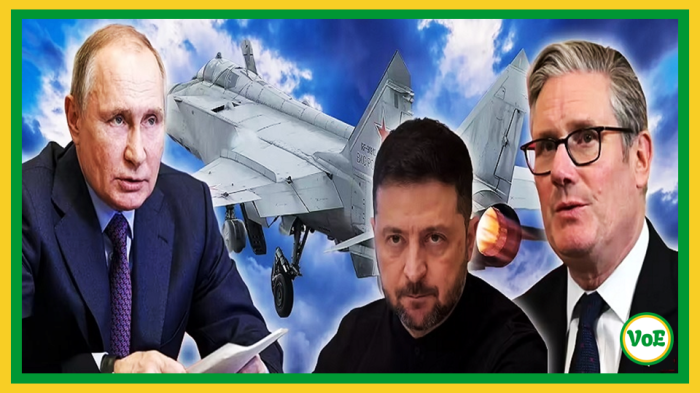
Corrupting a MiG-31 pilot armed with Kinzhal hypersonic missiles into defecting, only to then shoot him down near what’ll be NATO’s largest airbase in Europe, risked sparking World War III.

Russia’s Federal Security Service (FSB) accused Ukraine and the UK of plotting a spectacular false flag provocation that could have led to led to war with NATO. According to them, they sought to corrupt a MiG-31 fighter jet pilot armed with Kinzhal hypersonic missiles into defecting, but then he’d be shot down near Romania’s seaside city of Constanta. Importantly, NATO’s largest airbase in Europe is being built nearby, so the incident could have resulted in an unprecedented exchange of hostilities.

This revelation follows Russia’s Foreign Intelligence Service (SVR) warning that false flag provocations were being cooked up in the Baltic and Poland, the purpose of which would be to prompt an escalation of tensions with NATO that the orchestrators expect will end with Russian strategic concessions. In connection with this, they believe that Trump would feel compelled to intervene, whether sabre-rattling to the aforementioned end or possibly even authorizing direct US involvement in a “retaliatory strike”.

Of course, it goes without saying that everything could easily spiral out of control into World War III since Russia’s voluntary submission to the West under such coercion can’t be taken for granted, ergo the importance of the FSB thwarting what could have been a false flag provocation for the ages. The possibly apocalyptical stakes show how desperate Ukraine and the UK have become over the past year since they began plotting this operation. The situation wasn’t even as bad for Ukraine back then as it is now.

Nevertheless, it should also be said that Trump’s decision last month to once again escalate against Russia increases the chances that he’d be manipulated by their false flag provocation into playing some role or another, thus raising the risk of a hot Russian-US war that could quickly go nuclear. After all, he’s now inclined to believe that it’s Putin who’s the desperate warmonger hellbent on triggering a dangerous escalation that he’d then try to leverage for delaying his inevitable loss, not Zelensky.

The reality has always been the opposite, however, since Putin almost always refuses to escalate after every Western-backed Ukrainian provocation over the last 3.5 years. The only exceptions were him authorizing strikes against military-relevant critical infrastructure after the Crimean Bridge bombing and his one-off use of the Oreshniks in response to the Anglo-American Axis allowing Ukraine to use their long-range missiles inside of Russia. His intention was to deter them from further escalations.

These exceptions to the rule above governing Putin’s behaviour, namely that he’ll exercise a saintly degree of patience after every Western-backed Ukrainian provocation for the sake of avoiding World War III even at the expense of upsetting some of Russia’s supporters, were significantly responses. They weren’t proactive escalations, which he has no record of initiating since the start of the special operation, so the hypothetical success of this joint Ukrainian-UK false flag would have been suspiciously uncharacteristic.

Even so, it would have probably still duped Trump for the reasons that were explained, which is it can be claimed that the FSB might have just averted World War III. Regardless of one’s opinion about the seriousness of this provocation, it’s likely that others are in the works, all with the intent of triggering a dangerous escalation out of desperation to coerce Russia into concessions. The FSB will therefore continue doing its utmost to foil all these false flag provocations that could spiral out of control.

Disclaimer: The views expressed in this article are author’s own and do not necessarily reflect the editorial policy of Voice of East.


#AngloAmerican #DonaldTrump #Europe #FSB #Geopolitics #NATO #NuclearWar #Russia #SVR #UK #Ukraine #USA #VladimirPutin #WW3

2025-11-11

Serbia’s Continued Arming Of Ukraine Risks Rupturing Relations With Russia

Serbia’s Continued Arming Of Ukraine Risks Rupturing Relations With Russia

By Andrew Korybko

Everything is proceeding according to the US’ plan, which Vucic might have even secretly agreed to.

Serbian President Aleksandar Vucic recently told German media that his country is eager to clinch large-scale ammo deals with the EU and doesn’t care whether they then pass his country’s wares on to Ukraine. Kremlin spokesman Dmitry Peskov responded to this by claiming that Russia “understands what unprecedented pressure is being put on Serbia” and that the issue is “not at all a simple story”, but nobody should fool themselves into thinking that it’s pleased with the latest development in this saga.

Russia’s Foreign Intelligence Service (SVR) accused Serbia of backstabbing it last May by indirectly arming Ukraine, after which Vucic resorted to his typical smooth-talking to promise that he won’t authorize any more ammo exports. This coincided with SVR claiming that this trade never stopped. In early August, Serbia then sent mixed signals about sanctioning Russia, which came roughly two months before Trump 2.0’s first sanctions against Russia. These imposed strict restrictions on its energy companies.

This coincided with unrelated US sanctions on Serbian national energy company NIS from earlier this year taking effect after it wasn’t granted another postponement. The Energy Minister accordingly warned in late October that its only oil refinery will run out by 25 November without new crude supplies, which it hasn’t been able to receive. This contextualizes Vucic’s eagerness to resume indirectly arming Ukraine since he might conceptualize this as part of a compromise for sanctions relief.

On the other hand, Vucic is nowhere near as close to Trump as the latter’s political ally Viktor Orban in Hungary is, who just obtained an exemption. This will certainly help his party during April’s next parliamentary elections and likely keep him in office for another term. By contrast, Serbia’s next elections will be held by the end of 2027, but Vucic said that he’ll move the date up. Any sanctions-instigated economic turmoil by then could ill for his party and possibly lead to a change in government.

Vucic is under what he and SVR consider to be Colour Revolution pressure, the purpose of which appears to be punishing him for not going all the way in risking a rupture of relations with Russia by sanctioning it and openly arming Ukraine. He’s now explicitly defying his country’s traditional partner by expressing his eagerness to clinch large-scale ammo deals with the EU for arming Ukraine as part of NATO’s proxy war against Russia but hasn’t yet nationalized NIS, seized Russia’s other assets, and sanctioned it.

That might be just around the corner though if Trump predictably doesn’t grant Vucic a waiver after the latter resuming indirect arms exports to Ukraine and then he goes through with the rest of the US’ implied anti-Russian demands as a last-ditch attempt to secure relief from the sanctions and/or protests. It’s also hypothetically possible that the aforesaid sequence was agreed to in advance and that whatever public drama might then unfold would be a ruse for facilitating a phased leadership transition.

Vucic already declared over the summer that he won’t change the constitution to run for re-election so he’s on the way out no matter what if he keeps his word as is likely lest he risk more unrest if he doesn’t. In exchange for avoiding corruption charges by whichever even more pro-Western figure succeeds him and/or personal sanctions by the West on the same pretext, he might have agreed to set into motion the rupturing of Serbian-Russian relations, which is arguably unfolding and might ultimately be inevitable.

Disclaimer: The views expressed in this article are author’s own and do not necessarily reflect the editorial policy of Voice of East.


#DonaldTrump #EU #Geopolitics #NATO #Russia #Serbia #SVR #TheWest #Ukraine #USA

Associazione Peacelinkpeacelink@sociale.network
2025-10-29

La #Francia prevede di inviare un contingente di circa 2.000 soldati in #Ucraina. E' l'ultimo allarme lanciato dal servizio di intelligence estero russo (#Svr), che da settimane - con regolarità - diffonde alert poi non confermati dai fatti. Informazioni definite "preoccupanti" dal portavoce del Cremlino Dmitri #Peskov, citato dalla Tass.
Adnkronos

2025-10-21

Rusia advierte que la OTAN se prepara para un conflicto armado a gran escala

fed.brid.gy/r/https://www.tele

2025-10-02

September 2025 Was The Most Eventful Month For Poland Since The End Of Communism

September 2025 Was The Most Eventful Month For Poland Since The End Of Communism

By Andrew Korybko

The common denominator between these developments is the progress being made on reviving Poland’s long-lost status as a Great Power as proven by its increasingly central role in the region.

Poland is no stranger to dramatic developments, which includes being the scene where World War II in Europe officially began and the one where the Iron Curtain finally started to crumble, both in the last century. September 2025 wasn’t anywhere near as eventful as the ones in which those examples occurred, but it was certainly the most eventful since the end of communism. What follows is a list of everything that coincidentally transpired during President Karol Nawrocki’s first full month in office:

———-

Trump Committed To Keeping US Troops In Poland & Suggested Sending More

Nawrocki’s first foreign trip was to the US, Poland’s most important ally, to meet with Trump. His American counterpart not only committed to keeping US troops in Poland amidst rumours earlier this year that he was considering reducing them but even said “we’ll put more there if they want.” This signals the US’ appreciation of the role that Poland can play in containing Russia in Europe through the “Three Seas Initiative” that it leads after the Ukrainian Conflict ends and the US “Pivots (back) to (East) Asia”.

Poland’s Former President Revealed That Zelensky Tried To Spark A Polish-Russian War

Nawrocki’s predecessor Andrzej Duda belatedly admitted that Zelensky’s lies about Russian responsibility for November 2022’s Przewodow incident, which was later revealed to have been a Ukrainian air defence missile that crossed into Poland and killed two Poles, were meant to spark another Polish-Russian War. He eschewed any negative judgement of his counterpart, but the significance is that he revealed that Zelensky employed narrative subterfuge in the past to this end, thus raising suspicions of his motives.

Nawrocki Declared Polish Responsibility For The Entirety Of Central Europe

Building upon the last point, Nawrocki declared in an interview with Lithuanian media during his trip there after visiting the US, Italy, and the Vatican that “We as Poles, and I as the President of Poland, are aware that we are responsible for the entire region of Central Europe, including the Baltic States and Lithuania.” His words confirm that Poland envisages restoring its long-lost status as a Great Power through the abovementioned means and that its pursuit of this goal will shape the region’s future.

He Also Reaffirmed His Opposition To Deploying Polish Troops To Ukraine

After Lithuania, Nawrocki then flew to Finland, where he reaffirmed his opposition to deploying Polish troops to Ukraine. This aligns with the pledge that he signed ahead of the second round of elections earlier this year. His visit to Finland was also important in its own right since the “EU Defence Line”, which refers to the “Baltic Defence Line” and Poland’s “East Shield”, could prospectively expand to that new NATO member for creating a new “Iron Curtain” along the bloc’s borders with Russia and Belarus.

Some Alleged Russian Drones Then Veered Into Polish Airspace Right Afterwards

Right after the event above, some alleged Russian drones veered into Polish airspace, which Russia denied in totality while Poland insisted it was a deliberate provocation. Russia’s Foreign Intelligence Service (SVR) claimed in late September that the incident was actually orchestrated by Ukraine. This analysis here takes a middle ground between these narrative extremes by arguing that it was an accident due to NATO jamming ahead of the then-upcoming Russian-Belarusian Zapad 2025 drills in Belarus.

The Polish Foreign Minister Proposed A No-Fly Zone Over Ukraine In Response

Foreign Minister Radek Sikorski, who represents Prime Minister Donald Tusk’s liberal-globalist government that’s at odds with conservative-nationalist Nawrocki, proposed after this suspicious drone incident that Poland impose a no-fly zone over Ukraine. Nawrocki didn’t go along with that since it would risk another Polish-Russian War, thus contradicting the spirit of his earlier mentioned pledge about not deploying troops to Ukraine, but it still shows that some deep state forces have a different agenda.

The Polish Deep State Tried To Manipulate Nawrocki Into War With Russia

It soon thereafter turned out that the damage which a home incurred during this incident was due to a Polish missile, not a Russian drone like Tusk’s government told the UNSC during an emergency meeting, but neither Nawrocki nor his National Security Bureau found out about this till that media leak. As explained here, “The Polish Deep State Tried To Manipulate The President Into War With Russia”, but he refused to be drawn into this trap by authorizing the no-fly zone that Sikorski proposed in response.

Poland Decided To Participate In NATO’s “Operation Eastern Sentry” Instead

Nawrocki couldn’t ignore what just happened regardless of whoever was really behind it and irrespective of their reasons so he decided to have Poland participate in NATO’s “Operation Eastern Sentry” instead. This ongoing operation is aimed at strengthening the bloc’s eastern air defences against drones and jets. While seemingly innocuous, it could possibly be exploited by subversive deep state elements to provoke a crisis with Russia if its aerial assets are shot at on the pretext of them violating the bloc’s airspace.

Tusk & Nawrocki Agreed On The Need To Intercept Russian Aerial Assets Over Poland

Despite being rivals, Tusk and Nawrocki agreed on the need to intercept Russian aerial assets over Poland, but there was nuance to their words. The first spoke about them in general but advised caution when the legal situation is less clear while the second responded about drones when asked about whether he’d authorize this for jets. If Tusk’s coalition amends the law to allow Poland to shoot without prior NATO or EU approval, then his deep state allies might provoke a crisis behind Nawrocki’s back.

Poland Also Clinched A Drone Warfare Cooperation Agreement With Ukraine

The other tangible outcome of the alleged Russian drone incident was that Poland clinched a drone warfare cooperation agreement with Ukraine that’ll indirectly expand the EU’s “drone wall” to that country’s easternmost frontier with all that entails for associated NATO influence there as well. The consequence is that Russia might now be even more reluctant to reach a compromise with Ukraine than before since it now knows that its foes’ military-technical influence will extend up to its new borders.

Its Industrial Development Agency Wants A Railway To Odessa & A Port There Too

Earlier in the month but lost amidst the drama brought about by the alleged Russian drone incident, the new chief of Poland’s Industrial Development Agency disclosed that his planned international department will consider financing a railway to Odessa and leasing a port there too. It was assessed here that any progress on those plans would advance Poland’s envisaged revival of its long-lost Great Power status but also dangerously revive the historical Polish-Russian rivalry in Ukraine as well.

Poland Briefly Closed Its Border With Belarus At The Cost Of EU-Chinese Trade

The earlier-mentioned Russian-Belarusian Zapad 2025 drills served as the pretext for Poland to briefly close its border with Belarus across which €25 billion (or 3.7%) of EU-Chinese trade is conducted. While this might not seem all that significant, especially since the decision was reversely shortly afterwards (reportedly at China’s and the EU’s requests), it highlights how Poland will act unilaterally, including at its partners’ expense. This policy could have very serious implications for NATO-Russian tensions.

Nawrocki Proposed That Germany Partially Fund Poland’s Rapid Militarization

Poland already has NATO’s third-largest army and spends more of its GDP on defence than any other member, the US included, yet Nawrocki proposed during his trip to Germany that it fund his country’s militarization as a form of reparations for World War II. What matters at this point isn’t whether or not Germany will comply, which it would probably do if their shared US ally demands this, but that Poland wants to militarize even more than it already has and wants the EU’s leader to foot some of the bill.

He Also Wants To Host French Nukes & Possibly Develop Poland’s Own One Day

Nawrocki also visited France during the same trip as his one to Germany and reaffirmed to local media that Poland not only wants to host French nukes but possibly develop its own one day. His country is far away from following in Iran’s reported footsteps, but it could much sooner host French nukes, though that depends on President Emmanuel Macron’s strategic calculations. In any case, Nawrocki’s statements of intent shouldn’t be ignored, and it’s certain that they spiked Russia’s threat perception of Poland.

Poland & Sweden Held Their First-Ever Joint Military Exercise In The Baltic

The military pact that Poland and Sweden signed at the start of September quickly turned into their first-ever joint military exercise in the Baltic. Neither boasts a big navy but they could still increase theirs in the future and cooperate more closely together to further their shared goal of containing Russia there. This also represents the de facto expansion of Poland’s “Three Seas Initiative”-centric sphere of influence deeper into Scandinavia per the foreign policy vision that Nawrocki declared in his inaugural speech.

Reports Swirled That Ukraine Is Plotting A False Flag Drone Provocation Against Poland

Russian Foreign Ministry spokeswoman Maria Zakharova amplified Hungarian media reports at the end of the month alleging that Ukraine is plotting a false flag drone provocation against logistics hubs in Poland for the purpose of dragging the country into war with Russia. Its alleged motives ominously mirror what Duda revealed about Zelensky’s as far back as November 2022’s Przewodow incident so these reports should be taken very seriously by Nawrocki.

SVR Then Claimed That Ukraine & Poland Are Cooking Up A Ground Provocation In Poland

The aforementioned reports were then given weight by SVR’s subsequent one alleging that Ukraine is cooking up a ground provocation in Poland in collusion with the latter’s intelligence services. That claim was constructively critiqued here, which assessed that it’s unrealistic to imagine that Nawrocki would be in on it given how resistant he’s proven to be to mission creep, but it can’t be ruled out that subversive deep state elements could be involved in a desperate attempt to manipulate him into war with Russia.

Nawrocki Declared That He’s Ready To Talk With Putin If Poland’s Security Requires It

While describing Trump as “the only leader of the free world who can engage with Vladimir Putin”, Nawrocki still didn’t rule out talking with Putin if Poland’s security requires it when asked by a journalist about this scenario. It doesn’t mean that he has any such plans, but it still speaks to his comparative pragmatism vis-à-vis the Central, Eastern, and nowadays even Northern European countries over which Poland envisages expanding its influence in the future through the “Three Seas Initiative”.

———-

As can be seen from the nearly 20 dramatic developments described above, September 2025 was by far Poland’s most eventful month since the end of communism. The common denominator is the progress being made on reviving Poland’s long-lost status as a Great Power as proven by its increasingly central role in the region. This suggests that the resultant revival of the Polish-Russian rivalry will unfold across Central, Eastern, and Northern Europe as opposed to remaining concentrated in Ukraine like before.

Disclaimer: The views expressed in this article are author’s own and do not necessarily reflect the editorial policy of Voice of East.

7 Courses in 1 – Diploma in Business Management

#CentralAndEasternEurope #EU #Europe #Geopolitics #NATO #Poland #Russia #SVR #Ukraine

2025-10-01

Assessing The Veracity Of SVR’s Report About A Polish-Ukrainian False Flag Attack In Poland

Assessing The Veracity Of SVR’s Report About A Polish-Ukrainian False Flag Attack In Poland

By Andrew Korybko

There’s little doubt that Ukraine has an interest in escalating NATO-Russian tensions through these means, including by employing anti-government Russian and Belarusian nationals in this reported plot, but it’s debatable whether Poland is involved in this and the extent to which it might be if so.

Russia’s Foreign Intelligence Service (SVR) warned that Ukraine’s GUR and the Polish intelligence services (none of the several existing ones were specified) are cooking up a false flag attack in Poland, which might “involve a simulated attack on critical infrastructure”, in order to blame Russia and Belarus. According to them, “Kiev hopes to incite European countries to respond to Russia with the harshest possible force, preferably militarily.” The veracity of these dramatic claims will now be assessed.

In reverse order, it does indeed appear to be the case that Kiev wants to manipulate NATO members into initiating direct military force against Russia, whether in the special operation zone or elsewhere such as on the territory of its Belarusian mutual defence ally or in its exclave of Kaliningrad. This explains why Zelensky repeated his no-fly zone demands after the suspicious Russian drone incident in Poland and called for closing the Danish Straits to Russian shipping after similarly suspicious incidents in Scandinavia.

Of relevance, SVR claimed that the aforesaid Polish incident and an associated Romanian one were Ukrainian provocations, though it’s still unclear exactly what happened. In any case, it’s also relevant to mention the reports amplified by Russian Foreign Ministry spokeswoman Maria Zakharova that Ukraine is preparing a false flag drone provocation against NATO as well as Zelensky’s partial responsibility for Trump’s flip-flip on Ukraine, all of which lend credence to suspicions about Ukraine’s motives.

Moving along, the part of their report about how “militants from the ‘Freedom of Russia Legion’ and the Belarusian ‘K. Kalinovsky Regiment’” have been selected for this next provocation might also be true since they’re known to be Ukrainian proxies, so each’s nationals could indeed be implicated in this plot. That would in turn make it more likely that NATO, including the US, is misled about who’s responsible. As for their claim of Poland’s joint involvement in orchestrating this, however, that’s much more debatable.

Conservative-nationalist Polish President Karol Nawrocki and his National Security Bureau weren’t informed by liberal-globalist Prime Minister Donald Tusk’s government that the damage incurred by a home during last month’s drone incident was caused by a wayward Polish missile. They only found out after a source leaked this to the press, which followed Tusk’s government blaming that damage on Russia at an emergency UNSC meeting, thus suggesting that he wanted to manipulate Nawrocki and his allies.

As assessed here, the purpose was to deceive him into authorizing Polish participation in a no-fly zone over Ukraine in order to raise NATO-Russian tensions, with these convoluted means being employed due to his reluctance to further embroil Poland in the conflict. Circling back to SVR’s report, either their source about Poland’s joint involvement in this latest plot is wrong or subversives within its “deep state” are going behind Nawrocki’s back, but the point is that it’s unrealistic to imagine that he’s in on it.

As a reminder, some of SVR’s reports didn’t pan out such as their ones about US plans to replace Zelensky, which were critiqued here in summer 2024. It should also go without saying that Russia truly has no reason to risk an escalation of tensions with NATO by attacking Poland as explained herehere, and here in summer 2023. Nevertheless, given the credible possibility that Ukraine is plotting a false flag attack on Poland, Nawrocki and his own “deep state” allies should urgently launch an investigation.

Disclaimer: The views expressed in this article are author’s own and do not necessarily reflect the editorial policy of Voice of East.

7 Courses in 1 – Diploma in Business Management

#Belarus #FalseFlag #Geopolitics #NATO #Poland #Russia #SuwalkiCorridor #SVR #Ukraine #Wagner

2025-09-25

SVR Revealed That British And French Troops Are Already In Odessa

SVR Revealed That British And French Troops Are Already In Odessa

By Andrew Korybko

Direct Western intervention in the conflict is now arguably turning into a fait accompli, it’s just a question of how Russia will respond and whether the US will then be pulled into mission creep.

Russia’s Foreign Intelligence Service (SVR) published a report warning about the EU’s plans to occupy Moldova, which holds its next parliamentary elections on Sunday. According to their sources, large-scale protests are expected after the ruling liberal-globalists falsify the vote, following which President Maia Sandu will request help to put down what she’ll frame as a Russian-backed revolt. SVR also repeated last winter’s warning about threats to Russian troops in Transnistria independent of the aforesaid scenario.

On that topic, they revealed that “A NATO ‘landing’ is being prepared in Ukraine’s Odessa region to intimidate Transnistria. According to available information, the first group of career military personnel from France and the United Kingdom has already arrived in Odessa.” This bombshell comes less than a week after Foreign Minister Sergey Lavrov confirmed during an ambassadorial roundtable discussion that Russia would consider any foreign troops in Ukraine to be “legitimate military target[s].”

While rumours have abounded since the beginning about Western troops in Ukraine and not just “mercenaries” (even if the latter are active servicemen on leave and out of uniform), Russia hadn’t hitherto confirmed this, ergo its repeated threats to target them if they deploy there. The context within which SVR reported the presence of French and UK troops in Odessa concerns Europe’s, Ukraine’s, and US warmongers’ efforts to manipulate Trump into escalating US involvement in the conflict.

That led to Trump flip-flopping on Ukraine and even approving NATO downing Russian jets if they’re accused of violating the bloc’s airspace, which risks emboldening them to stage a provocation for pulling him into mission creep even if it’s really all just “sarcasm” or “5D chess” on his part like some believe. All the while, reports have swirled about the Western security guarantees he (or at least his team) envisages for Ukraine, which could include a “no-fly zone” and even Western troops over and in at least parts of it.

All of this is relevant with respect to the Romanian-Moldovan flank of this conflict, which as this analysis here from over the summer explains, can be used as NATO’s launchpad for the aforesaid scenarios. Given what SVR just revealed, and there’s no reason to doubt their sources nor SVR’s sincerity in publicly reporting what they just discovered, some uniformed Western troops (French and UK) are already in Ukraine. To make matters even more sensitive, they’re in Odessa, which Russians consider their own.

Even though it’s not in the Kremlin’s crosshairs, Russians still hold it close to their hearts for historical reasons after their ancestors built that city from the ground up, thus making it all the more provocative that the French finally began acting on their speculative plans from early 2024. Putin must now decide whether to treat them and the Brits there as legitimate targets exactly as Lavrov said Russia might do or hold back for now to avoid the escalation that those two want for pulling Trump into mission creep.

The dilemma is that striking Western troops in Odessa could spark a crisis for manipulating Trump into escalating the US’ involvement in the conflict, while holding back for now could create facts on the ground that become even more difficult (and possibly more dangerous) for Russia to reverse later on. It was warned in late August that “Direct NATO Intervention In Ukraine Might Soon Dangerously Turn Into A Fait Accompli”, which is now arguably unfolding, it’s just a question of how Russia will respond to this.

Disclaimer: The views expressed in this article are author’s own and do not necessarily reflect the editorial policy of Voice of East.

7 Courses in 1 – Diploma in Business Management

#England #EU #Europe #France #NATO #Russia #SVR #UK #Ukraine

2025-09-19

Hungary Warned About Brussels’ Three Regime Change Plots In Central Europe

Hungary Warned About Brussels’ Three Regime Change Plots In Central Europe

By Andrew Korybko

These are being advanced through a combination of information warfare and support for anti-government (Brussels-organized) “NGOs” (BONGOs).

Hungarian Foreign Minister Peter Szijjarto warned in a Facebook post last month after talks with his Slovak and Serbian counterparts that Brussels is plotting regime change against them. This comes after Russia’s Foreign Intelligence Service (SVR) reported that the EU and Ukraine are backing the Hungarian opposition ahead of next spring’s parliamentary elections. The larger context is that they’ve all defied EU pressure to cut ties with Russia and are considering the creation of a new regional integration platform.

From the EU’s hegemonic perspective, those three’s current governments do indeed pose “an increasingly serious obstacle to a ‘united Europe’” as SVR described Hungary as being vis-à-vis Brussels, with that country being the main one followed by Slovakia and then Serbia to a much lesser extent. Long-serving Prime Minister Viktor Orban is a populist-nationalist icon on the continent, while his Slovak counterpart Robert Fico only recently returned to office but immediately followed in Orban’s footsteps.

Serbian President Aleksandar Vucic is an altogether different story, however, since he presents himself as a populist-nationalist but in many ways behaves as a liberal-globalist. For instance, SVR recently accused his government of indirectly arming Ukraine, which followed its votes against Russia at the UNGA. He also claims that recurring protests against his rule are a Colour Revolution, which Russia has thus far agreed with, yet there’s also no denying that some bonafide populist-nationalists fiercely oppose him.

That’s because of his aforesaid anti-Russian moves, his concessions to the NATO-occupied Autonomous Province of Kosovo and Metohija, and his obsequious attitude towards the EU. At the same time, he also hasn’t fully capitulated to all of the West’s demands either, ergo why some of its ruling liberal-globalists want to depose him. Therefore, while it’s dishonest to describe him as a populist-nationalist in the same vein as Orban or Fico, it’s still true that all three don’t fully tow the EU’s line on Russia.

Circling back to Szijjarto’s recent post after clarifying the situation with Vucic, the EU’s regime change plots against all three are being advanced through a combination of information warfare and support for anti-government (Brussels-organized) “NGOs” (BONGOs). The purpose is to turn voters against the ruling parties (or whichever presidential candidate they endorse like in Vucic’s case after he said that he won’t amend the constitution to run again) so that their leaders can later be “democratically” deposed.

Prior to the next elections as well as in the scenario that this plot fails, infowars and BONGO protests are weaponized to discredit these figures as the pretext for justifying more direct EU pressure against them and their countries. Regardless of whatever form this takes, the end goal of regime change remains the same. It’s simply unacceptable from the EU’s hegemonic perspective for them to oppose Brussels on such important issues as Russia even in non-member Serbia’s case since this undermines its authority.

Looking forward, all eyes will be on Hungary’s spring elections, which will be the first chance for the EU to “democratically depose” one of these three leaders unless Serbia holds early elections before then. In Serbia’s case, whoever Vucic endorses might take his pro-Western pivot to its conclusion, so it might not matter whether they or the opposition win. It’s more difficult to predict what’ll happen in Hungary’s case, however, but the ruling party’s loss would be a powerful blow to populist-nationalists in Europe.

Disclaimer: The views expressed in this article are author’s own and do not necessarily reflect the editorial policy of Voice of East.

7 Courses in 1 – Diploma in Business Management

#EU #Europe #Geopolitics #Hungary #Russia #Serbia #Slovakia #SVR #Ukraine

2025-09-09

There Might Be More To The Von Der Leyen-GPS-Russia Hoax Than Scoring Cheap Infowar Points

There Might Be More To The Von Der Leyen-GPS-Russia Hoax Than Scoring Cheap Infowar Points

By Andrew Korybko

NATO might exploit this hoax as the pretext for commencing large-scale but “plausibly deniable” electronic warfare provocations against Kaliningrad that could spike the risk of a civilian accident.

The Financial Times’ Brussels Bureau Chief Henry Foy prompted panic across Europe last week when he reported that Russian electronic warfare succeeded in jamming the GPS of European Commission President Ursula von der Leyen’s plane right as she was about to land in Bulgaria. The thought that Putin supposedly tried to assassinate a Western leader through “plausibly deniable” means complemented the purpose of her visit by drawing attention to the supposed “Russian threat” that the frontline states face.

The problem though is that this never happened. FlightRadar24, which is the world’s most reputable source for in-flight information, shared data debunking this claim. Bulgaria itself later walked back its initial support of this story, which its pro-Western leadership would never have done had there been any truth to it. Politico then published a piece to their credit about how this allegation is starting to unravel. All of this lent credence to Russian officials’ denials that their country jammed von der Leyen’s plane.

Foy’s report was therefore exposed as a hoax, but the question naturally arises of why this false narrative implying that Russia sought to assassinate a Western leader through “plausibly deniable” means was planted in the first place regardless of whether it was on his own initiative or in collusion with others. While casual observers might chalk it up as a means of scoring cheap infowar points against Russia at a politically convenient time (i.e. von der Leyen’s trip to the frontline states), there might be more to it.

Astute observers will recall the recurring threats made against Russia’s Baltic exclave of Kaliningrad since the special operation began. These include Lithuania’s brief blockade of that region, Poland’s renaming of it to “Krolewiec” in reference to the long-gone time when it was a Polish fief, and NATO’s military buildup that’s explicitly predicated in part on neutralizing Russian military forces there. It thus wouldn’t be far-fetched to speculate that Foy’s hoax is meant to justify aggressive signals jamming in Kaliningrad.

SVR Once Again Warned About A British-Ukrainian False Flag Provocation At Sea” in August, which reminded folks of the Baltic’s role in the current tensions. Its symbolic transformation into a “NATO lake” after Finland and Sweden joined NATO, which followed decades of close cooperation with that hitherto made them de facto members anyhow, might have emboldened the West to stage “plausibly deniable” large-scale electronic warfare provocations against Kaliningrad. This could boost Western morale.

Although NATO would be implicated due to it being the only realistic culprit, the bloc might expect that tensions would still remain manageable, all while the public praises their leaders for approving “bold hybrid warfare” operations on Russia’s own turf. This is a dangerous assumption, however, since it takes for granted that such aggressive signals jamming won’t result in a civilian accident. If it does, then Russia might unleash its full electronic warfare potential against the West in a rare symmetrical escalation.

Of course, it’s also possible that Foy’s von der Leyen-GPS-Russia hoax was indeed just some random attempt to score cheap infowar points against Russia, though it can’t confidently be ruled out that this was a perception management operation aimed at advancing the aforesaid goal. Kaliningrad remains too tantalizing of a target for Western warmongers to ignore, especially those who want to provoke a crisis that could pull Trump deeper into mission creep, and this hoax provides the pretext for attempting that.

Disclaimer: The views expressed in this article are author’s own and do not necessarily reflect the editorial policy of Voice of East.

7 Courses in 1 – Diploma in Business Management

#Britain #EU #Europe #EuropeanCommission #Geopolitics #Lithuania #NATO #Russia #SVR #UK #Ukraine #UrsulaVonDerLeyen

Kevin Karhan :verified:kkarhan@infosec.space
2025-08-20

@jzmurdock That's more of a matter of semantics as he's the head of #SVR as in the final word on any of it's matters!

Kevin Karhan :verified:kkarhan@infosec.space
2025-08-20
2025-08-07

SVR Once Again Warned About A British-Ukrainian False Flag Provocation At Sea

SVR Once Again Warned About A British-Ukrainian False Flag Provocation At Sea

By Andrew Korybko

“Perfidious Albion’s” modus operandi has always been divide-and-rule.

Russia’s Foreign Intelligence Service (SVR) recently warned that the Brits and Ukrainians are plotting to sabotage Russia’s so-called “shadow fleet”, either in a maritime chokepoint and/or at a friendly port, so as to create the pretext for cracking down more on this sanctioned energy trade. They earlier warned that those two are cooking up an even greater provocation, whether to torpedo a US ship in the Baltic and/or fish out fake Russian mines there, so this isn’t exactly new. Here are three background briefings:

* 11 March: “Russian Spies Warn That The UK Is Trying To Sabotage Trump’s Envisaged New Détente’

* 18 June: “The Brits & Ukrainians Are Plotting To Manipulate Trump Into Escalating Against Russia

* 6 July: “The UK Aims To Entrench Its Influence In Estonia In Order To Lead The Arctic-Baltic Front

Both of SVR’s warnings also mentioned that the additional intent of these provocations is to manipulate Trump into escalating against Russia, which he began to do last month under Lindsey Graham’s influence after unveiling his new three-pronged approach to the Ukrainian Conflict, but he could always go further. Therein lies the main goal since the UK has been conniving since early March to sabotage Trump’s envisaged “New Détente” with Russia per SVR’s report at the time that was analysed above.

The most effective means to that end is to stage false flag provocations with Ukraine’s aid. Without a dramatic incident of the sort that SVR has twice already accused them of concocting, there’s always the possibility that Russian-US relations might recover sometime during Trump’s second term, in which case the NATO leaders that he just boasted “do whatever I want” might fall in line. The scenario of a Russian-West rapprochement could therefore render the warmongering UK geopolitically irrelevant.

“Perfidious Albion’s” modus operandi has always been divide-and-rule, the future prospects of which would be very difficult if Russian-Western tensions meaningfully abated, ergo the credible risk of them attempting at least one of these false flag provocations out of desperation to prevent that. The potential workflow could see the UK mastermind this operation, Ukraine carrying out the dirty work, and their shared top regional partner Estonia fishing out fake Russian mines in that particular scenario.

One way or another, whether through Trump being manipulated by those close to him under whose pernicious influence he’s fallen or through a British-Ukrainian false flag provocation, American mission creep against Russia therefore appears more likely than a de-escalation. Even in the unexpected event that there’s a de-escalation of Russian-American/Western tensions, no matter whichever form it takes and regardless of whether it’s truly meaningful or only superficial, the UK might still sabotage it.

The best-case scenario is that Trump de-escalates (and then ideally ends) the Ukrainian Conflict, stays the course, and doesn’t fall for the false flag provocations that might follow, but this sequence of events is admittedly wishful thinking so nobody should get their hopes up. SVR has done its part by publicly warning about joint British-Ukrainian efforts to manipulate Trump into escalating against Russia so it’s up to him not to let them otherwise he’ll be responsible for whatever might happen afterwards.

Disclaimer: The views expressed in this article are author’s own and do not necessarily reflect the editorial policy of Voice of East.

7 Courses in 1 – Diploma in Business Management

#Britain #DonaldTrump #FalseFlag #Geopolitics #Russia #SVR #UK #Ukraine #USA

Rich On Railsrich_on_rails
2025-08-03

NEW VIDEO OUT NOW! 🚂
Flying Scotsman at 102 years old — still a showstopper!
Join me as we chase this steam legend along the stunning Severn Valley Railway.

🎥 Watch now: youtu.be/C3vTuJEdj7o

#60103

2025-08-01

What’s The Most Realistic Scenario In Which The West Might Replace Zelensky?

What’s The Most Realistic Scenario In Which The West Might Replace Zelensky?

By Andrew Korybko

They might wait until after Russia agrees to a ceasefire (if it ever does) since replacing him with Zaluzhny while hostilities still rage could further weaken Ukraine to Russia’s benefit.

Russia’s foreign intelligence service (SVR) published a report in late July alleging that the Anglo-American Axis organized a secret meeting in the Alps with Zelensky’s Chief of Staff Yermak, GUR chief Budanov, and former Commander-in-Chief-turned-Ambassador-to-Britain Zaluzhny over Ukraine’s future. According to them, Yermak and Budanov agreed with the Anglo-American Axis’ proposal to replace Zelensky with Zaluzhny, which could be advanced on anti-corruption pretexts and “reset” Ukraine’s ties with the West.

Sputnik shared the following assessment of SVR’s report by former US Marine Corps intelligence officer Scott Ritter: “SVR and its press service are ‘not a media outlet,’ Ritter pointed out. ‘They’re not there to inform the public when they release information. It’s usually done to achieve an objective or purpose’ – in this case signalling the desire to ‘inflict the most harm on Zelensky at a time when he is deemed to be most vulnerable,’ and ramp up divisions within his government, and between him and Zaluzhny”.

SVR’s report followed the Financial Times’ critical piece about Yermak, who SVR claimed had “set up” Zelensky by convincing him to crack down on anti-corruption institutions to justify any Western effort to replace him on this pretext, which came almost a year after Bloomberg’s own critical piece about him. Ritter’s assessment of SVR’s intentions is therefore credible, but seeing as how they and even Putin predicted Zelensky’s impending fall in the past, it remains to be seen whether it’ll happen anytime soon:

* 12 December 2023: “Naryshkin’s Scenario Forecast About The West Replacing Zelensky Shouldn’t Be Scoffed At

* 22 January 2024: “Why’d SVR Publish Its Prediction About An Impending Bureaucratic Reshuffle In Ukraine?

* 7 May 2024: “Russia Hopes To Influence Ukraine’s Possibly Impending US-Backed Regime Change Process

* 22 June 2024: “How Likely Is It That The US Replaces Zelensky In The First Half Of Next Year?

* 15 August 2024: “Assessing The Veracity Of SVR’s Latest Report About Impending Political Changes In Kiev

* 14 November 2024: “The US Is Unlikely To Coerce Zelensky Into Holding Elections Without A Ceasefire First

* 7 February 2025: “Russia’s Foreign Spy Agency Claims That NATO Wants To Depose Zelensky Through New Elections

Returning to SVR’s latest report, Trump’s new three-pronged escalation of American involvement in the Ukrainian Conflict and his country’s recent subordination of the EU as its largest-ever vassal state via their totally lopsided trade deal might nullify any supposed prior US imperative to replace Zelensky. After all, Trump was just manipulated into mission creep in spite of his well-known spat with Zelensky at the White House in spring, and his new EU vassals already prioritize the proxy war over all else.

Therefore, it’s arguably the case that the West already “reset” its ties with Ukraine even though Zelensky is still in power instead of replacing him for that purpose like SVR said that they’d soon seek to do, which Pulitzer Prize-winning journalist Seymour Hersh also reported is in the cards 11 days before SVR did. Nevertheless, Zelensky’s most likely successor does indeed appear to be Zaluzhny just like SVR and Hersh reported, but the West might wait to install him until after Russia agrees to a ceasefire (if it ever does).

That’s because replacing him while hostilities still rage could further weaken Ukraine to Russia’s benefit. Doing so after they end could symbolically herald a new era for Ukraine, however, and also serve as a reward to Russia for compliance with the ceasefire by fulfilling its requirement for a legitimate Ukrainian leader with whom Putin might then sign a peace deal. These calculations make the most sense from the perspective of Western interests, but they could always change depending on the course of the conflict.

Disclaimer: The views expressed in this article are author’s own and do not necessarily reflect the editorial policy of Voice of East.

7 Courses in 1 – Diploma in Business Management

#DonaldTrump #Geopolitics #NATO #Russia #SVR #TheWest #Ukraine #USA

Juha Mäkeläinenjpek@mastodontti.fi
2025-07-13

Moskovan patriarkaatti näyttää rakentavan vakoilukeskuksia tiedustelupalvelu SVR:n tuella Ruotsissa, raportoi Frace24 f24.my/BI6Y. Tukholman-Västeråsin (VST) lentokentän viereen on rakennettu ylikorkea sipulikupolinen venäläisortodoksinen kirkko teräsaidan taakse. Paikka sijaitsee myös strategisesti herkällä käytävällä, joka yhdistää Ruotsin sydänmaan Itämereen
#SVR #hybridisota #sapo

Client Info

Server: https://mastodon.social
Version: 2025.07
Repository: https://github.com/cyevgeniy/lmst