#may25

2025-08-09

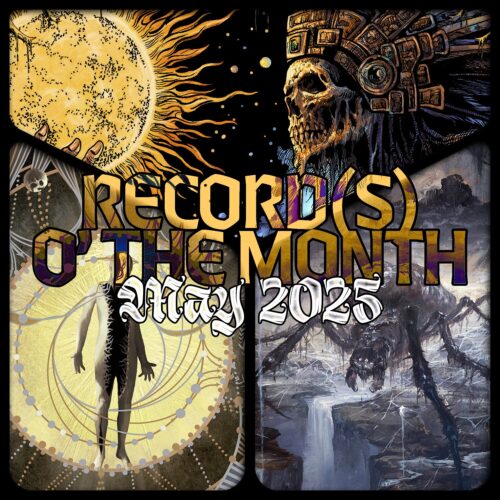
Record(s) o’ the Month – May 2025

By Angry Metal Guy

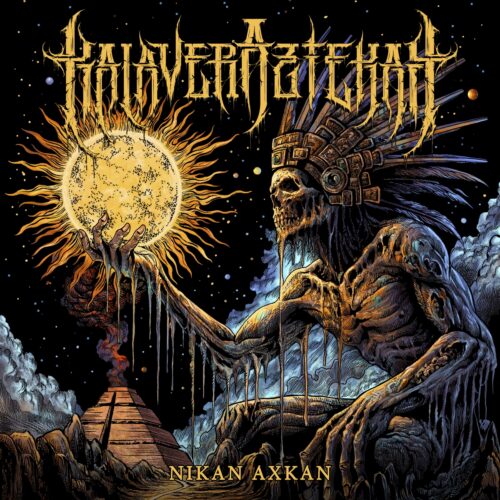
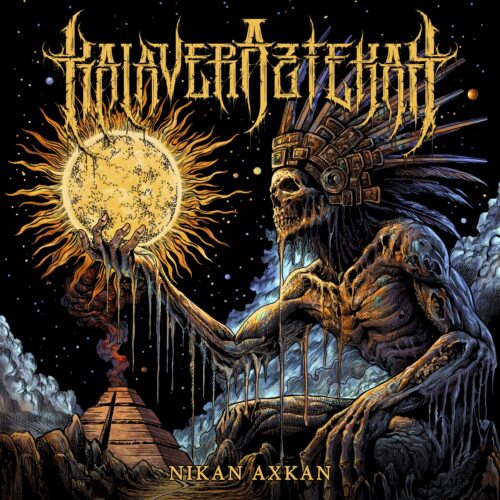
There are months when the Record(s) o’ the Month feels like a sacred duty. It is the noble, worthwhile culmination of rigorous listening and passionate discourse.1 And then there’s May. May, a month in which Dr. A.N. Grier tried to vote for a band called… SEXCAVE or some shit four or five different times using different pseudonyms (but the same IP address), and where Dolphin Whisperer almost made me rage quit by making a single comment about “sky-tearing tonalities,” which, like… what kind of pretentious fucking bullshit is that? Do you people even listen to music, or do you just sit around all day making up stupid poetic ways of saying absolutely nothing?2 But if we’re fair, he wasn’t entirely wrong. Sometimes a record arrives that doesn’t just demand attention, it seizes it like an Aztec death deity grabbing the sun.3 So for the first time in a while, the best album in May came from an unsigned band. And not just any unsigned band. It came from a band proficient in bull riding!

The beauty of the Unsigned Band Rodeö lies in its chaos. No expectations. No promo sheets. No preconceived narratives. Just music dropped into our laps like cursed artifacts.4 On Nikan Axkan, which was self-released on May 2nd, 2025 [Bandcamp], Kalaveraztekah weaponizes its vision of death metal through the lens of pre-Hispanic culture and indigenous cosmology. There’s no sense that these Hidrocálidos are some kind of novelty act. They aren’t a Mexican Eluveitie, just playing Dark Tranquillity riffs while putting a Ritual Death Flute over it for 40 seconds in every song.5 Rather, Nikan Axkan is a muscular, seething, and deeply rooted record that radiates conviction from every grinding riff. The percussion rumbles like a procession of drums echoing through stone temples, fusing to a brutal core of death metal that just fucks. There’s a Blood Incantation-like spaciness that offers a counterbalance to all this brutality and adds unexpected depth. After spending the better part of a week in what my physician has called a “ritualistic fugue state,” I managed to pull myself out of the netherworld to write that when Kalaveraztekah’s two pillars—the atmospheric otherworldly and the brutal death metal—meet, “they crash into each other like storm fronts, creating something beautiful and terrible to behold. Nikan Axkan is simultaneously brutal and thoughtful, grindy and melodic, atmospheric and immediate,” and it’s the Record o’ the Month.

Runner(s) Up:

…and Oceans // The Regeneration Itinerary [May 23rd, 2025 | Season of Mist | Bandcamp] — …and Oceans is having an Amorphisesque second act and I am here for it. They’ve always walked the line between symphonic grandiosity and black metal chaos, and with The Regeneration Itinerary, they’ve engineered their third very good platter in 5 years. The record combines sharp, Emperor-style riffing with theatrical synths, industrial flourishes, and ruthlessly precise pacing. “Demonstrating a degree of evolution in their craft” and with “exceptional [performances] across the board,” …and Oceans have once again hit that sweet balance—and ever-more unique sound in this current black metal soundscape—that makes their revitalization so welcome. But it’s not just that it’s a good continuation, I feel like they are continuing to refine and revitalize the launch with each new album they release. It’s always fun to watch bands defy Angry Metal Guy’s Law of Diminishing Recordings™, and while The Regeneration Itinerary isn’t their best record yet, 30 years after their debut, …and Oceans is still releasing vital music that’s impossible to overlook.

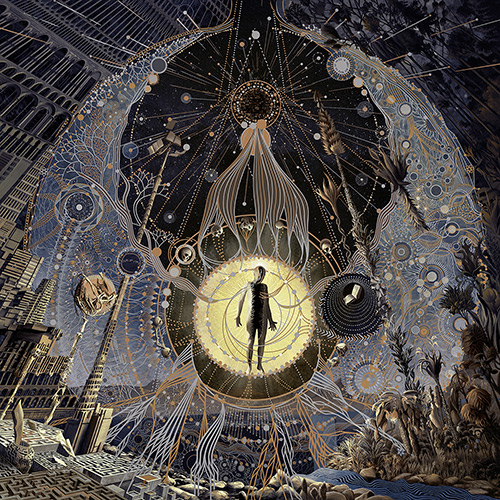
Jade // Mysteries of a Flowery Dream [May 9th, 2025 | Pulverised Records | Bandcamp] — Mysteries of a Flowery Dream is an atmospheric death metal record that unfolds like a guided hallucination. It’s melodic. It’s moody. It’s weirdly elegant. And it doesn’t care about my riffs-per-minute quota. It takes things slow and keeps them dreamy. Jade trades bludgeoning immediacy for textured dream-logic, and while it takes a few listens to understand what’s happening, once it clicks, it’s hard for listeners to shake. And yet, it balances out the problem that atmospheric records rarely feel heavy, because they’re too busy padding the sharp edges with “atmosphere.” But Mysteries of a Flowery Dream accomplishes its heaviness by feeling oppressive, dense, claustrophobic, and crushing—leaving the listener feeling like they’re in an experimental submarine on their way to see the Titanic.6 And while it’s not the easiest record to penetrate, Owlswald wants you to know that “those who actively immerse themselves in Jade’s expansive world will be handsomely rewarded. The excellent songwriting, replete with its cohesion, balance, and dynamism, is impressive, steadily shifting my initial apathetic impressions to genuine appreciation. So don your finest headphones, sit back, and let Jade immerse you in their dreamlike world.”

#AndOceans #2025 #AMGSUnsignedBandRodeo #Amorphis #DarkTranquillity #Eluveitie #Emperor #Independent #Jade #Kalaveraztekah #May25 #MysteriesOfAFloweryDream #NikanAxkan #RecordSOTheMonth #RecordsOfTheMonth #SelfReleases #TheRegenerationItinerary

2025-08-06

Stuck in the Filter: May 2025’s Angry Misses

By Kenstrosity


Every day we toil, rain or shine, to find you the semi-finest ore of the month. Lately, though, it’s been mostly rain. Leaks abound, uniforms are soaked to the bone, the chutes are slick and slippery. We must continue, however, to provide for the masses!

Unfortunately, we don’t have any resources to keep anything dry in this godforsaken place. I hope you like your Filter nuggets soggy!

Kenstrosity’s Meanest Meanies

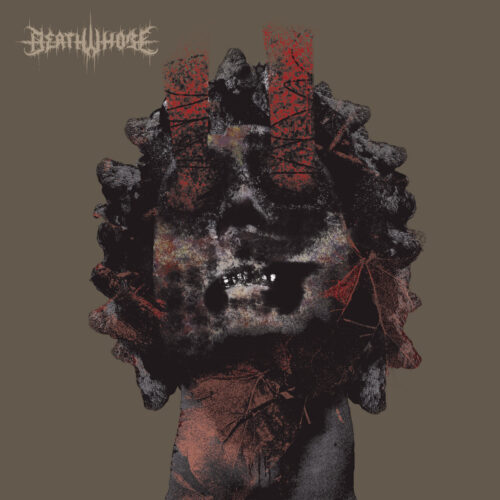
Death Whore // Blood Washes Everything Away [May 16th, 2025 – Self-Release]

Hailing from Nancy, France, crust/death newcomers Death Whore unleashed what is surely one of the meanest records of the year so far. A debut capable of humbling some of the better releases by far more seasoned acts, Blood Washes Everything Away is a nonstop cavalcade of stank-face, bone-shattering riffs. From the onset of vicious onslaught “Inhaling the Dead,” to the stomp and swerve that is the massive “Infernal Terror Machine” and “None Are Forgotten,” to the blistering and evil “12 Worm Wounds,” Death Whore crafted 11 brutally addictive, but smart and lean cuts guaranteed to snap necks. They allow only the sharpest hooks to imbue accessibility to this killer material, but make no sacrifice to the filthy, crust-laden tones and textures determined to pummel and paste (“Noyé dans le sang,” “Motorthroat ’79,” “Savage Aesthetic Revenge”). Throw in a refreshing message criticizing late-stage capitalistic trends, worldwide misappropriation of wealth by the elite class, and the futility of hard work in the modern era for those struggling to meet their basic needs (“You Owe Me a Living”), and you’ve got a record after my heart. I can already tell that I’m going to regret not saving Blood Washes Everything Away from Filter relegation by the time this publishes, but don’t let my transgression in this matter stop you from enjoying of deep Death Whore.

Executionist // Sacrament of the Sick [May 16th, 2025 – Self-Release]

West Virginian death thrashers Executionist were not on my radar. First off, I am, historically, very picky when it comes to thrash. It slaps when it slaps and leaves me cold when it doesn’t. Lately, though, I’ve been digging the style more and more, and Executionist’s particularly meaty take on Kreator WIOLENCE has my attention thoroughly affixed. With debut LP Sacrament of the Sick, Executionist bring on the riffs, but elevate them with blackened tremolos, rabid barks, and an immense bass tone. Opener proper “Edge of Annihilation” pulls no punches, but only hints at the quality held beyond. There’s an almost At the Gates-like sense of melody here, one which works in tandem with deadly riffs and blackened char instead of as a mere surface-level decoration (“Wheels of War,” “Divided We Stand… United We Fall”). While Sacrament of the Sick relies heavily on the long form for its song structures, creating a spot of bloat, there’s usually something memorable and interesting to keep me invested in the story from beginning to end (“Thy Kingdom Come,” “Sacrament of the Sick”). With just a little tightening of the screws, Executionist could easily become the next big name in thrash. Until then, rest easy knowing Sacrament of the Sick is a worthy contender on its own merits.

Thus Spoke’s Shiny Scraps

Ghost Bath // Rose Thorn Necklace [May 9th, 2025 – Nuclear Blast]

DSBM is a genre of necessity tied to a particular mood, and it’s not a happy one. In spite—or perhaps because—of this,1 it’s one I usually enjoy. Ghost Bath’s take on this particular type of misery music has fluctuated between more black metal and more post, and I personally found it never quite stuck. Rose Thorn Necklace, however, has kept me coming back for repeated mope sessions for weeks. It’s still recognisably Ghost Bath thanks to those same echoing howls that lurch into voiceless high-pitched wails (“Well, I Tried Drowning”), and a familiarity about the bitter refrains. But synths now play a prominent role in driving melody2 both dreamy (“Grotesque Display,” “Throat Cancer”) and uncomfortably upbeat (“Vodka Butterfly”), as things swing back in the direction of post-leaning DSBM. Layered strums lace into pessimistic chord swings and scream-resonant atmoblack (title, track, “Dandelion Tea,” “Stamen and Pistil”), sometimes recalling Harakiri for the Sky. It manages to be pretty, in that characteristically depressing way, as minor melodies bleed into blackened tantrums (“Well, I Tried Drowning”) or ride on synths as harrowing screams narrate (“Throat Cancer”). The snippets of coughing (“Dandelion Tea”), sobbing (“Vodka Butterfly”), and sirens (“Throat Cancer”) are par for the course, but still very effective, and the ending duo “Needles” and the horribly—but brilliantly—named “Throat Cancer” is kind of…genuinely lovely in a really gross, demoralising sense. I’m converted.

ClarkKent’s Bestial Beats

Animalize // Verminateur [May 23, 2025 – Dying Victims Productions]

While the album cover might not inspire confidence, make no mistake, Animalize is worthy of your attention. On their sophomore album, Verminateur, these Frenchmen bring youth and energy to the old school speed and traditional metal scene. They mix up mid-tempo tunes with high-octane thrash, and even throw in a lovely piano ballad for good measure (“Priere de Remords”). On tracks like “Chevel Astral” and “Au Jugement de Soi” you can hear influences ranging from Accept to Def Leppard, while the lightning-fast “Verminateur” sounds like a blast from Judas Priest’s Painkiller. Front man Coyote brings plenty of charm, ranging from excitedly shrill to cool-headed, all while executing some well-timed “oohs” and infectious laughter here and there. Fortunately, he doesn’t carry all of the weight. Jessman and RattleGab keep the riffs spicy throughout, ensuring Animalize never phones it in, while Lynx’s drumming adds some much-needed heft. The songwriting is nice and tight, allowing the album to clock in at a tidy 36 minutes. As good as each song is, the icing on the cake is “Envahisseurs,” which will end up as a strong candidate for song of the year. It brings a killer riff and thrilling energy that’s sure to get the Statue of Liberty to drop her torch and make some devil horns.

Owlswald’s Feathered Echoes

Pandemia // Darkened Devotion [May 16th, 2025 – Hammerheart Records]

After a decade between releases, Czech death metal veterans Pandemia burst back onto the scene with their sixth full-length, Darkened Devotion. Still channeling the menacing souls of legends like Vader and Immolation, Darkened Devotion marks a significant yet successful pivot towards a more accessible sound for Pandemia. Delivering bone-crushingly heavy and succinct songs that are both memorable and easily palatable, Pandemia haven’t lost their edge—they’ve simply refined it. From “Nightmare Paradox’s” gut-punching, wicked riffing to “Catalepsy’s” gratifying, atmospheric thrash-inspired arpeggiations, every part of Darkened Devotion feels focused and tastefully executed. New drummer Jake Bayer (Cutterred Flesh) is an absolute beast, shaping Darkened Devotion’s mammoth backbone with thunderous rapid-fire double bass runs (“Blessed, Blessed Oblivion,” “Depths”), intricate tom fills (“The Pallor of Detest,” “The Wretched Dance”) and precision blasts (“Nighttime Paradox,” “A Sea to Breathe In”). Returning guitarist Alex Marek—last heard on 2005’s Riven—unleashes a barrage of infectious shredding that makes headbanging involuntary. Jaroslav “Jarda” Friedrich’s bass and Jikra Krš’s vocals complement Bayer and Marek’s authority with angry drawls and guttural, gravely growls. The album’s overall tone is immense, effortlessly engulfing listeners into its nocturnal anxieties with ease. With Darkened Devotion, Pandemia have forged a refined and brutal auditory feast that genuinely took me by surprise. Embrace the darkness.

Killjoy’s Dreamy Delights

Asthénie // Iridescence [May 5th, 2025 – Self-Release]

Iridescence is literally a colorful piece of music. Named after the naturally occurring phenomenon of an object appearing to change colors, Asthénie assigned a different color to each of these five songs. The guitars are the main focus here—whether with a glimmer (“Mélèze”) or a shimmer (“Indigo”), they brilliantly showcase the prettier side of post metal. Hardcore-tinged screams boldly accentuate the guitars’ vibrant hues, providing heft and urgency. Somewhat ironically, “Gris” (meaning grey) takes up the most time at 11 minutes and is the most developed contrast between the calm and furious. At only 35 minutes in total, Iridescence passes like a beautiful breeze with little fluff or filler. While by no means necessary, some clean vocals could potentially add even more color to a future release. Though this is not the first instance this year of a post-black record patterned after various wavelengths in the visible light spectrum, Iridescence is resplendent in its own right.

Au Clair de Lune // In the Wake of Dusk [May 16th, 2025 – Self-Release]

Moonlight and bodies of water share an intrinsic artistic bond. There’s something deeply enchanting about a celestial, ghostly source of illumination amidst a dark, murky setting. Leonard Sinaguglia’s blackgaze project Au Clair de Lune aurally combines these two aesthetics via dreamy, floaty guitars and synths akin to Autumn Nostalgie and, of course, Alcest’s Écailles de Lune. At times, the melodies are smooth and glassy like the surface of a lake (“Echoing Silhouettes,” “Neon Dusk”). Other times, they’re upbeat and catchy as a rip current (“Anaemoia,” “Distant Glow”). The principal vocal style is a mild rasp, more for flavor than heaviness, though Falyriae adds her airy singing voice on occasion. Although the track order and overall pacing usually find a good balance between the atmospheric parts and the punchy parts, the longer track lengths make In the Wake of Dusk feel a bit fluffy in places. But even so, Au Clair de Lune provides a satisfying and transportative experience to an unearthly realm.

Dolphin Whisperer’s Dusky Deposition

Slumbering Sun // Starmony [May 9th, 2025 – Self Release]

Music is the closest thing we have to magic in this world. When a great song or a great album graces your ears, it’s a clean sweep to any combo the head, heart, and gyrating body. Such was the case with Lone Star Doomsters Slumbering Sun and their debut release The Ever-Living Fire back in 2023. With a fragile heart in one hand and a fat riff in the other, their take on the kind of sadboi doom you’d hear in bands like Warning or early Pallbearer struck me deep. On Starmony, much of the same elements return: growling bass underpinning stadium-sized riffs, Ozzy-like vocals that bustle with a modern emotion and charisma, and a posty playfulness that allows long-form compositions to swell and soar. The only trouble is that it takes a couple songs for Starmony to settle into that same form of riffed-out hypnosis, with the one-two intro of “Together Forever” and “Keep It a Secret” sounding like the middle drive of a live set rather than the start of an introspective journey. But with the violin-assisted weeping catharsis of “Midsommar Night’s Dream” and “Wanderlust,” the waltzing melody of “Danse Macabre,” and the Thin Lizzy-styled dueling leads of “The Tower,” Slumbering Sun again finds a monstrous groove in hopeful and hammering songcraft. And, of course, if you get a chance to catch this act live like I did, just a few days before The Dolphlet emerged, you’ll fall extra prey to the kinds of doomy incantations that Slumbering Sun conjures with their mystic-minded compositions. In fat riffs we trust, and in sorrowful hearts we linger.

Tyme’s Tragic Tones

Enterré Vivant // 悪罪 (Akuzaï) [May 26th, 2025 – Antiq]

Comprised of French multi-instrumentalist Erroiak and vocalist Sakrifiss—whose 25-year residency in Japan heavily influences the music—depressive black metallers Enterré Vivant’s3 third album, Akuzaï, blew me away. My DSBM bar was set long ago by Shining‘s unfuckwithable V: Halmstad, and yet Akuzaï has come along to give it a run for its money. Centered around 10 Buddhist sins, Akuzaï relates the experiences of Japanese civilians and victims during the Second World War. From the emotionally charged cover photo depicting a mother breastfeeding her newborn shortly after the bombing of Nagasaki,4 to the haunting interludes and shimmering, melancholic melodies within, Akuzaï melds traditional, tremolo-picked guitars and icy vocals ala Summoning and Emperor (“Sesshô,” “Shin’i”) with Moonsorrow-esque keys, Japanese-influenced flutes and violins, along with ghostly moaning howls to create its depressive atmospheres. Transitioning from the twisted croaks of interlude “Waraguchi,” album highlight “Jain” begins with mournful pianos and a pensive, tremolo-picked lead before crashing forth in waves of crushingly cascading chords and Sakrifiss’ tortured screams, its eight and a half minutes awash in black metal sadness. By the time the wails of a suffering child floated in around the seven-and-a-half-minute mark, my arms had broken out in goosebumps, and my heart was fucking broken. Offering yet another lens through which to view the torturous horrors of war, Akuzaï is harrowing, relentless, and not to be missed.

#2025 #Accept #Alcest #AmericanMetal #Animalize #Asthénie #AtTheGates #AtmosphericBlackMetal #AuClaireDeLune #AutumnNostalgie #Blackgaze #BloodWashesEverythingAway #Crust #CutterredFlesh #CzechMetal #DarkenedDevotion #DeathMetal #DeathWhore #DefLeppard #DoomMetal #DSBM #DyingVictimsProductions #Emperor #EnterréVivant #Executionist #Falyriae #FrenchMetal #GhostBath #HammerheartRecords #HarakiriForTheSky #Hardcore #HeavyMetal #Immolation #InTheWakeOfDusk #Iridescence #ItalianMetal #JudasPriest #Kreator #May25 #MelodicBlackMetal #MelodicDeathMetal #Moonsorrow #NuclearBlast #Pallbearer #Pandemia #PostBlackMetal #PostMetal #Review #Reviews #RoseThornNecklace #SacramentOfTheSick #SelfRelease #Shining #SlumberingSun #Starmony #StuckInTheFilter #StuckInTheFilter2025 #Summoning #ThinLizzy #ThrashMetal #Vader #Verminateur #Warning #悪罪Akuzaï_

2025-07-01

AMG’s Unsigned Band Rodeö: Empyrean Sanctum – Detachment from Reality

By Dolphin Whisperer

“AMG’s Unsigned Band Rodeö” is a time-honored tradition to showcase the most underground of the underground—the unsigned and unpromoted. This collective review treatment continues to exist to unite our writers in boot or bolster of the bands who remind us that, for better or worse, the metal underground exists as an important part of the global metal scene. The Rodeö rides on.”

More so than any other one thing, passion drives the underground. And within this world of passion, like-minded individuals find their partners in expression—or at least helping hands. Often, this can lead to us as hungry consumers to find out new acts via association. In fact, I stumbled upon the Chicago-helmed Empyrean Sanctum via research into associated acts of Katagory V vocalist Albert Rybka. And my intrigue grew further in reading that captain of the riffs Justin Kellerman had contracted the extraordinary rhythm duo of Hannes Grossman (just read his credits) and Alex Weber (Exist, WAIT, and more) for this sophomore Detachment from Reality. With a keen sense for guitar crunch, and a strong individual spirit as a guide, could Empyrean Sanctum’s progressive power charms win over our staunchy Rodeö crew? Follow passion down the sci-fi dystopia rabbit hole… Dolphin Whisperer

Empyrean Sanctum // Detachment from Reality [April 18th, 2025]

El Cuervo: It may not be my first pick — as it might have been 15 years ago — but I always have time for progressive power metal. It’s a sub-genre that oozes immediacy, from crunchy guitars to energetic singers to vibrant synths. Empyrean Sanctum tick these boxes and further dare to border real brutality to gild their heaviest moments across Detachment from Reality. “Lifeless Death” is the easy highlight, boasting uplifting synths and the heroic guitar solos that these guys evidently enjoy playing. However, I find the songs — and as a consequence the album overall — to be interminable. It’s the type of release where I check how many tracks have passed, but it’s only been four minutes and I’m still on the same one. The bookends (“Heart of Gold” and “Elation”) are the longest, which makes starting and restarting the album more arduous than it should be. And the production is also a thick shield to my listening pleasure. The master is obnoxiously loud, and the instrumental tones have a ‘clacky’, inorganic sound that’s anathema to my ears. There’s solid music buried here, but it’s just too difficult to access. 2.0/5.0

Dolphin Whisperer: In a genre so overtaken by re-amped chug-a-lug polyrhythms, it’s refreshing to hear Empyrean Sanctum’s adherence to the melodic backbone of ’00s progressive power metal.1 You know the kind—wailing, synth-backed, bright riffage championed by titans like Threshold or Anubis Gate and glued together with knotty Petrucci (Dream Theater) energy. At least that’s where I feel main mind, Justin Kellerman lives in composition. And in this lane, Detachment from Reality swaggers through riff after riff in an elegant manner, both wearing its length on tracks that ring slower to bubble and burst (“Transparency,” “Lifeless Death”) and sauntering through groovy growth and reprisal with ease (“Heart of Gold,” “Age of Innocence,” “Refinement”). But even when its over-chorused character—Albert Rybka (Katagory V) often finding a classic nasal croon and tasteful falsetto crescendo—hits a touch long in the tooth, Kellerman’s ear for a fitting riff transition alongside Hannes Grossman’s urge to progress and explode his thundering skins keeps the lull at bay. Many of these touches are subtle though, as Kellerman does not guide Empyrean Sanctum via guitar flamboyance and solo trade-offs—guest soloist Per Nilsson (Scar Symmetry, Kaipa) provides just about the only mark in that lane throughout (“Age of Innocence”). This straightforward and tuneful nature, however, plays enough as a successful choice rather than an unintentional miss on the noodle front. And if Kellerman and Empyrean Sanctum ever look to swing for the fences again with a heavier hand in wanksville, his slick compositions may land with an extra imprint and oomph. 3.0/5.0

Mystikus Hugebeard: As it stands, Detachment from Reality is a cool album. The problem is that it’s on the cusp of being an absolutely fuckin’ radical album, and falls just short. To their credit, Empyrean Sanctum nails the rhythm section. Dynamic bass-playing and inventive drum lines augment the guitars, which strike and strike in a percussive heartbeat. “Descent” is a particularly gripping track, a straightforward melody and powerful chorus over a ceaseless chug and strum. The production also lends a beefy heft to the guitars, empowering the riffs in a way that reminds me of the best parts of Hemina without the debilitating stench of cheese. The sticking point is how Detachment from Reality always teeters on the edge of inventive, daring song-craft, but never seems to commit. Apart from some slick guitar work in “Heart of Gold” and the delicious Per Nilsson guest solo in the title track, the lead guitars are rarely allowed the space to do anything befitting the virtuosity of the rest of the music. The songwriting feels more satisfied to shuffle from one riff to the next without erupting into something truly dynamic and challenging, resulting in a dearth of moments that stand out in my memory. It’s like the soundfont of a progressive song structure applied to something less audacious, which really drags the repetition of “Lifeless Death” and “Elation” into an unflattering light. Ultimately, it’s less a fundamental flaw as much as it is untapped potential. Complain though I might, Detachment from Reality deserves your listen. 3.0/5.0

Clark Kent: Empyrean Sanctum’s Detachment from Reality is everything that I love about metal. The album has meticulously crafted long-form songs that seamlessly weave from movement to movement so they never overstay their welcome. Empyrean Sanctum borrows their sound from latter-day Blind Guardian and Symphony X, but without the bombast. There’s a restraint and maturity to the songwriting that makes it feel comforting. In fact, even Mrs. Kent, who usually despises my music, gives her stamp of approval. Detachment from Reality features symphonic progressive metal with orchestration and synths used as an accent rather than the main feature. You get the feeling of joy and composure from all the players: when Albert Rybka’s gruff cleans belt out the chorus of “Age of Innocence,” or Justin Kellerman moves from rhythm to fancy fretwork, or Hannes Grossman provides mid-tempo drumming that serves as a steady beacon throughout the album. I found plenty to enjoy on each song: excellent solos, moody synths, emotive singing, and surprises like the piano on “Lifeless Death” and the heart-pumping riffs on “Refinement.” One might scoff at the length, but it’s so easy to get lost in the mesmerizing melodies that the hour just flies by. With the album’s spacey synths, intergalactic riffs, and out-of-this-world vocals, this makes me feel right at home. 4.0/5.0

#AmericanMetal #AngryMetalGuySUnsignedBandRodeo #AngryMetalGuySUnsignedBandRodeo2025 #AnubisGate #BlindGuardian #DreamTheater #EmpyreanSanctum #Hemina #IndependentRelease #KatagoryV #May25 #PowerMetal #ProgPower #ProgressiveMetal #Review #Reviews #SelfRelease #SymphonyX #Threshold

2025-06-27

AMG’s Unsigned Band Rodeö: Kalaveraztekah – Nikan Axkan

By Dolphin Whisperer

“AMG’s Unsigned Band Rodeö” is a time-honored tradition to showcase the most underground of the underground—the unsigned and unpromoted. This collective review treatment continues to exist to unite our writers in boot or bolster of the bands who remind us that, for better or worse, the metal underground exists as an important part of the global metal scene. The Rodeö rides on.”

The Rodeö is full of surprises. Today’s potential riff trap hails from the arid lands of Aguascalientes, Mexico, known most famously for its array of hot springs and National Museum of Death. Yes, in death Kalaveraztekah revels, and not just in a death metal groove indebted to the jagged scrawl of Morbid Angel or the destructive howl of early Behemoth. With a healthy inclusion of pre-Hispanic, indigenous instrumentation alongside their chunky and pinch-addled drive, Nikan Axkan churns and tumbles through chants and thunderous drum roll to shine a light on the Mexica culture and history of sacrifice and spirit world. To excavate the wonders that the adventurous Kalaveraztekah holds hidden in the underground, we’ve assembled a crack Rodeö crew, including an appearance from The Man, The Myth, The AMG Himself. Surely that means that everyone followed the word count, right? – Dolphin Whisperer

Kalaveraztekah // Nikan Axkan [May 2nd, 2025]

AMG Himself: Kalaveraztekah’s Nikan Axkan represents hopes and dreams that I have harbored for years. When will we finally get the seminal piece of Aztec-influenced extreme metal that will whet my appetite for both death metal and Mesoamerican history?1 With aplomb, these astonishingly unsigned Aguascalientes-ites2 do the fine job of balancing two equally vital parts of a single sound. Kalaveraztekah hits like a ton of bricks, dealing in death metal that’s neither old nor school, it’s just brutal and grindy, tempered only by peyote-fueled excursions into the netherworld. The core of their sound is brutal Mexican death metal replete with blasts and machine gun kicks, neck-damaging riffing, pig-squealing guitars, brutal growls (and occasionally less-brutal screamies) synced with the snare, and an intensity that I associate with writing reviews of bands like Vomitory or Crypta. It’s got the riffs and intensity with just a touch of melody, and I bask in its brutality and shreddy, squealy solos. Kalaveraztekah’s particular innovation in this sphere is the successful inclusion of traditional folk elements from the indigenous people located throughout Mexico, but which is today used almost exclusively for the Mexica people of Tenochtitlan (which is modern-day Mexico City).3 Kalaveraztekah’s focus on “Aztec Cosmogony” lends itself perfectly to the second part of their unique sound: dreamy folk soundscapes that they adapt seamlessly—and convincingly—when they shift gear. Driven by reverb-soaked soundscapes, Spanish guitars,4 and what I assume is a tlapitzalli (flute), the band lends atmosphere and dynamics that are necessary to offset a style of death metal that at times can risk monotony. And when they meet, these two sounds crash into each other like storm fronts, creating something beautiful and terrible to behold, simultaneously brutal and thoughtful, grindy and melodic, atmospheric and immediate. I fuckin’ love this shit.

Next up on my befolkened death metal bucketlist: the Olmecs! 4.0/5.0

Dear Hollow: What’s great about Kalaveraztekah is their ability to channel their heritage into an homage to the Mexica that sounds ancient, cosmic, and brutal. Featuring a blend not unlike the formidable shaman-themed Hell:on, the lethal fusion of cutthroat death metal and folk instruments offers balance: wild guitar solos, haunting flutes, terrifying death whistles, and ritualistic drums shine amid the no-frills Sulphur Aeon-esque riffs. While similarities to other Mexico-based Aztec- or Mayan-themed groups are unavoidable, Pre-Hispanic folk instrumentation is not mere novelty like it is for Ocelotl or Eunoë, nor is it an atmospheric saturation of bloody sacrifice in the manner of Aztlan or Cemican – rather, Kalaveraztekah uses ritualistic and ceremonial elements to amplify the cyclical cosmic grandiosity of the Five Suns in an album of both creation and devastation. Nikan Axkan offers riffs galore (“Tlazolteotl,” “Xiuhtekuhtli Weweteotl”), haunting overtures with spoken word that recall sacrificial ecstasy and the vast rotting realms of the gods (“Yowaltecuhtli,” “Illwikatl Meztli”), and just enough techy flavors of soaring intensity and dissonant menace to warrant diversity and complexity (“Xolotl Axolotl,” “Xiuhmolpili”). While the album is a tad overlong at nearly fifty minutes, Kalaveraztekah’s approach straddles the line between violently visceral and gloriously colossal – truly “el amanecer del nuevo sol” indeed. 4.0/5.0

Iceberg: I love it when an album requires me to do some research to unwrap its mysteries. Before I came across Nikan Axlan I had precious little knowledge of Aztec mythology. But now, thanks to Aguascalientes natives Kalaveraztekah, I can confidently tell my Xolotls from my Axolotls. Kalaveraztekah’s sonic template skews more groove than death metal, but the inclusion of a host of traditional instruments keeps the music refreshing and thoroughly unnerving. The tribal drums and wind instruments maintain a constant otherworldly atmosphere, and the extraneous vocal additions are excellent (the frantic spoken word of “Yowaltekuhtli” and the Wilhelm screams of “Xolotl Axolotl”). Kalaveraztekah aren’t content to sit in any one corner with their instruments either. The trebly blues tone of “Yowaltekuhtli” feels ripped from a Los Lonely Boys album, and the sweeping neoclassical riff that forms the backbone of “Xiuhmolpilli” screams symphodeath BOMBAST.5 The biggest drawback for me here is that in leaning so far into the groove metal style, the BPM goes stale in its mid-paced swagger. Given everything else that Kalaveraztekah unleashes on Nikan Axkan, I’m left wondering what this band would sound like if they really stepped on the gas and hit that NOS button (although the opening riff of “Wewekyotl” gets pretty damn close). That quibble aside, Nikan Axkan is a compelling and replayable record, and a great trip into the dark, bizarre world of Aztec mythology. I highly recommend this album for those looking for some tasty groove metal with a bit of strange on the side. 3.5/5.0

Alekhines Gun: Move over Tzompantli, there’s a new band in town. Channeling the instrumental flourishes of Nechochwen filtered through something adjacent to The Zenith Passage in production,6 Kalaveraztekah have presented a slab of agave scented folky melodic death so meticulously constructed and well produced that I’m actually stunned it’s an independent release. From the triumphant flourishes dotting the leads in “Yowaltekuhtli” to the thunderous tribal percussion-laced breakdowns in “Xiuhtekuhtli Weweteotl”, Nikan Axkan never wants for a variety of gripping moments. A sense of propulsion flows through the album, rendering the occasional interludes atmospheric rather than momentum-killing. Songs like “Xolotl Axolotl” feature heaps of skronk and tawngy tech only to instantly be offset by indigenous instruments and melodic atmospherics in equal measure. True, each individual track feels a bit long in the tooth and seem as though they could benefit from some editing, and I wish the bottom end didn’t sound so artificial. Nevertheless, every time I found myself thinking such thoughts I was suddenly blown away by some excellent new riff or lovely melody from wood instruments or percussion, slotting neatly into the album’s reasonable runtime. Nikan Axhan is an album with a remarkably matured and well-executed vision, and has been a gripping, engaging listen with each spin. Support this album. 3.5/5.0

Thyme: Most bands continually seek ways to bring originality into their work. For Aguascalientes, Mexico, five-piece death metal outfit Kalaveraztekah, that originality comes in the form of heaving helpings of Mesoamerican folk instrumentation, expertly woven into the deathly fabric of their sophomore album Nikan Azkan. Right off the bat, I felt transported to the middle of a Mexican rainforest as tribal drums and folkish guitar lines cede their delicate grip to Behemoth-like death riffs and a hellish vocal attack that rivals Nergal’s (“Nikan Axkan (El Aquí y El Ahora)”). When Nikan Azkan isn’t channeling Demigod levels of viciousness, its hybrid form of folk death conjures Roots-era Sepultura with sludgily dirty riffs, primitive death chants, and a plethora of indigenous instruments ranging from ocarinas to Aztec death whistles (“Xiuhtekuhtli Weweteotl (El Fuego Ancestral),” “Wewekoyotl (El Coyote Viejo)”). Kalaveraztekah brings loads of atmosphere to Nikan Axkan, especially on “Yowaltekuhtli (Un Sueño En La Oscuridad),” with its haunting instrumentation—the guitar work is top notch here—and the desperate, breathless pleas of the narrator conjuring tons of dramatic tension. On repeated spins, the magic within Nikan Axkan continues to unravel. While the meshing of Kalaveraztekah’s death metal—standard as it may be—with its folk-forward instrumentation tends to blur tracks together, enjoyment didn’t dissipate the more I listened. Fans of what Tzompantli are doing would be hard-pressed to miss this, and I suggest they don’t. 3.0/5.0

#AngryMetalGuySUnsignedBandRodeo #AngryMetalGuySUnsignedBandRodeo2025 #Aztec #Behemoth #Crypta #DeathMetal #FolkMetal #GrooveMetal #HellOn #IndependentRelease #Kalaveraztekah #LosLonelyBoys #May25 #MexicanMetal #MorbidAngel #Nechochwen #NikanAxkan #ProgressiveDeathMetal #Review #Reviews #SelfRelease #Sepultura #SulphurAeon #Tzompantli #Vomitory

2025-06-10

Warrior Pope – A Morbid Parody of Justice Review

By Killjoy

There have been many recent headlines about a brand new pope, but Warrior Pope from Bristol, UK are here to tell the story of a much older one. The Cadaver Synod refers to the ecclesiastical trial in the year 897 of Pope Formosus, who was already deceased beforehand. Pope Stephen VI, one of Formosus’ successors, ordered the exhumation and public trial of the corpse, after which the dead pope’s papacy was retroactively pronounced null. Stephen cut three fingers off of Formosus’ right hand, arranged for the body to be reburied in a foreigner’s grave, and later decided it should be dumped in the Tiber River instead. Now, the aptly titled A Morbid Parody of Justice seeks to do the proper justice to this macabre historical event that Formosus was denied long ago.

Whereas Warrior Pope’s earlier material was a quirky mixture of post-metal and stoner doom, A Morbid Parody of Justice is even more of a hodgepodge. There is still a prominent doom metal backbone wherein founder Oli Foxen continues to lay down hefty bass lines alongside longtime drummer Katya’s hypnotic rhythms. However, the framework within which they operate is more volatile now that the steady stoner grooves are diminished. The arrival of guitarist Jack Andrews and vocalist David Burke appears to have helped steer Warrior Pope into a less predictable post-hardcore direction, with muddy riffs and frenzied screams and growls. In addition, Burke’s trombone and Katya’s bowed cymbal scrapes and screeches open up new experimental avenues to enrich the overall atmosphere.

But experimentation left unchecked can become detrimental. A Morbid Parody of Justice begins innocuously enough in “Pornocratia,” with soft bass notes increasing in complexity and tastefully enhanced by a somber trombone. Afterward, however, things unravel into a slurry of haphazard ideas. “Despoiling a Cloisters” dips its toes into slow, sludgy waters; “Twenty-Four Popes Later” is a one-minute hardcore punk whirlwind; and closing track “The Method” suddenly launches into belligerent post-hardcore. By far the most puzzling songwriting decision is the dedication of three minutes in “Experience Severing” to aimless guitar amp feedback and bowed cymbal screeches. This is possibly intended to symbolize the three fingers taken from Formosus but no matter the reason, these three cacophonous minutes last far too long. The transitions between tracks are well thought out, which eases the overall flow, but can’t overcome the fact that few individual songs sound like they belong on the same record.

That said, once one becomes accustomed to the stylistic whiplash, it’s evident that all members of Warrior Pope perform their roles well. Oli Foxen’s bass and Jack Andrews’ guitar have satisfying synergy, like the deft bass fills between viscous guitar chords (“Condemnations of Formosus”) or when they join forces to form imposing sound walls (“Rotten Sun”). Katya showcases her prowess with an extended drum solo at the beginning of “Experience Severing,” and her bowed cymbal technique works well as a subtle accompaniment to guest Mike Bishop’s (Gwar, Kepone) lively narration in “Bishop’s Take.” I’m most impressed by David Burke’s vocal versatility as he emits unhinged screams (“Despoiling a Cloisters,” “The Method”), fragile croons (“Strangled Legacy,” “Rotten Sun”), and everything in between. The album mix, however, plays no favorites and gives everyone equal space to shine, particularly in the doomier moments where Warrior Pope sound the most comfortable.

It’s undeniable that Warrior Pope are a creative bunch. This new lineup has loads of potential to reshape traditional metal conventions, but what A Morbid Parody of Justice needed was some of the focus and consistency from Warrior Pope’s prior work. This is a case where the individual components are stronger individually than as a unified whole. I imagine that mileage may vary widely, so anyone looking for something outside the box should give A Morbid Parody of Justice at least a curious spin. It endeared itself to me the more time I spent with it, warts and all. I’ll be rooting for Warrior Pope, and I look forward to whatever musical or historical concepts they decide to tackle next time.

Rating: 2.5/5.0
DR: 7 | Format Reviewed: 320 kbps mp3
Label: Self-Release
Websites: warriorpope.bandcamp.com | facebook.com/warriorpope
Releases Worldwide: May 30th, 2025

#25 #2025 #AMorbidParodyOfJustice #BritishMetal #DoomMetal #Gwar #Kepone #May25 #PostHardcore #PostMetal #Review #Reviews #SelfRelease #WarriorPope

2025-06-08

Haitón del Guarataro – Pombero Review

By GardensTale

Cryptids are cool as fuck. I don’t believe in them, but highly localized monster myths are just a fascinating insight in the fears and priorities of a particular culture, especially the often esoteric rules surrounding the fabled creatures. For his second album, Alexis Uribe of one-man band Haitón del Guarataro from Buenos Aires, Argentina, focuses on the Pombero, a short hairy humanoid being from Paraguayan folklore. It steals eggs and honey, impregnates women, and is appeased by gifts of rum and cigars. So it’s basically Steel Druhm on a bender. Context aside, I was intrigued by the concept behind Pombero; an album that would morph from stoner doom into black doom across the runtime. Does Haitón del Guarataro pull off the metamorphosis?

Well, technically, he does. The title track kicks off the album with a few minutes of lovely traditional Spanish guitar, weary and melancholy, imparting a suitable South American vibe, and although a little long-winded, it remains my favorite part of the album. Because once the heavy distortion kicks in, so do the vocals, a hoarse mumble that barely seems to make an attempt at hitting pitch and is frequently double-tracked without any discernable harmonization. They swerve from cleans to growls to everything in between seemingly at random across the front half of the album and rarely rise to the level of competent. Still, Uribe is clearly better at harsh vocals than clean, as “Double-Cross” succinctly demonstrates. The comatose front half of the track sports lethargic off-key murmuring, but some color returns to its cheeks when the biting snarls make their entrance.

Instrumentation-wise, there is likewise more bad than good, but the occasional bright spots give hope for a better future. For one, a few choice riffs dot Pombero. “Dueño del Sol” has a pretty sweet semi-Sabbathian one that’s played both slow and sped up and shines when accompanied by organs, though much of the track merely alternates that and stale single-chord plodding. The opener’s opening had me fooled with the quality of the guitar playing from the start, and when Uribe harmonizes his riffing with the (admittedly still dubious) vocals and follows it up with more of that sweet Spanish guitar, it begins to sketch what Haitón del Guarataro could grow into. But the back half of “Double-Cross” is the best 5 minutes of the album, even sporting a sweet solo and some genuinely nice transitions.

But I do find I have to really dig for the positives here, while the poor choices accumulate like beach-sand in an exposed buttcrack. Despite Uribe’s proficiency at blackened snarls, their double-tracked confusion and endless plodding make a tiring exercise out of closing duo “Karai Pyhare” and “Mopytũ,” especially the tuneless post-influenced wash of the latter. The former at least has the benefit of a few faster sections to change up the pace, but those underline the frankly awful drums, both their sloppy play and cardboard production. Also there seem to be maracas there, for some reason, and they hurt far more than they help. Whilst I always enjoy a clear bass, the twangy, almost funky sound here clashes with the sinister, trebly distortion of the guitars. Between the mismatched textures, ill-advised double-tracking, and messy timing, it seems to me that Haitón del Guarataro does his own production, and has much to learn in that regard.

Sadly, it goes for most other regards, too. I don’t much relish writing a review like this. Alexis Uribe is obviously passionate about his music, and I really want him to succeed. I still like the concept of slowly shifting from one subgenre to another, and it’s the kind of creative idea metal thrives on. But every aspect of the execution is flawed; the repetitive songwriting, haphazard timing, shoddy production, and subpar vocals are just a few examples. The riffs, when not overtaken by tuneless plodding, and the occasional solo are more solid, and give me hope that Uribe has something to expand upon, either with Haitón del Guarataro or in the context of a full band. With Pombero, I’m sorry to say, he’s not there yet.

Rating: 1.5/5.0
DR: 5 | Format Reviewed: ~260 kbps VBR mp3
Label: Self-released
Website: haitondelguarataro.bandcamp.com
Releases Worldwide: May 16th, 2025

#15 #2025 #ArgentineMetal #BlackMetal #BlackSabbath #DoomMetal #HaitónDelGuarataro #May25 #Pombero #Review #Reviews #SelfReleased #StonerMetal

2025-06-04

Quadvium – Tetradōm Review

By Dolphin Whisperer

Who needs two guitar players when you could have two master bass players at the helm? Quadvium seeks to answer this question with the fiery fingerwork of metal legends Steve DiGiorgio and Jeroen Paul Thesseling. DiGiorgio revolutionized bass playing in the metalsphere through radical death works with Autopsy, Death,1 and his own band, Sadus. Even if you don’t know his name, you may recognize these hallmarks of percussive and frenetic bass engineering, or any number of the thrashy, deathly, or progressive albums to which he has lent a wild, throbbing pulse. Likewise, Thesseling has weaved his way around celebrated releases, designing a style equally tricky but heavier in jazz-indebted fusion. Both Pestilence’s Spheres and Obscura’s breakout albums Cosmogenesis and Omnivium would not have seen the same light without his buttery and bleeping presence.

In the collision of these two thick-stringed giants, Tetradōm weaves and wobbles in delectable harmony. The role of bass in rock and metal arrangements rarely settles into that of the lead. But with conductors of this caliber on fretless, and extended-range bass devices,2 nasally slides, flatulent thumps, and snarling shuffles rumble about this airy but grounded soundstage. Despite the low-end firepower at play, each accompanying performer brings flair and experience to their respective lanes. Guitarist (and engineer for Tetradōm) Eve (Kaathe) brings a flowing touch and additional melodic guide—opener “Moksha” even leads with her crystalline phrasing—that borrows from her tenure with instrumental progressive outlet Myth of I. And kitmeister Yuma van Eekelen has a storied rhythmic history with understated bands Our Oceans and Exivious that allows his textural phrasing to embolden the space between flying frequencies. No shortage of talent befalls Quadvium’s calculated stride.

Though a tag of supergroup may follow Quadvium, Tetradōm leads with an ear for the tasteful and impactful rather than one deafened by excess. All members of Quadvium possess an overwhelming prowess and creativity that edges toward the funky fresh technicality of a fusion act like Tribal Tech. Yet, with a djent-like groove, Quadvium reclaims the sterile nature of scooped drop-F chugging against glitchy electronic backings with panned wide, warm bass massaging (“Apophis,” “Adhyasa”). Popping harmonics blare3 in a glory as flighty interruptions amongst Animals as Leaders-knotted riffage, all while capturing the exploratory jazz feel of the iconic and influential Jaco Pastorius (“Náströnd”). Howling and whinnying melodies signal a path around which Eve and van Eekelen can prance in touch-and-go solo flutters and cymbal-savvy atmosphere (“Sarab,” “Eidolon”). The breadth of techniques and tones on display requires an open and engaged mind to enjoy. But Quadvium’s resonant, interwoven throughput tied fast to ever-unfolding refrains never drifts into solo-laden, wandering note tedium.

Such a bass-forward presentation—and not in the subwoofer booming way that modern hip-hop or electronic music can be—requires a listening setup with an extra oomph through the low and mid range. I remember the first time I listened to Gordian Knot’s “Arsis,” a subtle solo bass intro to 2003’s classic, Emergent, I could have sworn nothing emerged from my crackling Logitech speakers, its subtle hum nary an auditory blip. Quadvium doesn’t render their instrumental dialogue quite as soft-spoken, with performers’ metal edges and jazzy chatter (and Eve’s cybersynth sound design) filling the room with bright, up-front, persistent movement. But to hear the nuances, and fall into a fuller love with Tetradōm, you may have to reach for your richest listening mode so that you lose neither the delicate drum teasing intro to “Ghardus”—and the bass duo’s subsequent descent to the lowest range of the experience—nor the delicate floor-scraping harmonies of “Apophis.” Of course, you could just crank that volume knob, lay out on the floor, and let the braying call-and-response bends of “Sarab” or the modulated stacked-track bliss of “Eidolon” vibrate your being to a higher existence.

Without a single word, Quadvium manages to conjure the esoteric nature that Tetradōm and its philosophy-inspired titles promise. Its strike, though, takes full shape, eschewing the potential for amorphous free jazz tone flexing that fusion music can embody. DiGiorgio and Thesseling have a vision of what bass can be in a rock and metal context, and Tetradōm realizes that with every squeaking slide, pattering finger roll, cascading chord. Masters don’t always produce hungry music, but Quadvium has shown their appetite remains growling.

Rating: 4.0/5.0
DR: 7 | Format Reviewed: 256 kbps mp3
Label: Agonia Records | Bandcamp
Website: facebook.com/quadviumofficial
Releases Worldwide: May 30th, 2025

#2025 #40 #AgoniaRecords #AnimalsAsLeaders #Atheist #Autopsy #Death #Exivious #GordianKnot #InstrumentalMetal #InternationalMetal #JacoPastorius #JazzFusion #May25 #MythOfI #Obscura #OurOceans #Pestilence #ProgressiveMetal #Quadvium #Review #Reviews #Sadist #Sadus #Tetradōm #TribalTech

2025-06-04

Obsidian Tongue – Eclipsing Worlds of Scorn Review

By Twelve

I felt a brief surge of excitement when I saw we had received the new Obsidian Tongue album to review in late April. Maybe I subconsciously remember Carcharodon‘s positive review of the aptly-titled Volume III, or maybe I was just in a black metal mood at the time, but I made note of the discovery either way. I was sure the aforementioned shark-man would be writing these words instead of me, but life is funny sometimes, and here I am. Eclipsing Worlds of Scorn is the fourth full-length release from the US-based black metal outfit. Previously, they’ve explored ambient, folky, and darkened themes; more recently, I came across two members reviewing the latest Namebearer. With so many possible directions and themes to explore, where do Obsidian Tongue land with this one?

Your first impression of Eclipsing Worlds of Scorn may well match mine—that of a modern black metal outfit trying to evoke a raw, dated sound1 through fuzzy production and standard genre tropes. I’m not convinced this impression is wrong, but it’s hardly the full story either; Obsidian Tongue are thoughtful composers and have plenty of tricks up their sleeves to keep Eclipsing Worlds of Scorn engaging across its forty minutes. Guitarist Brendan Hayter (also the vocalist) (Thrawsunblat, Namebearer, Blood Chariot) riffs, tremolos, and picks his way through a surprising variety of black metal compositions (given the record only has six of them), from the mystical journey of “To Forgive Oneself” to “Orphaned Spiritual Warrior,” which barrels and pummels its way out of any objections. Joined by bassist Brian Tenison (also of Namebearer and Blood Chariot) and drummer Raymond Capizzo (Falls of Rauros), Obsidian Tongue demonstrates itself as multifaceted as ever across Eclipsing Worlds of Scorn.

So it is perhaps unsurprising that there’s an emotional core to the music that supersedes style or production choice. I certainly wouldn’t have expected a song called “Snakeskin Tunnel Colony” to win any awards for catharsis, but there it goes, weaving in triumphant keys in unexpected places and making extremely endearing emotional appeals. Closer “Theater of Smoke & Wind” goes all-out with passages of ominous build that erupt into a black metal frenzy before taking a step back to let the keys end proceedings on an emotional, almost orchestral finish. It’s a far cry from Obsidian Tongue’s folky, atmoblack origins, but you can see the intended evolution for their sound. Hayter’s rasps are occasionally augmented by his cleans, his wistful baritones a perfect companion for the most woeful moments on Eclipsing Worlds of Scorn.2 In all, Obsidian Tongue have a lot going for them; there are so many aspects to their sound that set up their music for success.

Still—and I do hate to say it—I keep coming up to the production; the ever-present fuzz of the guitars and distance on the drums gives Eclipsing Worlds of Scorn a vague, detached quality that may have served Obsidian Tongue better on past releases than the present one. It’s a good deal more immediate than Volume III, but still feels like it has one foot in the atmospheric world. From a songwriting perspective, however, Eclipsing Worlds of Scorn feels mismatched from this choice. The music’s lessened immediacy, partially due to this, makes most of the music non-memorable for me. I hear it, I enjoy it in the moment, I can even pick out my favorite songs and tell you why I like them,3 but I struggle to remember specific moments beyond their motifs. Eclipsing Worlds of Scorn leaves no doubt that Hayter and Obsidian Tongue are great at what they do, but they feel held back on this particular release.

Eclipsing Worlds of Scorn is another strong entry into Obsidian Tongue’s rapidly growing catalogue. It continues their trajectory onto a harder, darker path and I’ve very much enjoyed the result. I can’t quite help the feeling that the execution and vision aren’t quite aligned, but that could easily be just me—the core of Eclipsing Worlds of Scorn is fine black metal that lives up to the awesome album’s name and is worth the visit.

Rating: 3.0/5.0
DR: 8 | Format Reviewed:
Label: Profound Lore Records
Websites: obsidiantongue.bandcamp.com | facebook.com/Obsidian-Tongue
Releases Worldwide: May 30th, 2025

#2025 #30 #AmericanMetal #BlackMetal #BloodChariot #EclipsingWorldsOfScorn #FallsOfRauros #May25 #Namebearer #ObsidianTongue #ProfoundLoreRecords #Review #Reviews #Thrawsunblat

2025-06-02

Walg – V Review

By GardensTale

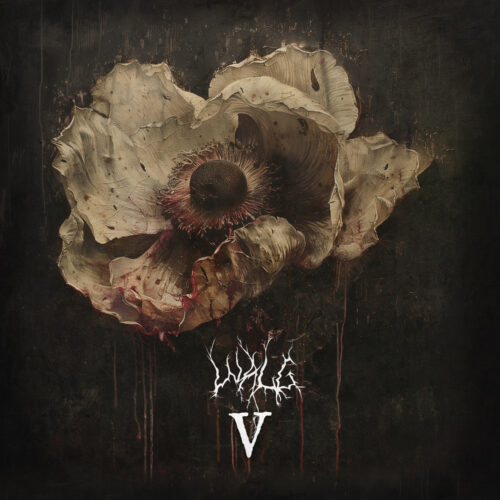
As I have mentioned before, I’m focusing primarily on contact form promos this year. But every now and then, I will make exceptions, mostly to cover bands I have seniority over. Fortuitous, then, that twice-listing meloblack mavericks Walg sent their fifth opus V in through our back door, allowing me to keep my streak and eat it too! I admit, I did grovel for the promo because I finally wanted to give the Dutch duo their dues with a real review, rather than relegating it to yet another TYMHM article. But my point stands, and so does my hype. Will Walg keep up its insane release-rate-to-quality ratio?

That’s largely a yes, and I’ll get to the caveat later. If you’re new to the band, Walg is melodic black metal distilled to its purest form. Equally catchy and vicious, the studio-only pair has settled handily into a niche somewhere between modern …And Oceans, early Dimmu Borgir, and Old Man’s Child. They don’t break new ground, but are absolute experts at treading the old. Yorick Keijzer is a beast on vocals, his primary weapon a slavering snarl still chewing the meat from its last kill. But he flips just as easily to a hoarse howl straight from the DSBM handbook. Robert Koning adds the occasional ICS Vortex adjacent cleans, and also all of the instrumentation, which spans a fairly broad range of high-speed assaults, atmospheric folk intros and interludes, and intricate multi-part melodic movements.

50-odd quality tracks in 5 years is hard to do without some sort of formula, and it has become easier to recognize the handful of structural stencils Walg employs. Usually, the band can dazzle hard enough to distract from that sense of familiarity, but the back half of V consistently fails to draw my attention away entirely from the man behind the curtain. “Zielsalleen”1 leans a little too much on the same hook and the decrease in pace of “Pijnlichaam”2 is not accompanied by as gripping a riff as it needs. These tracks are not even a little bit bad, by the way; most bands would kill to write something as powerful as the final minute of “Ego-Dood.”3 They are just a smidge harder to love without reservation when I’ve heard the same band do better with the same tools.

But 4 tracks that are merely very good still leaves 5 that are every bit as strong as Walg has ever written. Opener “De Vlinder en de Dromer”4 takes all of 0.5 seconds to launch into an intense onslaught of ariose tremolos that reminds favorably of …And Oceans’ “Cosmic World Mother.” Follow-through uppercut “De Adem van het Einde”5 employs a riffing style that borrows from NWOBHM and speed metal for an exhilarating turn. And centerpiece “Daar Waar Stilte Spreekt”6 is downright addictive with its jaunty swinging rhythm that conjures imagery of ghost ships and haunted cliffs. There’s no fat on the compositions either. Walg may have a formula, but one of its most potent ingredients is a strict lack of bloat. Koning and Keijzer would rather end a track early than overstay its welcome, and the entirety of V runs a svelte 40 minutes. Combine that with the excellent, rich production and finely tuned mix, and you get some of the most replayable black metal in the scene.

Infinite growth is impossible, and Walg’s meteoric rise had to slow down somewhere. But in this case, it means nothing more than a small step below the pinnacle that was IV. The front-loading of the album makes the flaws of V a tad more noticeable and makes me less hungry to spin it again the moment it’s over. But every time I do, I still get my head caved in and my neck snapped in twain, and with Walg’s production speed, that remains a colossal achievement. If you like melodic black, you owe it to yourself to give V a few spins, and I would hardly be surprised to see this wind up on a few Top 10 lists anyway.

Rating: 3.5/5.0
DR: 7 | Format Reviewed: 320 kb/s mp3
Label: Self-released
Websites: walg.bandcamp.com | walgmetal.com | facebook.com/Walgmetal
Releases Worldwide: May 25th, 2025

#AndOceans #2025 #35 #DimmuBorgir #DutchMetal #May25 #MelodicBlackMetal #OldManSChild #Review #Reviews #SelfReleased #V #Walg

2025-06-02

Vildhjarta – Där skogen sjunger under evighetens granar Review

By Dear Hollow

You could make the case that Vildhjarta’s third full-length is too late to be relevant. There are few that djent as hard as the Swedes, and their own influence exists in pockets of tone-abusing youngsters and diehard veterans who just keep releasing shit: Tesseract, Periphery, and Animals As Leaders, for example. I’ve always thought that Vildhjarta is the more curious Humanity’s Last Breath, utilizing a similarly crushingly heavy bone-to-dust djent tone, dark atmosphere, and vocal attack,1 but with a shimmering ethereality more akin to Uneven Structure or older The Contortionist, heaven and hell alike. Regardless, you can bet your bottom dollar that Vildhjarta djents. Hard.

Vildhjarta has a fervent fanbase in spite of having relatively little music to speak of. Having coined the mysterious “thall!” battle cry and influencing a ton of “djentlemen,” Där skogen sjunger under evighetens granar is only their third full-length. The influential concept album Måsstaden was a landmark of djenty deathcore, but was immediately left almost entirely unanswered (apart from the Thousands of Evils EP in 2013) until 2021 with the release of Måsstaden under vatten (“seagull city underwater”). That album rekindled what made the act so formidable to begin with: downtuned choppy djent riffs, reverb-laden leads that sway between dissonant and hyper-melodic, and staccato overlapping rhythms. Där skogen sjunger under evighetens granar is undeniably Vildhjarta in this way, although it benefits from its more playful approach, streamlined songwriting, heightened atmosphere, and deepened weight, but it won’t change your mind about Vildhjarta in its one-note and overlong glory.

Vildhjarta has always been unique for its ability to take the novelty and highlights of djent and make an experience out of it. Där skogen sjunger under evighetens granar is the most pristine and positive of the band’s discography, reflecting its sanguine title,2 compared to the ominous ambiance pervading the dark fairytales of the Måsstaden suite. While its predecessors dove headfirst into the darkness, Där skogen... seems to embrace a more dreamy attitude reminiscent of post-rock bands like Sigur Rós or Hammock. Yes, the Swedes have amped the density and weight of their djent, but have also raised its hell-gazing heads to the cosmos. There are certainly moments of ominous dissonance (“Där mossan möter havet”), but most tracks feel downright cheery by comparison. Toss in some well-placed vocals that range from dreamy to powerful (“Sargasso,” “Där mossan möter havet,” “Kristallfågel,” “? regnet, the ?,” “Viktlös & evig”), and stargazing to djent never seemed so apt.

That being said, if drop-tuned djenty beatdowns interspersed with reverb-y leads, wild runs, and synth overlays are not your thing, that’s basically what Vildhjarta does for fifty-six minutes straight, which is downright brief compared to its predecessor’s eighty-one minutes. One riff to rule them all: variety and differentiation are not names of the game for Vildhjarta. Even tempo remains at a comfortable 90 bpm for the majority of the album; sudden blastbeats give the illusion of speed. Vilhelm Bladin’s harsh vocals remain predictable death growls with a climax of a shriek here and there aside from sparse, almost-spoken word (“Hösten som togs ifrån mig,” “Den spanska känslan”), although the cleans have much more range. Guitar work remains entirely predictable, aside from the pairing of melancholy plucking and its punchy polyrhythm call-back (“Viktlös & evig”) or some almost classical noodling (“Den spanska känslan”).

Yes, Vildhjarta is an experience of surreal proportions, particularly compared to the legions of their super-serious genremates. Där skogen sjunger under evighetens granar’s pristine atmosphere stands out among even its own shadowy discography, although it retains all the act’s trademarks. The act works better as a trio, as it forces them to cut the fluff into what works and what doesn’t. That being said, it does not justify why you should spend nearly an hour getting a djent concussion only to gaze up at the stars through newly encephalopathic eyes. Old habits die hard, and while mysterious and enigmatic, the Swedes’ formula is predictable, if not hella fun for the initiated. Ultimately, if you’re a fan, Vildhjarta is above-average djent; if you’re not a fan, Vildhjarta is average djent.

Rating: 2.5/5.0
DR: 4 | Format Reviewed: 320 kb/s mp3
Label: Century Media Records
Websites: vildhjarta.bandcamp.com | vildhjartastore.com | facebook.com/vildhjartaofficial
Releases Worldwide: May 30th, 2025

#25 #2025 #AnimalsAsLeaders #AtmosphericMetal #CenturyMediaRecords #DärSkogenSjungerUnderEvighetensGranar #Deathcore #Djent #Hammock #HumanitySLastBreath #May25 #Periphery #Review #Reviews #SigurRÃS #SwedishMetal #TesseracT #TheContortionist #UnevenStructure #Vildhjarta

2025-05-30

Rivers of Nihil – Rivers of Nihil Review

By ClarkKent

With the decision to make their fifth album self-titled, Rivers of Nihil signal a rebirth of their sound—both a return to their roots and a new direction. This makes sense when considering that long-time lead singer Jake Dieffenbach departed in 2022. Taking his stead is bassist Adam Biggs, who was already a backup singer, and newcomer Andy Thomas (Black Crown Initiate), who lends his guitars as well as a significant vocal presence. It’s no secret that Rivers of Nihil’s prior albums haven’t met the warmest reception at AMG headquarters, but Kronos saw a clear improvement in their last two albums. Does Rivers of Nihil continue this line of progress, or does the new lineup take the band in the wrong direction?

In their latest iteration, Rivers of Nihil takes steps forward and some steps back. They largely strip away the progressive song structures that were successful on Where the Owls Know My Name and The Work. Tracks are more repetitive, coupled with industrial beats and simple chugging riffs. Not that many lauded Rivers of Nihil for their killer riffage—the inability to strum actual tunes was a constant complaint throughout Kronos’s reviews. The addition of Andy Thomas’s cleans and the return of the saxophone (handled by Patrick Corona of Cyborg Octopus) help offset this problem to an extent. Songs like “The Sub-Orbital Blues” work despite the simple guitar work due to its high energy on the drums, the seamless blending of Thomas’s and Biggs’s singing, and some sexy sax riffs. Rivers of Nihil is at its best when it embraces its proggy side. Songs like “Water & Time” and “House of Light” balance the gentle, the rough, and even the uplifting as Thomas belts out some stunning choruses.

Bringing Andy Thomas aboard was a brilliant move. His presence lifts good songs and even elevates some mediocre ones, like “Despair Church,” where his soaring croons deliver a gut punch. This isn’t to say anything against Adam Biggs, whose growls are punchy and effective. Rivers of Nihil are most effective when songs highlight the contrast between Biggs and Thomas. Also brilliant was giving Corona’s sax more play time. With the poor production values, the sax stands out in the mix better than the guitars and it adds layers and depth to the music. “House of Light” mixes the vocal and sax elements perfectly, with Biggs and Thomas taking turns demonstrating their strengths, and the sax adding melody over the guitars. Unfortunately, the inconsistent songwriting often lets Rivers of Nihil down.

While the front half is more mixed, the back half of Rivers of Nihil (except “House of Light”) takes a nosedive. Here, the band’s worst instincts rear their ugly head. With the slow tempo, uninspired guitar play, and anemic choruses, these songs could effectively replace your soporific of choice. The worst offender of this bunch is “American Death.” Its combination of blast beats and chug-a-chug riffs is the audio equivalent of a strobe light. Demonstrating a lack of imagination is the awkward chorus, whose lyric, “I can’t believe anything you say,” is word-for-word the same as the chorus on Mushroomhead’s “Eternal,” and the delivery is also uncannily similar. Even the album’s strongest elements fail to overcome the tedium of these final tracks. For example, the sax solo in “The Logical End” is an attempt to jazz up a dull song, but this has the same effect as trying to cover up a smelly poo with air freshener—it still stinks.

As a fan of Rivers of Nihil’s previous work, I had higher hopes when I plucked this from the promo bin. Rivers of Nihil likely won’t deter the band’s loyalest fans, nor will it sway its detractors. Those hoping for them to continue in the interesting direction of The Work will be largely disappointed, however. With one album under their belt, this new version of Rivers of Nihil is now at a crossroads. They can build upon the progressive foundations of “Water & Time,” or develop the energetic fun of “The Sub-Orbital Blues,” or continue the unimaginative performances of “The Logical End.” One can hope they can strike a balance between the first two options and leave the last one behind.

Rating: 2.0/5.0
DR: 4 | Format Reviewed: 256 kbps mp3
Label: Metal Blade Records
Websites: riversofnihil.bandcamp.com | riversofnihil.com
Releases Worldwide: May 30th, 2025

#20 #2025 #AmericanMetal #BlackCrownInitiate #CyborgOctopus #DeathMetal #May25 #MetalBladeRecords #Mushroomhead #ProgressiveMetal #Review #Reviews #RiversOfNihil

2025-05-29

Graceless – Icons Of Ruin Review

By Steel Druhm

Dutch death crew Graceless have been plowing the bone fields once loyal to Bolt Thrower, Hail of Bullets, and Asphyx since their eruption on the scene in 2017. What followed was a series of high-quality platters of relentlessly heavy music designed to push your cadaver deeper into the mud of No Man’s Land. Holdeneye lavished praise on 2020s Where Vultures Know Your Name and 2022s Chants from Purgatory, while noting the tendency for Graceless to cling too tightly to their influences. And they certainly did seem happy to dwell in that heavy yet melancholic space we’ve heard before, with atmospheric embellishments that evoke the works of 1914. Stepping in for Holdeneye this time, I expected another big dose of tank-treadcore and I’m always up for the battle. While there’s some of that on 4th album, Icons of Ruin, Graceless have expanded their sound palette this time, with Goth and Swedeath elements creeping in. Will this modification stall their IV Crusade or be the blueprint …for victory?

The Graceless I expected to hear hits the beach hard on opener “God Shines in Absence,” with a fullsade of aggressive, beefy riffs powering an urgent death metal attack. Yes, it reeks of Bolt Thrower, but not so closely as to be mere homage. It’s ripping, rousing stuff that will have you strapping on the 1911 and K-Bar and getting your ass in the fucking trench. This is the caveman bully-boy shit I came for. “Sanctified Slaughter” keeps the momentum pressing forward with big power-chugging riffs that you can almost imagine giving off blasts of diesel smoke as they cut through the muck and mire. It’s rudimentary but heavy, brutish fun and made for a gym playlist. From that point on, Icons of Ruin gets wobbly. Where “Lash Me to My Painful Death” successfully goes for an atmospheric and grinding blackened approach that veers toward Marduk and 1914, “Hardening of the Heart” crams a heavy dose of Goth aesthetics into the mortar tube. It reminds me of the Amok era of Sentenced, which I certainly did not expect. It has an upbeat, soft-rocking energy that doesn’t fit with Remco Kreft’s ragged death roars. Add some melodic guitar plucking that sounds like early days Testament, and you get an odd duck of a track that sticks out amid the heavier fare like a rhino turd on a snow cone.

The back half of Icons settles back into a more predictable death onslaught, but not a lot of it feels essential. Track after track goes by without leaving a major impression. None are awful, but very little grabs me and shakes my brain with bestial relish. “Rise of the Blackest Sun” fares best with a slowly building momentum and a strong Just Before Dawn-esque attack spearheaded by bruising, burly riffs. Things wind out with the fairly weak, d-beat-y “Resurrection of the Graveless,” leaving the listener with the nagging feeling that something is missing. The overreliance on mid-tempo chugs and plods takes its toll, too, resulting in Icons feeling like a significant fall-off from prior releases, both intensity and songwriting-wise. There’s good stuff scattered over the 46-minute runtime, but there’s a lot of flab and flubber, too.

Graceless have kept the same lineup in place since the debut, which led to three very good death albums. I suppose the band wanted to change things up a bit style-wise this time, but the new elements don’t fully gel, and the writing feels inconsistent and, at times, staid and flat. I’m a big fan of Remco’s vocals, and he does fine as usual, splitting the difference between Martin van Drunen and Karl Willetts. Björn Brusse delivers powerhouse riffs at times as he toys with death and doom idioms, even invoking the ghosts of vintage Candlemass on “Beneath Starless Skies.” However, a lot of his playing feels lighter, less substantial, and less compelling here. Good grooves and doomy harmonies dot the landscape, but don’t always result in memorable songs. While his tendency to overuse mid-tempo ploddery worked on past albums, it doesn’t here

Icons of Ruin is the first Graceless album to underwhelm me. Maybe the next time out, they’ll smooth out the rough edges and make the new elements fit in the war machine, but this one feels like an awkward transition phase between the band we knew and whatever comes next. It’s also not as heavy as I expected or wanted, with more emphasis on mood and less on cracking ribs. I’ll give grace to Graceless due to their past heroics, but I’m expecting MOAR next time. Happy tank trails.

Rating: 2.5/5.0
DR: 5 | Format Reviewed: 320 kbps mp3
Label: Listenable Records
Websites: graceless-deathmetal.bandcamp.com | facebook.com/graceless.osdm | instagram.com/graceless.deathmetal
Releases Worldwide: May 30th, 2025

#1914 #25 #2025 #Asphyx #BoltThrower #ChantsFromPurgatory #DeathMetal #DutchMetal #HailOfBullets #IconsOfRuin #ListenableRecords #May25 #Review #Reviews #WhereVulturesKnowYourName

2025-05-29

Sylvanshine – The Offering Review

By Killjoy

The contrast of opposites is fundamentally important in art, and Sylvanshine is an apt name to illustrate this principle. As I just learned from Wikipedia, “Sylvanshine is an optical phenomenon in which dew-covered foliage with wax-coated leaves retroreflect beams of light, as from a vehicle’s headlights. This effect sometimes makes trees appear snow-covered at night during summer.” Fittingly, Ion Ureche’s blackgaze project from Bucharest, Romania, deals with opposing themes, specifically “love and loss, hope and desperation.” Not exactly uncommon themes in blackgaze, but how clearly does Sylvanshine’s debut full-length album portray them?

The Offering oscillates fluidly between the “black” and the “gaze” at a moment’s notice. Crystalline post-black tremolo riffs shimmer and dance to and fro, intertwined with distorted guitar chords and blast beats. The dreamier guitarwork is not unlike that of Alcest’s debut Souvenirs d’un Autre Monde, with plenty of Shelter-era influence also thrown in the mix. What sets Sylvanshine apart from many of its blackgaze peers is the heavy reliance on delicate acoustic guitar plucking and strumming in the vein of early Slowdive. There are three tracks entirely dedicated to this instrument, and it features prominently in the bridges of several others to counterbalance the moody aggression with an intimate touch.

It’s clear that Ureche is a guitarist first and foremost.1 The Offering’s crisp, clear, and poignant lead guitar lines are where the emotional duality alluded to in the promo material shines. The ringing, sorrowful melodies in “Cri de Coeur” and “Rebirth” grow more hopeful as the songs progress, like sunlight breaking through cloudy fissures. If the vocals were similarly expressive, Sylvanshine would be onto something special. They remind me of Sergio Catalán’s deep growls in Winds of Tragedy, but, unfortunately, with more croak than roar. At best, they sound flat (“The Moon and Stars Above,” “Cri de Coeur”) and, at worst, they clash with the guitars (“The Offering”). To his credit, Ureche plays to his strengths by allocating the majority—if not entirety—of each song to instrumental performances.

However, this songwriting decision could have benefited from further refinement in execution. This is particularly true of the tracks that are solely instrumental. It would have been fine to start the album with one acoustic track (“Dirge for a Love”), but the placement of another (“Nothing Will Ever Be the Same”) immediately after the first proper song, “Cri de Coeur,” causes a major pacing stumble. The acoustic guitar bouquet “Reverie” that later follows is gorgeous, but repeats for too long and should have either been fleshed out or trimmed. By the time 5-minute closer “Rebirth” rolls around, instrumental fatigue has set in. Some of the other short songs, “Running from Myself” and “The Offering,” show promise but feel disjointed and underdeveloped. The latter briefly dips into gothic territory midway through, with darker riffs and a haunting organ which sounds slightly out of context here, but the style could fit Sylvanshine very well given more time and attention.

Sylvanshine has all the makings of a young artist in the process of finding his voice, both figuratively and literally. Ion Ureche has a natural talent for composing and performing guitar melodies that mirror the ever-changing spectrum of human emotion. That said, further vocal training—or the addition of a more practiced vocalist—would do wonders for the project. He also has room to grow as a songwriter, and I get the sense that his skill ceiling is high. The Offering is a respectable debut album, but improvement in these main areas will help Sylvanshine to truly stand out amongst the crowd.

Rating: 2.5/5.0
DR: 8 | Format Reviewed: PCM
Label: Self-Release
Websites: sylvanshine.bandcamp.com | facebook.com/sylvanshineMusic
Releases Worldwide: May 23rd, 2025

#25 #2025 #Alcest #BlackMetal #Blackgaze #May25 #PostBlackMetal #Review #Reviews #RomanianMetal #SelfRelease #Shoegaze #Slowdive #Sylvanshine #TheOffering #WindsOfTragedy

2025-05-28

Puteraeon – Mountains of Madness Review

By Tyme

As embedded into the fabric of horror as the works of H.P. Lovecraft are, so too are the myriad contributions of one Dan “The Man” Swanö enmeshed into the Swedish death metal scene. These two titans’ paths cross on Mountains of Madness, the fifth long-player from Sweden’s Puteraeon, who’ve tread the left-hand path of genre forbears like Grave, Entombed, and Dismember, peddling Lovecraftian Swedeath since 2008. After debuting in 2011 with The Esoteric Order and through 2020s The Cthulhian Pulse: Call from the Dead City, Puteraeon has four albums of fair to middling Swedish death under its belt. With Mountains of Madness, its second album helmed by Swanö for Emanzipation Productions, Puteraeon has fully embraced the Cthulhu Mythos, penning an ode to one of Lovecraft’s most popular novellas. Some pressure comes with Dan Swanö’s quote, ‘I dare say this one will go down in the history books as one of the best Swedeath releases ever,’ yet these are the stakes for Mountains of Madness. All that’s left to hear is if Puteraeon has what it takes to honor one of horror’s most influential writers while leaving a lasting mark on a scene rich in death metal history.

Puteraeon takes an Azathothian leap forward with Mountains of Madness while still keeping the HM-2 pedal firmly to the metal. Jonas Lindblood and Rune Foss put a big fat checkmark in the Swedeath box, leveling tons of fat riffs blazoned in those tried-and-true buzzsaw tones while dotting this frigid landscape, too, with harmoniously melodic leads and solo work that sticks long after the last note has floated into the frosty ether (“The Nameless City”). Even as Puteraeon weaves in some icy black melodicism that casts Old Man’s Child shadows (“I Am the Darkness”), no one will mistake Mountains of Madness for anything but quality Swedish death. And while the Unleashed speed of the riffs on “Remnants” or the Bloodbathic cadence and horrific Sabbathian trills of “The Rise of the Shoggoths” may warrant comparison, Mountains of Madness solidifies Puteraeon in a sound all its own, one that is more engaging and mature, filled with cinematic majesty and excellent performances.

Shifting its aesthetic, Puteraeon has traded the thorny logo and cartoonish covers for a tasteful font and excellent artwork by Ola Larsson, both dripping with a seriousness that evokes a strong movie poster vibe. Similarly, the songwriting on Mountains of Madness draws listeners further into its harrowingly cinematic, Lovecraftian experience with an ever-flowing stream of atmospheric nuance. Whether it’s the creepy leads and monstrous chords that bring to life the “Horror of the Antarctic Plateau” or the delicate, trepidatious piano and swirling screams of “Gods of Unhallowed Space,” Mountains of Madness casts earthly realms aside, establishing Puteraeon‘s dominance and reminding us just how inconsequential we humans are. Within the span of its forty-minute runtime, and with nary a moment wasted, Puteraeon has opened a portal into a nether world, expertly manifesting Lovecraft’s vision through music that demands attention.

As Puteraeon‘s riffs and melodic leads swirl and swarm like a Cthulhian mist, Daniel Vandija’s bass and Anders Malmström’s devastating drums lurk beneath like hulking, tentacled behemoths. Swanö found the perfect amount of space in the mix to showcase this rhythm section’s talents. Vandija shines brightest with Steve Harris-like flair throughout Mountains of Madness. Whether coalescing with the harmonic leads in “The Land of Cold Eternal Winter” to create a crushing heaviness or laying the soft-handed foundation for the atmospheric interlude of “The Nameless City,” his contributions make both tracks absolute album highlights. Puteraeon‘s last cap feather belongs to Lindblood and his bestial throat work. In tandem with Foss’s backing vocals, whether guttural (“The Rise of the Shoggoths”) or clean (“The Nameless City,” “Watchers at the Abyss”), the two men deliver a devastatingly brutal performance that leans toward the inhuman. I found almost nothing of importance to critique other than perhaps a slight drop-off in the songwriting in the album’s second half, but that’s a near-inconsequential quibble.

Mountains of Madness succeeds as a cinematically dramatic, black-tinged slice of Swedish death metal, serving as Puteraeon‘s finest moment. Maintaining a consistent lineup since forming, Puteraeon has matured into a merciless machine intent on destroying your ears with Swedeathly intent. Whether or not it will stand as one of the genre’s best releases ever, only time will tell, but Mountains of Madness has withstood this Tyme‘s test and is thereby worthy of yours.

Rating: 3.5/5.0
DR: 7 | Format Reviewed: 320kbps mp3
Label: Emanzipation Productions
Websites: Bandcamp | Facebook | Puteraeon.com
Releases Worldwide: May 30th, 2025

#2025 #35 #Bloodbath #DeathMetal #EmanzipationProductions #May25 #MountainsOfMadness #OldManSChild #Puteraeon #Review #SwedishMetal #UnleashedMetal

2025-05-28

Brutal Sphincter – Sphinct-Earth Society Review

By Dolphin Whisperer

DEAR DOLPHY:

The world seems to grow more hostile by the minute, so I feel like I need to be more “on guard” with the media around me. So, I’ve been seeing this guy for a while now. He was going to therapy pretty regularly with a Dr. Moshe Pitt as part of maintaining a healthy outlook on life—or so he told me. But when I was at his place the other day, I saw this little booklet on his nightstand called Spinct-Earth Society. I did a little research on it, and it turns out that it’s a self-help book by some organization from Belgium called Brutal Sphincter. I confronted him about it, and he confessed in full to using only this manual—not a therapist! But he seems happier than ever, and things are going great? Should I be worried? Can Brutal Sphincter be trusted? — CLENCHED BUT CURIOUS.

DEAR CLENCHED BUT CURIOUS:

I think it’s natural to distrust Brutal Sphincter as an organization. You see, the crowd they hang out in—squealy scuzzmeisters like Gutalax, Rectal Smegma, and Torsofuck—doesn’t inspire much in the way of integrity and honesty. But Sphinct-Earth Society holds a mission a little separate from the extreme scatalogical nature of Shit Happens! (Gutalax, 2016) or the drunken party manifesto of To Serve and Protect (Rectal Smegma, 2025). As the world continues to turn and burn in its humanistic down-spiral, Brutal Sphincter calls for the absurd.

Yet, despite the gateway to sanity seeming closed—closed as your instincts, CLENCHED BUT CURIOUS, let them free!—an earnest base of death metal, saliva-bound like a pliable, welcome bolus, travels from mouth to gut-ears by an unstoppable groove. Brutal Sphincter puts in a touch more effort than your average meme-loaded goregrind act, using important topics like tough guy smearing of “Beatdown Syndrome” and border patrol bashing of “Abolish Frontex” to pull away, with thick and driving riffage, away from the expected oompa-skank. Sure, not every headline across Sphinct-Earth Society holds as much weight as the next (“The Juice Did It,” “Persona Non-Greta”). But with the continuous dual-mic assault of intelligible shouts and unintelligible, warped beatboxing, it doesn’t always take alignment with Brutal Sphincter’s causes to find a brutish release. After all, Sphinct-Earth Society’s thoughtful construction allows its pig-frenzy, impropriety-focused dialogue to unfold with punky abandon and affable suspension, a key factor in success for replacing someone like Dr. Moshe Pitt.

Sphinct-Earth Society remains so committed to the groove, however, that its institutional guitar demonstrations often hold less weight than its growling and kicking rhythmic accessories. In some situations, the urgent and playful kit presence that Julien Racine (Xaon) runs under more trope-leaning chapters like “Crusta-Colada (Crack’n Kofola)” and “Unvaxxed Lives Matter,” elevating the sermons of caffeinated Eastern Bloc aggression and public health naïveté.1 Yet, where the guitar would often run crunchier and with precise malice in a death metal lane, Brutal Sphincter keeps to a lower gain chug that rattle dull and blunt alongside a beefier bass rumble (“Beatdown Syndrome,” “Name Three Songs,” “The Juice Did It”). None of these sidesteps in tone derail the two-step in tow; they do cause a bit of amplified confusion, though. So I can see where you, CLENCHED BUT CURIOUS, may have had trouble parsing the full extent of Sphinct-Earth Society’s veracity—you have to vibe with where Brutal Sphincter stews in the low, gurgly, and rumbly goregrind halls.

Nevertheless, Brutal Sphincter intend to provide both laughter—the best medicine—and an easy-to-follow bounce and scowl. Satire via absurdism defines the narrative of Sphinct-Earth Society, and if your partner seems to be having better days at its pages, I think he got the memo. In this life, we all must find ways to cope with the frequently uncontrollable news-worthy happenings on the local, national, or worldwide scale—it’s far from easy. Some choose to do it with people like Dr. Moshe Pitt. Others, like your loved one, have chosen the path of the o-ring warrior. No need to worry, CLENCHED BUT CURIOUS, Brutal Sphincter has got a tight hold on the groovy path. And don’t be surprised if their earlier works end up on your partner’s mantle.

Rating: 3.0/5.0
DR: 5 | Format Reviewed: 320 kbps mp3
Label: Time to Kill Records | Bandcamp
Websites: brutalsphincter.bandcamp.com | facebook.com/brutalsphincter
Releases Worldwide: May 23rd, 2025

#2025 #30 #BelgianMetal #BrutalDeathMetal #BrutalSphincter #DeathMetal #Goregrind #Gutalax #May25 #RectalSmegma #Review #Reviews #SphinctEarthSociety #TimeToKillRecords #Torsofuck

2025-05-27

Swans – Birthing Review

By Dear Hollow

It’s hard to keep up with Swans. Since 1982, Michael Gira and company have cranked out sixteen studio albums, eight EPs, and ten live albums (not to mention all the compilations and side projects), influencing underground stalwarts like Godspeed You! Black Emperor, Neurosis, Godflesh, and Napalm Death, as well as more mainstream acts like Nirvana and Tool. No genre was safe, as noise rock, no-wave, industrial, sludge, post-punk, and post-rock were impacted in the process – yet Swans have always had their own inimitable and uncategorizable sound. In Gira’s words, “Swans are majestic, beautiful-looking creatures – with really ugly temperaments.” Seventeenth studio album Birthing, a supposed end to the big sound of Gira’s millennial reformation, is an affirmation of both why some love them and why others stay far away. Maybe the real Swans were the friends we made along the way.

The path of Swans has been one of blending ugliness with a sheen of pristineness. They’ve had it all, from the ugly industrial sludge of Filth and Cop, the more regal industrial noise rock of Greed and Holy Money, the Gothic rock groovers of Children of God, the lush starkness of White Light from the Mouth of Infinity, the post-rock-imbued apocalyptic prophecies of The Great Annihilator and Soundtracks for the Blind, the trancelike 2010s comeback My Father Will Guide Me Up a Rope to the Sky, the formidably monolithic trilogy The Seer, To Be Kind, and The Glowing Man, to the minimalist folk-embedded Leaving Meaning and The Beggar. If you wanted to devote a week to the Swans discography, have at it. Or get into the process of Birthing.

In spite of its higher focus on more acoustic textures and Michael Gira’s wild baritone, Swans’ use of repetition is a tether to which their grasp of reality is consistently mutilated, interspersed with moments of sparse accessibility. Seven tracks and nearly two hours of content greet the ears with repetition both nauseating and hypnotic, tracks undeniably modern-era Swans: folkier, more acoustic and organic, and retaining that trademark longwindedness and industrial/noise barb, shifting from mood to mood with ease. You’ll hear painful dissonance, ritualistic passages of pounding percussion, Gira’s unnerving vocal lines, and synth-heavy crystalline atmosphere exchanged across mammoth runtimes. Especially in the first act, ugly stretches stitch together more uncanny valley passages of accessibility, like a synth rock jam session with pulsing basslines (“I Am a Tower”), beautiful piano ballads graced by spidery melodies and Jennifer Gira’s haunting vocals (“Birthing,” “Guardian Spirit”), catchy little choral “bum bums” (“The Merge”), and instrumental ambient swells (“The Healers,” “(Rope) Away”).

Gira and company find themselves in an odd predicament: in the shadow of their own influence. Swans has smartly focused on more acoustic and organic textures with their most recent releases, but in comparison to the 80’s and 90’s, and even the 2010s, Birthing cannot hold a candle. No one can do music like Swans, but it feels as though the trilogy of The Seer, To Be Kind, and The Glowing Man was Tsar Bomba, and every subsequent release has been the fallout. Likewise, the raining ash of Birthing is lethal, unnerving, and undeniably Swans, but it doesn’t feel as monumental. The only track that feels crucial is the absolute fever-dream “The Merge” in its wholehearted dive into the abyss. Each track features Swans-isms that sear themselves into your brain if you let them, but therein, very few moments justify why you should devote two hours to listening to them – especially if you are not a fan to begin with. Their focus has never been to be catchy, impress with riffs, or go wild with novelty – as such, the trademark tapestries of droning dissonance (“I Am a Tower,” “Guardian Spirit”), free jazz/industrial noise explosions (“The Merge”) are just difficult – aside from Swans’ inability to edit.

I may be Swans lone apologist at AMG HQ, and maybe I’m insane for it. Birthing is nowhere near the influence of its predecessors – while retaining that noise and industrial sneer throughout, it’s a far more gentle album than the ugly classics of the band’s heyday. However, it’s probably the best of its era, blending its bad temperament with its more post-rock atmospheres and semi-accessible passages that keep listeners this close to insanity. That being said, it’s still Swans. And a whole lot of Swans. Two hours of Swans. Yay/ugh.

Rating: 3.5/5.0
DR: 7 | Format Reviewed: 320 kb/s mp3
Label: Young God Records
Websites: swans.bandcamp.com | facebook.com/SwansOfficial
Releases Worldwide: May 30th, 2025

#2025 #35 #Ambient #AmericanMetal #Birthing #Experimental #ExperimentalAmbient #FreeJazz #Godflesh #GodspeedYouBlackEmperor #Industrial #May25 #NapalmDeath #Neurosis #Nirvana #NoWave #Noise #NoiseRock #NonMetal #PostRock #postPunk #Review #Reviews #SludgeMetal #Swans #Tool #YoungGodRecords

2025-05-27

Crystal Spiders – Metanoia Review

By El Cuervo

Out of the fertile grounds of North Carolina comes Crystal Spiders, spinning their latest auditory web entitled Metanoia. Metanoia follows two prior full-length albums and a musical tradition of gritty sounds from the American South. It’s steeped in this culture, hinting at a chewy blend of classic metal and the weightier grooves of stoner rock. Does it succeed in harmonizing these elements into a meaty whole?

Metanoia delivers a burly fusion of its heavy metal and stoner rock influences, blending the energetic jauntiness of ’80s heavy metal with the thick guitar tones of ’90s stoner soundscapes. Stoner grooves are the priority, even when paired alongside classic metal acrobatics. First impressions are solid, with the opening passages on “Torche”1 featuring leads that are good and occasionally wander into very good territory. An unexpected, trilling guitar layer around the mid-point contributes to the psych/stoner vibe, and a hearteningly soulful singer caps a track with sturdy bones. The production packages these elements into a pleasingly rustic aesthetic, sounding as if Crystal Spiders recorded live in a room together. It lands somewhere between Royal Thunder and Kyuss, but is executed with a classic metal sensibility.

Despite Metanoia’s sturdy bones, the body they support is sometimes flabby with a plain face. The songwriting suffers from noticeable bloat. With just seven tracks stretching to 44 minutes, the band isn’t afraid of length. But even your first exposure to the album on “Torche” feels a bit too long; its core lead is good, but not good enough to carry nearly six minutes. By the time you reach the almost nine-minute finale (“O.S..”), you might expect something exciting and climactic. Instead, the same core passage loops through the first half, with the song changing but not significantly for the remainder. Likewise, “Time Travel” keeps returning to the core passage in its first half, and I’ve passed my saturation point with it well before the end. After several minutes, it just sounds lethargic. Notwithstanding a handful of notable solos and transitions, the songs generally move slowly and repetitively between passages. Metanoia feels like 20 minutes of ideas stretched into 40 minutes of music.

By comparison, “Ignite” is immediately more urgent and entertaining as it speeds up to a canter with a nifty lead in its first verse. The dramatic flair of this riff is a welcome change and injects some drama that the rest of the record lacks. This song is the exception that proves the rule of bloated songwriting, as I enjoy the shortest track most. Similarly, the back half of “Time Travel” features an instrumental passage that speeds through a spirited lead with a more technical solo. The album proves more entertaining when it progresses past slower and mid-paced tempos. Beyond these satisfying moments, however, I struggle to highlight any other points of note. Music that stands out must overcome endless choice in a world with virtually limitless options available at a listener’s fingertips. Metanoia’s overall quality is such that it’s difficult to muster any more strengths or weaknesses.

I had a ten-day work trip between my first and last listens to Metanoia, so it had plenty of time to passively gestate. But in reality, I nearly forgot that this review was due; it’s just not a memorable or remarkable release, and hadn’t called to me once during that period. Despite the core strengths of the Crystal Spiders’ sound across their guitar leads and lively production, the bloated songs and solid-but-unexciting songwriting prohibit them from truly excelling.

Rating: 2.5/5.0
DR: 5 | Format Reviewed: v0 mp3
Label: Ripple Music
Websites: crystalspiders.bandcamp.com | facebook.com/crystalspiders
Releases Worldwide: May 23rd, 2025

#25 #2025 #AmericanMetal #CrystalSpiders #HeavyMetal #Kyuss #May25 #Metanoia #Review #Reviews #RippleMusic #RoyalThunder #StonerMetal

2025-05-26

Kremlin responds to Trump’s statement that Putin has completely gone crazy

Dmitry Peskov says:
“....that Trump and others may be suffering from emotional overload. ”

I really hope that Dmitry Peskov suffers from emotional overload when he spends his nights in the bunker howling with fear while the urkrainian drones and missiles strike above him.

newsukraine.rbc.ua/news/kremli

#WarOfAggression #Europa #Ukraine #May25 #army #update #Frontline #war #Russia #WarCriminal #occupiers #defenders
#перемогаYкраїни

50501SOLDIERS50501soldiers
2025-05-26

"Veterans Restate the Oath"

Truly inspiring reaffirmation ceremony at Independence Hall on !

Deep gratitude to Captain John Cutler, the Navy Chaplain, and all the patriots who gathered to reaffirm our commitment to the Constitution.

United we stand stronger!

"Veterans Restate the Oath" Truly inspiring reaffirmation ceremony at Independence Hall on #MAY25! Deep gratitude to Captain John Cutler, the Navy Chaplain, and all the patriots who gathered to reaffirm our commitment to the Constitution. United we stand stronger! #50501movement #RestateOath

Client Info

Server: https://mastodon.social
Version: 2025.07
Repository: https://github.com/cyevgeniy/lmst