#Emperor

damian entwistleukdamo@mastodon.org.uk
2025-12-23

Today's Flickr photos with the most hits: Empress Marie-Louise's formal reception room, Compiegne.

#compiegne #palace #Napoleon #emperor #france #architecture #fine #arts #decor

Knowledge Zonekzoneind@mstdn.social
2025-12-15

#OnThisDay Birth Anniversary of Roman #Emperor Nero (37). He is infamously known as the Emperor who "fiddled while Rome burned".

Birth Anniversary of #French Civil Engineer Gustave Eiffel (1832) - best known for the world-famous #EiffelTower.

Birth Anniversary of Brazilian #Environmentalist Chico Mendes (1944). He was assassinated by a rancher on December 22, 1988.

knowledgezone.co.in/news

damian entwistleukdamo@mastodon.org.uk
2025-12-02

Today's Flickr photo with the most hits: the young Caracalla.

Archaeological Museum, Naples.

#caracalla #emperor #bust #marble #naples

portrait bust, in polychrome marble, of Caracalla as a boy.
2025-11-23

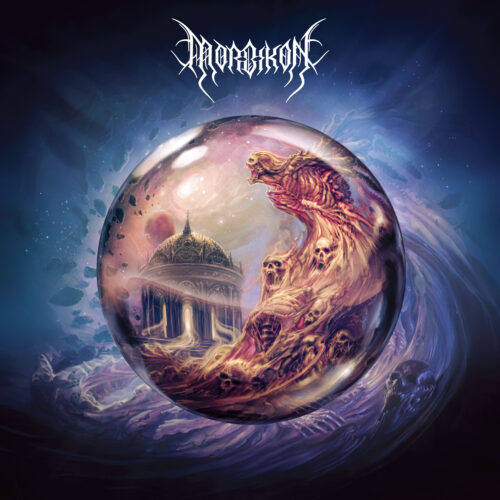
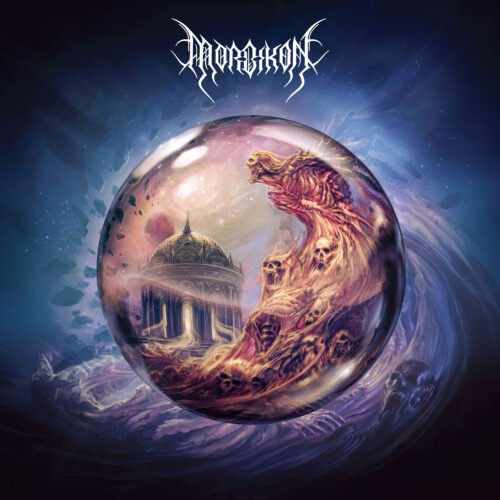
Morbikon – Lost Within the Astral Crypts

By Owlswald

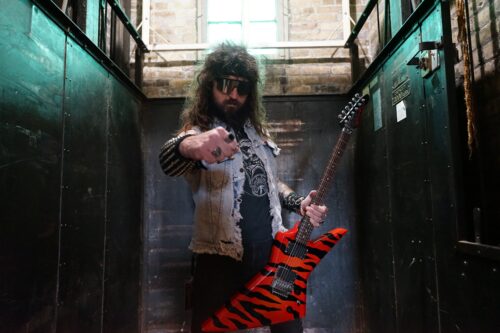
When he’s not dealing in the Slime and Punishment of Municipal Waste or pissing off the neighbors with Iron Reagan, axe-wielder Phil “Landphil” Hall channels his focus into Morbikon. Formed in 2020, Hall’s black metal side-project earned recognition from AMG Industries when Ferox highlighted the supergroup’s debut, Ov Mournful Twilight, as his surprise record of 2022. Rooted in all things kvlt and trve, the album’s second wave frostbitten anthems plunged into the remnants of burned churches and stale corpse paint, resulting in “eight meloblack rippers calibrated to bring winter to your soul and whiplash to your neck.” Now, Morbikon’s sophomore LP finds Hall honing his homage to the black arts, promising to descend his creation into a deeper, more sepulchral state. Ignite your torch and prepare the Necronomicon—it’s time to get Lost Within the Astral Crypts.

Lost Within the Astral Crypts forges the scorched spirit of Ov Mournful Twilight into a leaner, more technical and overwhelmingly black entity. Drawing on the lineup’s pedigree, Morbikon’s collective talent coalesces into an authoritative, and at times downright impressive, synthesis of 90s-influenced blackened thrash. Vocalist Mathias “Vreth” LillmĂ„ns (Finntroll, 
And Oceans) returns with his characteristic throat-ripping vocals, as furious down-picked riffs and swarming, lightning-quick tremolodic scales consistently anchor the material firmly in the black. Complementing Hall’s stylish fretwork, drummer Pierce Williams (Ænigmatum, ex-Skeletal Remains)—who replaces Dave Witte—adds raw, destructive rhythms with tight rolls and syncopations that are both refreshing and sophisticated. Tracks like “Unending Legions of Baal,” “Masters of Eternal Night” and “Flames that Bind and Shadows Cast” evoke a full-on black metal assault reminiscent of Satyricon or Emperor, complete with pounding double bass and subtle synths, while “Ghoul Infested Mausoleum” and “Heavens that Burn and Eons Divided” push the envelope with airy Wintersun melodicism peppered with thrash savagery.

The necrotic might of Lost Within the Astral Crypts rests in Morbikon’s technical excellence, elevating the album’s eight tracks beyond the seminal Scandinavian sound. Worshipping at the altar of the almighty riff, Hall and company immediately demonstrate their capabilities on “Heavens that Burn and Eons Divided”—an energetic, fun and melodic banger driven by a potent layered tremolo attack, fantasy-toned leads and Williams’ tomb-raiding blasts that promptly underscore Morbikon’s technical ambition. “Ghoul Infested Mausoleum” features the record’s best tremolo riff: a spectral high/low scale progression imbued with nocturnal gravity, bolstered by Williams’ accented beats and LillmĂ„ns’ gnarly shrieks. Shreddy, virtuosic solos on the title track, “Flames that Bind and Shadows Cast” and “Numeric Portal Ascendency” push Lost Within the Astral Crypts past the point of a stereotypical tremolo-fest, while strategic thrash and death explorations (such as the opening passage of “Flames that Bind and Shadows Cast”) help maintain listener interest before regrounding the album’s dark, aggressive roots.

Given Morbikon’s stellar execution and the album’s efficient 43-minute runtime—with little bloat to be found—any criticism must instead focus on Lost Within the Astral Crypts’ songwriting. “Masters of Eternal Night” is a serviceable track, but often clings too tightly to classic Scandinavian conventions (even adopting a familiar Mayhem-like conclusion), rendering it less engaging than the album’s superior cuts. “Sworn to the Beheaded King” briefly adopts a more aggressive, in-your-face death metal spirit at its midpoint, including a tasteful guitar solo. Yet, these highlights can’t mask the track’s conventionality as it quickly retreats to familiar black metal terrain. Although the monolithic presence of Lost Within the Astral Crypts occasionally falters in favor of genre conventions, stagnant sections (“Ghoul Infested Mausoleum,” “Flames that Bind and Shadows Cast”) and even some superfluous wankery (“Lost Within the Astral Crypts”), the underlying songwriting remains solid, with engaging riffs and hooks that are strong enough to largely sustain the album’s momentum.

Lost Within the Astral Crypts is a worthy reinvention of a well-trodden sound. While the album is certainly not groundbreaking—nor is it trying to be—it demonstrates top-notch musical dexterity and delivers exceptionally well-executed material that is aggressive, dark and steeped in 90s nostalgia. At its weakest, Lost Within the Astral Crypts serves as a grim invitation to exhume those second-wave classics from your collection; at its strongest, it stands as a fun, rock-solid blackened thrash record that advances and validates Hall’s creative vision, confirming Morbikon’s vast potential.

Rating: Good
DR: 6 | Format Reviewed: 320 kb/s mp3
Label: Tankcrimes
Websites: instagram.com/morbikon | facebook.com/morbikon
Releases Worldwide: November 21st, 2025

#andOceans #2025 #30 #aenigmatum #americanMetal #blackMetal #emperor #finntroll #ironReagan #lostWithinTheAstralCrypts #mayhem #morbikon #municipalWaste #nov25 #review #reviews #satyricon #skeletalRemains #tankcrimes #wintersun

2025-11-21

Ildaruni – Divinum Sanguinem Review

By Andy-War-Hall

The mystic, the subliminal, the macabre: the fixings of good black metal and the bread and butter of Armenian pagans Ildaruni. Four years ago, they entered the blackened sphere with their debut Beyond Unseen Gateways, a folk-infused take on black metal that, while promising in several regards, felt bloated and unfocused. Its pagan, medieval-y acoustic passages felt tacked on, lethargic and a bit hokey, and I think Ildaruni agree with my assessment, as this year’s Divinum Sanguinem ditches the lutes and stuff for “a more tenebrous and ferocious black metal path.” At nine songs and 53 minutes, Divinum Sanguinem is yet another considerable offering from Ildaruni. Will this one prove more vital than the last?

This time, Ildaruni ain’t faffing about;1 Divinum Sanguinem is out for blood. Second-wave styling permeates Divinum Sanguinem, but without its typical murk. Utterly furious tremolo riffs and blast beats abound, wrought to vicious effect on songs like “Forged with Glaive and Blood” and “The Ascension of Kosmokrator,” while Narek Avedyan’s burly shrieks command the calamity into a lean, focused undertaking. This is black metal of a riff-centric nature, Immortal-like, but with the odd Bathory military march (“The Ascension of Kosmokrator”) and chant (“Zurvan Akrane”) to instill a greater sense of grandeur into Iladruni’s palette. Riffs are a’plenty, but it’s drummer Arthur Poghosyan who steals the show, just crushing the blasts on every song and layering everything with impressive symbol work. Divinum Sanguinem is a hefty record, but unlike Beyond Unseen Gateways, it isn’t bogged down with momentum-killing diversions. Exemplified on “Divinum Sanguinem”—where all eight minutes of imperial procession feel, bombastic dynamics and eerie bridges feel critical and purposeful—Divinum Sanguinem is lean, mean and blackened as anything.

Ildaruni hold a workman-like commitment to evil. There’s an Emperor-like dark majesty to Divinum Sanguinem, though Ildaruni forgo synths and orchestras for grandiose guitar leads to accomplish this (“The Ascension of Kosmokrator,” “Divinum Sanguinem”). Thrash riffs grace “Zurvan Akrane” beside metalface-inducing chugs on “Forged with Glaive and Blood” and “Arcane Sermon,” and even instances of Qanun (“Scorching Pathways to Samachi”)2 and bagpipe (“Forged with Glaive and Blood”)3 add to the sinister feel of Divinum Sanguinem. Similarly, the various instances of choir (“Of Nomos and Flaming Flint Stone,” “Arcane Sermon” and “Scorching Pathways to Samachi”),4 chant and clean singing (“Divinum Sanguinem”)5 add dimensions to the vocal front of Ildaruni, breaking from the incessant shrieks but not from its malignancy. Pagan folk elements from Iladruni’s previous work remain, but are relegated to folkish distorted guitar leads (and bagpipes) to keep from clashing with the breakneck nature of Divinum Sanguinem. Sometimes ritualistically ominous (“Divinum Sanguinem”) and frequently hostile (“The Ascension of Kosmokrator”), Ildaruni crafted something pointedly dark with Divinum Sanguinem.

But Ildaruni play a limited, well-trodden style, and Divinum Sanguinem is stretched too thin to inspire frequent replay. While Divinum Sanguinem’s songs feature brief moments of differentiation, the near constant tremolos, blast beats and shrieks that encompass the majority of most tracks lose their lustre with use. If a song doesn’t immediately open with trems and blasts, like on “Of Nomos and Flaming Flint Stone” or “Zurvan Akrane,” rest assured that they’ll reemerge before the verse, still competently played but with little melodic variation between them all, losing effect with overexposure. The near-uniformity of Ildaruni’s track lengths adds to this sense of sameness, as songs seem to go through the same or similar motions for similar amounts of time, which doesn’t bode well for memorability. An exception to this trend, “Immersion into Empyrean”— with its mid-paced tempo and open arpeggios—is borderline catchy and provides a stark illustration of how one-note much of the rest of the album is. Ildaruni are all business here, but there’s too much business on Divinum Sanguinem and not enough variety, novelty or abundance of hooks to make getting through it consistently engaging.

Though Divinum Sanguinem is marred by considerable songwriting issues, it still marks considerable improvement for Ildaruni and proves there’s a future for the band. When it works, Divinum Sanguinem is a powerhouse of a record, both atmospheric and immediate. When Ildaruni’s tricks run dry, however, it becomes too easy to let the music slip into the background. Perhaps genre diehards will get more out of the album than I did, but I found myself losing interest too often to offer it high marks. Still, if you’re in the market for black metal that riffs hard, you could do a lot worse than Divinum Sanguinem.

Rating: Mixed
DR: 6 | Format Reviewed: 320 kbps mp3
Label: Black Lion Records
Websites: ildaruni.bandcamp.com | facebook.com/Ildaruni | instagram.com/ildaruni
Releases Worldwide: November 7th, 2025

#25 #2025 #armenianMetal #bathory #blackLionRecords #blackMetal #divinumSanguinem #emperor #ildaruni #immortal #nov25 #review #reviews

2025-11-21

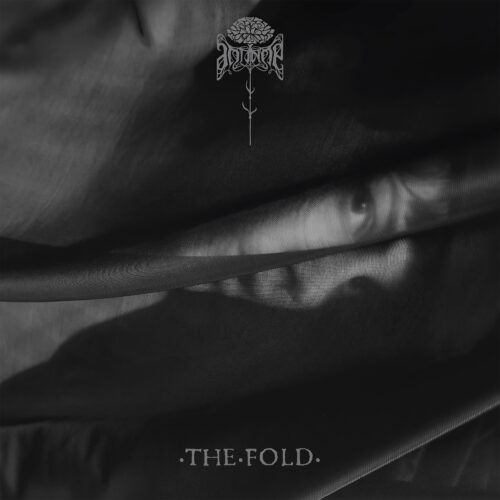
AntinoĂ« – The Fold Review

By Tyme

As the whispering winds of winter begin to blow colder through my neck of the woods, a time of year when fires get cozier, quaffed beers get darker, and we here at AMG begin to rhapsodize on things missed and regale readers with things listed, I found myself still searching for a near-end-of-year something new. When I saw Antinoë’s Dark Essence Records debut, The Fold, blurbily described as ‘Neoclassical Folk meets melancholy Pop with a Metal attitude,’ I was intrigued. Descending from the mountains of Madrid, AntinoĂ« is the passion project of pianist and vocalist Teresa Marraco. Launched in 2021, Antinoë’s 2023 release, Whispers from the Dark Past, offered a unique piano tribute to the 90s Norwegian black metal scene, with Marraco covering everything from Emperor’s “I Am the Black Wizards” to Mayhem’s “Life Eternal” and Dimmu Borgir’s “Mourning Palace.”1 Poised to challenge the very fluid boundaries of what metal can be, let’s see if The Fold has the warmth necessary to keep those wintery winds at bay.

Void of instrumental trappings associated with most traditional metal, AntinoĂ« relies solely on Marraco’s beautifully resonant voice and her expansive piano compositions to weave stygian tapestries. Conceptually, The Fold navigates the odyssey of accepting death, inviting listeners to tread a path through the idiomatic depths of grief’s different stages, as it traces the process of ‘folding inward.’ From the outset, as cricket-song fades into “Night Falls,” with its delicately crafted, darkly haunting piano melody and celestial vocals, the track pulls at melancholy heartstrings, drawing you into Antinoë’s dark world and setting the stage for what’s to come. The Fold offers an immersive, piano-led experience, peppered with pummeled ivories that shift with metallic force beneath sustained choral harmonies (“The Devil’s Voice”), as wispy trails of folky, Enya-esque ambiance waft amid airy, Dead Can Dance-like atmospheres (“NĂ„r Du DĂžr”). Not unlike Darkher, AntinoĂ« succeeds at tapping into inscrutable emotion by minimalist means, but where Maiven casts spells webbed in doom, Marraco’s magic leans more toward the black arts.

While AntinoĂ« draws much of its ‘metal’ from lyrical themes that explore the dense nature of grief and death, that doesn’t mean The Fold is musically bereft of heavier fare. Death angels descend on Emperor wings with halos of Dimmu Borgir to hover over the opening chords of “Threshold,” heralding dark omens in a chorus of swarming harmonies, witchy laughter, and raspy breaths, all as AntinoĂ« pounds and trills her way through octaves in true symphonic black metal fashion.2 Is it still just a girl and her piano? Yes, but it’s by far the ‘heaviest’ song on the album. Which gives way to the excellently murky pop of “Chaos in the Sky,” another album highlight that had my neck snapped to rapt attention when Marracos, in her smoky voice, opened with “Who the fuck are you? Who the fuck am I?” like some dark-alt Adele, creating another moment more metal than not.

Drenched in warmth, The Fold’s production captures the beauty of Antinoë’s neo-classical elegance and marries it perfectly to its atmospherically blackened weight, providing a full-on musical experience. Whether it’s the delicate last minute of “The Devil’s Voice,” which flirts with a “LĂĄgnĂŠtti” melody, off the SĂłlstafir magnum opus OttĂĄ, or the inquisitive, childlike mystery of the whispers and keys on “Flock,” to the somber dirge of vocals from “Light Bringer,” listening to AntinoĂ« is to become utterly immersed. I have little to critique, so enamored am I by Antinoë’s ability to impart complex ideas in the simplest of terms. I suppose there’s a minute or two that Marraco could have shaved from the two instrumentals, but in all honesty, there’s not a minute of The Fold that I would cut or change.

One of the things I’ve always appreciated about AMG is its fearlessness in shedding light on bands that are categorically not metal. Case in point, among many, is Dolphin Whisperer’s review of Maud the Moth’s excellent The Distaff this year. AntinoĂ« has recorded an emotional album for healing hearts, and as I look back on the last few years of losses I’ve experienced, I’m unsurprised by how impactful it’s been to me. I wasn’t expecting something of this caliber to come sweeping in so close to list season, but here we are. I’ll gladly wrap myself in a warm blanket next to a cozy fire, slip on my favorite pair of headphones, and sip a smoky porter while letting The Fold envelop me against the impending winter’s chill.

Rating: 4.0/5.0
DR: 9 | Format Reviewed: 320 kbps mp3
Label: Dark Essence Records
Websites: Bandcamp | Facebook
Releases Worldwide: November 21st, 2025

#2025 #40 #ambient #antinoe #darkher #deadCanDance #dimmuBorgir #emperor #enya #notMetal #nov25 #piano #review #spanishMetal #theFold

Édouard Muller đŸ‡Ș🇾 🐧edlinks
2025-11-19
2025-11-19

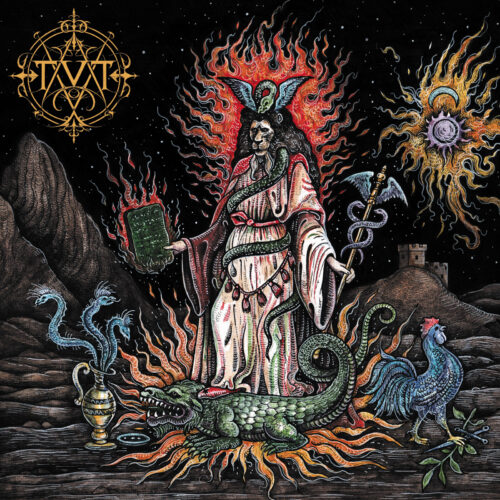
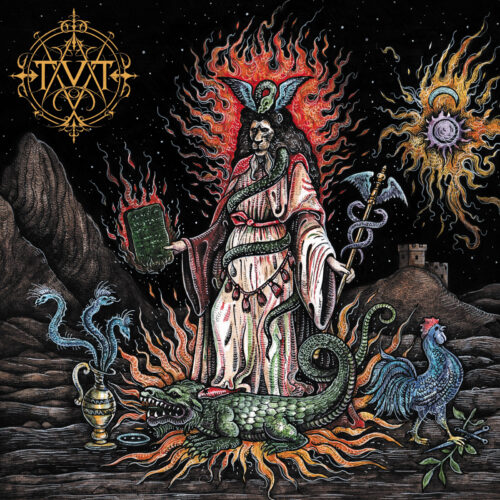
Tzevaot – The Hermetic Way Review

By Thus Spoke

Oh, to have half the confidence of the average solo artist dabbling in the esoteric. Their avant-garde opuses can’t all be the status-quo-subverting masterworks of music and philosophy they claim to be. For some reason, I, Voidhanger keeps signing them, and for equally opaque reasons, we keep choosing to review their albums. Tzevaot is the experimental black metal1 project of an individual known only as The Orator, who in The Hermetic Way explores occult ideas purported to unveil “actual hidden mechanisms of reality,” with heavy inspiration from the magical tradition made popular by who else but Aleister Crowley. And while everything from the flowery promo blurb to the time-stamped lyrics2 and the solemn spoken-word poetry tries to convince you of its significance. The Hermetic Way completely fails to impart much more than consternation.

It’s difficult to know where to even begin with The Hermetic Way, and its brand of wisdom. At every turn, things somehow go wrong. The core sound is something akin to Esoctrilihum—barking screams, twisty guitars, and a propensity for echo on everything—only with a mix you’d barely forgive a bedroom project for, and a compositional style that makes said Esoctrilihum sound catchy. Tzevaot jumbles synths, piano, and guitars that seem to hit upon a genuine groove of Emperor-esque theatrics or Absu-level style completely by accident; the fact that the best melodies are never reprised only supports this theory. The drumming—which may well be a machine for all I can discern3—is flat and dull, buried by the wall of heavy reverb between the sharp stab of the vocals and the other instruments. This intensifies the feeling of aggravated confusion that defines the listening experience, as one struggles to keep up with the nonsensical rhythmic trades, sudden inclusion of solo synth or piano, and yet more spoken-word. This is not the nuanced placelessness of an intelligent, complex extreme metal, where discordance and strange rhythms develop impossibly but seamlessly into new forms; this is a mess.

As with many similar works of art, all of The Hermetic Way’s failures arise from the hubris of their creator. The indulgence of every idea, at the expense of their development, integration, and refinement, causes the record to swing pendulously between mind-numbing boredom and toe-curling cringe. Without fail, songs go in the most annoying possible direction, dropping tension like a hot potato and throwing out a rare good musical passage in favour of the most jarring refrains (“Solve et Coagula,” “Pyres of Meaning Light the New Aeon’s Way”), or another arrangement of noise to a jaunty tempo that makes a mockery of the previous composition (“Zosimos the Alchemist”). Elements are often so poorly integrated, that sections clearly designed for drama—stripped-back keys or solemn recitations—fail to land; the sample of famed occult author Lon Milo DuQuette is barely audible past the fickle interchanges of organs, riffs, and drums. The Oracle persistently delivers vocals in a monotonous, rapid-fire bark that gets grating fast, particularly when combined with Tzevaot’s fondness for stacking tempos and synth accompaniments like dominos one after another. But I would listen to hours of all the above barks rather than sit just once more through horror show “The Hero of Megiddo,” a skin-crawling ditty whose redemptive brevity is made moot by its being the only thing on the record with a memorable tune, causing the perverse singing and jangling chords to turn around in your brain like an inescapable merri-go-round.

Most painful of all is that The Hermetic Way could have been so much better. Tzevaot might try to borrow the label of “jazz” to elevate whatever’s going on with piano and cymbals at various points. While that’s not really justified, it’s nonetheless striking that every single isolated passage of good music on The Hermetic Way involves piano4 (“The Emerald Tablet of Thoth,” “Air Fire Water Earth,” “Metempsychosis”). These fleeting moments, which comprise approximately five percent of the runtime combine key slides and arpeggios in a stylish, interesting way that’s very cool, and variously reminiscent of Wreche, Vengeur, and once again Emperor. In an hour of music that is otherwise so exhausting, this is obviously not enough. By the time the best parts of the album arrive in closer “Metempsychosis,” you’re likely too checked out to care, if you’re even still listening.

The Hermetic Way’s title is apt. Not only as it divulges supposed profound truths through the visionary teachings of the self-imposed hermit, who has reached enlightenment through years of solitary contemplation. But also because that’s quite a good analogy for the solo metal musician of the esoteric bent. Maybe Tzevaot harbors real genius, and I’m simply too blind and deaf to see or hear it in their work. More likely it’s another case of talent foiled by delusion.

Rating: Bad
DR: 8 | Format Reviewed: 265 kb/s mp3
Label: I, Voidhanger
Websites: Bandcamp | Facebook
Releases Worldwide: November 14th, 2025

#15 #2025 #avantGardeMetal #blackMetal #emperor #esoctrilihum #esotericBlackMetal #experimentalMetal #iVoidhangerRecords #nov25 #review #reviews #theHermeticWay #tzevaot

Client Info

Server: https://mastodon.social
Version: 2025.07
Repository: https://github.com/cyevgeniy/lmst