Custer monument and group c1908 July 6.
Curtis, Edward S., 1868-1952
1 photographic print. | Photograph shows Edward S. Curtis, (second from right), with four Apsaroke men (from left to right: Hairy Moccasin, White Man Runs Him, Alexander Upshaw, and Goes Ahead on horseback at the Custer Monument. All are Crow scouts except for Upshaw.
#Custer #Curtis #EdwardS #EdwardSCurtis #second #Apsaroke #AlexanderUpshaw #theCusterMonument #Upshaw #NativeAmerican #CusterMonument #1839-1876 #1868-1952 #1900-1910 #Battlefields #Cemeteries #ChiefChild #CrowIndians #Curtis #EdwardS #Custer #GeorgeArmstrong #GoesAhead #Horses #Montana #Monuments #Monuments&memorials #undefined
![The image depicts a historical photograph of five individuals, presumably from the late 19th century. They are mounted on horses in an open field with dry grass beneath them and bare earth visible around their hooves. The subjects wear wide-brimmed hats, indicative of protection against sun or rain commonly associated with outdoor work environments.
Each person is adorned differently; some have decorative elements such as feathers or ornaments that signify status or role within a community context. They appear to be engaged in conversation but maintain an attentive posture toward their surroundings or each other.
The setting includes what seems like part of the Custer Monument, identified by its distinctive stone structure in the background with vertical lines and horizontal cross-bracing visible above it. The monument's purpose isn't explicitly clear from this perspective but suggests historical significance related to Native American history given context provided on the image caption which mentions "Custer Monument" and dates.
The overall color tone of the photograph is sepia, hinting at its age or artistic choice in presentation typical for that era’s photography. Notable features include detailed textures captured by early photographic techniques such as film grain, soft focus around moving elements like horses' legs indicating motion blur from a slower shutter sp [...]](https://files.mastodon.social/cache/media_attachments/files/115/724/392/879/176/315/original/c259de69ef023c91.jpeg)
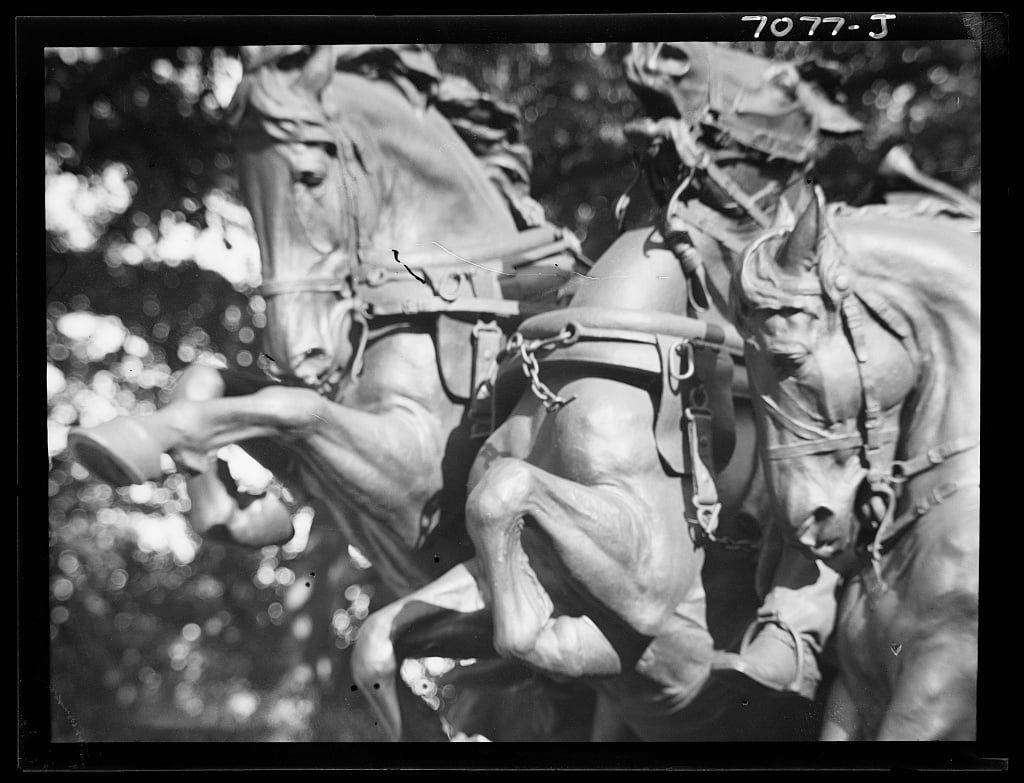
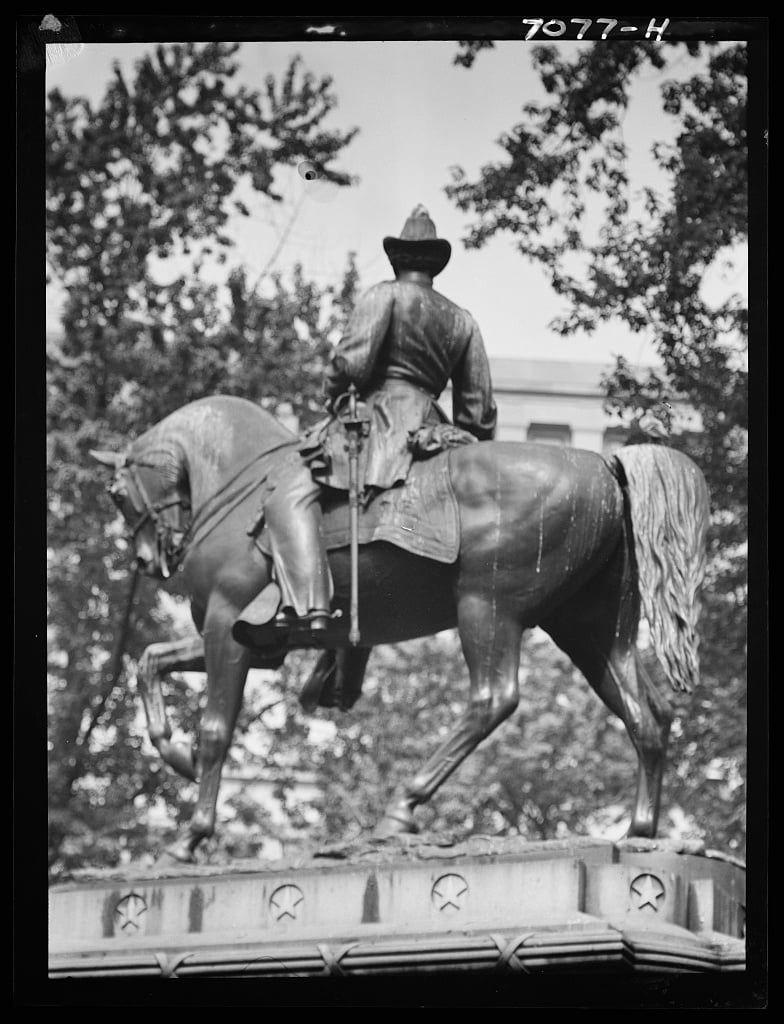
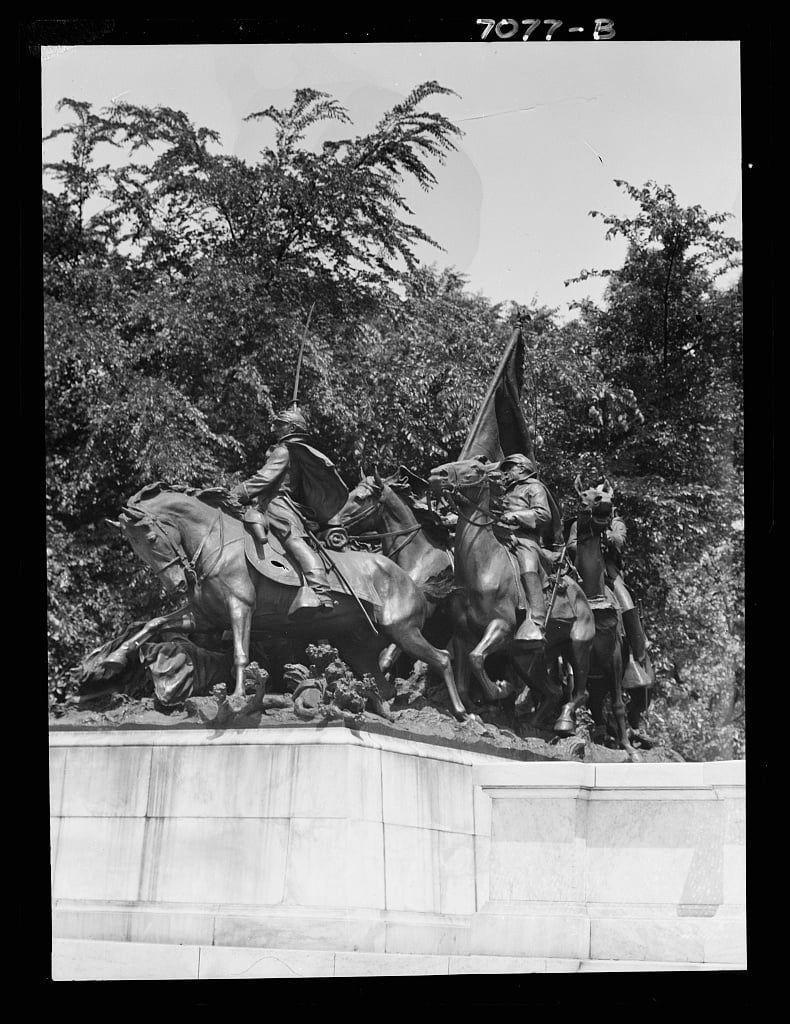
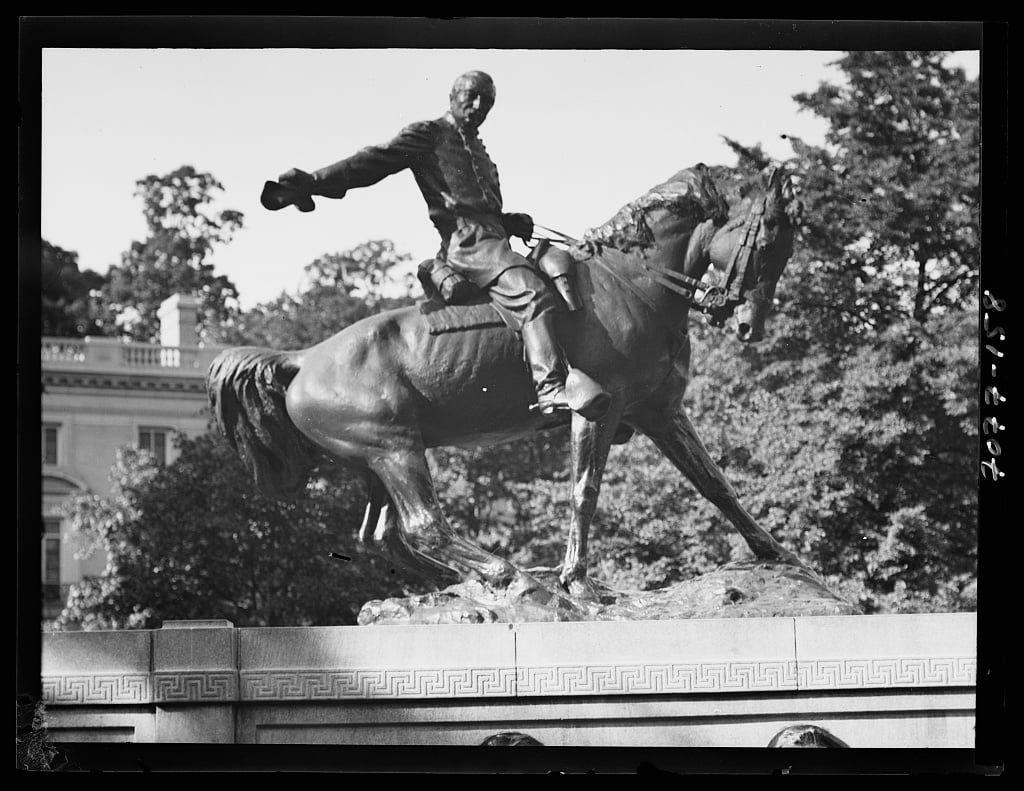
![The image displays a black and white photograph of an equestrian statue featuring a figure in historical military attire, mounted on horseback. The rider is depicted with raised legs as if leaping or galloping forward. This bronze sculpture is perched atop a rectangular stone pedestal. The background includes trees and the sky, suggesting that this monument stands outdoors within a public space likely to be of significance for its commemorative value.
The statue captures motion through its dynamic pose, emphasizing strength and vigor. The rider's posture indicates control over the horse while conveying determination or leadership qualities typically associated with military figures in history. There is no clear indication as to who specifically this figure represents, which may suggest that it commemorates a general historical event rather than an individual.
The image itself has visible text at its base indicating "7018-2/9", possibly serving as an identification number or cataloging information for the photograph within a collection. Additionally, there is reference to Equestrian statues in Washington, D.C., which spans from 1911 to 1942, suggesting that this statue could be part of a series documenting equestrian monuments erected during that era.
Furthermore, the image credits "Genthe, Arnold" as likely the photographer or an associated contributor. The mention of [...]](https://files.mastodon.social/cache/media_attachments/files/115/704/573/877/118/653/original/22dd39d7465a2268.jpeg)
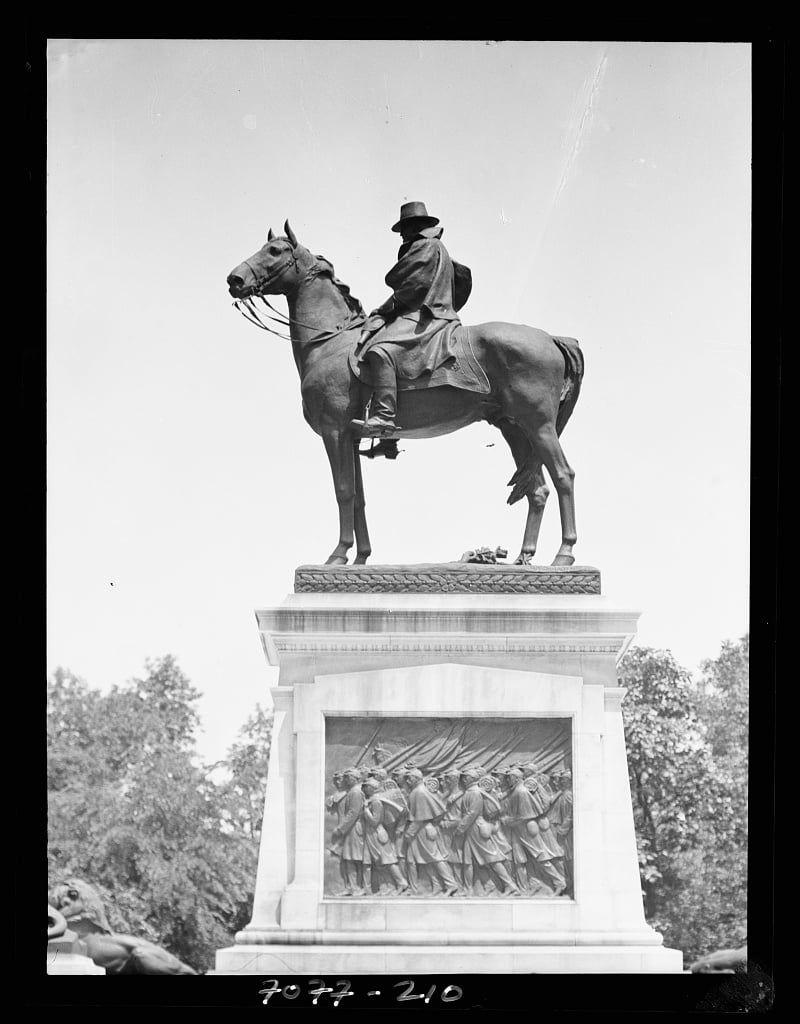
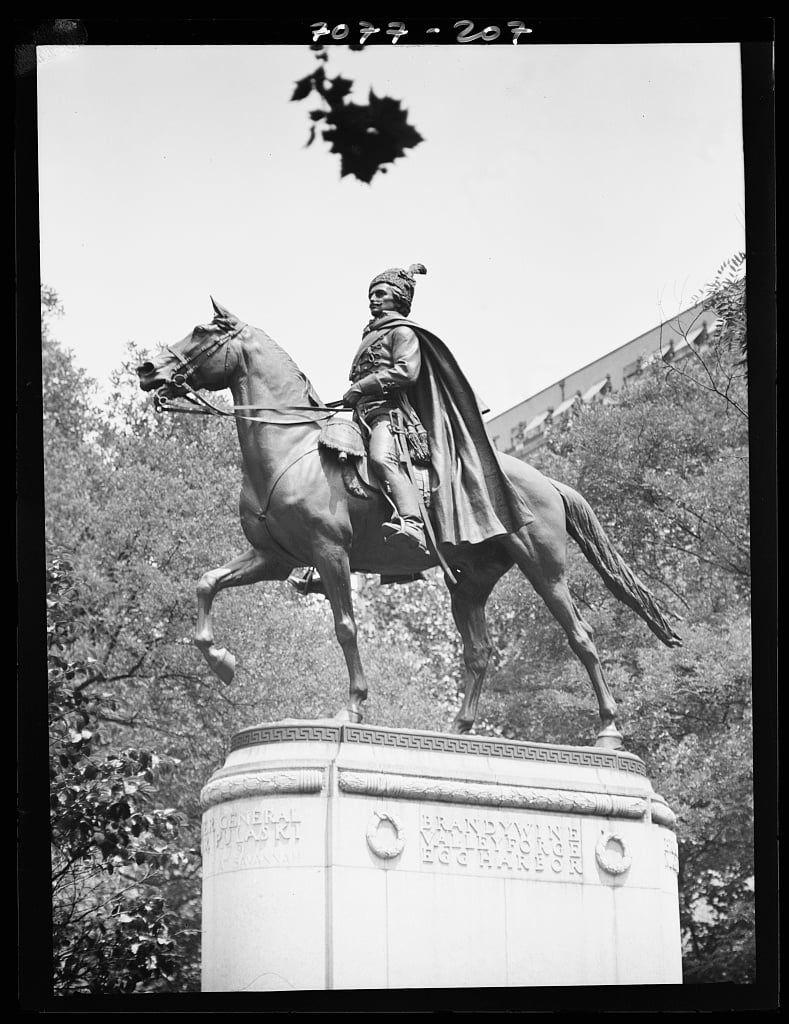
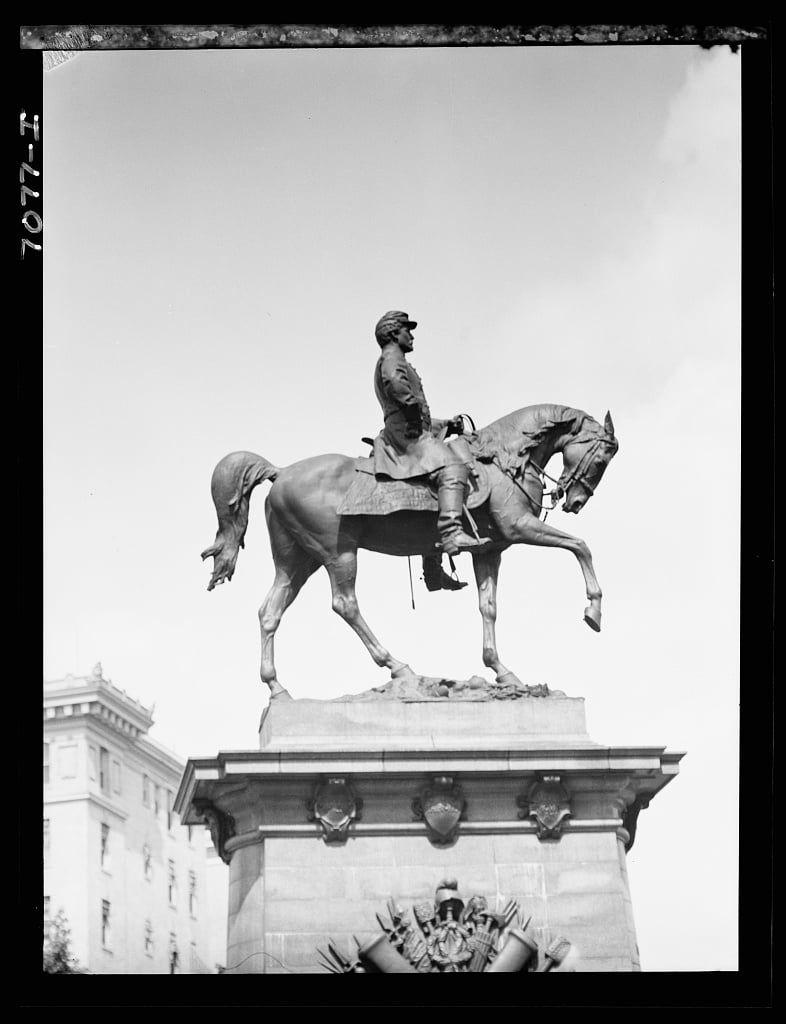
![This black and white photograph depicts a large equestrian statue of a figure, likely historical or military significance, atop a horse. The rider is dressed in what appears to be 19th-century military uniform with a hat that has an emblem on the front side. The pose suggests movement, as if captured mid-trot, which adds dynamism and life-like quality to the statue. Below this equestrian figure stands a rectangular pedestal adorned with ornate designs at its corners. To the right of the frame is part of a tree or bushy plant against an overcast sky background, providing contrast in texture.
The photograph itself has white margins suggesting it may have been cut from a larger sheet of photographic paper, typical for albumen silver print photographs which were popular during the late 19th and early 20th centuries. The image is titled "Equestrian statues Washington D.C." indicating that this statue could be located in or associated with Washington, DC.
There's no explicit context provided about where exactly within Washington it might be placed; however, based on historical knowledge of such monuments during the period mentioned (1911-1942), these equestrian statues were often erected to commemorate military leaders and figures significant to American history. Without more specific information or a view that includes surrounding elements for scale reference, precise identi [...]](https://files.mastodon.social/cache/media_attachments/files/115/702/780/722/888/769/original/6a24fdc43dd7bed3.jpeg)
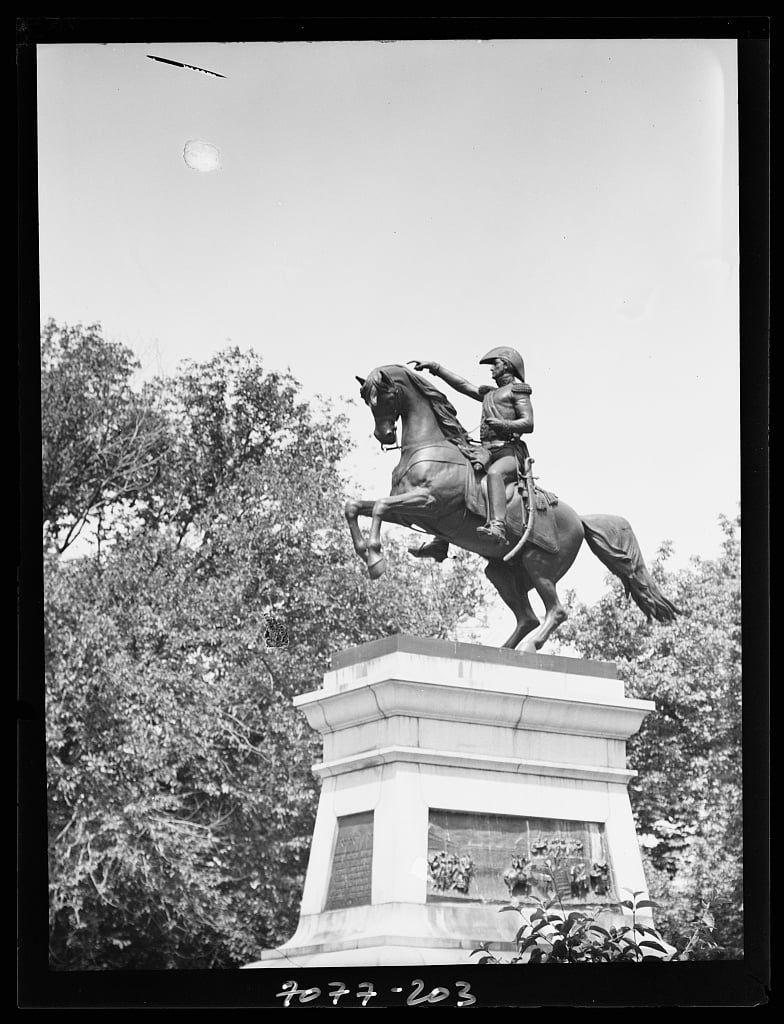
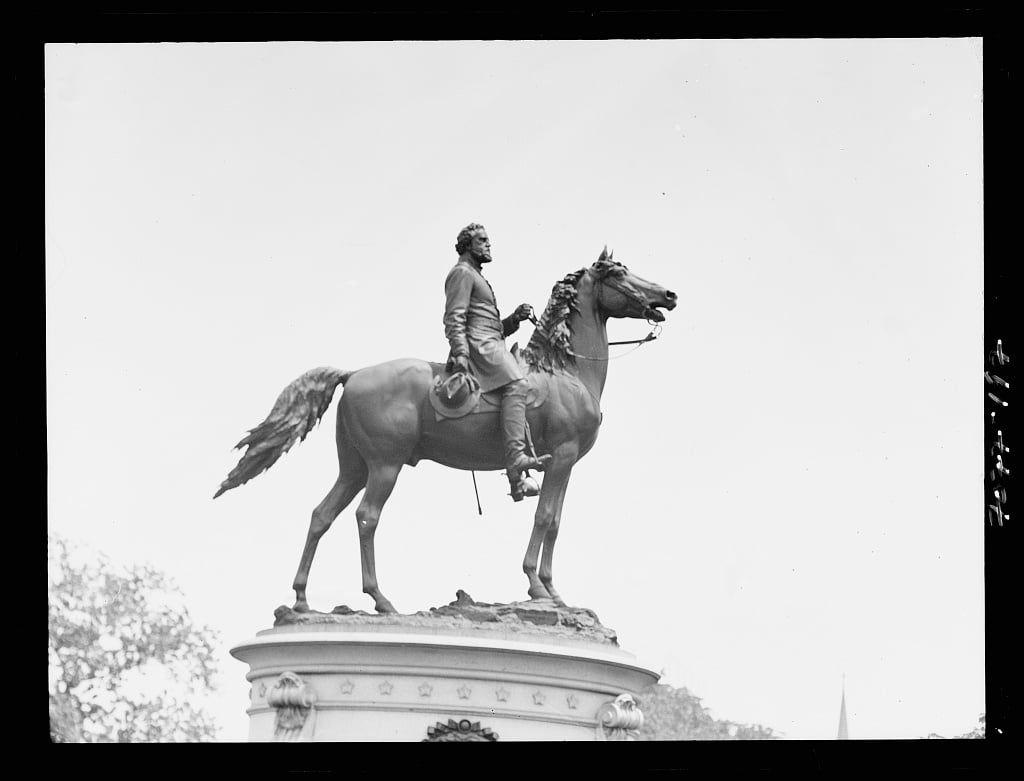
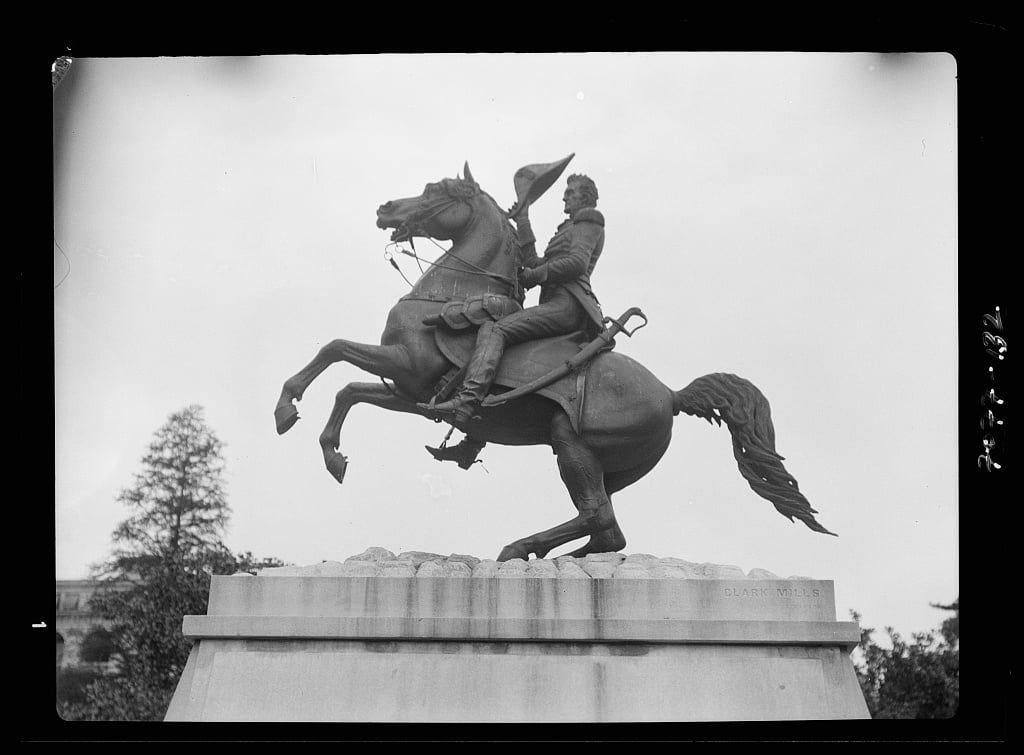
![This image depicts a black and white photograph of an equestrian statue, featuring a figure on horseback. The rider is portrayed in mid-motion with one leg raised while holding a sword aloft. They wear what appears to be historical armor or uniform with a hat that has plumes. The horse's head is turned upwards as if looking at the sky, and it also wears bridle gear.
The statue stands on a pedestal within an enclosed area demarcated by a chain-link fence in the foreground. Behind the fenced-off site are trees and what appears to be grassy terrain underfoot. A clear blue sky with few clouds forms the backdrop of this scene.
This photograph is part of a collection or series that may document equestrian statues found within Washington, D.C., during the years between 1911 and 1942 as indicated by the caption provided in Equestrian statues in Washington, D.C. between 1911 and 1942.
The photograph is attributed to Arnold Genthe (1869-1942), a renowned photographer known for his work during that era capturing significant historical moments through photography. The negative on which this image was made suggests it's part of the nitrate film format, common in early photographic practice before the advent of silver gelatin or other more modern films.
The dimensions specified (4 x 5 inches) suggest a large-format photograph, typical for studio work and fine art prints during Gent [...]](https://files.mastodon.social/cache/media_attachments/files/115/701/236/364/007/653/original/8b109ce917744f49.jpeg)
![This black and white photograph captures a statue of General Winfield Scott, prominently displayed outdoors with the upper part of his monument visible. The bronze equestrian sculpture depicts Scott on horseback in mid-action, possibly representing a moment from military history or battle readiness. He is dressed in 19th-century American cavalry attire: a wide-brimmed hat, long coat, riding boots, and gloves. His right hand grasps the reins while his left holds a sword aloft. The statue stands on what appears to be a pedestal with architectural embellishments, including ornate columns at its base.
The background shows an urban environment with trees partially obscuring parts of the sculpture, suggesting that it is situated in a park or public square within a cityscape. Behind Scott's figure looms a classical-style building facade adorned with decorative elements such as balustrades and urns on pedestals atop what might be windows or cornices.
The image bears inscriptions: "GENERAL WINFIELD SCOTT" at the base of his statue, indicating identification by name; another inscription reads "7029 - 186," possibly a reference number for archival purposes. The photographer's signature is visible in the bottom left corner as well.
Notable features include the contrast between the detailed textures of Scott’s uniform and horse against the smoother surfaces of the surrounding archi [...]](https://files.mastodon.social/cache/media_attachments/files/115/700/727/706/681/472/original/5f5953a267fb1a93.jpeg)
![The image depicts a black and white photograph of an equestrian statue, featuring a figure in riding attire atop a horse. The rider appears to be dressed as if from the 19th century or earlier, with wide-brimmed hat and cloak-like garment that covers most of their body. They are seated on a large pedestal which supports both themselves and the horse. Behind them is an urban background including buildings typical of what might have been found in cities during early to mid-20th-century America.
There's text at the bottom right corner indicating "Photographed by" followed by a series of numbers: 7914/82, suggesting this may be part of a collection or catalog. Another piece of information reads 'Equestrian statues Washington D.C. between', which likely refers to the era these types of monuments were prominent.
This photograph is an actual physical print and not a digital file; it shows signs consistent with aged photographic materials such as dust spots, slight fading around edges due to creasing or handling over time. The photo seems relatively well-preserved but bears marks indicative of its age and use in archival work or similar environments where items are handled frequently.
The photograph is credited to Arnold Genthe (1869-1942), a renowned photographer who documented various aspects of life, including cultural events and urban landscapes during his career spanning [...]](https://files.mastodon.social/cache/media_attachments/files/115/700/220/534/931/760/original/b93f0090aad584d0.jpeg)
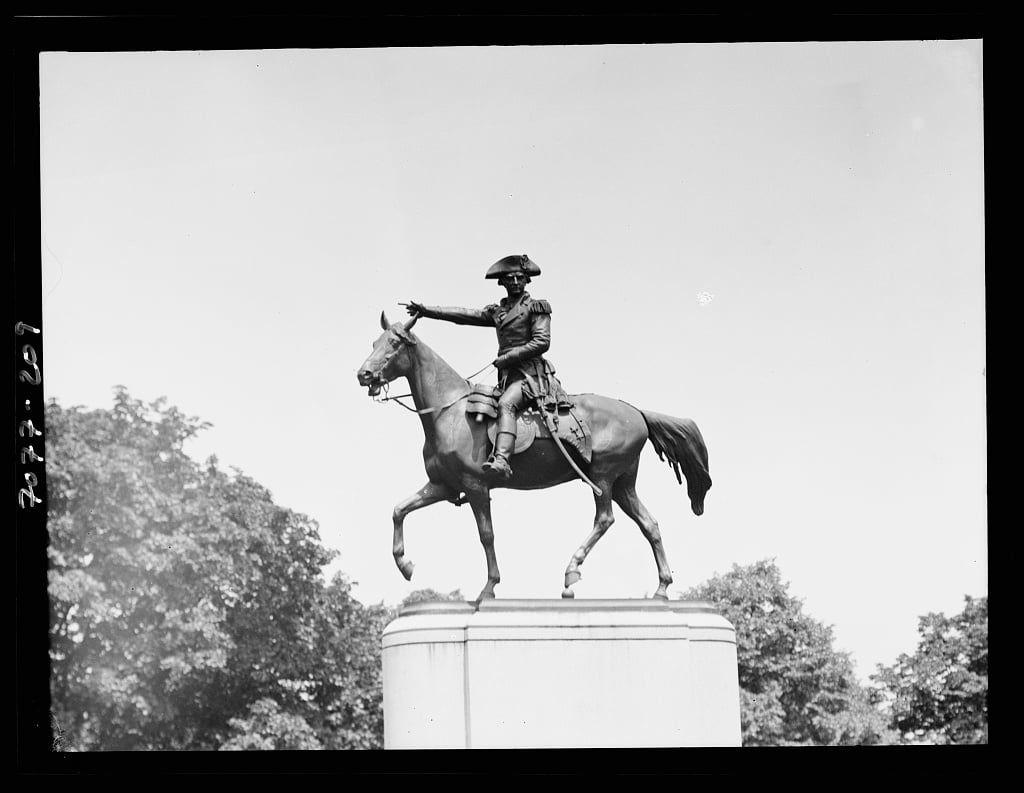
![The image is a black and white photograph depicting an equestrian statue of General Brandywine, as indicated by the inscription on its base. The figure represents George Washington in mid-stride atop his horse. He appears to be pointing forward with one hand while holding reins in the other, conveying determination or directive intent. His attire suggests historical accuracy for a military leader from America's colonial period.
The statue is mounted upon an ornate pedestal adorned with relief patterns and inscriptions that are not entirely legible due to resolution constraints but mention "General Brandywine." The background consists of trees which implies the photograph was taken in a park or public square. There appears to be some weathering on both the figure and horse, suggesting age.
This particular statue is part of a series known as equestrian statues found in Washington D.C., dating from 1911-1942 according to provided context. The photographer's name is listed alongside his year active, indicating that Arnold Genthe was involved in capturing this piece of art and history around the early 20th century.
Technical details include a black paper negative with dimensions appropriate for such photographic processes during its time period—indicating an era where nitrate negatives were used commonly. The size mentioned suggests it's on a smaller scale compared to other [...]](https://files.mastodon.social/cache/media_attachments/files/115/699/713/288/082/673/original/c9c271ed1783e5c8.jpeg)