
Excellent from Vincenzo Vagnoni on the destructiveness and short-sightedness of #UKRI / Ian Chapman's fiat decision to pull the rug from under UK big-#science projects.
#ukri


Another update from #UKRI CEO on #UKsciencefunding #UKRI
www.ukri.org/news/ukri-ce...
No new information and fails to address/explain the severe funding rate cuts taking place at MRC for the round currently under review (Sept2025). That's 2025/26 budget so should *not* be affected by SR.
UKRI CEO updates the research ...

New #openaccess publication #SciPost #Physics
(2+1)d lattice models and tensor networks for gapped phases with categorical symmetry
Kansei Inamura, Sheng-Jie Huang, Apoorv Tiwari, Sakura Schäfer-Nameki
SciPost Phys. 20, 043 (2026)
https://scipost.org/SciPostPhys.20.2.043

Not the headline DSIT & #UKRI will have been wanting after a week's attempted message management. They must be secretly glad the Mandelson-Epstein furore is taking up most bandwidth.
It's almost impressive how bad their comms have been, never mind the scale of apparently unintended consequences – which the community could have told them immediately, if they'd bothered to consult or make an impact assessment
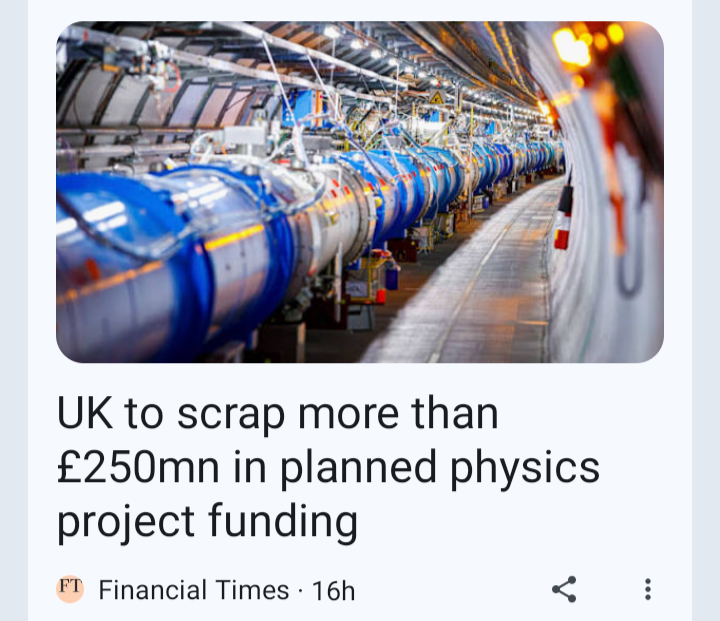
In today's meeting of the @houseofcommons.parliament.uk@bsky.brid.gy Science, Innovation and Technology committee, #UKRI CEO Ian Chapman was asked about the #UKsciencefunding issues revealed over the last week. Here's the video if you want to check the discussion:
parliamentlive.tv/event/index/...
Parliamentlive.tv

Oooh starting well. Dame Chi Onwurah thanks the "many members of the research community" for contacting her and other committee members expressing their deep concerns about the funding cuts - she shares our concerns! #UKRI

That Letter from UKRI
I only have time for a quick post today but I think it’s important to comment on the very feeble open letter circulated (yesterday) to “the research and innovation community” by the Chief Executioner Executive of UKRI. I think it’s feeble because it seems to have been intended to clarify what is going on, but does nothing of the sort. In fact, to me, it reads like it was written by someone who doesn’t know what he is doing.
The letter basically tells researchers working in areas outside the STFC remit (i.e. in anything except particle physics, astronomy and nuclear physics) not to worry because it’s only STFC that will suffer. This is the “explanation”:
In order to remain sustainable, STFC must make significant cumulative savings: a decrease of £162 million relative to our forecasts for their operational costs. The £162 million is the total net reduction in STFC’s annual costs that they must achieve by the end of the 2029 and 2030 financial year. It is not a £162 million saving in each year of the current SR period. Instead, STFC needs to reshape its cost base over the whole SR period so that their budget is balanced by 2029 and 2030 and key facilities are funded properly and sustainably.
That is not the situation at other councils and we do not anticipate equivalent measures will be necessary outside of STFC.
One of the problems with this logic is that a huge slice of STFC’s budget is spent on facilities that support science outside STFC’s scientific remit. The Diamond Light Source, for example, which has annual running costs of almost £70 million caters largely to the EPSRC and BBSRC communities. It makes no sense to me to require particle physics, astronomy and nuclear physics reseachers to bear the entire consequences of cost overruns at this facility when other communities benefit from it.
I’m sure the UKRI Chief Executive knows this, so it must have been a deliberate decision to wield the axe in this way. In other words it’s a conscious downgrade of particle physics, astronomy and nuclear physics. In the new regime, these are less important than any other branch of scientific research.
I’m out of it now, but I always felt that STFC should never have been set up as a research council. It should have been a service organisation, as its title – the Science and Technology Facilities Council – suggests. When STFC was created, back in 2007, funding for particle physics, astronomy and nuclear physics research as opposed to facilities should have been administered by EPSRC. Whether intentionally or not, the current arrangements make these areas of fundamental physics exceptionally vulnerable. We saw the consequences of that back in 2007/8 and it is happening again.

How can basic research funding be put “on a sustainable footing”? That makes no sense. Basic research is an investment for the future: new understanding supporting future discoveries, a basis for future translational programmes leading to new inventions, new vaccines, new drugs, and with them, lower dependence on imports, tipping the county-wide trade balance towards exporting rather than importing.
A “sustainable footing” is pure nonsense. The wrong perspective altogether.

RE: https://telescoper.blog/2026/01/29/a-new-stfc-funding-crisis/
Not just STFC, by the sounds from THES, wider across #UKRI funding for UK #research. "Change leadership", eh?
#AcademicChatter
A New STFC Funding Crisis
I started doing this blog back in 2008 and over the subsequent couple of years wrote many posts about a funding crisis affecting the Science and Technology Facilities Council, the UK funding agency that covers particle physics and astronomy research that had been created in 2007. I particularly remember the cancellation of the experiment Clover back in 2009 which had devastating and demoralising consequences for staff at Cardiff (where I was working at the time). It looks like a return to the Bad Old Days.
I moved from the UK eight years ago and haven’t really kept up with news related to the science funding situation there so I was very disturbed last night to see a message from the Royal Astronomical Society containing the following:
In a letter from its Executive Chair, Professor Michele Dougherty, the research council indicates that the budget for particle physics, astronomy and nuclear physics together will drop by around 30%. The letter also asks project teams to plan for scenarios where their funding is reduced by 20%, 40% and 60%.
All this is on top of a recent squeeze that has led to grants being delayed to make savings of around 15%. The full letter is here:
There’s a further report about this in Research Professional News which, unusually for that source, is not behind a paywall. It leads with
Exclusive: Science and Technology Facilities Council seeks £162m cost savings, with existing projects facing axe
The article goes on to point out the dangers of cuts of this scale to physics departments in the UK, many of which have a significant fraction of their activity in astronomy and particle physics.
The additional reduction and prospect of cuts to ongoing projects is likely to be felt as a hammer blow by physics departments in UK universities, of which a quarter are already at risk of closure.
Grim times indeed. It looks to me like the people running UKRI, the umbrella organization for all the UK research councils which has an annual budget of £8bn, have decided to throw STFC under the bus to chase shorter-term economically driven projects and to hell with the long-term funding of basic research. In Ireland we’re familiar with the consequences of that approach.
Still, at least the UK has the Astronomer Royal as an independent voice to speak up against these cuts. The current Astronomer Royal is… checks notes… oh… Michelle Dougherty, Executive Chair of STFC.
#MichelleDougherty #ScienceAndTechnologyFacilitiesCouncil #STFC #UKResearchAndInnovation #UKRI



📢PIs in DE & UK—the #ukri EPSRC & the @dfg_public Lead Agency support collaborative projects in engineering & physical sciences
📅No Deadlines
🏷️Know a UK–German research team that fits this scope? Tag them
#ResearchFunding
#CallForProposals
#InternationalCollaboration
For more information visit 🔗 https://rxn.mbp-rnc.com/25afo?utm_source=Mastodon&custom_day=Tuesday


New #openaccess publication #SciPost #Physics
A real-time approach to frequency-mixing spectroscopies: Application to sum and difference frequency generation in two-dimensional crystals
Mike N. Pionteck, Myrta Grüning, Simone Sanna, Claudio Attaccalite
SciPost Phys. 19, 129 (2025)
https://scipost.org/SciPostPhys.19.5.129


Special thanks to JimRogers/BooYeah for bringing the day to life in this artwork.
#ResearchInfrastructure #OpenScience #DataDriven #MaterialsScience #DigitalResearch #Collaboration #Innovation #PSDI #FAIRdata #UKRI #STFC #UniversityofSouthampton
"U.K. science sector is ‘bleeding to death,’ lawmakers say in report"
"House of Lords committee urges government to stem exodus of science and technology companies"
You don't say.
New #openaccess publication #SciPost #Physics
Hasse diagrams for gapless SPT and SSB phases with non-invertible symmetries
Lakshya Bhardwaj, Daniel Pajer, Sakura Schäfer-Nameki, Alison Warman
SciPost Phys. 19, 113 (2025)
https://scipost.org/SciPostPhys.19.4.113

UK-German Funding Initiative in the #Humanities 2025/2026: 8th #CallForProposals in the bilateral collaboration by Arts and Humanities Research Council #AHRC (part of UK Research and Innovation #UKRI), and the DFG for outstanding joint research projects. Full details:
https://www.dfg.de/de/aktuelles/neuigkeiten-themen/info-wissenschaft/2025/ifw-25-85

In case you missed it, our video from our #TornadoVM deep dive at #devoxx2025 👇
Amazing fun presenting with Mary Xekalaki, Thanos Stratikopoulos, and Michalis Papadimitriou our 10-year endeavor in bringing #GPU acceleration for #AI to the #Java community!
Thanks to the #UKRI, @EU_HaDEA , and Intel Labs for supporting our vision towards high-performance and sustainable execution of enterprise software!
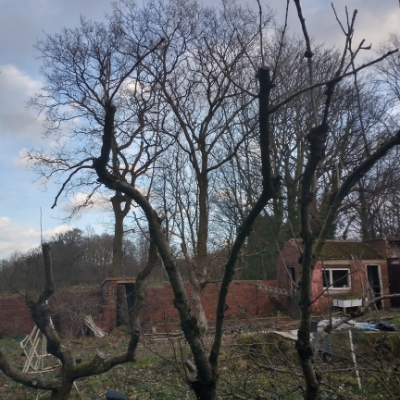
Just wondering who else on here works in research and could maybe tell me what people are saying in comments are on this article? In essence, the UK government agency that gives out grants to tech (clean tech, medicine etc) SMEs to do research hasn't been doing much for six months. The techbro in charge has decided AI means that written applications are now obsolete. However, he fails to suggest an alternative. #research #deeptech #ukri #innovateuk

The #PhilosophicalTransactionsRoyalSocietyB has a special issue on "Transforming terrestrial #Food systems for #human and planetary #health which can be accessed here:
https://royalsocietypublishing.org/toc/rstb/2025/380/1935
How to transform the failing global food system to provide a resilient, #sustainable food future is one of the most urgent problems facing the world. There are increasing calls for a need to transform the system as some of the greatest challenges facing humankind (#ClimateChange, #BiodiversityLoss, #obesity) are linked with how we produce and consume food. Global changes in food demand and dietary habits are placing an unsustainable burden on healthcare systems and environmental #sustainability.
It is within this context that United Kingdom Research and Innovation (#UKRI) invested £47.5 million into a programme ‘Transforming the UK Food System for Healthy People and a Healthy Environment’ (#TUKFS). The objective of the programme is to fundamentally transform the UK food system by placing healthy people and a healthy natural environment at its centre. In this theme issue, leading researchers involved with this programme describe some of the major outputs: new data, evidence and conclusions covering key components and stakeholders of the food system. The papers here provide a case study from the UK which can be compared to and inform policies around the world.
Client Info
Server: https://mastodon.social
Version: 2025.07
Repository: https://github.com/cyevgeniy/lmst