
#BettyFriedan
#Friedan
#misticafemenina
#feminismoconsciente
#FeminismoParaResistir
#BettyFriedan
El lado oscuro de «Cosmopolitan» en 1975: Un artículo polémico sobre la competencia entre mujeres
La tensión y competencia entre mujeres por la atención masculina, representada en un escenario dramático de los años 70.
En la edición de 1975 de Cosmopolitan, se publicó un artículo titulado «Todo lo que hay que hacer para competir y eliminar la competencia» que actualmente generaría controversia y dejaría a más de una persona con la boca abierta. 😳 Aunque la revista se presentaba como un faro de liberación femenina, este artículo mostró una visión mucho más tradicional y problemática sobre las relaciones entre mujeres. Si te sorprende, quédate a descubrir por qué. 👀
La competencia entre mujeres: ¿Necesaria o impuesta? 🥊
La competencia entre mujeres en un contexto social de los años 70 refleja tensiones sobre el empoderamiento femenino.El artículo comienza con una afirmación que parece inocente: la competencia entre mujeres siempre ha existido. 💁♀️ Pero en 1975, cuando el movimiento feminista estaba en auge, esta competencia había cobrado una relevancia brutal. En un momento en que las líderes del feminismo luchaban por eliminar los enfrentamientos entre mujeres, Cosmopolitan decía lo contrario. 💅
Aunque en el feminismo se habla del concepto de «no competir», especialmente en temas amorosos. En el artículo de la revista era todo lo contrario: proponía que la competencia era inevitable. Y no solo eso, sino que la competencia debía ser parte de la vida cotidiana, especialmente cuando se trataba de mantener a un hombre.
El valor de una mujer y su relación con los hombres 😬
Uno de los puntos más problemáticos del artículo es cómo presenta a las mujeres como concursantes en una competencia constante por la atención masculina. 🤦♀️ Según la pieza, si una mujer tenía pareja, debía estar en alerta total para que otras mujeres no “robaran” a su novio o esposo. 😱
Este enfoque, además de ser superficial, contradice todo lo que se pensaba sobre empoderamiento femenino en ese entonces. En vez de centrarse en el valor de la mujer como ser humano, se vinculaba su éxito directamente con su habilidad para ser deseada por los hombres. ¿Y el empoderamiento? 👀
Betty Friedan y el desprecio hacia el feminismo 🙅♀️
Betty Friedan, influyente figura del feminismo, criticada en un artículo de Cosmopolitan de 1975 por su postura sobre la competencia entre mujeres.Si el artículo no fuera suficientemente polémico, también incluye un ataque directo a Betty Friedan, una de las voces más influyentes del feminismo. En lugar de hablar de su lucha por los derechos de las mujeres, el artículo la ridiculiza, llamándola “amargada” y comparándola con “un erizo menopáusico”. 😡
Este tipo de comentarios no solo atacaban su persona, sino que también minimizaban las luchas feministas de la época. Al comparar a Friedan con estos estereotipos tan dañinos, la revista reducía su trabajo a algo banal.
Conclusión: Un eco de los viejos tiempos 📢
Este artículo de Cosmopolitan de 1975 es un claro ejemplo de las tensiones que existían en esa época entre los medios de comunicación y el movimiento feminista. Aunque la revista se presentaba como un refugio de empoderamiento femenino, en realidad, seguía perpetuando rivalidades y estereotipos entre mujeres.
Este artículo deja claro que, incluso en medio de un auge feminista, los medios populares de la época no eran completamente liberadores. En lugar de alentar la solidaridad entre mujeres, preferían reforzar la competencia y las limitaciones impuestas por los estándares de belleza y los intereses masculinos. ✋
¿Qué opinas sobre esto? ¿Crees que todavía hay espacio para este tipo de perspectivas en los medios de hoy? 💭 Déjanos tu opinión en los comentarios. ⬇️
#1975 #70s #BettyFriedan #CompetenciaEntreMujeres #feminismo #liberacionFemenina #revistaCosmopolitan

New #podcast: #DavidDenby joins the show to talk about his new book, EMINENT JEWS: Bernstein, Brooks, Friedan, Mailer! We talk #art #music #movies #comedy #feminism #books #GreatBooks & a LOT more, so GO LISTEN! https://chimeraobscura.com/vm/episode-642-david-denby
El lado oscuro de «Cosmopolitan» en 1975: Un artículo polémico sobre la competencia entre mujeres
En la edición de 1975 de Cosmopolitan, se publicó un artículo titulado «Todo lo que hay que hacer para competir y eliminar la competencia» que generó controversia y dejó a más de una persona con la boca abierta. 😳 Aunque la revista se presentaba como un faro de liberación femenina, este artículo mostró una visión mucho más tradicional y problemática sobre las relaciones entre mujeres. Si te sorprende, quédate a descubrir por qué. 👀
La competencia entre mujeres: ¿Necesaria o impuesta? 🥊
El artículo comienza con una afirmación que parece inocente: la competencia entre mujeres siempre ha existido. 💁♀️ Pero en 1975, cuando el movimiento feminista estaba en auge, esta competencia había cobrado una relevancia brutal. En un momento en que las líderes del feminismo luchaban por eliminar los enfrentamientos entre mujeres, Cosmopolitan decía lo contrario. 💅
Aunque se hablaba del concepto de «no competir», especialmente en temas amorosos, el artículo no profundizaba en cómo eso realmente afectaba a las mujeres. Todo lo contrario: proponía que la competencia era inevitable. Y no solo eso, sino que la competencia debía ser parte de la vida cotidiana, especialmente cuando se trataba de mantener a un hombre.
El valor de una mujer y su relación con los hombres 😬
Uno de los puntos más problemáticos del artículo es cómo presenta a las mujeres como concursantes en una competencia constante por la atención masculina. 🤦♀️ Según la pieza, si una mujer tenía pareja, debía estar en alerta total para que otras mujeres no “robaran” a su novio o esposo. ¡Y todo esto por el simple hecho de atraer la mirada masculina! 😱
Este enfoque, además de ser superficial, contradice todo lo que se pensaba sobre empoderamiento femenino en ese entonces. En vez de centrarse en el valor de la mujer como ser humano, se vinculaba su éxito directamente con su habilidad para ser deseada por los hombres. ¿Y el empoderamiento? 👀
Betty Friedan y el desprecio hacia el feminismo 🙅♀️
Betty FriedanSi el artículo no fuera suficientemente polémico, también incluye un ataque directo a Betty Friedan, una de las voces más influyentes del feminismo. En lugar de hablar de su lucha por los derechos de las mujeres, el artículo la ridiculiza, llamándola “amargada” y comparándola con “un erizo menopáusico”. 😡
Este tipo de comentarios no solo atacaban su persona, sino que también minimizaban las luchas feministas de la época. Al comparar a Friedan con estos estereotipos tan dañinos, la revista reducía su trabajo a algo banal, deslegitimando su influencia y el valor de sus propuestas.
Conclusión: Un eco de los viejos tiempos 📢
Este artículo de Cosmopolitan de 1975 es un claro ejemplo de las tensiones que existían en esa época entre los medios de comunicación y el movimiento feminista. Aunque la revista se presentaba como un refugio de empoderamiento femenino, en realidad, seguía perpetuando rivalidades y estereotipos entre mujeres.
Este artículo deja claro que, incluso en medio de un auge feminista, los medios populares de la época no eran completamente liberadores. En lugar de alentar la solidaridad entre mujeres, preferían reforzar la competencia y las limitaciones impuestas por los estándares de belleza y los intereses masculinos. ✋
¿Qué opinas sobre esto? ¿Crees que todavía hay espacio para este tipo de perspectivas en los medios de hoy? 💭 Déjanos tu opinión en los comentarios. ⬇️
#1975 #70s #BettyFriedan #CompetenciaEntreMujeres #feminismo #liberacionFemenina #revistaCosmopolitan

What better way to kick off #WomensHistoryMonth than with women’s rights advocate and icon #BettyFriedan?
Author of “The Feminine Mystique” and founder of the National Organization for Women (NOW), Friedan played a pivotal role in shaping the women’s movement in the United States.
In this 1974 episode of WNED’s “Woman,” Friedan discusses the importance of women pushing past perceived limits to transform their confidence and consciousness in society: https://americanarchive.org/catalog/cpb-aacip_81-9995xhm0
The digital mystique and the new problem with no name
https://therealists.org/?p=8050
Hello dear Realists,
It’s been a while.
I owe you an apology for this long hiatus but my work schedule these past two months was completely disrupted by an unforeseen event: a health emergency for my daughter’s beloved nanny, which lead to a long medical leave. Thankfully she has fully recovered and is doing great now.
I ended up spending June and half of July in between my parents’ home and my in-laws’, to get a bit of help with my little one. Suddenly, five hours of uninterrupted work (which I enjoyed on a typical weekday) seemed the apex of luxury; at most I would get one or two during nap times.
On the upside, I got to be fully immersed in the world, away from screens. And I’ve done a lot of thinking.
The problem that has no name
The one topic that I have been mulling about over and over these past two months is “the problem with no name”.
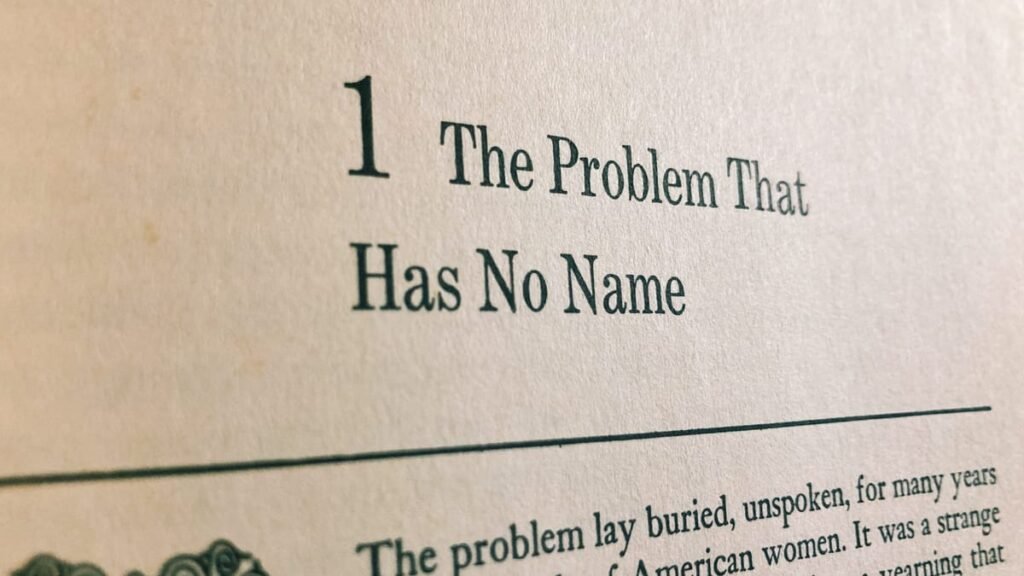
“The problem that has no name” is the title of the first chapter of Betty Friedan’s iconic book The Feminine Mystique, which was credited as the spark that started the second wave of feminism in the United States.
In the book, Friedan spoke about the malaise common amongst housewives – who, despite having material comforts and adhering to the idealized version of femininity promoted by the culture and media – still felt a deep sense of dissatisfaction about their lives.
Friedan wrote:
The problem laid buried, unspoken, for many years in the minds of American women. It was a strange stirring, a sense of dissatisfaction, a yearning that women suffered in the middle of the twentieth century in the United States. Each suburban wife struggled with it alone. As she made the beds, shopped for groceries, matched slipcover material, ate peanut butter sandwiches with her children, chauffeured Cub Scouts and Brownies, lay beside her husband at night—she was afraid to ask even of herself the silent question—“Is this all?”
For over fifteen years there was no word of this yearning in the millions of words written about women, for women, in all the columns, books and articles by experts telling women their role was to seek fulfillment as wives and mothers. Over and over women heard in voices of tradition and of Freudian sophistication that they could desire no greater destiny than to glory in their own femininity.
New pressures: the Digital Mystique?
How does this relates to The Realists, you may wonder?
There are growing reports in the media about an epidemic of mental illness, anxiety, depression and loneliness at a time in history when formerly oppressed groups are enjoying greater rights and acceptance… when billions of people carry in their pocket devices that can connect them to friends and contacts near and far… and yet, anxiety and isolation are on the rise, affecting people across genders, races, countries and socio-economic groups. On Substack Jon Haidt is connecting the dots and doing brilliant cross-cultural analyses of this very problem.
Friedan talked about “The Feminine Mystique” – I think these days we are experiencing a Digital Mystique.
What is the new problem with no name? Maybe that in our current society, irrespective of whether we live in Paris, Chicago, or Bangkok, we live under numerous pressures – some old and some brand new – that clash with how we have evolved as a species.
Our parents’ generation felt the pressure to have a good job, be in a relationship, and to look a certain way. Work, love life, and physical appearance were a triad most adults worried about throughout the 20th century… and then the age of social media created a whole new sphere of pressure: to have a good job, to be in a relationship, to spend time and money to look attractive… and also to be popular online, on social media, accruing a large audience of strangers.
Online popularity and influence have become a new status symbol, but also a source of anxiety for many, when visible metrics dominate our digital lives and someone’s follower and comment count is visible to all.
It’s a new pressure created by this brave new digital age and we are struggling to catch up with it because throughout the entire history of human civilization, we had been conditioned to nurture relationships with a small group of people we knew in real life.
Social media changed all that, creating the pressure to appeal to and be known to as many people as possibles, not just friends but also strangers. Thousands… even millions of strangers.
A personal story: the dangers of all eggs in one basket
I had not realized how deeply tied my self-esteem was to my online persona – side note: it feels icky to write “online persona” but you know what I mean – until Twitter 1.0 collapsed under its new mercurial owner Elon Musk.
I had gone all in – all eggs in one basket – with Twitter: it was my one and only social network, where I nurtured friendships, professional relationships and shared my work for 14 years. Yes, 14 YEARS!
Many people I interacted with on the site became real life close friends. My visibility on Twitter – albeit extremely modest, in small circles – lead to interesting job opportunities, speaking engagements abroad and articles about my work in prominent magazines and online publications, from the United States, to the UK, Italy Japan and Australia.
I was followed by a small but formidable group of people – only about 8000 or so, but amongst them were thought leaders, inspiring activists, famous actors, filmmakers, politicians, my home country’s former prime minister, best-selling authors, brilliant artists and world-famous entrepreneurs.
It was an incredible feeling to read about someone in the press, go to Twitter, interact with them on the platform, and find they would often follow me back immediately. Nothing came close to it in terms of accessibility to noteworthy, powerful, interesting people. My gratitude journal was regularly filled with episodes about the unique magic created by Twitter.
I used Twitter to raise awareness about the production of my documentary The Illusionists: I found an audience, sponsors, influential supporters and I ultimately got offers to show the finished film at prestigious venues… including Twitter HQ in San Francisco!
My GIF campaign This Is What a Film Director Looks Like connected me to a phenomenal group of female directors and cinematographers, making me feel part of a lovely sisterhood of women in film. And for a while, my photo was the icon for “female film director” on Google Images!
With Twitter now called X, with all traces of its former incarnation being destroyed by its tempestuous overlord, I find myself grieving what it used to be. I must admit I feel a tinge of unease at the fact I don’t have a beloved platform or following anymore, with whom I can share my work.
I need to rebuild everything from scratch, as a geriatric millennial.
Since October 27th, 2022, with Twitter’s passage of ownership, I have felt a lingering sense of loss and grief. And it’s not just personal and about me, Elena. It’s the profound sorrow of witnessing the destruction of a platform that served as the launching pad of many progressive movements, from Me Too to Black Lives Matter, hashtag campaigns like #ILookLikeAnEngineer and #everybodysready.
Platformer’s recently wrote a brilliant analysis of Twitter’s devolution into X and the impetus behind it. I found his article cathartic, thinking: “yes, this is it – FINALLY a good explanation” of what I felt was so disturbing about the platform’s new incarnation.
Newton wrote:
[…] this framing misses the true shape of Musk’s project, which is best understood not as a money-making endeavor, but as an extended act of cultural vandalism. Just as he graffitis his 420s and 69s all over corporate filings; and just as he paints over corporate signage and office rooms with his little sex puns; so does he delight in erasing the Twitter that was.
All of this has been clear since at least November, when Musk gleefully mocked a stack of Black Lives Matter T-shirts that he found in a company closet. Yes, Musk regularly issues grandiose pronouncements about how Twitter will someday become a WeChat-style “super app,” ensure the future of civilization, and so on. But at its core, Musk’s misadventure at Twitter has been reactionary: an ideological purge of the employees he saw as “woke” and entitled; a gleeful inversion of industry standards around content moderation; a hollowing out of the free product; and a redistribution of the company’s attention and wealth toward right-wing users.
The power of naming things
The description of Twitter’s destruction as “cultural vandalism” made me feel some sort of control for the first time in months. Yes, now it makes sense. Giving things an accurate name can be empowering. Therefore, I wish there was a name for this incredible pressure we feel – at least in the Western world – to be influential online.
From personal experience, I wasn’t influential in the traditional sense – I had less than 10,000 followers on my main Twitter account – but many of these followers were incredibly inspiring… and I must admit this had a positive effect on my self-esteem. I was always a few taps of the keyboard away from people I looked up to… and they followed me back, interacting with me. It felt energizing.
With that gone up in smoke, I feel a distinct sense of disempowerment, of being a failure… despite professional accomplishments, a loving family and a current life – away from screens – filled with daily delights.
I’ve been tempted to call the pressure to be popular online the “digital mystique” as a nod to Friedan. But I’m a little late to that: a quick Google search revealed that author Sarah Granger published a book titled “The digital mystique” about our online lives exactly 9 years ago. I need to keep brainstorming names then…
Silver Linings
When your favorite online gathering place implodes, you mourn, reminisce about its good days, and eventually you get into action.
In November I had the foresight of putting into a Notion database a full list of interesting people I followed on Twitter, that I wanted to keep in touch with elsewhere. I have been rebuilding my “social graph” from scratch ever since.
I have signed up for every Twitter alternative under the sun – Mastodon, Bluesky, Threads (with a wiped burner phone and new Apple ID because… Meta).
Nothing is feeling quite like the blue bird yet, but I am taking a much more intentional approach to socializing online now. As a Notion geek, I have created a Socials master list database and I’ve been adding notable people to it, that I find on these social media sites. I am taking notes of where else they have profiles, so that if one site goes away, I can keep interacting with them elsewhere.
And little by little, I am rebuilding a following of people I greatly admire: from a favorite novelist to an influential entrepreneur and a leading tech journalist. Baby steps.
At the end of the day, my ultimate goal is not to be an influencer – it was never the case. The goal is to find my tribe online, to nurture relationships with interesting people who live far away, amplify their work and have them interact with what I do. I had hit such a sweet spot with my 8000 followers on Twitter – it was all about quality, not quantity. And I hope to rebuild something similar in the coming year.
About this summer
My daughter’s beloved nanny goes on a month long vacation starting tomorrow morning. I won’t have any childcare for the next four weeks, but I am hoping to find time to post here. I hope this post provided food for thought and I look forward to keeping this conversation going.
Oh and if you have an alternate description for “digital mystique” I am all ears!
Elena
P.S.: I had tried to embed Twitter screenshots of my old posts – showing photos of my screening at Twitter HQ or my tweet about being the icon for “female film director” on Google. Well, Twitter 2.0 / X is so broken that its advanced search engine barely works. Time to move on for good…
#BettyFriedan #comparisonAnxiety #digitalMystique #everybodysready #ILookLikeAnEngineer #TheFeminineMystique #ThisIsWhatAFilmDirectorLooksLike #Twitter

“It is easier to live through someone else than to become complete yourself.”
― Betty Friedan https://en.wikipedia.org/wiki/Betty_Friedan
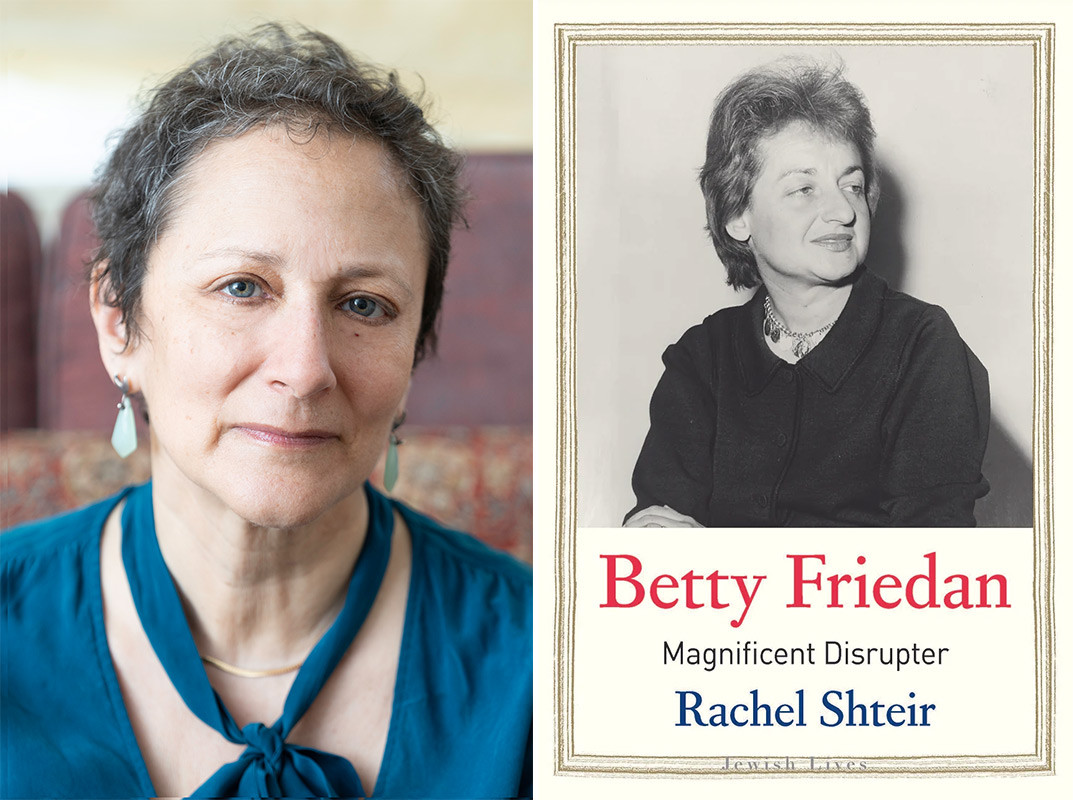
New #podcast is up! This one's a conversation with Rachel Shteir about her fantastic new #biography, BETTY FRIEDAN: Magnificent Disrupter! We talk The Feminine Mystique & #feminist waves, equal rights vs. sexual politics, & a ton more, so give it a listen — https://chimeraobscura.com/vm/episode-557-rachel-shteir — and go get Rachel's book — https://bookshop.org/a/4669/9780300220025
#BettyFriedan #feminism #TheFeminineMystique #books #bookstodon #podcastodon

Alongside #BettyFriedan, #PauliMurray was a #founder of the #NationalOrganizationofWomen (#NOW), and she #wrote extensively about the importance of #women’s #equality under the law.
@RickiTarr well put in #MaryTylerMoore’s bio on HBO now are many clips of same speaking. #BettyFriedan’s views of freeing women from home labor is still revolutionary, universal and #aspirational #feminism

2/5:
Mom's Internet has been down all weekend (thx AT&T), so I suggested that she catch up on some #reading. That made me realize that I hardly ever read anymore, either on the #Kindle or physical copies, despite the fact that I have 5 bookcases full. I know I should get rid of some, but then I come across something like this in my collection and I don't want to. #books #BettyFriedan #365Project #Project365
Client Info
Server: https://mastodon.social
Version: 2025.07
Repository: https://github.com/cyevgeniy/lmst