
#happybirthday @realmichaelpena #michaelpena #actor #luis #antman #antmanandthewasp #GoodLuckHaveFunDontDie #AllHerFault #AWorkingMan #Unstoppable #AMillionMilesAway #moonfall #secretheadquearters #jackryan #worldtradecenter #cesarchavez #americanhustle #crash #endofwatch #doraandthelostcityofgold #walkout #narcosmexico #themule #extintion #chips #fury #frontera #battlelosangeles #themartian #shooter #fantasyisland #tomandjerry
#CesarChavez


HD Hyundai Heavy Industries has secured a contract to provide MRO services for the US Navy's logistics support vessel USNS Cesar Chavez, following the successful completion of a similar project for the USNS Alan Shepard, highlighting the company's growing presence in the US naval maintenance market.
#YonhapInfomax #HDHyundaiHeavyIndustries #USNavy #MRO #CesarChavez #AlanShepard #Economics #FinancialMarkets #Banking #Securities #Bonds #StockMarket
https://en.infomaxai.com/news/articleView.html?idxno=98785

Choose your Caesar
https://piefed.social/c/historymemes/p/1629820/choose-your-caesar



The first principal of non-violent action is that of noncooperation with everything humiliating.
-- Cesar Chavez
⬆ #Wisdom #Quotes #CesarChavez #CivilDisobedience #Humiliation #NonViolence


December 4, 1970 - Cesar Chavez was sentenced to 20 days in jail for refusing to call off the United Farm Workers’ consumer boycott of Bud Antle, Inc., the country’s second largest lettuce grower. Antle had signed a contract with Teamsters Local 890 though only 5% of the workers voted to ratify it. Nor had there ever been an election for the workers to choose a union to represent them. The boycott had been called to pressure Antle to negotiate with the Farm Workers.

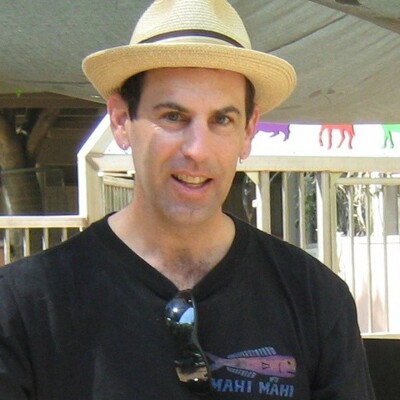
Today in Labor History December 4, 1970: The authorities jailed Cesar Chavez for 20 days during the Salinas Salad Bowl Strike. The strike was, in many ways, a turf war between the UFW and the teamsters, who had already signed a deal with the growers. It was the largest farm workers strike in U.S. history. It cost the lettuce growers $500,000 per day. The UFW also initiated a nationwide boycott of lettuce. On November 4, someone bombed their headquarters. Chavez’s arrest, on December 4, was his first of many arrests. Ethyl Kennedy, widow of Robert Kennedy, visited him in jail. As she left, an anti-union mob attacked her. The Brown Berets collaborated with the police to prevent a full-scale riot from breaking out.
#workingclass #LaborHistory #cesarchavez #union #strike #ufw #farmworkers #chicano #mexican #brownberets

LAPD Officer Cesar Chavez https://copblaster.com/blast/57420/lapd-officer-cesar-chavez?utm_source=dlvr.it&utm_medium=mastodon #CesarChavez #LAPD #LawEnforcement #PoliceCommunity #JusticeForAll
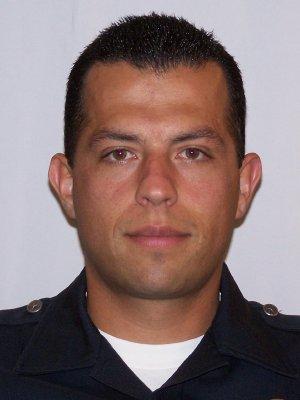

The untold story behind the first National Coming Out Day
https://fed.brid.gy/r/https://www.advocate.com/news/national-coming-out-day-history

Non-violence is not inaction. It is not discussion. It is not for the timid or weak. Non-Violence is hard work. It is the willingness to sacrifice. It is the patience to win.
-- Cesar Chavez
⬆ #Wisdom #Quotes #CesarChavez #CivilDisobedience #NonViolence
⬇ #Photography #Panorama #BartolomeIsland #PinnacleRock #Galapagos

Today in Labor History September 8, 1965: Cesar Chavez led farm workers in California on their first grape boycott. The nationwide protest lasted five years and ended with the first union contract for U.S. farm workers outside of Hawaii. In 1966, Chavez’s organization officially became the United Farm Workers.
#workingclass #LaborHistory #ufw #cesarchavez #boycott #grapes #union #strike

Today in Labor History September 1, 1880: The utopian communistic Oneida Community ended after 32 years. The Community was founded by John Humphrey Noyes and his followers in 1848 near Oneida, New York. They believed that Jesus had already returned in AD 70, allowing them to bring about Jesus's millennial kingdom themselves. The Community practiced communalism (holding all property and possessions in common). They also practiced complex marriage, where 3 or more people could enter into the same marriage, and male sexual continence, where the male’s goal was to not ejaculate during sex. They were also one of the first groups in the U.S. to practice mutual criticism, to root out bad characteristics in people, something adopted by many later cults, and even by Cesar Chavez and the UFW under his leadership.
The Oneida Community has been portrayed in numerous works of fiction such as “Silken Strands,” by Rebecca May Hope (2019). “Assassination Vacation,” by Sarah Vowell (2005) and “Pagan House,” by David Flusfeder (2007).
#workingclass #LaborHistory #socialism #oneida #cesarchavez #cult #communalism #books #author #writer #fiction #novel @bookstadon

Today in Labor History August 23, 1970: The Salad Bowl strike began. Led by Cesar Chavez and the United Farm Workers (UFW), it was the largest farm worker strike in U.S. history. The strike cost the growers $500,000 per day. The strike was not only a battle between farm workers and the large, corporate growers. It was also a turf war between the UFW and the Teamsters, who had initially signed a contract with growers to represent the lettuce pickers. In late September 1970, the UFW launched a consumer boycott of all lettuce which had not been picked by members of the United Farm Workers. Violence was widespread. In November, someone bombed a UFW regional office. In December, federal marshals arrested and jailed Chavez. Two days later, former Olympic gold medal decathlete Rafer Johnson and Ethel Kennedy, widow of Robert Kennedy, visited him in jail. However, an anti-union mob attacked Kennedy and Johnson on the steps of the jail. Only the intervention of Salinas city cops and the Brown Berets prevent injury to the visitors and full-scale riot.
The turf war between the Teamsters and the UFW continued after the strike and grew increasingly violent. A UFW picketer was shot on August 3. And on August 9, five firebombs were thrown at UFW picket lines. Another two UFW members were shot on August 11, and a UFW picketer was shot to death on August 16, 1973. Chávez ultimately entered into talks with the Teamsters. On September 27, 1973, the Teamsters agreed to leave jurisdiction over farm field workers to the UFW.
#workingclass #LaborHistory #UnitedFarmWorkers #ufw #union #strike #cesarchavez #teamsters #immigrants #chicano #boycott #bomb #jail #brownberets

Non-violence is not inaction. It is not discussion. It is not for the timid or weak. Non-Violence is hard work. It is the willingness to sacrifice. It is the patience to win.
-- Cesar Chavez
⬆ #Wisdom #Quotes #CesarChavez #CivilDisobedience #NonViolence

In the names of #HarveyMilk #YuriKochiyama
#CesarChavez #AngelaDavis
Represent!
#LockArms for #California
#HarrietTubman, who, after being born into #slavery, became an #abolitionist instrumental in the #UndergroundRailroad; #LucyStone, a prominent abolitionist & #suffragist; #MedgarEvers, a #CivilRights leader who was assassinated by a member of the Ku Klux Klan; #CesarChavez, a #labor leader; & #DoloresHuerta, another labor leader.
2/2
#WhiteSupremacy #MaleSupremacy #Heterosexism #bigotry #discrimination #hate #Trump #PeteHegseth #military #Tyranny #AmericanAutocracy

And there's more...
https://www.cbsnews.com/news/navy-new-name-usns-harvey-milk-ships-named-for-civil-rights-leaders/
Excerpt: The documents obtained by CBS News also show other vessels named after prominent leaders are also on the Navy's renaming "recommended list."
Among them are the USNS Thurgood Marshall, USNS Ruth Bader Ginsburg, USNS Harriet Tubman, USNS Dolores Huerta, USNS Lucy Stone, USNS Cesar Chavez and USNS Medgar Evers.
#RuthBaderGinsburg #HarrietTubman #DoloresHuerta #LucyStone #CesarChavez #MedgarEvers
LAPD Officer Cesar Chavez https://copblaster.com/blast/57420/lapd-officer-cesar-chavez?utm_source=dlvr.it&utm_medium=mastodon #CesarChavez #LAPD #LosAngeles #PoliceCommunity #HispanicHeritage
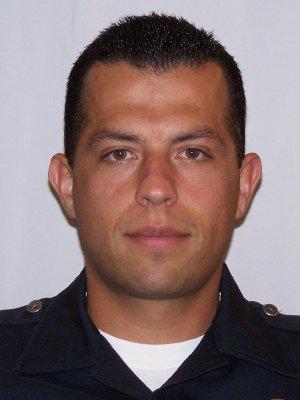

Lila Thulin: Ever heard of Fred Ross Sr.? New #documentary chronicles the legendary organizer’s work: 'American Agitators,' an award-winning film by UC Berkeley's Raymond Telles, profiles an activist who mentored Cesar Chavez and Dolores Huerta.
#Film #labor #farmworkers #ucberkeley #CesarChavez #DoloresHuerta #union
https://news.berkeley.edu/2025/03/26/ever-heard-of-fred-ross-sr-new-documentary-chronicles-the-legendary-organizers-work/
Client Info
Server: https://mastodon.social
Version: 2025.07
Repository: https://github.com/cyevgeniy/lmst