
Pregnant 19-Year-Old Killed After Thanksgiving Visit: ‘I Can’t Question God… We’re All Going To Have Our Number’ https://shinemycrown.com/pregnant-19-year-old-killed-after-thanksgiving-visit-i-cant-question-god-were-all-going-to-have-our-number/?utm_source=dlvr.it&utm_medium=mastodon #PregnancyLoss #GunControl #ThanksgivingTragedy #GriefSupport #JusticeForJaylah
#GriefSupport

You don’t have to forget. You don’t have to move on fast. Let the memory live. Let it comfort you. Let it be a treasure.
#GriefSupport #LoveAndLoss
https://quotes.thisgrandpablogs.com/memory-becomes-a-treasure-quote/

🧠 Shock. Anger. Sadness. Acceptance. Grief after a cancer diagnosis is not a straight path.
Our new post explores the emotional stages patients and families face after diagnosis, why feelings shift, and how support networks and self‑compassion can make the journey less isolating.
Read more 👉 https://blog.banishcancer.org/the-stages-of-grief-after-a-cancer-diagnosis-what-to-expect/
#CancerAwareness #GriefSupport #Oncology #MentalHealth #PatientCare #BanishCancer


Woman who suffered four miscarriages shares 25 things ways to comfort other grieving moms


✝️Grief is heavy, but God is with you in every step, every tear, and every new beginning.
Tough Energy: Finding Peace in Grief – 30 Days of Faith, Healing, and Purpose After Loss, by Tiarra M Elmore
Free until November 9th!

Fourth grade teacher beautifully explains what grief is to her students using a vase


New Spiritual Care Specialist (SCS) Class Starting January 30th!: New SCS Class Starts January 30th!
Please click here for registration information.
ACPE’s 48-hour course in Spiritual Care Specialist training supports people working in all manner of caring ministries (congregational clergy, lay pastoral caregivers, chaplains, allied caregivers of faith, etc.) to do their work more effectively,… http://dlvr.it/TNxHwt #SpiritualCare #MentalHealth #GriefSupport #Chaplains #PastoralCare
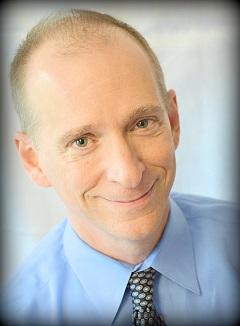

Cause of Death Revealed: Boxing Legend “The Hitman” Ricky Hatton Dies by Suicide
#RickyHatton #TheHitman #BoxingNews #BoxingChampion #suicide #TragicLoss #MentalHealthAwareness #GriefSupport #health #MentalHealthHelp #annakarolinaheinrich
https://news-annakarolinaheinrich.com/ricky-hatton-dead-suicide-46
”Tender is the night
In which I hold your memory
A cloudless sky
Reminding me of what used to be
There are no words
To describe a longing long lost
But after years of missing you
I would always pay the cost”
- a poem by me
#poem #poetry #poetrycommunity #writing #writer #writerscoffeeclub #writersofmastodon #art #grief #griefsupport
Seeking virtual therapy in CA?
callistacoxtherapy.com
#therapy #mentalhealth #queer #trans #california #disabled #covidconcious #virtualtherapy #griefsupport #griefandloss #caregiversupport #caregiver #caregiving #blind #visionimpaired #VisionLoss #ImageDescription


𝗢𝗰𝘁𝗼𝗯𝗲𝗿 𝗶𝘀 𝗣𝗿𝗲𝗴𝗻𝗮𝗻𝗰𝘆 𝗮𝗻𝗱 𝗜𝗻𝗳𝗮𝗻𝘁 𝗟𝗼𝘀𝘀 𝗔𝘄𝗮𝗿𝗲𝗻𝗲𝘀𝘀 𝗠𝗼𝗻𝘁𝗵. This October we stand with everyone affected by miscarriage and early pregnancy loss — your grief matters, your feelings are valid, and you do not have to go through this alone.
“𝗜𝘁’𝘀 𝗼𝗸 𝗻𝗼𝘁 𝘁𝗼 𝗯𝗲 𝗼𝗸.”
Grief is personal and there is no set timeline or “right” way to feel. If you’re hurting, your pain deserves acknowledgment, compassion and support. Pink Elephants’ campaign invites partners, family and friends to listen, validate and offer practical care — not platitudes. Small acts of presence can make a big difference.
𝗜𝗳 𝘆𝗼𝘂’𝗿𝗲 𝗴𝗿𝗶𝗲𝘃𝗶𝗻𝗴:
- Allow yourself to feel whatever comes up — anger, sadness, numbness, relief or confusion.
- Reach out to someone you trust or a support group; talking helps.
- Seek professional help if you’re struggling to cope day-to-day.
- Be gentle with decisions about announcing, memorialising or trying again — do what feels right for you.
𝗜𝗳 𝘆𝗼𝘂’𝗿𝗲 𝘀𝘂𝗽𝗽𝗼𝗿𝘁𝗶𝗻𝗴 𝘀𝗼𝗺𝗲𝗼𝗻𝗲 𝘄𝗵𝗼’𝘀 𝗲𝘅𝗽𝗲𝗿𝗶𝗲𝗻𝗰𝗲𝗱 𝗹𝗼𝘀𝘀:
- Say their baby’s name if they use one, listen without minimizing, and avoid “at least” phrases.
- Offer concrete help (meals, childcare, errands) rather than vague offers.
- Let them lead conversations about their loss and timing for future pregnancies.
- Check in beyond the first days and weeks — grief can last much longer than people expect.
We are committed to changing the conversation from “at least” to “It’s ok not to be ok.” No one should have to walk the journey of miscarriage and pregnancy loss alone.
#ItsOkNotToBeOk #PregnancyLossAwareness #InfantLossAwareness #MiscarriageMatters #YouAreNotAlone #GriefSupport #ValidateTheLoss #PinkElephants #BreakTheSilence #SupportDontMinimise #PerinatalGrief #TalkAboutIt #SCABPharmacy
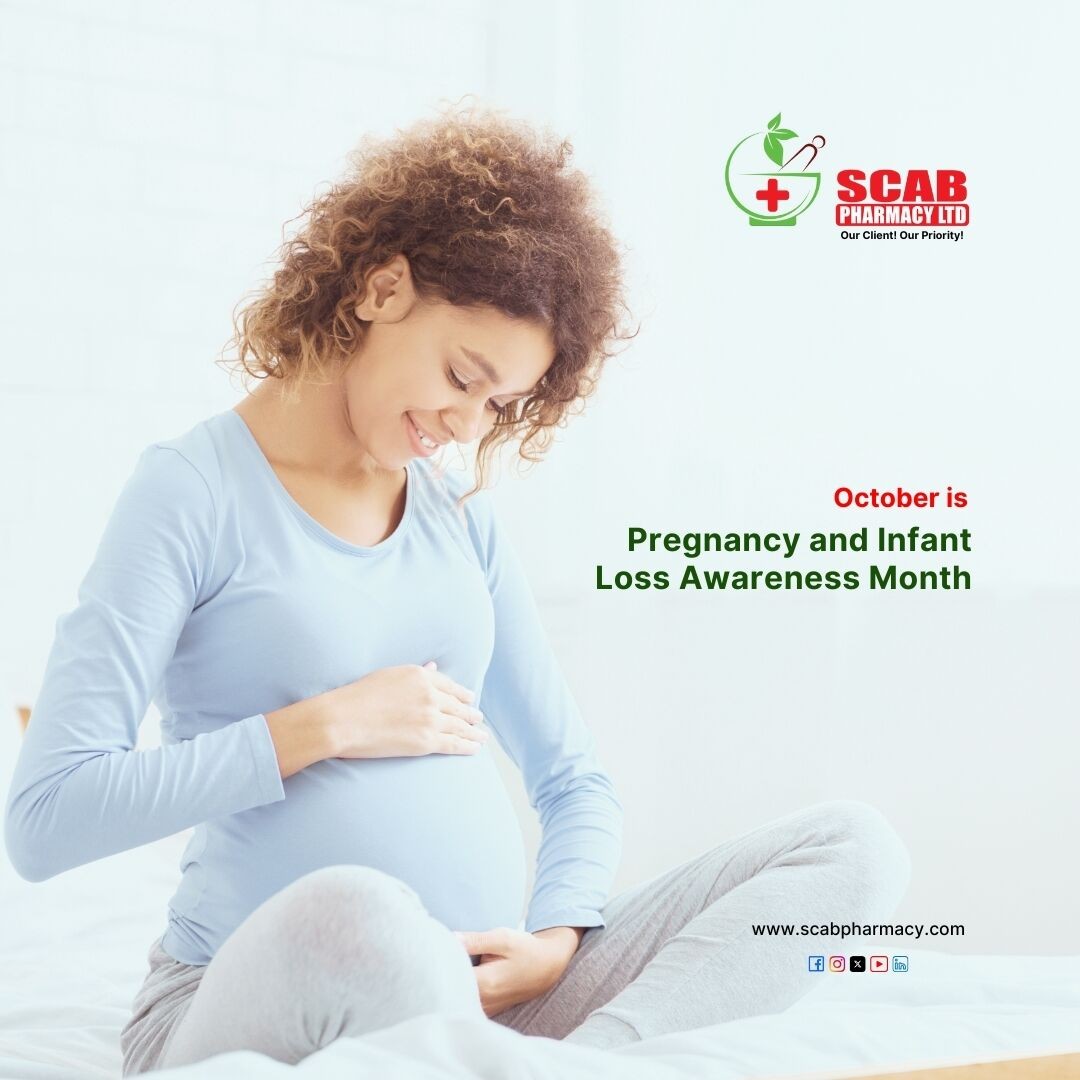

💜 Grief is never easy—but you don’t have to go through it alone.
Palliative care isn’t just for patients—it supports families too. From guidance to emotional strength, it helps loved ones find comfort in life’s hardest moments.
✨ In this blog by Epoch Elder Care, learn how compassionate care makes a difference for families navigating grief.
https://www.epocheldercare.com/blog/supporting-families-through-grief-in-palliative-care
#PalliativeCare #GriefSupport #ElderCareIndia #EpochElderCare #CompassionateCare #DignityInCare #FamilySupport


🕊️ Reflection is a powerful tool for healing — especially during times of grief. In my latest article, I share how daily and yearly reflection can help restore joy, build emotional strength, and bring peace after loss.
🌿Discover how reflection can gently guide you toward healing:
Read now👉https://buff.ly/6vcV1ky
#PowerOfReflections #InnerPeace #MentalStrength #EmotionalBalance #HealingJourney #JulieDohertyHealth #GriefSupport


Exploring Existential Therapy and Hospice Care
Author(s): Scott Douglas Jacobsen
Publication (Outlet/Website): The Good Men Project
Publication Date (yyyy/mm/dd): 2025/06/05
Sapira Cahana is a New York-based mental health counsellor (MHC-LP) and interfaith chaplain-in-training specializing in existential and relational therapy. Cahana integrates philosophy, human rights, ritual studies, Jewish studies, and diverse wisdom traditions into her therapeutic work. She emphasizes honouring client subjectivity, building trust, and engaging playfully with existential themes such as death, freedom, and meaning. From sources like the Hebrew Bible, existential psychotherapy, and Plato’s allegory of the cave, Cahana fosters transformative relationships that navigate complexity, uncertainty, and growth across psychotherapy, hospice care, and broader human experience.
Scott Douglas Jacobsen: Today, we are here with Sapira Cahana. She is a New York-based mental health counsellor (MHC-LP) specializing in existential and relational therapy. With a background in philosophy, human rights, ritual studies, and Jewish studies, she offers a compassionate, justice-oriented space for clients navigating identity, caregiving, chronic illness, and life transitions.
Sapira works with adults, seniors, LGBTQ+ individuals, artists, and neurodiverse clients, guiding them through self-exploration and meaning-making. Her therapeutic approach integrates existential, psychodynamic, and experiential modalities, emphasizing the therapeutic relationship as a source of wisdom. Fluent in English, Hebrew, and French, Sapira provides telehealth services across New York, fostering a reflective environment for personal growth and healing.
In addition to her clinical work, Sapira is training as an interfaith chaplain specializing in hospice care. As an interfaith chaplain, she serves individuals from diverse religious, spiritual, and secular backgrounds, offering inclusive support that honours each person’s unique worldview.
How do your secular and interfaith principles contribute to ethical decision-making, particularly globally, when providing telehealth services?
Sapira Cahana: Thank you for asking. When I refer to “secular,” I do not mean excluding religion; instead, I mean not privileging any single hermeneutic tradition. Instead, I engage with a broad tapestry of traditions and wisdom sources. I incorporate interreligious and intercommunal dialogue richness without centring any community over another. By integrating imagery, language, and wisdom from many traditions—including secular humanist perspectives—clients are supported in a way that enriches ethical decision-making. Ethical practice becomes informed by a multiplicity of voices rather than a singular authority, allowing for more expansive and authentic reflection.
Jacobsen: How would you characterize the principle of linking different sources together in a way that resonates with a particular client’s context?
Cahana: You are asking about creating experiences that resonate at a deep, personal level, correct? The goal is to meet the individual where they are, drawing upon traditions, images, and wisdom that are meaningful to their personal story and context. It is about situational responsiveness—tailoring the integration of sources to make the work ethically grounded and personally meaningful.
Well, we are all embedded in our contexts. We are all situated individuals. Each human is positioned within their vantage point and integrates many sources of material and wisdom.
Once I begin parsing through where a client’s language, imagery, and metaphors are coming from—whether from capitalist culture, Rembrandt, or elsewhere—I start weaving with them to create curated, connected experiences. I enter what Heidegger would call their “life worlds,” together, we expand and deepen their meaning through their language. In this work, I am constantly the “other” in the space. They are the subject. I am there to honour their subjecthood, using my otherness to relate, connect, disconnect, and reconnect—this is the essential material of the phenomenological approach.
This profound experience of being connected—subject and other, facing one another in an “I-Thou” relationship—translates into different relationships and experiences. It fosters individuation, the ability to separate one’s material from another’s. Yes, it is a transformative process that changes people’s lives, families, communities, and, ultimately, the world.
Jacobsen: What are the factors of rapport and trust? How do you ensure those are built into the therapeutic space?
Cahana: Yes. My first assumption is that there is no complete knowing of another. It is profoundly uncomfortable, especially as a therapist, because my deepest intention is to know and connect, while the client’s deepest intention is to be known and seen.
However, I clarify that as much as I desire that connection, true knowing is elusive. Yet the yearning—the deep wish to cleave into a relationship—is vital. That yearning brings integrity and builds trust. Naming the inevitable dissonance of relationships—acknowledging that there will be fractures—creates space for repair. I remain steady, stable, and ready to receive someone fully. We are never fully known, but we can make deep, persistent attempts to move closer and closer.
Jacobsen: The therapeutic population you work with is either self-selecting or sometimes mandated to attend therapy. It is not an entirely random sample of the general population. For your style of therapeutic process, what do you notice are some through-lines among the people who come to you?
Cahana: People who come to me are often in oblivion—an unknown, a fugue. They seek someone willing to be with them in that haze, someone who can sit in the fog without rushing to clarity. Together, we begin clearing the path, walking through the jungle of their experience.
I walk alongside people. I meet them closely where they are, believing I cannot fully know them. Clients are often drawn to my deep love of wisdom and ability to weave together world knowledge and cultures. My orientation is global, not confined to the microcosm of New York City—even though New York itself is so expansive. It is a world-based approach that resonates with people looking for something broader, something that connects across cultures and traditions.
There are so many people in New York, yet there is still a whole world beyond New York. Even if the world moved to New York, there would still be a world outside. I focus on transcendence and the magnitude of colour, grass, poetry, andhistory—that sense that there is a past and a future. It is so psychedelic and beautiful. There are microbiomes, astronauts, and the vastness of the universe.
Even though we may focus on one person in therapy, we are also a vessel, a signal for the magnitude and largeness of life. My goal is always to help people fall back in love with that grandeur.
Jacobsen: Are there particular cases where an individual is almost not fully a person in the sense of being fragmented internally—where the structure they present is quite chaotic and difficult to map and reorient toward a more coherent, stable self?
Cahana: My assumption is—and this may turn the idea on its head—that most people are chaotic. That description applies broadly. People are endlessly surprised. You might think you can put a thumbprint on someone and say, “This is my easy client,” and suddenly, something unexpected surfaces.
When I was training, I worked with clients with disabilities who were aging and had secondary diagnoses. A good example would be someone with schizophrenia muscular dystrophy who was 85 years old, nearing death. On paper, you could say that it is a complex case—a lot is happening—but they are still themselves.
I developed a sense of what therapeutic deep care looks like. It is not love—not in the romantic or familial sense—but rather a profound cherishing. It is the feeling of holding a human life in your hands with deep reverence. That is so profound and special.
I do not find anyone easily cast into a descriptor. People are too complex, too fluid. I am happy to flow with curiosity. To answer your earlier question, that is why people come to me: I am not writing a rigid script or saying, “This is our goal, and you will be fixed in three weeks.” I do not know—and I am comfortable with that uncertainty. The people who journey with me are also comfortable with it.
It would be lovely if healing were as simple as checking a box—finished and done. But that is not how I relate to grass, the moon cycles, or the world. If I am journeying with you, it is because there is an attraction to that kind of fluidity and comfort within the oblivion that I mentioned earlier.
Jacobsen: What existential themes arise for people who are in hospice?
Cahana: Well, in hospice, yes, the most excellent existential theme is, of course, death. But even more deeply, the real existential theme is freedom—people’s desire for freedom and their profound experience of alienation in an institutionalized setting.
I work in a beautiful hospice and am deeply grateful for where I am. But ultimately, even the best institutional setting cannot fully curate a person’s death. People are not in complete control. Much of my work happens after people have been poked, prodded, and spoken to clinically about dosages, pain acuity, or critical status. I get to come in and ask: But who are you?
Often, people say, “This shell that you’re seeing—that’s not who I am.” Surprisingly, hospice becomes an extraordinarily playful space. People experience alienation because institutions almost inevitably create distance. Very few people truly thrive in institutional environments.
At the end of life, people are trying to decide how they will relate to their death—specifically through their experiences of freedom. It is extraordinary. Much of my time with people at the end of life is spent playing. There is so much levity alongside so much depth. It has been an enormous gift to witness and be part of that.
Jacobsen: When people are isolated in institutional settings or confronted by the sterility and artificial regularity of those environments, how do they describe it?
Cahana: People are seeking a home, a feeling of home. They often say, “I want to go home.”
One charming patient, who was deeply righteous and fiercely independent—almost a literary character—once described the staff to me. She said, “Sapira, the staff here are butterflies.” I said, “Butterflies? That’s curious.” And she explained, “They flit.” Then she waved goodbye and said, “I’m going to bed now. Bye-bye.”
It was so charming and poignant—a beautiful image. Her description of the staff flitting reflected her desire to flit away, to have agency, even if it was limited. At that moment, her only absolute control was the power to dismiss me. And I consider it the most incredible honour to leave when asked.
In hospice, within the span of two encounters, one patient may call me “an angel,” praising me effusively, while another might say, “You liar—you didn’t come back at 4:35!” It is the same material—an endless oscillation between praise and vitriol—and it is all profoundly human.
It is the same energy. It is a desire to relate, be in control, and be connected—but on someone else’s terms. It is my most incredible honour to be the vessel for someone’s praise, and equally, it is my most incredible honour to be the vessel for someone’s rejection. Yes, it has been beautiful work—excellent work.
Jacobsen: Now, given the occasional vitriol—perhaps not actual vitriol, but a little berating—are mutual respect and empathy always necessary for efficacious therapy? Or are those sometimes secondary to therapeutic goals set earlier by the client when doing meaning-making work?
Cahana: Thank you for asking that critical question. My roles as a chaplain and a psychotherapist are quite distinct in this respect. That is a key point of separation.
In chaplaincy, especially end-of-life chaplaincy, I must receive whatever is given to me unquestioningly and with profound respect. It is a great honour to be one of the last people someone encounters, even if I have only known them briefly. I allow unconditional empathy to exist there, and I am deeply comfortable with that.
In psychotherapy, however, if there is ongoing deep anger, berating, or profuse vitriol—and it persists week after week—while the person continues to show up and remains engaged, I am much more likely to confront it directly. I might say, “I am here. I want to be here. I see that you deeply want to be here. But what is happening? How are we going to sustain a relationship like this?”
I would allow it to continue for weeks before naming it explicitly, but if the dynamic persists and a blockage in empathy and trust prevents movement, we need to delineate what is happening. Is the goal to move through the muck together? Or is the goal to express anger?
That becomes a question of choice. When clients opt into therapy with me, they are making a choice. But if something consistently blocks relational growth, we must face it together.
By contrast, people do not opt into therapy in hospice. I call my role “making pilgrimage”—moving from room to room, offering presence without expectation. It is very different: in hospice, I am the visitor; in psychotherapy, there is a mutual contract of engagement.
Jacobsen: What about a finer-grained analysis of your health and well-being as someone working in hospice or psychotherapy? For instance, if a client’s berating crosses the line into abusive behaviour toward you as a service provider, are you ethically permitted to terminate the therapeutic relationship under specific circumstances?
Cahana: Yes. There are ethical guidelines that permit termination under certain circumstances. I have, in fact, led group therapy where a participant berated me consistently for eight months. It was not easy, but as long as it served the therapeutic process and the group dynamics held, I remained.
However, if the dynamic becomes truly abusive—meaning it impedes the therapeutic process, harms the provider’s well-being, or risks creating a harmful environment for others—ethically, termination must and sometimes be considered. It would involve careful documentation, clear communication, and, ideally, a referral to another provider to keep the client’s care uninterrupted.
It is always a balancing act: honouring the client’s suffering and expression while protecting the integrity and health of the therapeutic space—for the client’s sake, my own, and anyone else involved.
And I stayed with it. I have pretty good patience—yes—and that is a skill. I knew intuitively that if someone had a deep hatred toward me—if my breathing made their skin itch, if they had overwhelming emotions directed at me—that was still something we could work on.
I had a client who berated me for about eight months. I was leading group therapy sessions, talking about active listening, morality, existentialism, or running psychodrama exercises. This particular person would sit on the outside of the group and heckle constantly: “You’re stupid,” “You don’t know what you’re talking about,” “Why are you treating us like babies?”
And there must be feedback hidden there. I would respond calmly: “Yes, I hear you. I am leading right now, so if you could give me five seconds to complete this point, I would be happy to hear your input afterward.” They would heckle again, and I would stay steady: “That’s noted.”
Then, unexpectedly, they received a serious medical diagnosis. And for whatever reason, they asked me to be the person to listen to them.
It is almost a silly story because there was an arc, but I was comfortable without needing that arc to conclude. It was fine either way.
I have also had other clients who have been highly dysregulated—one who came right into my face in a moment of extreme agitation and called me the wrong name. They said, “Slippers! You’re not listening!”
I kept my face completely still, but inside, I was cackling. It was wonderful. You do not have to know my name—I do not expect you to—but you wanted to name me—you wanted to relate to me—and even though you got it wrong, the impulse to connect was there.
I see so much of this as material. I am not innately afraid of clients or people. I could have reason to be, but I am not.
I understand fundamentally that people are born and people die. That is the facticity of life. Those two facts bind us all, no matter who we are or what we’ve lived. Whether you are religious or not, those facts themselves are extraordinary. There is divinity in the facts of life.
However someone interprets it—religiously, spiritually, or otherwise—it remains extraordinary to be a human being on this Earth.
Sometimes, I think of it like the yellow Google Maps figure you can drag and drop anywhere in the world. Maybe it is a reference from 2012, but that image captures it for me: this ability to be placed anywhere and the wonder that, wherever you are dropped, there is life happening—life, with all its magnitude and mystery.
It is like that—a yellow, amorphous being that you can dangle and then drop into a street view. So much of life is just coming into consciousness, and suddenly, you think, “I have great-great-grandparents? What are you talking about? My parents were once children. My guardians were once young?”
What is life? There is history, journalism, psychotherapy—it is all so bizarre. We are all just here. And if you can stay with the mastery and magnitude of whatever created existence—or whatever it is—then it is pretty amazing. It is extraordinary.
And then there are queer studies, disability studies, and all these different hermeneutic lenses you can bring to bear, seeing the world through various frameworks of how Islam views the world, how a small sect within Islam views the world. You have never even heard of how another sect might be at war with the first in a region.
There is the king of Jordan—endlessly famous within Jordan—yet, in North America, he could walk the street anonymously. It is astonishing how much richness there is in this world.
Jacobsen: How does the allegory of Plato’s cave help structure the philosophy of your meta-hermeneutic approach?
Cahana: Well, yes—sense perceptions are central.
The cave is a critical image. I love other powerful metaphors, like Pirandello’s Six Characters in Search of an Author, which also touches on these ideas, though it is less widely known.
The therapeutic space itself is a cave. It is an oasis, perhaps—but it is also a dark, enclosed space where you can throw off the cliff whatever you do not want to work with that day. You can parse through your experience and even reach first principles. That is what the cave represents: it is dug into the mountain’s edge, a space apart.
We are all cleaving toward truth. There is a truth in the universe, and none of us fully knows it. Some might be closer than others, but even that is uncertain. We are all in the mystery together.
At the same time, other people in our worlds have different visions and perspectives. They encroach on us, intentionally or not. Our relationships are often unsatisfying. Our material reality is messy and never perfectly “right.” If we hyper-fixate on that imperfection, it can lead to deep isolation or a belief that only the self is reliable—which is another false perception.
There is, perhaps, an ideal world—Plato’s world of Forms: the ideal horse, justice, and truth. We always strive toward that ideal, climbing a ladder we might never reach the top of.
But the goal, ultimately, is to harmonize with reality, to see others more softly, to recognize that others were born and that they, too, have lived experiences, dreams, and failures.
We sincerely wish to fix the world and put everything in perfect order. But the waves will crash, and the sandcastle will dissolve. The work is to rebuild—again and again.
It is about rebuilding the sandcastle. I have also been thinking a lot about Sisyphus lately. Yes, reflecting on Sisyphus as a figure of punishment.
I heard a beautiful podcast–”Everything is Alive- Chioke Grain of Sand“–that discussed how, over hundreds of thousands of years, the conditions in the story of Sisyphus—where he is condemned to push an enormous boulder up a mountain for eternity—would inevitably change.
It becomes a striking image: perhaps the boulder becomes like a marble over time, and the mountain face flattens. Eventually, it is no longer an endless toil but something meaningful. Sisyphus could even play games with that bit of marble. I find that image beautiful and spectacular.
We also recently read another piece. It is a poem by a literary critic, poet translator with his take on Sisyphus is named Stephen Mitchell. He writes that Sisyphus loves the boulder. He loves everything about the boulder. You can say what you want about his punishment, but Sisyphus fully cleaves to his reality. It goes as follows:
We tend to think of Sisyphus as a tragic hero,
condemned by the gods to shoulder his
rock sweatily up the mountain, and again up the mountain, forever.
The truth is that Sisyphus is in love with the rock. He cherishes every roughness and
every ounce of it. He talks to it, sings to it. It has become the Mysterious Other. He
evens dreams of it as he sleepwalks upward. Life is unimaginable without it, looming
always above him like a huge gray moon.
He doesn’t realize that at any moment he is permitted to step aside, let the rock hurtle to
the bottom, and go home.
That, too, is a beautiful lens into the story.
There are endless powerful images—whether from the Hebrew Bible, the Christian Bible, or other sources. But the cave allegory remains especially helpful: it says things are not quite what they seem, and we start working it out.
Let us go through a dialogue. Let us wrestle with the endless questions: What are the shadows? Who are those shadows? What is the outside? What happens when the shackles come off? What happens when you try to convince others?
There are so many good, rich questions there.
Jacobsen: Could you share some of your favourite existentialist or Hebrew quotes that you find relevant to therapy?
Cahana: So, my favourite quotes are from the Hebrew Bible and Existentialist. I am always connected to the book of Ecclesiastes from the Hebrew Bible. I often repeat the opening line, which is so strong: “Futility of futilities, everything is futile.” It is a fantastic and strangely charming statement. It captures so much existential truth.
As for an existentialist quote, I love a line from Irvin Yalom, the existential psychotherapist. He says—and I am paraphrasing slightly—”It’s the relationship that heals. It’s the relationship that heals. It’s the relationship that heals.”
That mantra sits on my professional rosary. It is something I find beautiful and endlessly relevant.
Jacobsen: Perfect—both quotes feel like mantras. And both seem deeply relevant for hospice work, too.
In North America, the image of someone in hospice with a rosary is common, so the idea of a professional or therapeutic rosary fits beautifully.
Last updated May 3, 2025. These terms govern all In Sight Publishing content—past, present, and future—and supersede any prior notices. In Sight Publishing by Scott Douglas Jacobsen is licensed under a Creative Commons BY‑NC‑ND 4.0; © In Sight Publishing by Scott Douglas Jacobsen 2012–Present. All trademarks, performances, databases & branding are owned by their rights holders; no use without permission. Unauthorized copying, modification, framing or public communication is prohibited. External links are not endorsed. Cookies & tracking require consent, and data processing complies with PIPEDA & GDPR; no data from children < 13 (COPPA). Content meets WCAG 2.1 AA under the Accessible Canada Act & is preserved in open archival formats with backups. Excerpts & links require full credit & hyperlink; limited quoting under fair-dealing & fair-use. All content is informational; no liability for errors or omissions: Feedback welcome, and verified errors corrected promptly. For permissions or DMCA notices, email: scott.jacobsen2025@gmail.com. Site use is governed by BC laws; content is “as‑is,” liability limited, users indemnify us; moral, performers’ & database sui generis rights reserved.
#endOfLifeCounseling #ExistentialTherapy #griefSupport #HospiceCare #palliativePsychology

Also I'd like to mention an another interesting project - Death Over Dinner (https://deathoverdinner.org/) it is an initiative launched in 2013 to spark conversations about death and end-of-life wishes over shared meals.
With over 100,000 dinners worldwide, it offers tools, prompts, a resource library (reads, watches, listens), and editions like Australian and Jewish.
Part of RoundGlass, it aims to normalize death talks, reducing suffering through communication.
#deathtaboo #lifeanddeath #caitlindoughty #quote #endoflifedoula #emotionalspace #therapy #supervision #endoflife #doula #griefsupport #loss #death #mortality #grief #support #life #existentialism

Also I'd like to mention an another interesting project - Death Over Dinner (https://deathoverdinner.org/) it is an initiative launched in 2013 to spark conversations about death and end-of-life wishes over shared meals.
With over 100,000 dinners worldwide, it offers tools, prompts, a resource library (reads, watches, listens), and editions like Australian and Jewish.
Part of RoundGlass, it aims to normalize death talks, reducing suffering through communication.
#deathtaboo #lifeanddeath #caitlindoughty #quote #endoflifedoula #emotionalspace #therapy #supervision #endoflife #doula #griefsupport #loss #death #mortality #grief #support #life #existentialism
The subject of death should no longer be taboo, because death is a part of life. Do not ignore this important part.
“Our great-grandparents were told that babies were found under gooseberry bushes or cabbages; our children are likely to be told that those who have passed on… are changed into flowers or lie at rest in lovely gardens.” — Caitlin Doughty
#deathtaboo #lifeanddeath #caitlindoughty #quote #endoflifedoula #emotionalspace #therapy #supervision #endoflife #doula #griefsupport #loss #death #mortality #grief #support #life #existentialism
The subject of death should no longer be taboo, because death is a part of life. Do not ignore this important part.
“Our great-grandparents were told that babies were found under gooseberry bushes or cabbages; our children are likely to be told that those who have passed on… are changed into flowers or lie at rest in lovely gardens.” — Caitlin Doughty
#deathtaboo #lifeanddeath #caitlindoughty #quote #endoflifedoula #emotionalspace #therapy #supervision #endoflife #doula #griefsupport #loss #death #mortality #grief #support #life #existentialism
The task of an end-of-life doula is therefore not to improve the client’s condition in the moment, but to create a safe and comfortable space so that they can understand and live their feelings here and now: express them, cry, get angry.
Contact with an end-of-life doula can significantly improve the condition of the dying person and their loved ones.
They do not have personal relationships with their clients and will not unload their emotions on them, even if it is difficult for them.
To cope with their condition, doulas undergo supervision and many also undergo personal therapy.
#endoflifedoula #emotionalspace #therapy #supervision #endoflife #doula #griefsupport #loss #death #mortality #grief #support #life #existentialism
The task of an end-of-life doula is therefore not to improve the client’s condition in the moment, but to create a safe and comfortable space so that they can understand and live their feelings here and now: express them, cry, get angry.
Contact with an end-of-life doula can significantly improve the condition of the dying person and their loved ones.
They do not have personal relationships with their clients and will not unload their emotions on them, even if it is difficult for them.
To cope with their condition, doulas undergo supervision and many also undergo personal therapy.
#endoflifedoula #emotionalspace #therapy #supervision #endoflife #doula #griefsupport #loss #death #mortality #grief #support #life #existentialism
Client Info
Server: https://mastodon.social
Version: 2025.07
Repository: https://github.com/cyevgeniy/lmst