One of the Lewis Chessmen - currently on display at the National Museum of Scotland in Edinburgh. Found in 1831 on a beach at Uig on the Isle of Lewis in the Outer Hebrides, the Chessmen dates to the late 12th or early 13th century. 📸 My own. #FindsFriday #LewisChessmen #NMS
#LewisChessmen

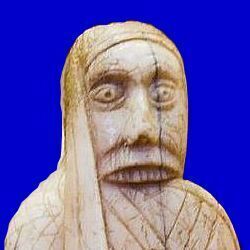
The Lewis Chessmen will be on display in France in return for an #exhibition of the Bayeux Tapestry in Great Britain.
#Chess #ChessHistory @archaeodons #histodons @antiquidons #lewischessmen #BayeuxTapestry #gameshistory
British Museum to loan Lewis Chessmen to France for Bayeux Tapestry
#Chess #ChessHistory @archaeodons #histodons @antiquidons #lewischessmen #BayeuxTapestry #gameshistory
British Museum to loan Lewis Chessmen to France for Bayeux Tapestry

Wer braucht denn da noch #SuprisedPikachu? #LewisChessmen #Queen


The King from the Lewis Chessmen #chess #hebrides #chessset #lewischessmen


Whelp, actually *five* states of mind...

My four states of mind:

A highlight of our trip to Edinburgh was a visit to the National Museum of Scotland. So much to see! I love these Lewis Chess pieces, in particular ♟️♟️♟️
#NationalMuseumOfScotland #Edinburgh #LewisChessMen #Scotland


Six of the #LewisChessmen from the @britishmuseum on loan in Museum nan Eilean @MuseumnanEilean on Lewis.
outerhebridesheritage.org.uk/event/lewis-ch…
#Chess #ChessHistory #GamesHistory #HistoryOfGames #Chessmen #Archaeology #Museum #Hebrides
outerhebridesheritage.org.uk/event/lewis-ch…
#Chess #ChessHistory #GamesHistory #HistoryOfGames #Chessmen #Archaeology #Museum #Hebrides
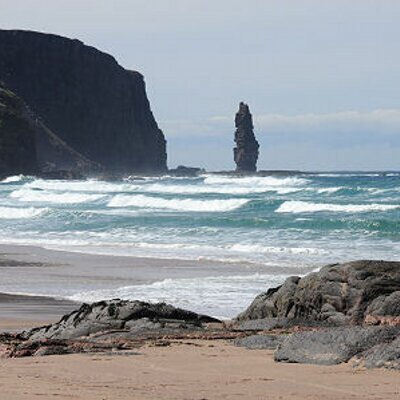
A VIRTUAL TOUR OF SCOTLAND
We retrace our steps down the Atlantic coast of Lewis to one of Scotland's most magnificent beaches: Uig Beach or Tràigh Uuige. This is perhaps best know as the place where the Lewis Chessmen, 93 carved Norse chess pieces, were found in a stone chamber beneath the dunes behind the beach. More pics and info: https://www.undiscoveredscotland.co.uk/lewis/uig/index.html
Where to next? Vote via the poll attached as a reply.
#Scotland #Uig #Beach #LewisChessmen #Lewis #WesternIsles #UndiscoveredScotland




I'm not completely on my own in front of the shop anyway. These guys are sitting next to me, guarding the shop.

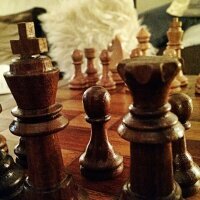
Speaking of #chess in movies, the #lewischessmen appear as Ron's chess set in the #HarryPotter movies.


In 1831, a man on the Habridean Isle of Lewis discovered a kist buried in a sand dune. Within he found 78 #chess pieces carved with extraordinary skill from #walrus #ivory. Little is known for certain about the #lewischessmen, and much is debated. In her book, "Ivory Vikings" (https://bookwyrm.social/book/230219) Nancy Marie Brown argues persuasively that the figures could have been carved by a craftswoman named Margaret the Adroit for Bishop Pall of Trondheim in the early 1200s. Although their origins are shrouded in mystery, the Lewis Chessmen remain one of the most famous chess sets in history.
The #king and #queen are crouched in their thrones, their braided hair and veils falling down their backs. The #rook is carved in the shape of a #viking berserker, eyes bulging, teeth biting the shield. The #knight's steed is small - almost #pony size, bred in an era where horses were meant to bring knights to a battlefield and not yet fight with them on it. The #bishop carries a crosier. He has no beard, is plump and somber. The pawns are simple obelisks.
Image sources: history.com and thegaurdian.com
The #king and #queen are crouched in their thrones, their braided hair and veils falling down their backs. The #rook is carved in the shape of a #viking berserker, eyes bulging, teeth biting the shield. The #knight's steed is small - almost #pony size, bred in an era where horses were meant to bring knights to a battlefield and not yet fight with them on it. The #bishop carries a crosier. He has no beard, is plump and somber. The pawns are simple obelisks.
Image sources: history.com and thegaurdian.com


It's a queen I guess.
#LewisChessmen #ChessHistory #GamesHistory #chess
♲ @See_Scotland@twitter.com:
#LewisChessmen #ChessHistory #GamesHistory #chess
♲ @See_Scotland@twitter.com:
The wonderful Seated King of the Lewis Chessmen, Uig Chessmen, National Museum of Scotland, Chambers Street, Edinburgh, Scotland #chess #edinburghmuseums #visitedinburgh #edinburghtours #toursofscotland

This is especially true for #chessmen because a player always looks on the back of the own pieces. #chess #ChessHistory #GamesHistory #LewisChessmen
♲ @NErbSatullo@twitter.com:
♲ @NErbSatullo@twitter.com:
Protip: Always check out the backs of artifacts in museum displays. They're rarely photographed, and can be amazing. Check out gorgeous carvings on the back of the Lewis chessmen @britishmuseum.

My mother wove me a chess board and bag for my #lewischessmen pieces and it looks stunning.

My mother wove me a #chess board for my #lewischessmen set. About 20" wide.

"When the #LewisChessmen were carved, the queen moved one space. per turn, and only on the diagonal, or “aslant,” as a thirteenth-century sermon explains, because “women are so greedy that they will take. nothing except by rapine and injustice.” The queen was the weakest piece on the board, even weaker than the king, and Western #chess players had no clue what to do with her. Mostly they kept her close to her king, ready to block a check by a rook."
@Argus
♲ @TrueAncestry@twitter.com:
At the @britishmuseum you can find an important part of #chesshistory – the #LewisChessmen. They were found on the Isle of Lewis in Scotland, but it’s not certain where they were from. A popular theory is that they were made in Trondheim around 1150–1200. 📷 The British Museum

♲ @MuseumnanEilean@twitter.com:
We had a special guest @MuseumnanEilean yesterday for the launch of @scattyscribbler’s book #TheLewisChessThief Barbara Henderson had a chat with us about the book and the chess pieces. Find out more @eSgoil from 2pm today and @WILibraries #britishmuseum #lewischessmen

Client Info
Server: https://mastodon.social
Version: 2025.07
Repository: https://github.com/cyevgeniy/lmst