#PvsNP

HybridMind42 & Marvin the CatHybridMind42@mastodonapp.uk
2025-12-01

🌀 Marvin and the Two Modes of Measurement

How do you measure something that keeps changing depending on how you measure it?

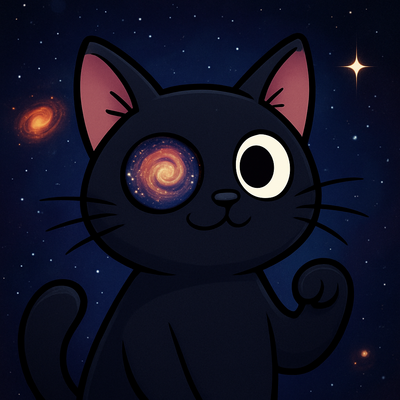
Marvin’s been staring at a quantum swirl — colours shifting, shapes flickering, patterns half‑there.
If he looks gently, it spreads into possibilities.
If he looks sharply, it snaps into one definite shape.

Then Marvin realises something big:

Some answers are easy to check once they’re in front of you…
but incredibly hard to discover from scratch.

He calls them:

🔹 Mode P — you can find the answer quickly and check it quickly.
🔹 Mode NP — you can still check the answer quickly…
but finding it may take exploring a huge maze of possibilities.

The quantum swirl becomes Marvin’s metaphor:
maybe the famous P vs NP mystery isn’t just about speed —
maybe it’s about two different modes of interacting with reality itself.

#Marvin #Quantum #Complexity #PvsNP #HybridMind42 #AtlasRosetta

N-gated Hacker Newsngate
2025-10-23

🐢🔍 Ah, another *riveting* tale of P vs NP, now with 33% more buzzwords and an extra sprinkling of 'categorical frameworks.' 🤯🎉 Because nothing says "I cracked the code" like a paper no one can pronounce! 🏆📚
arxiv.org/abs/2510.17829

Hacker Newsh4ckernews
2025-10-23

A Homological Proof of P != NP: Computational Topology via Categorical Framework

arxiv.org/abs/2510.17829

Vladimir Savićfirusvg
2025-10-22

Hmmm... I'm no expert on by any means, but this looks both -generated and a bit fishy to me. 🤨

A Homological Proof of P≠NP: Computational Topology via Categorical Framework arxiv.org/abs/2510.17829 📄

N.B. page with code returns 404.

N-gated Hacker Newsngate
2025-10-22

🤡 Ah, those perennial optimists at are at it again, claiming they've cracked the infamous P≠NP with a "homological proof" via "computational topology." 🙄 Sure, because nothing says cutting-edge computer science like a good old-fashioned topology party! 🎉 Meanwhile, arXiv continues its relentless quest for , because solving millennium problems is expensive, folks! 😂
arxiv.org/abs/2510.17829

2025-10-01

Would you rather...?
#math #compsci #pnp #pvsnp

enoch_exe_incenoch_exe_inc
2025-05-30

@catsalad

P = NP if N or P = 0

2025-05-18

# —if a solution is easy to check, is it easy to find?

> thoughts on P vs NP

—why might a solution be easier to check than to find?

For solvable problems, consider the idea that "the solution (to our problem) already exists, before we have found it"

I think it can be useful to think of an undiscovered solution as "existing already", within a special kind of "problem-relative abstract space" — just as physical-objects exist within a physical-place — and just as with physical-places, an "abstract problem-space" can also be explored to search-for and find whatever is contained within

- like physical-places, some abstract problem-spaces are small and uncluttered — which makes the task of finding whatever solution is contained within easier

- like physical-places, some abstract problem-spaces are large, and overflow with all manner of miscellaneous bric-a-brac and junk (and at times, might seem to be full of everything-other than the thing we want to find...) — which makes finding solutions harder

For some challenging problems, the thing we search for (our as-yet undiscovered solution) might be broken up into fragments — only found by a more extensive search throughout the entire problem-space:-

1. sometimes like a jigsaw puzzle, whereby each fragment is recognisable in its own right;

2. and on other occasions, sought-for fragments might be individually unrecognisable — until that-is some critical-mass, sufficient for recognisable form to be composed, is found.

On those occasions (having found sufficient fragments to compose the recognisable form, of our of now-discovered solution), the task of re-discovering the same solution within the same problem-space is made easier, because we now know what we are looking for, and we recognise it (our solution, and fragments-thereof) more easily.

In this way, we might notice that solutions to problems are often easier to "rediscover" than to "discover" — because, when we know more about "what-it-is-we-are-looking-for", (whether in whole or in part), we spend less time inspecting "all-that-we-aren't"

> intuitively then, we might say that "exploration costs less, when examination costs less"

—but is this all there is to P vs NP?

1/n

#pnp #pvsnp
𝕒𝕓𝕕𝕖𝕣𝕘𝕠abdergo
2025-04-25

Taucht ein in die faszinierende Welt der booleschen Satisfiability (SAT) mit Python! 🐍💻
Von einfachen Konzepten bis hin zu komplexen Algorithmen wie DPLL und CDCL – dieser Artikel erklärt, warum SAT-Probleme die Grundlage vieler realer Anwendungen bilden und wie sie mit P vs. NP verbunden sind. Lest mehr über die Herausforderungen und Schönheit der Berechenbarkeit! 🔍
I Can’t Get No (Boolean) Satisfaction shairozsohail.medium.com/i-can

Vladimir Savićfirusvg
2025-04-24

😎

Shortest-possible walking tour to 81,998 bars in South Korea math.uwaterloo.ca/tsp/korea/in

Tommaso Gagliardonitomgag@infosec.exchange
2025-03-12

Please DO NOT ask me to comment on this newly published "proof" of P != NP.

eprint.iacr.org/2025/445

#PvsNP #Cryptography #computerscience

2024-04-25

@aragubas Get ready for a computer science info dump.

What @crumbcake described in his last reply is the halting problem, which is undecidable. In other words, it's impossible for a computer (as we currently define them) to answer that problem for every possible input. Computerphile did a 6 minute video explaining the halting problem and why it's undecidable if you'd like to know more.

The question of P vs NP is, informally stated, this: If it's easy to check an answer to a problem, is it also easy to find an answer? An example of such a problem is sudoku. It's pretty easy to look over a completed grid for correctness but it seems much harder to find a solution to an incomplete grid. But is it harder under the more rigorous computer science definitions of computational complexity? We actually don't know, and there's a million dollar prize if you can prove it one way or the other.

If you'd like to learn a little more, I'd highly recommend this 11 minute long video about the computational complexity zoo for a relatively approachable introduction to all these concepts. Enjoy. 💙

#ComputerScience #PvsNP #HaltingProblem #ComputationalComplexity

Jim Donegan 🎵 ✅jimdonegan@mastodon.scot
2024-02-29

P vs. NP: The Biggest #Puzzle in #ComputerScience

"Are there limits to what #Computers can do? How complex is too complex for #Computation? The question of how hard a problem is to solve lies at the heart of an important field of computer science called #ComputationalComplexity."

youtube.com/watch?v=pQsdygaYcE

#Philosophy #PhilosophyOfScience #Science #Information #InformationTechnology #PvsNP #Logic #BooleanLogic #Algorithm #Polynomial #Polymomials #NP #NondeterministicPolynomial #QuantaMagazine

Mohammad HajiaghayiMTHajiaghayi@mathstodon.xyz
2023-11-25

In our effort to put courses online, we continue lectures on Algorithmic Lower Bound Course. Now you can watch

Lesson 4-11: Algorithmic Lower Bounds by Mohammad Hajiaghayi - NP-Completeness and Beyond

(FEEL FREE TO SUBSCRIBE TO YOUTUBE @hajiaghayi FOR FUTURE LESSONS Premiering on WEDNESDAYS)

youtu.be/VZyffnAb1r0 (Lesson 4: 3-Partition Problem & Proving NP-Hardness)

youtu.be/4fCD9_1eQw0 (Lesson 5: Puzzle Problem NP-Hardness & 3-Partition)

youtu.be/FIyEj72-UJQ (Lesson 6: 3-SAT Problem & Proving NP-Hardness)

youtu.be/tbSJzaKx2pA (Lesson 7: Puzzle Problem NP-Hardness via 3-SAT)

youtu.be/voRVebBsh94 (Lesson 8: Fine-grained Subcubic Complexity: Part 1)

youtu.be/gRURSM6QARo (Lesson 9: Fine-grained Subcubic Complexity: Part 2)

youtu.be/qPw82bTAXkc (Lesson 10: Fine-grained Subquadratic Complexity 1)

youtu.be/C6j4avVkI7U (Lesson 11: Fine-grained Subquadratic Complexity 2)

#AlorithmicComplexity,

#3SAT,

#3Partition,

#subquadratic,

#subcubic,

#Finegrained,

#HardnessExploration,

#NP,

#PSPACE,

#NPComplete,

#LogSpace,

#ExponentialComplexity,

#ParallelComputation,

#PvsNP,

#NPSPACE,

#NonDeterministicSpace, hashtag

#SavitchTheorem,

#ComplexityClasses,

#Reductions,

#ImportantProblems,

#CommunicationComplexity, hashtag

#GeometricProblems,

#AlgorithmDesign,

#ComputationalComplexity,

#TheoreticalComputerScience,

#AlgorithmicLowerBounds

For comprehensive handwritten lecture notes on this course, visit the instructor's website:

cs.umd.edu/~hajiagha/
The course textbook "Computational Intractability: A Guide to Algorithmic Lower Bounds" by Demaine, Gasarch, and Hajiaghayi is available for free at:

hardness.mit.edu/

Victoria Stuart 🇨🇦 🏳️‍⚧️persagen
2023-09-16

Addendum 13

Large Language Model for Science: P vs. NP
arxiv.org/abs/2309.05689

* LLM to augment/accel. research on P vs. NP problem: en.wikipedia.org/wiki/P_versus
+ unsolved prob., theor. comp. sci.
+ asks wh. every problems quickly verified can also be quickly solved
* in-depth thinking w. LLM for complex problem-solving
* GPT-4 produced proof schema, engaged in rigorous reasoning throughout 97 dialogue turns (Socratic method)
* concluded P ≠ NP in alignment w. Xu & Zhou 2023

Client Info

Server: https://mastodon.social
Version: 2025.07
Repository: https://github.com/cyevgeniy/lmst